300 Win Mag vs 7mm Rem Mag compared on ballistics, recoil, and hunting use. Find the right long-range cartridge. Shop AR15Parts.com or call (888) 706-0633.
If you're hunting whitetail on Red River bottom land or stretching shots past 300 yards on open ranch country around Grayson County, the cartridge in your chamber matters. The 300 Win Mag vs 7mm Rem Mag debate is one of the oldest arguments in long-range hunting, and the answer depends on bullet weight, recoil tolerance, and what you're shooting at.
At AR15Parts.com, we spend our days deep in precision components, chassis, stocks, optics rails, and the small parts that make a rifle shoot straight, and hunters walk into our Denison shop asking this exact question every fall. Below is the ballistics data and real-world tradeoffs to pick the right one.
Quick answer: For deer, pronghorn, and windy open-country shots inside 600 yards, choose the 7mm Rem Mag. It shoots flatter, drifts less in wind, and kicks noticeably less. For elk, moose, bear, and any shot past 600 yards where retained energy matters most, choose the 300 Win Mag, because it runs heavier, higher-BC bullets that the 7mm cannot match.
Building a precision long-range rig and need chassis, stocks, optics mounts, or components? We're here to help.
Why This Debate Has Lasted More Than Sixty Years
These two cartridges have been going head-to-head since the early 1960s. The 7mm Rem Mag debuted in 1962. Winchester answered with the .300 Win Mag in 1963. Sixty-plus years later, the debate is still alive because neither cartridge has a clean knockout.
Here in Grayson County, that debate is practical, not academic. Whitetail on river-bottom properties along the river corridor. Feral hogs on open ranch land where 300-yard shots are routine. Elk tags in New Mexico or Colorado every fall. The best long-range hunting cartridge for one of those situations may not be the right call for another.
This article breaks it down side by side: ballistics, recoil, barrel life, factory ammo availability, and hunting application. If you are also weighing something lighter, our 6.5 Creedmoor complete upper receivers give you a useful reference point, and we'll compare that cartridge's numbers directly later on. The 300 Win Mag vs 7mm Rem Mag question deserves a straight answer, and that is what you will get here.
A Quick Look at Each Cartridge's Origins and Design
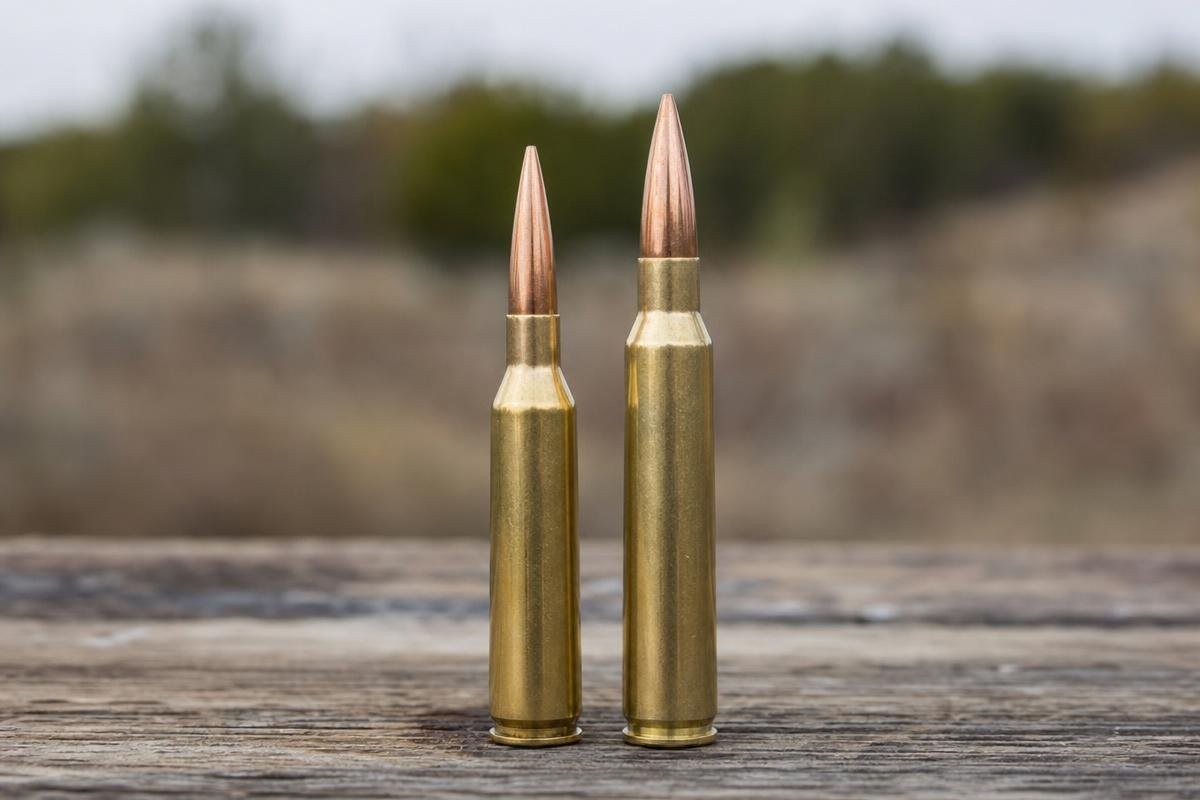
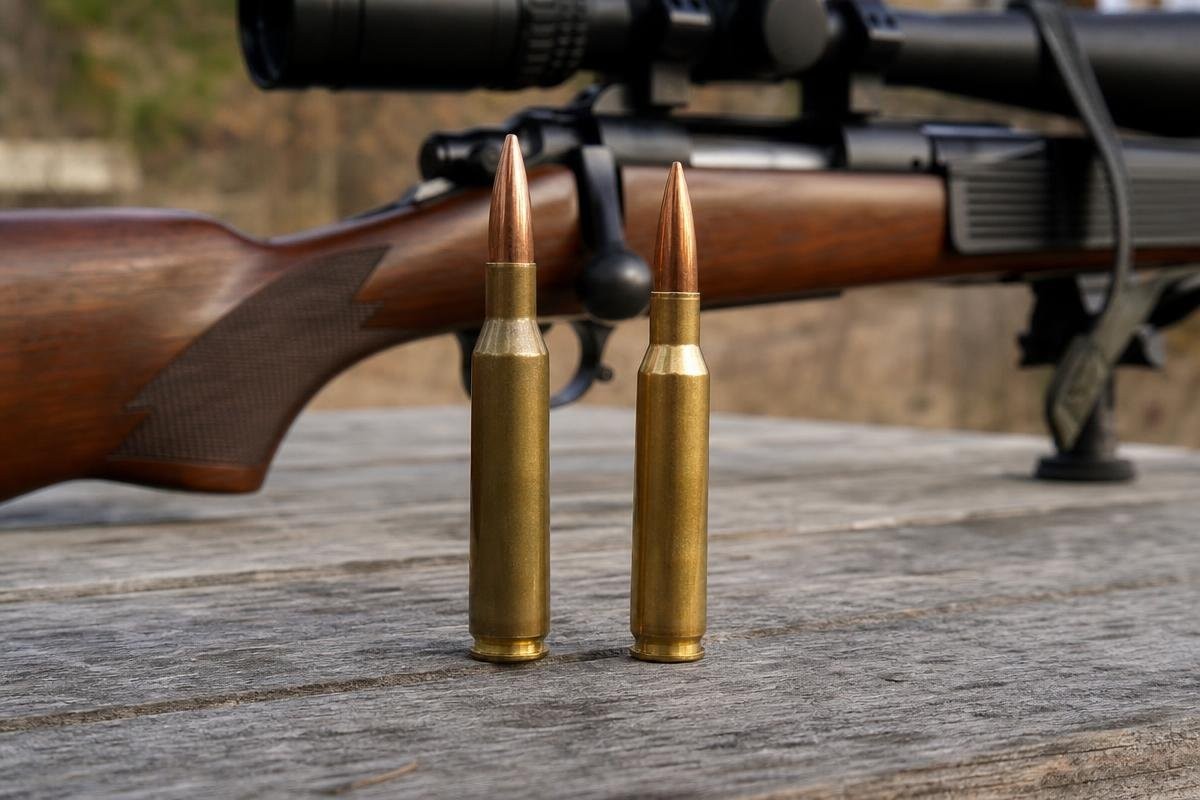
Both the 7mm Remington Magnum and the 300 Winchester Magnum trace their roots to the same parent case: the belted Holland and Holland 375 H&H Magnum. That belt is a raised ring ahead of the extractor groove, originally designed to headspace the cartridge in chambers cut before SAAMI standardization. Today the belt is largely vestigial. Modern chambers headspace off the shoulder, not the belt. But the design stuck, and both cartridges carry it into every rifle they feed.
7mm Remington Magnum: Built for Velocity and BC
Remington introduced the 7mm Rem Mag in 1962. It runs a 0.284-inch bullet diameter with a 2.500-inch case length and a SAAMI max pressure of 61,000 PSI. The design was built to push 140 to 175 grain bullets faster than the 30-06 Springfield while still fitting a standard long-action receiver.
That combination of high velocity and the 7mm bore's naturally high ballistic coefficients made it a favorite for shooters chasing flat trajectories at distance. Gunsmiths have chambered it in everything from factory sporter barrels to custom precision builds for hunters heading west for elk season.
300 Winchester Magnum: Built for Mass and Penetration
Winchester answered in 1963 with the 300 Win Mag. Same belted magnum architecture, but a 0.308-inch bullet diameter and a 2.620-inch case length, 120 thousandths longer than the 7mm. SAAMI max pressure sits at 64,000 PSI. That larger bore diameter moves heavier bullets and delivers more frontal area on impact, which is why it became the default choice for large, heavy game.
The tradeoff is real: the longer case seats modern high-BC projectiles deeper, cutting into usable powder capacity when you push past 200 grains. That is not a spec-sheet footnote. It shows up in load development and barrel wear, and our team sees it when shooters bring custom builds through the shop.
Ballistics Compared: Velocity, Energy, and Bullet Drop at Distance
Numbers settle arguments. So let's use consistent, real-world loads throughout: the 7mm Rem Mag with a 162-grain Hornady ELD-X at 2,940 fps (G1 BC 0.625), and the 300 Win Mag with a 180-grain Federal Trophy Bonded at 2,960 fps (G1 BC 0.507). Nearly identical muzzle velocities. Very different stories downrange.
Muzzle Velocity and Retained Energy
Out of the muzzle, both rounds are nearly a wash. The gap opens at distance. At 500 yards, the 300 Win Mag holds roughly 2,000 to 2,100 ft-lbs of energy. The 7mm lands in the 1,700 to 1,800 ft-lbs range with the same load pairing. That's a real difference on heavy game. The larger bore hits harder at distance, full stop.
The 7mm fights back with a higher BC. The 162-grain ELD-X sheds velocity slower than the 180-grain Trophy Bonded, which keeps bullet drop surprisingly competitive despite the lighter projectile. On open ranch land where feral hog shots past 300 yards are routine, that retained velocity matters for terminal performance.
Bullet Drop and Wind Drift
Trajectory between these two is closer than most shooters expect. The 7mm's high-BC bullet partially offsets the 300's heavier payload in terms of drop. The bigger separation shows up in wind drift.
At 600 yards in a 10 mph crosswind, the 7mm Rem Mag with a 162 to 175-grain high-BC bullet drifts roughly 1 to 2 inches less than the 300 Win Mag running a 180-grain load. That gap sounds small on paper. Out on open ground along the river corridor, where prevailing southwesterly winds average 12 to 16 mph, that 1 to 2 inches is the difference between a clean hit and a marginal one. Wind is where the 7mm earns its reputation as a precision cartridge.
How the 6.5 Creedmoor Fits This Picture
For context on a lighter option, a 140-grain 6.5 Creedmoor at roughly 2,700 fps (G1 BC around 0.610) drifts about the same as, sometimes slightly more than, the 7mm at 600 yards, but carries far less energy, roughly 1,100 to 1,200 ft-lbs at 500 yards versus the 7mm's 1,700 plus. In short, the Creedmoor matches the wind-bucking behavior of the 7mm while giving up energy for less recoil. Our 6.5 Creedmoor complete upper receivers are worth a look if that lower-recoil, lower-cost tradeoff appeals to you.
Supersonic Range and the Heavy-Bullet Advantage
This is where the debate gets decided for serious distance shooters. The 7mm Rem Mag pushing a 175-grain Berger Hybrid goes transonic around 1,350 to 1,400 yards. The 300 Win Mag running a 215-grain Berger Hybrid pushes that threshold to 1,400 to 1,500 yards. A hundred yards of additional stable flight is not trivial at that distance, because a bullet that stays supersonic stays predictable, and once a projectile drops through the transonic zone, groups open up fast.
The 300's larger case capacity lets it run 215 to 230-grain projectiles with G7 BCs that the 7mm simply cannot match at equivalent bullet weights. That is a genuine long-range advantage, not marketing. The 300 Win Mag's heavy-bullet ceiling is real, and past 1,200 yards, it matters.
Putting together a precision bolt-gun or a long-range AR alongside it? Call us at (888) 706-0633 for chassis, stocks, optics mounts, and components matched to your load.
Recoil, Barrel Life, and the Real Cost of Running a Magnum
Both cartridges hit hard at both ends. Before you commit to either one, you need an honest look at what running a magnum actually costs, in felt recoil, barrel wear, and dollars per trigger pull.
Felt Recoil: What the Numbers Mean Over a Full Day of Shooting
300 Win Mag recoil vs 7mm Rem Mag is a real difference, not a marketing talking point. In a 9-pound rifle, the 7mm generates roughly 20 to 22 ft-lbs of recoil energy. The 300 Win Mag pushes that to 25 to 28 ft-lbs. That gap is manageable if you are shooting 3 to 5 rounds on a hunting trip.
Run 50 to 100 rounds in a single range session and the story changes. Flinch creeps in. Follow-through suffers. Hit spotting gets harder. Shooters who spend serious time at the range before elk season should factor this in. If you are stacking round counts, the 7mm is easier to shoot well, all day.
Barrel Life: How Many Rounds Before Accuracy Falls Off?
The 7mm Rem Mag typically delivers 1,200 to 1,800 rounds of accurate barrel life depending on load and barrel steel. The 300 Win Mag runs slightly hotter and is harder on throats, expect 1,000 to 1,500 rounds before groups open up. Stainless steel or 5R-rifled barrels extend life on both, but they do not eliminate the math.
A shooter burning through a barrel every 1,200 rounds while also buying premium ammo at $3 to $4 per round is looking at real money. Plan for it before you buy the rifle, not after. If barrel costs and round counts concern you, a non-magnum option like 6.5 Creedmoor is worth a serious look, giving you a capable long-range platform that is far gentler on barrels and your budget.
Factory Ammo Cost and Availability in 2026
Budget $2.50 to $4.50 per round for quality hunting loads in either caliber from Federal, Hornady, Nosler, or Winchester. The 300 Win Mag has a slight edge in factory load variety, especially in the 180 to 220 grain range. The 7mm Rem Mag's sweet spot runs 140 to 175 grain, with strong premium options across every major manufacturer.
Availability is solid for both in 2026. Neither cartridge is hard to source. The cost difference per box is small, but it adds up across a full season of range prep and hunting use.
Which Cartridge Is Better for Hunting? It Depends on the Game.
Neither cartridge is universally better. The right answer depends on what you're hunting, how far you're shooting, and how much punishment your shoulder can take over a long season. Here's how they split across the most common hunting applications.
Deer and Pronghorn: Where the 7mm Rem Mag Shines
For whitetail on river-bottom properties or pronghorn on open plains where shots stretch past 300 yards, the 7mm Rem Mag is hard to beat. A 140 to 160 grain controlled-expansion bullet at 7mm velocities produces reliable expansion, adequate penetration, and a flatter trajectory than most hunters need to worry about.
The .284" diameter bullets carry high ballistic coefficients, and that matters when prevailing southwesterly winds in the valley are pushing 12 to 16 mph. Wind drift is a real-world problem here, not a ballistics chart footnote. For feral hog control on open ranch ground at 300-plus yards, the 7mm's wind resistance is a genuine field advantage.
Elk, Moose, and Bear: Where the 300 Win Mag Earns Its Keep
This is where the 7mm rem mag vs 300 win mag for elk question actually has a defensible answer. A 180 grain bonded bullet driven by the 300 Win Mag delivers more penetration through heavy shoulder bones than a 160 grain 7mm load at the same range. Most elk guides in the West prefer the larger bore for clients precisely because of that margin.
A well-placed 175 grain 7mm Rem Mag will cleanly take elk, no argument there. Bullet construction and shot placement matter more than the energy gap at typical hunting distances. But for hunters making the drive to New Mexico or Colorado, the 300 Win Mag's terminal energy at altitude gives you a real margin when conditions aren't perfect.
Long-Range Hunting Past 500 Yards: Which Cartridge Holds the Edge?
For 7mm rem mag long range hunting past 500 yards, the cartridge competes closely with the 300 Win Mag using 162 to 175 grain high-BC projectiles. Wind drift and drop numbers are similar at that range. The 300 Win Mag pulls ahead when you step up to 200 to 215 grain high-BC bullets, a weight class simply not available in 7mm.
For hunters regularly shooting past 600 yards at elk-sized game, that ability to run heavier, higher-BC bullets with more terminal energy is the deciding factor. The recoil tradeoff is real, as covered in the previous section, but at those distances the best long range hunting cartridge is the one you can shoot accurately under field conditions.
Still not sure which caliber fits your hunting setup? Call us at (888) 706-0633 and we'll give you a straight answer based on your game, your range, and your build.
Precision Rifle Competition: Does Either Cartridge Have a Place on the Line?
Both cartridges can show up at a match and perform. But in 2026, neither one is the dominant choice in PRS competition, and for different reasons. Understanding where each one fits, and where it gets outclassed, saves you from building the wrong rifle for your discipline.
PRS Competition: The 7mm Rem Mag's Role in a Changing Landscape
The 7mm Rem Mag is not the cartridge PRS shooters are reaching for in 2026. The 7mm PRC and 6.5 PRC have largely taken its place, offering better case efficiency and stronger factory match-ammo support. That said, the 7mm Rem Mag still carries competitive ballistic coefficients in a widely available factory package. Its lower recoil compared to the 300 Win Mag is a real advantage on a timed stage where spotting your own hits matters.
The honest problem is that newer purpose-built cartridges have passed it by. If you are already running a 7mm Rem Mag and shooting regional PRS matches, it will hold its own through most stages. But if you are building from scratch for PRS, there are better starting points today.
F-Class and ELR: Where the 300 Win Mag Still Dominates
F-Class Open and ELR are different conversations entirely. The 300 Win Mag's larger case capacity lets handloaders push 215 to 230 grain high-BC projectiles at velocities the 7mm Rem Mag simply cannot match with comparable bullet weights. Past 1,200 yards, that case capacity advantage becomes decisive. The 300 Win Mag has a long history in F-Class Open for exactly this reason.
Yes, recoil is stiffer. But F-Class shooters are shooting from a rest, not a positional stage. The recoil tradeoff is acceptable when the alternative is going transonic 200 yards earlier. For ELR events in West Texas, the 300 Win Mag is the more capable cartridge of the two in this comparison. We carry complete AR uppers in 19+ calibers if you are building a separate platform alongside your bolt gun.
Shooting Long-Range in North Texas: Local Conditions That Affect Cartridge Choice
North Texas is not a forgiving place for long-range shooting. This open cross-timbers and prairie country sits under southerly winds that average 12 to 16 mph. That is not a range-day anomaly. That is Tuesday. On open ranch land where feral hog shots push past 300 yards, wind drift becomes the deciding factor, and the 7mm Rem Mag's higher ballistic coefficient gives it a real field advantage over the .300 in those conditions.
That said, a lot of hunters in this area make the fall drive to New Mexico or Colorado for elk. At altitude, in mountain wind, with shots that may stretch past 400 yards, the .300 Win Mag's extra energy margin earns its keep. If you are hunting whitetail on river-bottom properties in October and chasing elk in the Sangre de Cristos in November, you are essentially asking one cartridge to do two different jobs.
Understanding that tradeoff is the whole ballgame, and we covered the numbers in the ballistics breakdown earlier in this post. We talk to local hunters about this exact question every season. We stock the components that build accurate long-range rifles, and our team shoots this country.
If you want a cartridge that handles Texas wind and doubles as the best long-range hunting cartridge for a western elk trip, both calibers have a legitimate case. Come in and we will help you sort it out.
Which cartridge hits harder at the muzzle and at distance?
The 300 Win Mag wins on raw energy at every distance. A 180-grain load produces 3,500 to 3,800 ft-lbs at the muzzle. The 7mm Rem Mag with a 162-grain load runs 3,100 to 3,400 ft-lbs. The 7mm's higher ballistic coefficient bullets close the gap downrange, but the 300 Win Mag retains more energy at 300, 500, and 700 yards. No distance flips that result.
How much more recoil does the 300 Win Mag produce?
In a 9-pound rifle, the 7mm Rem Mag generates roughly 20 to 22 ft-lbs of recoil. The 300 Win Mag pushes that to 25 to 28 ft-lbs. Over a long session zeroing or shooting a prairie dog field, that difference adds up fast. Recoil-sensitive shooters feel it by round 20.
Can I ethically hunt elk with a 7mm Rem Mag?
Yes. A 160 to 175-grain controlled-expansion bullet meets the minimum energy thresholds most wildlife agencies recommend for elk-sized game inside 400 yards. Shot placement matters more than the extra 300 ft-lbs the 300 Win Mag carries. Hunters heading to New Mexico or Colorado have taken elk cleanly with the 7mm for decades. It is a legitimate elk cartridge.
What is the practical effective range for hunting and competition?
Both cartridges are capable of 1,000-yard accuracy with quality equipment and a skilled shooter. For hunting, most ethical hunters limit shots to distances where they can consistently hit a 10-inch circle, which runs 500 to 700 yards with either round. The 300 Win Mag's energy advantage matters most at the far end of that range on large game.
Past 1,000 yards, the 300 Win Mag's ability to run 200 to 215-grain high-BC projectiles gives it a real edge in retained energy. If you are considering extreme long-range options in an AR platform, our complete AR uppers in 19-plus calibers include builds worth comparing. Shooters curious about a lower-recoil long-range alternative should also look at the 6.5 Creedmoor complete upper receivers we carry.
Is factory ammo easy to find for both?
Both cartridges have strong factory support. The 300 Win Mag has a slight edge in load variety, especially in heavier bullet weights. You will find both at most sporting goods retailers and online dealers without trouble.
Still have questions about which cartridge fits your rifle, your hunting ground, or your next build? Call us at (888) 706-0633 or reach out to our team. We stock parts and components for long-range builds across 19-plus calibers, and we are happy to talk through your setup before you spend a dollar.
Ready to Get Started with AR15Parts.com?
Call (888) 706-0633 to speak with our team directly. We're ready to answer your questions, walk you through your long-range component options, and help you find the right solution for your build. Whether you're just starting to plan or ready to move forward, we'll make the process simple and stress-free. Reach out today and let's talk about how we can help build your long-range setup.