If you're hunting whitetail or hogs across the open pasture and cross-timbers around Grayson County, or stretching shots out on a North Texas lease, the question of 338 ARC vs 308 is a real one worth answering straight. Both cartridges hit hard. Both have a place in a serious shooter's build. But they are not the same tool, and choosing wrong costs you money and performance.
We build complete uppers for both calibers, assembled, headspaced, and function-checked in our Sherman shop before they ship to your door. Here is how to decide which one is right for you. Ready to build? Tell us your caliber, barrel length, and intended use and we will put together the right upper for your rifle.
Two Cartridges, Two Platforms, One Decision
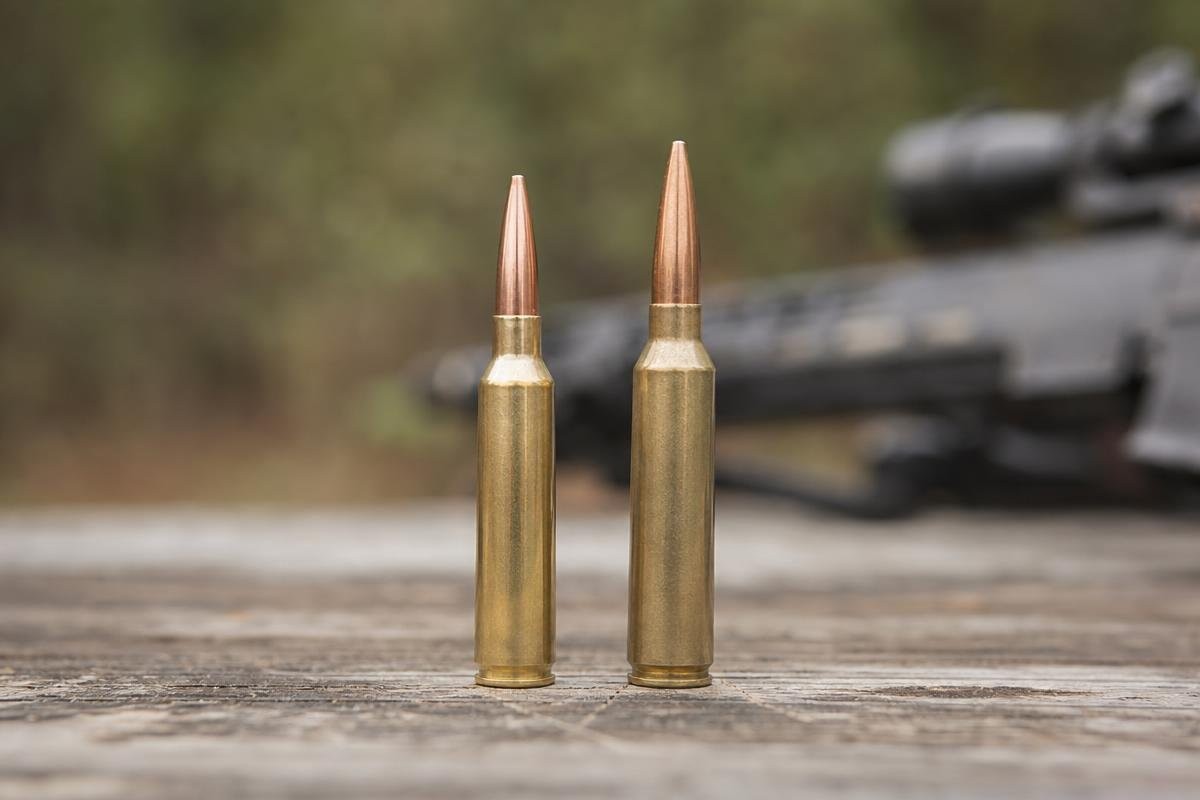
Two cartridges. Two completely different platforms. One decision that shapes your entire build. The 338 ARC runs on a standard AR-15 lower. The 308 Winchester requires a larger, heavier AR-10 or LR-308 action. That platform difference is the first thing you need to understand, because everything else flows from it.
Out here along the Red River corridor, shooters are chasing whitetail and feral hogs across mixed pasture and cross-timbers, and running shots past 300 yards on hunting leases near Lake Texoma. Both cartridges can handle that work. But they handle it differently. Below you'll find a comparison covering ballistics, recoil, ammo cost, and real-world use cases to help you pick the right one.
Browse our 338 ARC complete uppers or 308 Win complete uppers once you know which direction you're going.
What Are the 338 ARC and 308 Winchester?
These two cartridges share a general purpose but almost nothing else. One is a proven military and hunting round that has been around since 1952. The other is a modern big-bore design built specifically for the AR-15 platform. Understanding what each cartridge actually is makes the rest of the comparison easy to follow.
338 ARC: Hornady's Big-Bore AR-15 Cartridge
Hornady introduced the 338 ARC in 2023. It is derived from the 6mm ARC case, necked up to accept a .338 caliber bullet. The design runs in a standard AR-15 lower receiver, which is the detail that matters most for shooters who already own an AR-15 lower. No new platform required.
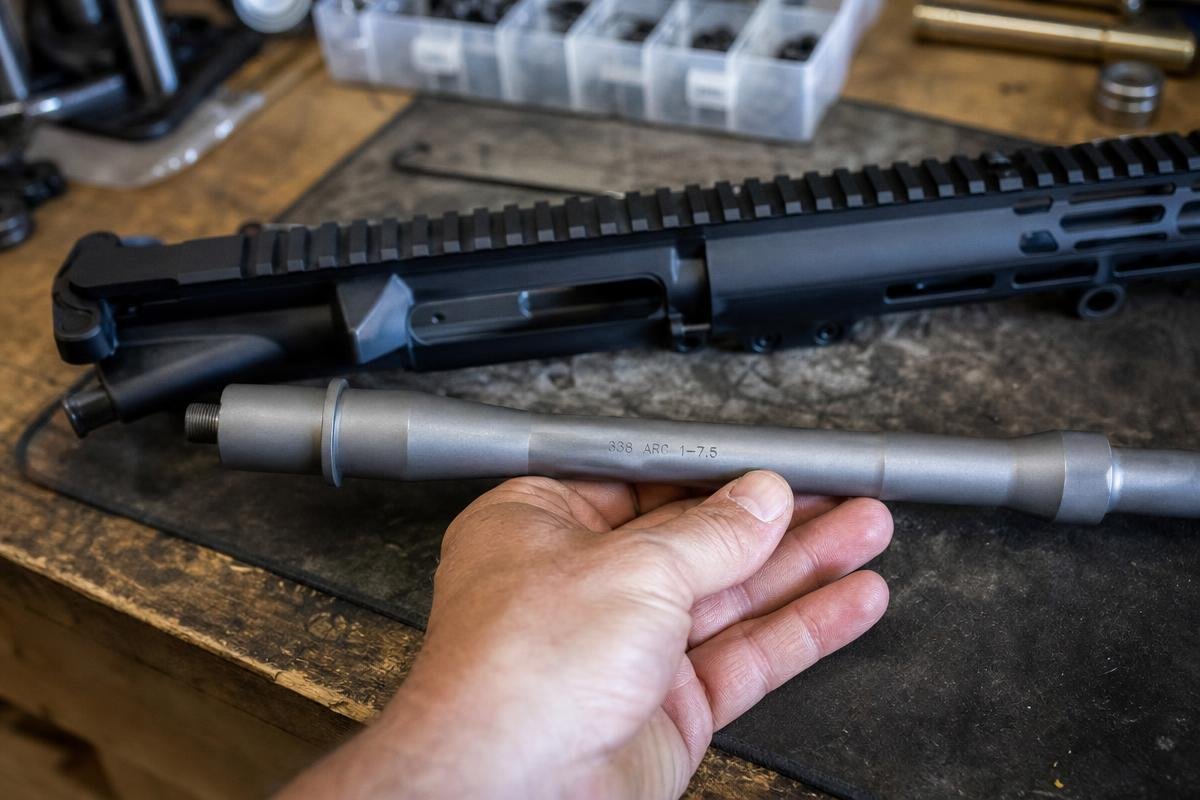
Bullet weights typically run 185 to 250 grains. From a 16-inch barrel, expect roughly 2,350 fps with a 185-grain load and around 2,100 fps with a 250-grain load. For feral hog and whitetail hunters working the bottomland around Lake Texoma, that is serious terminal performance from a compact AR-15 build. Our 338 ARC complete uppers drop directly onto any standard mil-spec lower and are built with a 1:9.375 twist barrel to stabilize the heavier 250-grain projectiles.
308 Winchester: The Proven Standard
The 308 Winchester, standardized alongside the 7.62x51 NATO round, has been in continuous service since 1952. It requires an AR-10 or LR-308 platform, which means a larger lower receiver, a longer action, and more overall weight. This is a fundamentally different and heavier rifle.
One point AR-10 builders should not overlook: 308 Winchester and 7.62x51 NATO are not identical. Commercial 308 Win is typically loaded to higher chamber pressure, and NATO chambers carry slightly more headspace clearance. A 308 Win chamber can safely fire 7.62x51, but firing max-pressure 308 in some loose NATO chambers is not ideal. We chamber our uppers specifically for the ammunition you intend to run, so tell us up front which you plan to shoot.
Precision loads typically run 150 to 175 grains. A 168-grain bullet from a 20-inch barrel produces approximately 2,650 fps at the muzzle. Ammo is available everywhere. If you want a ready-to-run upper for this platform, our 308 Win complete uppers are built to order.
Ballistics Head to Head: Velocity, Energy, and Drop
The open country around Lake Texoma can put you at 400 to 500 yards on a whitetail or hog without much effort. At that distance, retained energy and wind drift stop being range-day curiosities and start being real decisions. Here is how the 338 ARC vs 308 Winchester ballistics comparison actually shakes out with real numbers. The figures below are based on Hornady published ballistics and calculated with standard ballistic software at sea level.
Muzzle Velocity and Retained Energy
The 308 Win launches a 168-grain bullet at roughly 2,650 fps, producing about 2,620 ft-lbs at the muzzle. At 500 yards it still carries approximately 1,450 ft-lbs. The 338 ARC pushes a 185-grain bullet at around 2,350 fps for about 2,265 ft-lbs at the muzzle, dropping to roughly 1,200 ft-lbs at 500 yards. The 308 hits harder at 500 yards, full stop.
That said, the 338 ARC's heavier, high-BC projectiles close the gap fast past 600 yards, and the 250-grain load with a G7 BC of 0.290 or better starts to outrun the 308 in wind resistance past 1,000 yards.
All figures are approximate and vary by barrel length, atmospheric conditions, and specific load.
Bullet Drop and Wind Drift at Distance
From a 100-yard zero, the 338 ARC 185-grain drops about 45 inches at 500 yards. The 308 Win 168-grain drops about 42 inches. Nearly identical on paper. Wind drift tells a more interesting story. In a 10 mph crosswind at 500 yards, the 338 ARC drifts roughly 14 inches while the 308 drifts roughly 15 inches.
That edge grows as distance increases, which is where the 338 ARC long-range performance starts to matter for shooters pushing past 600 yards. At 1,000 yards and beyond, the 338 ARC's superior BC becomes a genuine advantage over the 308. If most of your shooting stays inside 500 yards, the 308 is the flatter, harder-hitting choice. Past that, the math shifts.
Platform Differences: AR-15 vs AR-10
The 338 ARC runs on a standard AR-15 platform. The 308 Winchester runs on an AR-10. That single fact drives nearly every practical difference between these two builds.
Size, Weight, and Handling
A 338 ARC rifle with a 16-inch barrel typically weighs 7 to 8 pounds unloaded. An AR-10 in 308 Win with a 20-inch barrel comes in at 9 to 11 pounds. That is a real difference after three hours on foot through cedar breaks on a lease near Whitewright or Bells.
The AR-10 is also longer overall. That matters in a hunting blind, in a truck cab, or any time you need to move fast between positions. The AR-15 chassis of the 338 ARC platform gives you a more maneuverable rifle without giving up serious terminal performance.
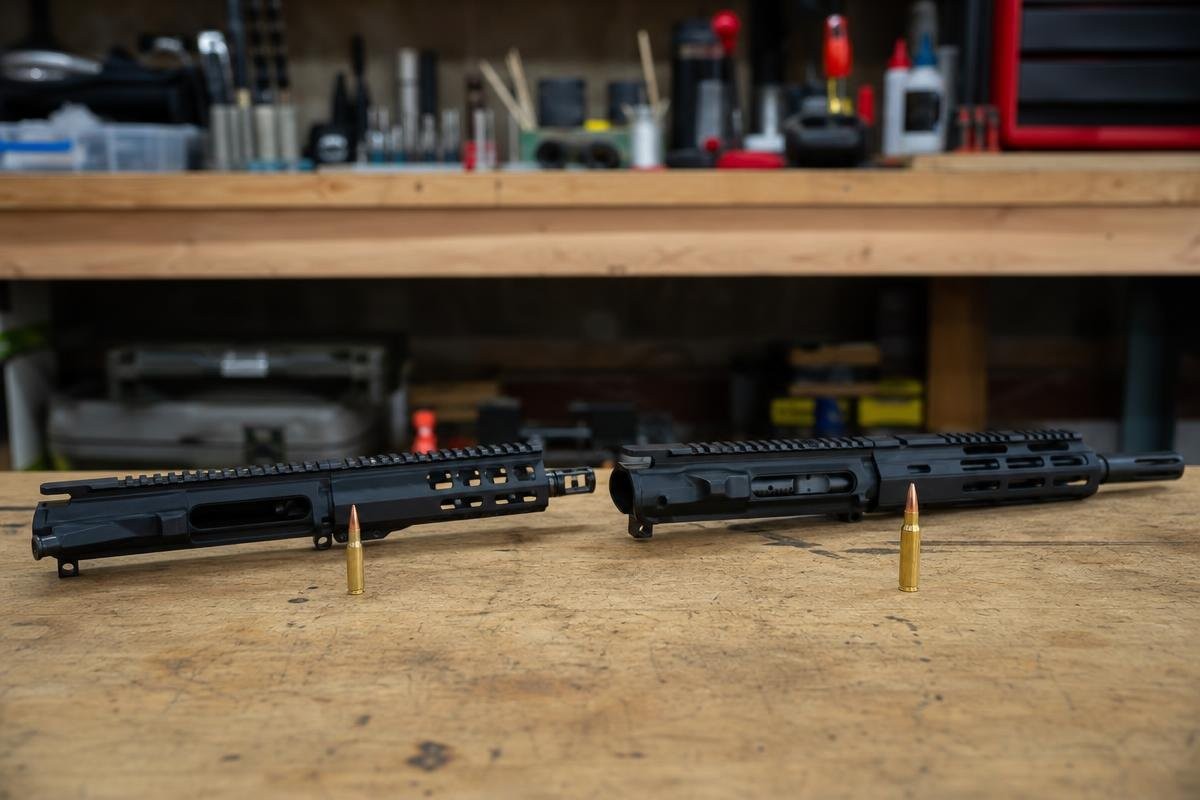
If you already own an AR-15 lower, a 338 ARC complete upper drops right onto it. No new lower required. That alone makes the 338 ARC an easier entry point for most shooters.
Parts Availability and Upgrade Paths
AR-15 components are the most widely produced rifle parts in the country. Triggers, stocks, grips, handguards, BCGs, you name it. Hundreds of manufacturers make them at every price point. Upgrading a 338 ARC AR-15 platform build is straightforward.
The AR-10 is a different story. DPMS-pattern and Armalite-pattern lowers are not always cross-compatible. That creates real headaches when you are trying to source parts or plan upgrades. Browse our complete AR uppers and you will see the difference in selection depth between the two platforms firsthand.
For most shooters, the AR-15 parts ecosystem is simply easier to work with. The 308 Win upper builds we do are solid, but the parts sourcing requires more attention to pattern compatibility from the start.
Not sure which barrel length or gas system fits your use case? Let us help you spec the right upper before you commit to a platform.
Recoil, Suppressor Compatibility, and Practical Shootability
Felt Recoil Compared
The 308 Win in an AR-10 generates roughly 18 to 22 ft-lbs of free recoil energy depending on load and rifle weight. The 338 ARC in an AR-15 sits closer to 15 to 18 ft-lbs with a 185-grain load. That gap surprises most shooters who assume a larger-diameter bullet means more kick.
The AR-15 buffer system and the lighter projectile both work in the 338 ARC's favor. Many shooters find the 338 ARC more comfortable over a long session than the heavier AR-10 platform. If you're doing a full 338 ARC hunting cartridge comparison for practical field use, felt recoil matters as much as raw numbers on paper.
Running a Suppressor on Each Platform
Both cartridges use 5/8x24 muzzle threading on most builds, so suppressor mounting is straightforward on either platform. The difference shows up in the gas system. The 338 ARC on an AR-15 can run overgassed when suppressed, and an adjustable gas block is often the right fix. For more on dialing in that setup, see our 338 ARC suppressed build guide.
The AR-10 in 308 Win is a more mature suppressed platform with a wider range of tested components. That said, suppressed hog hunting on private leases around Grayson and Cooke counties is exactly where the 338 ARC shines. It runs quiet, hits hard, and stays on an AR-15 lower. You just need to account for the gas tuning before you head out. Our 338 ARC complete uppers are built with that real-world use in mind.
Hunting and Long-Range Use Cases: Where Each Cartridge Wins
338 ARC for Hunting: What It Handles Best
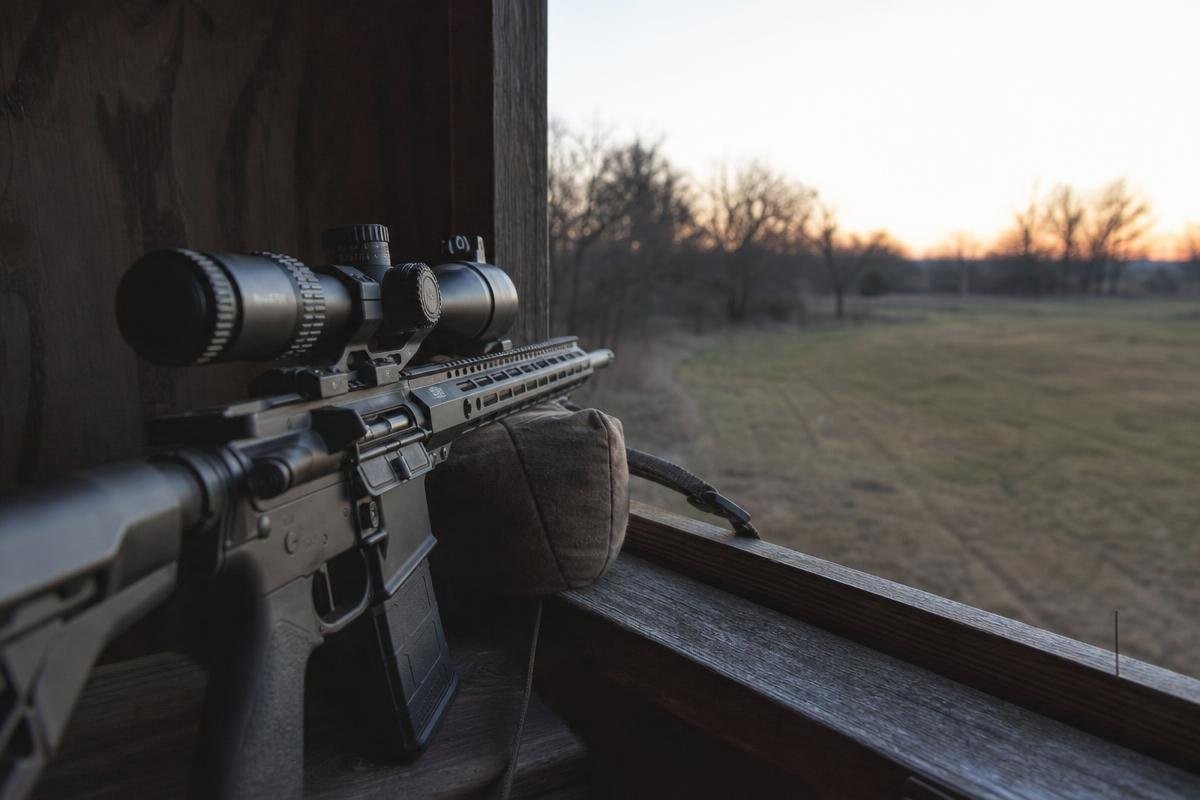
For whitetail deer and hog hunters working the mixed timber and pasture along the Red River corridor, the 338 ARC is a serious option. It handles deer and hogs cleanly out to 600 yards, and the 185-grain supersonic load carries enough terminal energy for elk-sized game inside 400 yards.
The 250-grain subsonic load runs at approximately 1,050 fps, which makes it a practical suppressed hunting round where regulations allow. If you want to dig deeper into 338 ARC hunting applications, we have a full breakdown on that.
The compact AR-15 platform is the other advantage. Mobile hunters covering ground on foot get a lighter, shorter rifle without giving up meaningful terminal performance over smaller AR-15 calibers. That matters when you are hiking fence lines or pushing through bottomland brush.
308 Winchester: Where It Still Leads
Between 600 and 800 yards, the 308 Win with a 175-grain match load stays highly competitive and has decades of field-proven results behind it. Factory ammunition is available at virtually every sporting goods store in Texas. That kind of availability matters when you are hunting Cooke County leases and need to grab a box locally on short notice.
308 Win is also legal for hunting in all 50 states with no special restrictions. The 338 ARC easily meets minimum caliber requirements in most jurisdictions, but you should verify local rules before your season. For a 308 vs 338 ARC long range comparison at the platform level, our 308 Win complete uppers and 338 ARC complete uppers pages show exactly what we build for each.
Not sure which upper fits your hunting setup? Call us at (888) 706-0633 and we will walk you through it.
Ammunition Cost, Availability, and Reloading
This is where 308 Win wins clearly. Factory 308 loads from Federal, Hornady, Winchester, and Remington sit on shelves at sporting goods stores from Sherman to Gainesville. Match-grade 308 runs roughly $1.50 to $2.50 per round. If you're heading out to a hunting lease in Cooke County on Friday afternoon and realize you're short on ammo, you can fix that problem locally.
Factory Ammunition: Price and Selection
338 ARC factory ammunition is produced primarily by Hornady, with very limited options from other manufacturers. Expect to pay $3.00 to $5.00 per round for factory loads. That's roughly double the cost of comparable 308 loads. Shooters near Denison and Sherman will almost certainly need to order 338 ARC online and plan ahead. It is not a last-minute shelf find.
For a 338 ARC complete upper to make long-term financial sense, reloading is worth considering seriously. For a 308 Win complete upper, factory ammo stays affordable enough that reloading is optional rather than necessary.
Reloading Considerations
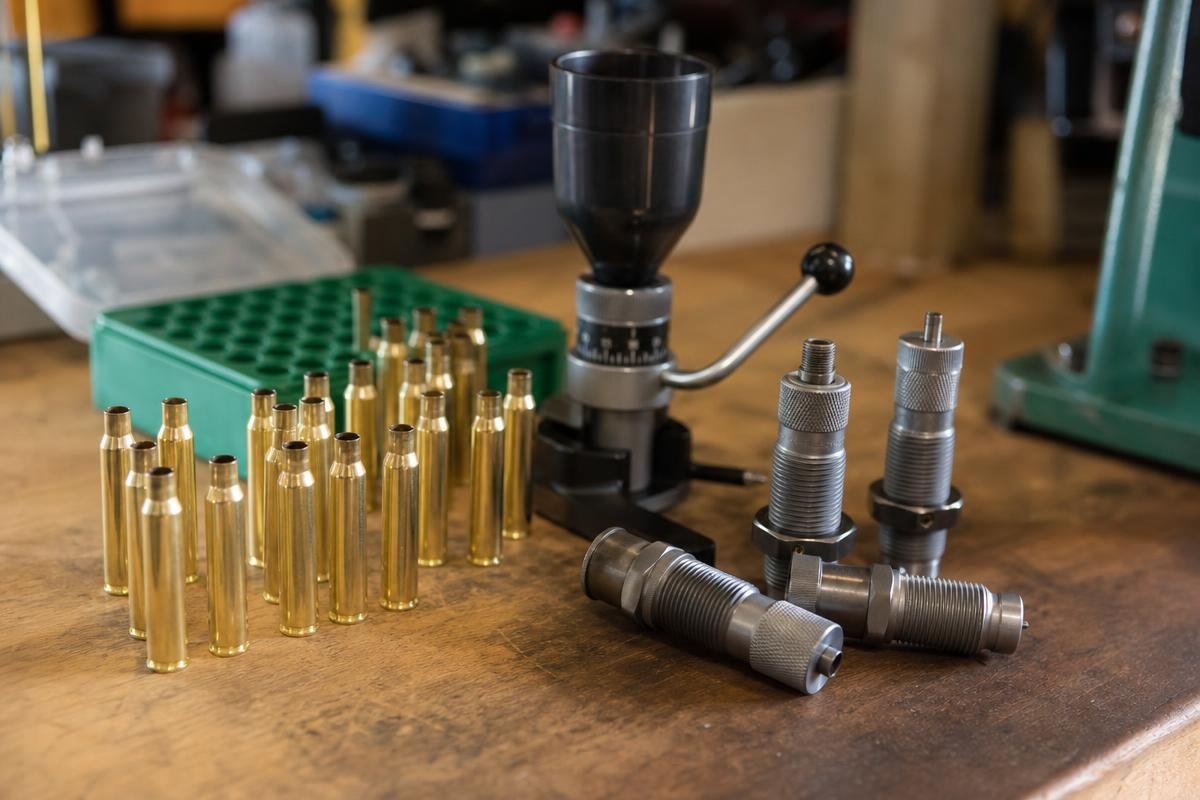
338 ARC reloaders have solid projectile options. Hornady, Sierra, and Berger all make quality .338-caliber bullets. Brass availability is improving but still lags well behind 308 Win. The 338 ARC case is based on the 6mm ARC, so it is a relatively new brass supply chain. Check out these 338 ARC reloading tips before you start building loads.
Reloading brings the cost per round down substantially and makes the 338 ARC a more realistic choice as the best big bore AR cartridge in 2026 for budget-conscious precision shooters.
Which One Should You Choose?
This is the core question, and the answer depends on what you already own and what you're trying to do. If you're running an AR-15 lower and hunting timber or bottomland in Cooke County, the 338 ARC is a direct upgrade path. If you grab ammo off the shelf in Sherman before a hunt and need guaranteed availability, the 308 Win is hard to beat. Both are capable cartridges. Your situation picks the winner.
Choose 338 ARC If...
- You already own an AR-15 lower and want to keep it
- You want a compact, lightweight rifle for backcountry or hog work
- You plan to run a suppressor on an AR-15 gas system
- You want serious terminal performance without stepping up to AR-10 bulk and weight
- You're considering other big-bore AR-15 options and want to see how it stacks up in our 338 ARC vs 5.56 comparison
Browse our 338 ARC complete uppers if you're ready to build.
Choose 308 Winchester If...
- Ammunition availability in remote areas is a priority
- You compete in precision rifle matches where 308 Win is the standard
- You already own an AR-10 platform
- You want the widest factory load selection at the lowest per-round cost
- You're shooting past 800 yards with proven match data behind you
If you're weighing the 308 against other long-range options, our 6.5 Creedmoor vs 308 comparison covers that ground directly. See our 308 Win complete uppers to configure your build.
Building Your Rifle in North Texas: Why Shooters Near Denison Choose AR15Parts.com
The rolling terrain along the Red River corridor puts real demands on your cartridge choice. Shots on whitetail or hogs past 400 yards happen regularly out here, and that gap between the 338 ARC's AR-15 footprint and a heavier AR-10 in .308 matters when you're moving through cedar breaks or repositioning on a lease in Cooke County. These aren't hypothetical scenarios. They're what local hunters deal with every season.
We're based in Sherman, TX, about 12 miles southwest of Denison, at 2022 S Crockett St, Sherman, TX 75090. You can reach us at (888) 706-0633 with build questions before you order. Our team assembles, headspaces, and function-checks every upper in house before it ships to your door. Nothing leaves the shop without passing that check. No FFL required.
If you've decided the 338 ARC's AR-15 platform is the right fit for your hunting setup, our 338 ARC complete uppers are built to your exact specifications. If you want the proven factory-load availability of .308 Win at any sporting goods store in Sherman or Denison before a weekend hunt, our 308 Win complete uppers are ready to configure. Either way, you're getting a rifle built to order, not pulled off a shelf. In 2026, both cartridges remain strong contenders for the best big bore AR cartridge title. The country around here will tell you which one fits your situation.