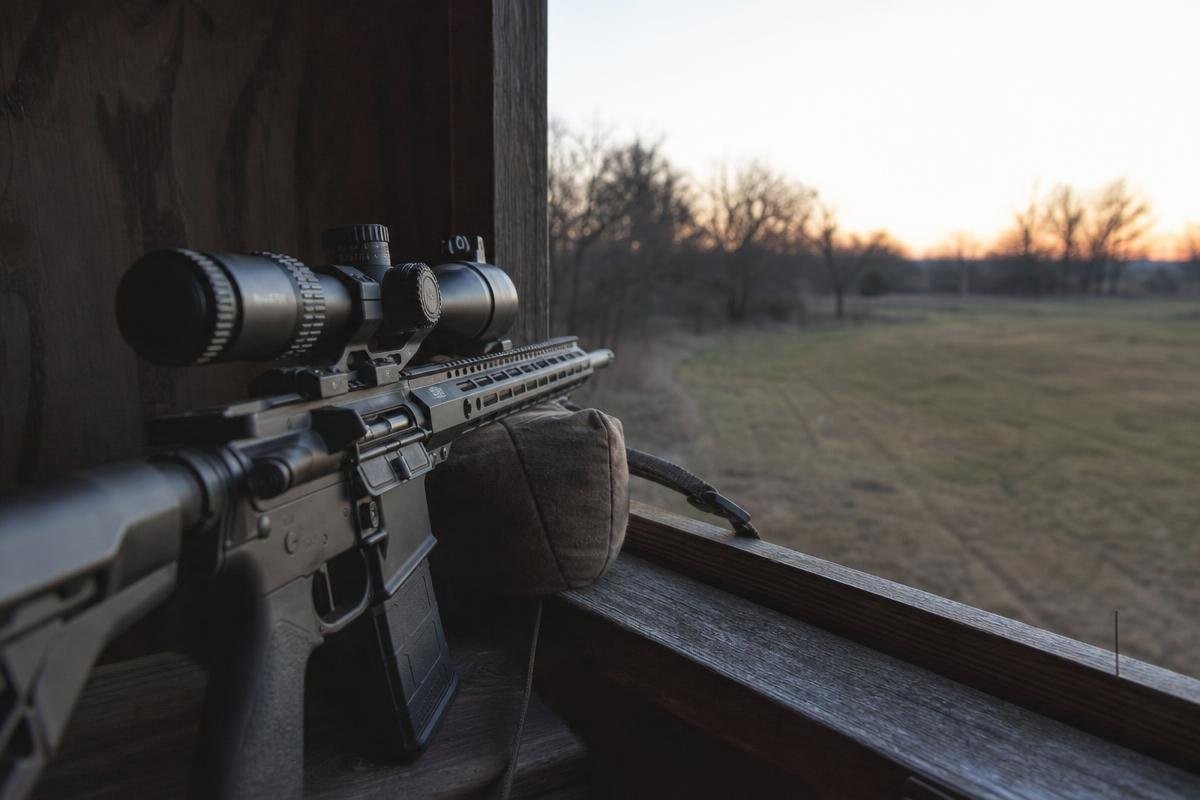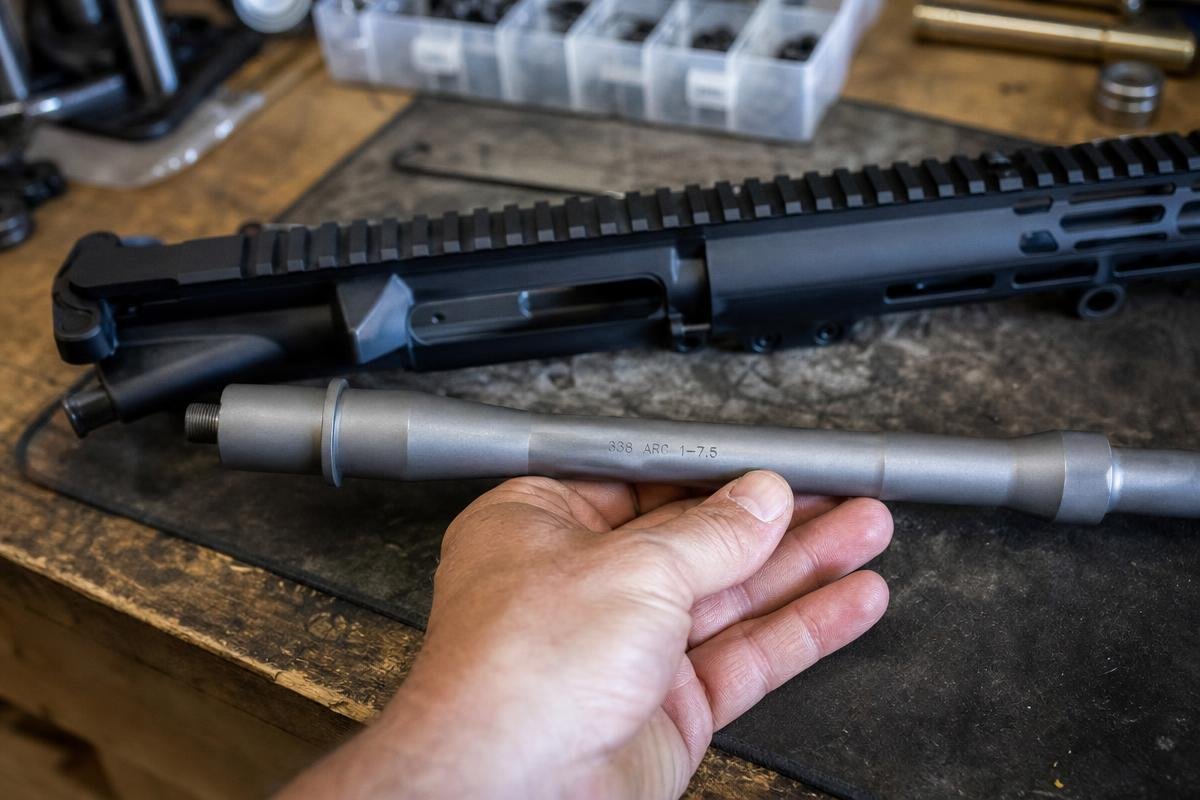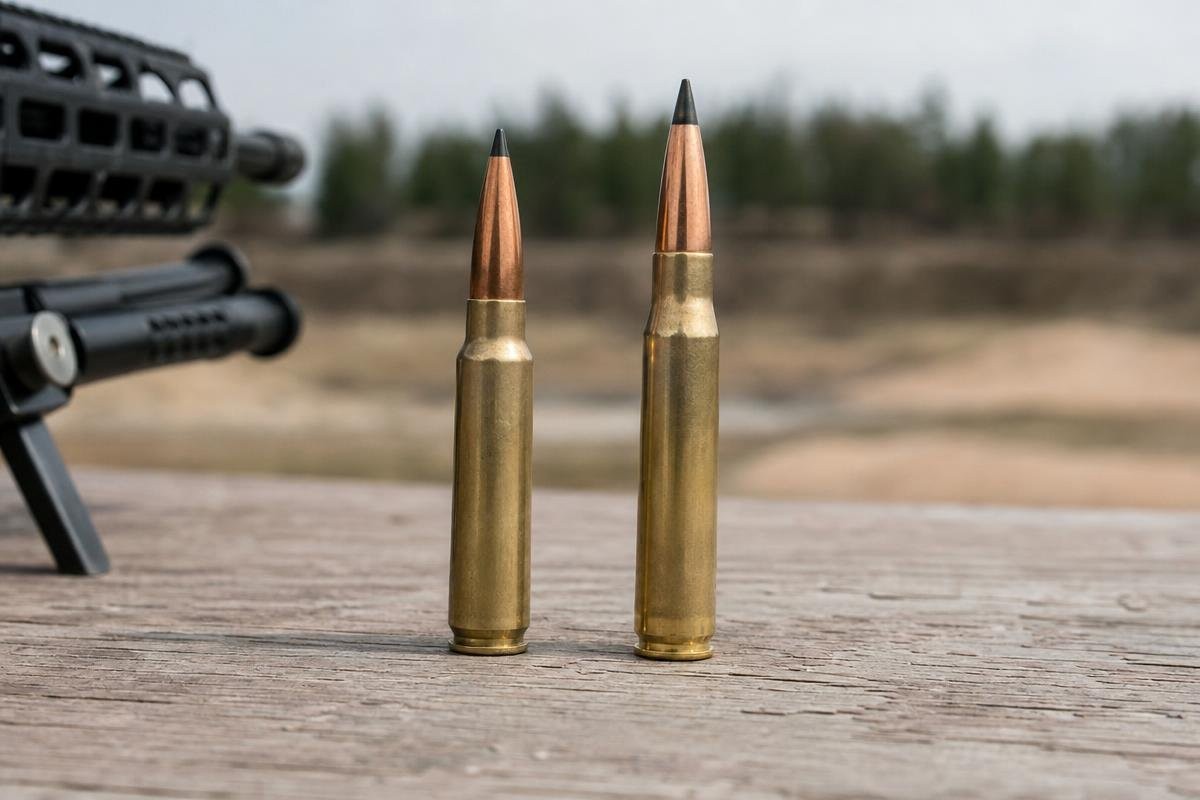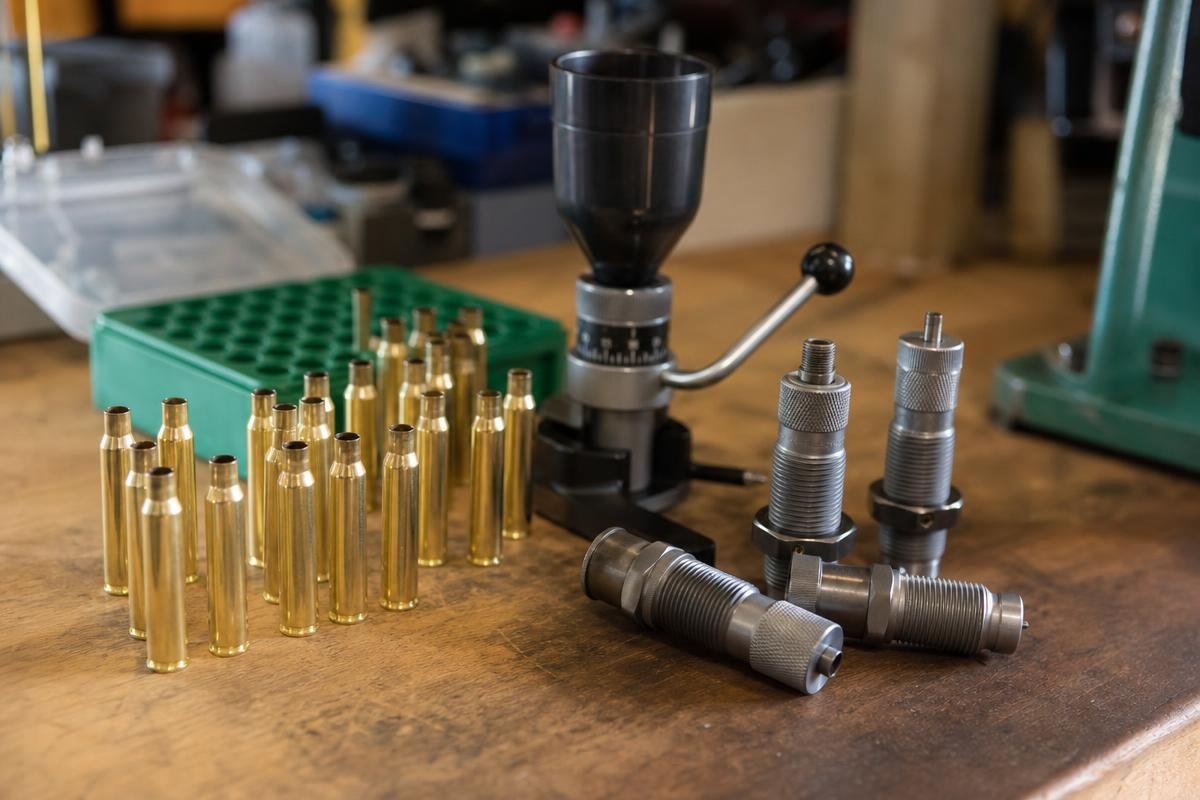
Reloading 338 ARC for precision and consistency starts with understanding what makes this cartridge different from anything else running on an AR-15 platform. We build and ship 338 ARC uppers out of our shop in Sherman, TX, serving shooters across Grayson County and the Denison area, and we get reloading questions every week.
Here you'll find brass prep, powder selection, seating depth, and chronograph work, so you can develop loads that shoot tight and repeat shot to shot. Have questions about 338 ARC builds or components? We're here to help.
Factory 338 ARC ammunition is scarce. As of 2026, Hornady produces it, but shelf availability across North Texas is inconsistent at best. If you own a 338 ARC upper and want to shoot it regularly, handloading is not optional. It is the practical path forward.
Hornady introduced the 338 ARC in 2023 as a large-frame AR platform cartridge pushing .338-caliber bullets from 185 to 300 grains at velocities that make 500-plus yard work genuinely viable. Shooters in Grayson County understand this. The Red River corridor west of Denison and the open terrain near Lake Texoma reward a cartridge that stays supersonic and hits hard at distance. A factory load gets you started. A dialed handload gets you there consistently.
Handloading 338 ARC is also mechanically advantageous. Seating depth, powder charge, and primer selection all affect precision in ways no factory round can optimize for your specific barrel and chamber. This guide walks through brass preparation, powder charge development, bullet seating depth, and chronograph validation so you can build a load that performs at your bench, not just on paper.
We are based in Sherman, TX at 2022 S Crockett St, about ten miles from Denison, and we build and ship 338 ARC uppers to shooters across Grayson County and beyond. We know what this cartridge demands. Let's get into it.
What Makes 338 ARC Different to Reload Compared to Common AR Cartridges
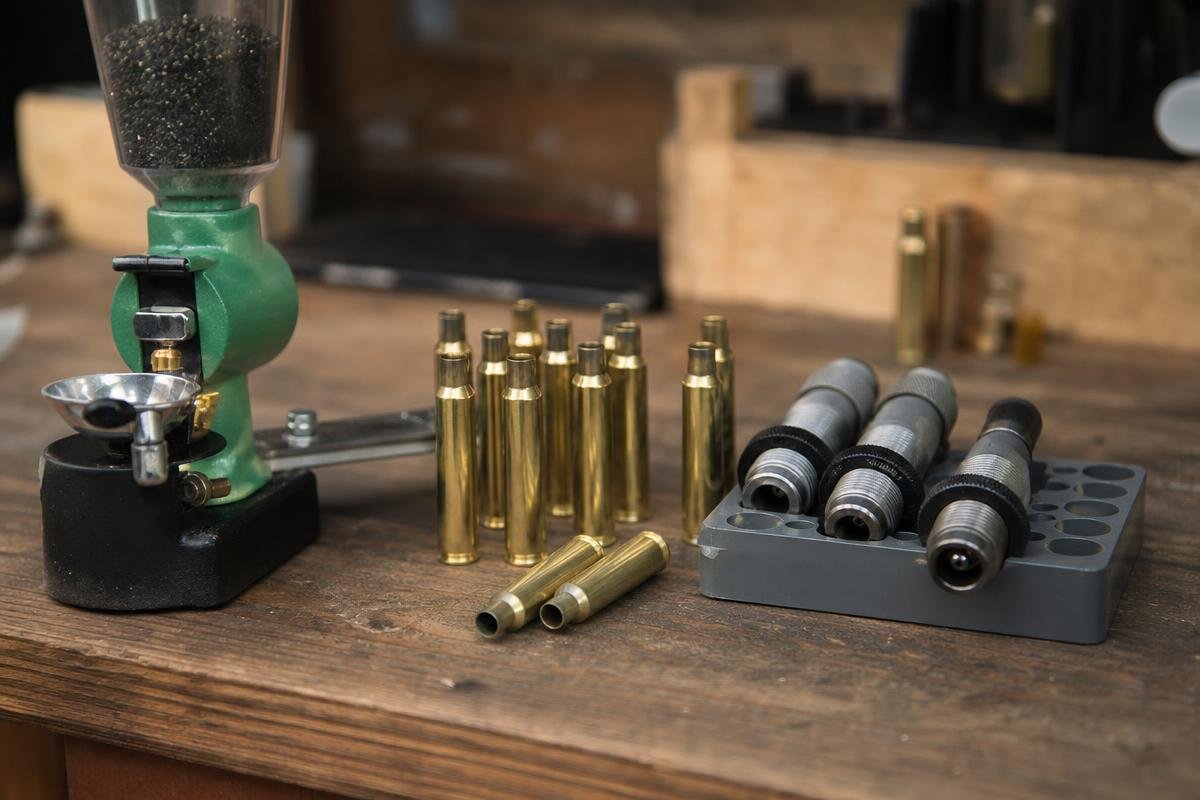
If you already reload 5.56, 6.5 Grendel, or even 6.5 Creedmoor, some of that knowledge transfers to 338 ARC. But the cartridge has enough unique characteristics that walking into it assuming your existing tooling and habits will carry you is a mistake. The rebated rim alone changes your setup from the first step.
Case Dimensions and Pressure Considerations
338 ARC uses a rebated-rim case. The rim diameter is smaller than the case body, sized to fit a standard AR-15 bolt face. That sounds convenient, but it means your standard .308-family headspace gauges and case gauges do not apply here. You need 338 ARC-specific dies, a 338 ARC case gauge, and headspace gauges cut for this cartridge specifically. There is no workaround.
SAAMI maximum pressure is 62,000 PSI, which puts it in the same range as other precision AR cartridges. That pressure ceiling is not unusual, but reaching it with the wrong powder or a compressed charge in a case you have not properly prepped is a real risk. Brass supply in 2026 is still primarily Hornady. That limited supply makes case prep discipline non-negotiable. You cannot afford to treat these cases as disposable the way you might with high-volume 5.56 brass.
Shooters in Grayson County and the Denison area also need to account for North Texas temperature swings. Summer bench sessions above 100 degrees F can push temperature-sensitive powders toward pressure spikes. Your 338 ARC reloading data developed in January may not behave identically in August.
Bullet Selection: 185 gr to 300 gr Range
Bullet weight drives every downstream decision in 338 ARC load development. The 185 to 200 gr range is where supersonic precision loads live. These bullets produce flatter trajectories and are well suited for the open terrain around Lake Texoma and the Red River corridor. The 250 to 300 gr range is subsonic territory, designed for suppressed 338 ARC large-frame AR builds where hearing-safe operation is the priority.
Pick your use case first. That choice determines your powder, your seating depth, and whether your loaded rounds fit within magazine length constraints on a large-frame platform. Mixing up bullet weight categories mid-load-development session wastes brass and produces data you cannot use.
Brass Preparation: The Foundation of Consistent 338 ARC Loads
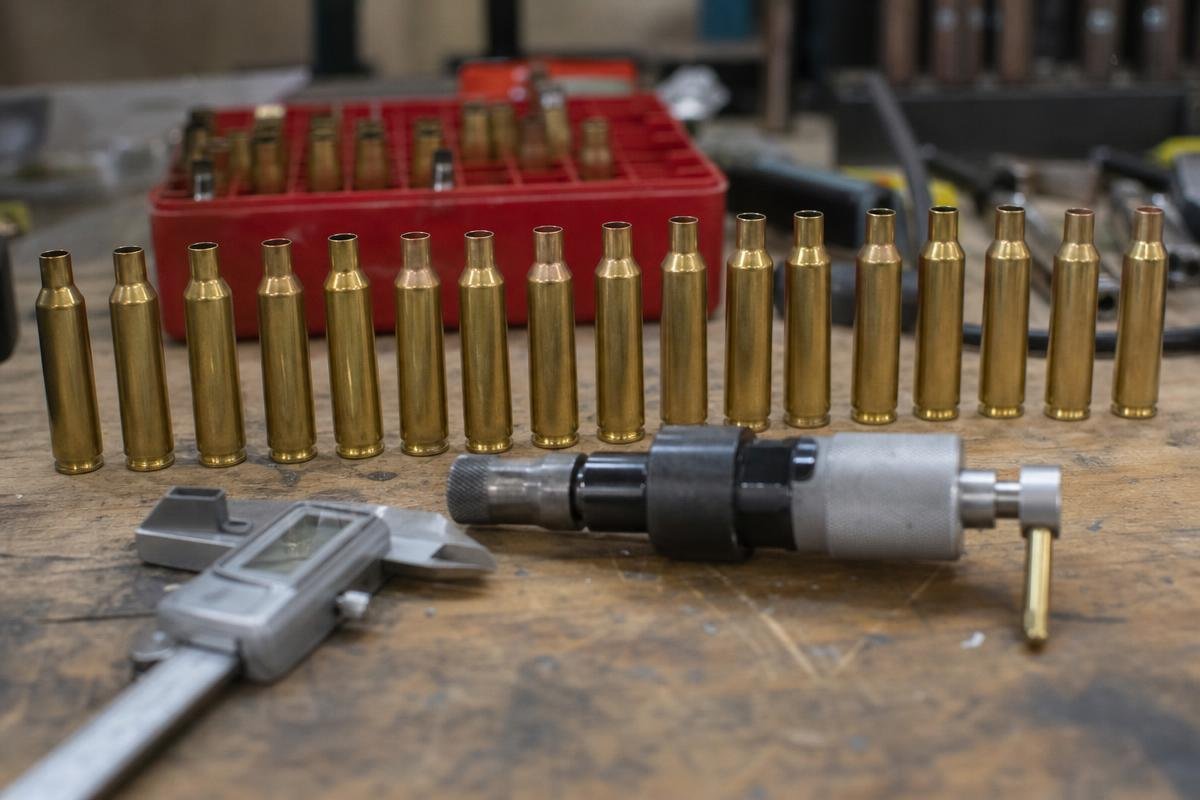
338 ARC brass prep is not a step you rush. Every consistency problem you fight at the chronograph traces back to something you skipped at the prep bench. Get this sequence right and your load development goes faster. Cut corners here and you are chasing variables that have nothing to do with powder or seating depth.
Cleaning, Annealing, and Case Inspection
Start with cleaning. Tumble or run cases through an ultrasonic cleaner before you size anything. Carbon and residue on the case body will score your sizing die and drag grit into the neck. Clean brass first, every time, no exceptions.
After cleaning, inspect every case. Look for case head separation, neck cracks, and primer pockets that have gone loose or cratered. These are signs of overpressure or case fatigue. A cracked case or separated head is not a reload. It is a discard. With 338 ARC brass still scarce, it is tempting to push cases further than you should. Do not.
Because 338 ARC brass is hard to replace, anneal your case necks every three to five firings. Annealing restores neck tension uniformity after repeated work hardening. Consistent neck tension is one of the biggest contributors to consistent velocity. Skipping annealing means your neck tension drifts case to case, and your groups drift with it.
One practical note for shooters in the Grayson County area: North Texas summers bring high humidity. After cleaning and inspecting, store prepped brass in sealed containers with desiccant. Moisture in primer pockets and case necks affects neck tension and primer ignition, both of which scatter your velocity data before you ever charge a case.
Trimming to Length and Primer Pocket Uniforming
Trim all cases to SAAMI trim-to length, confirmed against the current Hornady manual, and hold that measurement within 0.001 inches across your lot. Cases that vary in length produce inconsistent neck tension on the bullet. Inconsistent neck tension means inconsistent bullet pull, which means inconsistent velocity. A case trimmer with a positive stop makes hitting that tolerance repeatable.
Uniform your primer pockets with a dedicated tool. A primer seated 0.002 inches too shallow or too deep changes the strike geometry and introduces ignition variation that scatters velocity spreads. This is not a marginal gain. It is a measurable one. Large rifle primers are standard for 338 ARC.
If you are running a slow-burning powder like H1000 or Retumbo, magnum primers may improve ignition consistency. Faster powders like Varget or IMR 4064 do not need them.
If you are building your 338 ARC setup from the ground up, our 338 ARC complete uppers are assembled, headspaced, and function-checked in our shop before they ship to your door.
Powder Selection and Charge Development for 338 ARC
338 ARC powder selection comes down to matching burn rate to bullet weight and case capacity. The 338 ARC case is modest compared to the 338 Lapua or 338 Federal. That limits how much powder you can run, and it means very slow magnum powders will spike pressure before you reach useful velocity. Stay within the burn rate range published in current Hornady or Sierra manuals. Those numbers exist for a reason.
Burn Rate Considerations for Supersonic Loads
For supersonic loads in the 185 to 250 grain range, medium-to-slow burn rate powders are your practical starting point. H4350, Reloder 17, and Varget are the three worth testing first. H4350 and Reloder 17 suit heavier bullets in the 220 to 250 grain window.
Varget works well with lighter projectiles and carries a real advantage for shooters in Grayson County: it is one of the more temperature-stable powders available, which matters when your load data was developed on a 45-degree January morning but you are shooting in 100-degree July heat near the Red River. A temperature-sensitive powder can shift velocity 50 fps or more across that swing. Varget tends to hold tighter across that range.
Do not reach for slow magnum powders like H1000 or Retumbo. The 338 ARC case simply does not have the capacity to run them efficiently. You will hit pressure limits before you see the velocity gains those powders are designed to deliver.
Subsonic Load Powders and Charge Windows
Subsonic 338 ARC loads use 285 to 300 grain bullets and require faster-burning powders to produce consistent ignition. Trail Boss, Accurate 1680, and IMR 4227 are the practical options. These fill the case adequately at subsonic charge weights and light reliably. If you are building a suppressed upper specifically for subsonic work, the component choices at the reloading bench connect directly to how the rifle cycles and sounds downrange.
Never reduce below the minimum listed charge in your manual for subsonic loads. A large case with too little fast powder is not just inefficient. It can cause inconsistent ignition or, in worst cases, a dangerous detonation event. Minimum charge is a floor, not a suggestion.
Starting Low and Working Up: The Ladder Method
338 ARC load development follows the same ladder method used for any precision cartridge. Start at the published minimum charge and work up in 0.3 to 0.5 grain increments, shooting 3 to 5 rounds per node over a chronograph. A chronograph is not optional here. It is the primary diagnostic tool in the process.
Target an extreme spread under 15 fps and a standard deviation under 8 fps. When you find a charge window where velocity nodes cluster and ES tightens, you are in the right neighborhood. Stop immediately if you see flattened primers, sticky bolt lift, or cratered primer pockets. Those are pressure signs, not tuning variables. Back the charge down and consult your manual before continuing.
For specific 338 ARC reloading data and charge weights, always reference a current published manual from Hornady, Sierra, or Hodgdon. Do not pull numbers from forum posts or older data written for similar but different cartridges.
Seating Depth and Overall Cartridge Length for Accuracy
Seating depth is where precision reloading separates from production loading. Get it right and your groups tighten. Get it wrong and you're chasing pressure signs you don't understand. For 338 ARC seating depth work, the measurement that matters is cartridge base-to-ogive (CBTO), not overall cartridge length (COAL).
Finding the Lands: COAL vs. CBTO
COAL is easy to measure but unreliable for precision work. Bullet tip profiles vary between manufacturers and even between production lots from the same brand. Two bullets with identical COAL measurements can sit at completely different depths relative to the lands. CBTO measures from the case head to the bullet's ogive, which is the actual bearing surface that contacts the rifling. That's the number that controls pressure and accuracy.
Use a Hornady OAL gauge or equivalent tool to measure the distance to the lands in your specific barrel before setting any seating depth. Your chamber is unique. Your barrel's throat dimensions affect this measurement directly. Chamber dimensions and twist rate both influence how a bullet engages the rifling, and the barrel in your 338 ARC upper determines your starting point for all of this. Most precision loads start 0.020 inches off the lands.
Jumping 0.040 to 0.060 inches can reduce pressure and improve consistency in some barrels. Seating deeper increases pressure and should never go below the minimum COAL listed in your reloading manual.
Magazine Length Constraints on a Large-Frame AR Platform
This is where AR-platform reloaders face a problem bolt-gun shooters don't. Standard SR-25 magazines typically limit COAL to approximately 2.800 inches. Heavy 285 to 300 grain bullets seated to touch the lands can exceed that limit. You cannot feed what won't fit the magazine.
The practical solution: seat to a COAL that feeds reliably from the magazine, then measure your actual jump-to-lands and confirm it falls within an acceptable accuracy window for your barrel. Many barrels shoot well with a 0.050 to 0.080 inch jump. If you're running benchrest work where feeding is irrelevant, single-loading removes the constraint entirely and lets you tune seating depth without compromise. Shooters in the Grayson County area running large-frame AR builds should account for this from the first round they seat.
Questions about 338 ARC builds, components, or load development? Call us at (888) 706-0633 and talk to someone who actually builds these uppers.
Using a Chronograph to Validate and Refine Your 338 ARC Load
A chronograph is not optional for precision 338 ARC reloading. It is the only tool that tells you what your powder charge is actually doing shot to shot. Without velocity data, you are guessing. With it, you can diagnose problems before they show up as fliers on paper.
What Velocity Data Tells You About Consistency
Two numbers matter most: extreme spread (ES) and standard deviation (SD). ES is the gap between your fastest and slowest shot in a string. SD is the statistical spread across all shots. For a precision 338 ARC load, target ES under 20 fps and SD under 10 fps across a 10-shot string. If you are above those thresholds, the load is not ready.
High ES is a diagnostic signal, not a dead end. It usually points to inconsistent primer seating depth, powder charge variation, or neck tension problems. Start there before blaming the powder. Tighten your prep process first, then recheck velocity data on the next string.
Correlating Velocity Nodes to Grouping on Paper
A velocity node is a charge window where ES tightens noticeably. Finding one confirms consistent pressure. It does not confirm accuracy. Those are two different things. A tight node is a prerequisite, not proof.
Once your chrono shows a clean node, move to paper. Shoot 5-shot groups at 100 yards to confirm the load groups. Then stretch it. At the open terrain around the Lake Texoma corridor, 338 ARC loads get tested at real distance. A load that groups at 100 yards can fall apart at 300 or 500 if the velocity node was never properly confirmed. Read your targets and your chrono data together. Neither source alone tells the complete story.
If you are building a 338 ARC upper and want a platform that gives your handloads room to perform, start with a barrel and chamber that can actually hold the precision you are developing at the bench.
Reloading 338 ARC in North Texas: Practical Considerations for Denison-Area Shooters
This part of Texas is hard on reloaders. Summer highs push past 100 degrees F. January mornings can drop below 20. That 80-plus degree seasonal swing is not a minor variable in your 338 ARC load development. It is a real performance factor you need to account for.
Temperature Swings and Powder Performance
Some single-base powders shift 30 to 50 fps between a cold winter morning and a July afternoon at the range. That kind of velocity spread opens up your groups at distance. Varget is one of the better options for this climate because it holds velocity more consistently across wide temperature ranges. Whatever powder you settle on, chrono your loads in both seasonal extremes and write down the numbers. You need to know how your load actually performs year-round, not just the day you worked it up.
Humidity and Storage in a Texas Summer
Summer humidity in this part of the state is real. Powder left in a loosely sealed container will absorb moisture and produce inconsistent ignition. Store your powder and prepped brass in sealed containers with fresh desiccant packs. Swap the desiccant every few months during summer.
Why Long-Range Consistency Matters Here
The open terrain around Hagerman National Wildlife Refuge gives local shooters honest 500 to 800 yard shooting opportunities. That is where 338 ARC earns its keep. If you are running a 338 ARC complete upper at those distances, load consistency is not academic. It is the difference between a clean hit and a miss. We are based at 2022 S Crockett St in Sherman, just down the road, and we build these uppers for shooters who actually use them at that range.
AR15Parts.com carries 338 ARC uppers and components for shooters throughout the Sherman area and beyond. If you are building or upgrading a large-frame AR for this cartridge, call us at (888) 706-0633. Our team is based in Sherman, TX at 2022 S Crockett St and we are ready to talk through your build before you start loading your first batch of brass.