The 338 ARC and 300 PRC are both big-bore cartridges built for serious work at distance, but they live in completely different platforms and serve different purposes. One runs in an AR-15 frame. The other is a purpose-built precision rifle round. If you're hunting hogs in the Red River bottoms or reaching across open pasture near Lake Texoma, the right choice depends on your platform, your range, and your bullet.
Below we settle it with real numbers, real platform tradeoffs, and the perspective of a shop that builds these uppers every week. Building a big-bore AR upper or trying to choose the right caliber for your setup? We can help.
Quick Comparison Table
What Makes These Two Cartridges Different
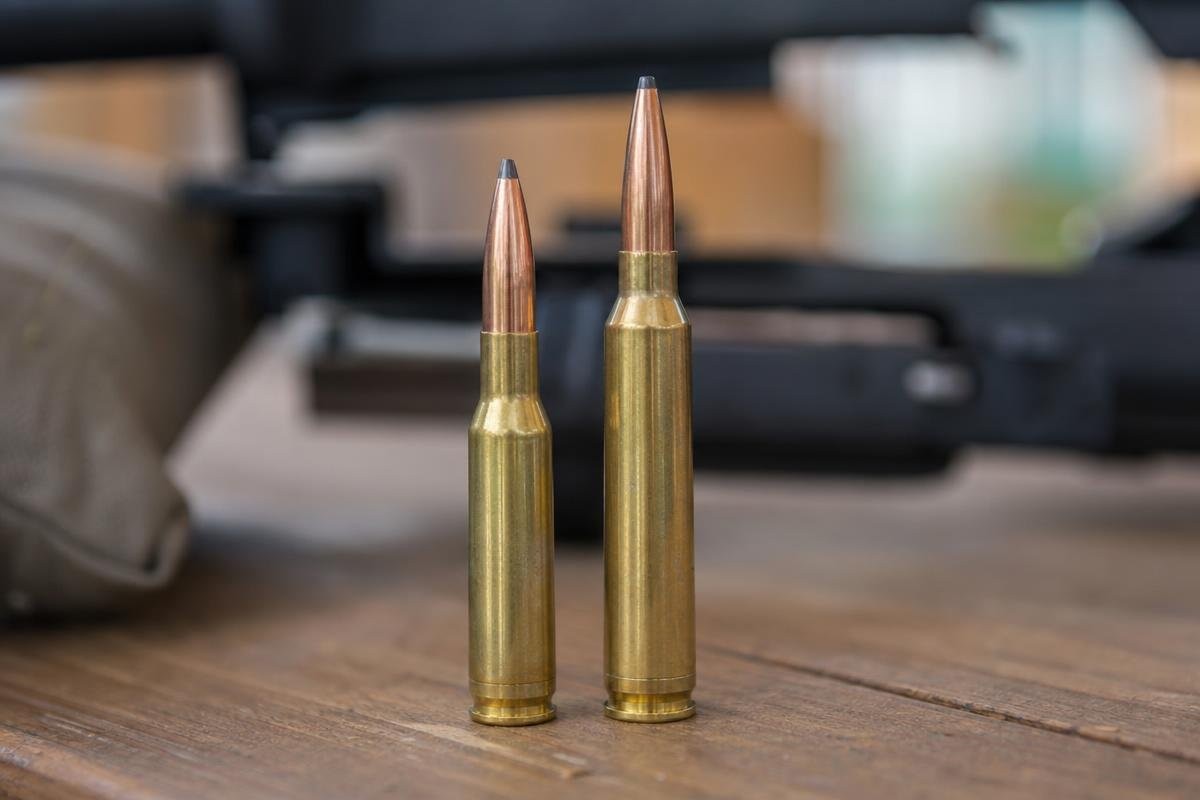
Two cartridges. Two completely different platforms. One question we hear at the counter all the time: can a semi-auto .338 actually hold its own against a bolt-gun .30-caliber magnum for serious downrange work?
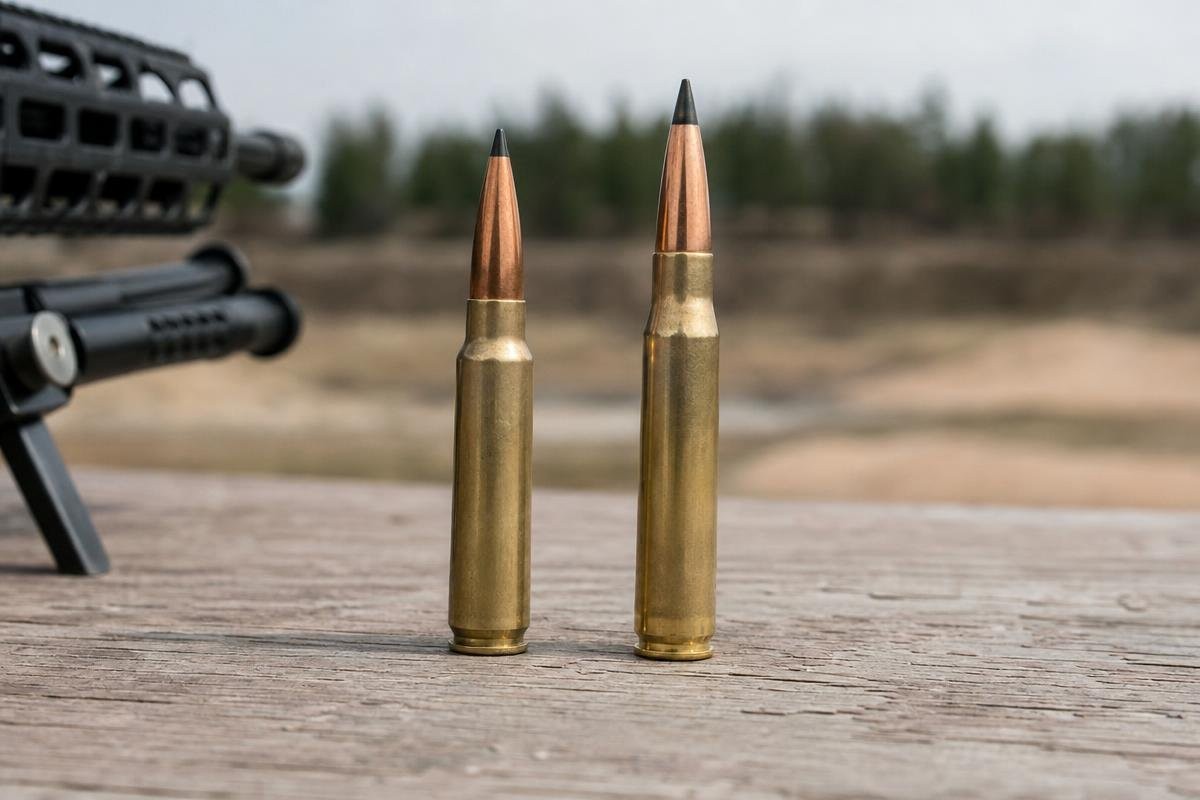
The 338 ARC was built for the AR-15 platform. The 300 PRC was built for long-action bolt guns pushing heavy .30-caliber bullets past 1,000 yards. These are not the same tool. Comparing 338 ARC vs 300 PRC ballistics is less about which cartridge wins and more about which one fits your actual setup. If you run an AR and want a hard-hitting 338 ARC complete upper for hog and deer work out to 400 yards in the Red River country around Denison, that is a different conversation than building a precision bolt rifle for open-country elk at 800 yards.
Below you'll find a full breakdown of platform differences, velocity and energy numbers, recoil, hunting use cases, and ammo availability. By the end, you will know exactly which cartridge solves your problem.
What Are These Two Cartridges, and Where Did They Come From?
Most comparisons between the 338 ARC and 300 PRC miss the point: these are not platform competitors. One runs in an AR-15. The other requires a magnum-length bolt gun. That single fact shapes every other difference between them.
338 ARC: Hornady's AR-15 Big-Bore Solution
Hornady introduced the 338 ARC in 2023 with one goal: push .338-caliber bullets out of a standard AR-15 lower. The case traces its lineage to the 6.5 Grendel family, sized to feed reliably through a modified AR-15 upper without requiring a new lower receiver. It headspaces off the case shoulder, not a belt, which improves consistency and supports accurate handloading.
It drives 250 to 270 grain .338-caliber bullets at practical velocities from 16 to 18 inch barrels. That is serious energy in a platform many Grayson County hunters already own. For hog hunters working the post-oak creek bottoms or deer hunters in tight timber stands, a dedicated 338 ARC upper drops onto your existing lower and changes the capability of the whole rifle.
300 PRC: A Bolt-Action Precision Cartridge Built for Distance
Hornady standardized the 300 PRC with SAAMI in 2018. It is based on the .375 Ruger case, necked down to .30 caliber, and designed around 212 to 250 grain high-BC bullets. Like the 338 ARC, it headspaces off the shoulder for consistent seating. Unlike the 338 ARC, it demands a magnum-length bolt-action receiver. You cannot chamber it in an AR-15. The case is simply too large.
U.S. SOCOM adopted the 300 PRC for precision sniper applications (confirmed through SOCOM procurement announcements in 2019). That tells you exactly what this cartridge was built for: extreme range, heavy bullets, and repeatable accuracy from a supported position. It is more at home on a West Texas mesa than in a cedar-choked draw off Lake Texoma.
Ballistics Head-to-Head: Velocity, Energy, and Bullet Drop
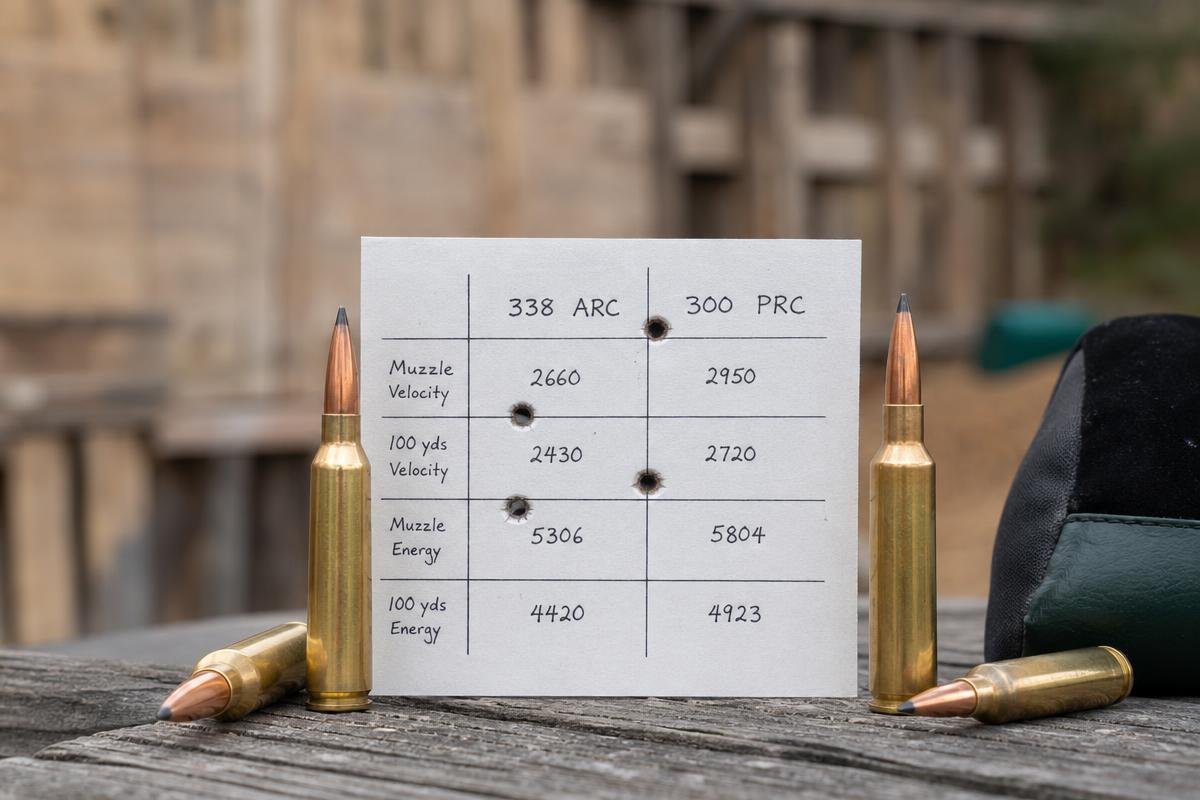
Muzzle Velocity and Energy
The 300 PRC hits harder at the muzzle. That is the short answer. Hornady's 212 gr ELD-X load from a 26-inch bolt-gun barrel runs approximately 2,860 fps and generates around 3,850 ft-lbs of muzzle energy. Step up to the 250 gr ELD-M and you are looking at roughly 2,735 fps and 4,154 ft-lbs.
The 338 ARC, running a 270 gr ELD-M from an 18-inch AR barrel, produces approximately 2,350 fps and 3,310 ft-lbs. Drop to a 16-inch barrel and velocity falls to the 2,250 to 2,280 fps range. Barrel length matters with the 338 ARC, so spec your build accordingly.
The 300 PRC's velocity edge comes partly from a 26-inch barrel that no AR-15 platform can replicate. That context matters when you read the numbers.
Bullet Drop and Wind Drift
At 500 yards from a 100-yard zero, the gap is real. The 300 PRC's 212 gr ELD-X, with a G7 BC of approximately 0.536, drops roughly 42 to 45 inches. The 338 ARC's 270 gr ELD-M carries a G7 BC of approximately 0.368 and drops closer to 65 to 72 inches at the same distance. Wind drift in a 10 mph crosswind tells a similar story: the 300 PRC drifts around 7 to 8 inches at 500 yards, while the 338 ARC drifts 12 to 14 inches. Past 800 yards, the 300 PRC wins on paper, and there is no honest way to argue otherwise.
The 300 PRC stays supersonic past 1,400 yards. The 338 ARC goes transonic around 900 to 1,000 yards depending on conditions. For most shots on whitetail and hog in the Red River bottomlands near Denison, that distinction is irrelevant. Inside 400 yards, the 338 ARC's numbers are more than adequate for any game animal in Grayson County.
For a deeper look at how the 338 ARC performs at distance, check the full complete AR-15 uppers in multiple calibers lineup to compare your build options.
Platform and Build Considerations: AR-15 vs Bolt Action
The ballistics tell one story. The platform tells another. These two cartridges don't just perform differently downrange, they require completely different rifles, different infrastructure, and different buying decisions before you ever pull a trigger.
Building a 338 ARC on an AR-15 Lower
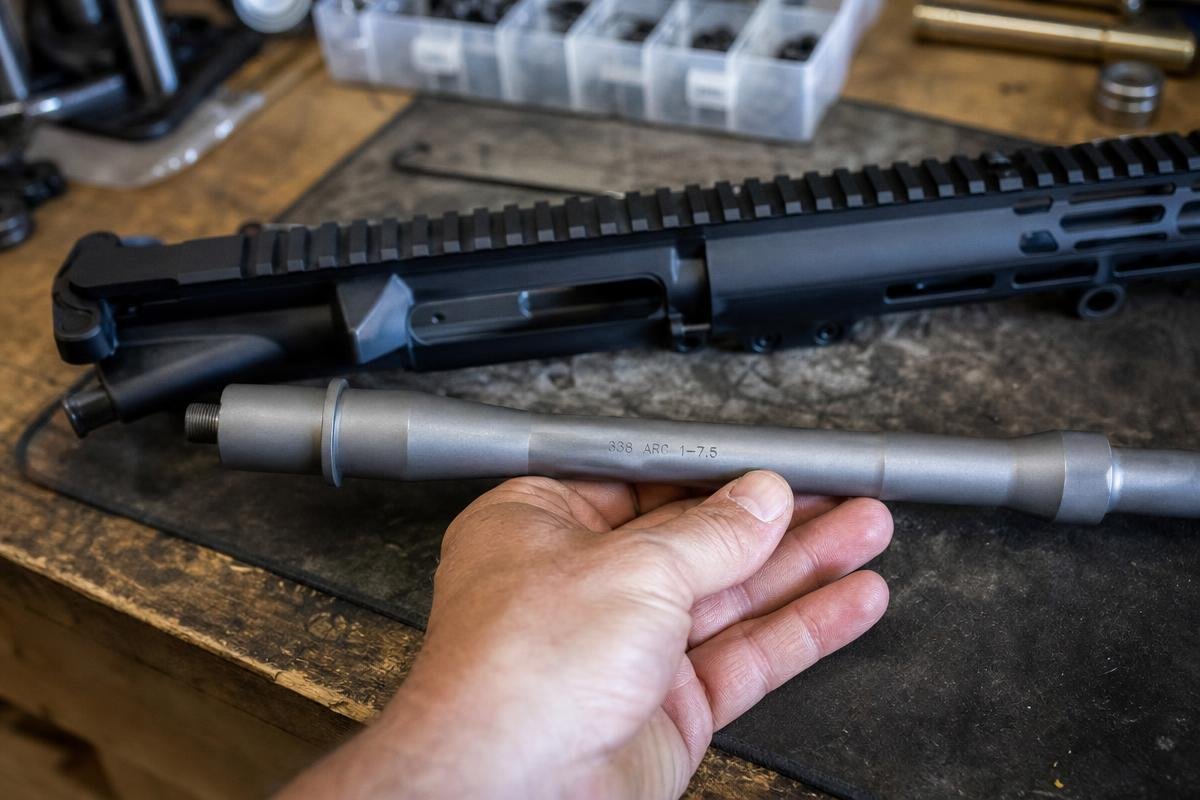
Your existing AR-15 lower carries over completely. Stock, pistol grip, lower parts kit, buffer tube, all of it stays. What you need is a dedicated upper, a 338 ARC barrel, and a matching bolt carrier group. We build complete AR-15 uppers in multiple calibers, including the 338 ARC, headspaced and function-checked before they ship to your door.
Barrel length runs 16 or 18 inches. Twist rate should be 1:9 or 1:10 to stabilize 250 to 270 grain projectiles. Upgrade your buffer to an H2 or H3. The 338 ARC generates more bolt thrust than 5.56, and a standard carbine buffer can cause reliability issues over time. One more thing: standard PMAGs don't work. You need modified AR-15 magazines with single-stack or altered feed lips designed specifically for this cartridge.
For Sherman-area shooters who already have a lower in the safe, this build path makes real sense. You're not starting from scratch. You're adding capability to a platform you already know.
Setting Up a 300 PRC Bolt-Action Rifle
The 300 PRC requires a magnum-length bolt-action receiver. Full stop. There is no semi-auto production option. Common platforms include Remington 700 footprint actions, the Ruger Precision Rifle, Christensen Arms builds, and full custom precision rifle setups. Barrel length runs 24 to 26 inches to get full velocity from the large magnum case.
This is a platform you commit to, not one you adapt from existing parts. There is simply no AR platform for the 300 PRC. If you want semi-auto capability, a familiar manual of arms, and fast follow-up shots, the 338 ARC is the answer.
Recoil, Suppressor Compatibility, and Shootability
Felt Recoil: What to Actually Expect
The 300 PRC generates roughly 30 to 35 ft-lbs of recoil energy in a 10-pound rifle. That puts it in the same neighborhood as a .300 Win Mag. The non-belted case and efficient powder burn give it a slightly slower, pushing sensation rather than a sharp snap, but it is still a hard-kicking rifle over a long day behind the glass.
The 338 ARC in an AR-15 runs closer to 18 to 22 ft-lbs depending on buffer weight and muzzle device. More importantly, the AR-15 gas system spreads that recoil impulse across a longer cycle. The bolt carrier moves rearward over a longer time window than a bolt gun's locking lug release.
That mechanical distribution makes the 338 ARC noticeably softer to shoot in practice, even though the raw numbers look similar to other big-bore AR cartridges. For sustained range work where you're running multiple strings, that difference adds up.
Running Both Cartridges Suppressed
Suppressing a bolt-action 300 PRC is mechanically simple. There is no gas system to tune. Thread the can on a 5/8x24 muzzle, and you are done. The tradeoff is that the large case volume limits how much the suppressor can reduce the sound signature. It will still be loud, just less so. The suppressor earns its keep more in muzzle blast reduction and recoil mitigation than in dramatic decibel drops.
A suppressed 338 ARC build is a different conversation. You need an adjustable gas block. A fixed gas block will over-gas the rifle with a can attached, causing reliability issues and accelerated wear. Thread pitch on 338 ARC barrels is typically 5/8x24, same as the .30-caliber magnum. Texas hog hunters running night shoots on lease ground deal with this exact setup question. The adjustable gas block is not optional on a suppressed build. Our 338 ARC uppers are built to accept that kind of customization from the start.
Questions about recoil management or suppressor-ready builds? Call us at (888) 706-0633 and we will walk you through the right setup for your hunt.
Hunting and Real-World Use Cases: Which Cartridge Fits Your Purpose?
The ballistics numbers matter, but the terrain you hunt decides the cartridge. These two rounds serve genuinely different hunters, and picking the wrong one for your ground is a real mistake. Worth knowing locally: Texas classifies feral hogs as unprotected, non-game animals, so there is no closed season and no bag limit on private land with landowner permission, which is why so many Grayson County lease members run night-capable, suppressed rifles year round.
338 ARC for Deer, Hog, and Black Bear Hunting
In the cedar and post-oak country around Pottsboro and the Lake Texoma shoreline, shots on whitetail and feral hog rarely push past 300 yards. The 338 ARC covers that range completely. The .338-caliber bullet diameter cuts a wide wound channel, and bonded or monolithic loads retain weight through heavy bone. That matters on big hogs and black bear, where penetration decides the outcome.
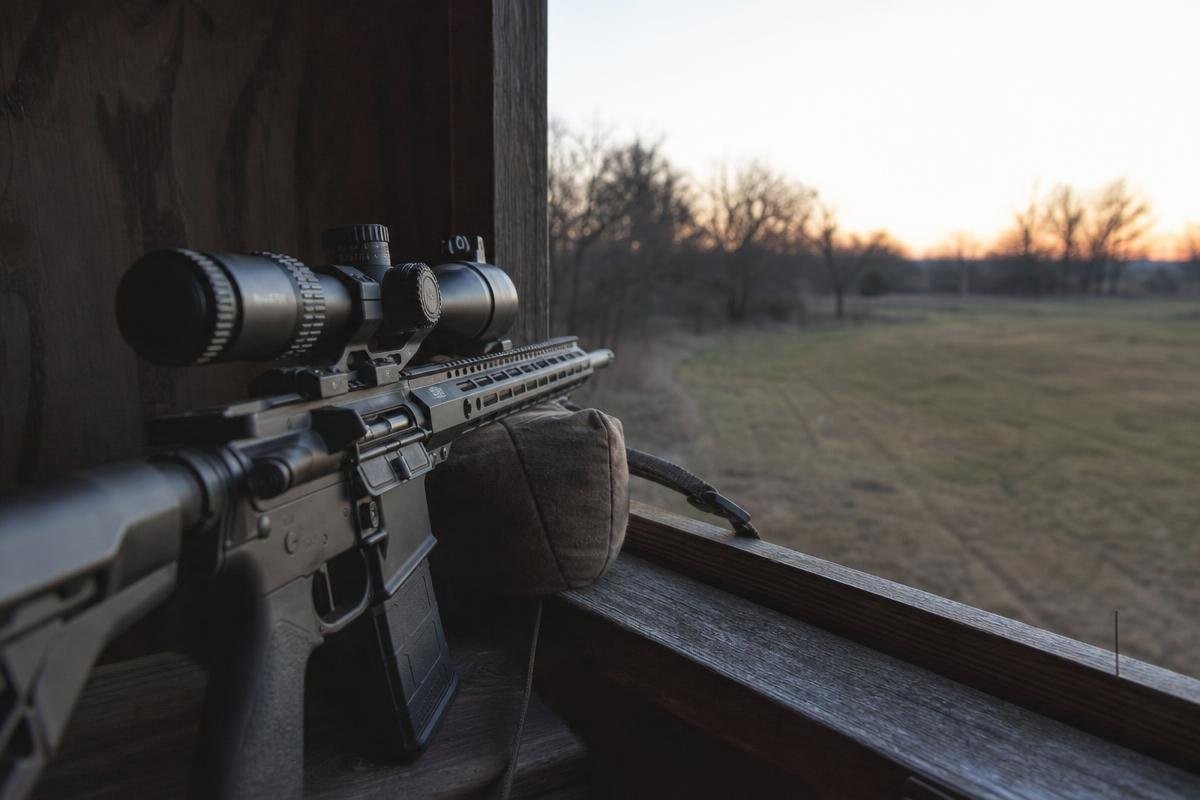
The semi-auto platform is a genuine advantage on hogs. A sounder moves fast in low light. A bolt gun gives you one shot before the group scatters. A 338 ARC upper on an AR-15 gives you fast follow-up shots without breaking your cheek weld. That is not a marketing point. It is a practical edge that bolt-action owners simply do not have.
300 PRC for Elk, Long-Range, and Competition
The 300 PRC is built for bigger animals at longer distances. A 212 gr ELD-X still carries over 2,000 ft-lbs at 800 yards. That is enough for an ethical shot on elk or moose where the 338 ARC has already faded. Hunters who travel to West Texas or the Panhandle for mule deer and pronghorn, where shots open up past 600 yards, will feel the difference immediately.
The 300 PRC is also gaining traction in PRS competition as a wind-bucking option at extreme distances. One rifle covers 100-yard timber and 700-yard open country. The tradeoff is weight, cost, and a bolt-action manual of arms.
Ammunition Cost, Availability, and Reloading
Neither of these cartridges is cheap to shoot. The 338 ARC launched in 2023, and factory load options are still limited. Hornady is essentially the only factory source right now. You are not walking into a shop in Sherman or anywhere else in North Texas and finding 338 ARC on the shelf. Plan on ordering online or handloading.
The 300 PRC has more factory options, mostly Hornady Precision Hunter and Match loads. Expect to pay $4 to $7 per round for match-grade factory ammunition. That adds up fast if you are running any kind of volume at the range. Brass is available from Hornady and a few custom makers, but it is still a premium component.
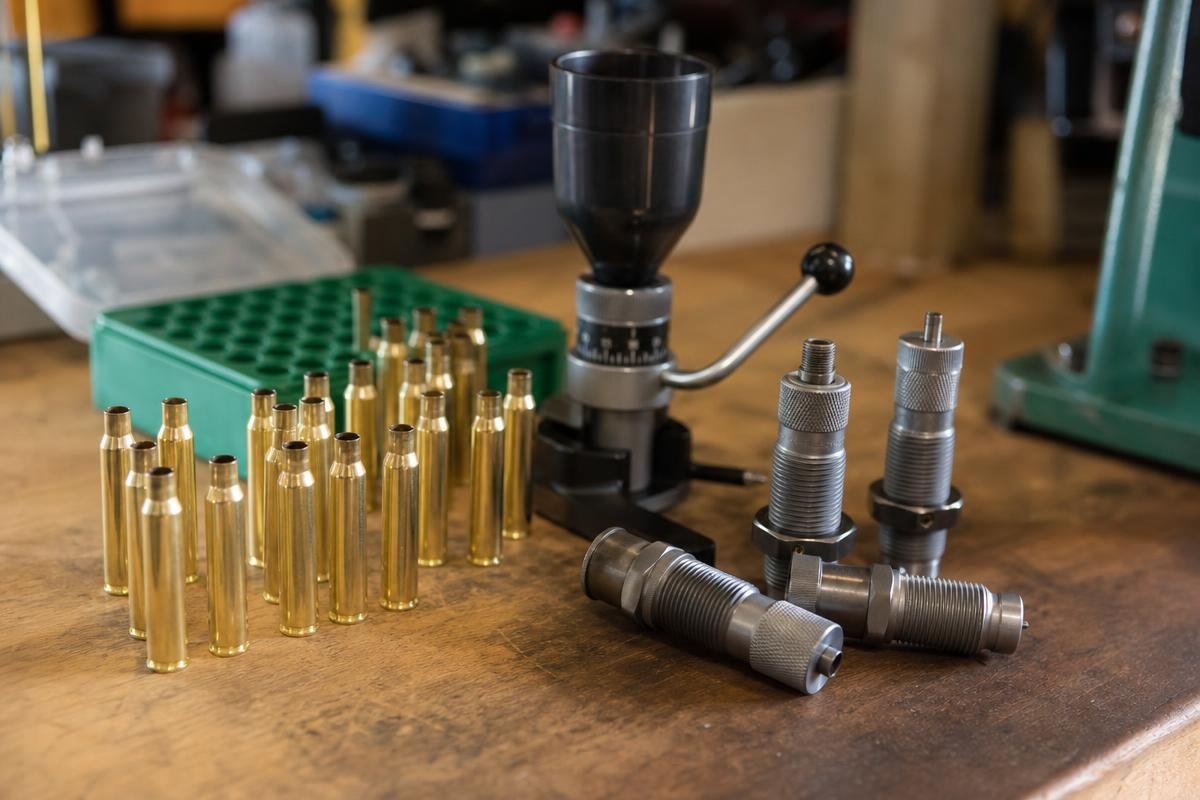
Reloading changes the math on both cartridges. The 338 ARC uses a case derived from the 6.5 Grendel parent case, so brass forming is straightforward for anyone who already reloads. Standard .338 bullets are widely available and affordable. The 300 PRC is a different story. That case burns 75 to 85 grains of slow powder per load. Component costs per round run noticeably higher, especially if you are shooting match-grade projectiles. If you are doing a serious big-bore cartridge cost comparison, factor reloading into the total picture before you commit.
Big-Bore Cartridges in North Texas Shooting Country
Most of the hunting around the Lake Texoma area and the post-oak bottomlands south of the river happens inside 300 yards. Dense cedar draws, creek bottoms, and tight timber edges keep shot distances short. For that terrain, the 338 ARC's downrange performance is more than enough. You are not leaving anything on the table at 50 to 250 yards in the brush.
Open pasture changes the math. When you push out to 300 to 400 yards across flat ground, the 338 ARC still handles it cleanly. The 300 PRC earns its keep when you travel west. West Texas mule deer country, the Panhandle, and eastern New Mexico are the landscapes where 700-plus-yard shots are realistic and the extra reach actually matters. For most Grayson County deer and hog hunters, that range never comes up.
When you compare Big-Bore Performance Compared, 338 ARC vs 300 PRC, terrain decides the winner as much as ballistics does. If your hunting stays local, the 338 ARC on an AR-15 platform covers every shot you will take. If you travel to open country, a 300 PRC bolt gun makes sense as a second build.
We are based at 2022 S Crockett St, Sherman, TX 75090, a short drive from the Lake Texoma corridor. No FFL required for upper assemblies. Browse our 338 ARC uppers or our full lineup of complete AR-15 rifles and order online. Ships directly to your door.