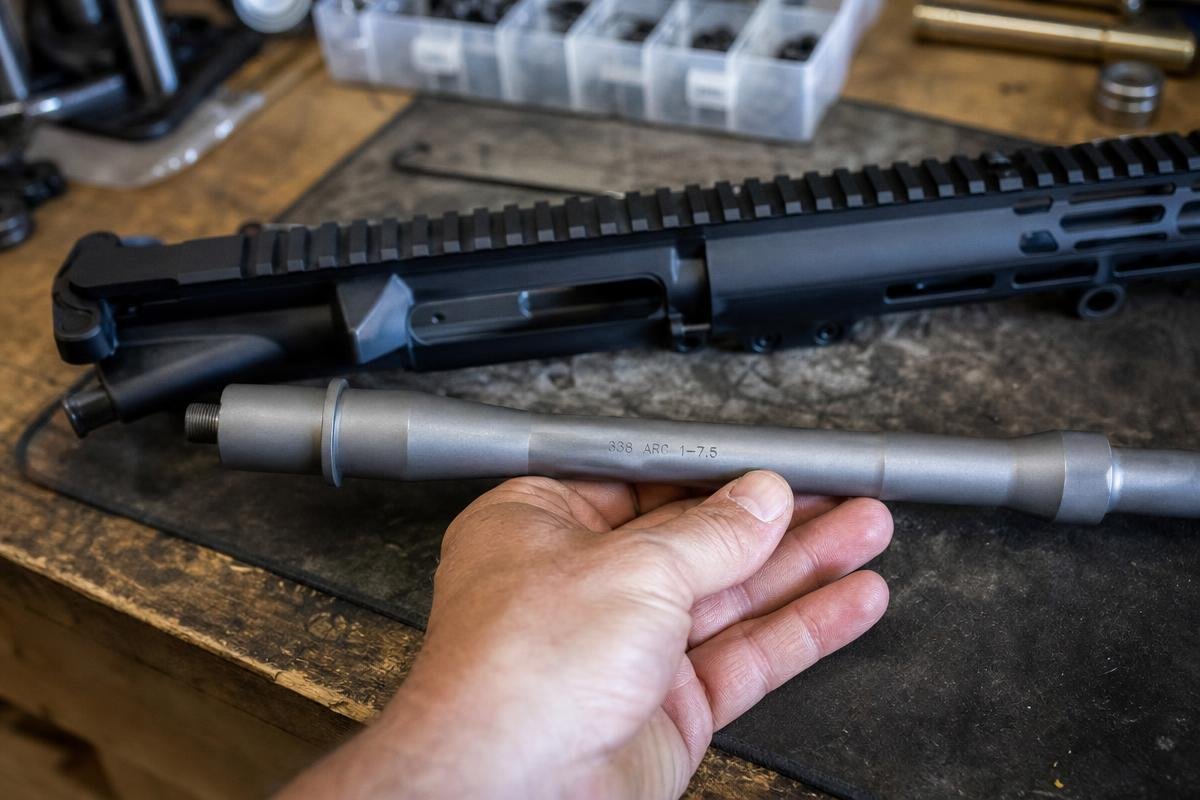
The 338 ARC is one of the most capable hunting rounds you can run on a standard AR-15 platform, but it is not the right choice for every shooter or every setup. If you are trying to sort out the 338 ARC hunting pros and cons before you build or buy, this guide gives you straight answers. AR15Parts.com has been building AR uppers out of our Sherman, TX shop at 2022 S Crockett St since 2013, and we assemble and headspace 338 ARC uppers right here in-house.
We see these rifles go to work on North Texas whitetail and feral hogs regularly, and that hands-on feedback shapes everything we write here. One customer from Whitesboro ran one of our 185-grain 338 ARC builds last season and anchored a boar close to 200 pounds at about 180 yards over a feeder, dropping it on the spot. That is the kind of real-world result that tells us more than any spec sheet. Ready to build a 338 ARC hunting rig? We can put one together built to your exact specifications.
The 338 ARC is Hornady's most capable AR-15 hunting cartridge to date. It was announced in late 2022 and became commercially available in 2023, built around a .338-caliber bullet in a case sized to feed from a standard AR-15 lower with STANAG-compatible magazines. Hunters already running the AR platform took notice immediately, and for good reason. This is a serious hunting round, not a range toy.
This article gives you a straight answer on whether the 338 ARC is worth building for hunting. We cover terminal performance on deer and hogs, effective range backed by real ballistics, the magazine capacity tradeoff you need to understand before you commit, and how it stacks up against other AR hunting calibers. If you are already looking at a 338 ARC upper receiver, this is the information a manufacturer spec sheet will not give you.
What Is the 338 ARC and Why Were Hunters Interested From Day One?
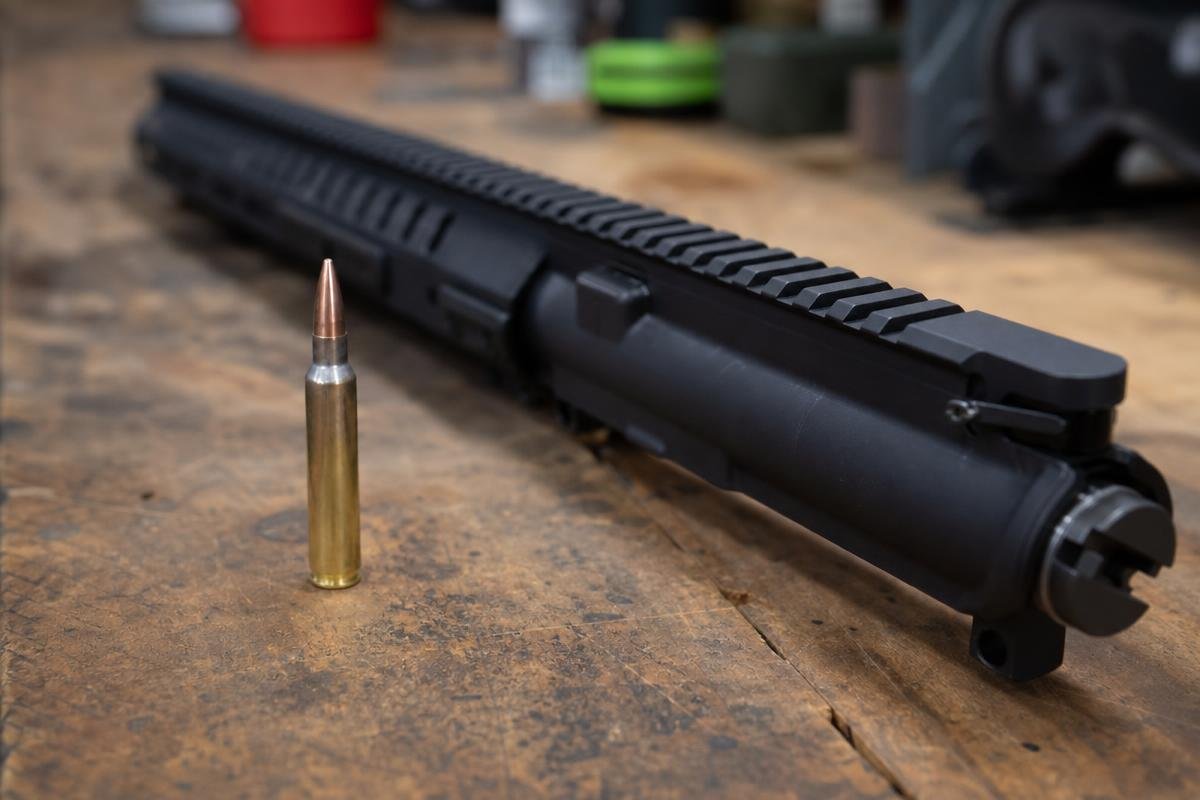
The 338 ARC is a relatively new cartridge, developed to push a full .338-caliber bullet through a modified STANAG magazine in a standard AR-15 platform. That combination turned heads fast. Hunters already knew what .338-caliber bullets could do from cartridges like the 338 Lapua and 338 Federal. The question was whether Hornady could shrink that performance into an AR-15-compatible package without gutting the ballistics.
The short answer is that they got close enough that hunters paid attention. The sectional density on heavy .338-caliber bullets is the real draw. More mass behind a wider frontal diameter means deeper penetration through bone and heavy tissue than most smaller AR calibers can match at comparable velocities.
The Cartridge Specs That Matter for Hunters
Bullet weights run from roughly 185 to 300 grains. A 185-grain load leaves a 16-inch barrel at approximately 2,550 fps, producing around 2,670 ft-lbs of muzzle energy. Step up to a 250-grain load and velocity drops to about 2,100 fps, but you gain sectional density that punches through shoulder bone on a mature whitetail or a 250-pound feral hog without argument. Muzzle energy across the practical load range sits between 2,200 and 2,800 ft-lbs. Those are numbers that matter in the field, not just on paper.
The deer hunting case is straightforward: heavier bullets at moderate velocity retain energy well inside 200 yards, which covers the vast majority of shots in the post oak breaks and cedar thickets across Grayson County and the surrounding counties.
How It Fits in a Standard AR-15 Lower
This is where the 338 ARC separates itself from calibers that require a whole new rifle. Your existing AR-15 lower, trigger group, and buffer system stay exactly as they are. All you need is a dedicated upper receiver with the correct bolt face and barrel. That makes it a practical bolt-on upgrade for anyone in North Texas who already owns an AR-15 lower and wants more terminal performance without buying a second rifle.
The Magazine Capacity Tradeoff: What Hunters Actually Give Up
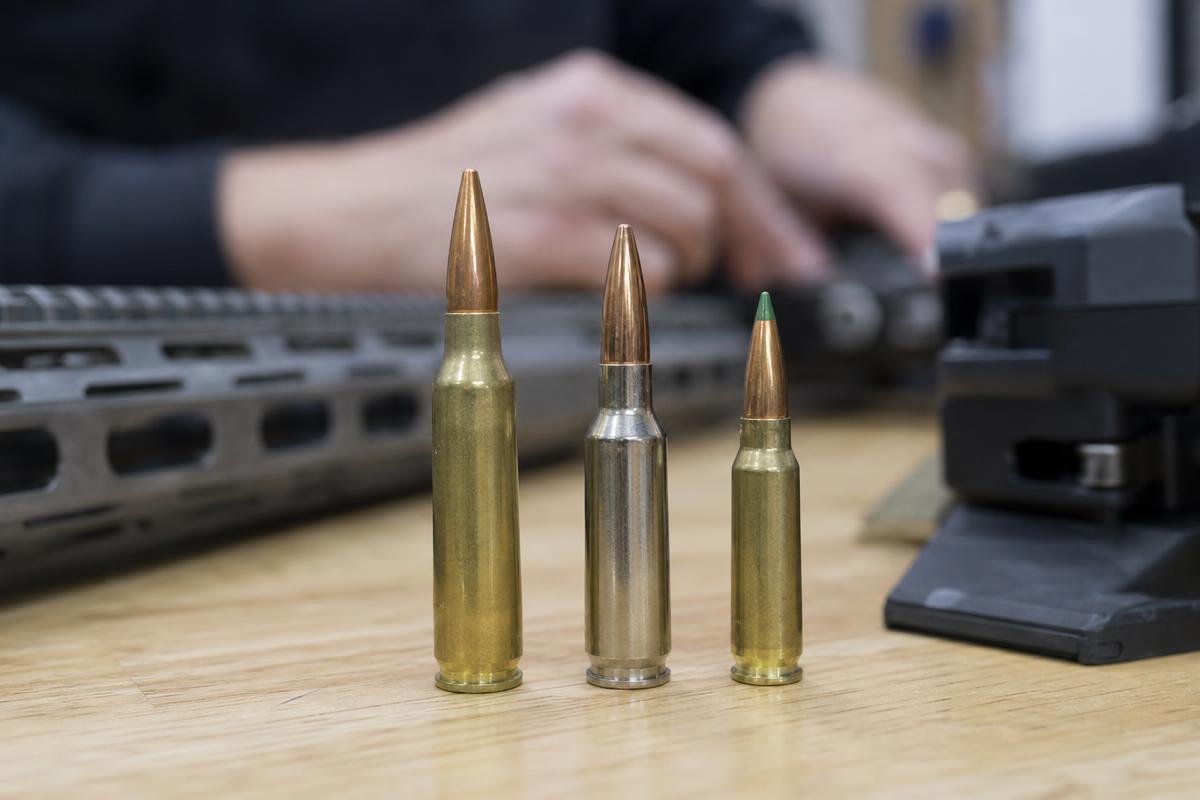
This is the question that comes up every time someone considers the 338 ARC for hunting. A standard STANAG-body magazine holds 5 to 7 rounds of 338 ARC. That same magazine body holds 30 rounds of 5.56. The gap is real, and you should know about it before you build.
Why Capacity Is Lower Than 5.56 or 6mm ARC
The wider .338 case body limits how rounds stack inside the magazine. Physics, not a design flaw. The cartridge is simply bigger, and there is no engineering workaround that changes that geometry. A 6mm ARC will give you more rounds in the same body. If round count is your first priority, that matters. If terminal performance is your first priority, the math shifts the other way. Our 338 ARC complete uppers are built around standard STANAG magazines, so no proprietary magazine system is required.
Does Reduced Capacity Matter in the Field?
For deer hunters, that same 5-to-7-round ceiling is not a practical limitation. Most ethical shots on whitetail are 1 to 3 rounds per encounter. In the tight cover around Sherman and Denison, you are rarely shooting more than once or twice before the deer is down or gone.
Hog hunting is where the capacity question gets more honest. Hunters running night feeders around Pottsboro or working large sounders across Cooke and Fannin counties want fast follow-up shots. A 7-round magazine is workable for a stand or blind setup. If you run and gun on moving sounders, you will feel that limit. It is not a dealbreaker, but it is a real factor to weigh.
For a deeper look at how the 338 ARC stacks up round-for-round against smaller AR calibers, our comparison of 6.5 Grendel complete uppers gives you a useful reference point on what you trade when you step up in bore diameter.
Terminal Performance on Deer, Hogs, and Larger Game
The 338 ARC generates 2,200 to 2,800 ft-lbs of muzzle energy depending on load. That puts it well above the 1,000 ft-lb ethical threshold for deer, and it stays there at distance. A 185-grain load still carries approximately 1,600 to 1,800 ft-lbs at 200 yards. The numbers are serious.
Deer Hunting: Energy, Expansion, and Ethical Kills
For deer, bullet selection matters more than the cartridge itself. High sectional density in .338-caliber projectiles drives deep penetration through shoulder bone on whitetail and mule deer. That is exactly what you want for a clean, ethical kill on a heavy-bodied animal.
Use bonded or controlled-expansion bullets.
The Hornady ELD-X and Swift Scirocco in .338 are the right choices. FMJ and varmint bullets are not. They fragment unpredictably on game and create wound channels that do not anchor animals reliably. Pick the right projectile and the 338 ARC is a legitimate deer cartridge out to 200 yards in open pasture or brushy bottomland.
Hog Hunting: Why the 338 ARC Earns Its Place
Chasing feral hogs is where this cartridge genuinely shines. Hogs throughout Grayson County and neighboring Cooke, Fannin, and Collin counties run heavy, often pushing 200 pounds or more. A 185-grain bonded load at 50 to 150 yards hits with enough energy to anchor a big boar without the overpenetration risk you get from larger magnum rounds. It is hard-hitting and controllable in a semi-auto platform, which matters on night setups where follow-up shots count.
A purpose-built upper paired with the right bonded bullet is the complete package for hog country. The cartridge does not require a magnum action, and it fits the terrain where most of these animals are taken, inside 150 yards in cedar thickets and along creek bottoms.
Larger Game: Where the 338 ARC Reaches Its Ceiling
This is where honesty matters. On elk and other large-bodied game, the 338 ARC is marginal past 300 yards. Energy retention drops, and shot placement becomes less forgiving on animals that can absorb punishment and run. For close-range elk in timber, the cartridge may work with premium bullets. For open-country shots beyond 300 yards, a 338 Federal or a larger platform chambered in 308 Win is a more appropriate choice. Know the ceiling before you head into the field.
Ready to spec out a 338 ARC hog rig? Talk to our builders about barrel length, twist rate, and the right bonded load for your ground.
Effective Hunting Range: What the Ballistics Actually Say
The 338 ARC effective range for hunting sits comfortably at 300 yards on deer-sized game, with enough energy left to anchor hogs cleanly. That is not marketing. That is what the numbers show. Using a 185-grain load at a 2,550 fps muzzle velocity as a baseline, you are looking at roughly 2,350 fps and 2,260 ft-lbs at 100 yards, 2,150 fps and 1,895 ft-lbs at 200 yards, and 1,960 fps and 1,575 ft-lbs at 300 yards.
These are illustrative estimates based on published ballistic data for comparable .338-caliber loads. Actual figures vary by specific load and barrel length. Run your exact load through Hornady's ballistic calculator before you dial in a firing solution.
Velocity Drop and Energy Retention at 100, 200, and 300 Yards
The 338 ARC stays above 1,500 ft-lbs past 300 yards on deer-sized game. That matters. A 5.56 load drops below that threshold well before 200 yards, and even the 6.5 Grendel platform starts to thin out past 250 yards on heavier game.
For a whitetail hunter in North Texas, where open pasture edges and field corners can push shots to 150 to 250 yards in winter, that energy retention is a real advantage, not a spec-sheet talking point. You have a clean ethical margin at distances this terrain actually produces.
If you want to put that energy to work from a purpose-built platform, our 338 ARC upper receivers are assembled, headspaced, and function-checked in our Sherman shop before they ship to your door.
Wind Drift and the BC Advantage of .338-Caliber Bullets
A 185-grain .338 bullet carries a G7 BC of approximately 0.260. That is meaningfully higher than a 77-grain 5.56 projectile. In a 10 mph crosswind at 200 yards, a lighter 5.56 load can drift 4 to 6 inches off target. The 338 ARC narrows that drift considerably. Wind off the Red River bottom is not hypothetical out here. It is a real factor on open pasture shots across Grayson, Cooke, and Fannin counties. The BC advantage of .338-caliber bullets translates directly to fewer corrected misses and cleaner kills at field-edge distances.
This is one reason hunters keep coming back to the round for open-country use. It was designed with high-BC projectiles in mind, and that design decision pays off when the wind picks up at last light.
Questions about which 338 ARC setup fits your hunting ground? Call us at (888) 706-0633 and we will walk you through barrel length, twist rate, and load selection for your specific conditions.
338 ARC vs. Other Hunting Calibers on the AR Platform
Every cartridge on the AR platform involves tradeoffs. The 338 ARC sits in a specific window: harder-hitting than the small-bore options, lighter-platform than the AR-10 cartridges. Here is how it stacks up against the three calibers hunters ask about most.
338 ARC vs. 6.5 Grendel
The 6.5 Grendel is a proven deer cartridge. It runs up to 26 rounds in a standard magazine, produces mild recoil, and stays effective on whitetail past 400 yards with a well-placed shot. If you are hunting open pasture and shot distance is your priority, the Grendel is hard to argue against. You can browse our 6.5 Grendel complete uppers if that fits your application.
The 338 ARC hits harder and carries more energy into the target.
On heavy hogs or larger game, that difference matters. You give up magazine capacity and take on more recoil, but you get a round that does more work at the point of impact. For deer on typical North Texas shots inside 200 yards, the Grendel is good enough. For tougher game or marginal shot angles, the 338 ARC earns its place.
338 ARC vs. 450 Bushmaster
The 450 Bushmaster exists largely because of straight-wall cartridge regulations in states like Michigan and Ohio. North Texas has no such restriction, so hunters here are not forced into the 450 by law. The 450 hits hard inside 150 yards but drops energy rapidly past that point. Beyond 200 yards it is not a reliable hunting round.
The 338 ARC extends that window to 300 yards and beyond while running in the same AR-15 lower. If your shots are consistently under 100 yards in tight cedar breaks, the 450 Bushmaster works. If you need reach across open pasture, the 338 ARC is the better tool. See our 450 Bushmaster complete uppers if the short-range application fits your terrain.
338 ARC vs. 308 Win
The 308 Win is a serious hunting cartridge, but it requires an AR-10 platform. That means more weight, more cost, and a completely different lower receiver. The 338 ARC delivers comparable energy at typical hunting distances in a lighter AR-15 chassis. If you already own an AR-15 lower, you can add a 308 Win complete upper or build a 338 ARC upper without buying a new platform entirely. For hunters who want AR-10 energy without AR-10 bulk, the 338 ARC is a real answer.
Hunting in North Texas: Why the 338 ARC Fits the Terrain
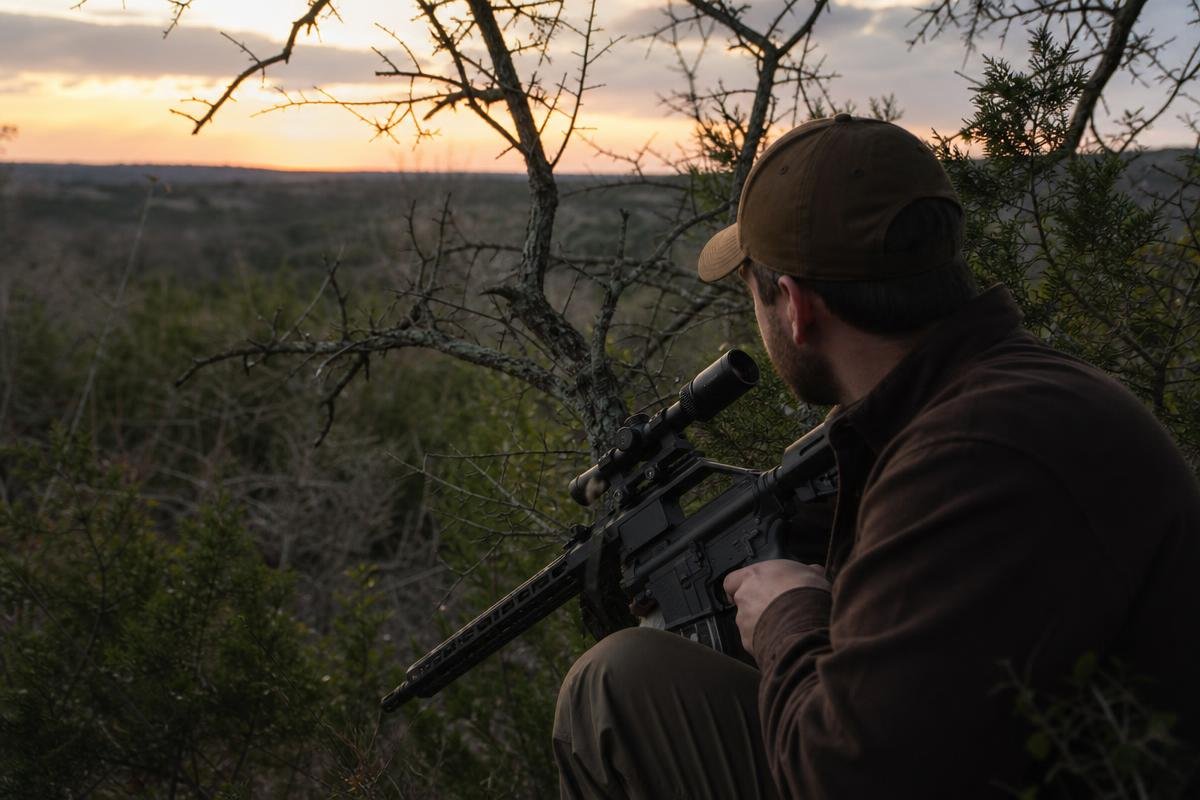
If you hunt the post oak breaks and cedar thickets along the Red River corridor north of Sherman, the 338 ARC makes a lot of sense. Shot distances on whitetail here run 50 to 200 yards in typical cover. That is exactly the range where this cartridge is at its best. You are not asking it to do something it was not built for.
Hog hunting is where the round really earns its keep in this part of the state. Hog pressure runs heavy across Collin County and the surrounding areas. A 200-pound boar hit at night over a feeder does not always cooperate with lighter calibers. The 338 ARC hits hard enough to anchor that animal without switching to a bolt gun. Texas has no straight-wall cartridge restriction and no minimum caliber requirement for deer beyond centerfire, so you have full flexibility to run this round on any hunt statewide.
Shooting deer in open pasture is straightforward. In heavier brush, the semi-auto format gives you a fast follow-up if you need one. That combination of terminal energy and platform speed is why hunters in this region are paying attention to it. If you are still weighing caliber options, our complete AR-15 uppers in 19+ calibers give you a side-by-side look at what else fits your hunting situation.
We are based in Sherman at 2022 S Crockett St, about 10 miles south of Denison. Call us at (888) 706-0633 if you want to talk through a 338 ARC upper built for the terrain you actually hunt. We have been assembling these rifles since 2013, we know this country, and we can help you get it right.