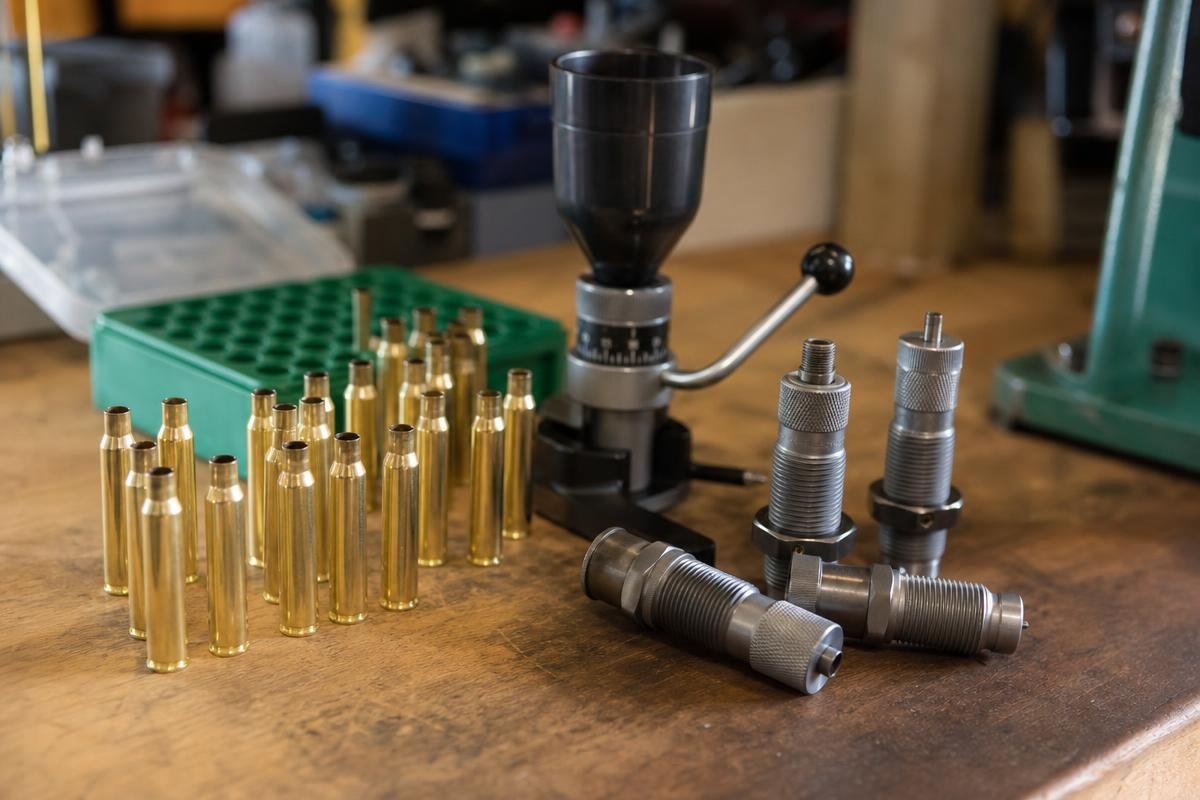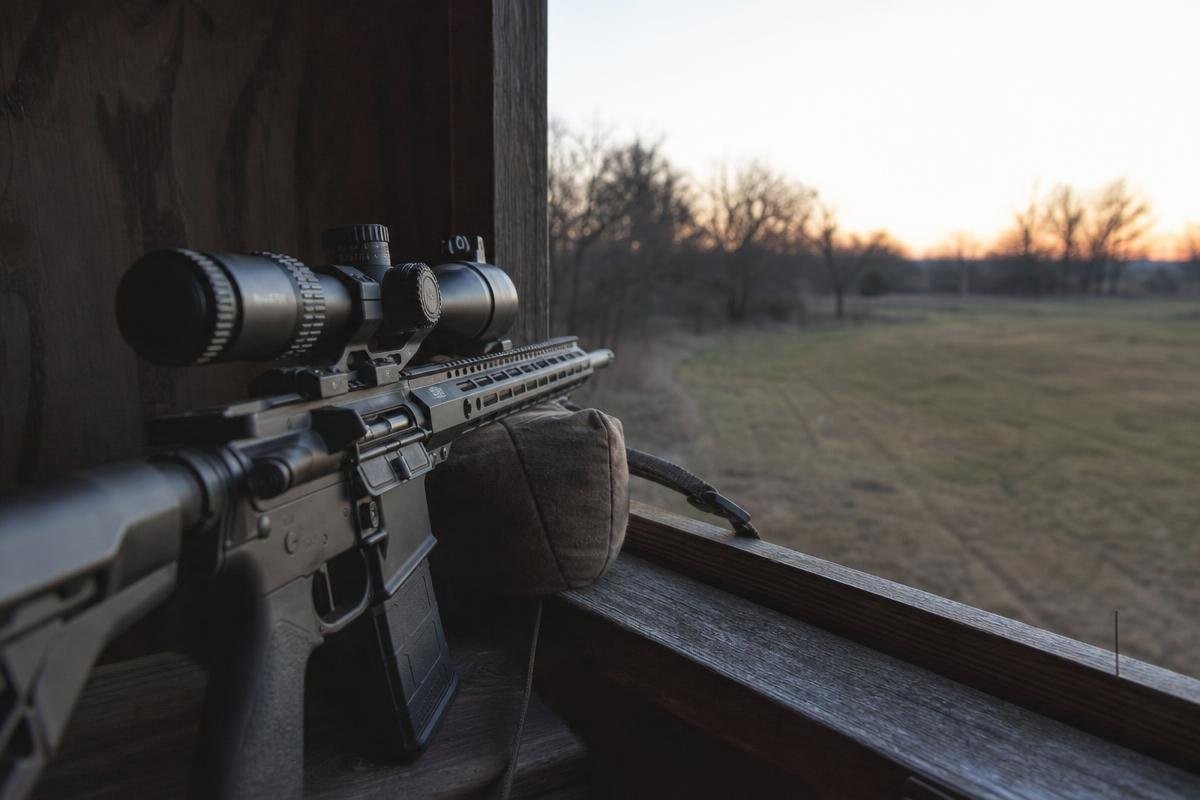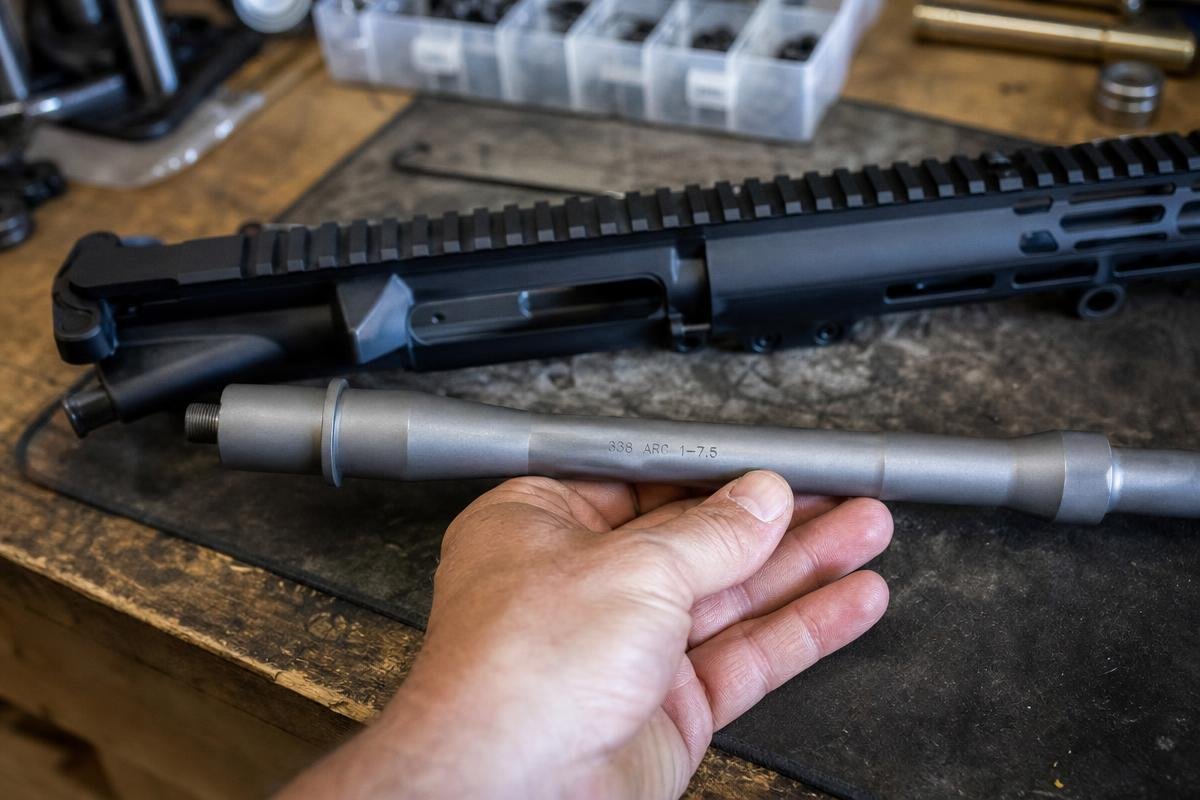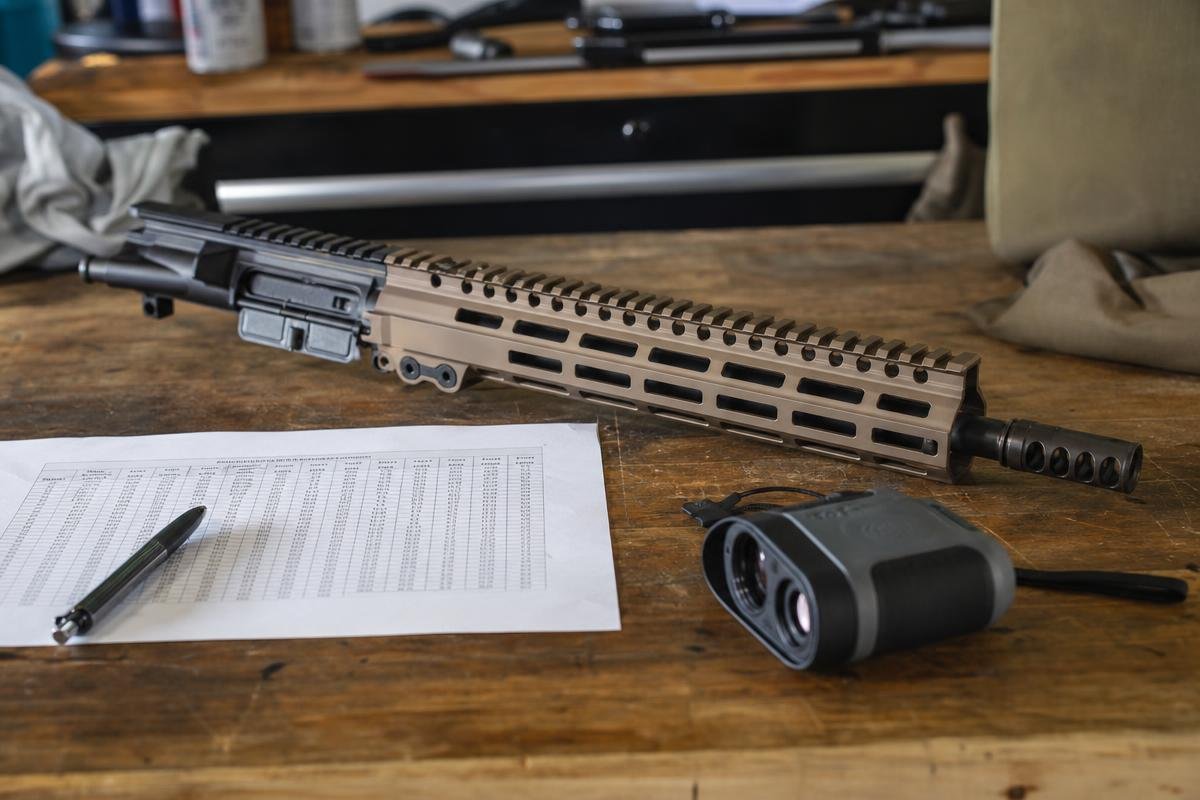
The 338 ARC pushes a .338-caliber bullet out of a standard AR-15 platform at over 2,600 fps from a 16-inch barrel, and that number matters when you're ranging a feral hog across an open pasture outside Denison or threading a shot through cedar brush at 300 yards.
This article breaks down 338 ARC ballistics: velocity, energy, and drop explained at real hunting distances, with hard data on how barrel length affects performance. We cover muzzle velocity, retained energy at 400 yards, and drop figures you can actually use in the field.
Ready to build a 338 ARC upper for North Texas hunting? We assemble every upper to order in our Sherman shop, headspaced and function-checked before it ships.
338 ARC Ballistics: Velocity, Energy, and Drop Explained
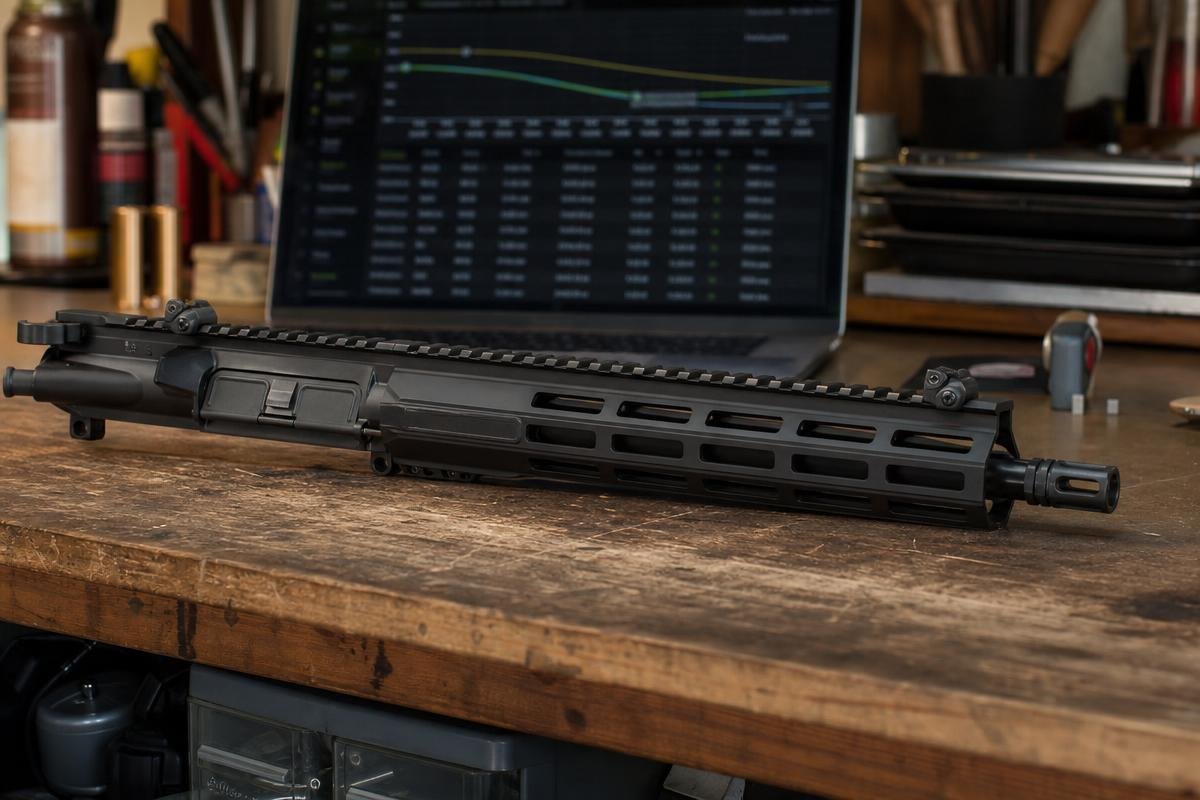
The 338 ARC is a Hornady-developed cartridge adopted by the U.S. Army, purpose-built to push a heavy, high-BC .338-caliber bullet to meaningful supersonic velocity from a standard AR-15 lower receiver. That combination is the whole point. You get a .338-caliber projectile, the kind that retains energy at distance the way smaller-bore cartridges simply cannot, without stepping up to a larger platform. Muzzle velocity runs in the 2,400 to 2,700 fps range depending on grain weight and barrel length, with energy figures that hold well past 500 yards.
Here you'll find the numbers directly. You will get 338 ARC muzzle velocity broken down by grain weight, retained energy at 100, 300, and 500 yards, bullet drop tables at common zero distances, and a look at how barrel length affects velocity. If you already know the cartridge fits your build and you want hardware, check out our complete 338 ARC upper receivers and go from there. If you want to understand the ballistics first, keep reading.
What Makes 338 ARC Ballistics Different From Other AR-15 Cartridges?
The 338 ARC sits in a different class than most AR-15 cartridges. It pushes a .338-caliber bullet through a standard platform without requiring a larger receiver or magazine. That combination of bore diameter and platform compatibility is what separates it from everything else in the AR-15 lineup when you compare velocity retention, energy, and drop at practical hunting and shooting distances.
Case Dimensions and Parent Cartridge
The 338 ARC is based on the 6mm ARC case. Hornady necked it up to accept a .338-inch projectile while keeping the rebated rim and overall length within AR-15 magazine well limits. If you are already familiar with 6.5 Grendel complete uppers, the bolt face and magazine are the same.
No FFL required for the upper. It ships directly to your door and drops onto any standard AR-15 lower.
Bullet Diameter and Sectional Density Advantage
Sectional density is the ratio of a bullet's mass to its cross-sectional area. A heavier bullet of the same diameter has higher sectional density, which means it sheds velocity and energy more slowly in flight. A .338-caliber bullet at 185 grains carries significantly higher sectional density than a 77-grain .224 bullet or a 123-grain .264 bullet at comparable muzzle velocities.
In practical terms, a 77-grain 5.56 load loses terminal energy quickly past 400 yards.
A 185-grain .338 ARC load retains enough energy for ethical game harvest well past 600 yards. That gap matters on open North Texas pasture where shots can push 400 yards or beyond. For a direct look at how those two cartridges stack up, the 338 ARC complete upper receivers page covers build options across barrel lengths. The physics favor the bigger bore at distance, not because of marketing, but because mass and diameter determine how much atmosphere a bullet can push through before it runs out of energy.
338 ARC Muzzle Velocity: What to Expect by Grain Weight
The 338 ARC was engineered specifically to perform from a 16-inch barrel. That matters. Most .338 cartridges need a 24-inch tube to hit their published numbers. The 338 ARC gets there in a compact upper you already know how to build. Here is what the velocity picture looks like across the common load weights, all from a 16-inch barrel.
Common Load Weights and Velocity Ranges
The figures below reflect Hornady's published 338 ARC ammunition data for a 16-inch barrel (Source: Hornady 2024 product data, hornady.com). The 250-grain entry is a handload and third-party projectile scenario, as Hornady does not currently list a factory 250-grain 338 ARC load. Verify against current published data before loading or ordering.
The 185-grain ELD Match is the speed leader at roughly 2,550 fps. Step up to the 250-grain hunting load and you drop to around 2,100 fps. That 450 fps spread matters for drop calculations, which section 5 covers in detail.
Choosing between a 16-inch and 18-inch barrel for your build? We can walk you through the velocity and handling tradeoffs before you commit. Call us and we'll spec it with you.
How Barrel Length Affects Muzzle Velocity
Plan on losing or gaining roughly 20 to 30 fps per inch of barrel. A 12.5-inch SBR or suppressed build will cost you around 70 to 105 fps compared to a 16-inch barrel. An 18-inch barrel adds back 40 to 60 fps on top of the 16-inch baseline. Those are real numbers, not rounding errors, especially past 300 yards.
The practical range for 338 ARC barrel length ballistics runs from 12.5 inches on the short end to 18 inches for a long-range optimized build. The 16-inch barrel is the sweet spot for most shooters. It keeps the upper compact, hits the cartridge's design intent, and delivers the velocity the ballistic tables are built around.
If you are deciding between barrel lengths for Grayson County terrain, thick cedar brush favors the shorter build while open pasture shots out past 300 yards reward the extra inches. Browse our AR-15 barrels by caliber to see current 338 ARC barrel options before you spec your build.
Grayson County sits at roughly 750 feet elevation. Sea-level ballistic tables apply here with minimal correction. One variable worth tracking: summer temperatures in the Denison area regularly push past 100 degrees F, which can affect powder burn rates. If you are chronographing handloads in July, expect slightly higher velocities than your cold-weather baseline.
338 ARC Energy Retention: Terminal Performance at Distance
Velocity gets the bullet there. Energy is what does the work. The 338 ARC carries serious terminal performance at distance, and the numbers back that up without any editorial spin.
Muzzle Energy and Retained Energy at 300 and 500 Yards
A 185-grain load at 2,550 fps generates roughly 2,670 ft-lbs at the muzzle. At 300 yards that drops to approximately 1,850 ft-lbs. At 500 yards you're still looking at around 1,350 ft-lbs. Run a 200-grain bullet at 2,430 fps and the numbers track close: about 2,620 ft-lbs at the muzzle, 1,800 ft-lbs at 300 yards, and 1,300 ft-lbs at 500 yards.
Most hunting authorities set 1,000 ft-lbs as the minimum threshold for ethical shots on deer-sized game. The 338 ARC clears that mark well past 500 yards with either load. For Grayson County whitetail and feral hog hunters, that matters.
Open pasture shots across 400 yards of North Texas field are not unusual, and this cartridge handles them with energy to spare. If you want a deeper look at how that translates to field performance, read through our breakdown of whether the 338 ARC is a good hunting round and where it fits best.
Comparing 338 ARC Energy to 6.5 Grendel and .308 Win
Here is where the 338 ARC energy at distance argument gets straightforward. The table below shows approximate figures derived from Hornady 2024 published ballistics for the 185-grain load. Verify against your specific load data before hunting season.
The 338 ARC vs 6.5 Grendel ballistics comparison is not close at distance. The Grendel is an excellent long-range cartridge, but it gives up roughly 450 ft-lbs at 500 yards and may dip below the 1,000 ft-lbs ethical threshold on longer shots. Where the 6.5 Grendel falls short on heavy game at distance, the 338 ARC does not. The .308 Win edges the 338 ARC slightly at 500 yards, but it requires a heavier .308 Win AR-10 upper and platform to run it. The 338 ARC gives you near-equivalent downrange energy on your existing AR-15 lower. That is the value proposition in plain terms.
338 ARC Bullet Drop: Zero Distance and Drop Tables
Bullet drop is where the 338 ARC separates itself from lighter AR-15 cartridges. The high-BC projectiles it shoots hold velocity longer, which means less drop at distance than most shooters expect. Understanding your zero is what makes that advantage usable in the field.
100-Yard Zero vs 200-Yard Zero
A 100-yard zero keeps things simple in tight cover. In the cedar and mesquite brush around Denison, most shots at whitetail or hogs come in under 150 yards. A 100-yard zero puts you right on target at close range with minimal adjustment. Past 300 yards, though, holdover climbs fast and you need to know your numbers.
A 200-yard zero is the better choice for open pasture shooting across Grayson County fields. With the 185-grain ELD Match, you run roughly plus 1.4 inches at 100 yards and come back to zero at 200. That flat window from 0 to 250 yards lets you hold center on most practical hunting shots without dialing. If you are pushing past 300 yards regularly, a 200-yard zero is the more efficient starting point. For a deeper look at how the 338 ARC performs at extended range, read our guide on 338 ARC long-range shooting.
Bullet Drop Table: 185-Grain ELD Match
The table below uses the Hornady 185-grain ELD Match at a muzzle velocity of 2,550 fps from a 24-inch barrel, G7 BC of 0.274, zeroed at 200 yards, at Denison's approximate elevation of 750 feet. Wind drift column assumes a 10 mph full-value crosswind. These inputs are replicable in JBM or Hornady 4DOF so you can adjust for your actual conditions.
At 500 yards, you are looking at 44.8 inches of drop. That is not a holdover you guess at. Know your dope, dial your turrets, and confirm on paper before you hunt. If you want to run these numbers on your own build, our 338 ARC complete upper receivers are listed with barrel length specs so you can plug in the right muzzle velocity from the start.
Questions about zeroing your 338 ARC build or which upper fits your hunting setup? Call us at (888) 706-0633 and we will walk you through it.
How the 338 ARC Performs in Real-World AR-15 Builds
The 338 ARC runs on a standard AR-15 bolt face, the same one used by the 6.5 Grendel. That means your bolt carrier group transfers directly between platforms. If you are already building on the Grendel, you are not starting from scratch on parts cost. On a 16-inch barrel, the cartridge runs best with a mid-length or rifle-length gas system. The longer dwell time keeps cycling reliable with heavier projectiles in the 215 to 250 grain range.
Gas System and Barrel Considerations
An adjustable gas block is worth the investment here. The right gas setting varies depending on whether you are running 215 grain match loads or 250 grain hunting rounds. A properly staked adjustable block lets you tune for both without swapping components. That matters if you are switching between factory hunting ammo and match ammo across seasons. For a deeper look at how gas system length affects cycling and reliability, see our guide on choosing the right gas system length for your AR-15 build.
The shared BCG with the Grendel is a real advantage for builders watching their budget. One BCG covers both uppers. If you want to understand exactly what that component does and why quality matters, read our breakdown of what a bolt carrier group does in an AR build. Every 338 ARC upper we assemble is headspaced and function-checked before it ships to your door.
Suppressed Builds and Subsonic Potential
The 338 ARC can run subsonic loads in the 270 to 300 grain range at approximately 1,050 fps. That is a viable suppressed option at short range. Energy drops sharply below supersonic thresholds, so this is not a long-range configuration. Think inside 100 yards, suppressed, with a heavy cast or copper projectile. For specifics on building a suppressed 338 ARC that actually cycles reliably, this suppressed 338 ARC build guide covers what works and what does not.
338 ARC Ballistics in North Texas Hunting and Shooting Conditions
The Red River corridor sits at roughly 750 feet elevation. That means the ballistic tables covered in earlier sections apply directly to your shots in this area. No altitude correction needed. Run your data as printed.
Grayson County hunting terrain rarely gives you one consistent shot picture. The country north and east of Sherman and Denison mixes wide open Coastal Bermuda pasture and cut hay fields with dense cedar brakes, mesquite thickets, and brushy creek bottoms feeding toward Lake Texoma. On a bean or wheat field edge you may glass a hog sounder at 350 to 450 yards, which is where the 185-grain ELD Match earns its keep with retained energy and a flat holdover.
Push into a cedar brake or a bottom draw and the same rifle is a 60 to 100 yard brush gun on a bedded whitetail. Feral hog pressure in this region is heavy and year-round, and unlike whitetail those hogs offer no closed season and frequent follow-up shots, so a cartridge that carries energy at distance and cycles reliably through a heavy sounder is a genuine advantage. The 338 ARC handles both ends of that range without a caliber swap.
Feral hog, coyote, and deer all fall well within the 338 ARC's ethical energy envelope at practical field distances. If you want a deeper look at how this cartridge performs on specific game, our breakdown of the 338 ARC for hunting covers the pros, cons, and best uses in detail.
One thing local handloaders need to watch: summer heat in this part of Texas regularly pushes past 100 degrees F. Powder burn rates shift with temperature, and that changes your velocity numbers.
Chronograph your loads in warm conditions before you trust cold-weather data at the bench. What you clocked in February may not match what you're shooting in July. We're based at 2022 S Crockett St in Sherman, about 10 miles from Denison, and we've been assembling AR uppers in this shop for shooters across Grayson County and beyond.
We build to order rather than drop-shipping, which means every upper is hand-assembled, headspaced, and function-checked before it leaves. If you're building a 338 ARC upper for this terrain, we can help you spec it right for the shots you're actually taking.