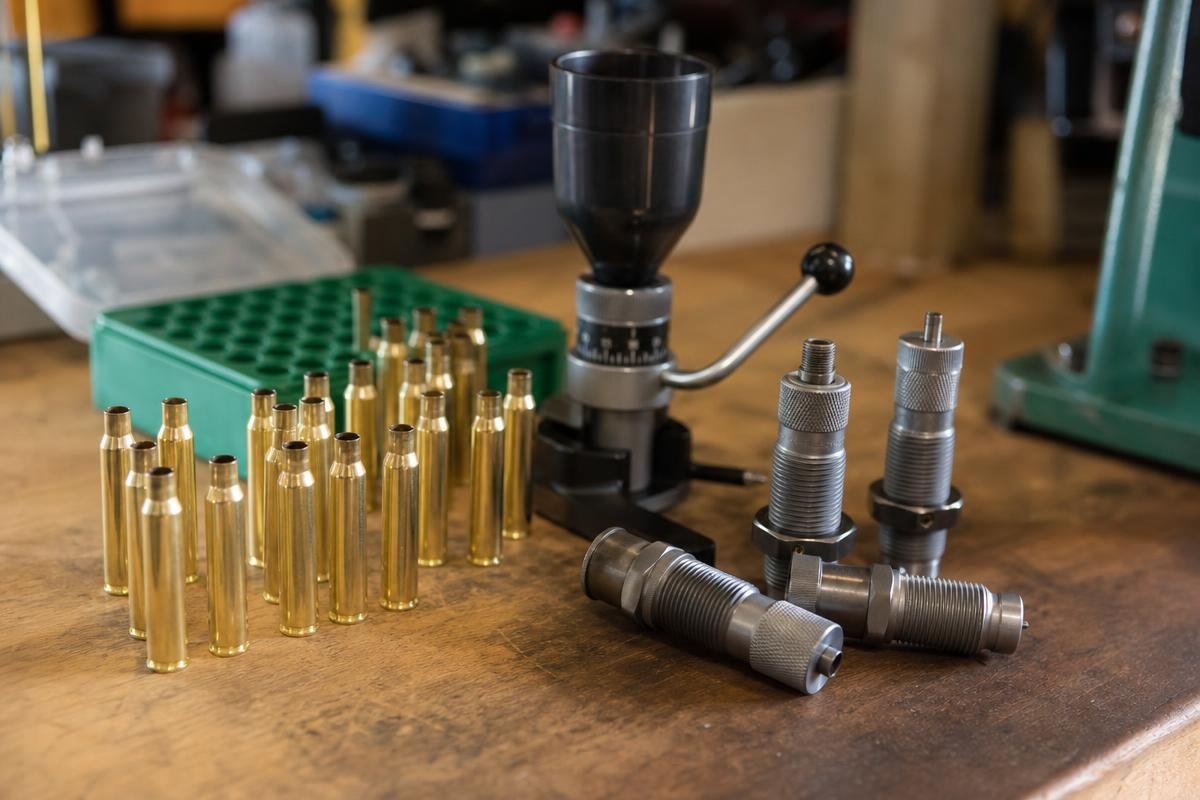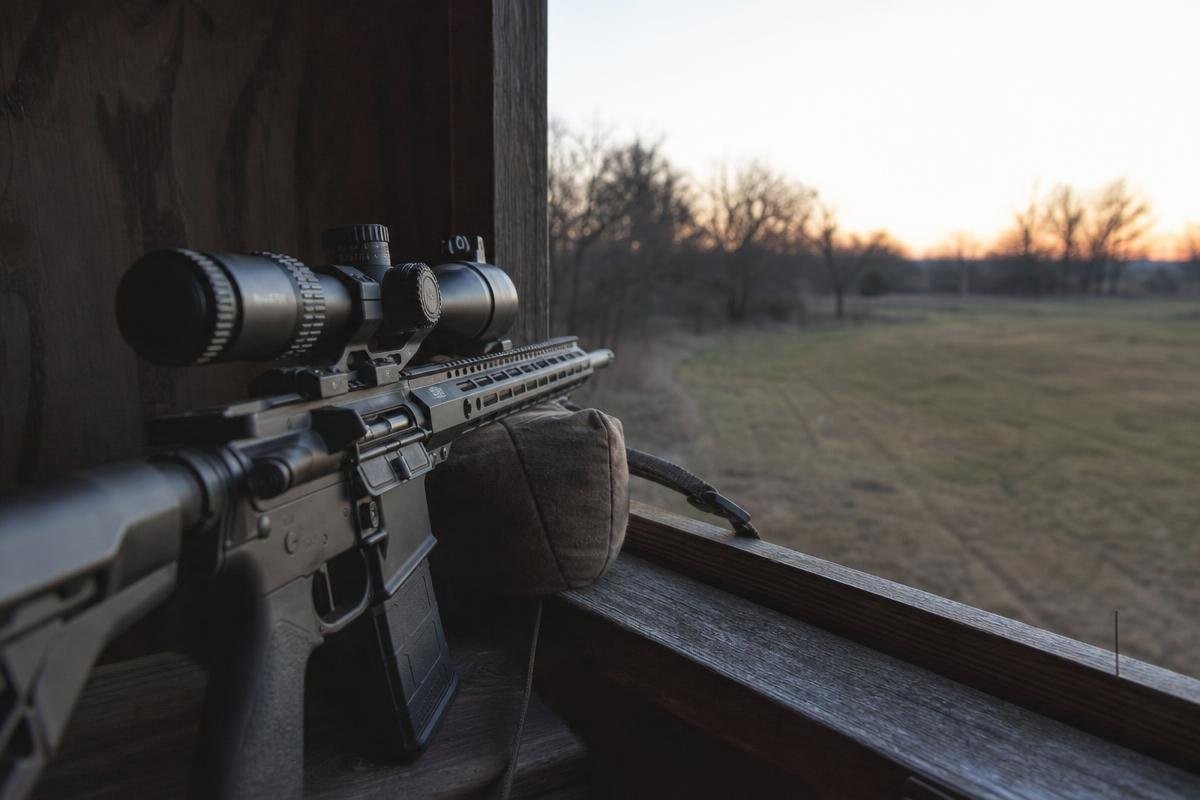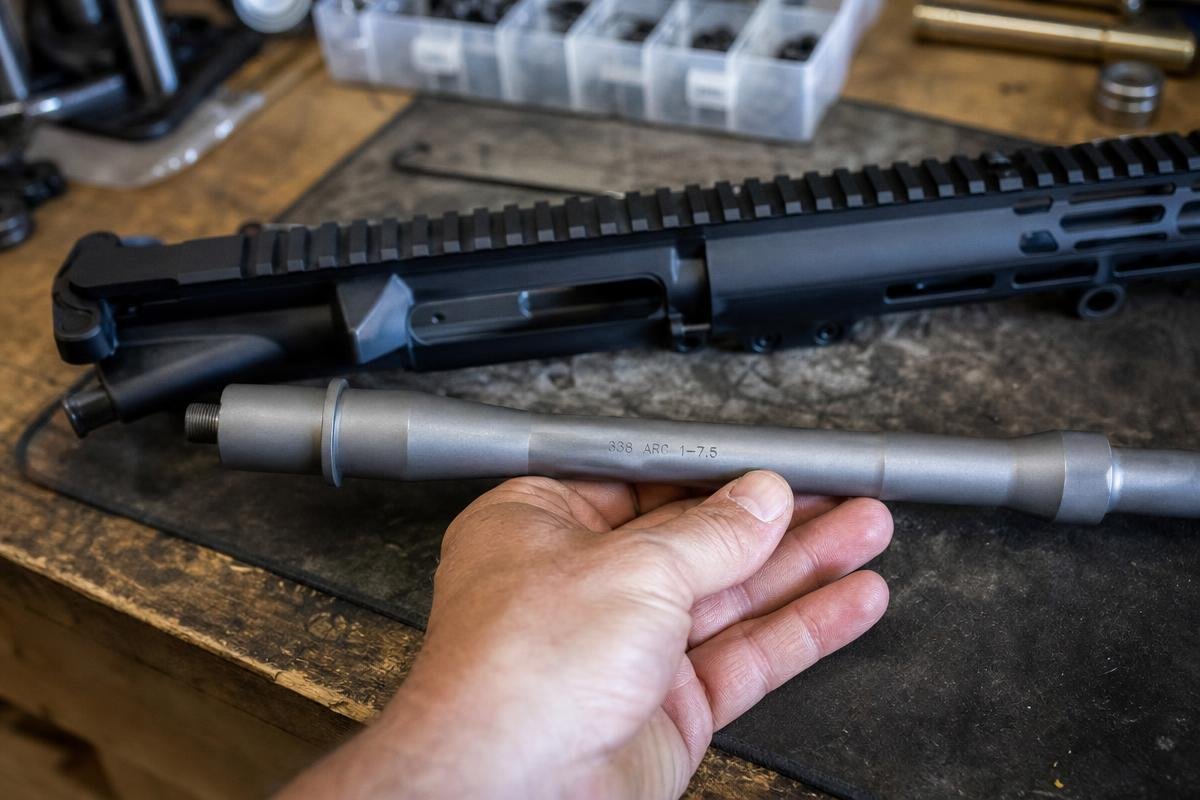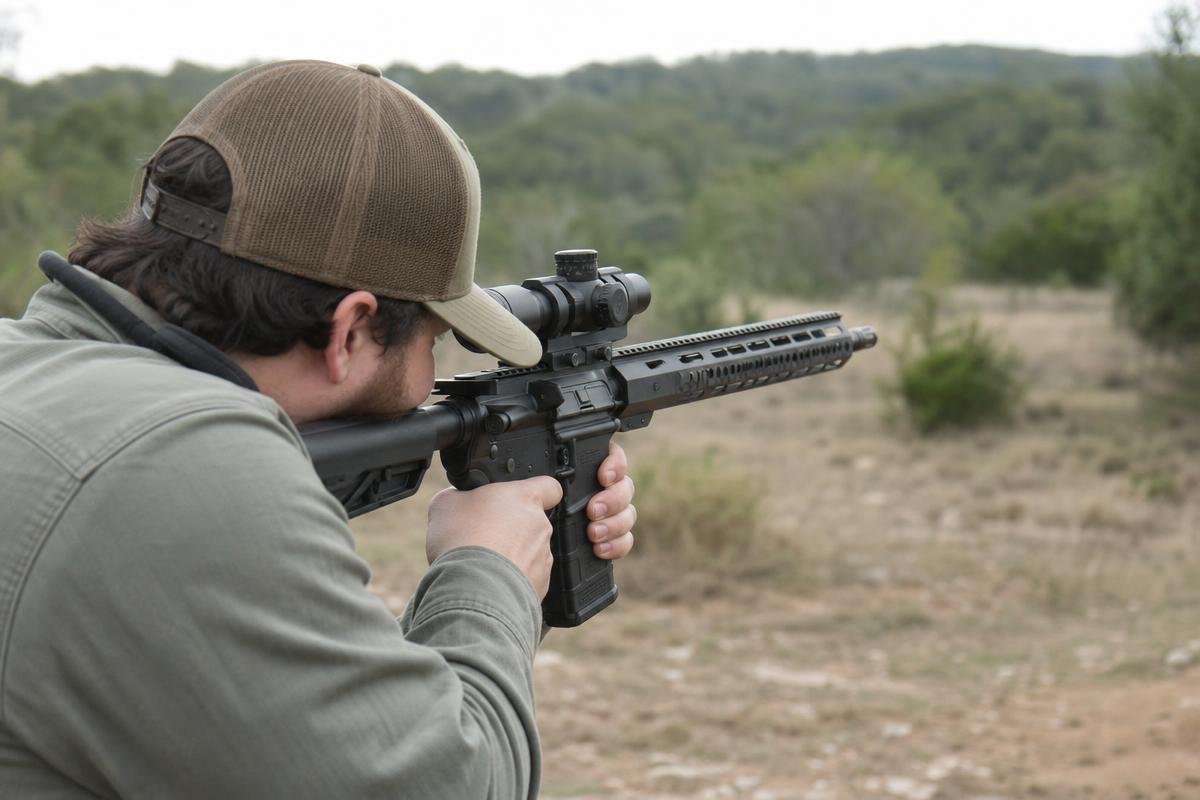
The .338 ARC is engineered from the ground up for hard-hitting performance in a standard AR-15 platform, and if you're asking what it's good for, the short answer is this: big bullets, serious terminal performance, and real suppressor-friendly subsonic capability without giving up a full-size rifle. We build 338 ARC complete uppers assembled, headspaced, and function-checked in our shop in Sherman, TX, using quality components built to your exact specifications.
Not pulled off a shelf. Built to order, before it ships directly to your door.
Ready to build your 338 ARC upper? We can walk you through every option.
What Is 338 ARC Good For?
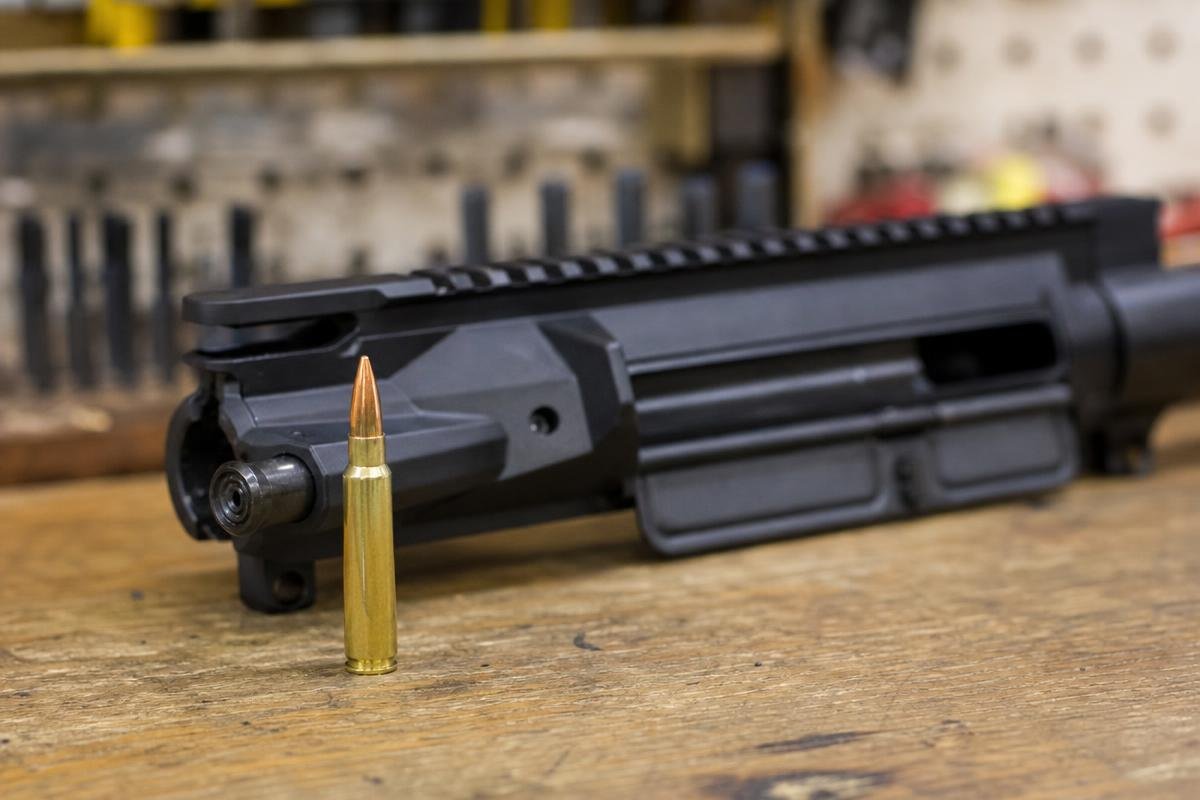
The .338 ARC is a Hornady-developed cartridge introduced in 2023 and built specifically for one job: push a heavy .338-caliber projectile through a standard AR-15 lower using a STANAG-compatible magazine. That means you get genuine big-bore terminal performance without rebuilding your entire platform around a new lower receiver. It runs on the same AR-15 you already own.
What makes it stand out is the subsonic side of the equation. A 300-grain 338 ARC subsonic load produces roughly 735 ft-lbs at the muzzle, compared to a heavy 220-grain 300 Blackout subsonic load at around 480 to 535 ft-lbs, which matters the moment you thread on a suppressor.
Supersonic loads are no slouch either, covering close to medium range with authority. If you are asking what the 338 ARC is good for, the short answer is suppressed hunting, hard-hitting close-range work, and any build where terminal performance matters more than raw distance.
Here you'll find the full picture: ballistics both subsonic and supersonic, real-world use cases, head-to-head comparisons against the .300 Blackout and 8.6 Blackout, and exactly what parts you need to run it. If you are ready to build now, our complete 338 ARC uppers are built and verified in-house before they ship to your door.
338 ARC Quick Specs: What You Are Working With
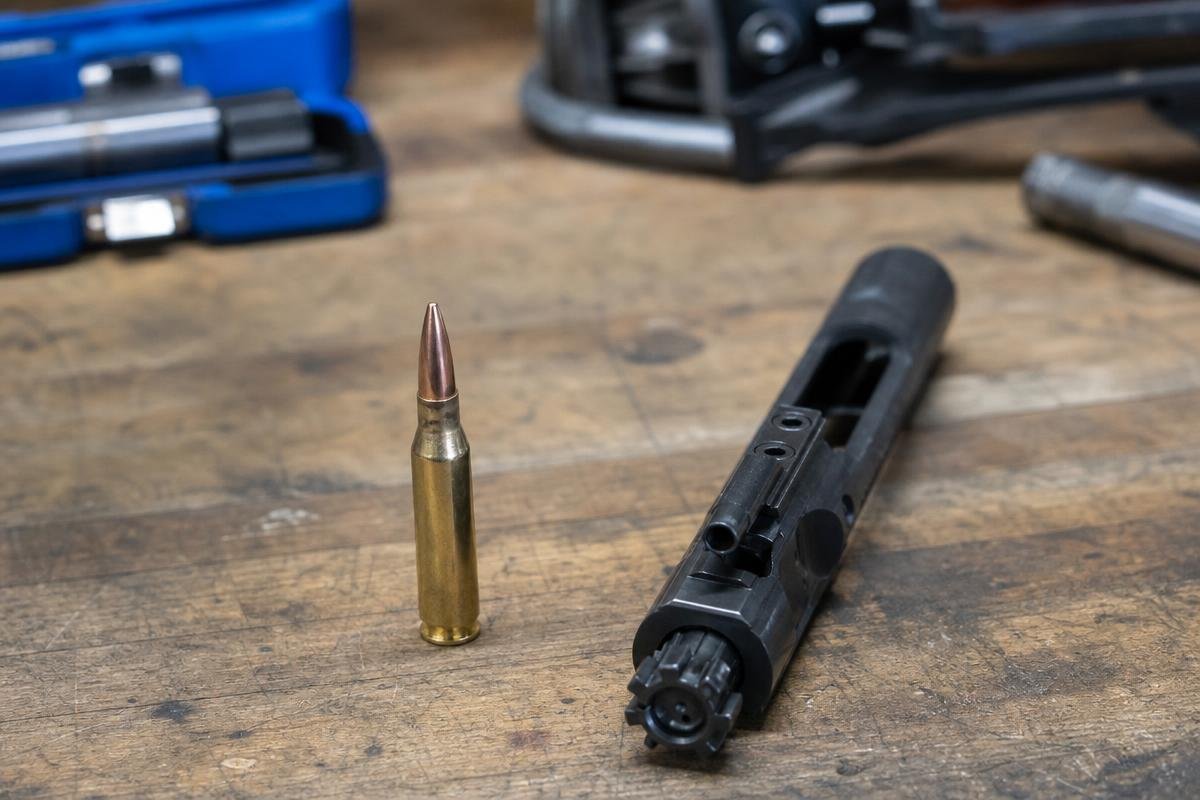
The .338 ARC is a purpose-built cartridge introduced by Hornady in 2023. It starts with the 6mm ARC case, necked up to accept .338-caliber projectiles. If you already run 6mm ARC uppers or know the ARC family, the case architecture will look familiar. Headspacing is off the case shoulder, not the case mouth.
Here are the core numbers you need to know before building or buying.
Case Design and Platform Compatibility
This is the part most builders care about first. The 338 ARC uses a standard AR-15 bolt face diameter. That means no new lower receiver. You swap the upper, and you are running. It is a different story than the 8.6 Blackout, which requires a larger bolt face and a dedicated lower. The 338 ARC AR-15 compatible design keeps your existing lower, your existing trigger, and your existing stock in the build. Standard STANAG magazines work. No proprietary feeding system required.
Projectile Options
Supersonic loads run 185 to 215 grain bullets. That covers hunting and general-purpose use at practical ranges. Subsonic loads step up to 300 grain projectiles, dropping velocity to the 1,000 to 1,050 fps window. That is where suppressor-focused builds live. The 338 ARC ballistics spread across two very different performance envelopes depending on which load you feed it. Sections 4 and 5 cover those tradeoffs in detail. See our complete 338 ARC uppers if you are ready to build.
The Purpose Behind the 338 ARC Design
Hornady built the .338 ARC with a specific mission: deliver maximum terminal performance inside 300 yards, not chase flat trajectories at distance. This is not a long-range precision cartridge. It is a hard-hitting, short-to-medium range round engineered to transfer energy fast, cycle reliably in a suppressed AR-15, and do real work on real game.
The .338-caliber diameter matters here. A larger projectile cuts a wider wound channel and transfers more energy into tissue than a .308 or 6.5mm bullet at the same velocity. That physics advantage is the whole point. Where 5.56 NATO struggles to perform practically in a subsonic role, the 338 ARC was designed around it from day one.
The Hard-Hitting Close-Range Mission
The ballistic data lines up with what hunters report from the field: this cartridge delivers consistent, decisive terminal performance on medium to large game at distances most hunters actually shoot. That matters more here than it does in a lot of places, because most shots on hogs and whitetail in the Red River bottomlands come well inside 300 yards.
If you want to know how it performs at extended ranges, our 338 ARC uppers page and the load discussion below cover that tradeoff in detail. But inside 300 yards, the 338 ARC is the answer.
Suppressor-First Engineering
Suppressed subsonic use was a core design requirement, not a feature added after the fact. A 300-grain subsonic load through a quality suppressor produces minimal bolt-cycle noise and a hearing-safe report. More importantly, 338 ARC subsonic performance beats 300 Blackout uppers in the same role because the heavier, larger-diameter projectile delivers more energy at the same subsonic velocity. That is not a marketing claim. It is simple physics.
338 ARC Ballistics: Subsonic and Supersonic Performance Compared
The 338 ARC ballistics story has two chapters. Supersonic for hunting and hard use. Subsonic for suppressed work where terminal performance still matters. Both modes are legitimate. Neither is a gimmick.
Supersonic Performance
A 200-grain projectile leaving a 16-inch barrel at roughly 2,100 fps produces approximately 1,960 ft-lbs of muzzle energy. That is a real number. For comparison, 300 Blackout supersonic loads push 110 to 125-grain bullets at around 2,200 fps, generating 1,200 to 1,350 ft-lbs. The 338 ARC delivers close to 50 percent more energy at the muzzle. If you are already running 300 Blackout uppers and wondering whether the step up is worth it, that gap answers the question.
Trajectory is where you need honest expectations. The 338 ARC is not a flat-shooter past 300 yards. Drop becomes significant beyond that range, which reinforces what the cartridge was designed to do: deliver heavy, wide bullets inside 200 to 300 yards with authority. It is a purpose-built cartridge, not a long-range generalist.
Subsonic Performance
This is where 338 ARC subsonic performance separates itself from the field. A 300-grain bullet running at approximately 1,050 fps produces around 735 ft-lbs of energy. A 230-grain .45 ACP round generates roughly 370 ft-lbs. The 338 ARC subsonic load delivers nearly double that energy while cycling through an AR-15 platform. That is not a novelty round. That is a suppressed hunting and close-range work load with real terminal capability.
Cycling reliability at subsonic velocities depends on gas system tuning and buffer weight. That is a practical setup consideration, not a flaw in the cartridge. Get the gas system right and it runs. This is exactly the kind of build detail we address when assembling and function-checking a 338 ARC upper before it ships to your door.
How Does 338 ARC Stack Up Against the Competition?
The .338 ARC does not exist in a vacuum. Three cartridges come up every time someone asks about it: 300 Blackout, 8.6 Blackout, and 338 Lapua Magnum. None of them are wrong choices. They just have different jobs. Here is how those jobs break down.
338 ARC vs 300 Blackout
Both cartridges run on a standard AR-15 platform and both are built around subsonic performance. That is where the similarity ends. A 300 Blackout subsonic load tops out around 220 grains at 1,050 fps, which puts you at roughly 535 ft-lbs of energy. The 338 ARC pushes a 300-grain projectile at similar velocity and delivers closer to 735 ft-lbs. That is a real difference at the muzzle and at the target.
Where 300 Blackout wins is availability and cost. Ammo is everywhere. Components are cheap. If you already have a 300 Blackout upper and you are happy with it, the 338 ARC is not going to change your life at 50 yards on hogs. But if you want more energy in the subsonic window without moving to a larger platform, the 338 ARC is the answer.
338 ARC vs 8.6 Blackout
Both fire a .338-caliber bullet. That is the end of the overlap. The 8.6 Blackout requires a non-STANAG magazine and a different bolt face. The 338 ARC uses a standard AR-15 bolt face and fits standard STANAG magazines. If you already own an AR-15, that is a meaningful practical advantage. No new lower, no proprietary magazines.
The 8.6 Blackout does push higher supersonic velocities and stretches effective range further. If long-range precision is the goal, it has an edge. If AR-15 compatibility matters, the 338 ARC is the 338 ARC AR-15 compatible answer.
338 ARC vs 338 Lapua Magnum
Same bullet diameter. Completely different mission. The 338 Lapua produces over 4,000 ft-lbs and is built for bolt-action precision past 1,000 yards. The 338 ARC is an AR-15 cartridge built specifically for 0 to 300 yards. Comparing them is like comparing a pickup truck to a semi. Both haul loads. One fits in your garage.
Questions about which caliber fits your build? Call us at (888) 706-0633 or browse our complete 338 ARC uppers to see what we have assembled and ready to ship.
What Is 338 ARC Actually Good For? Real-World Use Cases
So what is the 338 ARC good for, practically speaking? The short answer: hunting medium game and running a suppressed defensive build. It is built specifically for both, and it delivers on both. Outside those roles, the cartridge has real limits you should know before you buy.
Hunting
The 338 ARC is a genuine hunting cartridge, not a range toy. The large-diameter projectile produces reliable terminal performance on animals in the 100 to 300 lb range, which covers whitetail deer, hogs, and black bear cleanly inside 250 yards. That performance envelope is a strong match for the game most north Texas hunters actually pursue.
That semi-automatic platform matters on hogs. Fast follow-up shots are often the difference between one dead hog and a whole sounder disappearing into the cedar breaks. Most shots in north Texas creek bottoms and open pasture land fall well inside 200 yards, which is exactly where this cartridge earns its keep.
Suppressed Home Defense
338 ARC subsonic performance is where this cartridge separates itself from the crowd. Paired with a quality suppressor, it is hearing-safe and delivers more terminal energy than any common pistol cartridge. That matters in a home defense scenario where you cannot put on hearing protection before you act.
One thing to know: subsonic cycling requires a properly tuned gas system. A standard 5.56 upper will not run 338 ARC subsonic loads reliably. This is a build-specific setup, not a drop-in swap.
Where 338 ARC Falls Short
Be honest with yourself here. The 338 ARC is not a long-range precision cartridge. Past 300 yards, the ballistics fall off and better options exist. If your primary use case is 500-yard target work, this is not the answer. Look at our 6.5 Creedmoor uppers instead.
Ammunition availability is also limited compared to 300 Blackout or 5.56 NATO. Component cost runs higher. If you reload and hunt close-range, that tradeoff makes sense. If you shoot high volume at distance, it does not.
Running 338 ARC on Your AR-15: Platform and Parts Compatibility
Good news: the 338 ARC is 338 ARC AR-15 compatible without touching your lower. Your existing lower receiver, trigger group, buffer tube, and stock all carry over. What changes is the upper half.
What You Need to Convert
You need three things: a dedicated upper receiver, a barrel chambered in 338 ARC, and a cartridge-specific bolt. The bolt face diameter is standard AR-15, but the feed ramps and extractor geometry are specific to the 338 ARC case. Do not try to run this round on a standard 5.56 bolt.
Magazine compatibility is a genuine selling point here. The 338 ARC runs in modified STANAG-pattern magazines. Expect 10 to 15 rounds depending on the magazine body, since the larger case diameter eats into capacity. That is still a usable field count for hog hunting across Grayson and Cooke county creek bottoms.
The simplest path is a complete drop-in upper. Our team builds and verifies every upper in-house, headspacing it and function-checking it before it ships to your door. No FFL required. If you want to browse options beyond just 338 ARC, we carry complete AR-15 uppers in 19+ calibers. For the 338 ARC specifically, our complete uppers are built to your specifications, not pulled off a shelf.
Barrel Length
A 16-inch barrel is the practical minimum for full supersonic velocity. A 14.5-inch setup loses roughly 50 to 75 fps and works for SBR configurations, but you give up some of that downrange energy. Pair a 16-inch barrel with an adjustable gas block. That gives you the flexibility to cycle both supersonic and subsonic loads reliably. Run an H2 or H3 buffer for subsonic cycling. Without it, you will see short-stroking on the lighter-pressure loads.
The 338 ARC in Texas: Why This Cartridge Makes Sense Here

Feral hogs are a year-round problem across Grayson, Cooke, and Fannin counties. They tear up creek bottoms, root out pasture, and do not keep a schedule. That makes a semi-automatic rifle chambered in a hard-hitting, suppressor-capable cartridge more than a range toy. For north Texas hog hunters, 338 ARC hunting and suppressor use is a genuinely practical combination.
Most shots in this country come inside 200 yards. The Red River bottomlands north of Denison, along with the cedar breaks and open pasture edges of Grayson County, do not give you long sight lines. The 338 ARC is built specifically for exactly that distance window.
Running it suppressed with heavy subsonic loads means you can take a shot at night without blowing out your ears or spooking the rest of the sounder. Suppressed AR builds have become popular with rural north Texas landowners for exactly this reason, since hogs move at night and a bolt gun limits your follow-up while the AR platform gives you a second shot fast.
We are based in Sherman, TX, right in the heart of Grayson County. If you are coming in from Denison, Gainesville, or Bonham, we are close. If you are not local, we ship nationwide. Our 338 ARC complete uppers are assembled, headspaced, and function-checked in our shop before they ship to your door. No FFL required.