6.5 Creedmoor excels at long-range accuracy, hunting, and competition. See real ballistics data and shop 6.5 CM uppers built to order at AR15Parts.com.
The 6.5 Creedmoor is one of the most capable cartridges available for an AR-platform rifle, and if you're a North Texas hunter or long-range shooter asking what 6.5 Creedmoor is good for in terms of real-world performance, the short answer is: a lot. It shoots flat, bucks wind well, and stays accurate past 600 yards.
Out here in the Sherman-Denison corridor, where south winds run 10-20 mph and deer fields stretch across open river bottom, that matters. We build 6.5 Creedmoor complete uppers to order, each one headspaced and function-checked in our shop before it ships.
What Is 6.5 Creedmoor Good For?
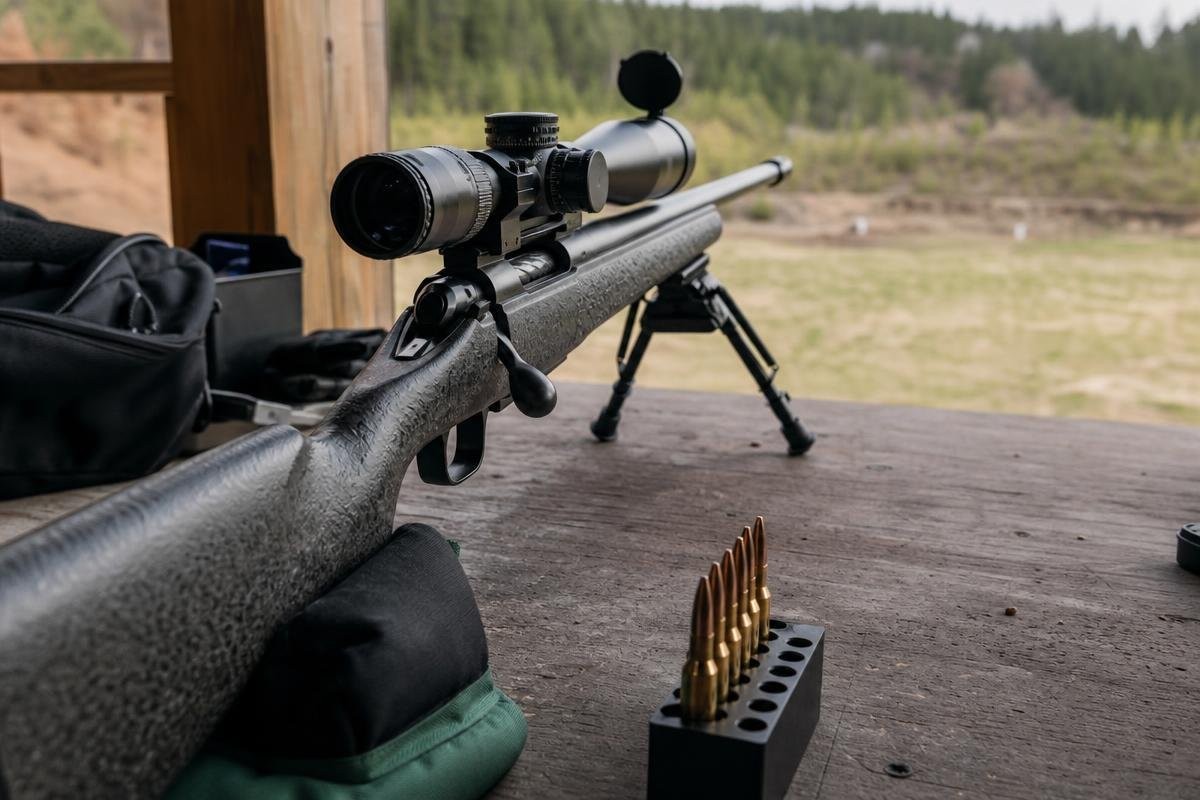
6.5 Creedmoor is best for long-range precision shooting, big-game hunting, and competition use, particularly in windy conditions where its high ballistic coefficient outperforms comparable cartridges. It earned that reputation through measurable results on paper targets and in the field, not through marketing.
Shooters adopted it because the numbers are real: high-BC bullets, flat trajectory, manageable recoil, and consistent performance past 500 yards. We have built and shot enough of these rifles to say plainly that the cartridge delivers what people claim it does.
Here you'll find what the cartridge actually does well and where it has real limits. We break down four specific applications: long-range precision shooting, big-game hunting, competition use, and general-purpose rifle builds. If you are considering a 6.5 Creedmoor complete upper, this gives you the straight answer on whether it fits your purpose.
What Makes the 6.5 Creedmoor Different From Other Rifle Cartridges?
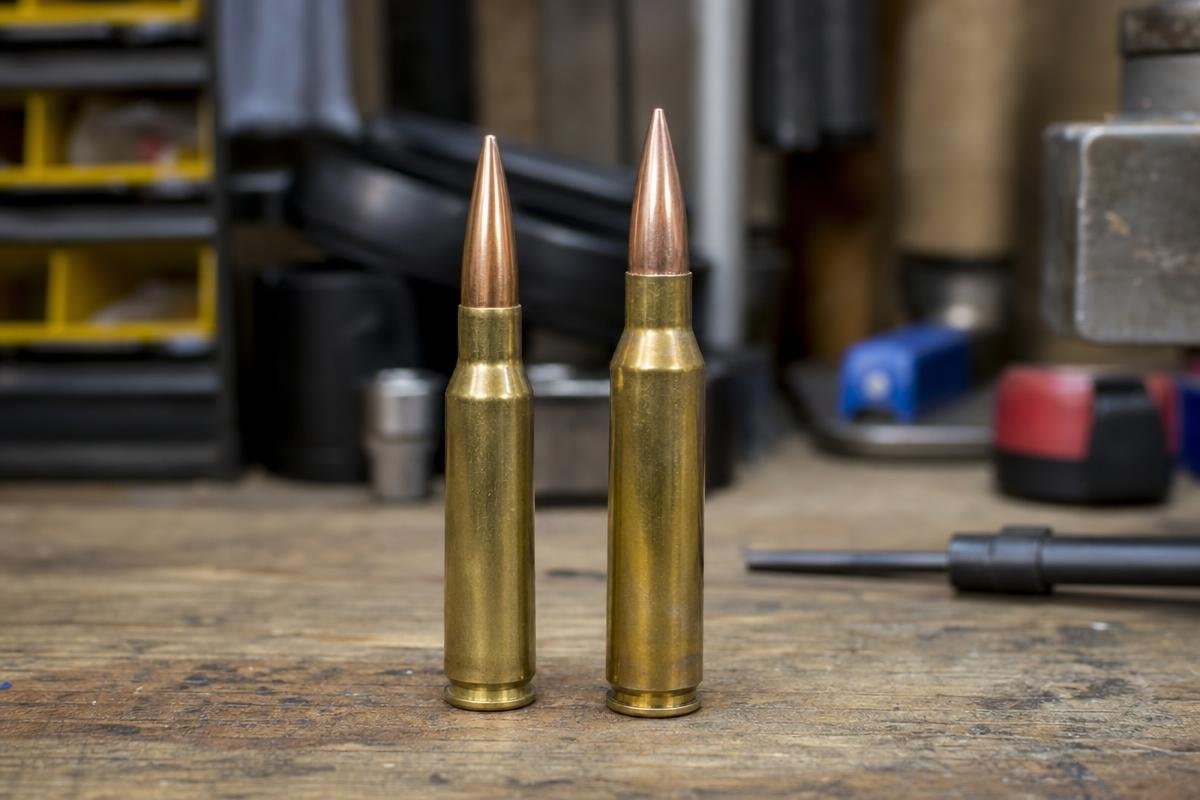
Most cartridges evolve from military or hunting roots. The 6.5 Creedmoor was engineered from scratch for one purpose: to win precision rifle competitions. That origin shapes everything about how it performs.
Design Origins
Dave Emary at Hornady and Dennis DeMille of Creedmoor Sports developed the cartridge in 2007. The goal was specific: fit a standard short-action magazine, generate low recoil, and push high-ballistic-coefficient 6.5mm bullets efficiently downrange. They based the case on the .30 TC, necked it down to .264 inches, and hit all three targets. The result was a competition cartridge that hunters and long-range shooters quickly adopted for practical use.
It was not designed around what brass was already available or what military surplus existed. It was designed around the bullet first, then the case built to match. That backwards-from-typical approach is why it outperforms older cartridges at distance despite its compact dimensions.
Cartridge Dimensions and Ballistic Coefficient
The specs matter here. Case length is 1.920 inches. Overall cartridge length is 2.825 inches. Bullet diameter is .264 inches. Typical bullet weights run 120 to 147 grains, with 140 grain loads being the standard choice for both match and hunting applications.
The real advantage is ballistic coefficient. A 140 grain match bullet carries a G1 BC between 0.500 and 0.650. That number tells you how well the bullet resists drag and wind deflection in flight. Higher BC means flatter trajectory and less drift in crosswind conditions. For practical comparison, a standard 168 grain .308 match bullet runs a G1 BC around 0.470.
The 6.5mm bullet is longer and more aerodynamically efficient relative to its caliber, which is why it holds velocity better past 400 yards. You can dig into exactly what that means on target in our section covering 6.5 Creedmoor ballistics at distance.
Based in Denison, TX at 2022 S Crockett St, AR15Parts.com builds custom 6.5 Creedmoor uppers to order, and our standard builds ship with quality barrels headspaced and function-checked before they leave the shop. Tell us your intended range and we'll spec the barrel length and twist rate to match.
6.5 Creedmoor Ballistic Performance: Velocity, Energy, and Drop at Distance
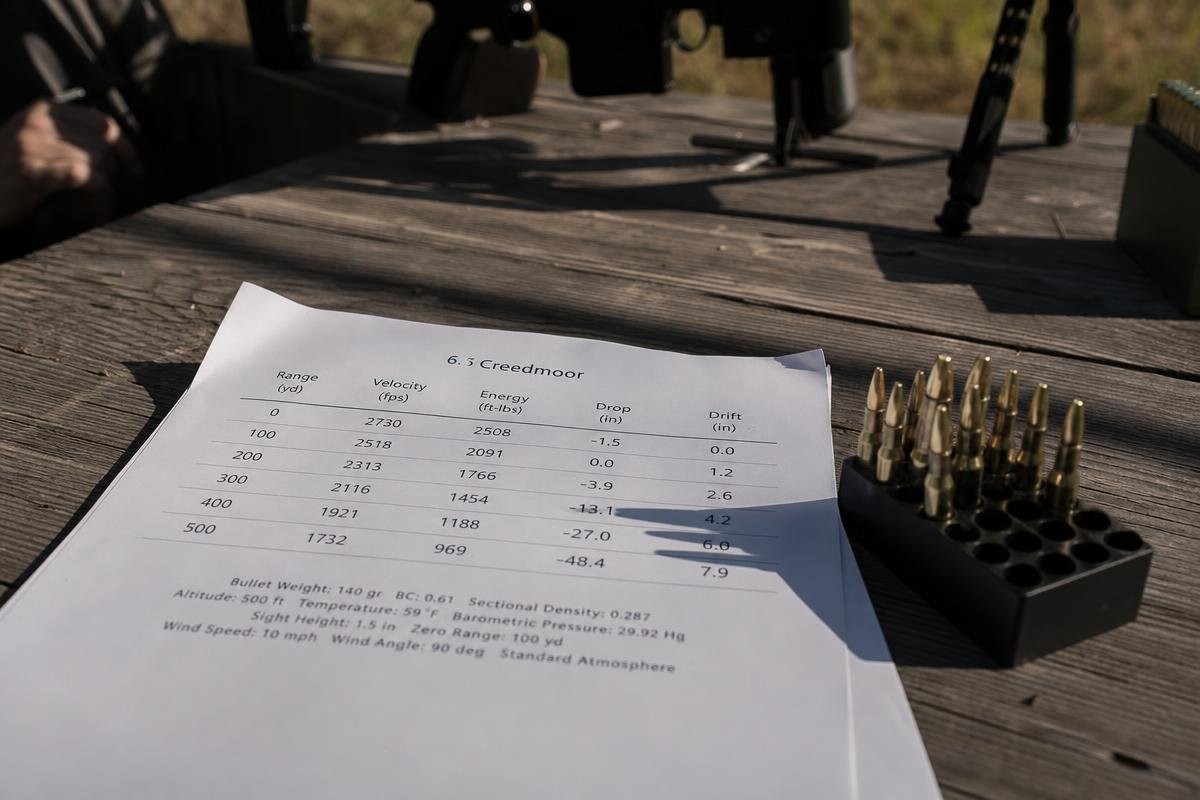
The numbers tell the story here. A 140 gr ELD-Match load out of a 24-inch barrel leaves the muzzle at roughly 2,710 fps with 2,283 ft-lbs of energy. By 500 yards, velocity drops to around 1,871 fps and energy settles at approximately 1,090 ft-lbs. That is still enough energy to take deer cleanly at distances most hunters will never actually shoot.
Velocity and Energy Retention
The high ballistic coefficient is what drives 6.5 Creedmoor long range performance. A 140 gr projectile with a G1 BC around 0.610 holds velocity better than heavier, blunter bullets. Compare that to a .308 Winchester 175 gr load. It starts with more muzzle energy, around 2,600 ft-lbs, but sheds velocity faster.
The two cartridges cross somewhere between 300 and 400 yards, and past that point the 6.5 CM carries more energy downrange. That is the core of the 6.5 Creedmoor vs .308 performance argument, and the physics favor the smaller bullet at distance.
Wind Drift
Raw velocity matters less than wind drift once you push past 400 yards. In a 10 mph full-value crosswind, a 140 gr 6.5 CM load drifts roughly 7 to 8 inches at 500 yards. A 175 gr .308 load drifts 10 to 12 inches under the same conditions. That 3 to 4 inch difference is a miss versus a hit on a precision target. Shooters in open, windy country deal with prevailing south and southeast winds of 10 to 20 mph regularly. High-BC cartridges are not a luxury here. They are a practical advantage.
Barrel Length and Its Effect on Performance
Barrel length is a direct trade between velocity and handling. Here is how the common options break down:
- 18-inch: The most compact 6.5 CM option. You give up roughly 175 to 225 fps versus a 24-inch tube, which shortens your ethical hunting range but makes the rifle easy to carry through brush and river bottom timber. Best for hunters who value maneuverability over reaching past 500 yards.
- 20-inch: The dual-purpose sweet spot. It costs you roughly 100 to 150 fps compared to a 24-inch barrel while keeping the rifle handy in the field. Ideal for hunting inside 500 yards across open farmland and river bottom terrain, with enough velocity left for occasional longer shots.
- 22 to 24-inch: The precision choice. For work stretching to 800 or 1,000 yards, the longer tube keeps the bullet supersonic farther and squeezes out maximum velocity. It adds real weight, so it belongs on a range or competition rifle rather than a walk-and-stalk hunting build.
If you are planning a build, our 6.5 Creedmoor uppers are available in multiple barrel lengths so you can match the tube to your intended use rather than settling for a one-size compromise.
Hunting whitetail past 300 yards on a river bottom sendero or open food plot? We'll spec the right barrel length and hunting-bullet twist rate for your setup.
What Is 6.5 Creedmoor Good For? Four Real-World Applications
The 6.5 CM covers four distinct jobs well: long-range precision shooting, big-game hunting, general range use, and limited military evaluation. Understanding what is 6.5 Creedmoor good for performance-wise means being honest about where it excels and where it doesn't.
Long-Range Precision Shooting
This is what the cartridge was designed for. A 140 gr load stays supersonic past 1,200 to 1,300 yards. That matters for PRS competition, where you need consistent bullet flight at extended distances. Recoil in a 10-lb rifle runs roughly 12 to 13 ft-lbs, which is mild enough that most shooters can spot their own impacts without losing the target.
Match bullet choices are well established. Hornady 140 gr ELD-Match, Sierra 140 gr MatchKing, and Berger 140 gr Hybrid are the go-to options. Any of them will perform at the ranges open-country ranges demand, especially when you're dealing with 10 to 20 mph south winds.
Big-Game Hunting
The 6.5 CM is a genuine hunting cartridge, not just a target round. A 143 gr ELD-X or 130 gr AccuBond still delivers over 1,500 ft-lbs of energy past 500 yards. That's enough for whitetail, pronghorn, and black bear at ethical distances. Deer hunters working river bottom farmland and food plots typically shoot 100 to 300 yards, which is squarely inside this cartridge's effective range.
When a long sendero opens a shot out toward 400 yards, the flat trajectory keeps holdover simple. If you want to dig deeper into 6.5 Creedmoor hunting capability, read our full breakdown on whether 6.5 Creedmoor is good for hunting.
For elk, keep shots inside 400 yards and use a heavy, controlled-expansion bullet. The honest tradeoff: this is not a magnum. If you're hunting large elk in open country or pursuing dangerous game, a .300 Win Mag or 7mm Rem Mag carries more energy where it counts.
General-Purpose Range Use
Mild recoil makes extended range sessions manageable. Factory ammo is widely available. That said, 6.5 CM is not optimized for close-range defensive work, and it's not suppressor-friendly the way a subsonic-capable round is. If you want a short-range suppressed setup, our .300 Blackout complete uppers are built for exactly that role.
Military and Law Enforcement Evaluation
The U.S. Army tested the 6.5 CM during the Next Generation Squad Weapon program. It was not selected. The Army chose the 6.8x51 Common Cartridge instead, prioritizing armor-penetration performance at squad level. Some precision sniper units have adopted the 6.5 CM in roles where .308 Win falls short at distance, but broad military adoption did not follow.
The cartridge is rarely the limiting factor past 800 yards. The shooter and the glass usually are.
How Does 6.5 Creedmoor Compare to .308 Winchester and Other Cartridges?
The cartridge comparison question comes up constantly. Here is a straight answer for each matchup, no hype, just honest tradeoffs.
6.5 Creedmoor vs .308 Winchester
The .308 hits harder at the muzzle. A 175 gr .308 load generates around 2,600 ft-lbs of muzzle energy versus roughly 2,283 ft-lbs from a 140 gr 6.5mm load. Inside 400 yards, that gap is real. Past 400 yards, the .308's lower ballistic coefficient works against it. The 6.5mm bullet retains velocity better, drifts less in wind, and drops less at distance. For 6.5 Creedmoor long range performance past 600 yards, the 6.5mm wins that fight clearly.
The .308 has a broader factory hunting load selection and a longer military track record. Both cartridges run on the AR-10 platform, so the decision usually comes down to your typical shot distance. Deer hunters shooting 100 to 300 yards across river bottom terrain will do fine with either. Precision shooters stretching past 500 yards will feel the difference. For a deeper look at building on that platform, see our guide on the Creedmoor vs .308 comparison.
6.5 Creedmoor vs 6.5 Grendel
Same bullet diameter, very different platforms. The Grendel runs on a standard AR-15 lower. It pushes a 123 gr bullet around 2,500 fps. The 6.5mm AR-10 cartridge pushes a 140 gr bullet closer to 2,710 fps and is built for 800-plus yard work. The Grendel is the right call if you want extended range without buying a new platform. If you already own an AR-15, check out our 6.5 Grendel complete uppers before committing to a larger build.
6.5 Creedmoor vs 224 Valkyrie
Both were designed for long-range AR-platform use. The Valkyrie runs on a modified AR-15 bolt and barrel, pushing 90 gr bullets near 3,000 fps with noticeably less recoil. It is a lighter, cheaper option for target shooting inside 600 yards. The 6.5mm AR-10 cartridge carries more energy at every distance and handles medium to large game more effectively. For target-only work on a budget, the Valkyrie makes sense.
For hunting versatility and 6.5 Creedmoor vs .308 performance comparisons that extend past 600 yards, the 6.5mm AR-10 cartridge wins. Browse our 224 Valkyrie complete uppers if that platform fits your use case, or read our full 6.5 Creedmoor vs 224 Valkyrie comparison for a detailed breakdown. Not sure which cartridge fits your build? Call us at (888) 706-0633 and we will walk you through the options.
Building a 6.5 Creedmoor Rifle: Platform, Barrel, and Component Considerations
The 6.5 Creedmoor uses a .308-footprint bolt face, which means you are building on an AR-10 or LR-308 platform, not a standard AR-15. That single fact drives every other component decision you make.
AR-10 Platform Basics
You need an AR-10 lower and upper receiver, not an AR-15. The two most common AR-10 patterns are DPMS and Armalite. They are not interchangeable. A DPMS-pattern upper will not mate correctly with an Armalite-pattern lower. Confirm the pattern before you buy anything. Our assembled 6.5 Creedmoor uppers are built to a specific pattern, so match your lower accordingly before ordering.
The magazine well, bolt carrier group, and buffer system are all AR-10 spec. Budget accordingly. AR-10 components cost more than their AR-15 counterparts across the board.
Barrel Length and Twist Rate
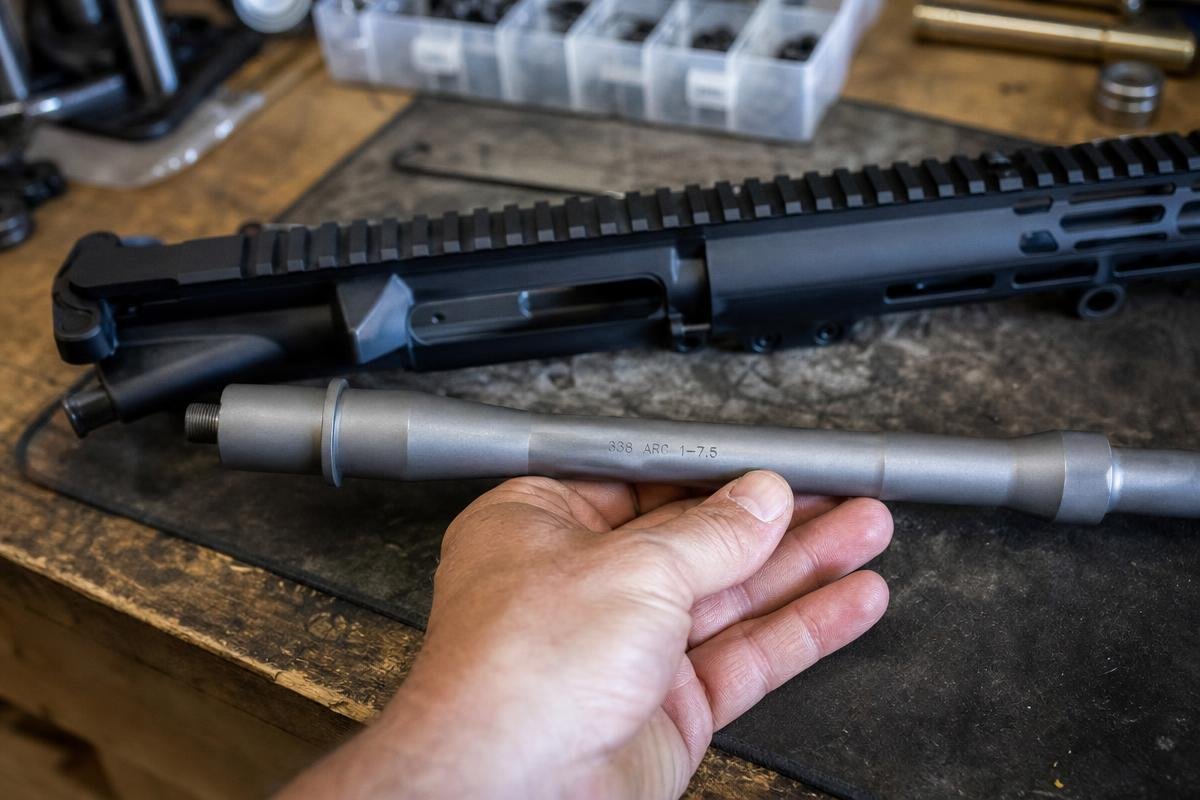
Twist rate determines what bullet weights you can stabilize. A 1:8 twist handles 140 gr match bullets cleanly and is the most practical choice for the majority of 6.5 Creedmoor uses. If you plan to run 147 gr or 153 gr ELD-M bullets at 1,000 yards or beyond, step up to a 1:7.5 or 1:7 twist.
For barrel length, a 20-inch barrel is the practical choice for a dual-purpose hunting and range rifle. It keeps the build manageable in the field while giving you enough velocity for ethical shots at distance. A 22-inch barrel gives you a better balance for precision work. A 24-inch barrel squeezes out maximum velocity for competition but adds real weight. Browse our AR-15 and AR-10 barrels to see available profiles and lengths.
Optics and Accessories
Do not underspec the glass. For 800-plus yard work, you need at minimum 10x magnification. Competition shooters commonly run 20-25x. For a hunting build, a 4-16x50 is practical and covers most field scenarios. A quality scope often costs as much as the upper itself. Plan for that before you start buying parts.
A muzzle brake is worth adding. It cuts felt recoil noticeably during extended precision sessions, which matters when you are calling your own shots and resetting quickly between rounds.
6.5 Creedmoor in North Texas: Range Conditions and Local Shooting Context
The terrain along the Red River corridor tells you a lot about cartridge selection. Open farmland, river bottom flats, and rolling prairie regularly put deer or steel targets at 300 to 600 yards with nothing to hide behind. That is exactly the range band where the 6.5 Creedmoor's flat trajectory and high-BC bullets earn their reputation.
Wind is the real variable out here. Prevailing south and southeast winds of 10 to 20 mph are common across this part of Texas, and that kind of consistent crosswind punishes low-BC cartridges hard at distance. The 6.5 CM's high-BC projectiles drift significantly less than a comparable .308 load under the same conditions. For local long-range shooters, that is not a minor edge. It changes how much correction you need to hold at 400 yards and beyond.
For whitetail hunting in the river bottom and open fields of this area, 6.5 Creedmoor hunting capability fits the typical 100 to 300 yard shot without any stretch. A 140 gr hunting load handles that range with authority and leaves clean margins. If you are building a rifle for this terrain, our 6.5 Creedmoor uppers are assembled and verified through the same shop-tested process before they head out for transfer at your local dealer.
Is 6.5 Creedmoor Good for Deer Hunting?
Yes, definitively. A 143 gr ELD-X or 130 gr AccuBond delivers clean, ethical kills on whitetail inside 500 yards. For elk, keep shots inside 400 yards. Most field hunts run 100 to 300 yards anyway, well inside that ethical window. For a full breakdown of 6.5 Creedmoor hunting capability, we cover load selection and shot placement in detail.
What Is the Effective Range of 6.5 Creedmoor?
The ethical hunting limit is 500 to 600 yards with the right load. For precision target shooting, it stays supersonic past 1,200 yards and is viable for 1,000-yard competition. Practical accuracy still depends on barrel quality, optic, and shooter skill.
Is 6.5 Creedmoor Better Than .308 Winchester?
Neither is universally better. The 6.5 CM wins past 400 yards on ballistic coefficient and wind drift, which matters in open farmland country. The .308 carries more muzzle energy, a wider hunting load selection, and a longer military service history. Pick based on your primary use.
What Platform Does 6.5 Creedmoor Run On?
It requires an AR-10 or LR-308 platform, not a standard AR-15 lower. It uses a .308-footprint bolt face and a longer receiver for its 2.825-inch overall cartridge length. Confirm DPMS or Armalite pattern before ordering an upper. Our 6.5 Creedmoor uppers are built to drop onto a compatible AR-10 lower.
What Bullet Weight Is Best for 6.5 Creedmoor?
140 gr match bullets like the Hornady ELD-Match or Sierra MatchKing for long-range precision. Use 130 to 143 gr bonded or polymer-tipped hunting bullets for game. Drop to 120 gr for shorter-range target practice with slightly less recoil.
Is 6.5 Creedmoor Good for Beginners?
Recoil is lighter than .308 and significantly lighter than magnum cartridges. Factory ammo is widely available and consistent. The main barrier is platform cost. AR-10 builds run more than comparable AR-15 setups, so budget accordingly before committing.
Ready to build? AR15Parts.com carries complete uppers in 19+ calibers, including 6.5 Creedmoor, plus AR-10 barrels in multiple lengths and twist rates. We are based in Sherman, TX at 2022 S Crockett St and ship nationwide. Call us at (888) 706-0633.
Ready to Get Started with AR15Parts.com?
Call (888) 706-0633 to speak with our team directly. We're ready to answer your questions, walk you through your options, and help you find the right solution for your needs. Whether you're just starting to plan or ready to move forward, we'll make the process simple and stress-free.
Reach out today and let's talk about how we can help.