The 338 ARC hits hard on target, and it hits your shoulder with authority too. If you're building or running a 338 ARC upper and wondering what 338 ARC recoil feels like, what to expect shot to shot, and how to manage it through buffer, spring, and gas system choices, this guide gives you straight answers. We build 338 ARC uppers here in Sherman, TX, assembled, headspaced, and function-checked in our shop before they ship to your door. We see these builds daily. The recoil is manageable. Here's how.
Need a buffer or gas system recommendation for your 338 ARC build? Our team specs these daily and can point you in the right direction.
What to Expect from 338 ARC Recoil and How to Manage It
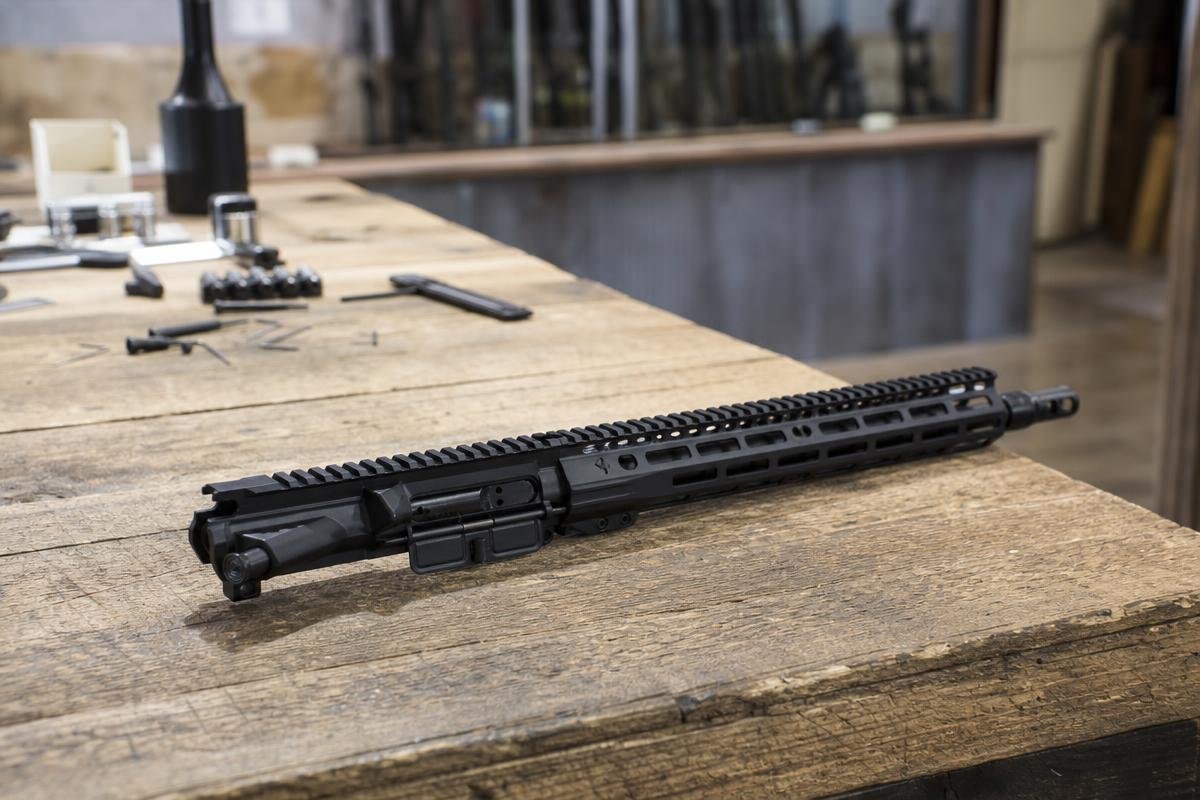
The 338 ARC is not a 5.56. It is not a 6mm ARC. Builders who treat it like one of those calibers and slap on a standard carbine buffer and a bare muzzle end up with a rifle that cycles hard, beats up the shooter, and fights them on follow-up shots. If you are planning a 338 ARC build, recoil management is something you plan around before the upper goes together, not after.
Pushing 215 to 250 grain projectiles at 2,350 to 2,500 fps generates a longer dwell time at the gas port than any standard AR caliber. That means the gas system, buffer, and muzzle device all have to work together to manage the impulse. Get one of them wrong and the whole system fights you.
Here in the Denison and Sherman area, a lot of local builders are running 338 ARC for Red River bottom hog hunting and open-country shots out past 400 yards. At that distance, a rifle that beats you up between shots costs you the follow-up.
Here you'll find what 338 ARC recoil physically feels like, how it compares to smaller AR calibers, and the specific hardware changes that bring it under control. If you are still selecting components, start with our 338 ARC complete uppers page to see how we configure these builds from the ground up.
What Does 338 ARC Recoil Actually Feel Like?
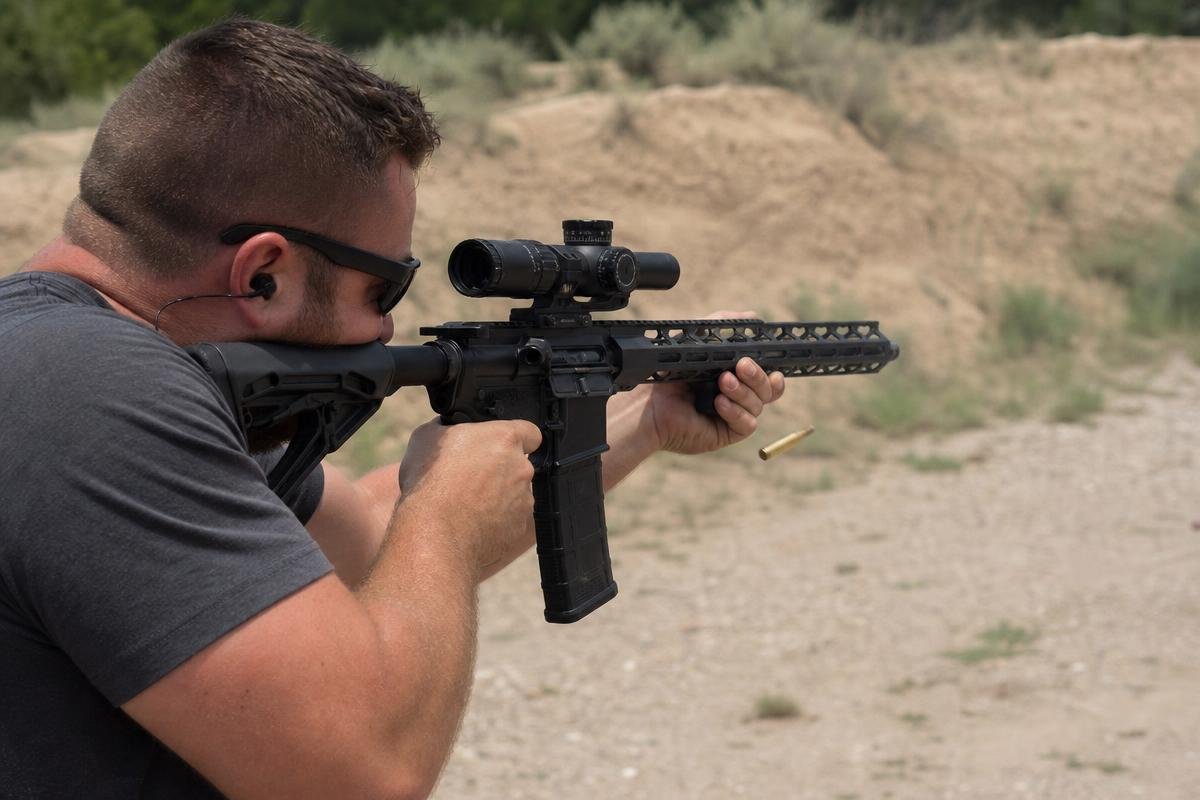
The 338 ARC does not snap. It pushes. That distinction matters if you are trying to calibrate expectations before you build or buy. The larger case volume and heavier projectile extend dwell time at the gas port, which means the rearward impulse arrives more slowly and lingers longer than what you feel from a 5.56 or even a 6mm ARC. Most shooters describe it as manageable but authoritative, which is about as accurate a summary as you can get without putting the rifle in your hands.
The Impulse Character
Think of the closest analog as a 300 Blackout supersonic load, but with more total energy behind it. The push is deliberate and linear, not the sharp wrist-flick you get from a lightweight 5.56 carbine. Your muzzle rises in a controlled arc rather than jumping. Follow-up shots take a beat longer to reacquire than they do with smaller AR calibers, but the movement is predictable, which means it is trainable.
Free recoil energy runs approximately 12 to 15 ft-lbs for a typical 338 ARC load, based on a 215 grain projectile at roughly 2,400 fps in an 8.5 lb rifle. That puts it well above 5.56 NATO at around 3.7 ft-lbs and meaningfully above 6mm ARC at 5 to 6 ft-lbs. For full context on how those two calibers stack up across the board, see our 338 ARC vs 5.56 breakdown.
How It Compares to Other AR Calibers
Here is a quick reference so you can place 338 ARC recoil in context:
- 5.56 NATO: ~3.7 ft-lbs, sharp and fast
- 6mm ARC: ~5 to 6 ft-lbs, mild push
- 338 ARC: ~12 to 15 ft-lbs, slow and heavy push
- 308 Winchester (semi-auto): ~15 to 18 ft-lbs, similar energy but in a heavier platform
That last point catches shooters off guard. A 308 in a standard semi-auto runs 15 to 18 ft-lbs, so 338 ARC is in the same neighborhood, but it is delivered through a lighter AR-15 platform. The rifle weighs less, so felt recoil can seem more pronounced than 308 to some shooters, even though the numbers are close.
If you are coming to 338 ARC from a 5.56 hog hunting build, expect a noticeable step up. It is not a barrier, but it is real. Browse our 338 ARC complete uppers to see the platform configurations we build.
Why 338 ARC Generates More Recoil Than Smaller AR Calibers
The 338 ARC is built on a modified 6mm ARC case necked up to .338 caliber. It pushes a 215 to 250 grain bullet at 2,350 to 2,500 fps from a 16 to 18 inch barrel. That combination of case volume, bullet mass, and velocity is the mechanical foundation of everything you feel at the shoulder.
Case Volume, Pressure, and Gas Port Timing
A larger case holds more propellant. More propellant generates more gas. That gas has to go somewhere, and in a direct-impingement AR, it cycles back through the gas port to drive the bolt carrier group rearward. The 338 ARC runs a heavier BCG than a 5.56 build, and the gas port dwell time is longer than you see in a standard carbine or mid-length system. More gas energy is dumped into the operating system per shot. That extended dwell time is the root mechanical cause of the heavier recoil impulse. Understanding it is the first step in any real 338 ARC recoil management plan. For a deeper look at how port position affects this, our 338 ARC complete uppers page covers the barrel and gas system specs we build to.
Platform Weight and Its Role in Felt Recoil
An AR-15 chambered in 338 ARC typically weighs 7.5 to 9 pounds with an optic. A comparable AR-10 in .308 Win runs 9 to 11 pounds. Physics is straightforward here: a heavier rifle absorbs more recoil energy before any of it reaches the shooter. The AR-15 platform gives up 2 to 3 pounds to the AR-10, so more of that recoil impulse transfers directly to you.
For hunters in the Red River bottom land near Denison who are choosing between an AR-15 in 338 ARC and an AR-10 in .308 for open-field shots at 300 to 500 yards, that weight difference matters. The 338 ARC delivers better ballistic performance at distance, but you are doing it from a lighter platform. Knowing that tradeoff going in makes the tuning decisions in the next sections much easier to follow.
Muzzle Devices That Actually Reduce 338 ARC Recoil
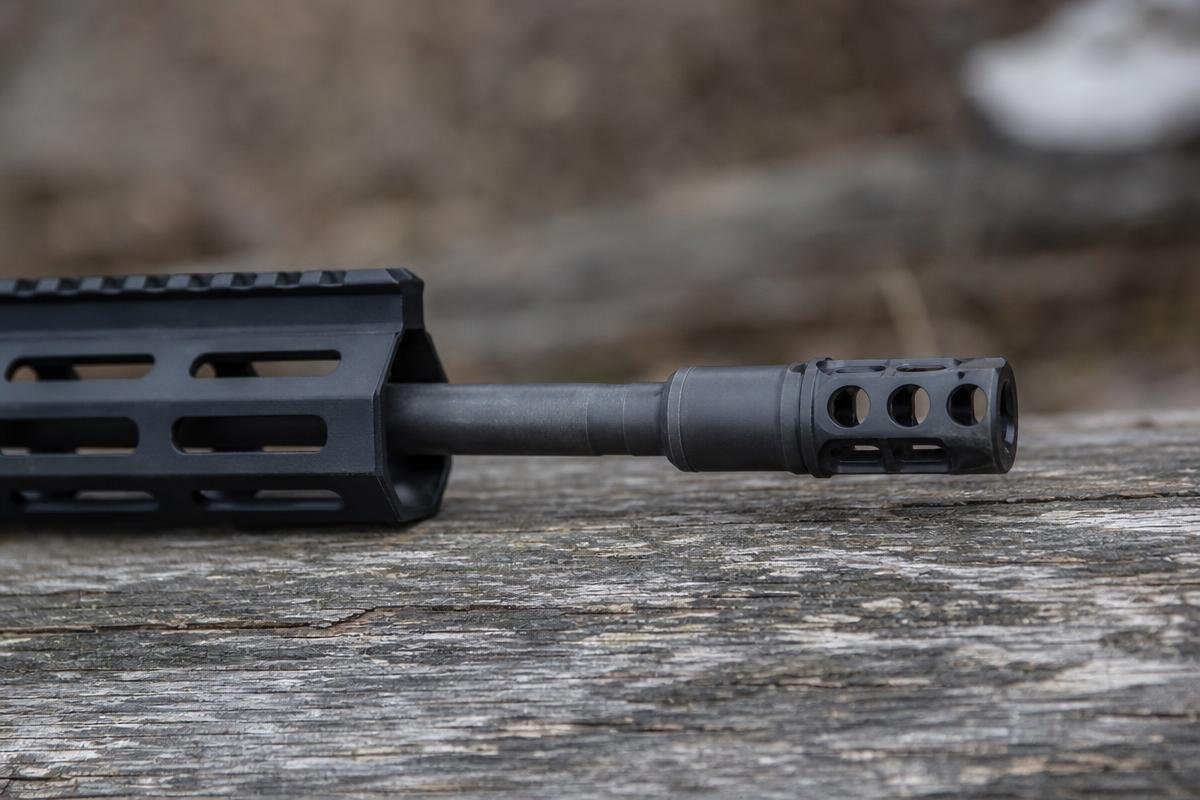
The fastest way to reduce 338 ARC recoil is to put the right muzzle device on the end of your barrel. Before you adjust your buffer or swap your stock, get the muzzle device right. It makes the biggest single difference in felt recoil of any hardware change you can make to a 338 ARC complete upper.
Muzzle Brakes
A quality muzzle brake is the most effective 338 ARC muzzle device for raw recoil reduction. A well-designed brake ports gas laterally and rearward, counteracting rearward impulse directly. Expect 30 to 50 percent reduction in felt recoil energy compared to a bare muzzle, depending on brake design and load.
The 338 ARC uses a .338 bore. Your brake must be threaded to match your barrel's muzzle thread pitch, which is typically 5/8x24 on 338 ARC barrels. One hard reality with brakes: muzzle concussion is significant, especially in enclosed spaces. Hearing protection is non-negotiable, and a brake is a poor choice for hunting in tight timber where a shooting partner is standing beside you.
Compensators and Hybrid Devices
A compensator redirects gas upward. That reduces muzzle rise and speeds up your follow-up shot, but it does less for raw felt recoil than a brake. If you are running feral hogs in the Red River bottom land near Denison, where a second shot on a moving target matters, a compensator or hybrid device is worth considering over a pure brake.
Hybrid muzzle devices combine upward gas venting with lateral porting. You give up a small percentage of raw recoil reduction compared to a dedicated brake, but you gain muzzle control and better blast management in the field. For hunting builds, that tradeoff usually makes sense.
Running a Suppressor
A suppressor softens the 338 ARC recoil impulse by adding muzzle mass and slowing gas release. The result is a noticeably smoother, more spread-out push rather than a sharp snap. Many shooters find a suppressed 338 ARC easier to stay on target than a braked one.
The tradeoff is backpressure. Suppressed use increases gas system pressure, and a 338 ARC that runs clean unsuppressed can become over-gassed with a can attached. Your gas system needs to be tuned for suppressed use, which typically means an adjustable gas block. If you want to go that route, read our full suppressed 338 ARC build guide before you spec the upper.
Buffer and Spring Tuning for 338 ARC Recoil Control
The buffer and spring are where most 338 ARC recoil management problems get solved or created. A standard carbine buffer at 3 oz is too light for this cartridge. It lets the bolt carrier slam rearward too fast, which spikes felt recoil and accelerates wear on your lower receiver. Get the buffer weight right first, then dial in the gas system.
Choosing the Right Buffer Weight
Start with an H2 buffer at 4.6 oz. That extra mass slows bolt carrier rearward travel and spreads the recoil impulse over a longer time window. The difference is noticeable on the first magazine. If you still see signs of over-gassing after 50 rounds, step up to an H3 at 5.4 oz and retest. Understanding how 338 ARC complete uppers are configured from the factory helps you know what baseline you are tuning from.
One pairing rule matters here: do not combine an H3 buffer with an extra-power spring. That combination will short-stroke the rifle and cause failures to feed. Run a standard carbine or mid-length spring with whichever buffer weight you land on. If you plan to run the rifle suppressed for hog hunting in the Red River bottom and unsuppressed at the range, an adjustable buffer from JP Enterprises or a Kynshot hydraulic unit gives you the flexibility to cover both configurations without swapping components.
The bolt carrier group mass is part of this equation too. Our AR-15 parts section covers component weights if you need to cross-reference your BCG spec.
Adjustable Gas Blocks
An adjustable gas block is the other half of a solid 338 ARC buffer setup. Start with the block fully open. Fire a full magazine and confirm reliable cycling and bolt lockback on the last round. Then close the block incrementally, one or two clicks at a time, until you find the minimum gas setting that still locks the bolt back consistently. That is your tuned position.
After the first 200 rounds, check the set screw torque on the gas block. Vibration loosens it. A loose block shifts your tuned position and brings the recoil spike back. Builders in the Grayson County area running 338 ARC for both field and range work will find this adjustable combination covers every scenario without compromise.
Need help speccing a buffer and gas block for your 338 ARC build? Call our Sherman team at (888) 706-0633. We spec these setups daily and can point you to the right components for your configuration before anything ships.
Stock and Grip Choices That Help You Absorb 338 ARC Recoil
Hardware upstream of the buttstock handles a lot of the work, but your stock and grip are where you actually meet the rifle. A poor fit here means the 338 ARC's push goes into your cheek or bicep instead of your shoulder and core. Get the fit right and the recoil impulse distributes the way it should.
Recoil Pads and Adjustable Stocks
Yes, a quality recoil pad makes a real difference on the 338 ARC. A Limbsaver or Pachmayr slip-on pad adds meaningful energy absorption at the buttstock, especially during extended range sessions where cumulative fatigue adds up. It takes the sharp edge off the push without changing anything else about your setup.
Adjustable stocks give you the bigger gain. A Magpul CTR or B5 Systems SOPMOD lets you dial in length of pull so the rifle seats correctly in your shoulder pocket. Hunters around Lake Texoma who shoot from prone or off sticks in open field conditions know that a rifle that fits transfers recoil efficiently.
One that doesn't fit punishes you regardless of what's on the muzzle. If you're running one of our 338 ARC complete uppers, pairing it with an adjustable stock is one of the fastest ways to reduce 338 ARC recoil in field positions.
Grip Angle and Shooter Technique
A vertical or near-vertical grip like the Magpul MOE+ gives you more leverage to pull the rifle firmly into your shoulder. That contact point is what lets your body absorb the impulse rather than fight it.
Technique matters more than any single piece of hardware. Firm cheek weld, a forward lean into the rifle, and a strong support-hand grip on the handguard all work together. Lock those three in and the 338 ARC becomes manageable at any range.
338 ARC Recoil in Context: Hunting and Long-Range Use in North Texas
The bottomland along Lake Texoma and the creek drains running into it holds some of the densest feral hog populations in Grayson County. These animals are tough, often moving in groups, and rarely drop on the first hit from an underpowered round. That is exactly where 338 ARC recoil earns its keep.
The extra impulse over a 6.5 Grendel or 5.56 comes with a terminal performance payoff that matters at 150 to 300 yards in thick cover. The recoil impulse is slow enough that most hunters can stay on target for a fast follow-up, which is not something you can say about a bolt gun in the same energy class.
For long-range work on the open plains west of Pottsboro and Gordonville, shots stretch to 500 yards and beyond. At those distances, 338 ARC's ballistic coefficient advantage over smaller calibers becomes the story. Managing 338 ARC recoil at that range is less about comfort and more about calling your shot cleanly. If you want the full field picture, read our 338 ARC hunting breakdown or our long-range 338 ARC guide before you build.
We build and ship 338 ARC complete uppers out of our shop at 2022 S Crockett St, Sherman, TX 75090. Every upper is headspaced, assembled, and function-checked before it ships to your door.