The 7mm-08 vs 308 Winchester debate is one of the most common cartridge questions we hear from hunters across North Texas and southern Oklahoma. Both rounds will kill deer. Both fit standard short-action platforms. But they are not the same cartridge, and the right choice depends on where you hunt, what you're hunting, and how your rifle is built.
We stock 308 Win complete uppers and build AR-platform rifles to order at our Sherman shop, so we spec these two cartridges for customers on a regular basis. Here is a straight answer. Building an AR in 308 Win or looking for a different caliber? We can help you spec the right upper for your hunt.
How Do These Cartridges Actually Perform in the Field?
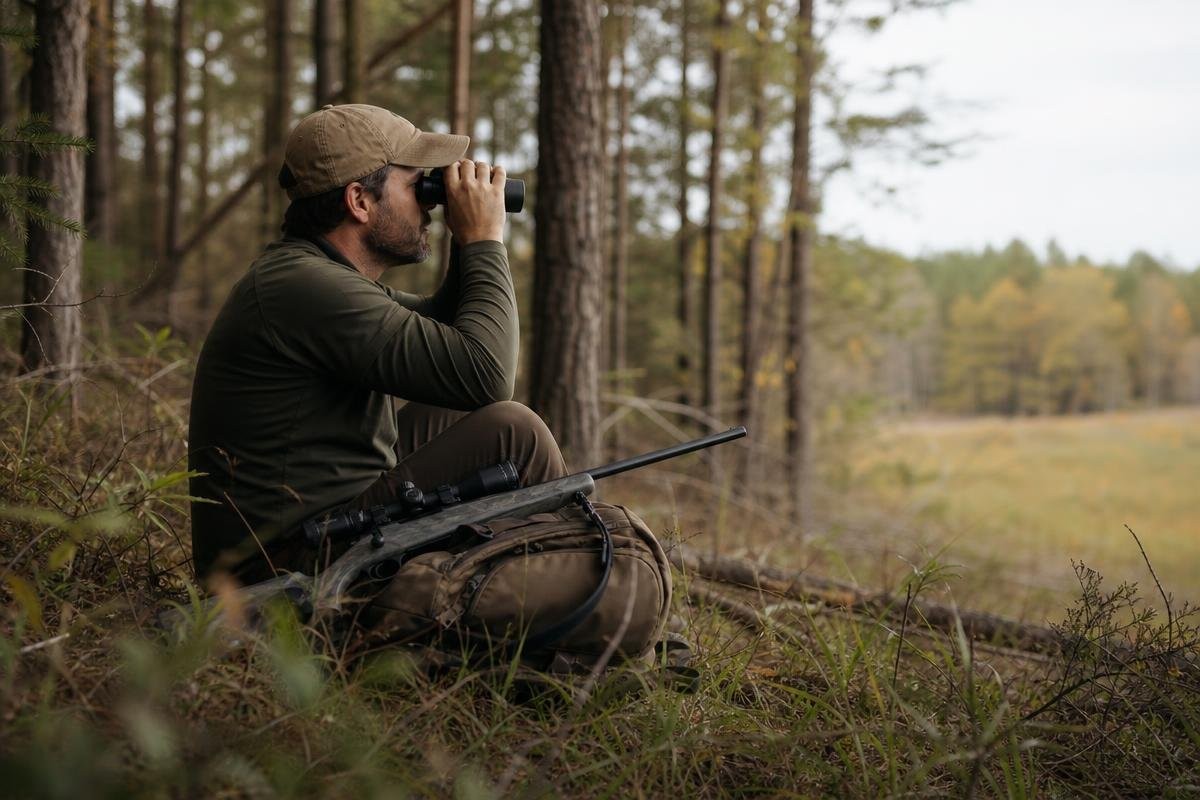
This is a real decision for a lot of North Texas hunters. Both cartridges run on the same short-action bolt guns and AR-10-pattern semi-autos. Both are proven on whitetail. But field performance separates them once terrain and range come into play.
Around Grayson County, most deer shots happen inside 150 yards in post-oak timber. That changes the math on cartridge selection. We cover ballistics, recoil, game suitability, and rifle availability so you can make a straight call. If you are already building on an AR-10 pattern platform, check out our complete 308 Win uppers assembled and headspaced in our shop as a starting point for comparison. No winner declared upfront. Just the data.
Cartridge Origins: Where the 308 Win and 7mm-08 Rem Come From
Hunters asking about 7mm-08 Remington vs 308 Winchester for deer are really asking about two cartridges that share the same DNA. Understanding where each one came from explains why they run in the same actions, fit the same magazines, and still shoot so differently past 300 yards.
308 Winchester: From NATO Spec to Hunting Staple
Winchester introduced the 308 Winchester in 1952 as the commercial version of the 7.62x51mm NATO cartridge. NATO formally standardized the military round in 1954. The case measures 2.015 inches long with a 51mm case length. It was built for military rifles, but hunters adopted it fast. The 308 became one of the most widely chambered hunting cartridges in North America within a decade of its release.
That parent case turned out to be extremely versatile. Wildcatters necked it up, necked it down, and reshaped it into dozens of offspring cartridges. One of those offspring became the 7mm-08.
7mm-08 Remington: A Wildcat That Went Mainstream
The 7mm-08 started as a wildcat: shooters took the 308 Winchester case and necked it down to accept a .284-inch (7mm) diameter bullet. The result was a smaller, faster projectile with a higher ballistic coefficient running in the same action. Remington commercialized the cartridge in 1980, and it has been a factory-loaded round ever since.
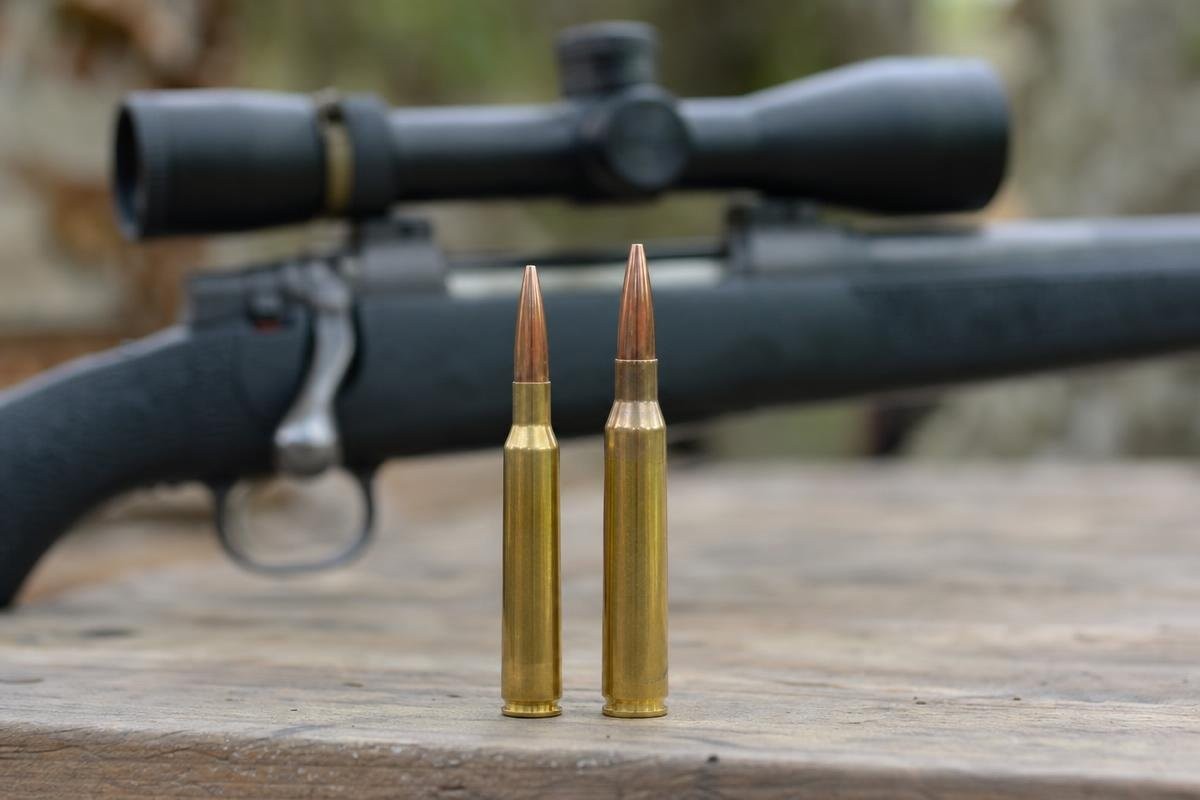
Both cartridges share the same bolt face and fit the same magazine length. That shared geometry is exactly why they run in the same action class, including AR-10-pattern platforms. Hunters building rifles for whitetail near Lake Texoma often ask why these two feel identical in the shop but perform differently at distance. The answer is in the bullet diameter and ballistic coefficient, not the action.
Hunters interested in building an AR-10-pattern rifle around either cartridge can browse our complete AR uppers in 19-plus calibers to see what platforms are available.
308 Win vs 7mm-08 Rem: Ballistics Side by Side
This is where the comparison gets interesting. On paper, the 308 Winchester carries more muzzle energy. But past 300 yards, the 7mm-08 Remington starts closing that gap fast, thanks to higher-BC bullets that shed velocity slower. Here is what the numbers actually look like.
Velocity and Energy at Distance
These figures come from published manufacturer load data measured from a 24-inch test barrel for two common hunting loads: the 308 Winchester 168gr Sierra MatchKing (BC ~0.447 G1) and the 7mm-08 Remington 140gr Hornady ELD-X (BC ~0.610 G1). Note that if you are running a shorter AR-10 barrel, expect roughly 20 to 30 fps of velocity loss per inch of barrel, so a 16- to 18-inch build will chronograph noticeably slower than the figures below.
The 308 starts with more energy. The 7mm-08 retains more of it past 300 yards. At 500 yards, the 7mm-08 leads in both velocity and remaining energy. For hunters who might stretch a shot across an open field edge along the Red River bottomlands near Denison, that difference is real and measurable. Build your 7mm-08 or 308 upper the way you want it, assembled and headspaced before it ships.
Bullet Drop and Wind Drift
With a 100-yard zero, the 308 Winchester 168gr drops roughly 45 to 48 inches at 500 yards. The 7mm-08 140gr drops approximately 38 to 42 inches at the same distance. That is a 6 to 7 inch advantage for the 7mm-08.
Wind drift at 500 yards in a 10 mph crosswind tells a similar story. The 308 drifts 12 to 13 inches. The 7mm-08 drifts 9 to 10 inches. If you are hunting inside 200 yards in the post-oak timber typical of North Texas, you will barely notice the difference. Push past 300 yards and the 7mm-08's BC advantage becomes the deciding factor. Hunters who want to compare a third cartridge in this performance class can look at our AR-10 caliber lineup, including 6.5 Creedmoor builds that occupy a similar long-range niche.
Sectional Density: Which Bullet Penetrates Deeper?
The 160gr 7mm-08 load has higher sectional density (0.284) than the 308 Winchester 180gr (0.271), meaning deeper penetration on heavy game. Sectional density (SD) is a measure of how well a bullet holds its path through tissue and bone, so a higher number generally translates to more penetration.
308 Win 180gr: SD 0.271
7mm-08 140gr: SD 0.248
7mm-08 160gr: SD 0.284
The 160gr 7mm-08 load actually beats the 308 Winchester 180gr in sectional density. That matters when we get into elk and larger game in section 6. For deer-sized animals, both cartridges penetrate more than enough at any reasonable hunting distance. If you are looking at a complete 308 Win upper assembled and headspaced in our shop, the 308's heavier bullet options give you flexibility that the 7mm-08 simply cannot match at the top end of the weight range.
Recoil and Shootability: Which Cartridge Is Easier to Shoot Well?
The 308 vs 7mm-08 recoil comparison is where these two cartridges separate most clearly for everyday hunters. A 180gr 308 Winchester load at 2,620 fps generates roughly 20 to 22 ft-lbs of free recoil in an 8.5-lb rifle. A 140gr 7mm-08 load at 2,800 fps in the same rifle produces approximately 13 to 15 ft-lbs. That is 30 to 35 percent less felt recoil, and you will notice it.
That gap matters most during pre-season bench sessions. Hunters at local deer camps sighting in before opener often run 20 to 30 rounds in a sitting. With the 308, flinch starts creeping in by round 15 for some shooters. The 7mm-08 lets you stay behind the scope longer, spot your own impacts, and correct without building bad habits.
The 308 is not punishing. Most adult shooters handle it without issue, especially with a quality recoil pad or a heavier rifle. The argument is not that the 308 kicks too hard. The argument is that the 7mm-08 is noticeably softer for equivalent or better downrange performance. That distinction matters for smaller-framed hunters, youth shooters, or anyone with shoulder sensitivity who does not want to sacrifice terminal performance to get there.
Follow-up shots tell the same story. Faster target reacquisition after the first round means more options if a deer quarters away or a hog keeps moving. The 7mm-08 gets your crosshairs back on target quicker. If you are building on an AR platform and want to compare options, our 308 Win uppers and our full lineup of AR uppers in 19+ calibers give you a direct side-by-side look at what each build actually weighs and how that affects felt recoil.
Deer Hunting: Does the 308 Win or 7mm-08 Rem Have the Edge?

For whitetail deer, honestly, neither cartridge has a clear edge over the other. Both are more than adequate inside 300 yards. The real question is where you hunt and how far you shoot.
If you're hunting the cross-timbers and post-oak country around Grayson County, most shots come under 150 yards. Thick cover, creek drainages, and river bottoms compress shot distances fast.
At that range, a 308 Winchester with 150-165gr Federal Power-Shok or Remington Core-Lokt delivers terminal performance that is hard to argue with. Frontal diameter, energy transfer, and bullet weight all favor the 308 when you're pushing through brush and bone. The 7mm-08 with 120-140gr loads hits with comparable energy at those distances and often prints a flatter trajectory, but the practical difference on a whitetail inside 150 yards is minimal.
The gap opens up past 250 yards. That's where the 7mm-08 earns its reputation. A 140gr Hornady ELD-X or 140gr Nosler AccuBond carries a higher ballistic coefficient than most 308 Winchester hunting loads. It sheds velocity more slowly and drifts less in a crosswind.
Open-country mule deer or pronghorn past 300 yards? The 7mm-08 has a real edge there. For hunters exploring complete AR uppers in other deer-hunting calibers, that same logic applies across the board: match the cartridge to the terrain, not just the animal.
For timber hunting inside 150 yards, the 308's heavier bullet options (165-180gr) offer slightly more frontal diameter and energy on impact. For field edges and longer senderos, the 7mm-08 is the flatter, softer-shooting choice. If you want a dedicated AR-platform option, our complete 308 Win uppers, built and headspaced in-house, are ready to run. Not sure which caliber fits your hunting setup? Call us at (888) 706-0633 and we'll point you in the right direction.
Elk and Larger Game: Can the 7mm-08 Rem Keep Up with the 308 Win?
This is where the comparison gets honest. Both cartridges can kill elk. But they do not give you the same margin for error, and that difference matters when you are standing at 250 yards on a bull that is quartering toward you.
308 Winchester for Elk: The Proven Standard
The 308 Winchester hunting cartridge has decades of elk kills behind it, and the ballistics explain why. A 180gr Federal Trophy Bonded Bear Claw or Nosler Partition loaded in 308 retains roughly 1,700 to 1,800 ft-lbs of energy at 300 yards. That clears the 1,500 ft-lb minimum most experienced guides recommend for elk by a meaningful margin. You have room for a less-than-perfect angle, a slightly longer shot, or a bullet that hits heavy shoulder bone instead of slipping through the ribs.
That margin is not a luxury. On elk, it is insurance.
7mm-08 Remington for Elk: Capable, but Demanding
A 160gr Nosler Partition or 150gr Swift A-Frame in 7mm-08 retains approximately 1,500 to 1,600 ft-lbs at 300 yards. It meets the threshold. It does not exceed it by much. That means the 7mm-08 for elk hunting is a load-selection and shot-placement game. You need premium bonded or partition bullets, shots inside 300 yards, and broadside or quartering-away angles. Take a bad angle or push the range, and you are asking the cartridge to do more than it was built to do.
The 7mm-08 is not the wrong choice for elk. It is a demanding one. The hunter has to close the gap that the cartridge cannot.
Which Cartridge Works Better as a Single Rifle for Deer and Elk?
A lot of hunters in this part of Texas draw an elk tag in New Mexico or Colorado and want to run the same rifle they use for whitetail back home. Some even chase the smaller elk herds in southern Oklahoma near the Arbuckle Mountains. That is a real and practical question. The answer is the 308. It handles both jobs without compromise.
The 7mm-08 is excellent on deer and capable on elk, but it asks more of you when the animal is bigger. If you want one rifle that covers both, our complete 308 Win uppers, built and headspaced in-house, are made for exactly that kind of versatility. Hunters who want to explore other calibers for western big game can also browse our full lineup of complete AR uppers across multiple cartridges.
Rifle and Ammunition Availability in 2026
The 308 Winchester is one of the most produced centerfire rifle cartridges in the world. Federal, Remington, Hornady, Nosler, Berger, and Sierra all load it, covering everything from 110gr varmint rounds to 220gr subsonics. You will find 20 to 30 distinct factory loads from major manufacturers at any given time. That depth matters when shelves run thin or you need a specific bullet construction for the job.
The 7mm-08 Rem is widely stocked at most sporting goods retailers, but selection is narrower. Expect 5 to 10 factory loads from the big names rather than the full spread you get with the 308. You will find 140gr hunting loads without much trouble. Specialty loads, match bullets, and heavy-for-caliber options are harder to source locally, especially in smaller markets like Denison, Durant, or Ardmore.
Platform Options: Bolt-Action and Semi-Auto
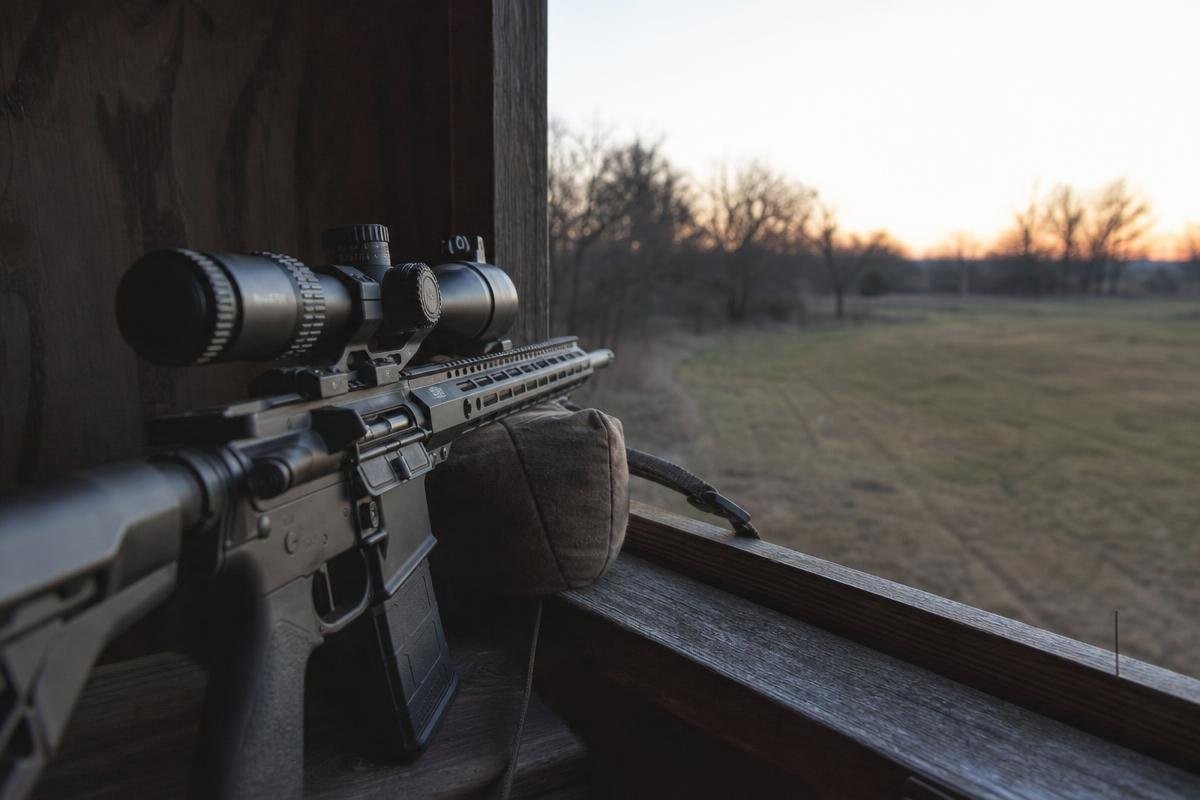
Both cartridges are well-supported in bolt-action rifles. Nearly every major manufacturer chambers the 308 Winchester, and most also offer a 7mm-08 option. The gap opens up in semi-auto platforms. The 308 is one of the most common AR-10-pattern chamberings available. The 7mm-08 is rarely seen in semi-auto configurations. If you want a gas-operated hunting or range rifle, the 308 is the practical choice.
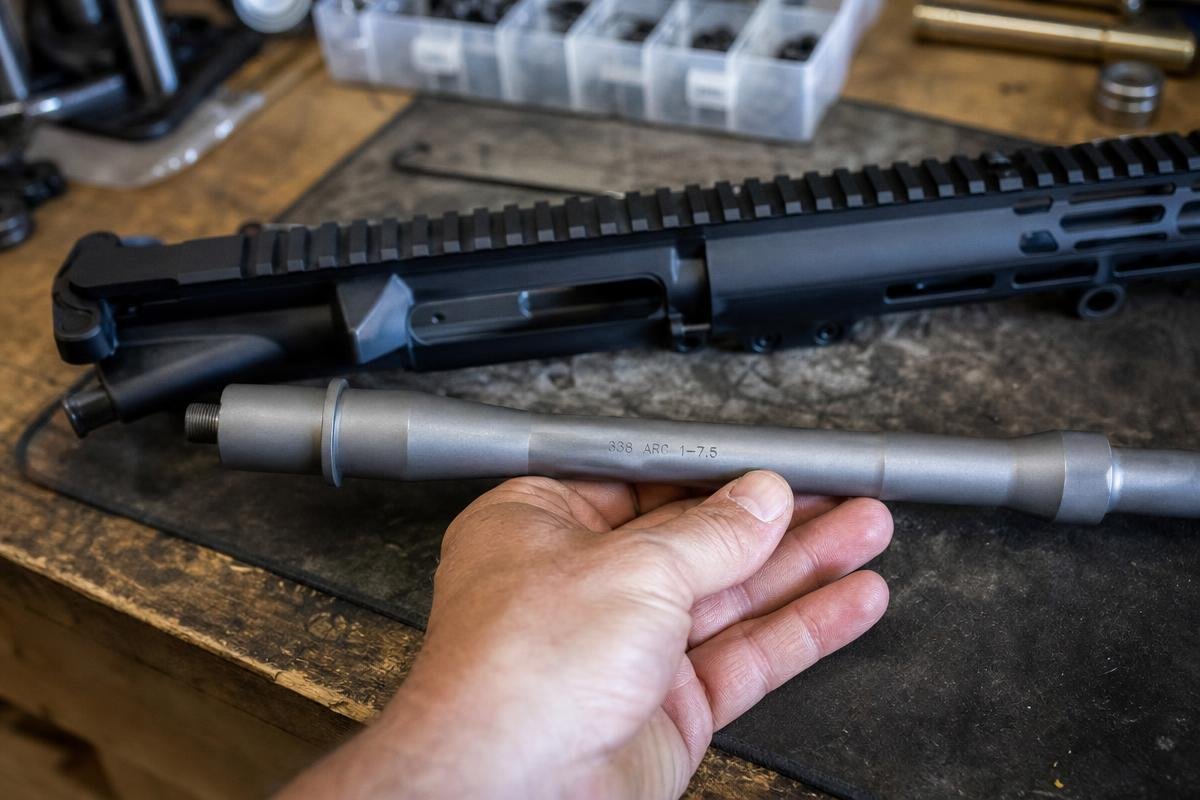
We build complete 308 Win uppers in-house, assembled and headspaced, ready to drop onto your AR-10-pattern lower. No FFL required. Ships directly to your door.
Reloading Support
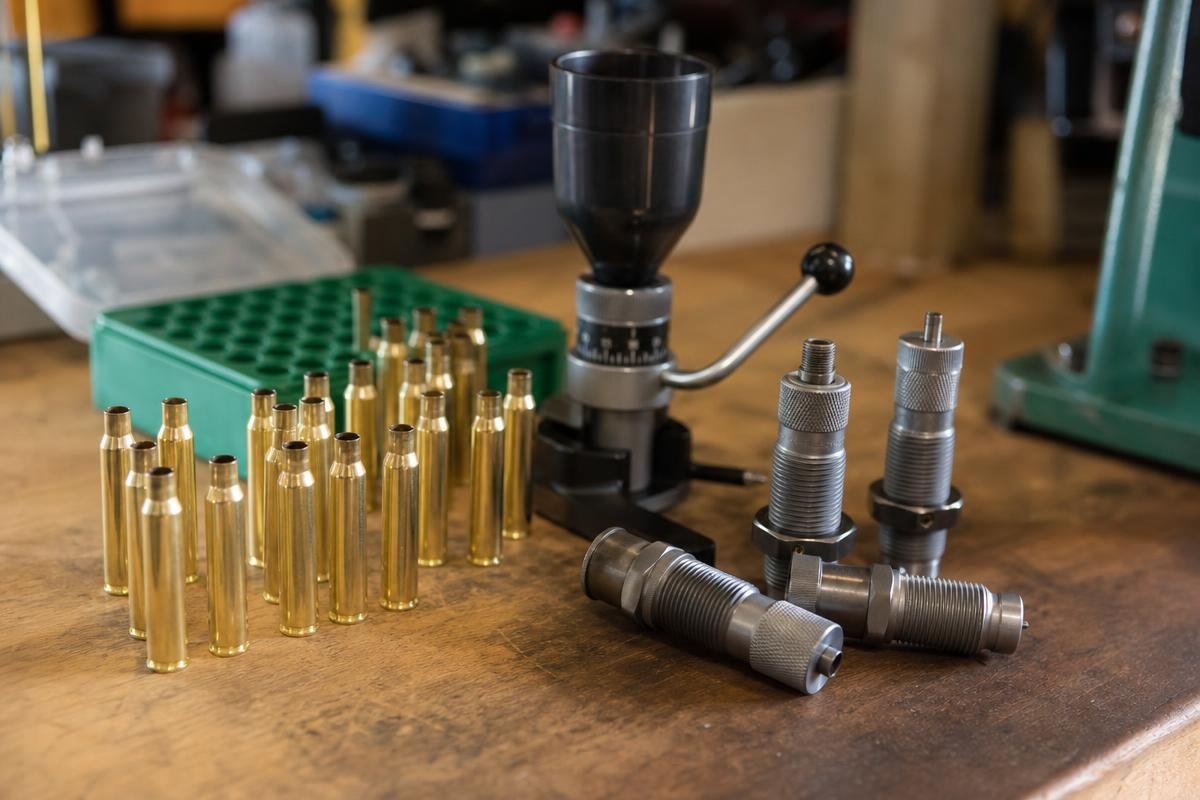
Both cartridges are well-supported with brass, dies, and projectiles. The 308 brass is more abundant and typically cheaper per piece. For hunters in the Denison area who reload their own ammunition, that cost difference adds up across a season.
Ready to build an AR-10-pattern rifle around the 308? Our shop at 2022 S Crockett St, Sherman, TX 75090 builds every upper to order. Call us at (888) 706-0633 or shop online. From whitetail in Grayson County to elk out west, we have the platform to match your cartridge.