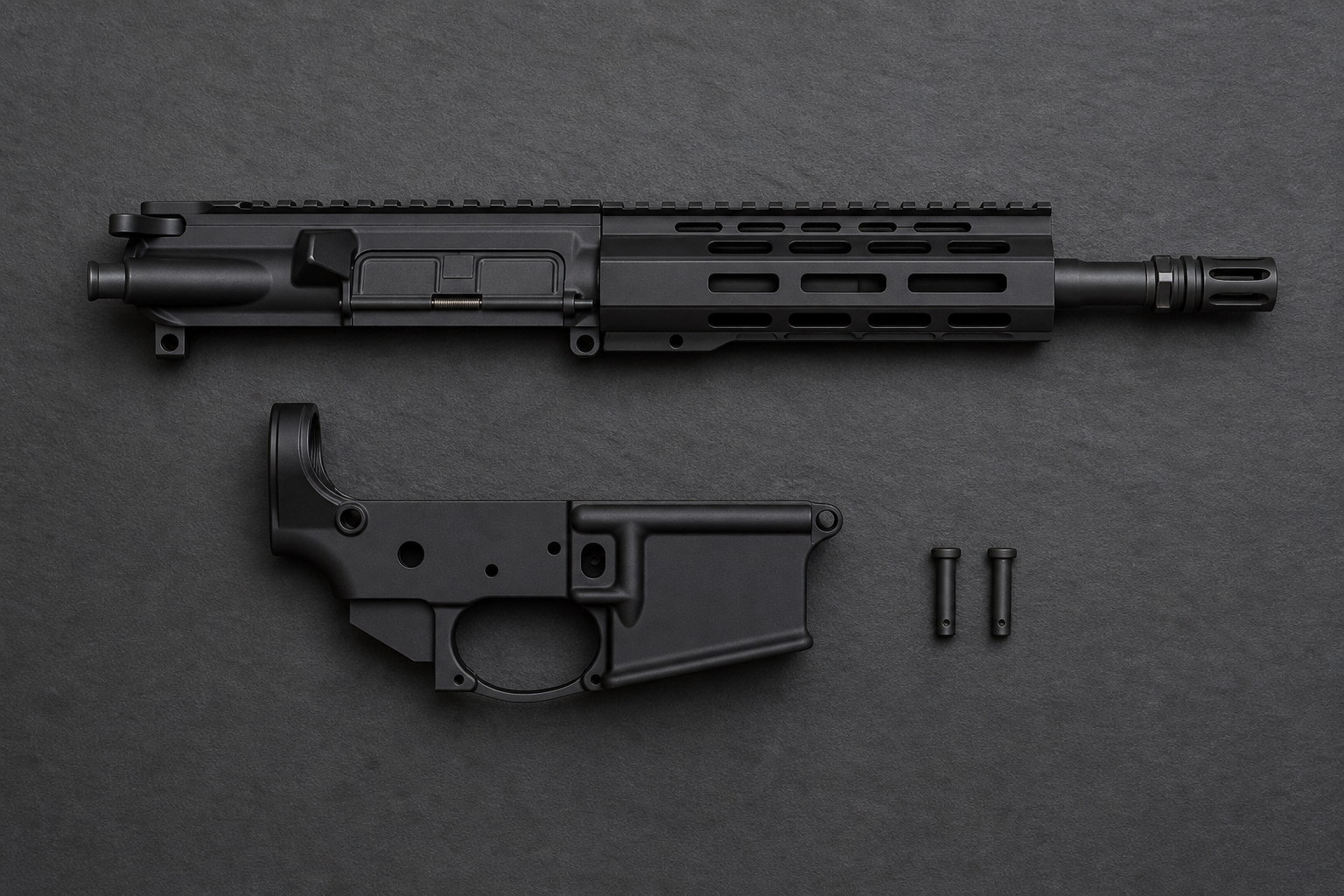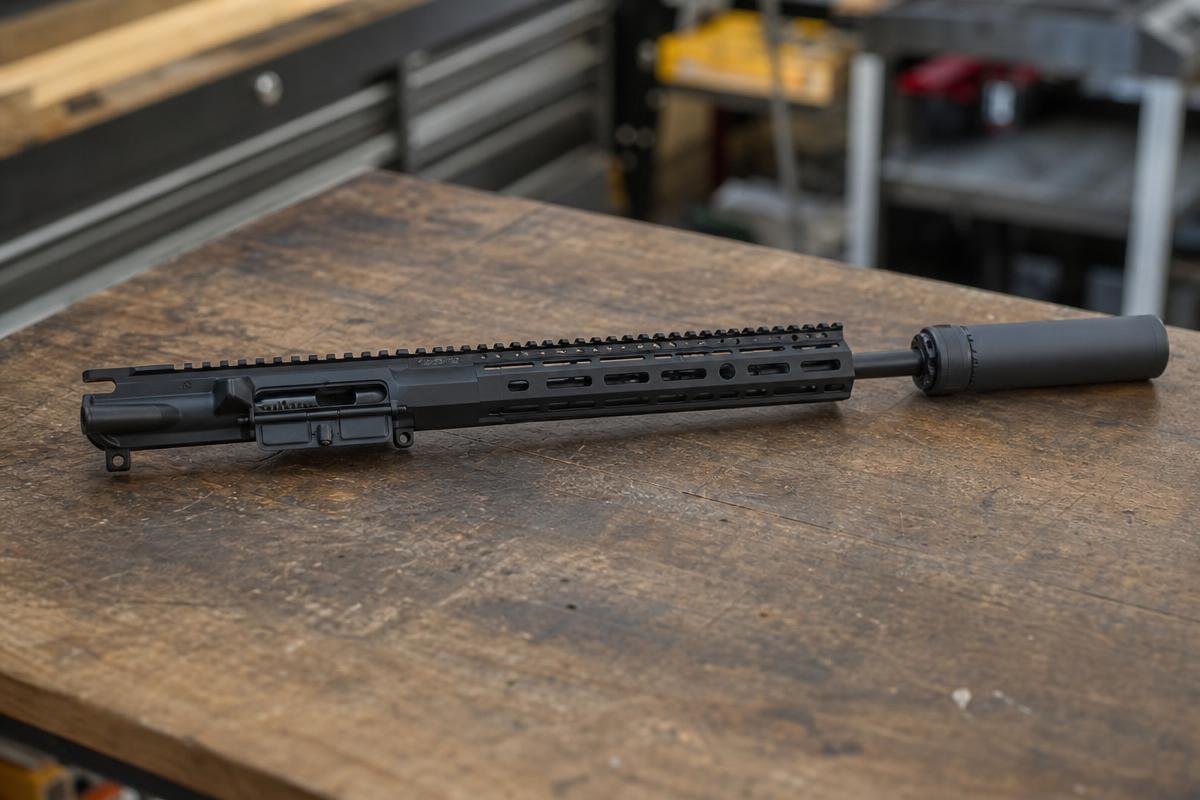
Gas system tuning is the single biggest variable in any 338 ARC suppressed build, and getting it wrong means short-stroking, over-gassing, or a bolt carrier that beats itself to death. We build 338 ARC complete uppers to order at our FFL shop in Sherman, TX, headspaced and function-checked before they leave the bench.
If you're hunting deer or hogs in Grayson County and want a suppressor-ready setup that actually cycles reliably, here is what works and what doesn't. Ready to spec a suppressor-ready 338 ARC upper built to your exact configuration?
Getting the Specs Right for Reliable, Clean-Running Suppressed Fire
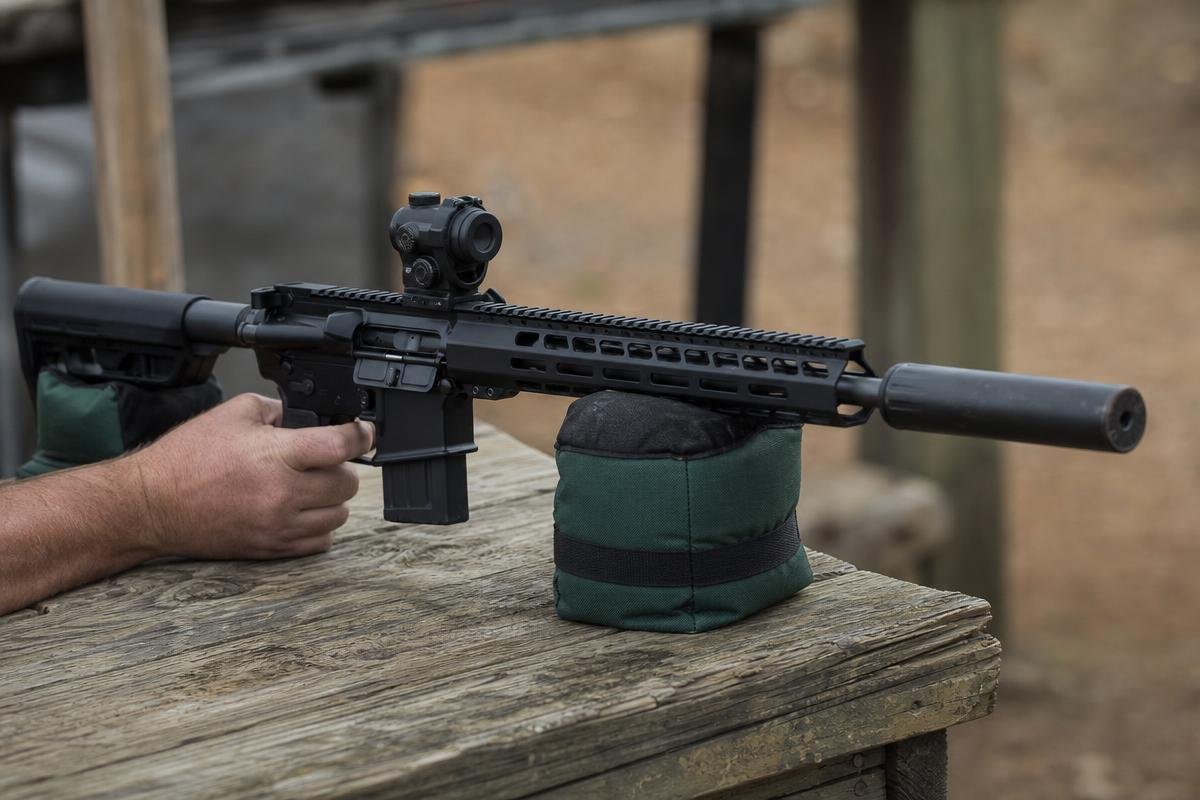
The 338 ARC was engineered with suppressor use in mind from day one. That matters. Most AR calibers were adapted for suppressed shooting after the fact, which means gas system compromises and reliability headaches. The 338 ARC starts with a .338-caliber bore, subsonic-capable bullet weights above 300 grains, and a case designed to run efficiently in a standard AR-15 platform. It is one of the most capable suppressor hosts available in an AR frame right now.
Getting reliable performance out of a suppressed 338 ARC build depends on getting the specs right. Barrel length, gas port sizing, adjustable gas block, BCG coating, 5/8x24 thread pitch, buffer weight, and handguard clearance all interact. Get one wrong and the build runs dirty, short-strokes, or beats itself apart. We build complete 338 ARC uppers to order, headspaced and function-checked before they leave the bench. Here you'll find exactly what works.
Why the 338 ARC Is a Strong Suppressor Platform
The 338 ARC is one of the better suppressor hosts available on the AR-15 platform, and the reason starts with physics. A larger bore diameter means more internal baffle volume per stage inside the can. More volume means more space for propellant gas to expand and cool before it exits the muzzle. That directly translates to better sound attenuation per grain of powder burned.
Bore Diameter and Suppressor Volume
A .338-bore suppressor runs an internal diameter of roughly .355 to .360 inches. Compare that to a .30-cal can and you have meaningfully more baffle volume at every stage. Most quality .338-bore cans are also rated to handle the 338 ARC's pressure envelope without issue. The standard muzzle thread is 5/8x24 TPI, which is widely supported across suppressor brands. If you are already running a .30-cal can, check with your manufacturer before mounting it on a .338-bore barrel.
For Grayson County hunters running suppressed setups on deer and feral hog ground near Denison, that extra attenuation matters. You want the round doing its job without running off every animal in the area.
Subsonic and Transonic Performance in .338
This is where the 338 ARC separates itself from most AR calibers. With the right powder selection, a 16-inch barrel can push a 300-grain projectile to approximately 1,050 fps, right at the subsonic threshold. At that velocity, the supersonic crack disappears entirely. The only remaining sound signatures are mechanical cycling and muzzle exit. That is a genuinely quiet package.
5.56 NATO cannot reach subsonic velocities at any useful bullet weight without a purpose-built subsonic load. The 338 ARC does it with standard projectiles and a barrel length that is still practical in the field. For a full breakdown of how the two cartridges compare, read our 338 ARC vs 5.56 comparison. If you are ready to build, browse our complete 338 ARC uppers to see current configurations.
Barrel Length: The Single Biggest Decision for a Suppressed 338 ARC Build
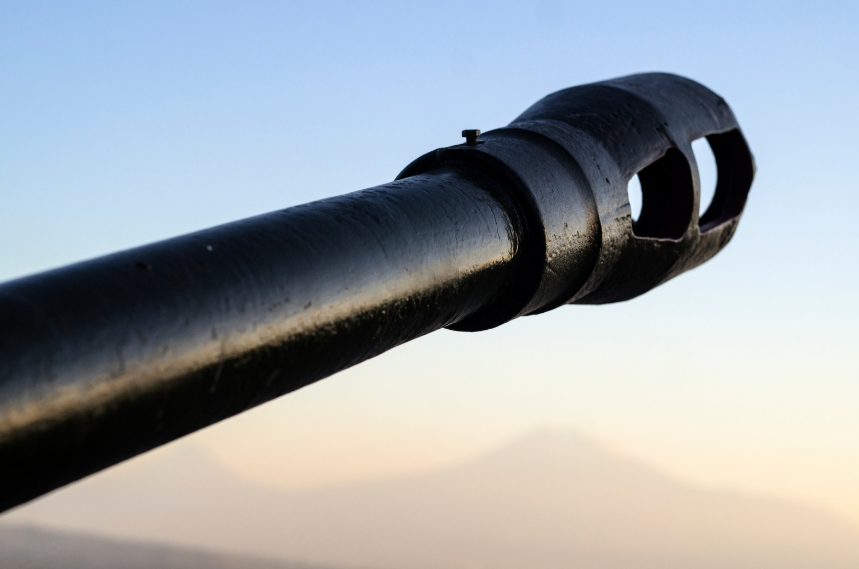
Barrel length drives almost every other decision in a suppressed 338 ARC build. It determines your gas system, your port pressure, your velocity, and how the rifle cycles when a can is mounted. Get this right first, and the rest of the build falls into place.
16-Inch Barrels: The Balanced Choice
The 16-inch barrel is the most common 338 ARC barrel length for suppressor builds, and for good reason. It runs a mid-length 9-inch gas system, which keeps port pressure manageable when the suppressor backs pressure into the action. You'll see roughly 2,400 to 2,500 fps with 215 to 225 grain bullets.
Add a .338-bore suppressor and you're looking at 6 to 9 inches of additional overall length, which is still a practical package for moving between a truck and a deer blind on Grayson County ranch land. Understanding choosing the right gas system length is the single most important step before you order parts.
For most North Texas hunters running deer or hog setups around Lake Texoma, the 16-inch configuration hits the right balance of velocity, portability, and suppressed reliability.
18-Inch Barrels: Maximizing Velocity Before the Can
An 18-inch barrel picks up roughly 50 to 75 fps over a 16-inch tube. More importantly, it lets you run a rifle-length 12-inch gas system. That longer dwell time means lower port pressure and a slower bolt unlock, which translates directly to smoother cycling and reduced suppressor wear on precision and hunting builds. If you're running a dedicated long-range setup for open ranch country, the 18-inch is worth the extra length. Browse our top 338 ARC uppers for hunting and tactical builds to see how we configure these.
12.5-Inch and Shorter: SBR Considerations
Short-barrel 338 ARC suppressed AR build parts are a different animal entirely. Any barrel under 16 inches makes this an NFA item requiring a Form 1 or Form 4 before you build. Velocity drops to approximately 2,100 to 2,200 fps with 215 grain bullets. A pistol-length gas system generates extreme port pressure when a suppressor is mounted, and that pressure has to go somewhere.
You need an adjustable gas block set to its most restrictive position, and you need to plan for added stress on the BCG and buffer system. We cover both of those topics in the next two sections.
Gas System Tuning for Suppressed 338 ARC Builds
Gas system tuning is the most critical variable in a 338 ARC suppressed AR build. Get this wrong and you get early bolt unlock, punishing recoil, and accelerated wear on every component downstream. Get it right and the rifle cycles cleanly with the can attached.
Why Suppressors Over-Gas Your AR
A suppressor traps expanding gas at the muzzle. That trapped gas creates back-pressure that travels back through the gas tube and reaches the bolt carrier before the case has fully unseated from the chamber. The bolt unlocks early. Felt recoil spikes. Parts wear faster than they should.
The 338 ARC makes this worse than 5.56 does. More case capacity means more propellant gas, which means more back-pressure arriving at the bolt carrier group. If you are running a 338 ARC complete upper and adding a suppressor without addressing the gas system, you are asking for problems. North Texas summers push this further. When ambient temps exceed 100°F in Denison, carbon builds faster and pressure effects compound with every string of fire.
Adjustable Gas Blocks: What to Look For
You need an adjustable gas block. A fixed block gives you no way to dial back the excess pressure a suppressor introduces. Look for a block with at least 10 discrete positions so you have real precision when tuning. Set-screw and clamp-style designs both work well. Low-profile is required if you are running a free-float handguard, which most suppressed builds do.
Superlative Arms, SLR Rifleworks, and Seekins Precision all make blocks worth running. The tuning process is straightforward: find the minimum gas setting that gives you reliable cycling with the suppressor attached, then open one additional position as a safety margin. That extra position protects you when ammo pressure varies or the can runs hot.
Buffer Weight and Spring Rate for Suppressed Cycling
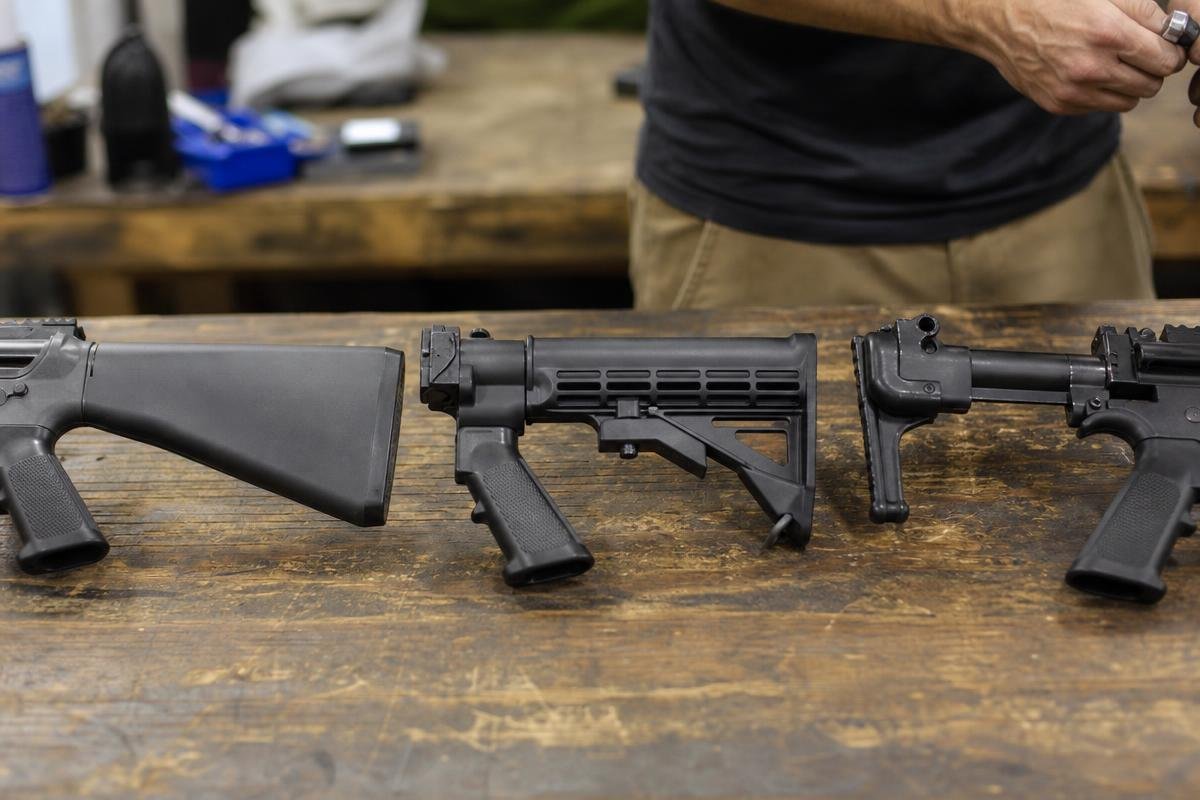
A standard carbine buffer at 3 oz is too light for a suppressed 338 ARC gas system suppressed setup. Start with an H2 buffer at 4.7 oz for a 16-inch build. If you are still seeing bolt bounce or short-stroking issues, step up to an H3 at 5.4 oz. Rifle-length tube setups call for a rifle-length buffer to match.
Pair the heavier buffer with a quality spring. JP Enterprises and Sprinco both make enhanced-reliability springs that hold tension longer than mil-spec replacements. A heavier buffer alone slows the bolt carrier. A better spring controls the return stroke. Together, they keep your 338 ARC suppressed AR build parts working in sync.
BCG and Charging Handle Selection for a Suppressed Build
Suppressed fire pushes significantly more carbon back into your upper receiver than unsuppressed shooting. On a 338 ARC suppressed AR build, that fouling compounds fast, especially during North Texas summers when temperatures push past 100°F. Your BCG coating and charging handle choice matter more here than on any standard build. If you want to understand what a bolt carrier group does for your AR build before spec'ing one, start there.
BCG Coatings That Handle Suppressor Carbon and Heat
The best BCG for suppressed 338 ARC use is coated in Nickel Boron (NiB) or Diamond-Like Carbon (DLC). Both shed carbon without aggressive scrubbing. NiB has a slick, almost self-lubricating surface. DLC is harder and more heat-resistant. Either is a strong call for a suppressed build running hot in Grayson County deer and hog country.
Nitride (Melonite/QPQ) is a solid mid-tier option. It penetrates the steel surface rather than sitting on top, so it will not flake. It cleans up reasonably well and holds up to suppressor heat. Phosphate BCGs work, but they hold carbon aggressively and demand more frequent cleaning. For a suppressed build, that cleaning burden adds up quickly. See our full AR-15 BCG coatings guide for a side-by-side breakdown.
One spec to confirm before ordering: the 338 ARC uses a .422 bolt face diameter, the same as 6.5 Grendel and 6mm ARC. Not every BCG on the market is compatible. Verify bolt face diameter before you buy.
Choosing a Suppressor-Ready Charging Handle
A standard mil-spec charging handle vents gas directly back toward your face when a suppressor is attached. That is not a comfort issue. It is a real problem on a high-pressure build. Ambidextrous or oversized latch handles with a gas-deflecting geometry, Raptor-style or BCMGUNFIGHTER designs, route that blowback away from the shooter. Browse our selection of AR-15 charging handles to see what fits your setup.
On suppressed builds with higher backpressure, Raptor latch tension occasionally needs adjustment. It is a quick fix, but worth knowing before your first range session.
Spec'ing a suppressed 338 ARC and not sure which BCG coating or charging handle fits your setup? Call us at (888) 706-0633 and we'll walk you through the right combination before you order.
Handguard and Muzzle Device Setup for a Suppressed 338 ARC
Your handguard and muzzle device choices are not afterthoughts on a suppressed build. They directly affect heat management, fitment, and how fast you can transition between suppressed and unsuppressed use. Get these wrong and you'll feel it on your support hand after the first string of fire.
Free-Float Handguard Clearance for Suppressor Bodies
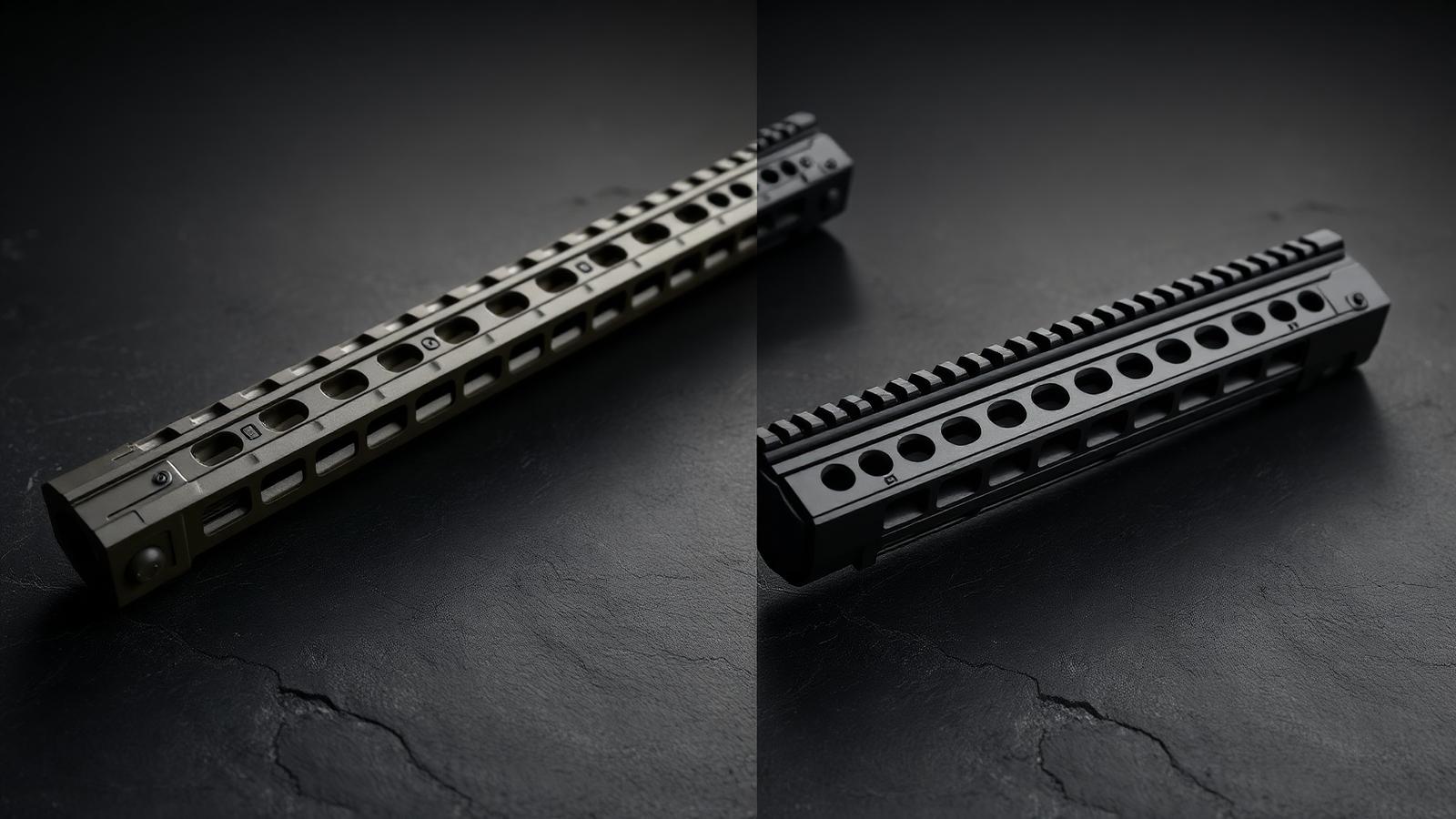
Most .338-bore suppressors run 1.5 to 1.75 inches in outer diameter. Your handguard needs at least 0.25 inches of clearance beyond that at the muzzle end. That puts you in the 1.75 to 2.0-inch inner diameter range for a free-float handguard. Anything tighter and you risk contact with the suppressor body.
That contact is a real problem. Suppressor surface temperatures can exceed 400 degrees Fahrenheit after a fast string of shots. During a late-summer hog hunt near Lake Texoma, where ambient temps are already pushing triple digits, that heat builds faster than you'd expect. Contact with a hot suppressor will burn your support hand and warp polymer handguards over time. Stick with a free-float M-LOK or KeyMod aluminum handguard with confirmed ID clearance. Measure before you buy.
Muzzle Devices: Direct Thread vs. Quick-Detach Mounts
Direct-thread suppressors mount directly onto 5/8x24 muzzle threads. They're simpler, lighter, and less expensive. Attachment takes 15 to 30 seconds. If your 338 ARC upper runs suppressed most of the time, direct thread is a clean solution.
Quick-detach mounts use a proprietary muzzle device that stays on the rifle. The suppressor snaps on in under a second. That speed matters if you're swapping the can between rifles or running it on and off regularly. When the suppressor is off, always cap or protect those 5/8x24 threads with a thread protector or muzzle brake. Bare threads get dinged and dirty fast.
How the 338 ARC Suppressed Build Compares to Other Suppressed AR Calibers
Caliber selection is a mission decision. The 338 ARC suppresses well, but that doesn't make it the right call for every shooter. Here's how it stacks up against the two calibers we get asked about most.
338 ARC vs 300 Blackout: Different Jobs, Different Strengths
300 Blackout was engineered from the ground up for suppressed CQB use. A 9-inch barrel running 220 gr subsonic loads produces roughly 300 ft-lbs of energy at the muzzle and is nearly hearing-safe with a can. That's a specific, narrow mission it does extremely well. Our 300 Blackout complete uppers are a popular choice for exactly that role.
The 338 ARC operates in a completely different space. In supersonic configuration it delivers 2,500 to 3,000 ft-lbs at 300 yards and retains 1,800 to 2,000 ft-lbs at 500 yards. It is not a subsonic platform. It's a suppressed precision and hunting cartridge. If you're hunting feral hogs or whitetail on private land near Lake Texoma, the 338 ARC is the practical choice. If you need a quiet house gun or a truck rifle for close work, 300 Blackout wins that argument.
338 ARC vs 6mm ARC: When the Bigger Bore Wins
The 6mm ARC shares the same .422 bolt face as the 338 ARC and shoots 103 to 108 gr bullets with excellent ballistic coefficients. It's lighter to feed, less expensive per round, and a strong choice for pure precision target work. Our 6mm ARC complete uppers are built on the same platform with the same gas system considerations.
Where the 338 ARC separates itself is terminal energy on large game. The 6mm ARC delivers roughly 900 to 1,100 ft-lbs at 500 yards. The 338 ARC nearly doubles that. For a suppressed large-bore AR build where terminal performance past 400 yards matters, the 338 ARC is the answer. For a lightweight precision rig where you're punching paper or steel, the 6mm ARC is the smarter, more economical platform.
Pick the caliber that fits the job. The 338 ARC suppressor host build earns its place when range and terminal energy both matter.
Building Your Suppressed 338 ARC in Denison and North Texas
Local Conditions That Affect Suppressed AR Builds
Summer temperatures around Sherman and the Red River Valley regularly push past 100 degrees Fahrenheit. That heat, combined with the humidity that rolls in during spring and fall, accelerates carbon fouling inside your suppressor and upper receiver faster than you'd see in a drier climate. If you're running a suppressed 338 ARC suppressor host build in these conditions, BCG coating matters. NiB and DLC coatings shed carbon far more easily than phosphate, and a stainless steel barrel resists corrosion better when the weather swings between dry and muggy.
The hunting terrain around Eisenhower State Park and the private land bordering Lake Texoma makes a suppressed large-bore AR genuinely practical here. Feral hogs and whitetail are both in season across this area, and the 338 ARC's ability to stay quiet and hit hard past 300 yards is a real advantage on that kind of ground.
Getting Your 338 ARC Upper Built to Order
Our shop is located at 2022 S Crockett St in Sherman, TX, about 10 miles from Denison via US-82. We build every 338 ARC suppressed AR build parts configuration to order. That means assembled, headspaced, and function-checked before it leaves the bench. You pick the barrel length, gas system, and handguard setup. We build it to your exact specifications.
No FFL required for an upper receiver. It ships directly to your door. Shop complete 338 ARC uppers and configure yours today. If you have questions about matching your gas system to a specific suppressor, reach out before you order and we'll sort it out.
Ready to put together a suppressed 338 ARC build that actually runs? Our team in Sherman, TX builds complete 338 ARC uppers to your specs: barrel length, gas system, handguard configuration, all assembled, headspaced, and function-checked before it ships to your door. No FFL required. Call us at (888) 706-0633 with your build questions.