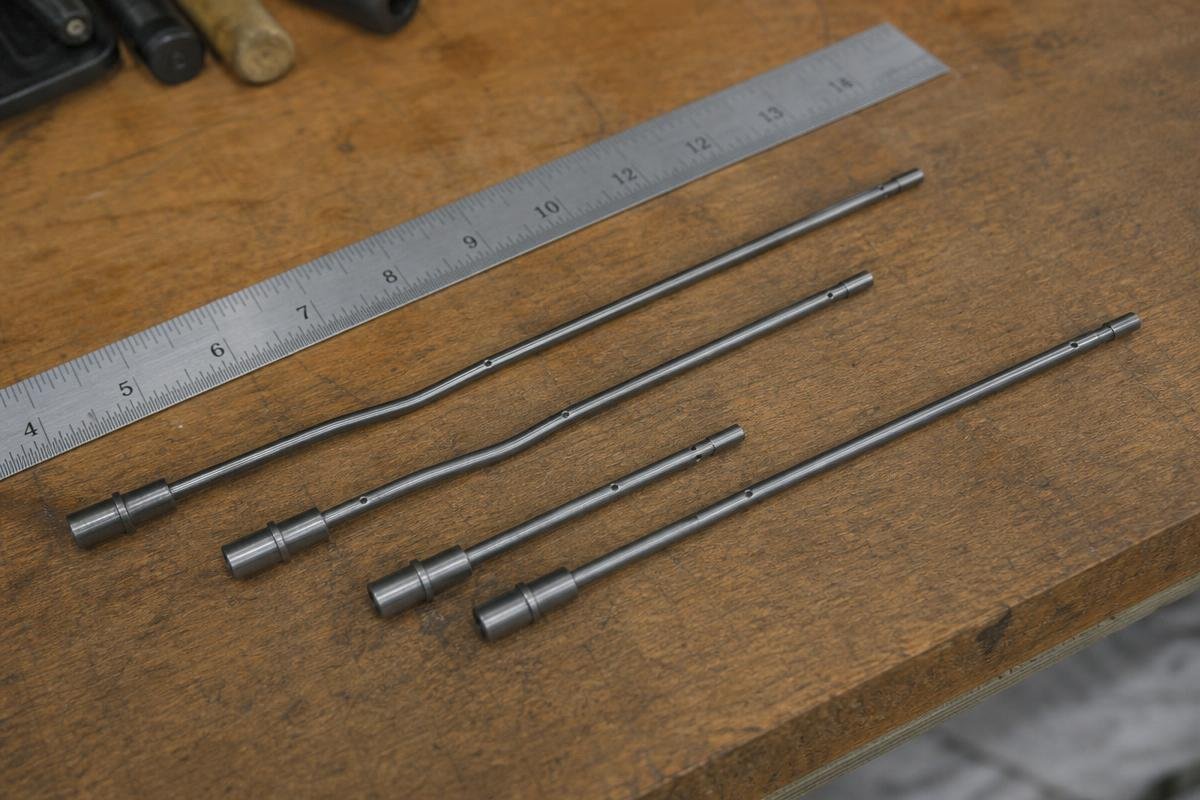
Choosing the right gas system length is one of the most consequential decisions in any AR-15 build, and getting it wrong means overgassing, short-stroking, or accelerated bolt carrier wear. We build and ship complete uppers and barrels every day out of our shop at 2022 S. Crockett St. in Sherman, TX, and here is how to match gas system length to barrel length so your rifle cycles reliably from day one. No guesswork. No generic advice pulled from a forum thread.
Already know your barrel length? Build your upper with the gas system matched before it ships to your door.
Matching Gas System Length to Barrel Length for Reliable Cycling
Pick the wrong gas system length and your AR-15 will short-stroke, beat the bolt carrier group to death, or stop cycling altogether. It is one of the most consequential decisions in any AR build, and it gets overlooked more than almost any other component choice. AR15Parts.com builds and ships complete AR-15 uppers every business day from our shop at 2022 S. Crockett St. in Sherman, TX, serving builders across the Denison-Sherman corridor and the rest of North Texas. Every upper leaves here with the gas system already matched to the barrel.
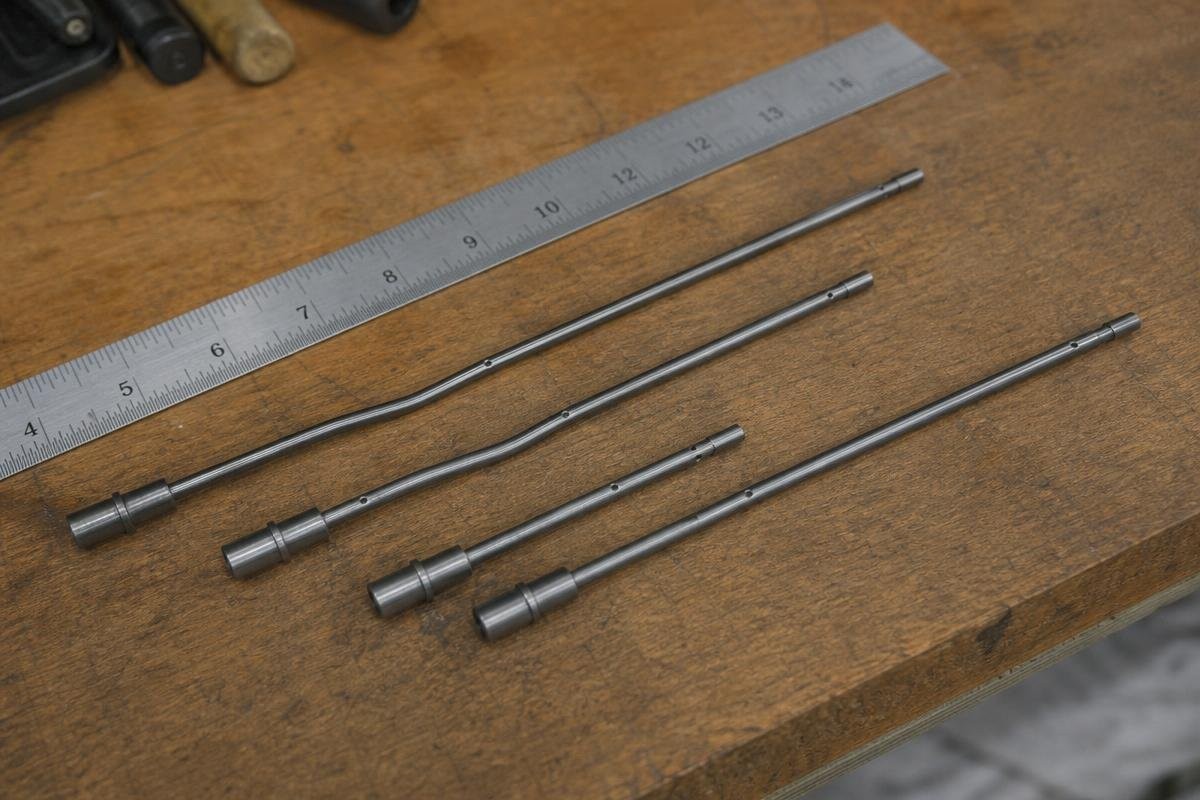
Here you'll find all four gas system lengths: pistol, carbine, mid-length, and rifle. Barrel length is the primary variable that drives the decision. Get it right and your rifle runs clean, recoil stays manageable, and bolt timing stays where it belongs. Get it wrong and no amount of tuning fixes the root problem. Whether you are spec-ing a 16-inch home defense carbine, a 20-inch .308 for the Red River bottom country, or a short-barreled pistol build for 3-gun, the answer starts with understanding how gas system length controls bolt carrier timing and dwell time.
What Does the Gas System Actually Do?
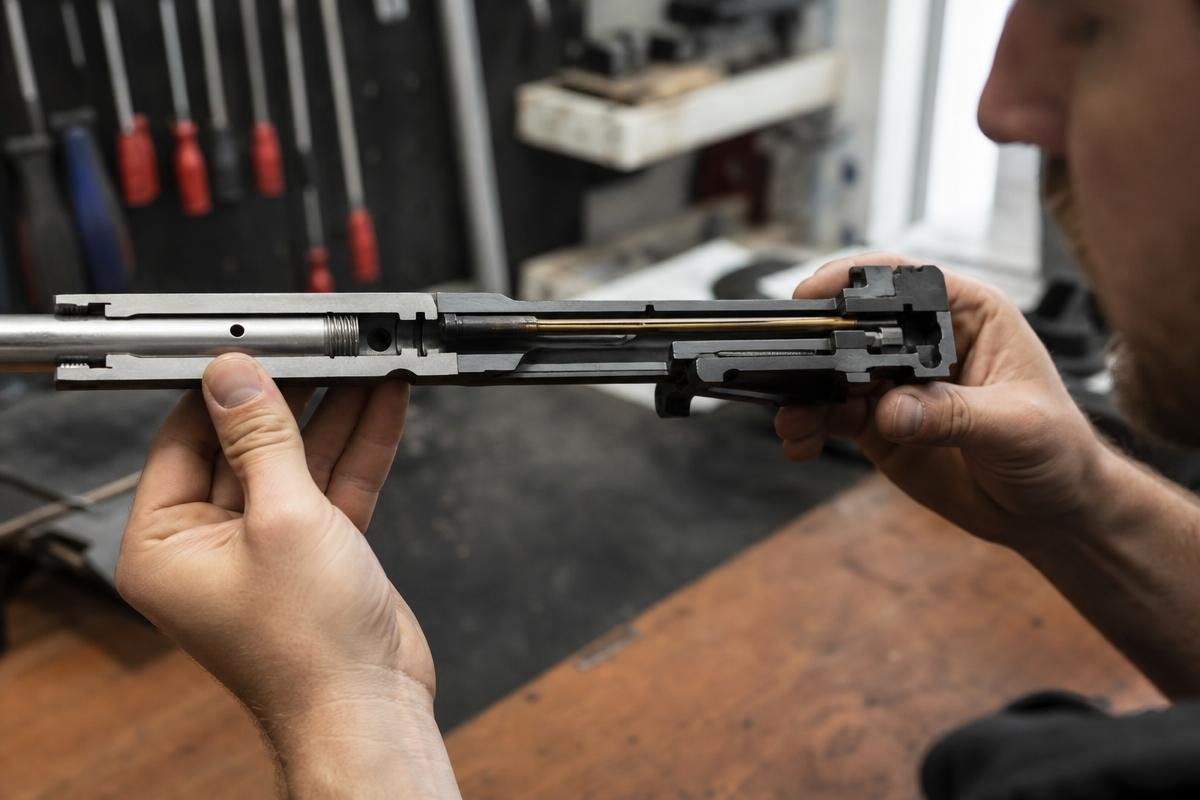
The gas system is what turns a single-shot into a semi-automatic. When a round fires, expanding propellant gas drives the bullet down the bore. A small hole drilled into the barrel, called the gas port, vents some of that gas into a tube. That gas travels rearward through the tube, enters the bolt carrier key, and pushes the bolt carrier group rearward to cycle the action. That is direct impingement in plain terms.
How the Direct Impingement Cycle Works
The cycle runs in four steps. First, the round fires and the bullet starts moving down the bore. Second, the bullet passes the gas port and pressurized gas bleeds into the tube. Third, that gas slams into the bolt carrier key, driving the carrier rearward, compressing the buffer spring, extracting the spent case, and cocking the hammer. Fourth, the buffer spring pushes the carrier forward, strips a fresh round from the magazine, chambers it, and locks the bolt. The rifle is ready to fire again.
Every phase of that cycle depends on precise timing. The bolt must not unlock before chamber pressure drops to a safe level. Too early and you get torn case heads and hard extraction. Too late and the action cycles sluggishly or short-strokes. The gas port location is what controls that timing.
Why Gas Port Location Changes Everything
The gas port is drilled at a specific distance from the chamber face. That distance is what defines your gas system length, whether pistol, carbine, mid, or rifle. A port drilled closer to the chamber taps gas earlier in bullet travel, when bore pressure is still very high. The carrier moves hard and fast. That works on short barrels where the bullet exits the muzzle quickly, but it hammers components on longer barrels.
A port drilled farther from the chamber, as on mid-length and rifle-length systems, taps gas after the bullet has traveled farther down the bore. Pressure is lower. The carrier moves with less force and over a longer stroke. The result is a softer, more controlled cycle with less stress on the bolt and carrier.
This is why barrel length and gas system length must be matched. Get it wrong and you are either over-gassing or under-gassing the rifle, and both cause problems. Browse our AR-15 barrels by caliber and length to see how each barrel option pairs with a specific gas system.
The Four Gas System Lengths: Specs, Barrel Ranges, and Trade-Offs
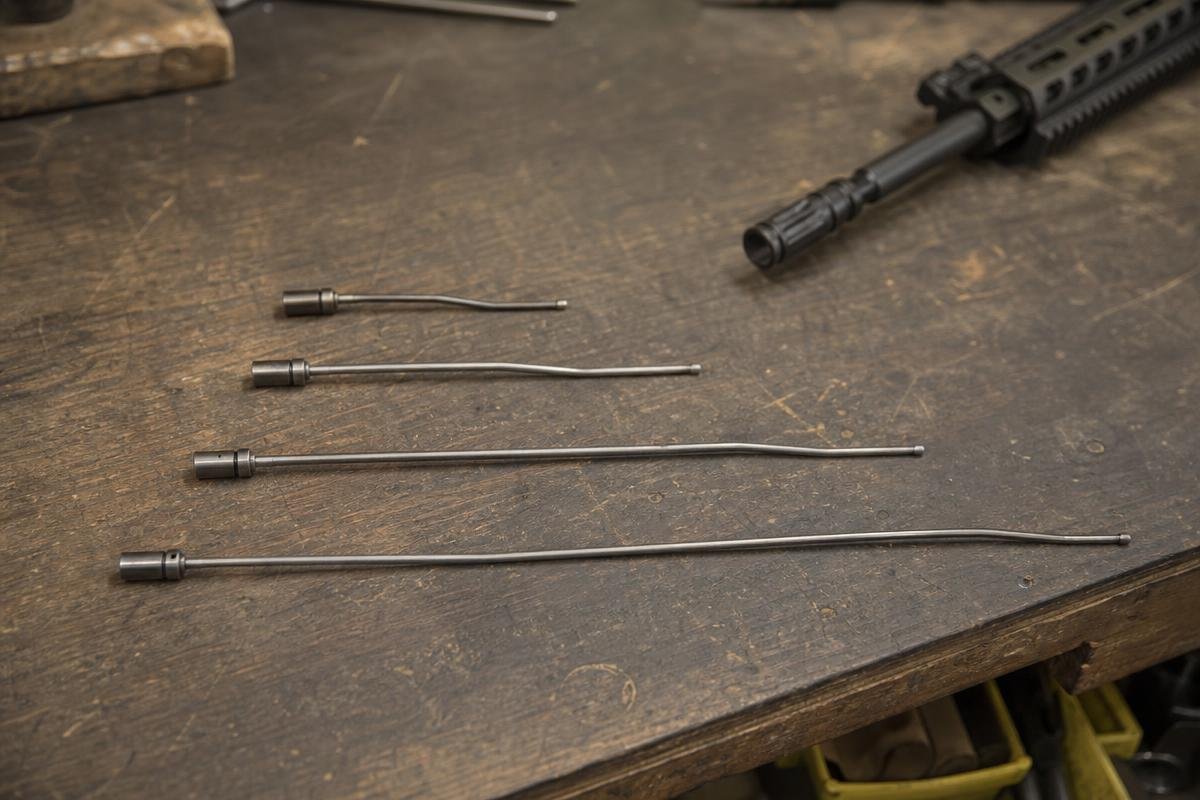
Every AR-15 gas system falls into one of four lengths: pistol, carbine, mid, and rifle. The tube length determines where gas taps off the barrel, how much pressure hits the bolt carrier group, and how the rifle cycles. Run the wrong length for your barrel and you pay for it in recoil, wear, or failures to cycle. Here is what each one actually does.
Pistol-Length Gas System (4 Inches)
The pistol-length tube runs approximately 4 inches, placing the gas block about 4 inches from the chamber face. It is built for 7 to 10 inch barrels. Short barrels burn powder fast and shed pressure quickly, so the gas port has to tap early to catch enough pressure to cycle the action. This is the right call for SBR configurations and 300 Blackout pistol builds, where the cartridge is optimized for short barrels anyway.
Put a pistol-length system on a 16-inch barrel and you are tapping gas at peak pressure, long before the bullet has cleared the muzzle. The BCG gets hammered on every shot. Extraction force spikes. Bolt lug wear accelerates. It is not a timing edge case. It is a design mismatch that shortens the life of your components.
Carbine-Length Gas System (7 Inches)
The carbine-length tube runs approximately 7 inches, with the gas block sitting about 7 inches from the chamber. Designed for 10 to 18 inch barrels, it became the military standard on the M4 at 14.5 inches. It works. But on a 16-inch barrel, it taps gas earlier in the pressure curve than necessary, which means the bolt unlocks faster and hits the buffer harder than a mid-length system would on the same host.
For a 16-inch 5.56 build, carbine-length runs hotter and more aggressively than the barrel warrants. You feel it in the recoil impulse and eventually in your bolt carrier tail and buffer tube threads. It is not a catastrophic mismatch, but it is not the best choice either.
Mid-Length Gas System (9 Inches)
The mid-length tube runs approximately 9 inches, placing the gas block about 9 inches from the chamber face. The recommended barrel range is 14 to 20 inches, with 16 inches as the clear sweet spot. On a 16-inch barrel, mid-length taps gas at lower pressure than carbine-length does, giving the bullet more time to exit before the bolt starts unlocking. The result is a softer, more controlled recoil impulse and less mechanical stress on every part in the system.
For a standard 16-inch 5.56 or .223 Wylde build, mid-length is the answer. It is the most widely recommended configuration among builders for good reason. The carbine vs. mid-length gas system debate is not really a debate on a 16-inch barrel. Mid wins.
Rifle-Length Gas System (12 Inches)
The rifle-length tube runs approximately 12 inches, with the gas block positioned about 12 inches from the chamber. This is the original AR-15 and M16 configuration, designed for 20-inch barrels. It taps gas late in the pressure curve, well after the bullet has passed the port. The bolt unlocks slowly, recoil is the softest of any length, and the action cycles with a long, smooth stroke.
Hunters in the Red River bottom country running 20-inch 5.56 or longer-barreled 5.56 uppers get the full benefit of rifle-length: lower felt recoil, more complete combustion, and a gentler impulse on follow-up shots. Run rifle-length on a 16-inch barrel and the opposite problem appears. Dwell time drops, gas pressure at the port falls short, and you risk short-stroking. The bolt does not travel far enough to strip the next round reliably.
How to Match Gas System Length to Your Barrel Length
The decision comes down to one variable: dwell time. Get that right and everything else follows. Here is a quick-reference framework you can use before you order a single part.
- Under 10 inches: pistol-length gas system
- 10 to 14 inches: carbine-length gas system
- 14 to 20 inches: mid-length gas system (carbine-length if mid is unavailable)
- 20 inches and up: rifle-length gas system
That covers most 5.56 NATO and .223 Wylde builds cleanly. Caliber exceptions are where builders get tripped up, and we cover those below.
The Rule of Thumb: Dwell Time Is the Variable You're Solving For
Dwell time is the time the bullet spends in the barrel after it passes the gas port. More dwell time means lower pressure at the moment the bolt unlocks, producing a softer, more controlled cycle. Less dwell time means higher pressure at unlock, which drives a harder, faster cycle and puts more stress on your bolt carrier and case head.
A longer gas system moves the port farther from the chamber, giving the bullet more travel time before gas bleeds off. That is why a mid-length system on a 16-inch barrel runs noticeably smoother than a carbine-length on the same barrel. The bullet has already dropped to a safer pressure before the bolt starts moving. Matching your tube length to your barrel length keeps that pressure window in the right range every time.
Caliber-Specific Considerations That Change the Equation
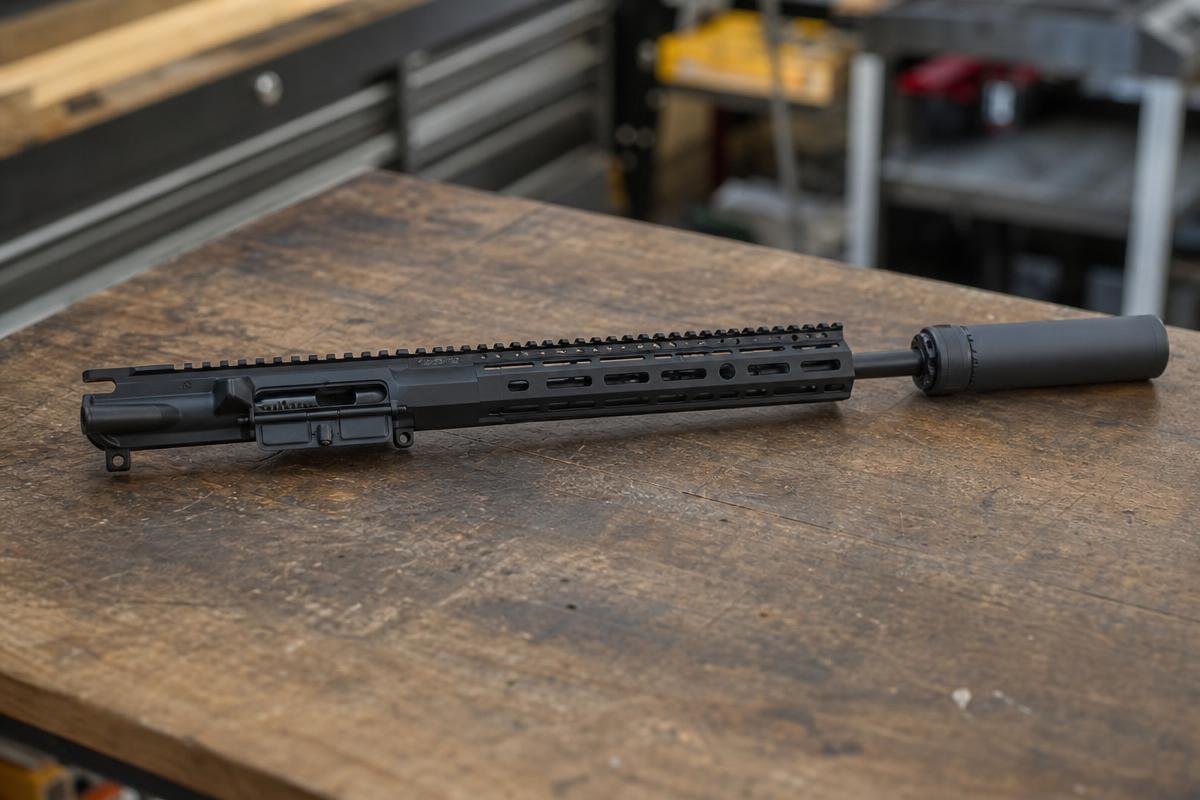
300 Blackout is the biggest exception. Subsonic loads generate far less gas pressure than supersonic 5.56. Even on a 16-inch barrel, most 300 BLK builds run pistol-length or carbine-length gas systems. Suppressed 300 BLK builds almost always benefit from an adjustable gas block because the suppressor adds back-pressure that a fixed block cannot compensate for.
Browse our 300 Blackout complete uppers to see how we spec those builds.
7.62x39 on a 16-inch barrel typically runs carbine-length due to that cartridge's gas curve. On the other end, 6.5 Grendel and 6mm ARC on 18-inch barrels want mid-length or rifle-length systems to keep dwell time in range. Hunters running Red River bottom country north of Denison for whitetail and hog know these calibers well.
If you are building a Grendel or ARC rifle for that kind of work, our 6.5 Grendel complete uppers and 6mm ARC complete uppers are already matched to the correct gas system length before they leave our shop.
Adjustable Gas Blocks: When a Fixed Block Is Not Enough
Most shooters do not need an adjustable gas block. A fixed low-profile block works reliably for the vast majority of AR-15 builds. If you are running a standard 16-inch 5.56 mid-length setup with factory ammunition, save your money. But there are three specific situations where an adjustable block earns its place.
Who Actually Needs an Adjustable Gas Block
The first is suppressed builds. Adding a suppressor dramatically increases backpressure in the gas system. A fixed block tuned for unsuppressed fire will over-gas the action, causing bolt bounce, case head stress, and accelerated extraction wear. The second is 300 Blackout builds where you cycle between subsonic and supersonic loads. Those two load types run very different pressures, and a fixed block cannot split the difference cleanly.
The third is precision builds where you want the softest possible recoil impulse without short-stroking the action. North Texas hog hunters running suppressed 300 BLK rifles in the Red River bottom country north of Denison are exactly the use case where an adjustable block makes practical sense, not a marketing upsell.
Setting Up an Adjustable Gas Block Without Guesswork
The tuning process is straightforward. Start with the gas block fully open. Fire a full magazine and confirm the bolt locks back on empty. Then incrementally close the adjustment until the bolt fails to lock back. Open it one or two clicks from that point. That is your minimum reliable setting.
One hard rule: tune with the exact ammunition you plan to run. A 208-grain subsonic load and a 125-grain supersonic load produce very different port pressures. Tune for one, and the other may not cycle reliably. If you are building a suppressed or dual-use setup and want the gas system matched before it ships, browse our complete AR-15 uppers and contact us to discuss your configuration.
Running a suppressed build or cycling mixed loads? Call us at (888) 706-0633 and we will help you spec the right gas system before you order.
Common Gas System Mistakes and How to Avoid Them
Most gas system problems fall into one of two categories: too much gas or not enough. Both will make your rifle unreliable, and both are preventable. Here is how to read the symptoms and trace them back to the actual cause.
Over-Gassing: Signs Your System Is Running Too Hot
The most common over-gassing setup we see is a carbine-length gas system on a 16-inch barrel. Mid-length was the right call, but carbine got used instead. The result is gas entering the system too early, before chamber pressure has dropped to a safe level for unlocking.
Symptoms include sharp, snappy felt recoil, the bolt carrier slamming rearward hard enough to feel through the stock, and cratered primers on spent brass. Over time, you will see case head separation and accelerated bolt carrier group wear that shortens the service life of your BCG. Suppressed builds with fixed gas blocks are especially prone to this.
Solutions, in order of preference: switch to a longer gas system if your barrel profile allows it, install an adjustable gas block, or run a heavier buffer. A heavier buffer reduces the symptom. It does not fix the timing problem at the gas port.
Under-Gassing: Signs Your Rifle Is Short-Stroking
Under-gassing shows up as failures to feed, failures to eject, and a bolt that does not lock back on an empty magazine. The bolt carrier is not traveling far enough rearward to strip the next round. Subsonic 300 BLK on a suppressor-less build is one of the most common setups where this happens. Browse our 300 Blackout complete uppers if you are building specifically for that cartridge and want the gas system already dialed in.
Common causes include a rifle-length gas system on a 16-inch barrel, a clogged or undersized gas port, and an adjustable gas block set too restrictive. Start your diagnosis by confirming the gas port diameter matches the manufacturer spec for that barrel and gas system combination. Then check the gas tube for obstructions. In the Texoma area, summer heat routinely pushes past 100 degrees, which accelerates carbon fouling inside gas tubes and can turn a minor partial obstruction into a full short-stroke condition. Check the tube. Confirm the gas block is sitting directly over the port. Those three steps resolve the majority of under-gassing complaints we hear.
Building in Denison and North Texas: Why Your Environment Matters
Where you shoot and what you hunt shapes which gas system makes sense for your build. The Denison-Sherman corridor runs a specific mix of shooters: whitetail and hog hunters working the Red River bottom country north of town, competitive 3-gun shooters, and home defenders. Each group lands on a different barrel length, and that barrel length drives the gas system decision.
North Texas summers run 95 to 105°F on outdoor ranges from June through September. That heat accelerates carbon fouling inside gas tubes faster than most shooters expect. Carbine-length systems already run hotter than mid or rifle-length. Add a July afternoon in Grayson County and you need to clean that gas tube more often than the manual suggests. If you are running a carbine-length system on a 16-inch 5.56 and shooting high round counts in summer, plan on inspecting the tube every 500 rounds rather than every 1,000.
Hunters running 20-inch barrels in 6.5 Creedmoor or .308 Win for the Red River bottom country should be on rifle-length or mid-length gas systems. Competitive 3-gun shooters with 16-inch carbines are best served by mid-length. Those are not opinions. They are the correct pairings for the barrel lengths those builds require.
We build and ship from 2022 S. Crockett St. in Sherman, TX 75090, minutes from Denison via US-75. Customers in the 75020 and 75021 ZIP codes get the same shop-assembled, headspaced, and function-checked upper that ships directly to your door. No FFL required for a stripped or complete upper receiver.