The bolt carrier group is the most mechanically active assembly in your AR-15. Every round you fire depends on it cycling correctly. If you've ever wondered what a bolt carrier group is and why it can make or break your build, you're asking the right question. We stock BCGs from trusted suppliers and build complete uppers right here in Sherman, TX. North Texas humidity is hard on uncoated parts, so knowing what's inside your rifle matters before you head to the range or the deer lease.
Building an upper or upgrading your BCG? We can help you choose the right one for your caliber and use case.
Why the Wrong BCG Fails at the Worst Possible Moment
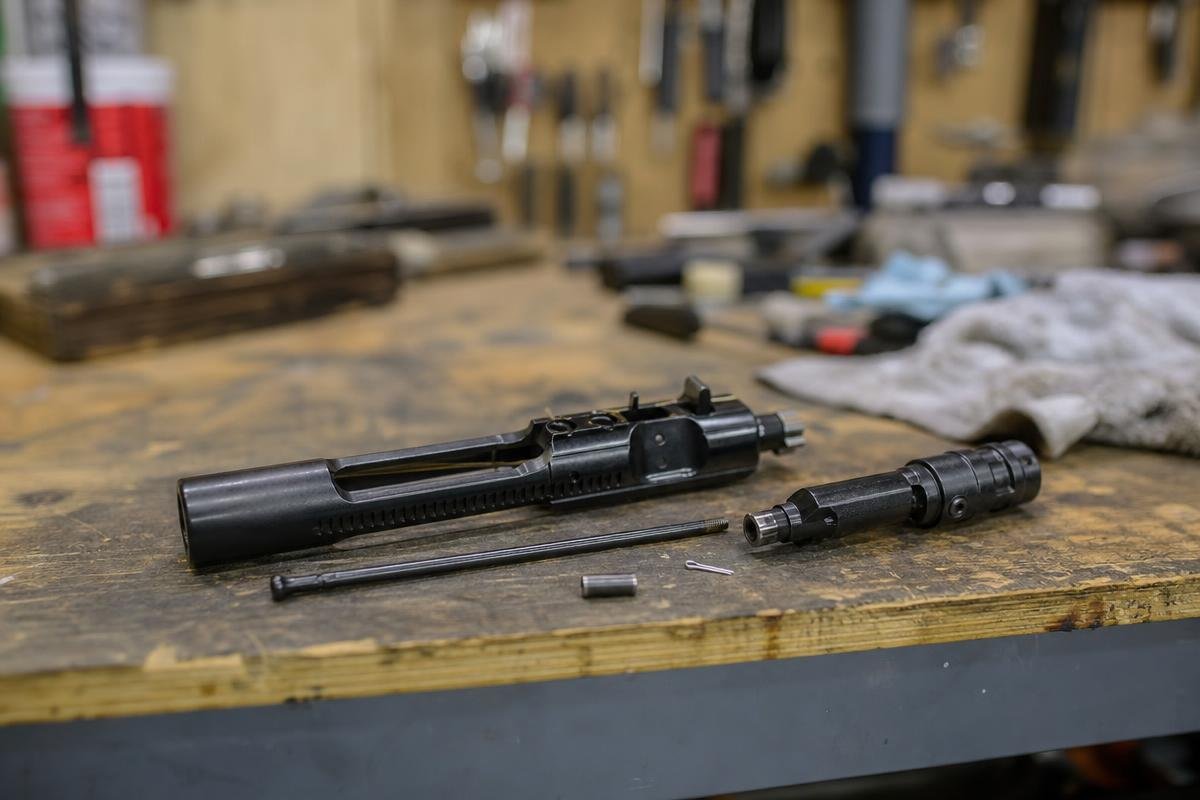
The bolt carrier group is the most mechanically active assembly in your AR-15. Every round you fire depends on it. It chambers the cartridge, fires it, extracts the spent case, and resets the action, all in a fraction of a second. Pick the wrong one and your build will fail. It is that simple.
Builders in Denison and the Grayson County area run their ARs hard, hog hunts near Lake Texoma, 3-gun matches, truck guns sitting through Texas humidity swings. A BCG that cannot handle those conditions is not a theoretical problem. It is a malfunction at the worst possible moment.
Here you'll find what a bolt carrier group is, how it functions through the gas cycle, the real difference between M16 and AR-15 carrier profiles, coatings, and how to match a BCG to your specific build. For a quick-reference overview, see our full AR-15 BCG guide on types and coatings.
What Exactly Is a Bolt Carrier Group?
The bolt carrier group is the reciprocating heart of your AR-15. It chambers each round, fires it, extracts the spent case, and resets for the next shot, all in a fraction of a second. Every one of those functions depends on seven distinct parts working together in sequence.
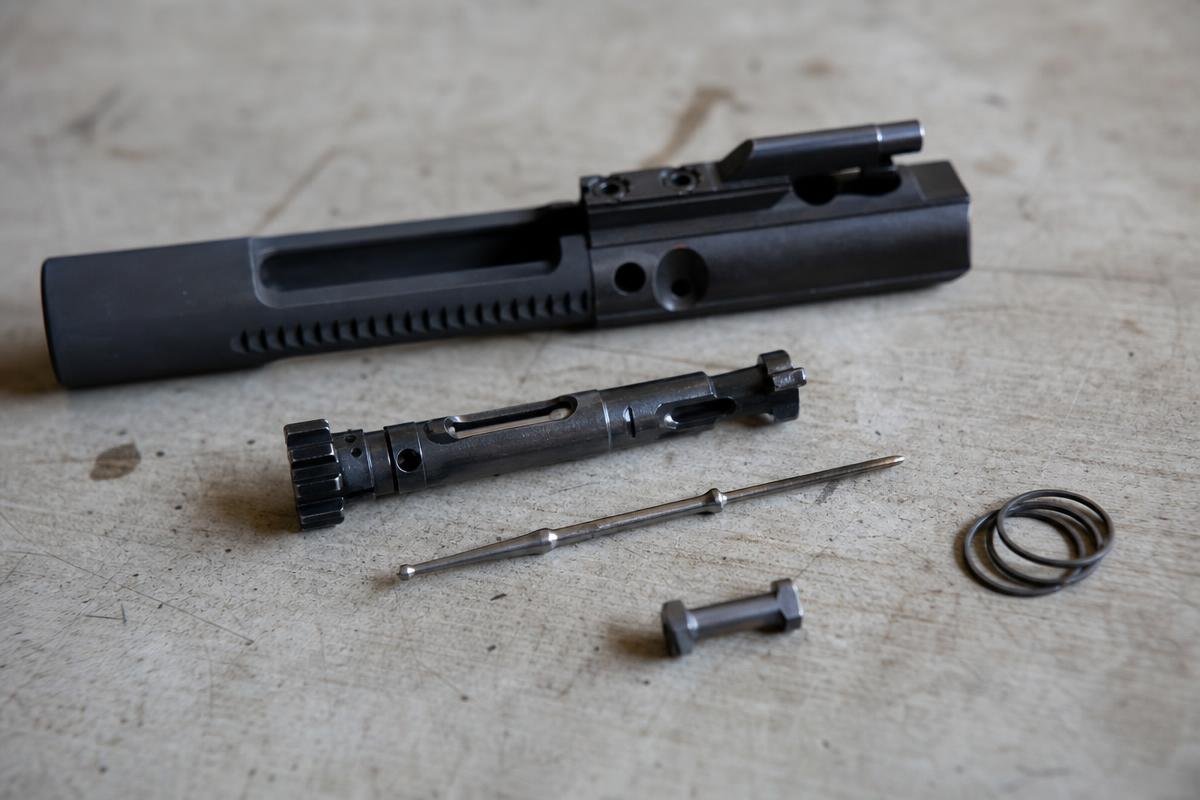
The Seven Parts of a BCG
Here is what you are actually holding when you pull a BCG out of your upper. Builders in Sherman and Denison assembling their first complete AR-15 upper ask us about these parts constantly, so we will be direct about what each one does.
- Bolt carrier body: The outer housing that rides inside the upper receiver and contains every other component.
- Bolt: The front piece that seats into the barrel extension; its locking lugs engage the barrel extension to contain chamber pressure. This is the part that wears first, so pay attention to the lugs.
- Firing pin: Slides through the carrier body and strikes the primer when the hammer drops.
- Firing pin retaining pin: A small cross-pin that keeps the firing pin from falling out during handling.
- Cam pin: Rotates the bolt approximately 15 degrees to lock and unlock the barrel extension lugs during each cycle.
- Gas key: The raised block staked to the top of the carrier body; it accepts propellant gas from the gas tube to drive the carrier rearward.
- Gas key screws: Two fasteners that secure the gas key to the carrier body; proper staking keeps them from backing out under recoil.
How the BCG Fits Inside the Upper Receiver
The carrier body rides on two machined rails inside the upper receiver, held forward by buffer spring tension. When you close the upper, the gas key aligns directly with the gas tube. That alignment is not adjustable, so a bent or improperly staked gas key causes immediate cycling failures.
The bolt nose extends forward and seats into the barrel extension. That seating depth determines headspace. On every 5.56 NATO upper we assemble, we verify headspace with go and no-go gauges before the upper ships. If your bolt does not fully seat, your rifle will not go into battery, and that is a safety issue, not just a reliability one.
How Does the BCG Actually Cycle When You Pull the Trigger?
Understanding bolt carrier group function means understanding the gas cycle. Every round fired runs through the same sequence of mechanical events inside your upper receiver. Miss a step, and the rifle malfunctions. Here is exactly what happens.
The Direct Impingement Gas Cycle Step by Step
This is how a bolt carrier group works from trigger pull to the next chambered round:
- Trigger releases the hammer. The hammer falls and strikes the firing pin.
- Firing pin ignites the primer. The primer ignites the powder charge, and the bullet starts moving down the barrel.
- Bullet passes the gas port. High-pressure gas bleeds off through the port drilled in the barrel.
- Gas travels through the tube into the gas key. The key channels that gas directly into the interior of the carrier.
- Carrier begins moving rearward while the bolt is still locked. Gas pressure builds inside the carrier and pushes it back. The bolt stays locked to the barrel extension momentarily.
- Cam pin rotates the bolt approximately 15 degrees. That rotation unlocks the lugs from the barrel extension.
- Carrier and bolt travel rearward together. The extractor pulls the spent case out of the chamber and the ejector kicks it clear. The buffer spring compresses.
- Buffer spring drives the carrier forward. The bolt strips a fresh round from the magazine, chambers it, and the cam pin rotates the lugs back into lockup. The rifle is ready to fire again.
Gas system length changes where in the barrel that port sits, which changes the pressure and timing when gas enters the key. A carbine-length system delivers gas earlier and harder. A mid-length or rifle-length system gives the bullet more time to clear the port before gas bleeds off. That timing difference directly affects dwell time and extraction reliability. If you are sorting out your build configuration, read our guide on choosing the right gas system length before you finalize anything.
One more thing worth knowing if you shoot in the Grayson County area: hot summers push barrel temps up fast during extended range sessions. Higher heat can slightly increase gas pressure and affect cycle timing. That is worth keeping in mind before you tune your buffer weight.
What Happens When the BCG Fails to Complete the Cycle
Two malfunctions show up most often when the BCG is the problem.
Failure to extract means the spent case stays stuck in the chamber. The cause is almost always a worn or broken extractor, or insufficient gas pressure reaching the key. You will see the bolt try to move rearward but the case does not come with it.
Failure to go into battery means the bolt does not fully close on the chambered round. Dirty or corroded bolt lugs are the most common cause. An undersized chamber will do it too. The symptom is a trigger that will not reset or a rifle that simply does not fire. A quick inspection of the lugs and a thorough cleaning usually tells you exactly where the problem is. If cleaning does not fix it, the extractor or gas key staking may need attention before your next range trip.
M16 vs. AR-15 BCG: What Is the Real Difference?
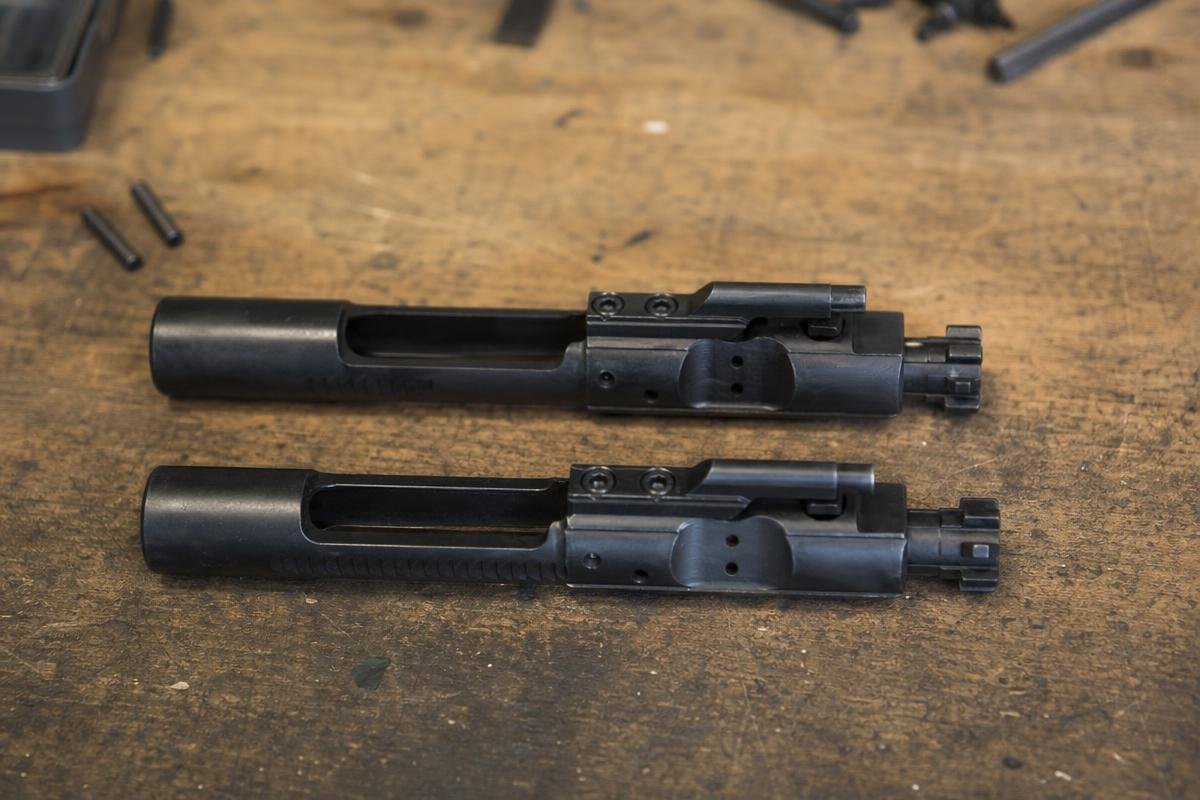
This is one of the most common questions we get, especially from Grayson County hunters building a dedicated hog gun or a 3-gun competition rifle. The M16 vs. AR-15 BCG difference comes down to mass and geometry, not fire control. The M16 carrier has a solid, full-mass rear section. The standard AR-15 carrier has material machined away from that same rear section, making it lighter.
Installing an M16-profile BCG in a semi-auto lower does not make the rifle fire automatically. The M16 carrier has a machined auto sear trip, but it is non-functional without the full-auto components in the lower receiver. It is completely legal in a standard semi-auto AR-15.
The extra mass is actually why most quality manufacturers default to the M16 profile for semi-auto builds. That added weight slows the unlocking cycle slightly, giving the case more time to extract cleanly before the bolt fully opens. Fewer extraction failures. More consistent cycling across a wider range of ammunition.
Why the M16 Carrier Profile Is the Builder's Default Choice
For most AR-15 builds, the M16 carrier is the better option. It runs more reliably across different gas pressures and ammunition loads. If you are building a rifle for hog hunting around Lake Texoma or running a suppressor on a short-barreled upper, that extra dwell time matters. The AR-15 BCG explained simply: the lighter standard carrier works, but the M16 profile gives you more margin. That margin is worth having.
Commercial and 9mm BCG Variants Worth Knowing
Beyond the standard profiles, a few variants come up regularly. The 9mm BCG is a blowback design with no gas key and significantly more mass. It does not interchange with a standard AR-15 upper. The .308/AR-10 BCG is larger in diameter and also not compatible with standard AR-15 uppers. Calibers like 6.5 Creedmoor on an AR-15 platform use a standard AR-15 BCG, but proper headspacing is critical. If you are building in that caliber, start with our 6.5 Creedmoor complete uppers, which are headspaced and function-checked before they ship.
BCG Materials and Coatings: What Actually Affects Reliability?
The alloy your bolt is made from and the coating on your carrier are not marketing details. They are the two variables that most directly determine how long your BCG lasts and how often you need to clean it to keep it running.
Steel Alloys: 8620, 9310, and Carpenter 158
Most carriers are machined from 8620 steel. It machines cleanly, takes case hardening well, and handles the mechanical stresses of the carrier body without issue. It is a solid, proven choice for that part of the assembly.
The bolt is a different story. The bolt takes the full force of cartridge pressure at the locking lugs with every single round. That is where alloy choice actually matters. 9310 steel offers higher impact toughness and better fatigue resistance than 8620, which makes it a better fit for the bolt specifically.
Carpenter 158 is the Mil-Spec standard per MIL-B-11595E. It has a consistent grain structure and proven toughness under sustained fire. If a manufacturer calls their bolt mil-spec, it should be C158. That designation is not a vague quality claim. It is a traceable material specification.
Coatings Compared: Phosphate, Nickel Boron, Nitride, and DLC
Phosphate, also called parkerizing, is the mil-spec standard. It leaves a matte gray, porous surface that holds oil well. The trade-off is that it needs consistent lubrication to run cleanly. Let it run dry and carbon builds up fast.
Nickel Boron (NiB) is harder and slicker than phosphate. Its surface is self-lubricating to a degree, which means less oil required and easier carbon removal after a range session. Nitride, often called Melonite or QPQ, uses a salt-bath nitriding process to push surface hardness to roughly 65 to 70 HRC. It does not flake or peel, resists corrosion well, and sits at a solid mid-tier price point.
DLC, Diamond-Like Carbon, is the premium option. Vickers hardness runs 1,500 to 3,000 HV depending on formulation, with a very low friction coefficient and excellent corrosion resistance. For a 5.56 NATO complete upper that sees heavy round counts, DLC is worth the cost.
This matters locally. Rifles stored in a truck box or outdoor safe in the Grayson County area cycle between dry summer heat and humid overnight air repeatedly.
That pattern accelerates surface oxidation on phosphate-coated BCGs faster than in drier climates. NiB, nitride, or DLC are worth the price difference for any rifle that lives outside. For a deeper breakdown, see our detailed BCG coatings comparison.
Not sure which BCG coating fits your build and storage setup? Call us at (888) 706-0633 and we'll point you in the right direction.
How to Match a BCG to Your Specific AR Build
Picking a BCG is not just about quality. It has to match your caliber, your gas system, and your buffer setup. Get any one of those wrong and your rifle will either short-stroke or beat itself apart. Here is how to get it right.
Caliber Compatibility and Bolt Face Dimensions
Most common AR-15 calibers share the same standard .223/5.56 bolt face. That includes 5.56 NATO, .223 Wylde, .300 Blackout, 6.5 Grendel, .224 Valkyrie, 6mm ARC, and .350 Legend. If you are building on a standard AR-15 lower with any of those chamberings, a standard .223/5.56 BCG fits. Our 5.56 NATO complete uppers all ship with a correctly matched BCG already installed.
6.8 SPC is the exception. It uses a larger bolt face and requires a BCG built specifically for that cartridge. AR-10 and .308 Win builds require a completely different, larger BCG entirely. Do not mix them. A mismatched bolt face creates dangerous headspace conditions. The rule is simple: the bolt face must match the chamber. No exceptions.
Gas System and Buffer Weight Pairing
BCG mass, gas system length, and buffer weight all work together to control cycle timing. A heavier M16-profile BCG paired with a carbine-length gas system and a standard 3 oz carbine buffer can run overgassed on short barrels. You will see it in hard extraction, brass flung 15 feet, and accelerated wear on the bolt and carrier.
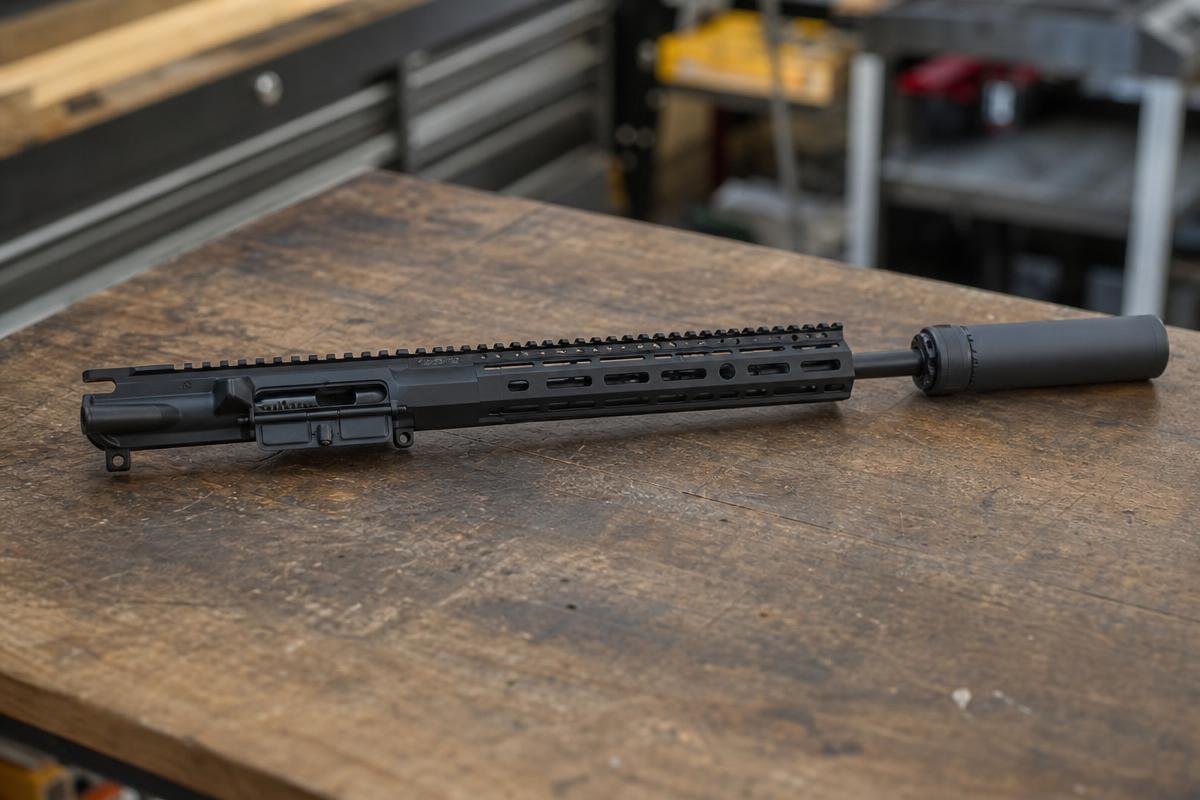
For pistol-length gas systems on barrels under 10 inches, an M16-profile carrier combined with an H2 or H3 buffer is a proven solution. The added mass slows the unlock just enough to let pressure drop before extraction begins. Suppressed, short-barreled builds especially need this pairing dialed in. A suppressor increases backpressure significantly, and a standard buffer in that setup will run hard and dirty.
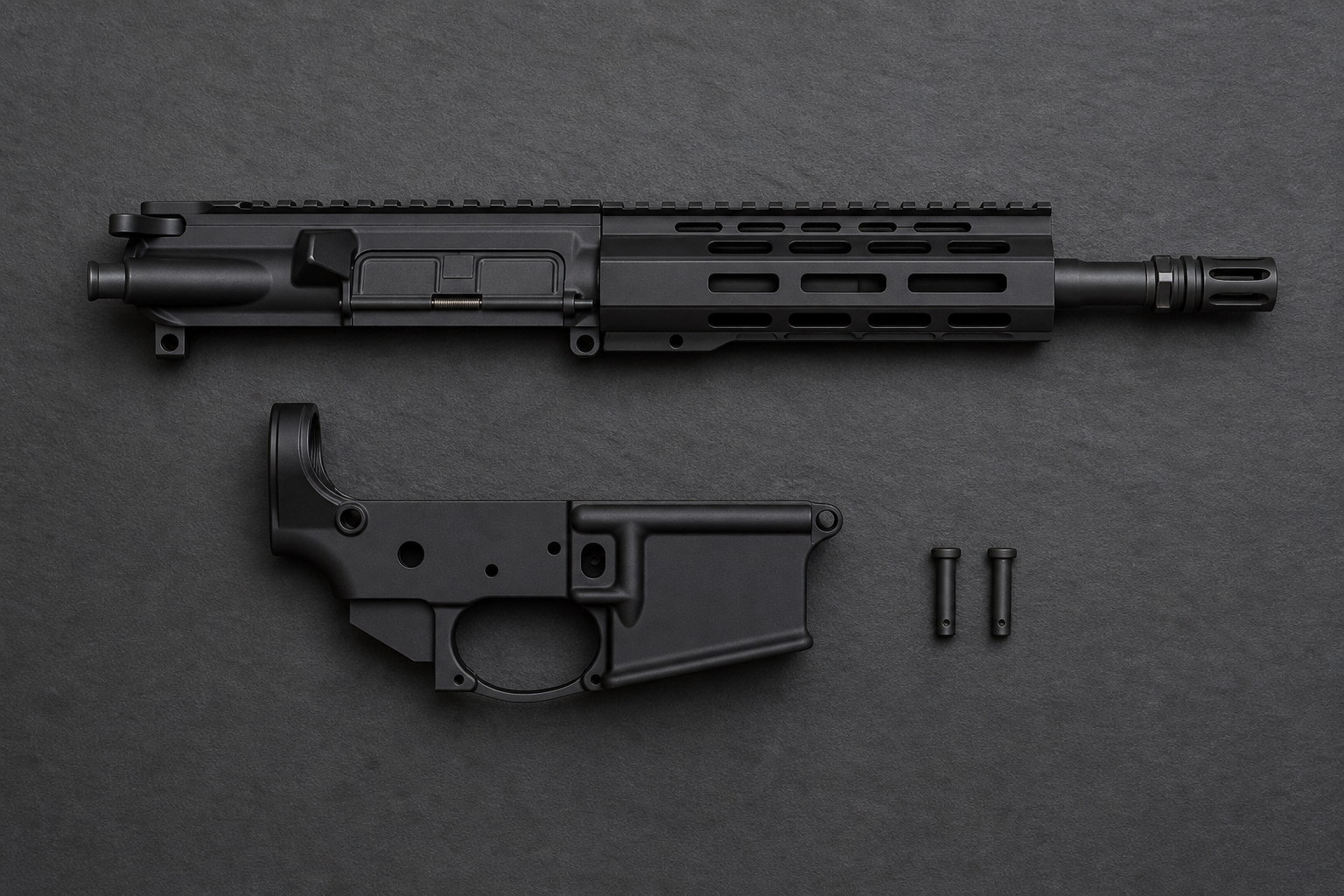
If you cannot get the timing right with buffer weight alone, an adjustable gas block gives you another tool without swapping the BCG or buffer. Our complete AR-15 uppers are assembled, headspaced, and function-checked before they ship, so the BCG, barrel, and gas system are already matched and tested. You are not guessing at compatibility out of the box.
BCG Maintenance: How to Inspect, Clean, and Know When to Replace
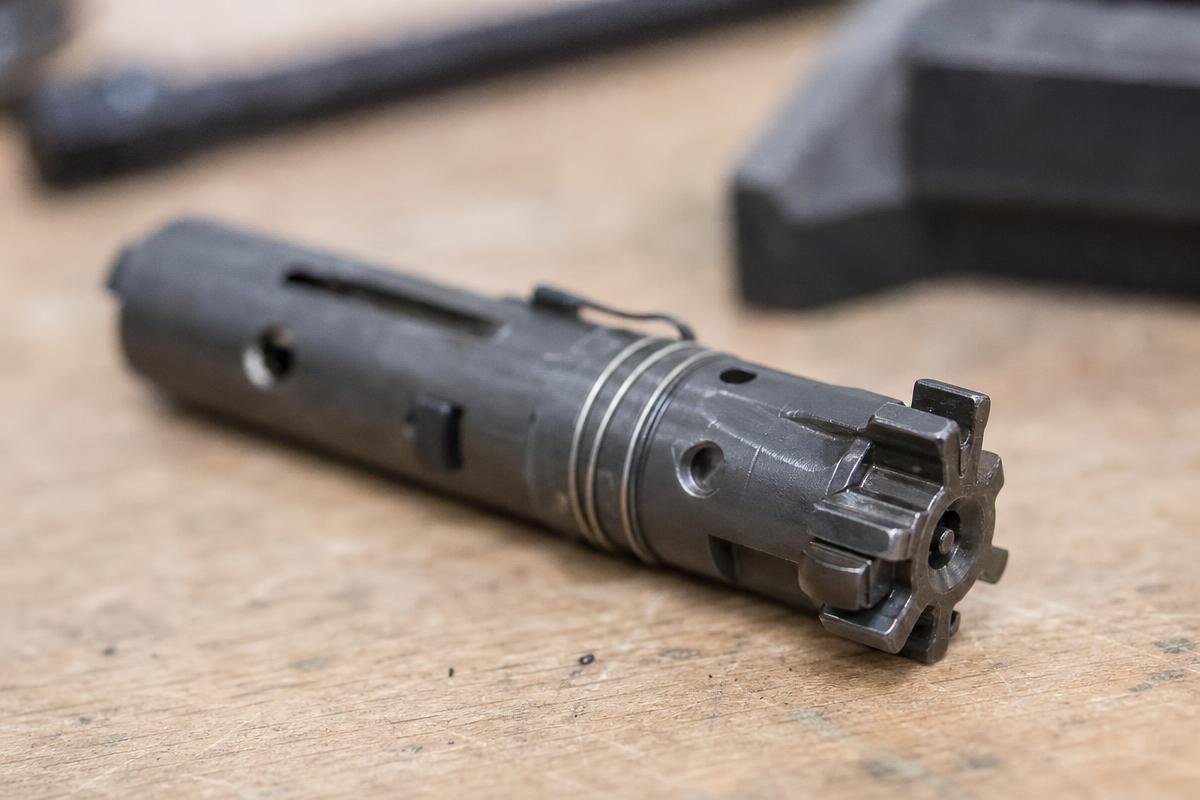
A BCG that cycles thousands of rounds without issue does not stay that way on its own. Regular inspection and cleaning are what separate a rifle that runs when you need it from one that fails at the worst possible time. This is especially true for rifles used along the Red River corridor near Hagerman National Wildlife Refuge, where a hog hunting build might sit in a humid truck cab for hours before a shot is ever fired. That environment is hard on phosphate finishes. A post-hunt wipe-down and re-lube is not optional.
The Four-Point Inspection Every Shooter Should Know
Run through these four checks any time you clean your rifle. They take less than five minutes and catch the failures that cause real problems.
- Bolt lug integrity. Inspect the base of each lug for cracks after high round counts. A cracked lug is a safety issue, not a maintenance issue. If you see a crack, the bolt comes out of service immediately.
- Extractor spring and insert. Depress the extractor. It should snap back firmly with no hesitation. A weak or sluggish return means the spring is tired. Replace the spring and rubber insert every 5,000 to 10,000 rounds as preventive maintenance, not after a failure.
- Gas rings. Assemble the bolt into the carrier. Hold the carrier upright, bolt nose down. If the bolt slides freely under its own weight, your gas rings are worn. If it holds in place, you are good. No gauge needed. That simple test tells you everything about bolt carrier group function.
- Gas key staking. Look at the screws securing the gas key to the carrier. The metal around each screw head should be peened over, locking them in place. Loose gas key screws are one of the leading causes of BCG-related malfunctions. If the staking looks clean and the screws do not move, you are fine. If they do move, the key needs to be re-staked by someone who knows what they are doing.
Cleaning Intervals and Lubrication Points
For duty or defensive builds, clean after every range session. For recreational use, every 500 to 1,000 rounds is a reasonable interval. Phosphate-coated BCGs have a porous surface that holds oil well but also traps carbon faster than NiB or DLC coatings. If you are running a phosphate BCG, plan on cleaning more often and applying more oil than you would with a slicker finish.
Focus lubrication on four specific BCG components: the bolt tail, the cam pin, the gas key interior, and the carrier interior rails. Those are the contact and friction points. Everything else is secondary. If you are building or upgrading a complete upper for hunting or competition, check out our 300 Blackout complete uppers or browse the full lineup of complete AR-15 uppers to find a configuration that fits how you actually shoot.