Compare AR-15 collapsible stock types, key specs, and install steps. Mil-spec vs commercial, LOP, and more. Shop at AR15Parts.com or call (888) 706-0633.
The stock on your AR-15 affects fit, control, and how fast you get back on target. If you're building or upgrading a rifle in the Denison or Sherman area, choosing the right collapsible stock matters more than most builders realize. This AR-15 collapsible stock guide covers types, features, and installation so you can make a confident decision before you buy. Texas has no state-level restrictions on collapsible stocks, so your only limits are your build goals and your length of pull. Have questions about stocks, uppers, or your next build? We're here to help.
Why the Stock Is the Most Overlooked AR-15 Component
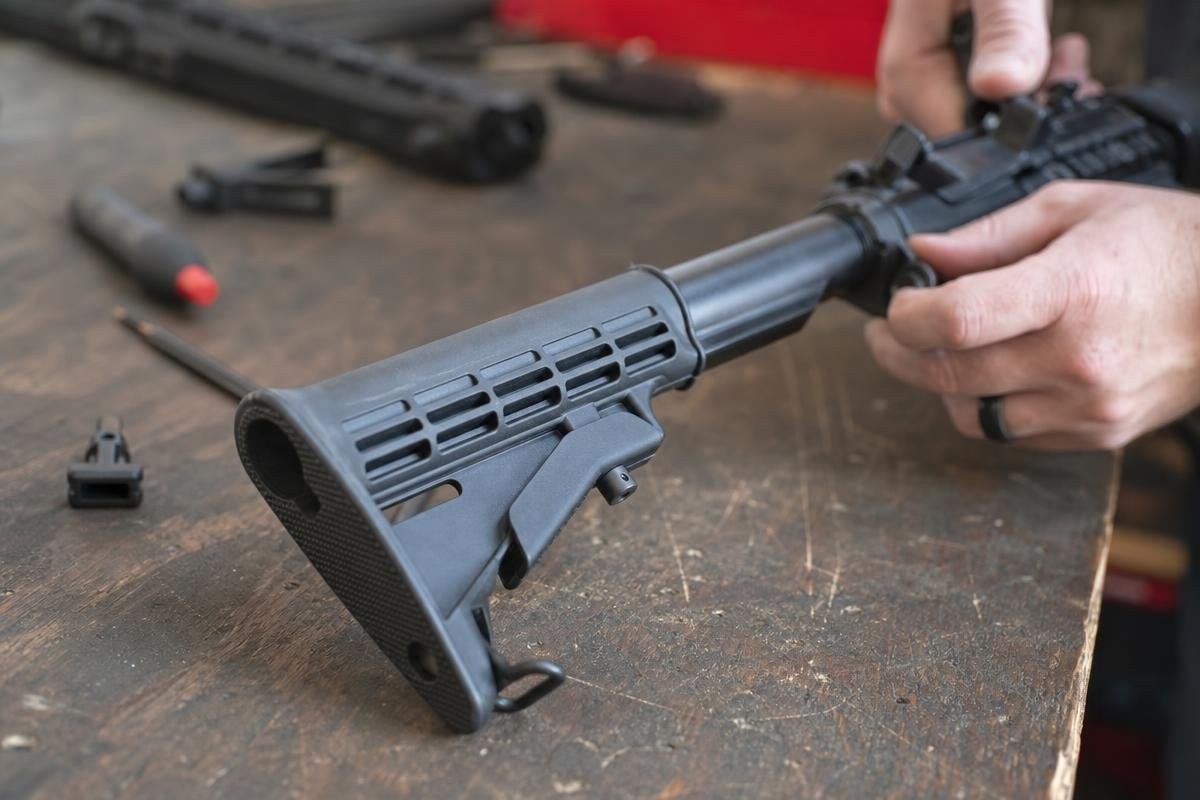
The stock is the last thing most builders think about and the first thing that affects how an AR-15 actually feels in your hands. Get it wrong and your cheek weld is off, your length of pull is fighting you, and recoil management suffers. Get it right and the rifle fits like it was built for you, because it was.
Here you'll find the full picture on AR-15 collapsible stocks: how they work, the main types available, what specs actually matter before you buy, and how to install one yourself. If you're also sorting out fixed, adjustable, and folding stock options for a different build configuration, that ground is covered separately in our fixed, adjustable, and folding stock guide, so we won't repeat it here.
Shooters run the full range of use cases. A hunter layering up for a cold late-season whitetail sit needs a shorter pull. A homeowner clearing a tight hallway in a smaller, older house needs the same. We stock buffer tube assemblies and stocks from brands like Magpul, BCM, and Aero Precision, and we ship parts directly to your door with no FFL required on stocks and accessories.
What Makes a Stock 'Collapsible' on an AR-15?
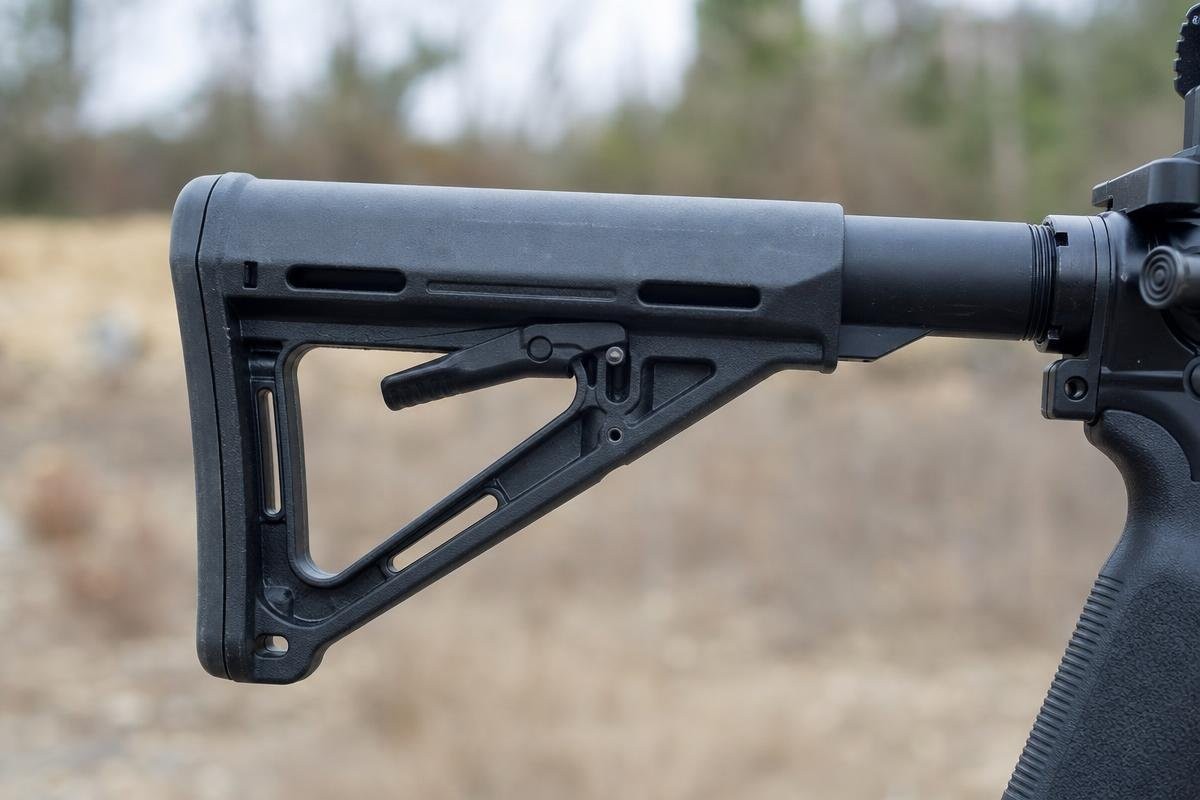
A collapsible stock slides along the buffer tube and locks into multiple length-of-pull positions using a release lever or button on the underside of the stock. That adjustability is the whole point. You can shorten the pull for close-quarters work, extend it for a steadier long-range hold, and fit the same rifle to different shooters without swapping parts.
This is different from a fixed stock, which has no adjustment, and a folding stock, which pivots to the side. A collapsible stock stays in line with the bore and simply telescopes. For most AR-15 builders, that adjustability makes it the default choice.
How the Buffer Tube Determines Stock Compatibility
The buffer tube, also called the receiver extension, is the aluminum tube that threads into the back of your lower receiver. It houses the buffer and recoil spring, and it is the track your stock rides on. The tube spec determines which stocks physically fit your build. Get this wrong and the stock will not lock up correctly, period.
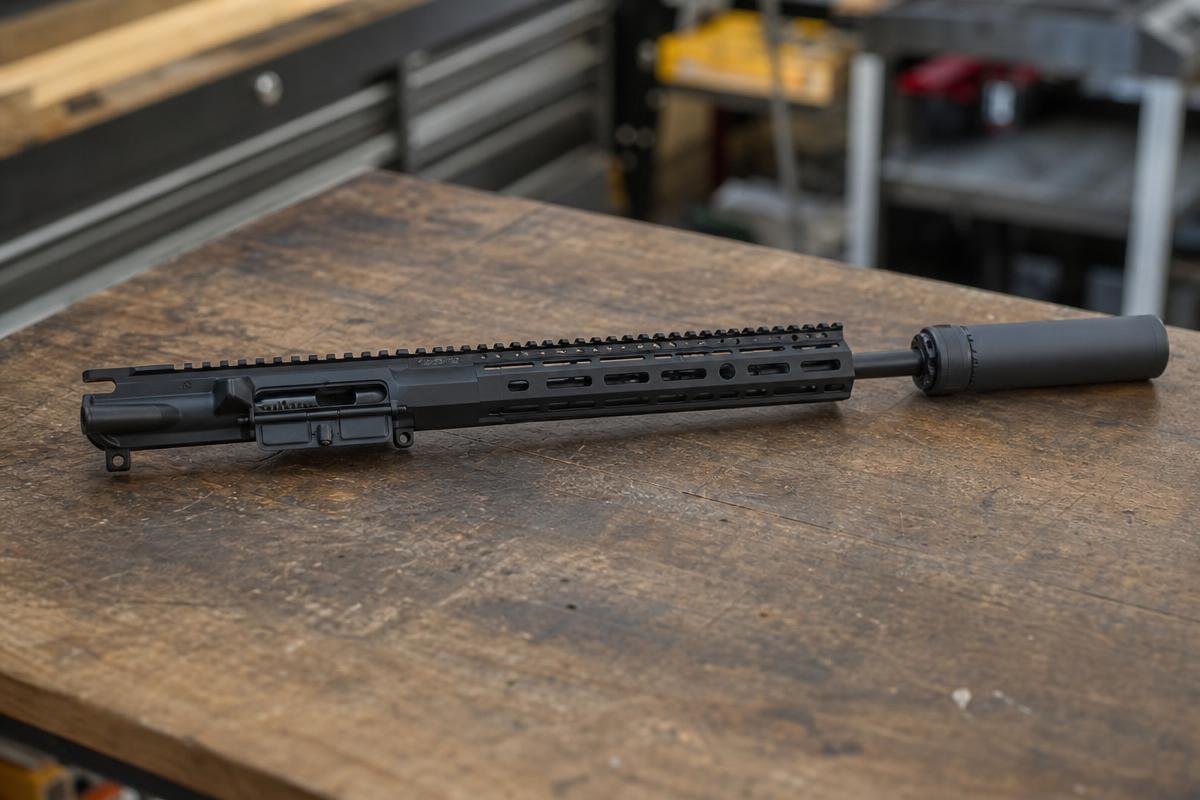
We carry complete AR-15 uppers paired with mil-spec buffer tube setups, so if you are building from a complete upper down, it pays to confirm your lower's tube spec before you order a stock.
Mil-Spec vs. Commercial Buffer Tube
This is where most buyers make a costly mistake. Mil-spec tubes have an outer diameter of approximately 1.148 inches and a straight profile along the full length. Commercial tubes measure approximately 1.168 inches and taper slightly toward the rear. That difference is small enough to feel like it should not matter. It does.
Stocks are not interchangeable between mil-spec and commercial specs. A mil-spec stock on a commercial tube will wobble and fail to lock. A commercial stock on a mil-spec tube will not seat properly.
You don't need calipers to figure out which one you have. Look at the rear of the tube: a commercial tube tapers to a smaller diameter at the back and usually has an angled buttpad face, while a mil-spec tube runs straight and square. Check for manufacturer markings stamped on the tube itself, and if you bought your lower or complete upper as a kit, the receiver documentation almost always lists the tube spec. When in doubt, a set of calipers settles it in seconds.
Not sure if your lower has a mil-spec or commercial tube? Contact us and we'll help you confirm the spec before you order a stock.
The Main Types of AR-15 Collapsible Stocks
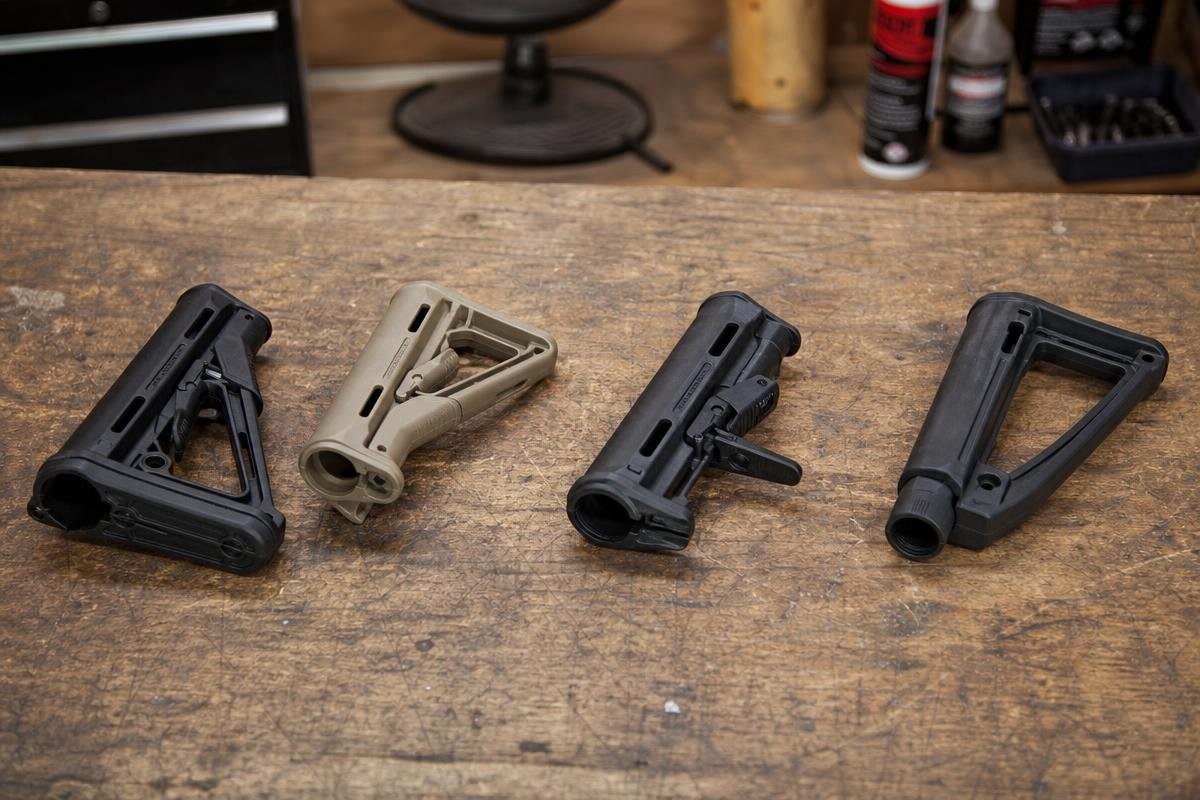
Not all collapsible stocks are built the same. The right choice depends on your build purpose, your optics setup, and how you shoot. Here is a straight breakdown of the four main categories you will encounter when shopping for a collapsible stock.
Standard 6-Position Mil-Spec Stocks
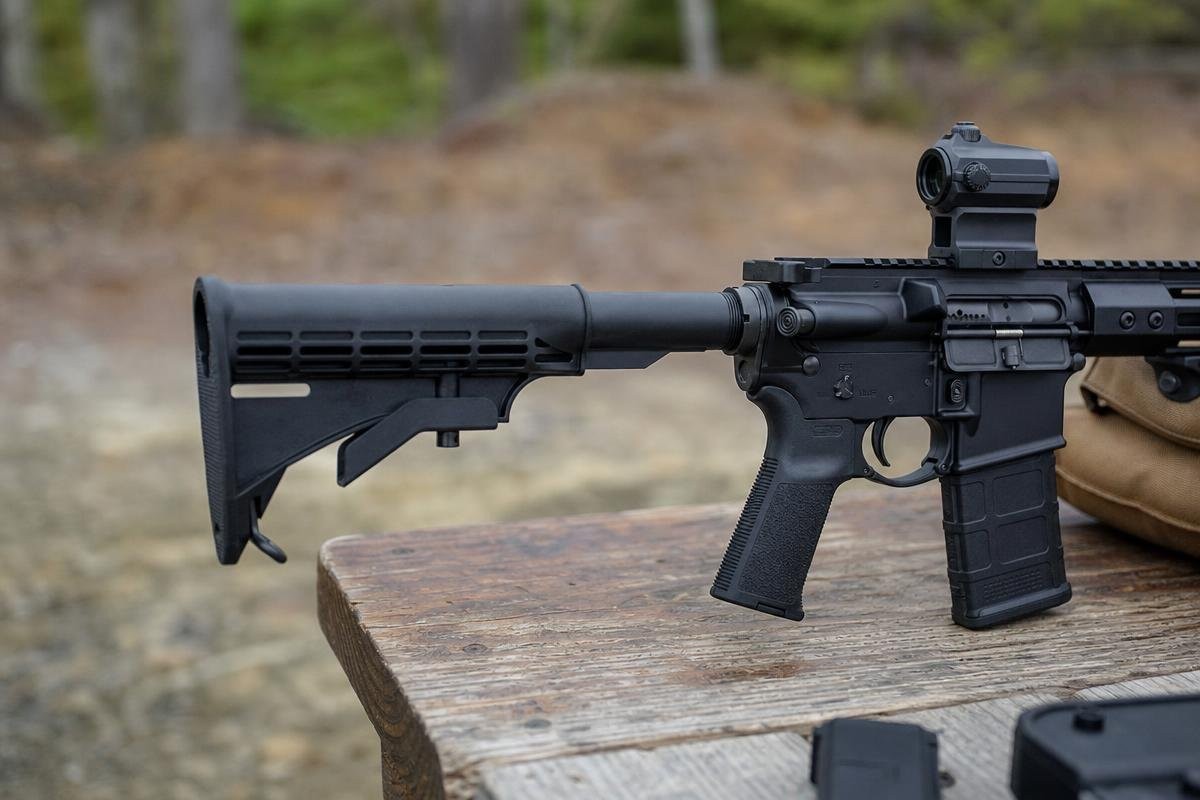
This is the most common AR-15 adjustable stock type on the market, and for good reason. Six locking positions give you roughly 2.25 inches of LOP adjustment, typically running from 12.5 to 14.75 inches. The M4-style profile is lightweight, simple, and proven across general-purpose and home defense builds.
For a shooter running a dual-purpose rifle, one that covers whitetail in the field and home defense in a smaller house, this stock handles both without compromise. It fits carbine-length buffer tubes, which are the most common setup on standard AR-15 builds.
- Six discrete locking positions
- LOP range: 12.5 to 14.75 inches
- Fits mil-spec carbine buffer tube
- Typical weight: 5 to 7 ounces
Enhanced Ergonomic Stocks with Adjustable Cheek Risers
The real difference between a basic mil-spec stock and an enhanced ergonomic stock comes down to lockup and cheek weld. Enhanced stocks use a friction lock or cam lever, similar to the CTR-style cam design, to eliminate rattle and tube slop. That tighter fit matters when you are running a red dot or magnified optic and need a consistent sight picture every time you mount the rifle.
Adjustable cheek risers on these stocks let you raise the comb height to match a higher optic rail. If you are running a 1-6x scope on a flattop upper, a cheek riser keeps your eye aligned without craning your neck. These stocks weigh a bit more than a standard mil-spec unit, but the stability trade-off is worth it for optics-heavy builds.
Minimalist and Skeleton Stocks
Minimalist and skeleton stocks strip material from the buttstock body while keeping the standard buffer tube interface intact. You get the same carbine tube compatibility with a weight savings of roughly 3 to 6 ounces compared to a standard stock. That matters on SBR configurations and competition builds where every ounce counts.
One note: if you are running a short-barreled rifle, NFA compliance applies regardless of stock type. The stock itself does not create the NFA item, but the overall configuration does. Know your build before you order.
- Weight savings: 3 to 6 ounces over standard stocks
- Retains standard carbine buffer tube interface
- Common in competition and weight-conscious builds
Precision Rifle Collapsible Stocks
Precision stocks like the Luth-AR MBA-3 and stocks in the Magpul PRS Lite category add independent LOP and comb height adjustment, a rubber recoil pad, and a rigid lockup that does not flex under load. These typically run 12 to 20 ounces, so you are adding weight intentionally in exchange for a repeatable, dialed-in shooting position.
Shooters stretching a rifle out at longer distances, whether on a private range or open ground, will notice the difference immediately. A consistent cheek weld at the same comb height, every shot, is what precision accuracy requires.
That consistency pairs directly with a quality bolt carrier group; if you want to understand how the BCG affects repeatable accuracy, our AR-15 BCG guide covering types, coatings, and selection is worth reading before you finalize your precision build.
- Independent LOP and comb height adjustment
- Rubber recoil pad standard
- Weight range: 12 to 20 ounces
- Best for bench shooting, precision rifle, and long-range field use
Key Features to Evaluate Before You Buy the Best Collapsible Stock for an AR-15
Before you spend money on a stock, there are four things worth checking carefully: length of pull range, lockup quality, sling attachment options, and material. Get these right and the stock will serve you for years. Get them wrong and you'll be swapping parts after the first range session.
Length of Pull Range and Position Count
Length of pull is the distance from the trigger face to the center of the buttpad. Most shooters fall between 12.5 and 14.5 inches. A standard 6-position mil-spec stock adjusts in roughly 0.375-inch increments, which gives you enough range to fit most body types and shooting stances. If you hunt and layer up for cooler weather during deer season, you need that shorter position available.
Heavy gear closes LOP fast, and a stock with only four positions may not get you there. Your barrel length and gas system setup also affect which LOP range makes sense for your build, so it's worth reading up on how gas system length ties into your overall AR-15 configuration before you finalize your stock choice.
Lockup Tightness and Wobble Reduction
Any movement between the stock and the buffer tube is a problem. For a general-purpose rifle it is annoying. For a precision build it is unacceptable. Stocks use one of three locking methods: a standard detent-and-spring, a cam lock, or a friction lock. Friction locks add drag against the tube surface and are the most effective at eliminating slop.
Before you buy, check reviews specifically for rattle complaints on your buffer tube diameter. Mil-spec and commercial tubes are not interchangeable, and a stock sized for one will wobble on the other.
Sling Attachment Options
This is where a lot of buyers overlook the details. Some stocks have a simple rear loop, some have QD sling cups, and some minimalist designs have nothing at all. QD cups are the most practical choice for a general-purpose AR-15. They accept push-button swivels for fast attachment and detachment without tools. If the stock you want does not have integrated QD cups, budget for a separate sling mount. It is a small add-on cost, but skipping it means improvising in the field.
Material, Weight, and Finish
Glass-filled polymer is the right call for most builds. It is strong, lightweight, and holds up to solvents, CLP, and temperature swings without warping or fading. Aluminum skeleton stocks are stiffer but add weight, which matters if you are already running a heavier upper. Check the buttpad too. A rubber buttpad gives you better shoulder grip and softens recoil feel.
A hard polymer pad is fine for bench work but slips on a shooting vest. For shooters running their rifles year-round, glass-filled polymer with a rubber pad covers every condition you will realistically encounter. Have questions about which stock fits your build? Call us or reach out directly. We will point you in the right direction.
How to Install an AR-15 Collapsible Stock: Step-by-Step
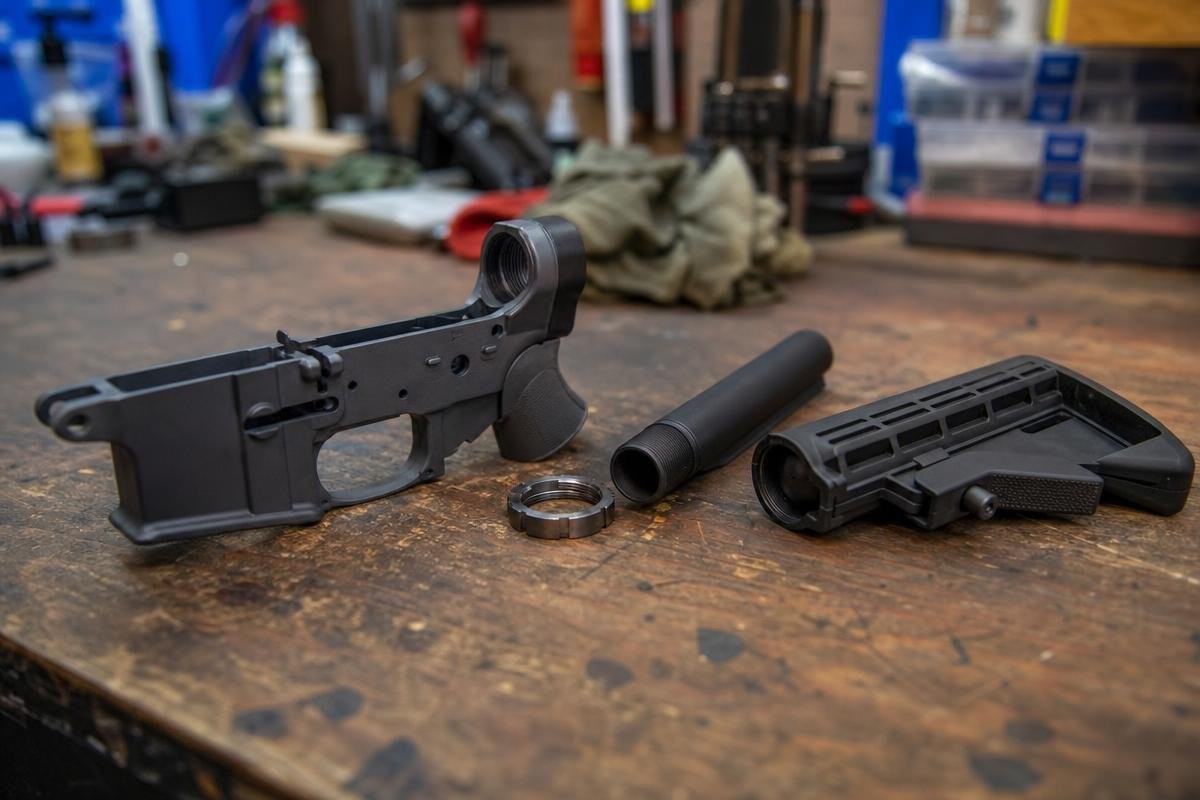
This walkthrough is written for the home armorer doing bench work in the garage or at a club night. You do not need to send this to a shop. You need the right parts, the right tools, and patience to do it once and do it right.
Tools and Parts You Need Before You Start
Gather everything before you touch the lower. Missing one item mid-install causes shortcuts that cause problems.
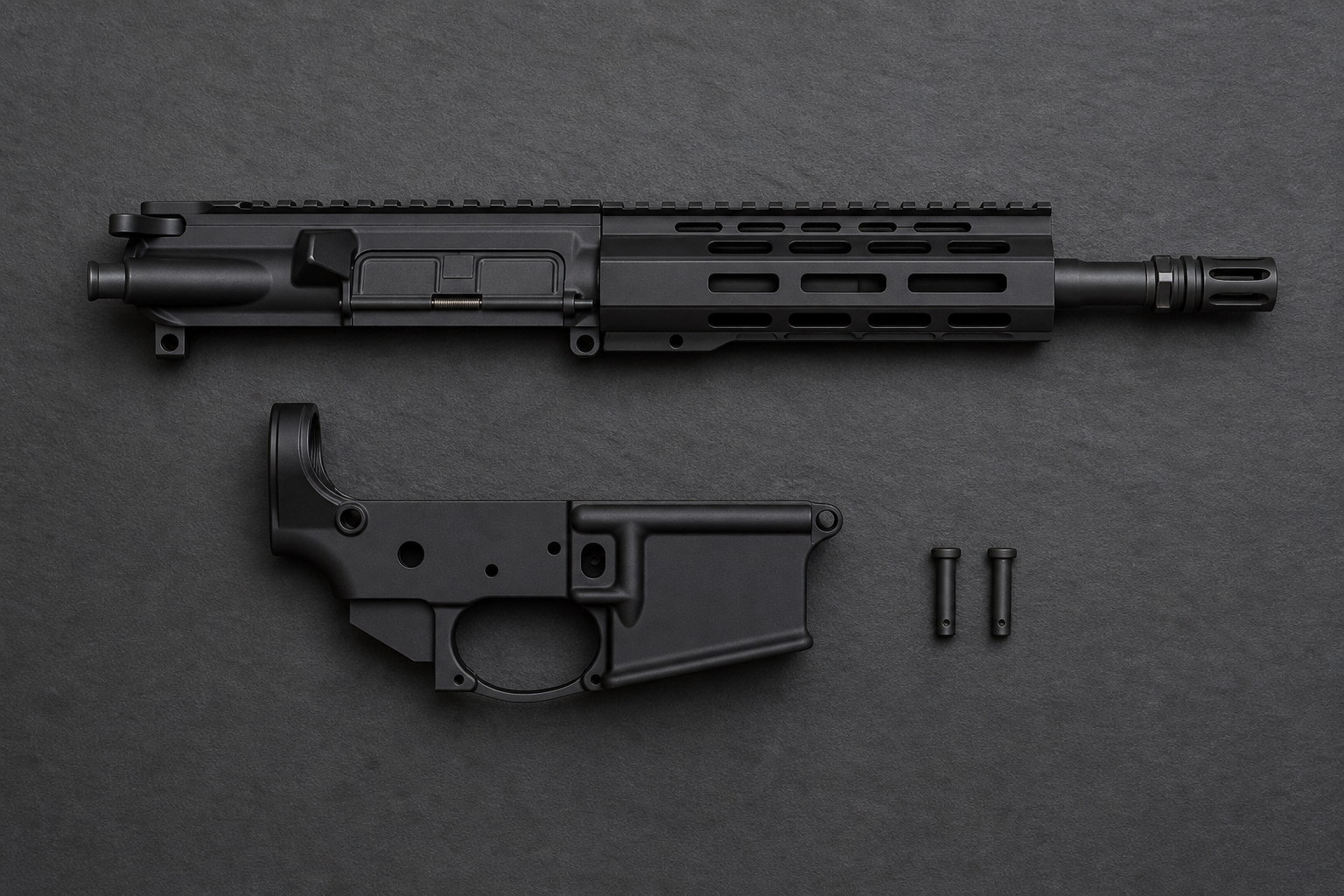
- Lower receiver
- Buffer tube, mil-spec or commercial (must match your stock)
- Castle nut and end plate
- Buffer spring, carbine length for most builds
- Buffer, standard carbine 3.0 oz, H buffer 3.8 oz, or H2 buffer 4.6 oz depending on your gas system
- Collapsible stock
- Armorer's wrench
- Torque wrench
- Roll pin punch set
- Blue Loctite, optional but recommended on the buffer tube threads
Know your tube spec before ordering a stock. Mil-spec tubes are 1.14 inches in diameter. Commercial tubes run slightly larger at 1.17 inches. They are not interchangeable with stocks built for the opposite spec.
Installing the Buffer Tube and Castle Nut
Thread the end plate and castle nut onto the buffer tube before you thread the tube into the lower. Snug the tube by hand first, then torque to 35 to 40 ft-lbs using your armorer's wrench and torque wrench. Do not guess on this. Under-torqued castle nuts back off under recoil.
Staking is required on any defensive or duty rifle.
Stake at a minimum of two points using a punch to deform the castle nut into the end plate notches. This prevents the nut from rotating loose no matter how many rounds you put through it.
Seating the Buffer Spring and Buffer
Drop the buffer spring into the tube, spring end going in first. The buffer follows, flat end toward the bolt carrier group. Push the buffer in and release it. It should compress smoothly and spring back with firm resistance. If it binds or sticks, check for a burr on the tube interior or a mismatched buffer diameter.
Attaching the Collapsible Stock
Slide the stock onto the buffer tube from the rear. The locking lever or button must engage the detent holes positively at each position. Run through every position and confirm each one locks without play. If you feel lateral wobble, your stock spec and tube spec are mismatched. Swap the tube or the stock, not both.
If you would rather skip the build entirely and run a fully assembled platform, browse our complete AR-15 rifles built and function-checked in our shop before they ship to your door.
Collapsible Stocks and Your AR-15 Build Configuration
Stock choice doesn't exist in a vacuum. The right collapsible stock for your build depends on barrel length, intended use, and what you're wearing when you shoot. A 6-position mil-spec stock gives you flexibility that a fixed stock simply can't match across different shooting conditions.
Matching Stock Length of Pull to Barrel Length and Intended Use
On a 16-inch home defense carbine, you want a shorter length of pull. Tight hallways and doorways punish a long LOP fast. Run the stock collapsed one or two positions from where you'd set it at the range. On a 20-inch precision rifle, you want the opposite: a longer LOP that locks in a stable cheek weld and consistent eye relief behind your optic.
Gear matters too. Hunters running insulated jackets during late whitetail season, or sitting a cold morning in a duck blind, typically need to shorten their LOP by one or two positions compared to their bare-chest range setting. Heavy body armor works the same way. A 6-position AR-15 adjustable stock type handles both scenarios without buying a second stock.
One thing the stock doesn't control: buffer weight. That's determined by your barrel length and gas system. If you're sorting out which buffer pairs with your setup, start with choosing the right gas system length for your build before you finalize your buffer selection.
Collapsible Stocks on Pistol-Configuration AR Builds
AR pistols use a pistol brace, not a stock. A brace attaches to the buffer tube the same way a collapsible stock does mechanically, but the two are legally distinct under federal regulations. As of 2026, ATF rules around pistol braces have shifted more than once in recent years. Verify your configuration with a licensed dealer or attorney before you build.
If you're putting together a pistol-configuration build and want to see what upper options work with that platform, browse our complete AR-15 uppers for pistol builds to find a caliber and barrel length that fits your setup.
What is the difference between a mil-spec and commercial buffer tube?
Mil-spec tubes have a straight profile with an outer diameter of approximately 1.148 inches. Commercial tubes have a slight rear taper and measure approximately 1.168 inches at the back. Stocks are built to one spec or the other and are not interchangeable. Check your tube before you order a stock.
Can I put any collapsible stock on my AR-15?
No. The stock must match your buffer tube spec, and the tube must be the correct length for the stock design. Verify both before purchasing. Mixing specs results in a loose fit, binding, or a stock that simply won't lock into position.
How many positions does a standard AR-15 collapsible stock have?
Most standard carbine stocks run 6 positions, giving you roughly 2.25 inches of total length-of-pull adjustment. Some aftermarket options offer 5 or 7 positions depending on the design.
Does a collapsible stock affect accuracy?
A properly fitted stock with minimal wobble does not degrade mechanical accuracy. What hurts accuracy is an inconsistent cheek weld caused by a loose or sloppy stock. That inconsistency shows up in your group size at distance, not in the rifle's mechanical capability.
What buffer weight should I use with a collapsible stock?
Buffer weight depends on your gas system, barrel length, and ammunition, not the stock itself. A standard 3.0 oz carbine buffer is the starting point for most 16-inch builds. H and H2 buffers slow the bolt carrier on overgassed setups.
Are collapsible stocks legal in all states?
No. California, New York, New Jersey, Massachusetts, Connecticut, and Maryland all have specific restrictions on collapsible stocks for AR-pattern rifles. If you are building locally or recently relocated from one of those states, consult a licensed dealer or firearms attorney for state-specific compliance. For local builders pairing a stock with one of our complete AR-15 uppers, there are no state-level restrictions to worry about here.
Ready to build or upgrade? We ship stocks, buffer tubes, and accessories directly to your door with no FFL required. Browse our full selection of complete AR-15 rifles and parts online, or call us with any questions about your build.
Ready to Get Started with AR15Parts.com?
Call (888) 706-0633 to speak with our team directly. We're ready to answer your questions, walk you through your options, and help you find the right solution for your needs. Whether you're just starting to plan or ready to move forward, we'll make the process simple and stress-free.
Reach out today and let's talk about how we can help.