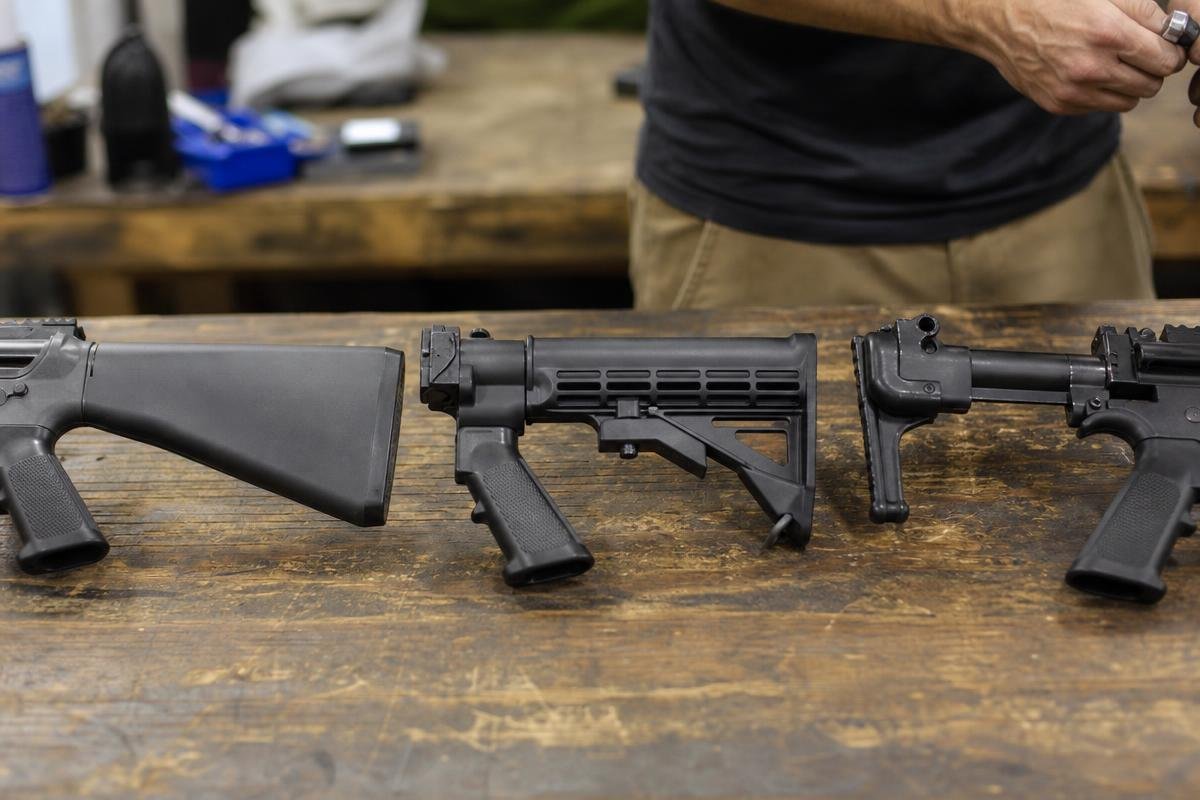
The stock on your AR-15 affects every shot you take. It controls your length of pull, your cheek weld, and how fast you can get on target. This AR-15 stock guide covers fixed, adjustable, and folding options so you can pick the right setup for your rifle, whether that's a long-range precision build, a compact truck gun, or anything in between.
Out here in North Texas, shooters run all three configurations depending on the terrain, and as an FFL-licensed shop building rifles for Grayson County customers, we work with every one of them at AR15Parts.com. Have questions about your build? We're here to help you choose the right stock for your setup.
Your stock is the only part of the rifle that touches your body on every single shot. It controls your cheek weld, your eye alignment behind the optic, and how recoil transfers into your shoulder. Get it wrong and your groups open up, your transitions slow down, and the rifle never quite fits. Most shooters spend hours picking a barrel and five minutes picking a stock. That's backwards.
Here you'll find all three main stock categories: fixed, adjustable and collapsible, and folding. We'll explain the buffer tube geometry behind each one, what length of pull actually means for your fit, and which setup makes sense for your specific use case. A precision rifle staged for open ranch land needs a different answer than a 300 Blackout compact upper riding in a truck for creek-bottom hunting. By the end, you'll know exactly which stock belongs on your build.
What Does an AR-15 Stock Actually Do?
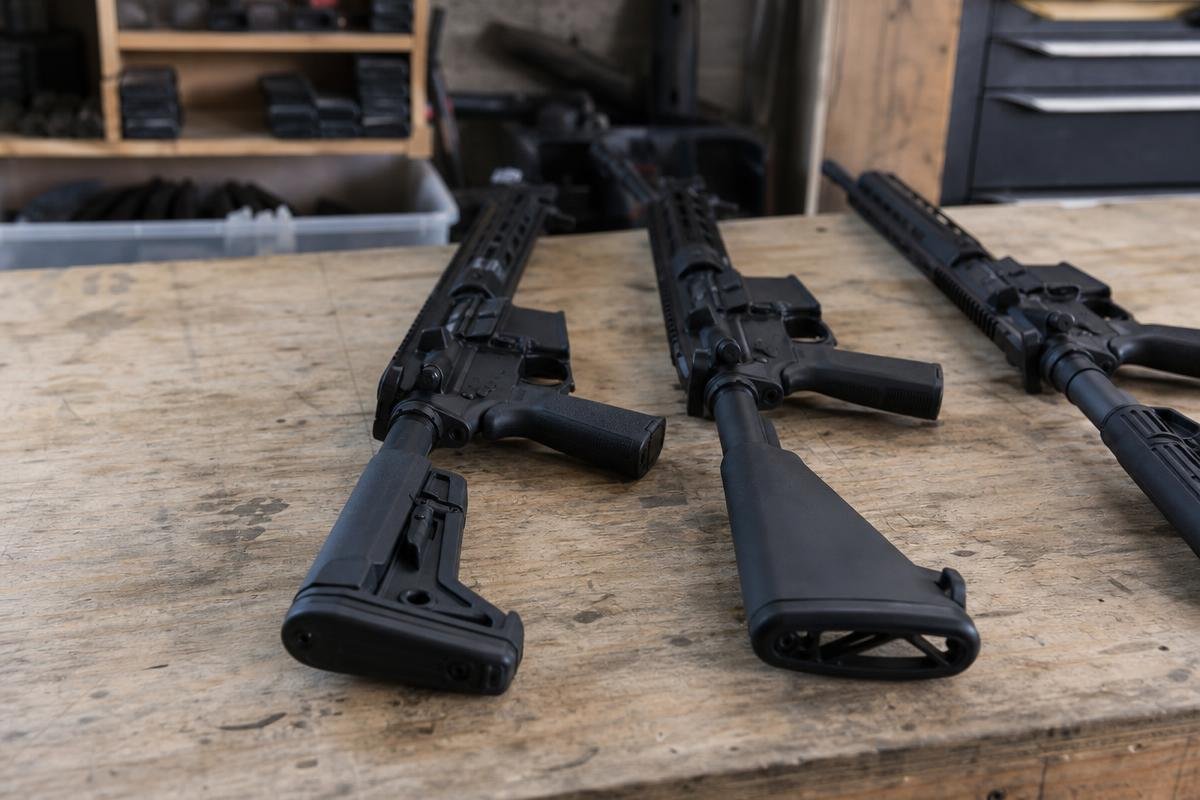
An AR-15 stock does three things: it provides a consistent cheek weld, transfers recoil into your shoulder, and anchors your body to the rifle during aimed fire. It gives you a repeatable surface for eye alignment, it redirects recoil energy from the buffer and spring, and it holds your position steady shot to shot. Get any one of those wrong and shot-to-shot consistency suffers, regardless of how well the rest of the rifle is built.
A mismatched stock height is one of the most common accuracy killers on otherwise solid builds. If your cheek weld shifts shot to shot, your eye relief shifts with it. That means inconsistent point-of-impact, especially noticeable when running a 1-6x LPVO on open pasture ground versus iron sights on a ranch rifle. Local shooters deal with both scenarios regularly.
The Stock's Role in Recoil Management
On a direct-impingement AR-15, the buffer and recoil spring cycle rearward with every shot. The stock is what absorbs and redirects that energy into your shoulder. A stock that fits poorly or sits at the wrong angle turns that energy into muzzle rise and lost target acquisition. Fit matters as much as the buffer weight itself.
How the Stock Interfaces with the Buffer Tube
The buffer tube's diameter and length determine which stocks will physically fit your lower. Carbine-length tubes accept an AR-15 collapsible stock and most adjustable designs. Rifle-length tubes are required for most fixed stocks. The buffer tube length question gets its own full section later, but know this now: you cannot mix stock types across tube profiles without consequences. Folding adapters are a separate mechanical category entirely, covered further down.
Fixed AR-15 Stocks: Precision, Stability, and Simplicity
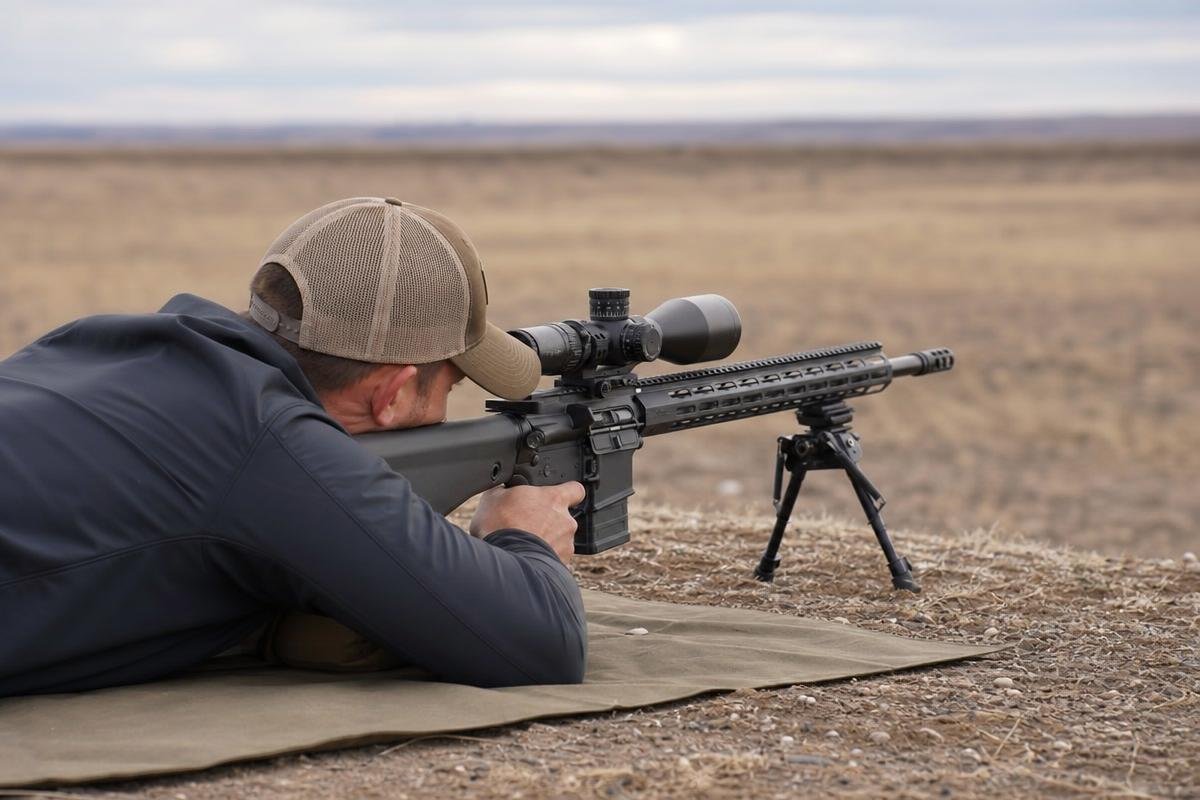
A fixed stock attaches directly to a rifle-length receiver extension and does not move. No wobble. No play. No position adjustments to fumble with under pressure. That rigidity is exactly why fixed stocks remain the standard for NRA High Power competition and serious precision gas-gun builds.
Why Precision Shooters Prefer Fixed Stocks
Every collapsible stock has some degree of flex or slop where it meets the buffer tube. On a precision build, that movement translates directly into inconsistent cheek weld and shot-to-shot variation. A fixed stock eliminates that variable entirely. The interface between stock and lower is solid, which matters most when you are shooting from a supported prone position at distance.
Open pasture land around Denison rewards that kind of consistency. Long flat shots across ranch terrain are where a rigid A2 or chassis-style stock on a rifle-length tube earns its keep. If you are building a dedicated precision upper, pair it with a lower that matches the same discipline. Our AR-15 complete uppers in 19-plus calibers include options well suited to fixed-stock precision builds.
Common Fixed Stock Designs and Materials
The A1 and A2 are the two mil-spec benchmarks. The A1 is the original Vietnam-era design, glass-filled polymer, with a length of pull of approximately 13 inches. The A2 is the more common configuration, same polymer construction, with a 14.5-inch length of pull. Modern precision fixed stocks step up to aluminum chassis designs with adjustable cheek risers and rubber butt-pads. These are heavier but give you a repeatable cheek weld that a standard A2 simply cannot match.
One real-world note for North Texas shooters: summer temperatures regularly push past 100 degrees Fahrenheit around Sherman and Denison. Polymer stocks expand slightly in that heat. It is not a structural issue, but it is worth knowing if you are comparing materials for a rifle that lives in a truck or a hot range bag.
Length of Pull on Fixed Stocks
Length of pull (LOP) is the distance from the trigger face to the center of the butt-pad. The A1's 13-inch LOP runs short. The A2's 14.5-inch LOP fits a medium-framed adult well in a t-shirt, but it becomes problematic with body armor or for smaller-framed shooters. That 1.5-inch difference between the two designs is the core of the fixed stock vs adjustable debate for many buyers.
Some precision fixed stocks use a spacer system that allows length of pull adjustment in half-inch increments.
That gives you some tuning range without switching to a collapsible design. Shooters who find the A2 too long but want to stay fixed often go that route. Those who need more range of adjustment typically move to a carbine-length collapsible stock instead, which we cover in the next section. Building a fixed-stock precision rifle? Start with a lower and upper matched to the same discipline.
Adjustable and Collapsible AR-15 Stocks: Fit Any Shooter, Any Position
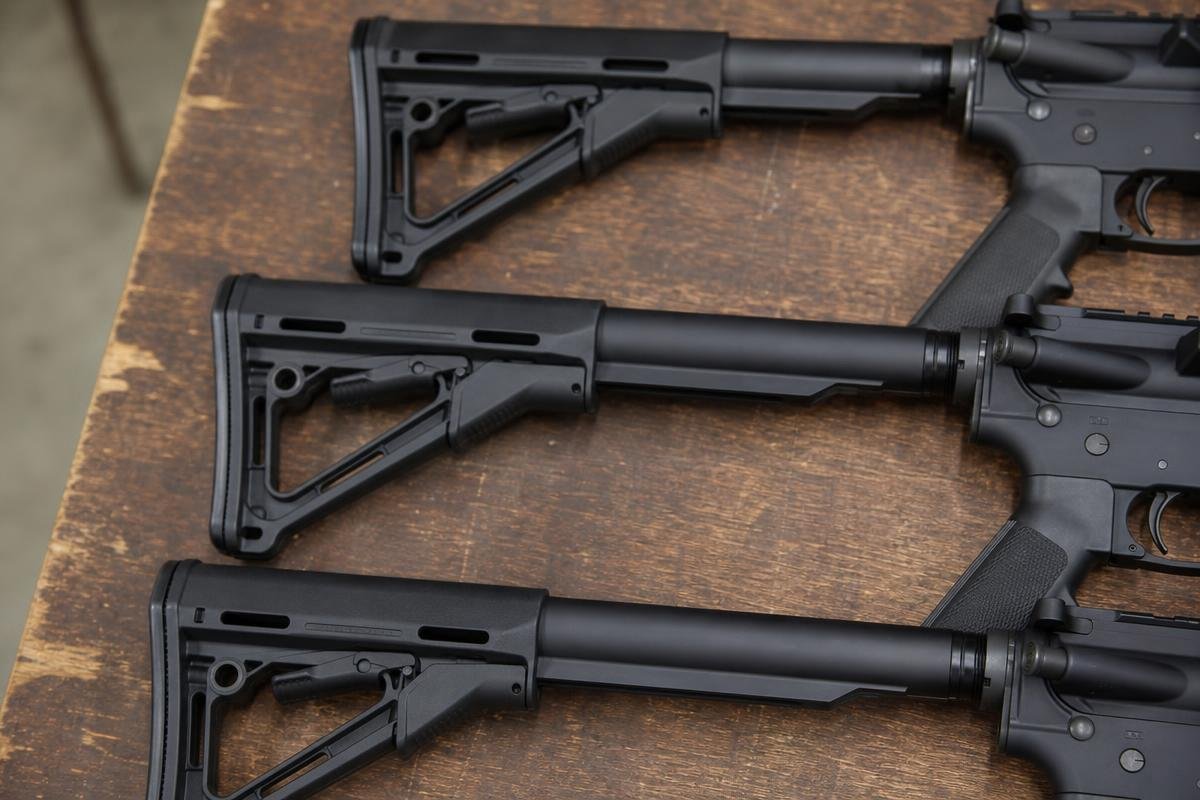
Collapsible stocks are the most common choice on AR-15 builds for good reason. A standard 6-position carbine tube gives you roughly 10.5 to 13 inches of length of pull, with about one inch of adjustment per position. That range fits a wide variety of shooters and shooting positions without swapping any parts. If you are building a truck gun for creek-bottom hunting or a home-defense rifle that multiple family members might shoot, an AR-15 collapsible stock solves the fit problem fast.
Mil-Spec vs Commercial Buffer Tube Diameter
This is where a lot of builds go wrong. Mil-spec buffer tubes measure 1.148 inches in outer diameter and have a slight taper. Commercial tubes measure 1.168 inches with a straight profile. Those dimensions are close, but stocks are not interchangeable between the two. Force a mil-spec stock onto a commercial tube and it will either not seat or will rock under recoil. Quality builds use mil-spec tubes. That is the standard we recommend, and it is what you will find on our complete AR-15 rifles built to order.
Locking Mechanisms and Adjustment Positions
A basic M4-style stock uses a simple lever latch. It works, but it allows some rattle and can shift slightly under recoil. Enhanced stocks like the Magpul CTR, B5 SOPMOD, and MOE add a secondary friction lock or locking lever that removes that slop entirely. For precision use, that consistent lockup matters. In North Texas heat above 100 degrees, polymer tubes and stocks expand slightly, and a locking carbine stock maintains a more consistent fit than a basic M4 latch when materials are moving in July.
Cheek Weld and Comb Height on Collapsible Stocks
Standard M4-style collapsible stocks have a low comb. That works fine with iron sights and low-mounted red dots. Mount a magnified optic on a higher 1.5-inch centerline and you will find yourself craning your neck to get behind the glass. Stocks with an elevated cheek riser, like the B5 SOPMOD, Magpul SL-S, or Bravo Company GUNFIGHTER, align your eye naturally behind taller optics. If you are running a 300 Blackout upper with a magnified optic for deer hunting, the comb height on your stock is not a detail to skip.
Folding AR-15 Stocks: Compact Carry and the Buffer Tube Problem
A folding AR-15 stock looks great in photos. In practice, there is a hard mechanical reality you need to understand before you buy one.
A standard direct-impingement AR-15 cannot fire with the stock folded. The buffer and recoil spring run straight through the buffer tube. Fold the stock and you break that straight-line path. The bolt carrier group has nowhere to cycle. The rifle is a single-shot until you unfold it.
How Folding Adapters Work on a Direct-Impingement AR-15
A folding adapter, the Law Tactical Gen 3-M being the most common, inserts between the lower receiver and the buffer tube. The entire tube and stock assembly hinges left. That gets you 6 to 8 inches of length reduction for storage and transport. You still cannot fire it folded. You unfold, confirm it locks, then shoot. The Gen 3-M adds roughly 3.5 oz and introduces a potential wobble point at the hinge. For a precision rifle or a duty carbine, a quality collapsible stock is simpler and more reliable. The adapter earns its place in specific use cases, not as a universal upgrade.
Folding Stocks on AR-15 Pistol Builds
This is where folding adapters genuinely shine. A 300 Blackout complete upper on a pistol lower with a 10.5-inch barrel and a folding brace fits in a standard backpack or a small case behind a truck seat. ATF classifications around pistol braces have shifted. Verify current rules with a licensed FFL or attorney before you build.
When a Folding Stock Actually Makes Sense
Honest answer: a narrow set of situations.
- Vehicle storage and truck gun setups
- Backpack carry on hunting leases where pack space is tight
- Range transport when case size matters
The creek-bottom terrain around the Red River corridor is exactly where a compact folding-adapter build earns its keep. A short 300 Blackout pistol stored behind a seat is a practical tool for ranch work and cross-state Oklahoma leases. It is not the answer for competition or precision shooting, where rigidity matters more than packed length.
Buffer Tube Length, Geometry, and Stock Compatibility
This is where a lot of builds go sideways. The buffer tube is not a universal part. Get the length wrong and your stock either will not fit or will not function. This section covers the full geometry breakdown.
Carbine-Length vs Rifle-Length Buffer Tubes
Carbine-length buffer tubes measure approximately 7 inches and accept 6-position collapsible stocks. Rifle-length tubes run approximately 9.5 to 10 inches and are required for fixed A1 and A2 stocks. These two tube lengths are not interchangeable. A collapsible stock will not lock correctly on a rifle-length tube, and a fixed A2 stock will not seat on a carbine tube. Full stop.
A precision rifle on a rifle-length setup and a compact truck gun on a carbine tube are working with completely different buffer specs. Mixing components from one configuration into the other is one of the most common and most avoidable build mistakes we see. If you are configuring a 300 Blackout upper for a pistol or short-barreled build, you are on a carbine tube. Plan accordingly.
Buffer Tube Thread Pitch and Receiver Compatibility
Buffer tubes thread into the lower receiver at 1-3/16 x 16 TPI. That spec is standard across virtually all mil-spec-pattern lowers. The castle nut torques to 35 to 40 ft-lbs and gets staked after torquing. Skipping the staking step lets the nut back out under recoil. That is not a maybe. It happens. Note that AR-10 pattern rifles use a different buffer tube spec entirely, a distinction covered when comparing complete uppers across platforms.
How Buffer Weight Interacts with Stock Selection
Your stock choice does not change the buffer weight recommendation. But switching tube lengths absolutely does. A standard carbine buffer runs 3.0 oz. An A2 rifle buffer runs 5.0 oz. You cannot drop a rifle buffer into a carbine tube. The H-series carbine buffers give you more options: H1 at 3.8 oz, H2 at 4.6 oz, H3 at 5.4 oz. Heavier buffers slow bolt carrier rearward travel and reduce felt recoil and bolt bounce.
Suppressed builds and pistol-length gas systems benefit from an H2 or H3 buffer paired with an adjustable gas block. If you change tube length on any build, swap both the buffer and the spring. One without the other creates cycling problems. Not sure which buffer tube length fits your build? Call us at (888) 706-0633 and we will walk through the specs with you before you order.
Butt-Pad Design, Ergonomics, and Sling Attachment Points
Butt-Pad Materials and Recoil Absorption
Yes, butt-pad material makes a real difference. Hard polymer pads, standard on most M4-style stocks, are durable and consistent. They also transmit more felt recoil directly into your shoulder. Rubber and soft-polymer pads compress slightly on firing and take the edge off, especially during high-volume range sessions.
That difference becomes more noticeable with heavier calibers. Running a 450 Bushmaster complete upper puts significantly more impulse into the stock than 5.56 does. A vented rubber pad like the ones on the Luth-AR MBA-1 or B5 SOPMOD earns its keep there. Aftermarket replacement pads are available for most popular stocks and cost very little compared to the comfort gain.
One note for the Red River area: rubber pads stiffen on cold winter mornings and feel less compliant in summer heat above 100 degrees, so factor that in for a year-round build.
Sling Loops, QD Cups, and Stock-Mounted Attachments
Most quality carbine stocks include at least one sling attachment point. A QD cup accepts a push-button swivel and lets you drop the sling in under a second. Stocks like the Magpul ACS and B5 SOPMOD include QD cups on both sides, which gives you flexibility for switching shooting positions or sling configurations without tools.
Single-point sling attachment usually runs through the lower receiver end plate, not the stock itself. Two-point setups pair a front handguard or gas block attachment with a rear stock mount. Minimalist stocks like the Magpul SL skip the QD cups entirely to cut weight. Know your sling setup before you pick your stock.
How to Choose the Right AR-15 Stock for Your Build
Stock selection comes down to three things: what you're building the rifle to do, how your body fits the gun, and how much weight you can afford. Get those three right and the choice is straightforward.
Match the Stock to Your Intended Use
Precision or competition prone shooting calls for a fixed stock or chassis-style adjustable with a cheek riser. A rifle-length tube and an A2 or similar fixed stock give you a repeatable cheek weld every time. For a duty carbine or home defense build, run a locking collapsible like the B5 SOPMOD or Magpul CTR on a mil-spec tube with an H2 buffer.
Hunting open pasture or creek-bottom terrain near Sherman means two different answers: a fixed stock for long-range work and a compact collapsible or folding adapter for a truck gun. Suppressed builds need a collapsible stock paired with an adjustable gas block and an H2 or H3 buffer to manage the added backpressure.
Shooter Fit: Length of Pull, Body Armor, and Arm Length
Length of pull is the single most important ergonomic variable on your rifle. Correct fit means a slight bend in your shooting elbow with the stock seated in your shoulder pocket and your trigger finger reaching the trigger naturally. Too long and your elbow rises, your head moves forward, and your cheek weld breaks under recoil.
Too short and your shooting arm collapses and you lose control. Shooters wearing body armor or heavy winter gear typically need 1 to 2 inches less LOP than their bare-shoulder measurement. A standard 6-position carbine tube covers most adult shooters across that full range.
Weight Budget and Stock Selection
Weight adds up fast. A basic M4-style collapsible stock runs 5 to 7 oz. A locking carbine stock like the CTR or SOPMOD adds 7 to 10 oz. A fixed A2 sits at 10 to 12 oz. A precision chassis stock runs 12 to 16 oz. A folding adapter adds another 3 to 4 oz on top of whatever stock you attach. If you're building a sub-6-pound rifle, a minimalist collapsible is the answer. If consistency and adjustment points matter more than ounces, the heavier precision stock pays off. Factor total weight across both ends of the rifle before you commit.
AR-15 Stocks in North Texas: What Local Shooters Are Running
Shooters in the Sherman and Denison area deal with conditions that actually matter when picking a stock. Summer temperatures regularly push past 100 degrees Fahrenheit, and that heat causes polymer stocks to expand slightly, which can make a collapsible stock's locking detents feel stiffer or looser than they did in cooler weather. Cold mornings along the Red River corridor do the opposite, stiffening rubber butt-pads and reducing recoil absorption. Material choice here is a seasonal one, not just a spec-sheet decision.
Texas law shapes stock choice too. There is no state magazine or feature restriction on semi-automatic rifles, and long guns can legally travel loaded in a vehicle, which is why compact folding-adapter truck guns are popular for ranch and lease work here. Deer season, roughly November into early January in this part of North Texas, drives a lot of our hunting builds.
Open ranch land east and west of Sherman rewards a fixed stock for supported shots at distance, while brushy creek-bottom ground favors a compact collapsible or folding adapter for moving through cover and climbing in and out of a blind. Hunters running Oklahoma leases near the Red River are common customers, many of them pairing 300 Blackout uppers for timber work or 6.5 Creedmoor uppers for open-pasture shots, and each caliber has different buffer and stock considerations covered above.
North Texas dust and heat also mean your locking mechanisms and butt-pad hardware need regular attention, since grit works into adjustment channels fast. We are based at 2022 S Crockett St, Sherman, TX 75090, and we assemble, headspace, and function-check every upper before it ships to your door. If you need a complete upper to pair with your stock selection, browse our full lineup and order directly.
Ready to pair your stock selection with a complete upper that is already assembled, headspaced, and function-checked? Browse our full lineup of AR-15 complete uppers in 19-plus calibers, or call us at (888) 706-0633. We build to order from our shop at 2022 S Crockett St, Sherman, TX 75090, and ship direct to your door. No FFL required for uppers.