6.5 Creedmoor vs 6.5 Grendel compared side by side: ballistics, platform fit, hunting use, and which belongs in your next build.
Both cartridges share the same bullet diameter, but the 6.5 Creedmoor vs 6.5 Grendel question comes down to platform, range, and what you're actually hunting. The Grendel runs in a standard AR-15 lower. The Creedmoor needs a larger action. Out here in North Texas, where shots can stretch across open ag fields or compress fast in the Red River bottom, that difference matters.
We build both calibers to order at our Sherman shop, headspaced and function-checked before they ship to your door, and after years of assembling these uppers in-house we've seen firsthand where each one fits. Not sure which caliber fits your build? Talk to a builder before you buy.
6.5 Creedmoor vs. 6.5 Grendel: What's the Real Difference?
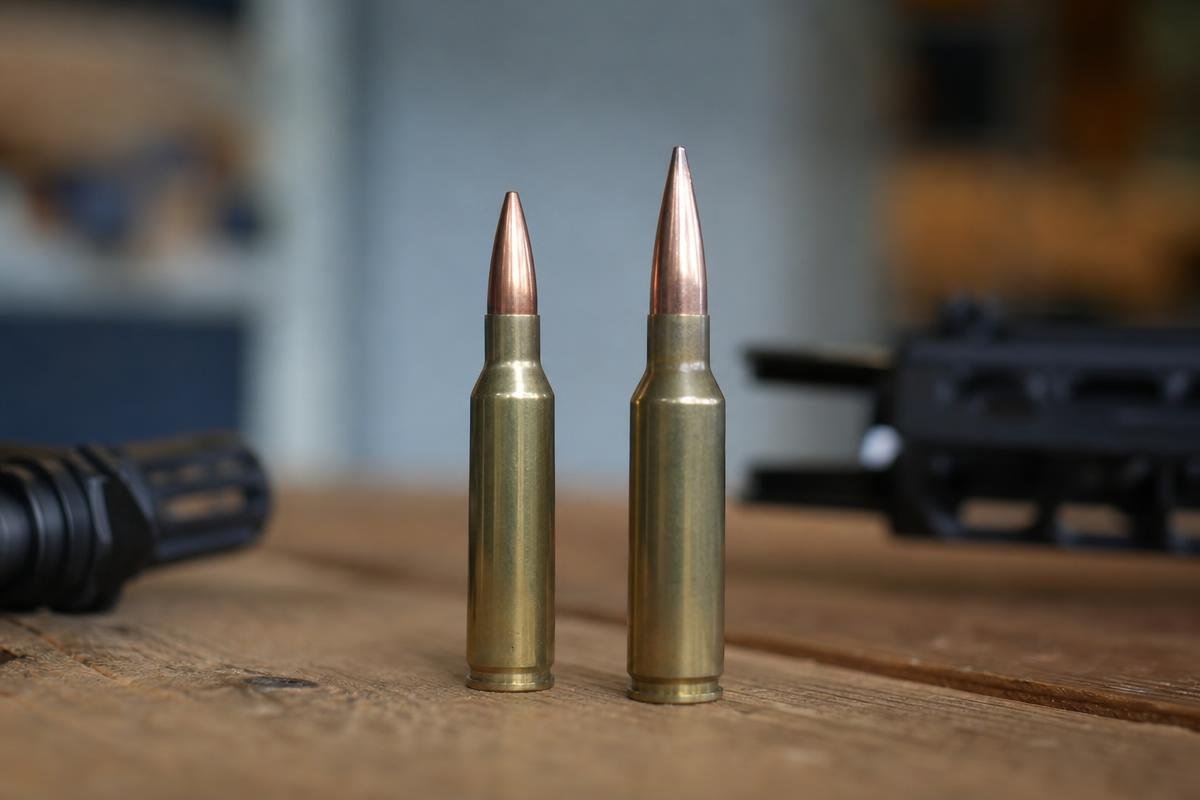
Same bullet diameter. Completely different rifles. That is the short answer to the 6.5 Grendel vs. 6.5 Creedmoor ballistics question, and it matters more than any velocity number before you buy a single part. Both cartridges fire a 6.5mm (.264 caliber) projectile, and that is where the similarity ends.
The 6.5 Grendel runs on a standard AR-15 lower receiver. The 6.5 Creedmoor requires a large-frame AR-10 or DPMS-pattern lower. That platform difference changes your build cost, your rifle weight, and your magazine options before you ever touch a ballistics chart. Platform choice is the first decision, not caliber preference.
If you hunt the river-bottom brush or the open agricultural fields between Denison and Hagerman National Wildlife Refuge, this is a real choice with real consequences. Here you'll find platform compatibility, ballistic performance out past 500 yards, hunting applications, and which cartridge fits your actual build. We carry 6.5 Grendel complete uppers and 6.5 Creedmoor complete uppers assembled in-house. Read through, then decide.
Platform Compatibility: The Most Important Difference Nobody Talks About
Most comparison articles jump straight to ballistics. That's the wrong place to start. The most important question is simpler: what lower receiver do you already own? That single fact determines which cartridge is even an option for you.
6.5 Grendel: Built for the AR-15
The 6.5 Grendel AR-15 build runs on a standard mil-spec AR-15 lower. Your existing lower receiver, buffer tube, and stock stay exactly where they are. The only parts that change are the upper receiver, barrel, bolt carrier group, and magazines.
The BCG uses a modified bolt face sized for the larger Grendel case head, but it still fits inside a standard AR-15 upper. Magazines follow the Alexander Arms or ASC pattern rather than standard STANAG, but they drop into the same magazine well without modification.
If you already hunt hogs near Eisenhower State Park with an AR-15 lower, converting to Grendel costs you an upper swap. That's it. Browse our 6.5 Grendel complete uppers to see what a conversion actually requires.
6.5 Creedmoor: A Large-Frame Cartridge
The 6.5 Creedmoor AR platform is a different animal entirely. This cartridge requires a DPMS-pattern AR-10 upper and a matching AR-10 lower. You cannot mount a Creedmoor upper on a standard AR-15 lower. The receiver dimensions are larger, the bolt carrier group is physically bigger and not interchangeable with an AR-15 BCG, and the magazine well is a different size.
If you own an AR-15 lower and want to shoot Creedmoor, you are buying a complete new platform, not swapping an upper. That is a full build decision, not a parts swap. See our 6.5 Creedmoor complete uppers built on the DPMS AR-10 pattern to understand exactly what the platform requires before you commit.
How We Build and Check Every Upper
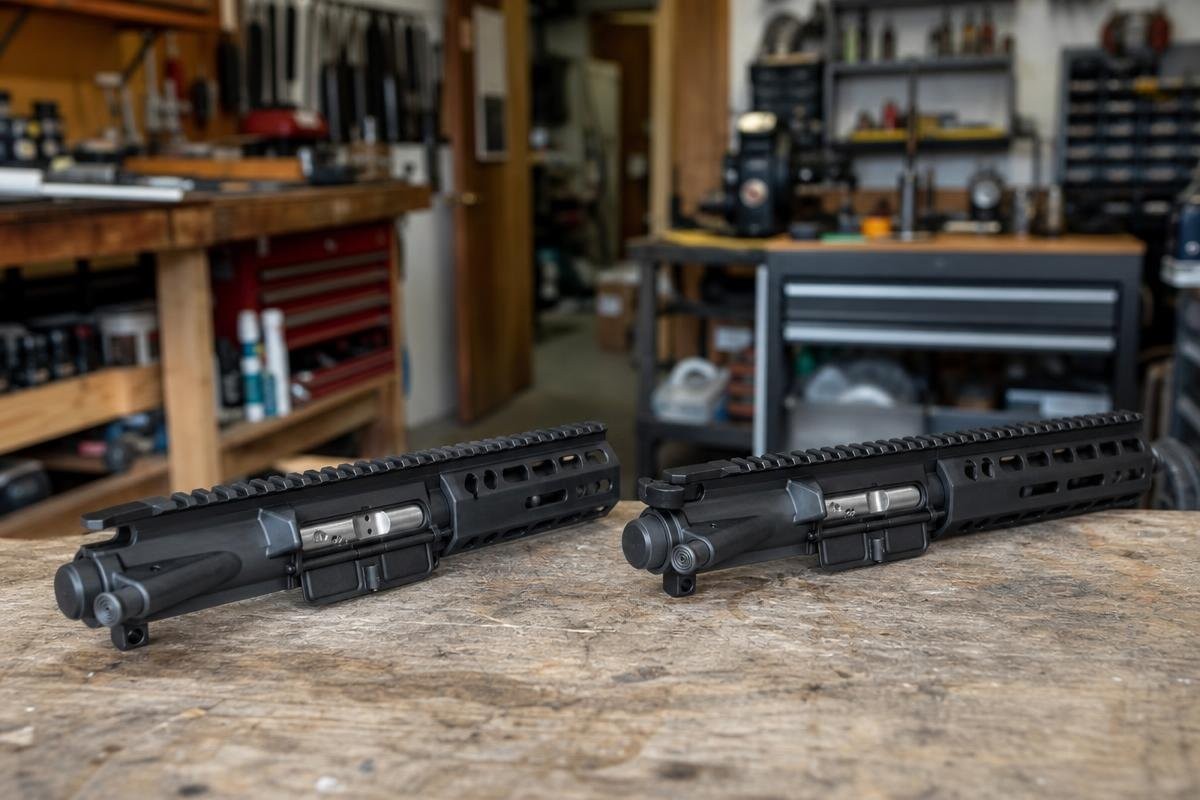
When we say a barrel is headspaced and function-checked, we mean each upper goes through the same steps on the bench before it ships. We torque the barrel nut to spec, then set headspace with go and no-go gauges matched to the specific cartridge, since a Grendel bolt face and a Creedmoor bolt face are not interchangeable.
We verify gas port alignment, cycle the bolt carrier group by hand to confirm clean feeding and extraction, and inspect the crown and chamber before the upper leaves the shop. That is why our uppers arrive ready to drop onto your lower without a trip to a local gunsmith. It is the same process whether you order an off-the-shelf configuration or something custom configured to your barrel length and handguard preference.
Ballistics Head to Head: Velocity, Energy, and Drop at Distance
The open agricultural fields around Grayson County change the 6.5 Grendel vs 6.5 Creedmoor ballistics conversation fast. A 300-yard shot on a whitetail in river-bottom brush is one thing. A 500-yard shot across a Denison-area lease is another. The numbers below tell you exactly what each cartridge does at distance.
Muzzle Velocity and Energy
The 6.5 Creedmoor launches a 140-grain bullet at roughly 2,710 fps from a 24-inch barrel, producing about 2,283 ft-lbs of muzzle energy. The 6.5 Grendel pushes a 123-grain bullet at approximately 2,580 fps from the same barrel length, generating around 1,818 ft-lbs. That is a 465 ft-lb gap at the muzzle, and it only grows as distance increases.
On our 18-inch Grendel builds, we consistently chronograph 2,440 to 2,460 fps with 123-grain Hornady SST, which is still a meaningful step up from 5.56 NATO. The Grendel is not a short-range cartridge. It is a shorter-range cartridge than its larger competitor.
Energy retention at distance is where the G1 ballistic coefficient matters. The Creedmoor's 140-grain bullet carries a G1 BC near 0.610. The Grendel's 123-grain runs around 0.510. Higher BC means the Creedmoor sheds velocity more slowly, which is why it holds an energy advantage at every yard marker past the muzzle. If you are evaluating the best 6.5 cartridge for an AR build, that gap is worth understanding before you buy.
Trajectory Drop and Wind Drift
From a 100-yard zero, the Grendel's 123-grain drops roughly 45 to 50 inches at 500 yards. The Creedmoor's 140-grain drops approximately 38 to 42 inches at the same distance. That 7 to 8 inch difference is real. At 800 yards, the gap widens further. You also have to read the wind differently.
The Creedmoor's higher BC makes it less sensitive to lateral drift, which matters on open ground where gusts come in unpredictably. Both cartridges are capable past 300 yards. Only one of them stays competitive past 600. Ready to order a Creedmoor or Grendel upper? Get a custom quote matched to your barrel length and use case.
Which Cartridge Is Better for Hunting?
The honest answer depends on where you hunt and how far you shoot. Both cartridges are legal for deer statewide under Texas Parks and Wildlife regulations, including right here in Grayson County. The real question is terrain, and around Denison and Sherman, that matters a lot.
6.5 Grendel for Hunting: Capable Inside 400 Yards
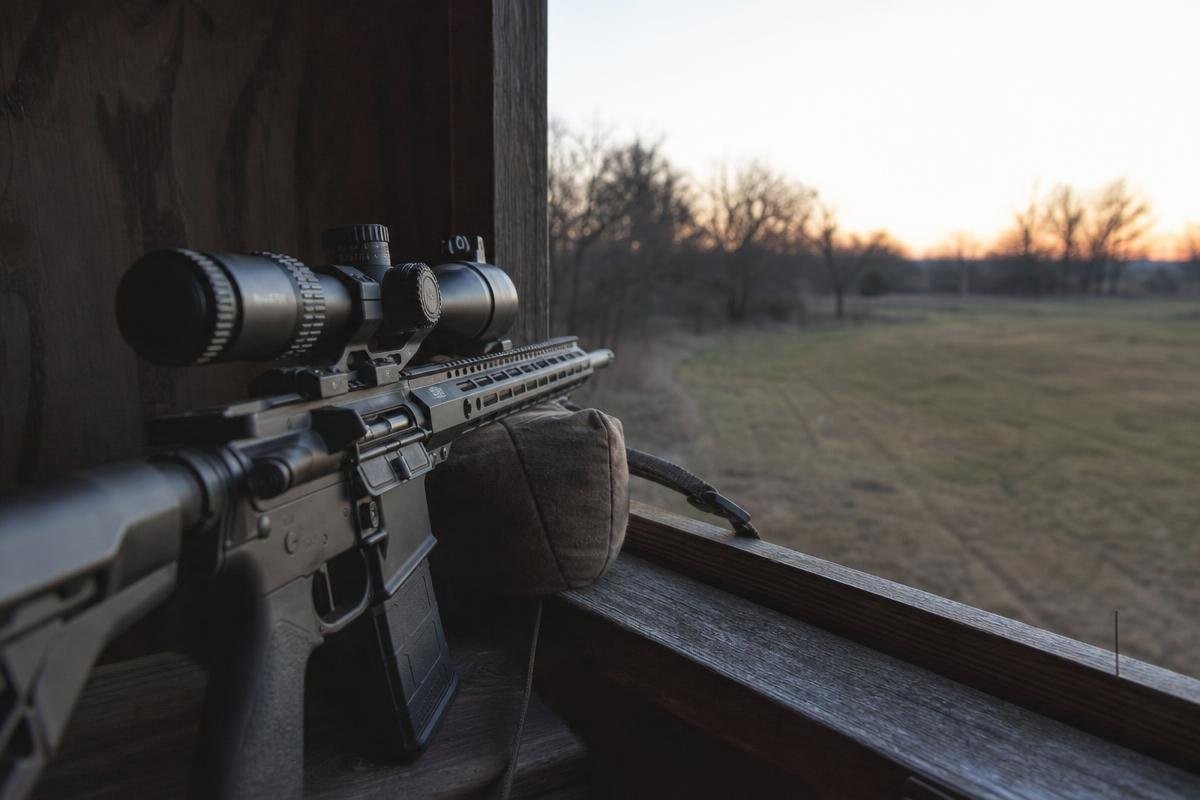
Yes, the 6.5 Grendel is more than enough for whitetail deer in Texas. A 123-grain Hornady SST or ELD-M produces clean, ethical kills on deer and feral hogs inside 400 yards. That covers nearly every shot you will ever take in the river-bottom brush along the Red River or on a lease near Lake Texoma. The compact AR-15 platform handles tight blinds and thick cedar country far better than a longer rifle.
If you want to dig deeper into real-world performance, our breakdown of the 6.5 Grendel for hunting covers the tradeoffs honestly. You can also check our guide to the best deer hunting calibers for AR platforms if you are still comparing options. Past 400 to 450 yards, retained energy on elk-sized game becomes marginal. For whitetail in the Grayson County bottoms, that limit never comes up. For elk, it does.
6.5 Creedmoor for Hunting: Elk Country and Open Ground
The 6.5 Creedmoor is built for longer reach. A 143-grain Hornady ELD-X holds over 1,500 ft-lbs past 500 yards, which meets accepted minimums for elk-sized game. That makes it the right call for open-country hunts in West Texas, Colorado, or Wyoming where 300-plus-yard shots are routine.
On the open agricultural fields east of Sherman, where a deer can stand 350 yards across a soybean field, the added reach and retained energy are a genuine advantage. If that is the direction your build is going, view our Creedmoor upper options and match a barrel to your typical range.
For the best 6.5 cartridge for AR hunting close to home, the compact platform wins in the brush. For open ground and bigger game at distance, the Creedmoor earns its place.
Recoil, Weight, and Handling: What the Specs Don't Tell You
Felt Recoil: A Real Difference Between Platforms
The numbers tell part of the story. A 6.5 Grendel AR-15 build generates roughly 8 to 10 ft-lbs of free recoil. An AR-10 chambered in 6.5 Creedmoor pushes closer to 13 to 15 ft-lbs, comparable to a .308 Winchester. That gap is noticeable at the bench, and it compounds across a full day of shooting.
The heavier AR-10 frame absorbs some of that energy, but it does not close the gap. For newer shooters or anyone running high round counts at a competition, the milder impulse of the smaller platform is a real, practical advantage, not a paper spec.
The lighter cartridge wins on recoil. Full stop.
Weight and Handling in the Field
A typical 6.5 Grendel complete upper on an AR-15 with an 18-inch barrel runs 7 to 8 pounds unloaded. A 6.5 Creedmoor complete upper on an AR-10 with a 20-inch barrel typically lands at 9 to 11 pounds. That 2 to 3 pound difference sounds small on paper.
Walk the river-bottom brush along the Red River or cover agricultural fields in Grayson County for a full day, and you will feel every ounce of it. Hunters running leases near Lake Texoma know exactly what we mean. The lighter AR-15 platform also opens up a wider range of aftermarket configuration options, including adjustable and folding stocks, that simply are not as practical on a heavier AR-10 frame.
Carry weight matters when the shot opportunity comes at mile three. Not sure which platform fits your hunting setup or shooting style? Call us at (888) 706-0633 and we will help you sort it out before you buy.
Ammunition Availability and Cost: A Practical Consideration for 2026
Ballistics matter. So does being able to find ammo at a reasonable price. If you're deciding on the best 6.5 cartridge for AR builds or bolt guns, shelf availability is a real part of that decision, especially if you're hunting open ag land around the North Texas region and need to stock up before season.
6.5 Creedmoor Ammo: Wide Selection, Wide Distribution
The 6.5 Creedmoor is one of the most widely produced rifle cartridges in the country right now. Federal, Hornady, Nosler, Berger, and Barnes all load it. You'll find factory 140-grain loads at most sporting goods retailers, and quality hunting rounds run roughly $1.50 to $2.50 per round depending on the load. Match-grade options like Hornady ELD Match and Federal Gold Medal are consistently in stock online. This cartridge has no availability problem.
6.5 Grendel Ammo: Loyal Following, Narrower Shelf Presence
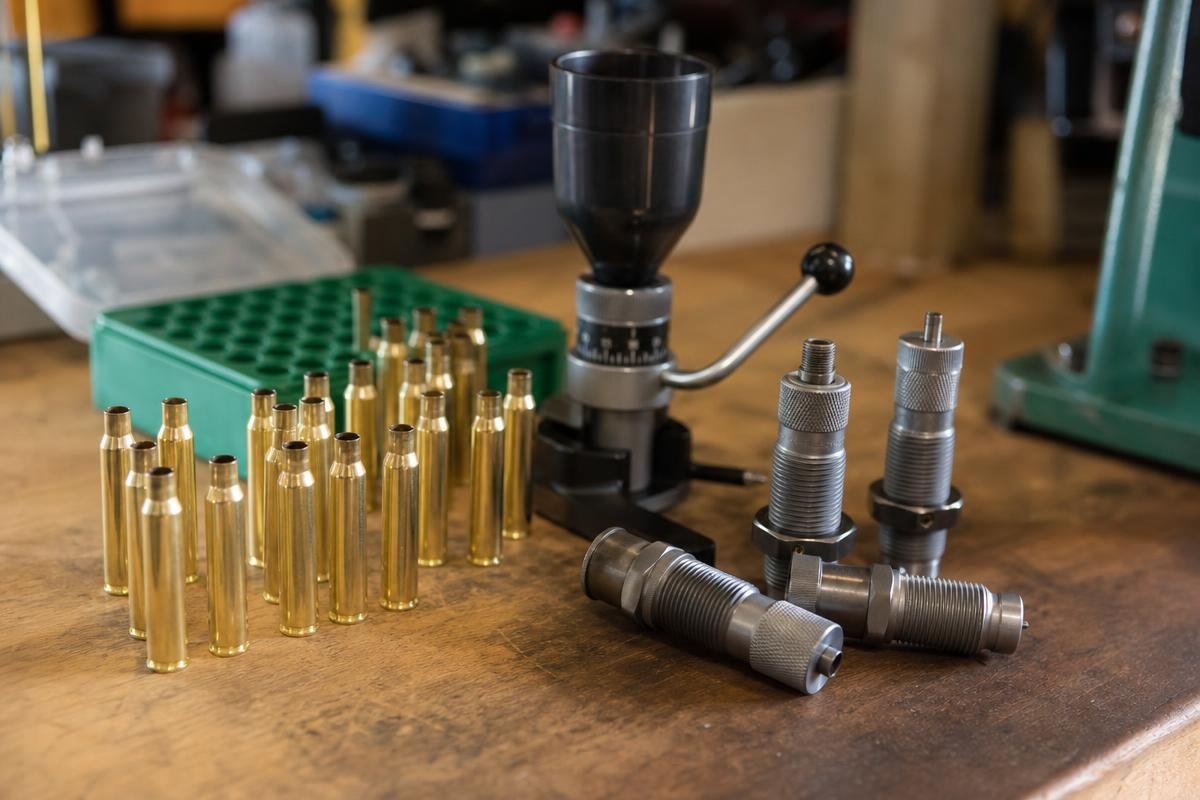
The 6.5 Grendel has a smaller but dedicated following. Hornady, Wolf, Sellier and Bellot, and Alexander Arms all produce factory loads. Quality hunting rounds run about $1.20 to $2.00 per round, which makes it slightly more affordable to shoot in volume. Lapua brass and Sierra or Hornady projectiles are available for reloaders, and the smaller case is efficient to reload in bulk.
The honest answer on local availability: rural sporting goods stores in the North Texas area may carry Creedmoor loads reliably but stock limited Grendel selection. Online ordering solves that. If you're building a 6.5 Grendel complete upper or a 6.5 Creedmoor complete upper, plan to source Grendel ammo online and keep a solid supply on hand.
Building Your AR in 6.5 Grendel or 6.5 Creedmoor: What You Need to Know
These two calibers are not interchangeable builds. One fits your existing AR-15 lower. The other requires a completely different platform. Get that wrong and you're buying parts twice.
6.5 Grendel AR-15 Build: Parts List and Key Specs
A 6.5 Grendel AR-15 build starts with your standard AR-15 lower. You keep it. What changes is everything above the receiver: you need a 6.5 Grendel-specific upper assembly, a modified bolt carrier group with the larger bolt face the cartridge requires, and ASC or Alexander Arms pattern magazines. Your existing lower, trigger, and stock stay put.
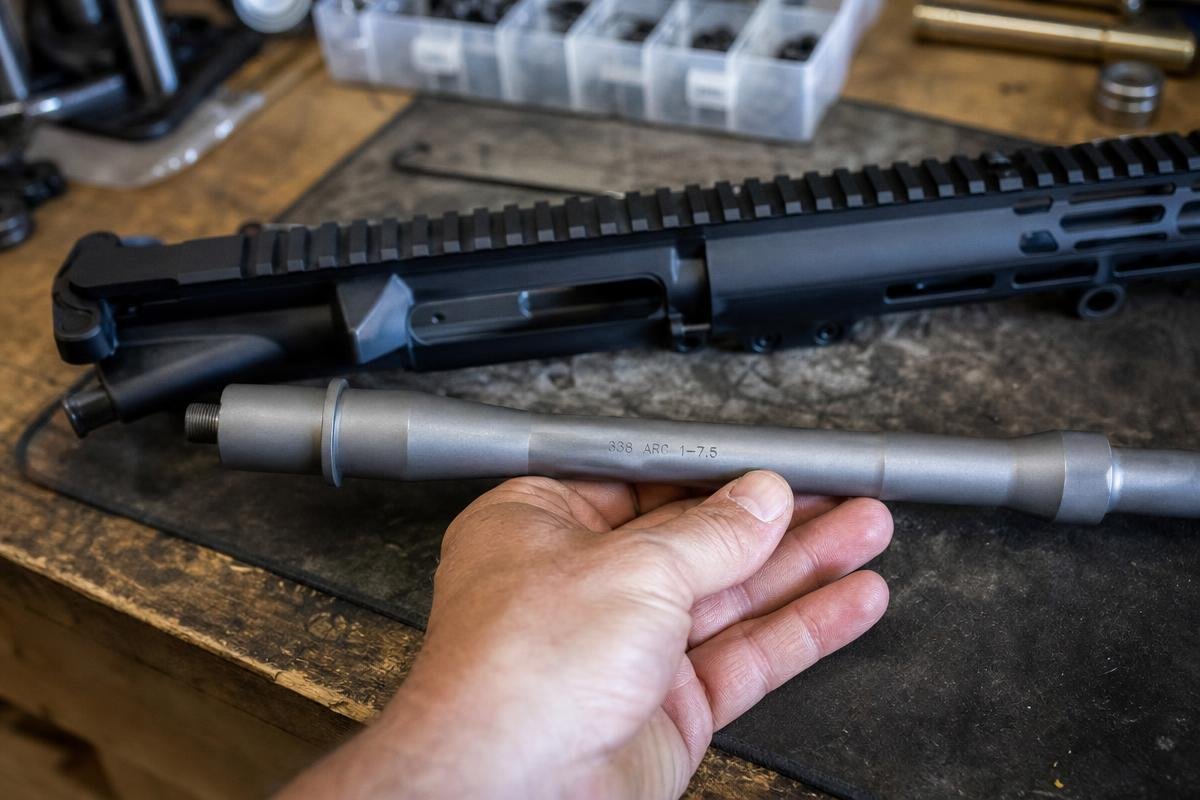
Barrel twist matters here. A 1:8 twist handles 100 to 130 grain projectiles well. Common barrel lengths run 18 and 24 inches for hunting and precision work. A 16-inch barrel functions fine but costs you roughly 100 to 150 fps at the muzzle. For shooters in open agricultural country where shots push past 300 yards, the longer barrel earns its weight.
Our Grendel upper builds arrive assembled, headspaced, and function-checked in our shop before they ship to your door. No local gunsmith required.
6.5 Creedmoor AR-10 Build: Parts List and Key Specs
The 6.5 Creedmoor AR platform is a different animal. You need a DPMS-pattern large-frame upper and lower, an AR-10 BCG, a 6.5 Creedmoor barrel in 1:8 twist (optimal for 140-grain projectiles), and .308-pattern magazines. Common barrel lengths are 20 and 24 inches. Nothing from your AR-15 lower carries over.
That means higher build cost across every component. The larger platform adds weight and cost, but it also handles the cartridge's pressure and case volume correctly. Our Creedmoor uppers are built to the same standard: assembled, headspaced, and function-checked before shipping. If you're still comparing calibers across platforms, browse our complete AR uppers in 19-plus calibers to see the full range of options.
So Which One Should You Buy?
Here is the decision framework we walk customers through at the shop. Start with the platform you already own, because that answers most of the question before ballistics ever come up.
Already have an AR-15 lower? Buy the Grendel. Drop in a 6.5 Grendel complete upper and you have a genuine long-range capable rifle for the cost of an upper swap, no new lower, no new trigger, no new stock. For hunters in the river bottoms and brush country north of the Red River, where shots rarely push past 300 yards, this is the right answer nearly every time.
Building new and shooting past 500 yards? Buy the Creedmoor. If you regularly stretch shots past 500 to 800 yards, or you are chasing elk in open country where the extra velocity and energy retention actually matter, the AR-10 platform is worth the investment. Open-field hunters working agricultural land east of Sherman who routinely take 400-yard shots fall in this camp too.
Torn between the two? Split the difference by your budget and your recoil tolerance. The Grendel is lighter, cheaper to feed, and easier on the shoulder. The Creedmoor costs more across every component and kicks harder, but it buys you real reach. The cartridge that fits your platform and your range is the right cartridge.
We build complete 6.5 Grendel uppers and complete 6.5 Creedmoor uppers, assembled, headspaced, and function-checked in our shop before they ship to your door. Call us at (888) 706-0633 or browse our complete upper assemblies. If you know what you need, we can build it to your exact specifications.