Bigger isn't always better, and out here in North Texas that question has a real answer. Hunters and shooters working the open bottomland where sight lines stretch 300 to 600 yards want to know whether the 338 ARC is worth the tradeoffs over 5.56, or whether the smaller round still does the job. We build complete uppers and complete rifles in both calibers, assembled, headspaced, and function-checked in our shop at 2022 S Crockett St, Sherman, TX before anything ships to your door.
Serving the Denison-Sherman area and the wider Grayson County zip codes, this article gives you the straight ballistic comparison so you can decide which cartridge actually fits your build. Ready to spec out your next upper? We can build it to your exact specifications.
338 ARC vs. 5.56 NATO: Is Bigger Always Better?
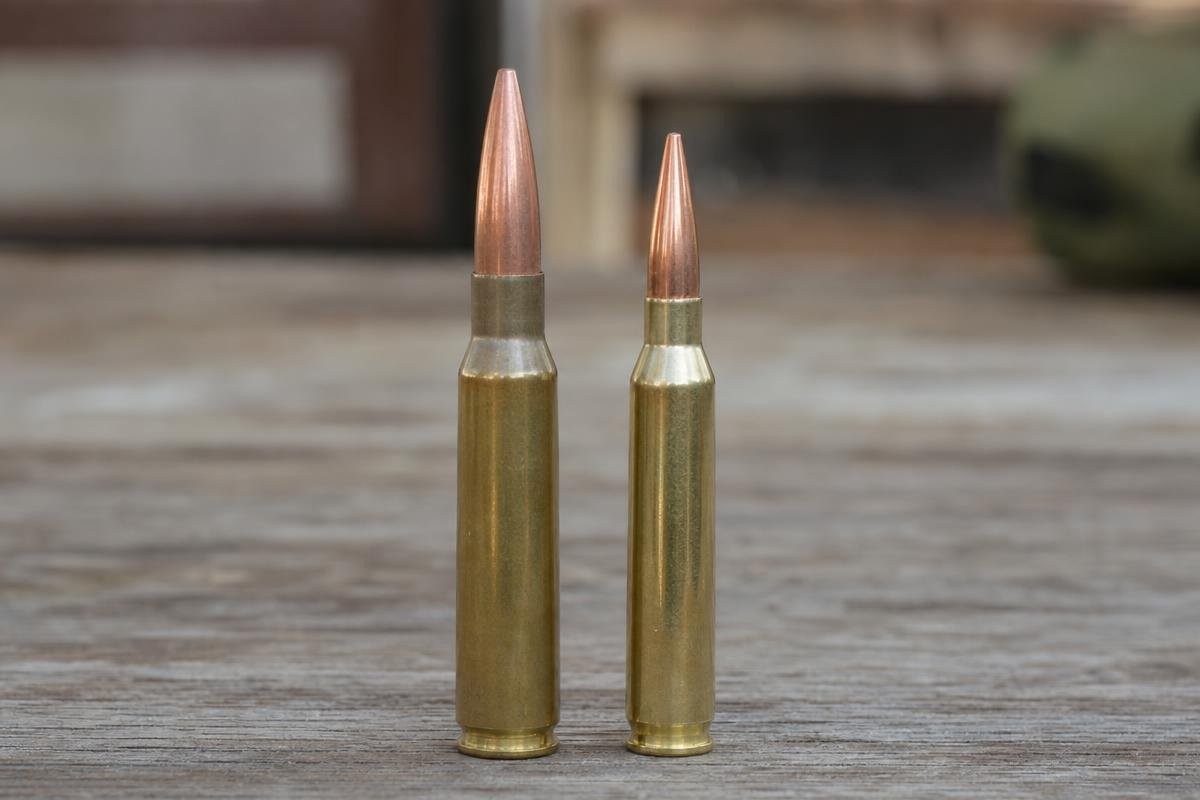
The 338 ARC hits harder at distance. The 5.56 NATO is the proven AR-15 standard. Those two facts create a real tension for shooters who want one platform that does more than one job. This article cuts through the noise with a direct comparison across six axes: muzzle velocity, energy retention at distance, recoil, magazine capacity, parts availability, and mission-specific use cases.
Bigger is not automatically better. The right answer depends on your target distance, your quarry, and what you are willing to give up to get there. If you are weighing a caliber change, our complete AR-15 uppers page covers both cartridges and a dozen others, all built to order and verified before they leave our Sherman shop.
What Is the 338 ARC, and How Did It Get Here?
Origin and Design Intent of the 338 ARC
Hornady developed the 338 ARC (Advanced Rifle Cartridge) to do one specific thing: push a high-BC .338-caliber bullet through a standard AR-15 lower receiver at extended range. This was not a cartridge built around muzzle energy alone. Hornady engineered it around ballistic coefficient, meaning the bullet holds velocity and energy further downrange than most AR-15 cartridges have any business doing.
The specs are straightforward. You get a .338-inch bullet diameter, projectile weights running 215 to 265 grains, and SAAMI-spec pressures that work with a dedicated barrel and modified bolt face. Your existing AR-15 lower stays exactly where it is. If you want to dig deeper into what this cartridge was built for, we have a full breakdown of 338 ARC performance and purpose worth reading before you buy.
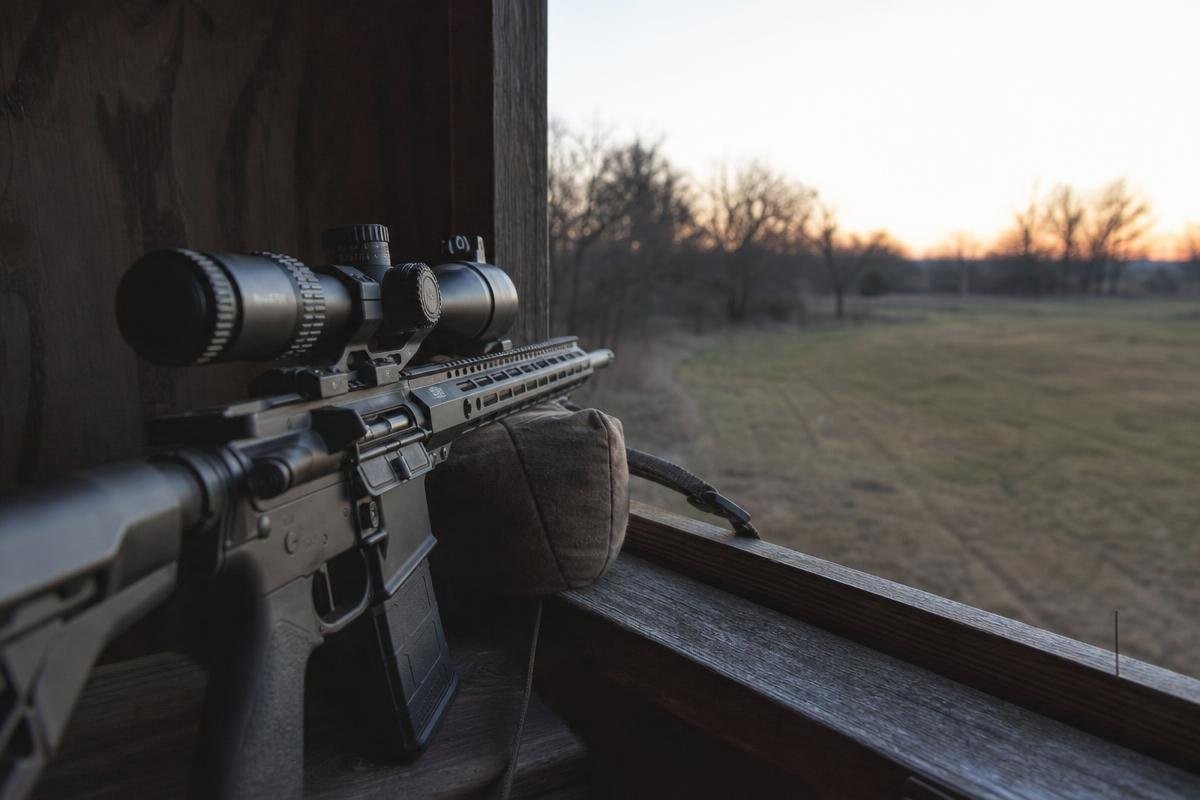
Out here in the river bottom country, that design intent matters. Picture a stand overlooking an open pasture edge that runs several hundred yards to a distant tree line. That is exactly the range band where 338 ARC ballistics separate themselves from what a 5.56 NATO or smaller caliber AR-15 can deliver, and it is a common look on private land in this part of North Texas.
How the 338 ARC Differs from Other Large-Bore AR Cartridges
This is where a lot of shooters get confused when comparing 5.56 vs larger caliber AR-15 options. The 338 ARC is not a thumper. The 450 Bushmaster and 458 SOCOM are both purpose-built for short-range terminal performance. The 450 Bushmaster hits hard inside 200 yards. The 458 SOCOM was designed around subsonic suppressor use. The 50 Beowulf exists to maximize energy at close range, full stop.
The 338 ARC is the only cartridge in this group optimized for long-range, BC-driven performance. Where those other cartridges run out of steam past 300 yards, the 338 ARC is still delivering meaningful energy at 600 and beyond. North Texas hog hunters who already run a 450 Bushmaster for close-quarters work on private land near Pottsboro will recognize immediately that the 338 ARC fills a completely different role. It is not a replacement. It is a different answer to a different question.
5.56 NATO: Why It Still Runs the Show
The Genuine Strengths of 5.56 NATO
5.56 NATO has dominated the AR-15 platform for decades because the platform was literally built around it. The bolt face, buffer weight, gas system timing, and magazine dimensions are all engineered for this cartridge. Nothing is a compromise. Everything just works.
A 55-grain load out of a 16-inch barrel exits at roughly 3,100 fps. Recoil is minimal, which means fast, accurate follow-up shots. Standard 30-round STANAG magazines are everywhere, and the aftermarket for every component is the largest in the industry. For North Texas shooters running informal range days on rural property near Denison, 5.56 is the practical everyday round. Ammo is easy to source locally, and the cost per round makes high-volume practice realistic in a way that larger calibers simply cannot match.
If you want a ready-to-run setup without building from scratch, our 5.56 NATO complete uppers are built and tested in-house, then shipped straight to your door.
Where 5.56 Runs Out of Gas
Past 500 yards, the physics get honest. A 55-grain FMJ retains roughly 400 to 500 ft-lbs of energy at that distance. That is marginal for ethical hunting on deer-sized game. A 250-grain 338 ARC load at the same distance carries well over 1,000 ft-lbs. That gap is not small.
Wind drift compounds the problem. Lower ballistic coefficient projectiles get pushed hard in crosswind conditions, and the open fields west of Lake Texoma see plenty of steady wind coming off the water.
Consider a hog crossing a long sendero at 400 yards on a gusty afternoon: at that distance and in that wind, 5.56 becomes a genuine performance question for anyone chasing the best AR-15 caliber for long range work. It is not the answer for hog hunting past 300 yards or precision shooting where terminal energy actually matters.
Head-to-Head: Ballistics, Recoil, and Real-World Performance
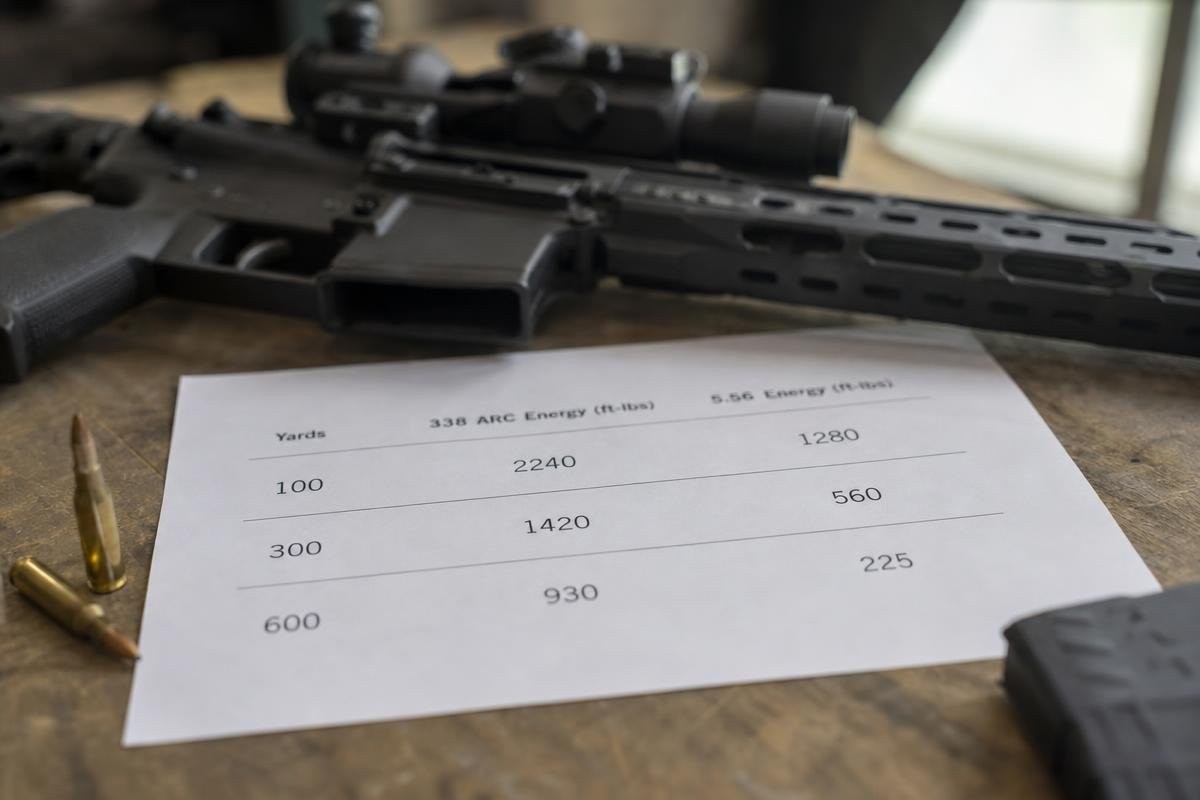
The numbers tell the story fast. The 338 ARC 250-grain Hornady ELD-M leaves the muzzle at roughly 2,500 fps with 3,470 ft-lbs of energy. The 5.56 NATO 55-grain M193 starts at 3,100 fps but only generates 1,175 ft-lbs at the muzzle. That gap gets brutal downrange.
Energy Retention and Ballistic Coefficient: The Numbers
The table below shows retained energy at the three distances that matter most in this comparison:
That means the 338 ARC delivers roughly seven times the terminal energy at 600 yards. The reason is the ballistic coefficient. The 250-grain ELD-M posts a G7 BC of 0.290 or better. A standard 55-grain FMJ runs about 0.151. That BC gap is what drives the 338 ARC ballistics advantage at distance.
The heavier bullet simply sheds velocity slower and bucks wind harder. When you are shooting across open bottom country toward a distant field edge, you feel that difference in real time. At long range the 5.56 is fighting gravity and wind, while the 338 ARC is still delivering ethical terminal energy on target.
Not sure which caliber fits your build? Our team in Sherman can walk you through the tradeoffs before you spend a dollar.
Recoil: What It Actually Feels Like
The 338 ARC in a rifle-weight AR-15 produces recoil comparable to a light .308 load. It is noticeable. It is not punishing. A quality muzzle brake cuts felt recoil significantly, and that matters when you are running follow-up shots or putting rounds downrange during a long training session. Check our AR-15 barrel options if you are building around a specific barrel profile that pairs well with a brake.
The 5.56 NATO comparison is simple: 5.56 is softer. Faster follow-up shots, less fatigue, easier for newer shooters. If high round count training is your primary use, that is a real practical advantage.
Magazine Capacity and Ammunition Cost
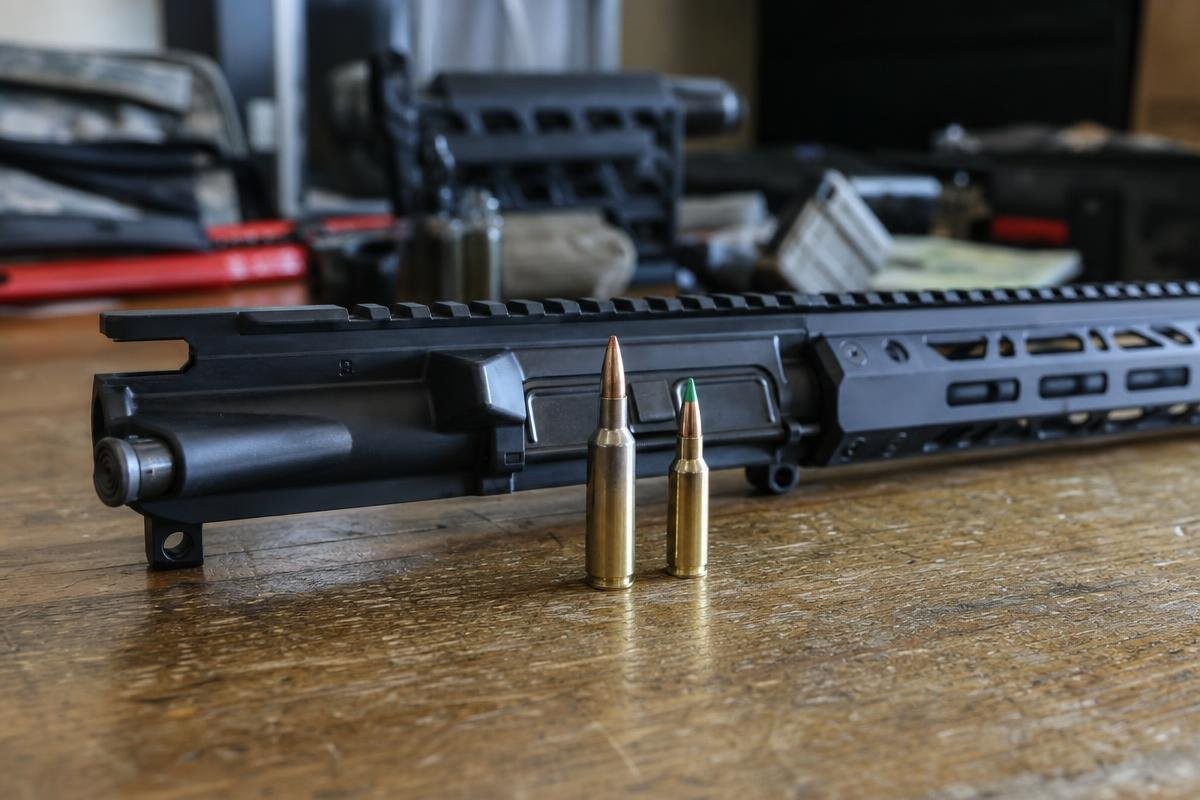
The 338 ARC case is wider than 5.56. Most shooters run 10-round magazines in a standard AR-15 lower. The 5.56 runs 30 rounds standard. That is a significant capacity difference for any defensive or high-volume application.
Ammunition cost follows the same pattern. The 338 ARC is premium match ammunition. You are not buying it in bulk at budget prices. The 5.56 NATO comparison here favors 5.56 for anyone running volume. For the best AR-15 caliber for long range shooting across North Texas terrain, the 338 ARC earns its cost. For everything else, 5.56 keeps your wallet intact. Browse our 338 ARC complete upper receivers to see current build options and pricing.
Is Bigger Actually Better? Matching the Cartridge to the Mission
Bigger is better only when the mission calls for it. That is the honest answer. The 338 ARC hits harder at distance and carries more energy downrange, but 5.56 NATO does things the 338 ARC simply cannot match on volume, cost, and availability. The right cartridge depends entirely on what you are doing with the rifle.
When the 338 ARC Is the Right Call
If you are hunting the Red River bottom near Lake Texoma, shooting across open pasture toward Pottsboro, or pushing past 500 yards at a long-range match, the 338 ARC earns its place. Terminal energy and bullet diameter matter on whitetail and hog at distance. A first-round hit at 600 yards is not a 5.56 conversation. For 338 ARC for hunting and extended-range precision work, the cartridge is a genuine answer. If a miss at distance costs you an animal or a match, run the bigger round.
When 5.56 NATO Is the Smarter Choice
High-round-count training days, home defense, competition shooting, and any scenario where you need to source ammo locally on short notice all favor 5.56 NATO. Magazine capacity stays high. Ammo costs stay manageable. Parts are available everywhere. If you are running 500 rounds on a range day or building a dedicated defensive rifle, 5.56 is the smarter choice. Full stop.
For a deeper look at what the 338 ARC delivers beyond 500 yards, our breakdown of 338 ARC for long-range shooting covers the practical details.
The Practical Solution: One Lower, Two Uppers
You do not need a second rifle. A standard mil-spec lower accepts a 5.56 upper and a 338 ARC upper with zero modification. Run 5.56 for training and competition the rest of the year. Swap to 338 ARC for hunting season or a long-range match. That is the AR-15 platform doing exactly what it was designed to do. Browse our complete AR-15 uppers in multiple calibers and build the combination that fits your shooting calendar.
Need help picking the right upper for your mission? Call us at (888) 706-0633 and we will point you in the right direction.
What Changes on Your AR-15 When You Switch to 338 ARC?
The short answer: your lower receiver stays exactly where it is. The 338 ARC runs on a standard mil-spec lower. Your fire control group, buffer tube, pistol grip, and stock all carry over without modification. What changes is everything above the takedown pins.
What the Upper Requires
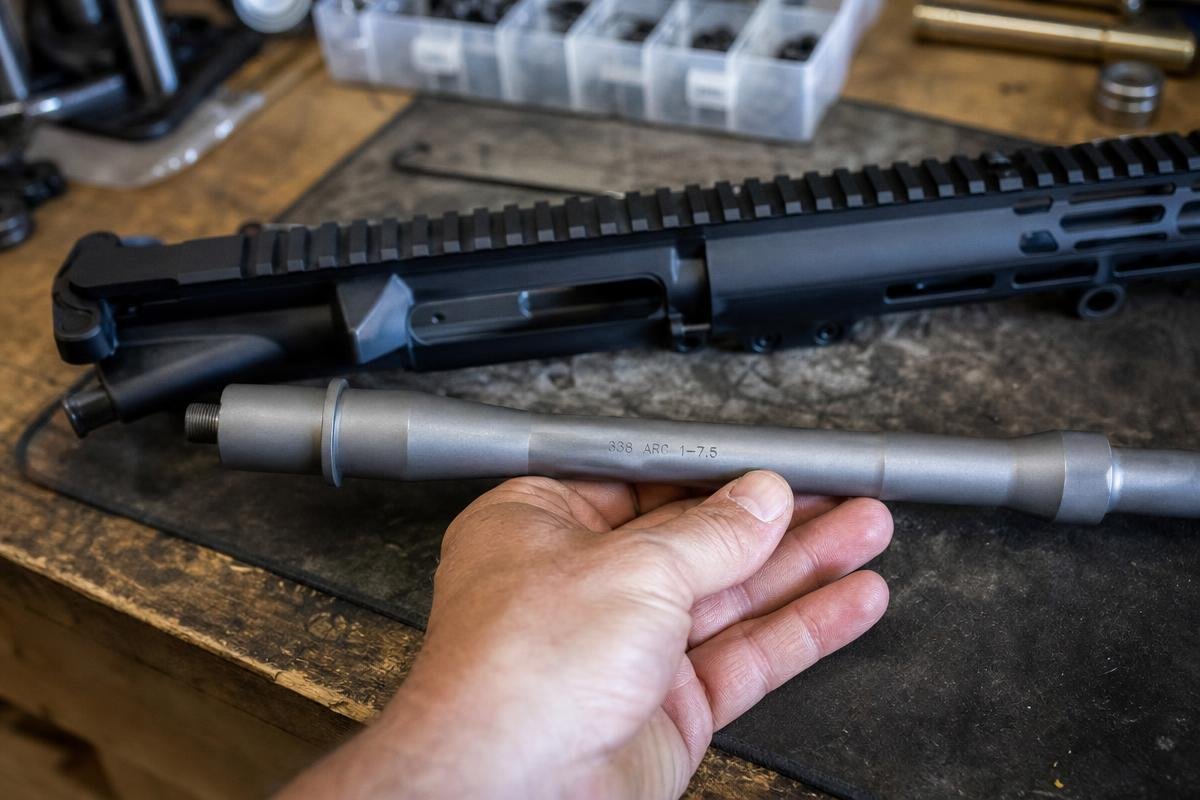
You will need a dedicated barrel chambered in 338 ARC and a 338 ARC-specific bolt face. The case head diameter is larger than 5.56, so a standard bolt will not work. Beyond that, the upper receiver itself is a standard AR-15 pattern. This is a complete upper swap, not a new rifle purchase.
Every one of our 338 ARC complete upper receivers is hand-assembled, properly headspaced, and function-checked before it ever leaves the bench. No FFL required for an upper-only purchase. Order it, receive it, drop it on your existing lower, and you are running 338 ARC ballistics out of the same rifle you already own.
Gas System, Buffer, and Handguard Considerations
Gas system length matters here. On a 16-inch or longer barrel, a rifle-length or mid-length gas system gives you reliable cycling with 215 to 265 grain projectiles. A carbine-length system can over-gas the rifle with heavier loads and create extraction problems over time.
Buffer weight is the other variable most shooters overlook. An H2 or H3 buffer is the right call for 338 ARC. The heavier projectiles generate more bolt velocity on the way back. A standard carbine buffer lets the bolt cycle too fast, which increases felt recoil and puts extra stress on the carrier key and gas rings.
Handguard selection follows the same logic as any other AR build. Standard M-LOK or Picatinny rails work fine. No special lower or proprietary handguard is required. If you are already running a free-float rail on your current upper, the same setup transfers to a 338 ARC build without issue.
How Shooters in Grayson County Are Running Both Calibers
The terrain around Sherman, Colbert, and the Pottsboro area tells you a lot about which cartridge to reach for. Open bottom land along the river corridor stretches several hundred yards to the nearest cover on a clear day. At those distances, the 338 ARC vs 5.56 NATO comparison stops being theoretical. The 338 ARC earns its place on deer and hog setups out here. The 5.56 stays on the range rifle.
Private land hog hunting near Colbert, OK is common for shooters in this zip code. Hogs at 200 to 400 yards across a sendero or field edge are exactly where the 338 ARC's terminal performance separates itself from a 5.56. You want energy on target, not just a hit. The 5.56 works at closer ranges, but local hunters running the Pottsboro area have moved toward heavier calibers for anything past 150 yards on big animals.
For range days on rural property, most shooters here keep a 5.56 NATO upper in the truck for volume fire and cost control, then swap to a 338 ARC upper for hunting season. Both ship directly to your door with no FFL required for upper-only purchases. We're based in Sherman at 2022 S Crockett St, about 10 miles from Denison. Order online, and it shows up ready to run.