6.5 Creedmoor velocity, energy and bullet drop to 1,000 yards. Real load data, barrel length comparisons and build tips. Call AR15Parts.com at (888) 706-0633.
The 6.5 Creedmoor has earned its reputation on paper targets and whitetail leases alike, but raw ballistics data only tells part of the story. Here we break down 6.5 Creedmoor velocity, energy, and bullet drop at distance using real load data, from muzzle out to 1,000 yards, so you can make an informed decision before you build or buy.
We stock and build 6.5 Creedmoor uppers right out of our Sherman, TX shop, and as an FFL dealer serving North Texas, we know exactly what this cartridge does in local conditions. Ready to build a 6.5 Creedmoor upper? We can help you spec it out.
The 6.5 Creedmoor earns its reputation through physics, not marketing. High ballistic coefficient bullets, moderate recoil, and a case designed from the ground up for long-range accuracy make the numbers genuinely worth studying. Muzzle velocity typically runs 2,620 to 2,820 fps with a 140gr load, and that velocity holds downrange better than most cartridges in its class.
Here you'll find 6.5 Creedmoor muzzle velocity, retained energy, and bullet drop from 100 to 1,000 yards. You'll get a head-to-head comparison with .308 Winchester, a breakdown of how barrel length shifts every number on the chart, and a look at real-world conditions specific to this part of Texas.
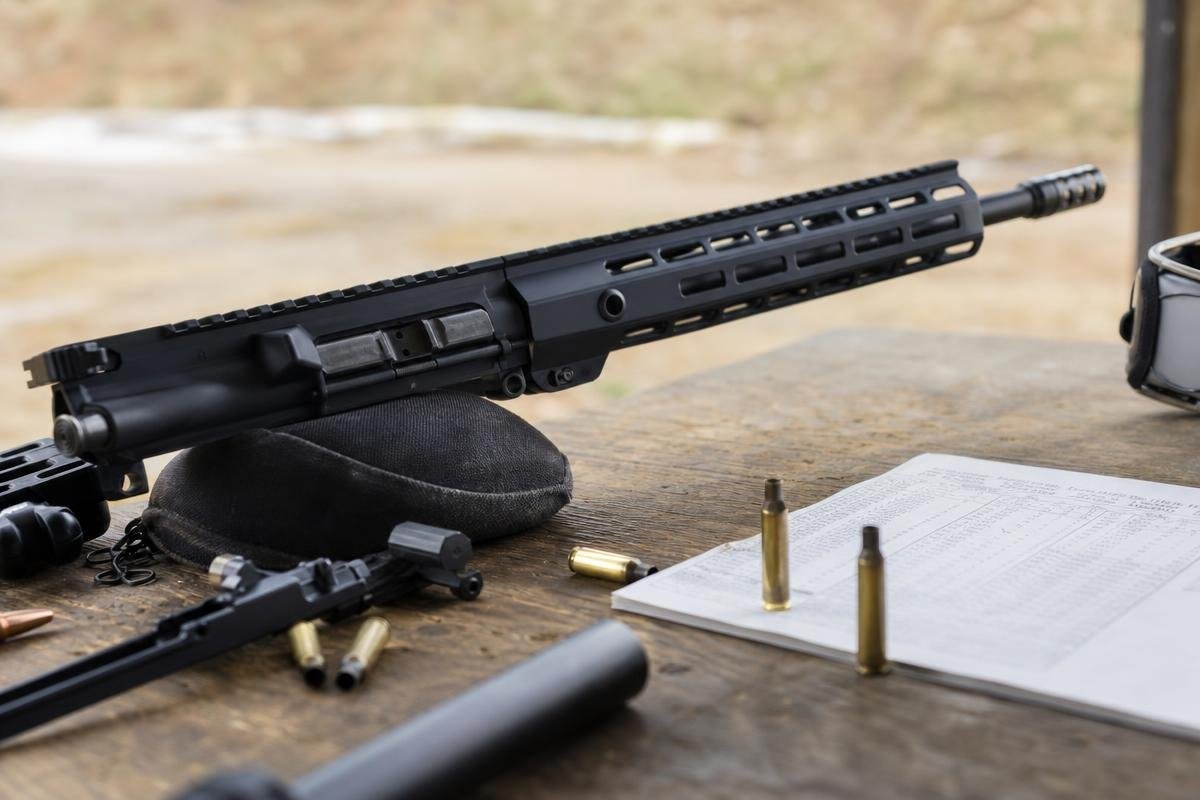
If you're ready to put these ballistics to work on a build, our 6.5 Creedmoor complete upper receivers are assembled, headspaced, and function-checked in our shop before they ship to your door.
What the 6.5 Creedmoor Ballistics Chart Actually Tells You
A 6.5 Creedmoor ballistics chart shows muzzle velocity in fps, retained energy in ft-lbs, bullet drop in inches referenced to a 100-yard zero, and wind drift at a standard crosswind, and those numbers need to be read together, not in isolation. Some tables also add time of flight in seconds. Any one number by itself will mislead you.
You will also see two BC figures listed: G1 and G7. G1 was developed for flat-based pistol bullets. G7 was modeled after long, boat-tail rifle projectiles. For a 6.5 Creedmoor trajectory out to 1,000 yards, G7 BC is the number that matters. It predicts real-world performance more accurately past 300 yards. If a table only lists G1, treat it as a rough estimate beyond that range.
How Do You Read Muzzle Velocity, BC, and Sectional Density Together?
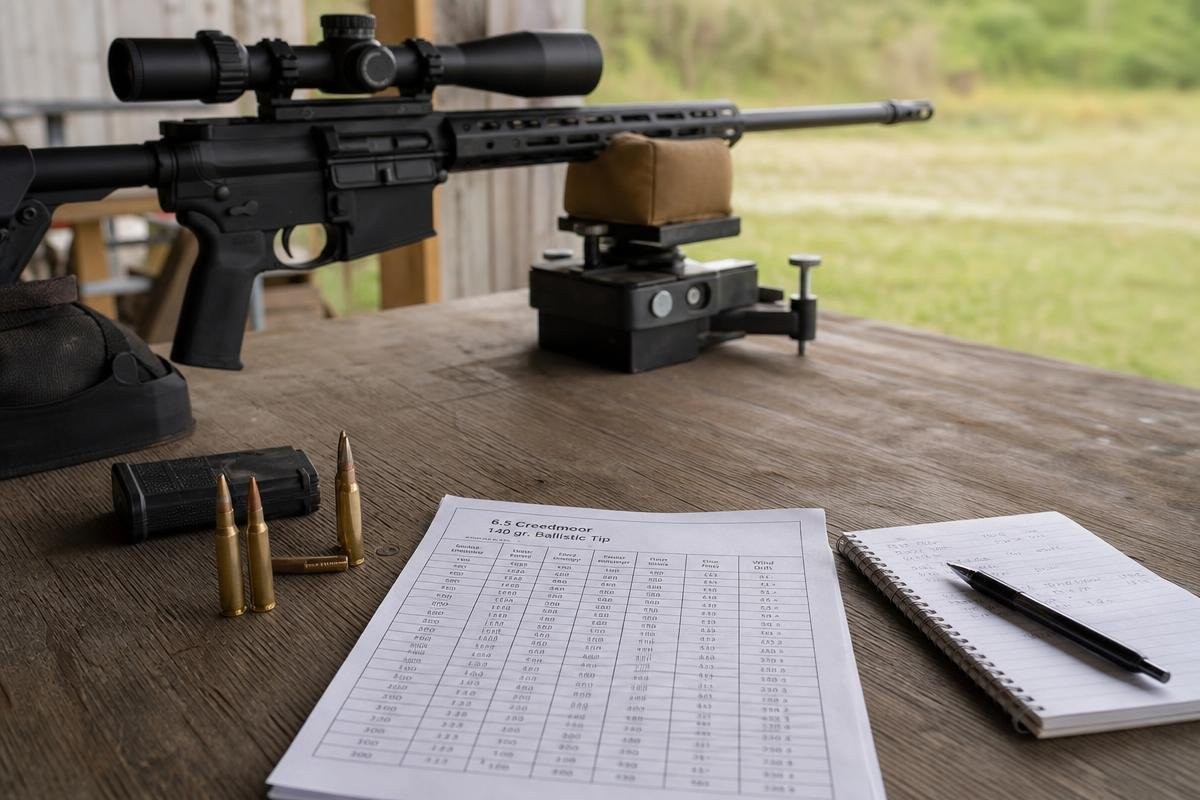
The 140gr match bullets that dominate our 6.5 Creedmoor complete upper receivers carry a G7 BC in the 0.300 to 0.330 range. That figure tells you how efficiently the bullet sheds velocity against air resistance. Sectional density for a 140gr 6.5mm projectile runs around 0.287. High SD supports deep penetration on game and contributes to stable, predictable flight at distance. These two numbers together explain why the cartridge performs the way it does, not just at the muzzle, but at 500 and 1,000 yards.
The ELD-M leaving a 24-inch barrel at 2,710 fps retains roughly 1,820 fps at 500 yards. A .308 Win 175gr SMK starting at 2,650 fps retains roughly 1,620 fps at that same distance. That 200 fps gap is BC doing its job over time and distance.
Why BC Matters More Than Muzzle Velocity Alone
A higher-BC bullet at lower muzzle velocity will eventually overtake a lower-BC bullet that started faster. With the 6.5 CM 140gr versus .308 Win 175gr, that crossover typically happens somewhere between 200 and 400 yards depending on the specific load. Past that point, the 6.5 holds more velocity, more energy, and drifts less in the wind.
That last part is practical, not theoretical. Shooters running open ground near Lake Texoma deal with prevailing south winds common in spring and early summer off the water. At 500 yards, a 10 mph full-value wind pushes a 140gr 6.5 CM bullet roughly 7 to 9 inches. A lower-BC projectile at the same velocity drifts noticeably more. BC is what separates a correctable hold from a missed shot. Our complete AR uppers in 19-plus calibers include builds specifically configured for this kind of extended-range work.
6.5 Creedmoor Ballistics Chart: 100 to 1,000 Yards
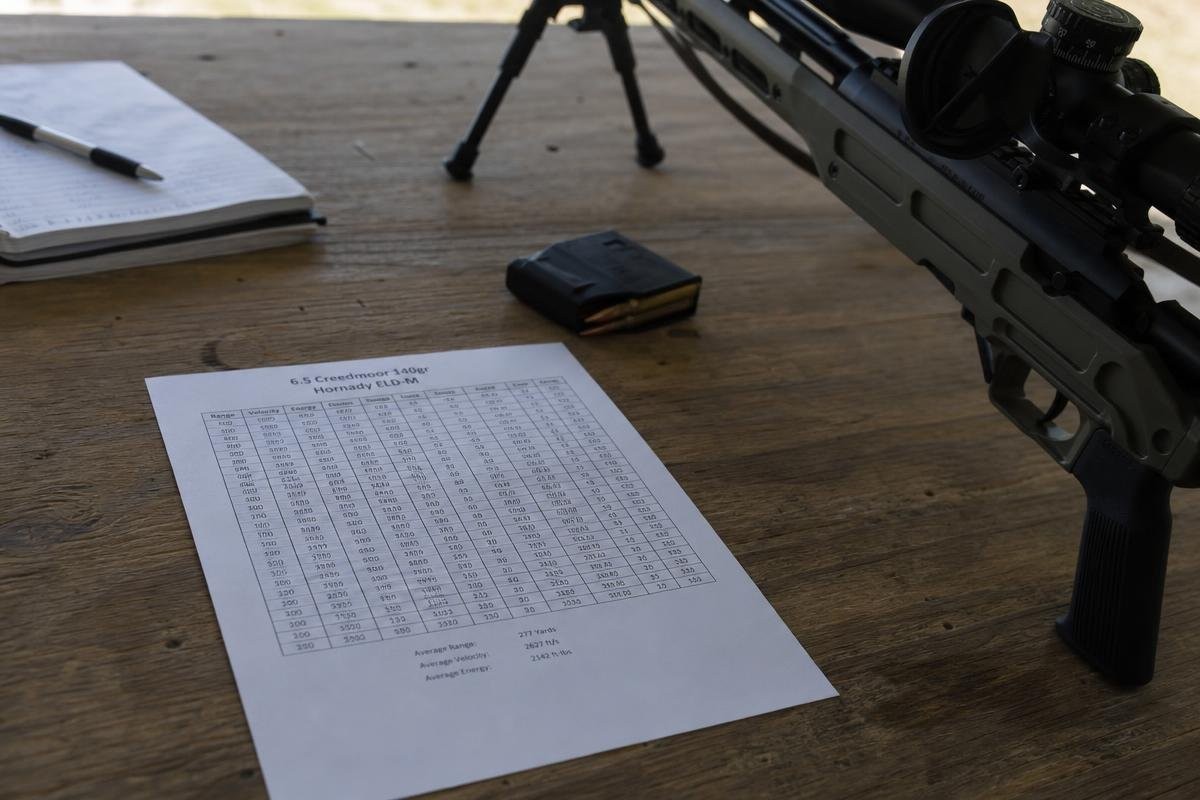
The table below uses a 140gr Hornady ELD-M at 2,710 fps muzzle velocity, fired from a 24-inch barrel, zeroed at 100 yards, calculated at sea level under standard atmospheric conditions. Sherman sits at roughly 750 feet elevation, so your real-world numbers will track these figures closely without any significant altitude correction.
These are representative reference figures. Actual velocity, energy, and drop vary by ammunition lot, ambient temperature, and barrel condition. Use this table as a planning baseline, not a manufacturer guarantee.
Now that you've seen the numbers, put them to work. We'll spec barrel length, twist rate, and load to match the ranges you actually shoot.
140gr ELD-M: The Benchmark Load
Hornady engineered the 6.5 case specifically to push 140gr VLD-style bullets from an AICS magazine at competitive velocities. That design intent is why the 140gr became the de facto standard. At 2,710 fps from a 24-inch barrel, the ELD-M stays supersonic past 1,200 yards under standard conditions, which is why you see it dominate long-range data tables across the board.
The G7 BC of approximately 0.305 is what keeps the bullet drop numbers manageable past 600 yards. Where a lower-BC bullet is falling off a cliff in the wind, the match bullet is still holding a predictable arc. That matters on Lake Texoma's open shoreline where crosswinds run steady off the water through the spring and early summer months.
120gr and 143gr Loads: How Bullet Weight Shifts the Numbers
The Hornady 120gr ELD-M leaves the muzzle around 2,910 fps with a G7 BC near 0.270. It shoots flatter at 300 yards, which makes it a solid choice for Grayson County whitetail hunting where most shots stay inside that distance. At 500 yards, though, the lighter projectile gives up roughly 60 to 80 ft-lbs of energy compared to the 140gr, and bullet drop is similar because the velocity advantage erodes fast.
The 143gr ELD-X runs around 2,700 fps with a G7 BC near 0.315. It retains more energy past 600 yards and hits harder on large game at distance, with drop at 500 yards coming in close to the standard match figures. Barrel length is the variable that determines which load makes sense for your build. If you are choosing between a 20-inch and 24-inch tube, our 6.5 Creedmoor complete upper receivers show how we configure each option. The right barrel length changes your muzzle velocity by 25 to 40 fps per inch, and that compounds at distance.
How Does 6.5 Creedmoor Stack Up Against .308 Winchester at Distance?
At the muzzle, these two cartridges are closer than most people expect. A 140gr 6.5 CM load leaves the barrel at roughly 2,710 fps. A .308 Win 175gr Sierra MatchKing runs about 2,650 fps. Sixty fps is nothing. The story changes fast once those bullets are in the air.
Velocity and Energy: Where the Gap Opens Up
By 500 yards, the 6.5 CM 140gr is still moving at approximately 1,994 fps. The .308 175gr has dropped to around 1,620 fps. That gap keeps widening. At 1,000 yards, the 6.5 CM retains roughly 1,404 fps and stays supersonic. The .308 175gr is down to about 1,050 fps, right at the edge of transonic instability where bullets can destabilize and group sizes open up.
Energy tells the same story. At 1,000 yards, 6.5 Creedmoor energy at distance comes in around 613 ft-lbs. The .308 175gr lands near 430 ft-lbs. That is a meaningful difference for precision work at extended range.
Wind Drift and Drop: The Practical Difference at 600 and 1,000 Yards
This is where the 6.5 CM's higher BC pays off in a way you feel on the target. In a 10 mph crosswind, a 140gr ELD-M drifts roughly 11 inches at 600 yards. A .308 175gr SMK drifts closer to 15 inches. At 1,000 yards, the 6.5 CM drifts approximately 20 to 22 inches. The .308 drifts 28 to 30 inches. At 600 yards that is roughly a half-MOA difference in wind hold. At 1,000 yards it is the difference between a hit and a miss on a 10-inch plate.
For shooters working the open Red River bottoms near the Texoma area, where steady spring and summer crosswinds are routine, that gap is real and it shows up in your data log.
The 6.5 CM delivers both less drop and less drift past 600 yards. That is the honest summary of the comparison at distance.
That said, .308 Winchester is not the wrong answer. It offers heavier projectile options, a wider bullet selection for hunting, and more complete AR uppers across more calibers at lower price points. Inside 400 yards on whitetail in Grayson County's creek bottoms, most hunters will never notice a performance difference. If you want to push past 800 yards on steel or need to wring more from a precision build, the 6.5 CM pulls ahead clearly. If budget and bullet variety matter more, .308 is still a serious cartridge.
Deciding between a 6.5 CM and a .308 upper? Our team in Sherman can walk you through both builds and help you match the cartridge to your range and application. Call us at (888) 706-0633.
How Barrel Length Affects 6.5 Creedmoor Velocity and Drop
Barrel length is one of the most practical decisions in any 6.5 CM build, and the numbers are straightforward. The cartridge loses roughly 20 to 30 fps per inch of barrel removed from a 24-inch baseline. That adds up fast when you start cutting toward a compact AR-10 configuration.
Here is what that looks like across common barrel lengths, using a 140gr load:
- 24 inch: ~2,710 fps muzzle velocity
- 22 inch: ~2,660 fps
- 20 inch: ~2,610 fps
- 18 inch: ~2,560 fps
- 16 inch: ~2,510 fps
Going from 24 inches to 16 inches costs you roughly 200 fps of 6.5 Creedmoor muzzle velocity. At 500 yards, that translates to approximately 4 to 6 additional inches of 6.5 Creedmoor bullet drop and around 150 ft-lbs less retained energy. Those are real numbers worth understanding before you commit to a build.
The 24-Inch vs 20-Inch Barrel Tradeoff
The 24-inch barrel is the ballistic ideal. Most factory ammo is rated at 24-inch test barrel specs, so that is the baseline for published 6 5 Creedmoor ballistics velocity energy drop at any given range. A 20-inch barrel gives up roughly 100 fps of muzzle velocity. At 500 yards, the energy difference is approximately 80 to 100 ft-lbs. That matters for elk. For whitetail in Grayson County's post oak creek bottoms, where most shots happen inside 300 yards, it is a non-issue.
The 20-inch barrel is a practical hunting rifle length and fits the AR-10 platform without the awkward handling of a full 24-inch tube.
Going Shorter: What a 16-Inch or 18-Inch Barrel Costs You
A 16-inch barrel on a 6.5 CM AR-10 is a real and popular configuration. It is compact and handy, especially in the creek bottom terrain common across the Red River bottoms. The tradeoff is that muzzle velocity drops to around 2,510 fps, and the cartridge reaches transonic instability closer to 1,000 yards than 1,200. For hunting inside 400 yards, that is not a problem. For precision long-range work or competing at distance, the 18-inch or 20-inch barrel is the smarter call.
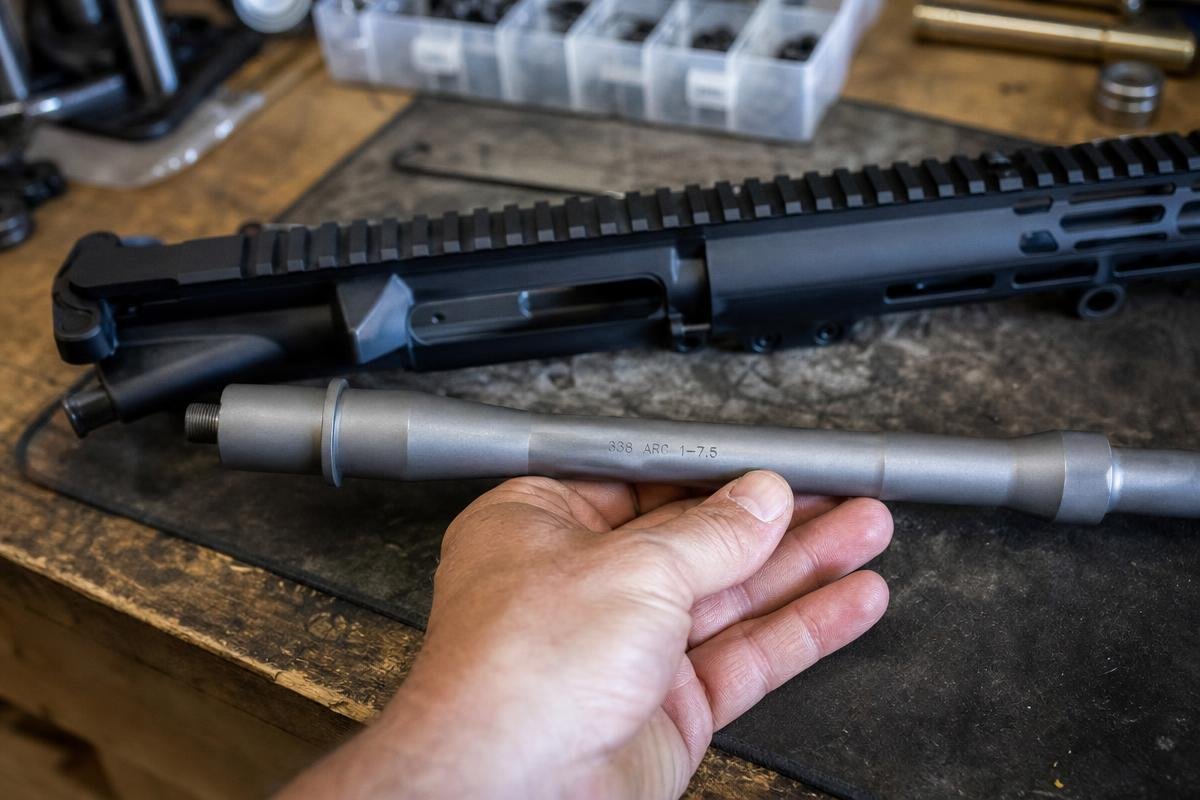
If you are building a 6.5 CM upper and want help matching barrel length to your intended use, our uppers are built to order with the barrel length that fits your application. We headspace, assemble, and function-check every upper in our shop before it ships to your door.
Shooting 6.5 Creedmoor in North Texas: Wind, Elevation, and Real-World Conditions
Standard sea-level ballistics tables apply here without significant altitude correction. The Sherman and Pottsboro area sits at roughly 750 feet elevation, which means the figures in our chart translate directly to what you will see on the range. Shooters in Colorado or the Mountain West have to recalculate everything. You do not.
How Wind and Heat Affect Your Ballistic Data in This Region
The open shoreline north of town is a different story. The corridor around Hagerman National Wildlife Refuge sees prevailing south winds through spring and early summer, often in the 10 to 15 mph range on open days. At 500 yards, a 12 mph crosswind pushes a 140gr ELD-M roughly 9 to 10 inches off your point of aim. That is not a rounding error. That is a clean miss on a whitetail or a called shot that lands in the wrong ring at a precision match.
Summer heat matters too, just not the way most shooters expect. On a 100-plus degree July afternoon, reduced air density means bullets shed speed slightly more slowly downrange. Your 6.5 Creedmoor energy at distance holds up a hair better than the chart predicts. Flip that around to a January morning below 30 degrees F with cold-soaked ammo and you can lose 20 to 30 fps off your muzzle velocity. Not catastrophic, but enough to shift your 500-yard 6.5 Creedmoor bullet drop by a meaningful fraction of an MOA.
Practical Zeroing Strategies for Texas Long-Range Shooters
Most whitetail shots in the post oak and creek bottom country around Pottsboro and Collinsville stay inside 300 yards. For that hunting context, a 200-yard zero makes sense. It puts you about 1.8 inches high at 100 yards and only 10 inches low at 300.
You can hold on to the shoulder and not think about it. If you are pushing out to the open ground along the river bottoms where genuine long-range opportunities exist, a 100-yard zero gives you a precise near-range reference. Just know you are holding roughly 56 inches low at 500 yards, which works out to a 4.7 MOA dial before you squeeze the trigger.
If you are building a rifle for this kind of mixed-use shooting, our 6.5 Creedmoor complete upper receivers are assembled, headspaced, and function-checked in our shop before they ship to your door. We are based at 2022 S Crockett St in Sherman, TX 75090. Call us at (888) 706-0633 with build questions and we will point you toward the right barrel length and configuration for the ranges you are actually shooting.
If you are ready to put these numbers to work, our team builds 6.5 Creedmoor complete upper receivers to order, headspaced and function-checked in our shop before they ship to your door. Call us at (888) 706-0633 to find the right upper for your build. We are based in Sherman, TX at 2022 S Crockett St, just minutes from the Texoma area, and we are glad to talk through barrel length, twist rate, and load selection before you buy.
Call (888) 706-0633 to speak with our team directly. We're ready to answer your questions, walk you through your options, and help you find the right solution for your needs. Whether you're just starting to plan or ready to move forward, we'll make the process simple and stress-free.
Reach out today and let's talk about how we can help.