The 6.5 Grendel punches well above its weight in an AR-15 platform, and understanding the actual velocity, energy, and drop numbers is what separates a confident shot from a missed one. This article breaks down 6.5 Grendel ballistics across 0 to 500 yards using published load data (Hornady 11th Edition and Sierra reloading data) for 90gr, 123gr, and 129gr bullets, so you know exactly what your rifle is doing at every distance.
If you hunt creek bottoms and rolling terrain in North Texas, or you're stretching your range work out past 300 yards, these numbers matter. Ready to build a 6.5 Grendel upper that matches your range? We build them to order right here in Sherman, TX.
6.5 Grendel Ballistics: Velocity, Energy and Drop Explained
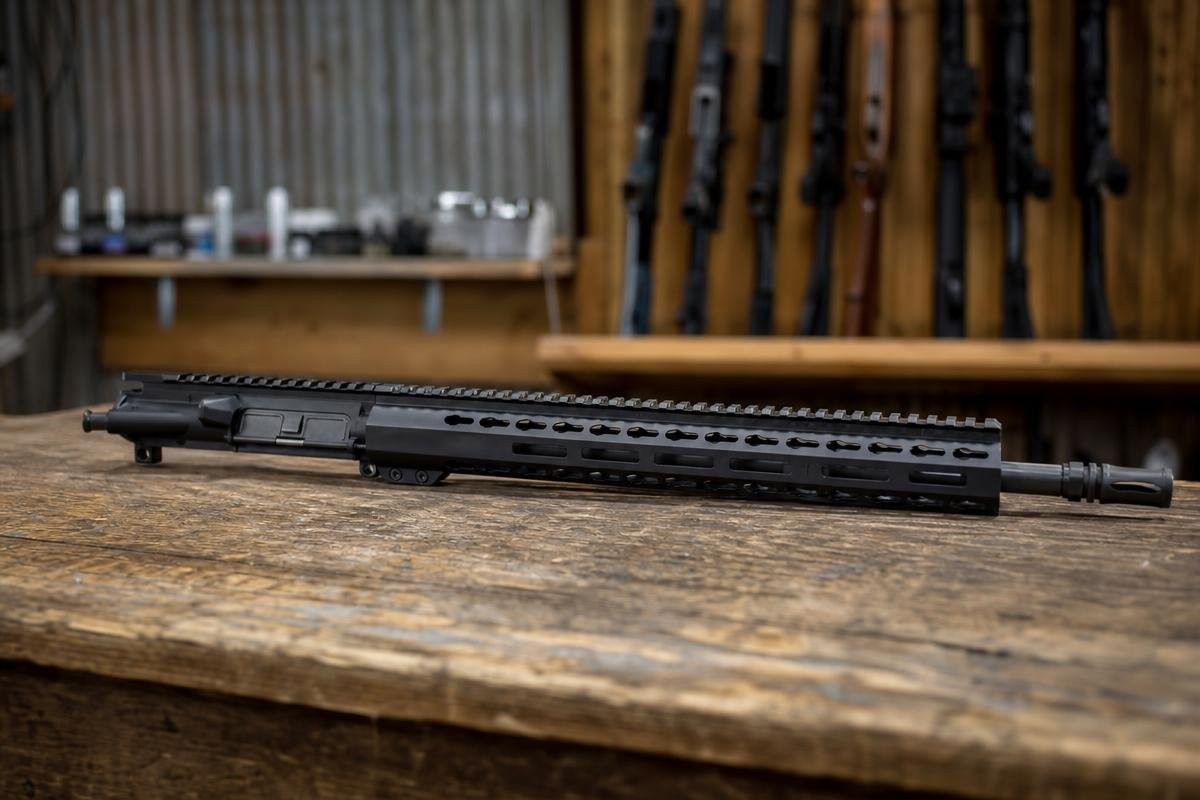
The 6.5 Grendel was designed in 2003 by Arne Brennan, Bill Alexander, and Janne Pohjoispää to push the AR-15 platform past the ballistic ceiling of 5.56 NATO without requiring a larger receiver. It fires a 6.5mm (.264-caliber) projectile from a case sized to fit the standard AR-15 magazine well. You get a modified bolt and a purpose-built upper, and the rest of your lower stays exactly as it is.
Here you'll find the numbers that actually matter before you commit to a build: 6.5 Grendel muzzle velocity by barrel length, retained energy at distance, bullet drop at 100 through 500 yards, wind drift past 500 yards, and how those figures translate to deer hunting in the creek bottoms and rolling terrain around Grayson County. If you are already past the research stage, you can browse 6.5 Grendel uppers and get straight to the build.
What Do 6.5 Grendel Ballistics Numbers Mean?
The three numbers that define 6.5 Grendel ballistics are muzzle velocity, retained energy, and bullet drop, each measured at specific distances to predict real-world performance. Velocity tells you how fast the bullet leaves the barrel. Energy tells you how hard it hits downrange. Drop tells you where it actually lands. Understanding how those three interact is what separates a shooter who dials in first-round hits at 400 yards from one who guesses.
Muzzle Velocity by Barrel Length
The 6.5 Grendel muzzle velocity with a 123gr load runs roughly 2,440 to 2,500 fps from a 16-inch barrel, 2,580 to 2,620 fps from an 18-inch, and 2,640 to 2,680 fps from a 20-inch. A 24-inch barrel pushes that to around 2,720 to 2,750 fps. The cartridge loses approximately 25 to 30 fps per inch below 20 inches.
That loss compounds into real drop and energy differences past 300 yards, which is why barrel selection matters before you ever pull the trigger. The 18-inch barrel is the most common build we see because it splits the difference between a manageable rifle length and solid velocity retention. It also works well with standard gas system geometry; if you want to understand how barrel length affects your gas system, our barrel selection page covers the tradeoffs in detail.
Ballistic Coefficient and Why It Drives Velocity, Energy, and Drop
Muzzle velocity gets the bullet moving. Ballistic coefficient (BC) keeps it moving. The G1 BC for a 123gr Hornady SST runs about 0.510, same for the 123gr Sierra MatchKing. Drop to a 95gr V-MAX and you're at 0.350. The 90gr TNT sits around 0.310. A higher BC means slower velocity bleed, less drop, and less wind push at distance.
The BC is the number that separates a good hunting load from a great long-range load. For Grayson County deer hunters shooting creek-bottom terrain inside 300 yards, a 95gr load gets the job done. Past 300, the 123gr class is where the cartridge earns its reputation. Browse our complete 6.5 Grendel upper assemblies to see which barrel lengths we build to order.
6.5 Grendel Ballistics Chart: Velocity, Energy, and Drop by Distance
Numbers on paper mean nothing until you see them laid out across real distances. The tables below use published load data (Hornady 11th Edition and Sierra reloading manuals) from an 18-inch barrel. Actual results will vary based on your specific barrel, ambient temperature, and altitude. At 700 to 800 feet above sea level in Grayson County, the effect is minimal. A 100-degree Texas summer day, though, can shift your point of impact enough to matter at distance.
123gr Load: The Long-Range Standard
The 123gr SST is the benchmark load for this cartridge. Muzzle velocity from an 18-inch barrel runs approximately 2,580 fps with a G1 BC of 0.510. That high BC is what separates it from lighter varmint bullets past 300 yards.
Figures are representative from published load data (Hornady and Sierra manuals). Results vary by barrel, temperature, and altitude.
If you want to see how these numbers translate into a complete upper build, check out our complete 6.5 Grendel upper assemblies built and headspaced in our shop.
90gr and 95gr Varmint Loads: Speed Over Retention
The 90gr TNT starts fast at around 2,900 fps. The 95gr V-MAX runs about 2,820 fps. Both carry lower BCs than the 123gr, which costs them energy quickly past 200 yards.
Figures are representative from published load data (Hornady and Sierra manuals). Results vary by barrel, temperature, and altitude.
These loads shoot flat inside 250 yards and work well on coyotes and hogs. They are not the right choice for deer-sized animals at distance. If you are sorting out whether 6.5 Grendel is the right choice for hunting your specific game, the bullet weight decision matters as much as the cartridge itself.
Reading the Drop Numbers for Real-World Zeroing
Most creek-bottom and rolling-terrain deer hunters in the Grayson County area rarely shoot past 300 yards. A 200-yard zero is the practical choice. With the 123gr load, you are 2.1 inches high at 100 yards and 10.5 inches low at 300 yards. Hold dead-on to about 250 yards and you stay inside a deer's vital zone without any holdover.
Past 300 yards, you need a scope with exposed elevation turrets or a BDC reticle calibrated specifically for this cartridge. A 100-yard zero tightens your near-distance precision but costs you at 250 to 300 yards without adjustment. For most hunting setups in this region, the 200-yard zero gives you the most usable 6.5 Grendel effective range without dialing on every shot.
How 6.5 Grendel Retained Energy Compares to 5.56 NATO and .308 Win
The numbers from the ballistics chart tell one story. This section explains what they mean for the deer hunter in Grayson County asking whether the cartridge is actually enough gun at 300 yards. Short answer: yes, and it is not close when you stack it against 5.56 NATO.
Energy at 300 and 500 Yards: Where the Grendel Wins
Running an 18-inch barrel, a 123gr SST load leaves the muzzle around 2,580 fps and arrives at 300 yards carrying roughly 1,080 ft-lbs of energy. That same distance drops a 55gr 5.56 NATO FMJ down to about 464 ft-lbs. The 1,000 ft-lb threshold is widely cited as the floor for ethical whitetail hunting. The 5.56 does not reach it. The Grendel crosses it with room to spare.
At 500 yards the gap stays wide. The 123gr load retains approximately 736 ft-lbs. The 5.56 is down to roughly 252 ft-lbs. For shots across open pasture in the Red River corridor, where 300 to 400 yards is a realistic distance, 6.5 Grendel retained energy holds up in a way that 5.56 simply cannot match.
The Grendel is the answer when 5.56 runs out of steam but you are not ready to move to a larger platform. If you want to put one of these uppers together, browse our complete 6.5 Grendel upper assemblies, headspaced and function-checked before they ship.
Where 5.56 and .308 Still Have the Edge
The .308 Win running a 168gr BTHP out of a 20-inch barrel produces around 1,551 ft-lbs at 300 yards and 1,124 ft-lbs at 500 yards. It outperforms the Grendel at every distance. For elk-sized game or shooting past 600 yards, the .308 is the better choice. The tradeoff is platform size and weight. The .308 lives in an AR-10 class rifle, which is heavier, longer, and more expensive to feed. If you want to understand the full implications of that choice, our guide on AR-10 platform .308 uppers covers the hardware side in detail.
The 5.56 holds its own advantages too. Standard 30-round magazines, the widest ammo supply chain in the AR world, and a lower cost per round all matter for high-volume practice. The 6.5 Grendel effective range for hunting simply exceeds what 5.56 can responsibly deliver, and it does it inside the same AR-15 lower you already own.
Wind Drift and Transonic Stability: The Grendel Past 500 Yards
Wind is where the 6.5 Grendel separates itself from the 5.56 platform in a way that matters on real ranges. The high ballistic coefficient of the 123gr SST (G1 BC 0.510) keeps the bullet on a tighter path downrange, especially in the open crosswind conditions you see across Grayson County and the Red River corridor.
10 mph Crosswind Drift at Distance
Run a 123gr SST at 2,580 fps muzzle velocity through a 10 mph full-value crosswind and here is what you get:
- 100 yards: 0.7 inches of drift
- 200 yards: 2.9 inches
- 300 yards: 6.8 inches
- 400 yards: 12.8 inches
- 500 yards: 21.0 inches
Compare that to a 5.56 55gr load in the same wind. At 500 yards you are looking at 35 to 38 inches of drift. The higher BC of the Grendel bullet cuts wind deflection by roughly 40 to 45 percent at 500 yards. If you shoot at an outdoor range near Sherman or Denison where afternoon crosswinds are common, that difference is not theoretical. You will see it on paper.
The 6.5 Grendel effective range for wind-sensitive precision work extends well past what the 5.56 platform can honestly claim. Our complete 6.5 Grendel upper assemblies are built around barrels with 1:8 twist, which stabilizes the high-BC 123gr and heavier projectiles that make this wind performance possible.
Going Transonic: What Happens After 800 Yards
Transonic transition happens when the bullet decelerates through approximately 1,340 fps, the speed of sound at sea level and 59 degrees Fahrenheit. In that speed band, aerodynamic forces become unpredictable and groups open up. For the 123gr SST at 2,580 fps, that transition occurs somewhere between 875 and 925 yards depending on altitude and temperature. Heavier 130gr+ projectiles like the Berger Hybrid push that threshold closer to 1,000 yards.
The honest answer on the 6.5 Grendel ballistics chart ceiling: this is a capable 800-yard cartridge with the right bullet and conditions. It is not a 1,000-yard cartridge in the same sense as the 6.5 Creedmoor. If you want to understand how those two cartridges compare at distance, read our breakdown of 6.5 Grendel vs 6.5 Creedmoor at long range before you decide which platform fits your build.
Questions about which upper or barrel setup gets the most out of your long-range Grendel build? Call us at (888) 706-0633 and we will walk you through the options.
How Barrel Length and Twist Rate Shape Your Grendel's Velocity, Energy, and Drop
Barrel length and twist rate are two of the biggest build decisions you will make for this cartridge. Get them wrong and you leave real performance on the table. Get them right and the 6.5 Grendel effective range opens up considerably.
Choosing the Right Barrel Length for Your Use Case
There are three practical scenarios here. If you are hunting creek-bottom terrain near Denison where shots rarely push past 300 yards, a 16-inch barrel is adequate. You lose some muzzle velocity compared to longer tubes, but the rifle is lighter and easier to carry through thick cover. That tradeoff makes sense in the field.
For shooters who split time between hunting and testing at 300 to 500 yard outdoor ranges in the Sherman area, an 18-inch barrel is the practical sweet spot. You recover meaningful velocity without building a rifle that is awkward to carry. Most hunters and range shooters land here.
Dedicated precision work past 500 yards calls for a 20 to 24-inch barrel.
The longer tube maximizes 6.5 Grendel muzzle velocity and pushes the transonic threshold farther downrange, which matters for the stability discussion covered in the previous section. A 24-inch barrel is uncommon in field use but shows up in benchrest and PRS-style builds. If you have settled on your barrel length and want to move forward, browse our complete 6.5 Grendel upper assemblies built to your specifications.
Twist Rate and Bullet Weight Matching
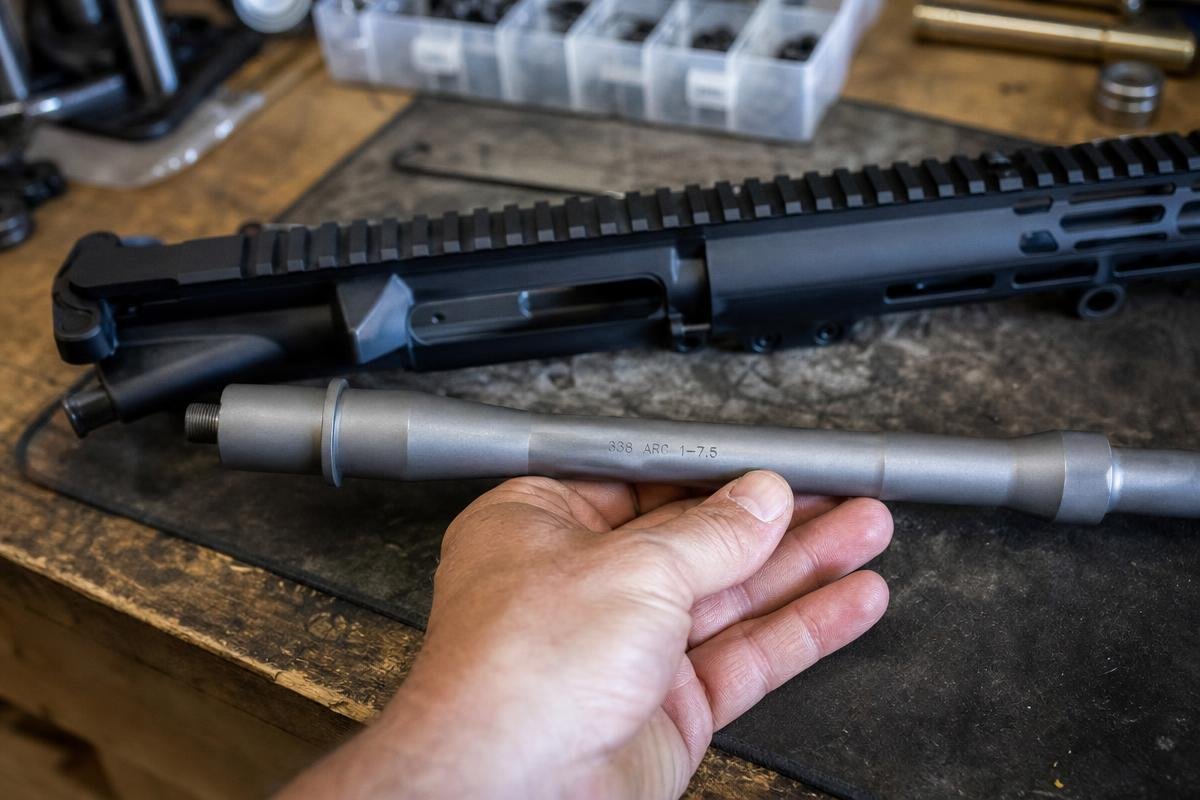
The standard twist for this cartridge is 1:8. That rate stabilizes bullets up to approximately 130 grains, which covers the 123gr and 129gr loads that give the cartridge its long-range ballistic advantage. Some builders running 130gr Berger Hybrid loads step up to a 1:7.5 twist for added stability margin.
A 1:9 twist barrel will handle 90 to 100 grain varmint loads without issue. It will not reliably stabilize 123 grain and heavier projectiles. If you load 123gr or heavier and run a 1:9 barrel, expect degraded accuracy and inconsistent flight. The rule is simple: 123gr or heavier requires a 1:8 twist. Lighter varmint builds can use 1:9.
6.5 Grendel in North Texas: Range Conditions and Hunting Applications
If you shoot in the Denison area, elevation is basically a non-issue. At 700 to 800 feet above sea level, the air density difference compared to sea level is negligible. You do not need to adjust your ballistic calculations the way a shooter in Colorado or New Mexico would. Your drop card from the previous section applies as-is.
Heat is a different story. Summer temperatures around Denison regularly push past 100°F, and that affects powder burn rates enough to shift your point of impact. If you zeroed your rifle in July, verify that zero again in October before deer season opens. A small shift in muzzle velocity can move your point of impact an inch or two at 300 yards, and that matters on deer.
White-Tailed Deer Along the Red River Corridor
The rolling terrain, mesquite flats, and creek-bottom hunting typical of this part of Texas suits this cartridge well. The Hagerman National Wildlife Refuge and the broader Red River bottom country give a sense of the mixed timber and open pasture shot distances hunters here deal with.
Most shots on whitetail in this region fall inside 250 yards, and the 6.5 Grendel retained energy at that distance with a 123gr SST or 120gr Nosler Ballistic Tip stays well above the 1,000 ft-lb threshold most hunters consider the ethical minimum for deer. If you have been wondering whether the Grendel is a good deer hunting cartridge, the numbers answer that question clearly for North Texas shot distances.
Outdoor ranges near Sherman and Denison that stretch to 300 or 500 yards let you confirm the 6.5 Grendel effective range for your specific load before you ever walk into the field. We build and ship complete 6.5 Grendel upper assemblies from our shop at 2022 S Crockett St, Sherman, TX 75090. Call us at (888) 706-0633 with build questions.