Two cartridges dominate the long-range AR conversation right now: the 6.5 Creedmoor and the 224 Valkyrie. Out here in North Texas, where the plains open up past Lake Texoma and a steady south wind can push a bullet several inches at 800 yards, that choice matters more than it does on a 300-yard range.
At AR15Parts.com we build complete uppers and rifles chambered in both, assembled, headspaced to SAAMI spec, and test-fired in our Sherman shop before they ship to your door. This breakdown gives you the straight ballistic facts so you can pick the right cartridge for your setup. Ready to build a long-range upper matched to North Texas wind? Tell us your target distances and we'll spec the right barrel and caliber.
6.5 Creedmoor vs 224 Valkyrie: Two Different Answers to the Same Long-Range Question
The 224 Valkyrie was built from the ground up for the AR-15 platform, engineered specifically to stay supersonic past 1,000 yards in a standard-size receiver. The 6.5 Creedmoor started life as a bolt-gun competition cartridge and was adapted to semi-auto later. That difference in origin shapes everything: platform size, recoil, barrel selection, and where each round actually performs in the field.
If you are trying to sort out the 6.5 Creedmoor vs 224 Valkyrie long range debate, read on for the full picture. We go through ballistics head-to-head, platform requirements, recoil, barrel life, and supersonic range limits. We also give a straight recommendation by shooter type at the end. No winner gets declared in this intro. Read the data first.
Where These Two Cartridges Come From
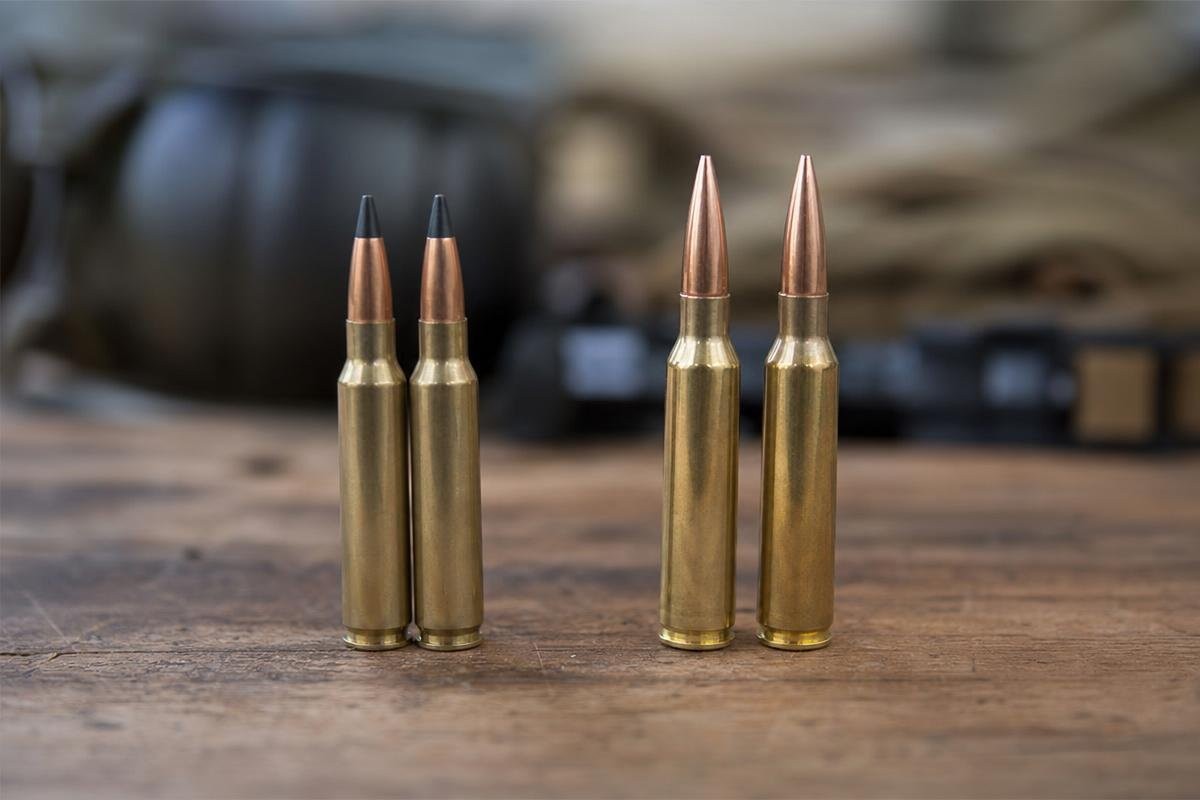
224 Valkyrie: Federal's AR-Native Long-Range Round
Federal Premium introduced the .224 Valkyrie in 2018 with one specific goal: build a cartridge that runs in a standard AR-15 and stays supersonic past 1,000 yards. They started with the 6.8 SPC case and necked it down to accept .224 caliber projectiles. The result is a round purpose-built for the AR-15 platform from day one, not adapted to it after the fact.
The Valkyrie stays supersonic past 1,000 yards with 75 to 90 grain bullets.
That matters because a bullet going subsonic mid-flight loses stability and accuracy fast. Federal designed the Valkyrie to avoid that problem entirely, using high-BC projectiles that hold velocity at distances where most standard AR-15 cartridges have already run out of steam. If you want to build a 224 Valkyrie complete upper on your existing AR-15 lower, the platform swap is straightforward.
6.5 Creedmoor: Bolt-Gun Precision Adapted to Semi-Auto
Hornady and Creedmoor Sports developed the 6.5 Creedmoor in 2007 for competitive long-range target shooting. It was built around the .30 TC case and designed first as a bolt-action cartridge. Semi-auto use came later, and it requires the larger AR-10 or LR-308 platform to function.
The 6.5 Creedmoor was never intended for the AR-15 frame. That distinction shapes every build decision downstream. The 6.5 Creedmoor delivers outstanding ballistic performance and a proven competition record, but it comes with a heavier, larger platform. Shooters looking at 6.5 Creedmoor complete uppers need to plan for an AR-10 pattern lower from the start.
Ballistics Head-to-Head: Velocity, Drop, and Wind Drift
On paper, these two cartridges look surprisingly close. Both push bullets to approximately 2,700 fps from a 24-inch barrel. But 224 Valkyrie vs 6.5 Creedmoor ballistics diverge fast once you stretch the distance. Here is what the numbers actually show.
Muzzle Velocity and Retained Energy
At the muzzle the two are nearly even, but the 6.5 Creedmoor retains far more energy downrange. Federal's 90-grain Gold Medal Sierra MatchKing in .224 Valkyrie carries a G1 BC of approximately 0.563 and leaves the muzzle at roughly 2,700 fps. Hornady's 140-grain ELD Match in 6.5 Creedmoor runs a G1 BC of approximately 0.610 at nearly the same muzzle velocity. Muzzle velocities are nearly identical. Energy at distance is not.
The 140-grain bullet carries significantly more mass. At 500 yards, the 6.5 CM retains roughly 1,200 ft-lbs of energy versus approximately 700 ft-lbs for the Valkyrie 90-grain. At 1,000 yards, that gap widens further. The Valkyrie sheds velocity faster because lighter bullets decelerate more quickly, regardless of BC.
For whitetail hunters on the open pastures of Grayson or Cooke County, that energy difference at 400 yards is not academic; it is the margin between a clean, ethical harvest and a marginal hit. For a full breakdown of how the 6.5 CM holds energy across distance, see our 6.5 Creedmoor complete uppers and the ballistic data behind them.
Bullet Drop at 500, 800, and 1,000 Yards
At 1,000 yards the 6.5 Creedmoor 140-grain drops slightly less in MOA than the Valkyrie 90-grain. Both cartridges require serious elevation correction past 500 yards. At 500 yards, the difference in bullet drop between the two is modest, roughly 1 MOA or less depending on the load and zero. At 800 yards, the gap grows. The Creedmoor's edge comes primarily from higher sectional density, which helps it resist deceleration through the flight path.
Neither cartridge is a flat shooter at 1,000 yards. Both demand a dialed firing solution. Where the Valkyrie holds its own on a calm day, the Creedmoor gives you a small but real advantage in elevation correction at extended distance.
Wind Drift: Where the BC Gap Becomes Real
In a 10 mph full-value crosswind at 1,000 yards, the 224 Valkyrie 90-grain drifts approximately 1.5 to 2 MOA more than the 6.5 Creedmoor 140-grain. This is where the Valkyrie takes its hardest hit at distance. The lighter bullet sheds velocity faster, and slower bullets drift more, even with a competitive BC.
For shooters in the Denison area, that number is not theoretical. The open terrain around Lake Texoma and the rolling plains of Grayson County regularly produce 10 to 20 mph south and southeast winds. At 800 to 1,000 yards in that kind of wind, the Creedmoor's edge in wind resistance is the difference between a first-round hit and a correction. If you are building for those conditions, our 6.5 Creedmoor complete uppers and 224 Valkyrie complete uppers are both built to order and ready to configure.
Build your 6.5 Creedmoor upper for North Texas wind conditions, spec'd for the 800 to 1,000 yard shots our terrain demands.
Platform Requirements: AR-15 vs AR-10
This is where the two cartridges split hard. One fits your existing AR-15. The other demands a completely different rifle. That decision affects your wallet, your carry weight, and what you already have sitting in the safe.
224 Valkyrie Runs on a Standard AR-15 Lower
If you already own an AR-15 lower, you are most of the way to a Valkyrie build. Keep your standard mil-spec lower parts kit. Keep your standard buffer system. The only changes happen above the receiver: you need a 6.8 SPC bolt and a Valkyrie-specific barrel. That is it.
The result is a lighter, more compact rifle than anything the 6.5 Creedmoor AR platform can offer. For North Texas shooters who already have a lower in the safe, converting to Valkyrie is a parts swap, not a ground-up build. Our 224 Valkyrie complete uppers drop straight onto your existing lower with no additional fitting required.
The Valkyrie is the only cartridge on this list that gives you genuine 1,000-yard capability from an AR-15 platform.
Get a Valkyrie upper configured for your existing AR-15 lower. Keep the lower you own and stretch it to 1,000 yards.
6.5 Creedmoor Needs an AR-10 Platform
The 6.5 Creedmoor AR platform is a different animal entirely. You need an AR-10 (LR-308 pattern) upper and lower, a larger .473 bolt face, and a heavier buffer system. Nothing from your AR-15 lower carries over. You are starting from scratch.
The rifle will run noticeably heavier and longer than any AR-15 build. That extra mass helps manage recoil, but you will feel it on a long walk out to a shooting position near the lake-country terrain around Denison. If you want to see what a complete build looks like before committing, check our 6.5 Creedmoor complete uppers for a clear picture of what the AR-10 upper assembly involves.
Recoil, Barrel Life, and Range Time
Yes, the recoil difference matters. The .224 Valkyrie produces noticeably less felt recoil than the 6.5 Creedmoor. Lighter bullet, similar velocity, lighter AR-15 platform. That combination means faster shot-to-shot recovery and cleaner spotter communication during a string of fire.
The 6.5 Creedmoor in an AR-10 pushes harder and rises more.
A quality muzzle brake brings that down, but it adds cost and weight to an already heavier rifle. Run a full day at the bench in North Texas heat and that difference accumulates. Shooters putting in extended sessions at 600 to 1,000 yards will feel it by round 100.
Barrel Life and Throat Erosion
This is where the math gets real for high-volume shooters. The .224 Valkyrie is a small-bore, high-velocity cartridge. Throat erosion sets in fast. Expect 2,000 to 3,000 rounds of accurate life from a quality barrel before precision starts to fall off. That is a real budget line if you are shooting 5,000 rounds a year chasing long-range Valkyrie performance.
The 6.5 Creedmoor is easier on barrels. Larger bore, moderate powder charge. Accurate barrel life runs 3,000 to 5,000 rounds. For competitors running regular matches in the Denison area, that extra barrel life translates directly to money saved. Plan for replacement AR barrels in either caliber and build that cost into your annual shooting budget before you commit to a cartridge.
The 224 Valkyrie supersonic range extends well past 1,000 yards on paper, but a degraded throat will cost you consistency long before the bullet goes transonic. A fresh barrel is not optional for precision work at distance. Questions about barrel selection or which caliber fits your shooting schedule? Call us at (888) 706-0633 and we will give you a straight answer.
Which Cartridge Should You Choose for Long-Range Shooting?
The answer depends on your platform, your target distances, and where you shoot. If you're running targets past 800 yards in open plains country where wind is a real factor, those variables matter more than personal preference.
Choose 224 Valkyrie If...
- You already own an AR-15 lower and want to keep the build compact and light.
- You need genuine 1,000-yard capability without stepping up to an AR-10 platform.
- You shoot in moderate wind conditions, generally under 15 mph.
- You want lower recoil for high-volume precision training sessions.
- A lighter, more packable rifle matters to your setup.
The Valkyrie is the best long-range AR cartridge you can run on a standard AR-15 lower. That's a real advantage if you're not ready to commit to the weight and cost of an AR-10 build.
Choose 6.5 Creedmoor If...
- You need maximum wind resistance and retained energy past 800 yards.
- Platform weight is secondary to raw ballistic performance.
- You plan to hunt deer-sized game with the same rifle you use for precision work.
- You're already invested in the AR-10 platform.
- You want the widest ammo selection and component availability on the market.
Shooters in the Grayson County area deal with persistent south and southeast winds running 10 to 20 mph across open terrain. At 800 to 1,000 yards, that wind punishes the Valkyrie harder than the Creedmoor. If that describes your range conditions, the 6.5 Creedmoor vs 224 Valkyrie long-range question answers itself.
Put plainly: the Valkyrie is the most capable build you can run on an AR-15; the Creedmoor is the most capable semi-auto long-range cartridge regardless of platform. Browse our complete AR uppers in both calibers and build to your exact specifications.
Long-Range Shooting in North Texas: What Local Conditions Mean for Your Build
Grayson County shooters deal with conditions that make cartridge selection matter in a real way. The terrain around the Red River and the lake country to the north gives you long, open sight lines. Private long-range ranges within an hour of Sherman and the surrounding area put 600 to 1,000 yard shots within reach on a weekend morning, and feral hog hunting on the open row-crop and pasture ground around Grayson and Fannin County adds a practical use case where a repeatable long shot matters.
The wind is the deciding factor out here. Persistent south and southeast winds of 10 to 20 mph are not a textbook scenario in this part of Texas. They are Tuesday. A steady 15 mph crosswind at 1,000 yards separates these two cartridges in a way that ballistics tables make clear: the 6.5 Creedmoor bucks that wind significantly better than the .224 Valkyrie. If you are shooting past 800 yards in open plains terrain, that difference shows up on paper and on steel. That is where the 224 Valkyrie vs 6.5 Creedmoor ballistics conversation stops being academic.
The .224 Valkyrie earns its place at 600 yards and under, especially on an AR-15 platform where recoil and weight matter. But if your range sessions regularly push past 800 yards with a crosswind, the 6.5 Creedmoor is the better answer for this geography. We build both. Our shop is at 2022 S Crockett St, Sherman, TX 75090, about 10 miles south of Denison. Browse our 6.5 Creedmoor complete uppers or our 224 Valkyrie complete uppers and find the best long range AR cartridge for how you actually shoot.