The 338 ARC vs 6mm ARC comparison comes up constantly, and for good reason. These two cartridges share the AR platform name but serve very different purposes. If you're hunting whitetail across open Grayson County ag fields or running a precision build for long-range work, picking the wrong one costs you performance where it counts.
At AR15Parts.com, we assemble both chamberings to spec at 2022 S Crockett St in Sherman, TX, about eight miles south of Denison, and we've been building AR uppers here in North Texas for shooters who want a rifle that works out of the box. Not sure which chambering fits your build? Call us and we'll walk you through the trade-offs before you spend a dollar on parts.
Platform Differences: Why These Two Cartridges Are Not Interchangeable
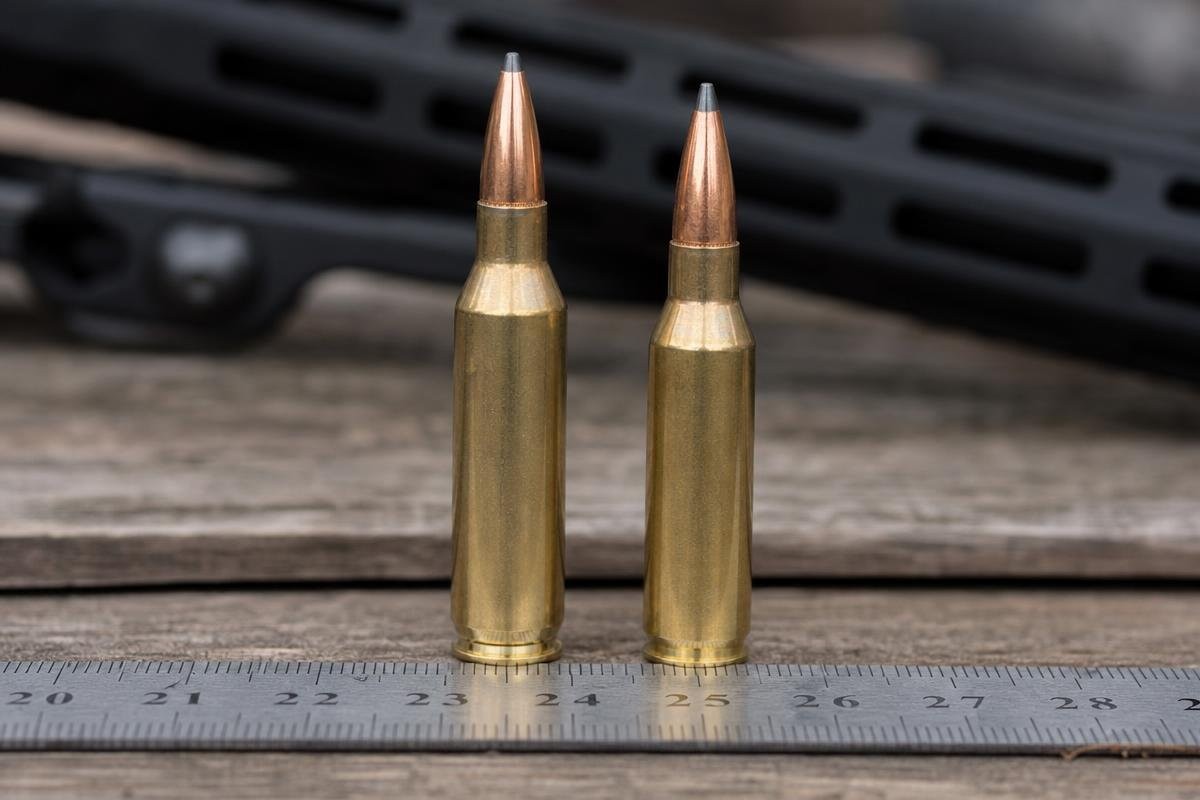
The name trips people up constantly. Both cartridges carry the "ARC" acronym, so buyers assume they are related, maybe siblings off the same design tree. They are not. The 338 ARC is a big-bore, AR-10-based cartridge built to deliver serious energy at extended range. The 6mm ARC is a precision, low-recoil round designed specifically for the AR-15 platform. Different jobs. Different platforms. Different everything.
Below you'll find a full breakdown of exactly where they differ: case dimensions, ballistic performance, recoil, platform compatibility, and which cartridge fits your actual use case. If you are ready to build now, we have a 338 ARC complete upper and a 6mm ARC complete upper ready to configure. If you need to understand the difference first, keep reading.
What 'ARC' Actually Means and Why These Two Cartridges Are Not Related
ARC stands for Advanced Rifle Cartridge, a Hornady branding designation and not a family name. The .338 ARC and 6mm ARC share those three letters and nothing else. Different parent cases, different bore diameters, different platforms. If you are shopping these two cartridges because the name made them sound related, that is a reasonable assumption and a completely wrong one.
338 ARC: The Big-Bore AR-10 Cartridge
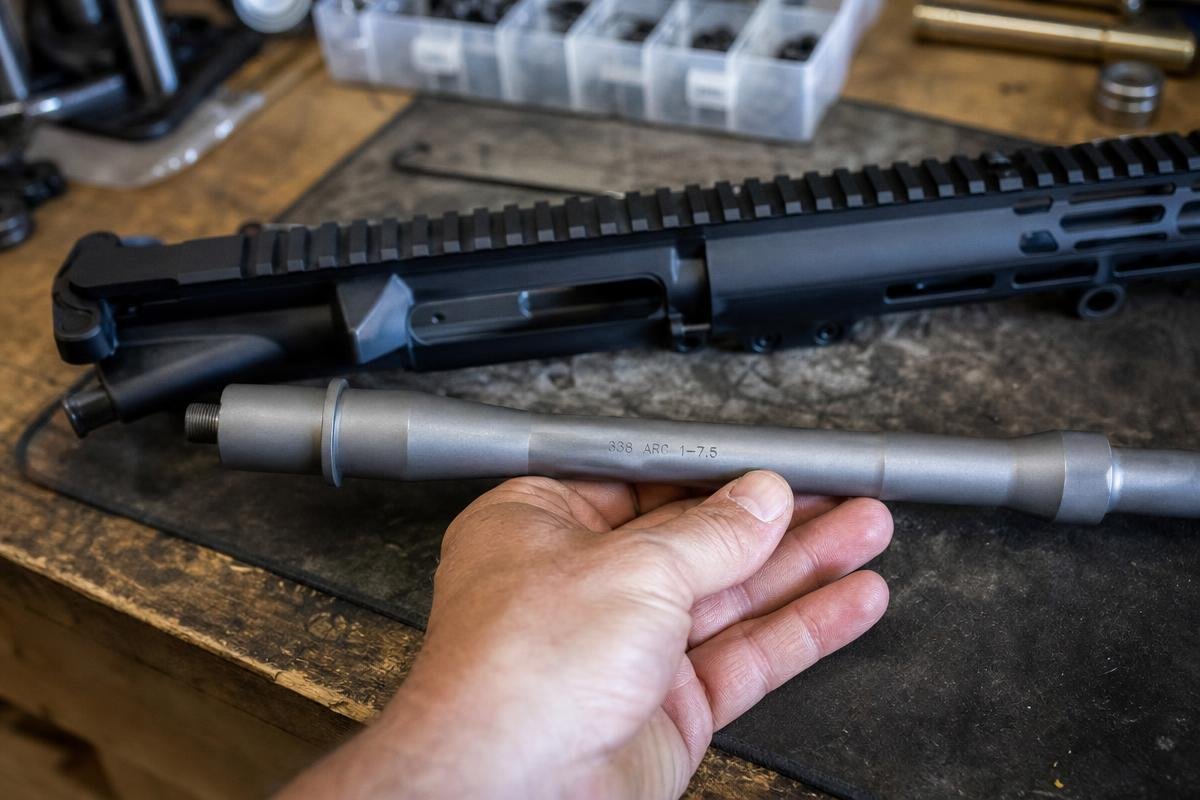
Hornady developed the .338 ARC for a government customer that needed extended-range performance and barrier penetration in a semi-automatic platform. The cartridge is derived from the .338 Norma Magnum, necked and dimensioned to run in an AR-10 pattern rifle. Bullet weights run from 250 to 300 grains.
This is a big-bore, heavy-hitting cartridge built around the DPMS LR-308 lower. If you already run an AR-15 lower, the 338 ARC AR-15 platform pairing is not possible. The .338 ARC requires a larger receiver entirely.
The tradeoff for that power is size and weight. AR-10 builds are heavier, longer, and more expensive to feed. That is not a flaw. It is the cost of running a cartridge that hits like this one does.
6mm ARC: The Precision AR-15 Cartridge
Hornady introduced the 6mm ARC in 2020 specifically for the AR-15 platform. The parent case is the 6.5 Grendel, which means bolt and magazine compatibility follows the same pattern. Bore diameter is .243 inches. Bullet weights run 103 to 108 grains. The design goal was 6mm ARC long range performance out to 1,000 yards with manageable recoil and a standard AR-15 lower.
If you already own an AR-15 lower, the 6mm ARC is the cartridge in this comparison you can actually build on it. That platform difference alone is often the deciding factor for North Texas shooters who already have a lower in the safe.
Case Dimensions and Cartridge Specs Compared
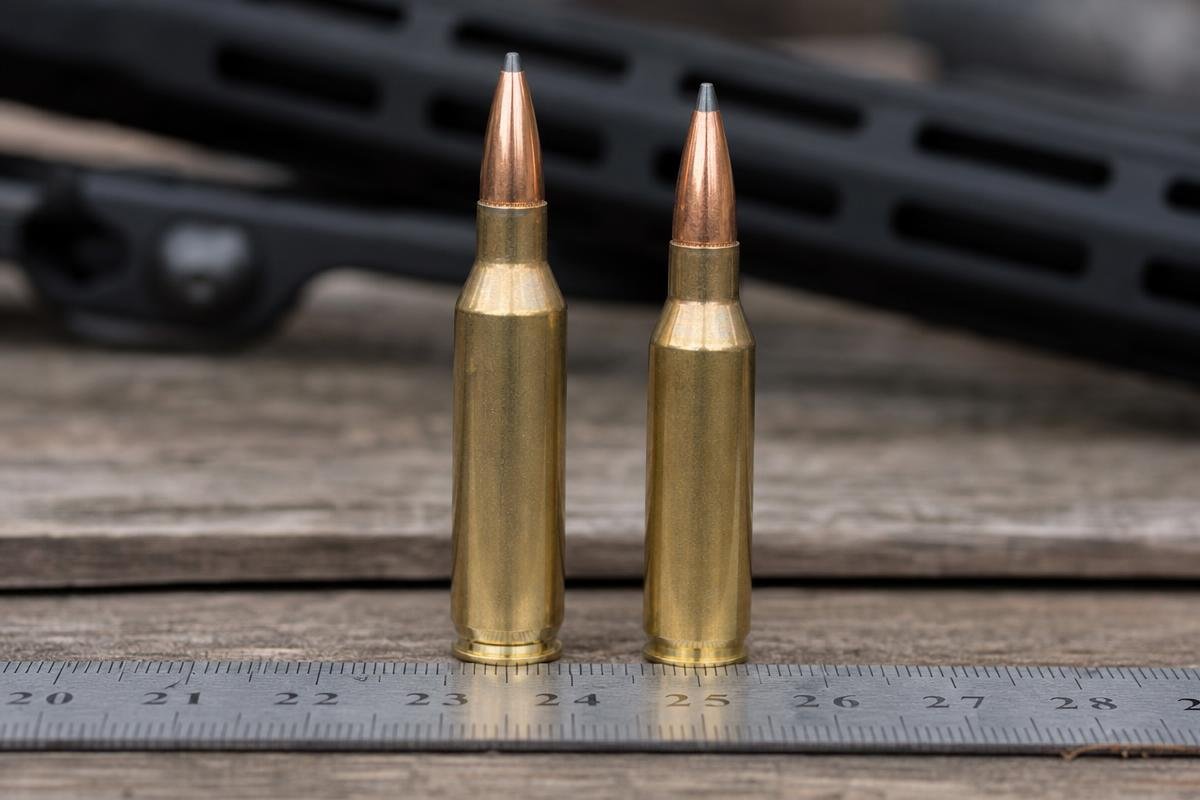
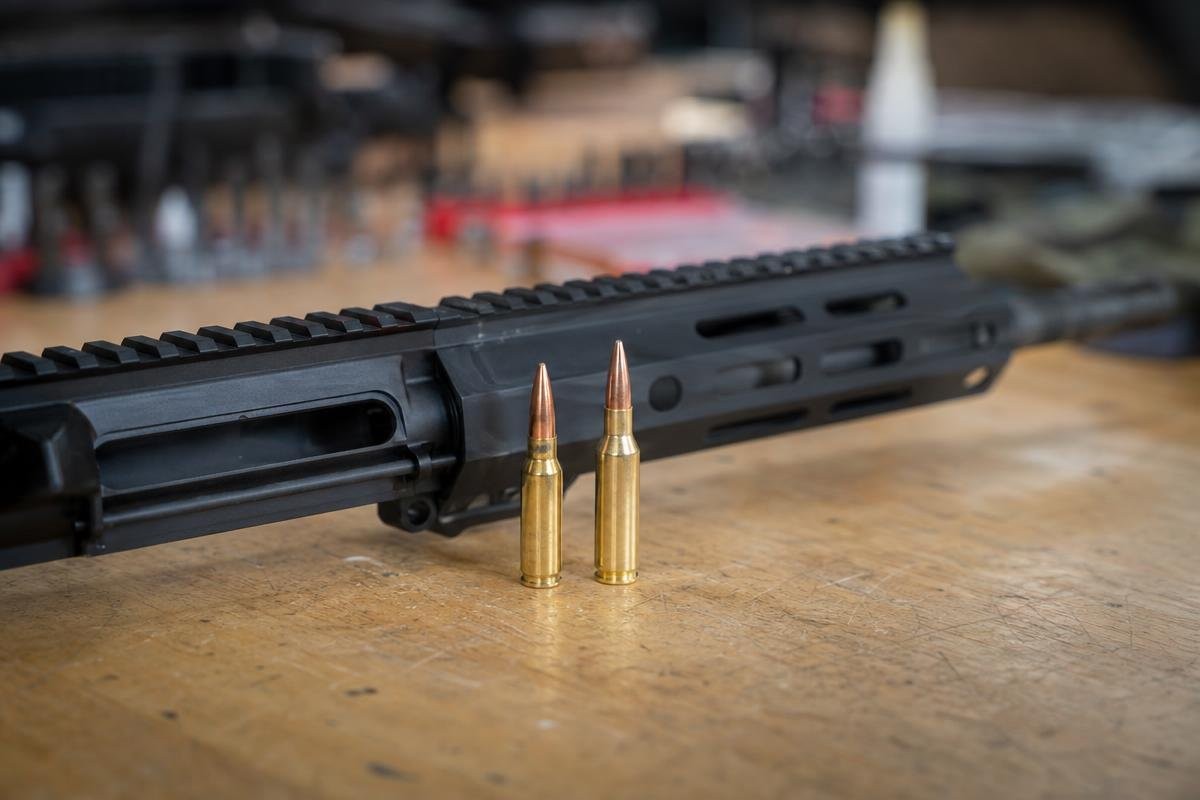
These two cartridges are not close in size. The 338 ARC fires a .338-inch (8.58mm) bullet. The 6mm ARC fires a .243-inch (6.17mm) bullet. That is nearly a tenth of an inch difference in diameter, and it drives every other spec on this list.
Case length tells the same story. The 338 ARC is sized for SR-25/DPMS pattern magazines with an overall length around 2.800 inches. The 6mm ARC measures 1.491 inches case length with an overall length of 2.260 inches, running on 6.5 Grendel-pattern magazines. You can see how the 6.5 Grendel platform shares that same magazine architecture if you are already familiar with that build.
Muzzle Energy and Pressure
SAAMI max pressure for the 338 ARC is 62,000 psi. The 6mm ARC runs at 52,000 psi. Out of an 18-inch barrel, a 250 gr 338 ARC load produces roughly 2,600 fps and approximately 3,750 ft-lbs of muzzle energy. A 108 gr 6mm ARC load from the same barrel length produces roughly 2,700 fps and approximately 1,750 ft-lbs.
Note that these figures are barrel-length dependent; longer barrels raise velocity, and the 18-inch number reflects a common real-world AR build rather than a maximum-length test barrel. Even so, the heavier cartridge hits the muzzle with better than twice the energy.
Where the 6mm ARC Closes the Gap
Raw muzzle energy is not the whole story. The 108 gr ELD-M carries a G7 BC of approximately 0.536. Typical 338 ARC projectiles run around 0.350. That BC gap means the smaller round sheds velocity slower and bucks wind harder at distance. For a 338 ARC vs 6mm ARC ballistics comparison, that distinction matters most past 400 yards.
Hunters shooting across the open agricultural fields that stretch out around Pottsboro and Whitesboro will feel that difference directly when the wind comes up. If you want to dig deeper into the heavier cartridge's numbers, our 338 ARC complete upper receivers page covers specs and build options in detail.
Ballistic Performance: How Each Cartridge Behaves at Distance
These two cartridges serve different purposes downrange. The numbers make that clear. Neither is a compromise of the other. They are built for different jobs, and the ballistics reflect that.
338 ARC Downrange: Energy and Trajectory
A 250 gr .338 projectile from a 338 ARC complete upper retains strong energy well past 400 yards, enough to anchor large game and handle barrier-defeating applications where penetration matters. For feral hog control across open terrain, that retained energy is the point.
The tradeoff is trajectory. Expect roughly 50 to 60 inches of drop at 500 yards from a 100-yard zero. Wind drift is also significant. Heavy .338 projectiles carry lower ballistic coefficients, so crosswind corrections add up fast, especially in the fall and winter winds that sweep the Red River valley.
6mm ARC Downrange: Precision and Wind Resistance
The 6mm ARC long range performance story is built around the 108 gr ELD-M. Its G7 BC of approximately 0.536 means it retains around 900 to 950 ft-lbs at 1,000 yards and drifts only 20 to 22 inches in a 10 mph crosswind. That is competitive with 6.5 Creedmoor, from a lighter AR-15 platform. For a complete 6.5 Grendel upper comparison, that pairing is worth a separate look, but the 6mm ARC holds its own at distance.
The limitation is terminal energy. Past 600 yards on game larger than deer-sized animals, the 6mm ARC runs thin. For North Texas whitetail across ag fields and creek bottoms, shots typically fall inside 400 yards, where the 6mm ARC's flat trajectory and wind resistance are genuine advantages over heavier cartridges.
This 338 ARC vs 6mm ARC ballistics comparison comes down to one question: are you stopping something large at moderate range, or shooting precisely at distance? The heavier round is the answer to the first. The 6mm ARC owns the second. Every upper we build is headspaced and function-checked before it ships, so you can bolt it on and zero it, not troubleshoot it.
Recoil, Shootability, and Practical Field Use
The spec sheet only tells part of the story. What you actually feel behind the rifle across 50 rounds in a hog field is what matters. In the 6mm ARC vs 338 ARC recoil conversation, the gap is not subtle. It is significant enough to change how you build, how you shoot, and how long you last in the field.
338 ARC Recoil: What to Expect on the AR-10
The 338 ARC generates approximately 25 to 30 ft-lbs of recoil energy depending on rifle weight and muzzle device. That is roughly double the felt recoil of a .308 Win from a comparable platform. Experienced shooters can manage it, but follow-up shots are slower and fatigue accumulates faster in extended sessions. If you are running a big-bore build, plan on a quality muzzle brake.
A good brake drops felt recoil by 30 to 40 percent, which makes a real difference when you are calling shots on a second target. A suppressor accomplishes the same thing while adding the hearing protection benefit. Without one or the other, the .338 is a deliberate, one-shot-at-a-time cartridge for most shooters.
6mm ARC Recoil: Why Low Impulse Was a Design Goal
The 6mm ARC produces approximately 8 to 10 ft-lbs of recoil energy from a standard AR-15 build. That is comparable to a .223/5.56 loaded with heavier bullets. Low recoil was not an accident. It was a deliberate design goal, and it shows on the range. The AR-15 gas system absorbs the impulse efficiently, which means faster target reacquisition, less shooter fatigue, and real accessibility for a wider range of shooters.
For the best ARC cartridge for AR-15 precision use, that low impulse is a genuine advantage, not just a marketing point. If you are running extended night shoots on hogs across creek bottoms, the difference between 8 ft-lbs and 28 ft-lbs adds up fast. Have questions about which ARC build fits your shooting style? Call us at (888) 706-0633 and we will walk you through the options.
Platform Compatibility: AR-10 vs AR-15 and What That Means for Your Build
This is the part most comparison articles skip over. Platform compatibility is not a minor detail. It determines how much your build costs, what lower you can reuse, and what magazines you need to buy.
Building a 338 ARC Upper: AR-10 Platform Requirements
The .338 ARC runs on an AR-10 / DPMS LR-308 pattern platform. You cannot put a .338 ARC upper on a standard AR-15 lower. The receiver dimensions are different, full stop. If you already own an AR-10 lower, the swap is straightforward. If you are starting from scratch, budget for the larger, heavier, and more expensive AR-10 platform from the ground up.
Magazines are SR-25 / DPMS pattern. Expect 10 to 20 round capacities. Common barrel lengths run 18 to 24 inches, which suits the cartridge's long-range intent. This is a purpose-built precision setup, not a lightweight field rifle.
Building a 6mm ARC Upper: AR-15 Platform Requirements
The 6mm ARC uses a standard AR-15 lower. If you already run an AR-15 for deer or hog work around Denison, you can add a 6mm ARC upper without replacing anything below the upper receiver. That makes it the lower-cost entry point for shooters who do not want to invest in a second platform.
Two details matter before you order parts. First, the bolt face is larger than a standard 5.56 bolt. A factory 5.56 BCG will not headspace correctly in a 6mm ARC build. The bolt face matches the 6.5 Grendel pattern, so if you have built a 6.5 Grendel upper before, this will feel familiar. Second, magazines are 6.5 Grendel pattern, not standard STANAG mags. Do not assume your existing 5.56 magazines will feed correctly. They will not.
Common barrel lengths are 16 to 24 inches. A 16-inch barrel gives you a more compact package. An 18 to 24-inch barrel squeezes out more velocity for precision work at distance. Our complete AR-15 uppers in 6mm ARC are assembled, headspaced, and function-checked in our shop before they ship to your door. You do not have to sort out compatibility issues on your end.
Which Cartridge Is Right for Your Use Case?
These two cartridges serve completely different shooters. The bigger round is built for stopping large, dangerous animals or defeating barriers at distance. The 6mm ARC is built for precision, volume, and versatility on an AR-15 platform. Pick the one that matches what you actually do with a rifle.
When to Choose the 338 ARC
If you're hunting elk, bear, or wild boar past 400 yards and need serious terminal energy on target, the 338 ARC complete upper receiver is the answer. It's also the right call for military or law enforcement applications where barrier penetration matters. Hunters taking out-of-state trips into elk country in Colorado or New Mexico should look at this cartridge hard.
That said, the .338 is overkill for whitetail inside 300 yards. Ammo costs more per round, recoil is real, and high-volume training sessions get expensive fast. It lives on an AR-10 platform, which adds weight. If your hunting is local ag fields and creek bottoms, you're carrying more rifle than you need.
When to Choose the 6mm ARC
The 6mm ARC is the smarter build for most Texas shooters. It handles deer-sized game cleanly inside 600 yards, runs in a standard AR-15, and delivers genuine 6mm ARC long-range performance without punishing recoil. Hog hunters running fast follow-up shots at night will prefer it. PRS competitors who want the best ARC cartridge for AR-15 platform rules will pick it every time.
Ammo is more available and costs less per round than the heavier cartridge. If you want one rifle that hunts, competes, and trains without breaking your shoulder or your budget, the 6mm ARC wins that argument. See our full lineup of 6.5 Grendel complete uppers if you want to compare a similar precision AR-15 option before you decide.
Shooting in North Texas: Why Cartridge Choice Matters in Grayson County
If you hunt the rolling plains and creek bottoms around Denison, Sherman, and Pottsboro, you already know these shots can stretch. Agricultural fields open up fast out here. A 400-yard shot on a deer crossing a winter wheat field is not unusual. Both cartridges are viable at that distance, but the 6mm ARC's precision edge matters when the wind picks up off Lake Texoma and starts pushing your bullet sideways.
Fall and winter wind is a real factor in this part of Texas. The 6mm ARC's high-BC projectiles shed wind drift better than most .338 loads at distances past 300 yards. For whitetail work across ag fields, that translates directly to cleaner hits. The 338 ARC is not overkill on deer, but it brings recoil and platform weight you probably do not need for a 200-pound buck at 350 yards.
For hog control inside 300 yards, the math flips. The .338's terminal energy is decisive on big hogs, and the populations around Cooke and Fannin counties are not getting smaller. If you are running tight creek-bottom ambushes at close to mid-range, that extra bullet weight earns its keep.
We are based at 2022 S Crockett St in Sherman, just a few miles south of Denison. A 6mm ARC complete upper or a big-bore 338 ARC upper ships directly to your door. No FFL required.