Head-to-head comparison of .300 Blackout and 5.56 NATO uppers: ballistics, barrel length, suppressor use, ammo cost, and which one fits your build.
.300 Blackout and 5.56 NATO are the two most popular chamberings on the AR-15 platform, and they're often positioned as competitors when they're actually specialists for different jobs. 5.56 is the general-purpose, long-range, high-volume choice. .300 Blackout is the short-barrel, suppressor, close-range specialist. Both feed from the same magazines, run on the same bolt, and drop onto the same lower. Choosing between them comes down to what you're building the rifle to do, and here's how to decide.
Quick Answer: Which One Do You Want?
If you're building a general-purpose rifle, a training gun, or anything longer than 14 inches, pick 5.56. If you're building a short suppressor host, a home defense pistol, or a compact hunting rifle inside 200 yards, pick .300 Blackout. The rest of this guide explains why.
Ballistics and Effective Range
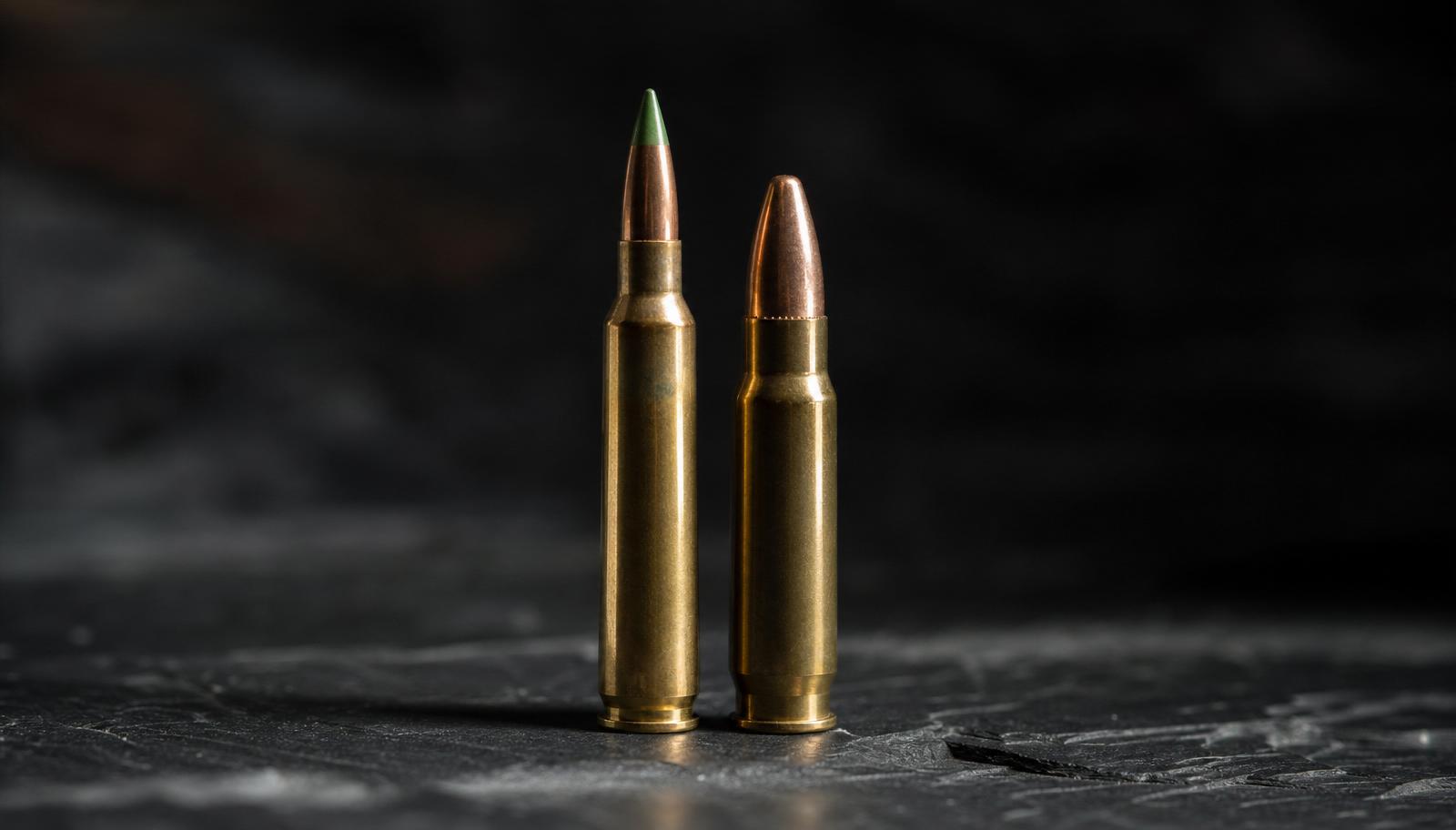
5.56 fires a light, fast bullet (typically 55 to 77 grain) at high velocity, and it depends on that velocity to do damage. Terminal performance drops sharply below about 2,500 fps, which is why short 5.56 barrels underperform. In a 16-inch barrel, 5.56 stays supersonic and effective past 500 yards and remains a viable target caliber to 600 yards with match-grade loads.
.300 Blackout fires a heavier, slower .30-caliber bullet (110 to 220 grain), sacrificing velocity and long-range trajectory for terminal energy at short range and reliable subsonic performance. A 110-grain supersonic load out of a 9-inch barrel is running roughly 2,200 fps at the muzzle, and it drops below supersonic around 300 to 400 yards, well before 5.56 does. Beyond 300 yards, .300 BLK's ballistics become impractical.
The tradeoff is straightforward: 5.56 wins on range, .300 BLK wins on terminal energy in short-barrel configurations.
Barrel Length and Suppressor Use
This is where the two calibers diverge sharply. 5.56 was designed around a 20-inch barrel (the original M16) and was later shortened to 14.5 inches for the M4. Anything below 14.5 inches costs 5.56 real velocity, and below about 11.5 inches, 5.56 becomes a compromised caliber, loud, flashy, and reliability-sensitive to load.
.300 Blackout was engineered from the start to hit full velocity in a 9-inch barrel. That means a 9 to 10.5-inch .300 BLK upper delivers the caliber's full ballistic potential in a compact package, exactly where 5.56 gives up the most. This is why every serious short-barrel and suppressed AR-15 build defaults to .300 BLK.
For suppressor use, the gap widens further. .300 BLK subsonic loads (typically 200 to 220 grain) run around 1,000 fps and cycle reliably from short barrels with the right bolt and buffer setup. 5.56 has no practical subsonic loading, its case simply can't drive a heavy bullet at subsonic velocity reliably. If suppressed shooting is a priority, .300 BLK is the clear answer.
Cost, Availability, and Volume
5.56 is the cheapest centerfire rifle ammunition in America by a wide margin. Bulk practice 5.56 runs $0.30 to $0.50 per round, defensive and match loads $0.70 to $1.50. It's stocked in every gun store, big-box retailer, and online ammo shop.
.300 Blackout ammo runs 2 to 3x more per round. Bulk supersonic is typically $0.70 to $1.20, and subsonic loads for suppressed shooting can hit $1.50+ per round. It's widely available but not universally stocked, and it's rarely on sale.
If you plan to shoot 500+ rounds a month for training, 5.56 saves real money. If you shoot a couple of magazines a range trip and mostly hunt or run suppressed, .300 BLK's cost premium is manageable.
Which Upper Should You Actually Build?
The clean decision framework:
- Building a 16-inch general-purpose rifle: 5.56, every time. Cheaper to shoot, longer range, more ammo options.
- Building a home defense pistol or SBR under 12 inches: .300 Blackout. Better ballistics from a short barrel, quieter suppressed.
- Suppressor host: .300 Blackout for subsonic and quiet supersonic use. 5.56 suppressed is fine, but louder and less optimized.
- Training rifle for volume shooting: 5.56. The ammo cost difference over a year of practice pays for the upper.
- Hunting inside 200 yards (hog, medium game): .300 Blackout. Better terminal energy and legal in some straight-wall states where 5.56 isn't ideal for game.
- Precision or match shooting: 5.56 (or a 5.56 variant like .223 Wylde). Longer range, better trajectory, more match ammo options.
Or, honestly, build both. One 5.56 upper for range and training, one .300 BLK upper for suppressor and short-barrel use, both running off the same lower. That's exactly the flexibility the AR-15 platform was designed for.
Shop AR-15 uppers in both calibers at ar15parts.com to compare configurations side by side.