Planning an upper around 300 Blackout subsonic ammunition is a different job than building for supersonic loads. Heavy, slow bullets produce less gas, less recoil impulse and a very different sound signature, and every part of the upper has to account for that. Barrel length, gas system length, buffer weight, muzzle threads and even your charging handle choice all start to matter more.
This guide covers the practical decisions that change when subsonic rounds become your main diet. We focus on what you can control at the upper, what to leave to the component manufacturer's published specs, and how to test your setup safely. If you plan to shoot both supersonic and subsonic loads from one rifle, you will find the tradeoffs here too.
Want to see what a ready-to-run 300 Blackout upper looks like before you plan your own?
Key Takeaways
- Subsonic 300 Blackout loads generate less gas pressure at the port, so the gas system and buffer have to be matched to reliably cycle them.
- Shorter barrels and pistol-length gas systems are common on uppers built for subsonic use, but anything under 16 inches on a rifle is an NFA item that still needs ATF registration.
- A suppressor changes back pressure and cycling, so test your upper both with and without the can before trusting it.
- A 1:7 or 1:8 twist barrel is the norm for 300 Blackout and helps stabilize the long, heavy bullets used in subsonic loads.
- Muzzle thread pitch must match your suppressor mount or muzzle device, and the barrel's published spec is the only number to trust.
- Always follow the ammunition and component manufacturer's instructions, and ask a qualified gunsmith when something does not cycle correctly.
What Makes 300 Blackout Subsonic Ammo Different
The 300 AAC Blackout cartridge was designed to run both fast, lighter bullets and slow, heavy bullets from the same AR-15 platform. Subsonic loads keep the bullet below the speed of sound so it does not create a supersonic crack downrange. Paired with a suppressor, that is the whole point of the round for many owners.
Heavy Bullets at Low Velocity
Subsonic loads use heavy projectiles, often around 190 to 220 grains, pushed at modest speeds. For one published example, Hornady lists its 300 Blackout 190 gr Sub-X Subsonic at 1,050 fps and 465 ft-lb of energy at the muzzle from a 16-inch test barrel, with velocity listed at 998 fps at 100 yards.
Those numbers tell the story. The bullet is heavy, the energy is modest and the trajectory drops quickly past 100 yards. Hornady's own table shows the bullet falling many inches by 200 yards, so subsonic is a close-range tool.
Less Gas to Work With
A slower, lower-pressure load sends less gas back through the port. That is the root of nearly every setup change in the rest of this piece. An upper that cycles hot supersonic rounds without a hitch may short-stroke on subsonic loads, especially without a suppressor attached.
Supersonic vs. Subsonic at a Glance
| Factor | Supersonic 300 Blackout | Subsonic 300 Blackout |
|---|---|---|
| Bullet weight | Lighter bullets | Heavy bullets, often 190 grains or more |
| Velocity | Above the speed of sound | Below the speed of sound (Hornady lists 1,050 fps for its 190 gr Sub-X) |
| Gas available for cycling | More | Less, so cycling is more sensitive to setup |
| Sound downrange | Supersonic crack | No supersonic crack |
| Best use | Longer shots, flatter trajectory | Suppressed shooting at close range |
| Suppressor dependence | Optional | Often tuned around a suppressor |
Barrel Length and Gas System Choices for Subsonic Loads
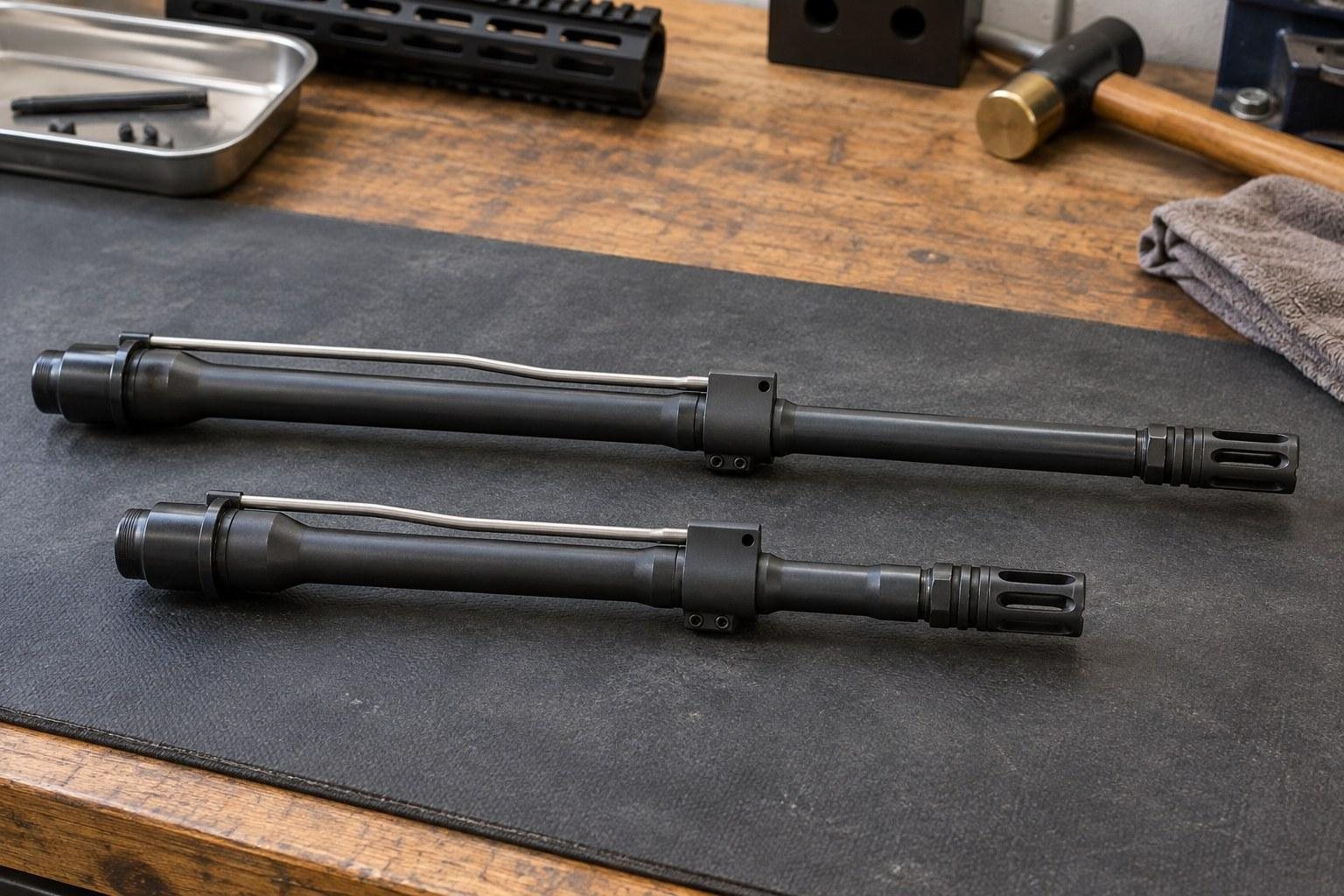
Barrel length is the first decision that subsonic ammo pushes in a new direction. Because the load is designed to stay slow, a long barrel does not buy much extra velocity you actually want, and a compact barrel keeps a suppressed rifle maneuverable.
Common Barrel Lengths
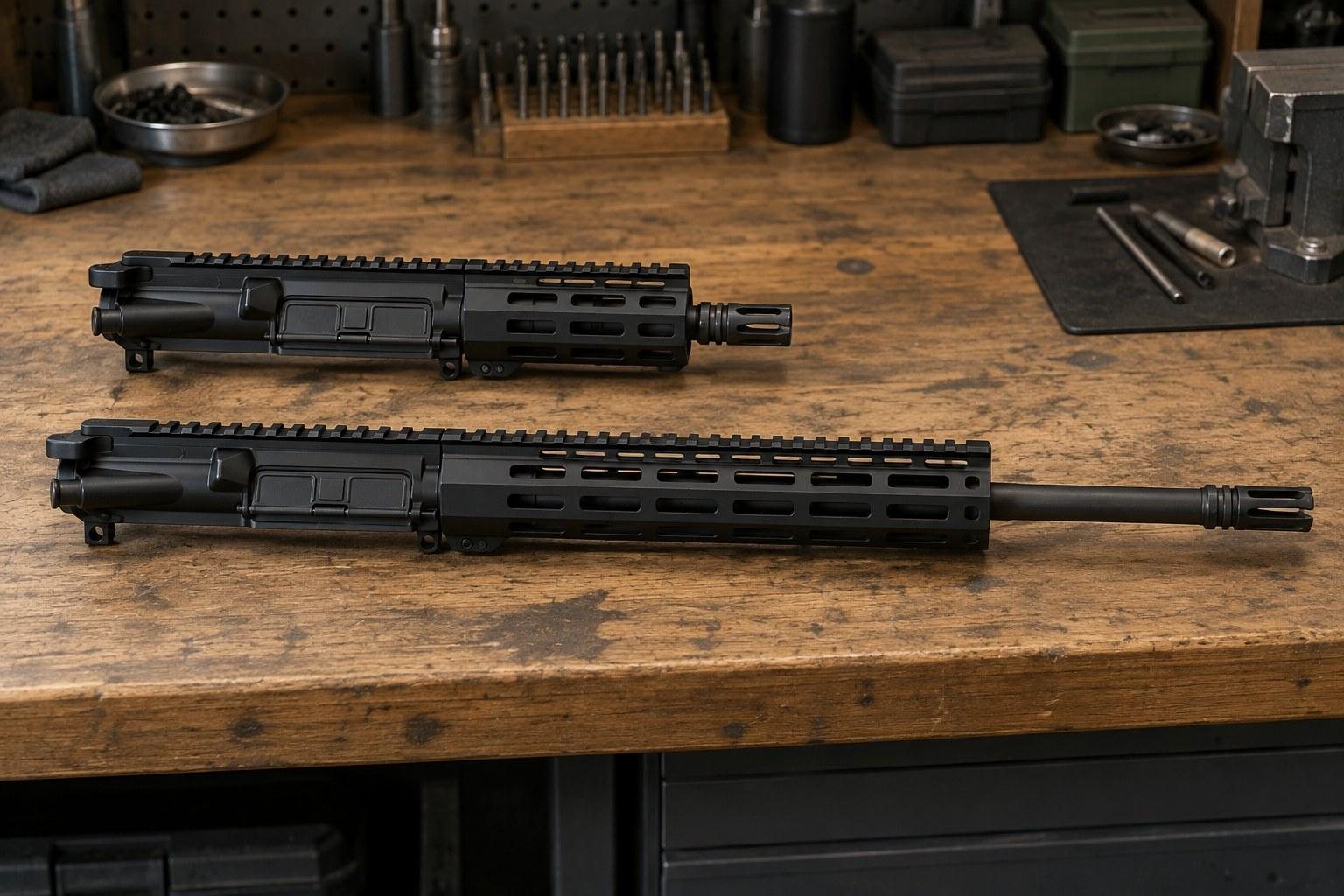
300 Blackout barrels are commonly available in short lengths like 8 inch and 10.5 inch, as well as 16 inch options in various weights and finishes. Shorter 300 Blackout barrels are typically paired with pistol-length gas systems, which is typical for the caliber.
A short barrel is not a free choice, though. On a rifle, a barrel under 16 inches, or an overall length under 26 inches, makes a short-barreled rifle. Since January 1, 2026 the federal SBR and suppressor tax is $0, but ATF registration is still required. State and local laws vary, so check yours before you order.
Why Pistol-Length Gas Is the Norm
300 Blackout is usually paired with a pistol-length gas system because tapping gas closer to the chamber gives short barrels and lower-pressure subsonic loads enough gas to cycle the bolt carrier reliably. Do not try to tune a gas system by drilling or opening a gas port. Pick a barrel whose published gas system and port were designed for the ammo you plan to shoot, and if you need fine control, read our adjustable gas block guide first.
Twist Rate
Long, heavy subsonic bullets need a fast twist to stabilize. Most 300 Blackout barrels use a 1:7 or 1:8 twist. For the theory behind those numbers, see our AR-15 twist rate guide.
Want a deeper look at how length affects your build before you choose?
Buffer, Spring and Bolt Carrier Group Considerations
The upper is only half of the cycling equation. The buffer and spring in your lower decide how much energy it takes to send the bolt carrier rearward and how hard it slams home. With subsonic loads, those parts often decide whether the rifle runs.
Buffer Weight
A lighter load may need a lighter buffer to cycle unsuppressed. Add a suppressor and the extra back pressure can make the same rifle run harder, which is why many owners settle on a buffer that works with the can attached. There is no universal answer, so start with the barrel or upper manufacturer's recommendation and test methodically.
Bolt Carrier Group
A clean, properly lubricated bolt carrier group matters more when the gas margin is small. Dirty or dry parts add friction that a subsonic load may not overcome. If you are replacing yours, browse bolt carrier groups and confirm the bolt face is correct for 300 Blackout, which shares its bolt face with 5.56.
Magazines
300 Blackout generally feeds from standard AR-15 magazines, but heavy subsonic bullets have long overall lengths that some magazines handle better than others. You can find options among 223, 5.56 and 300 Blackout magazines. Mark your 300 Blackout magazines so they never get mixed with 5.56 ammunition.
Suppressor and Muzzle Device Setup
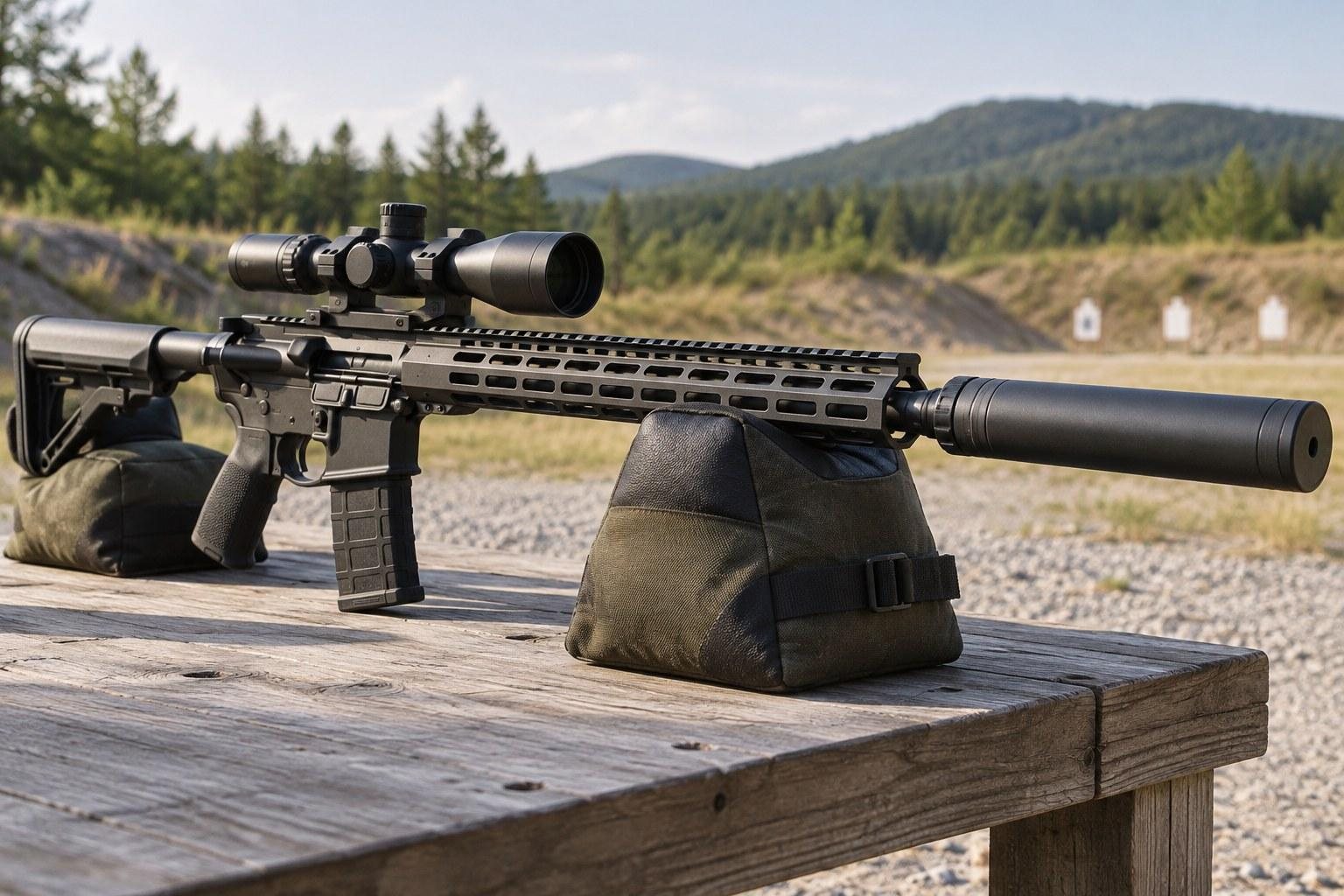
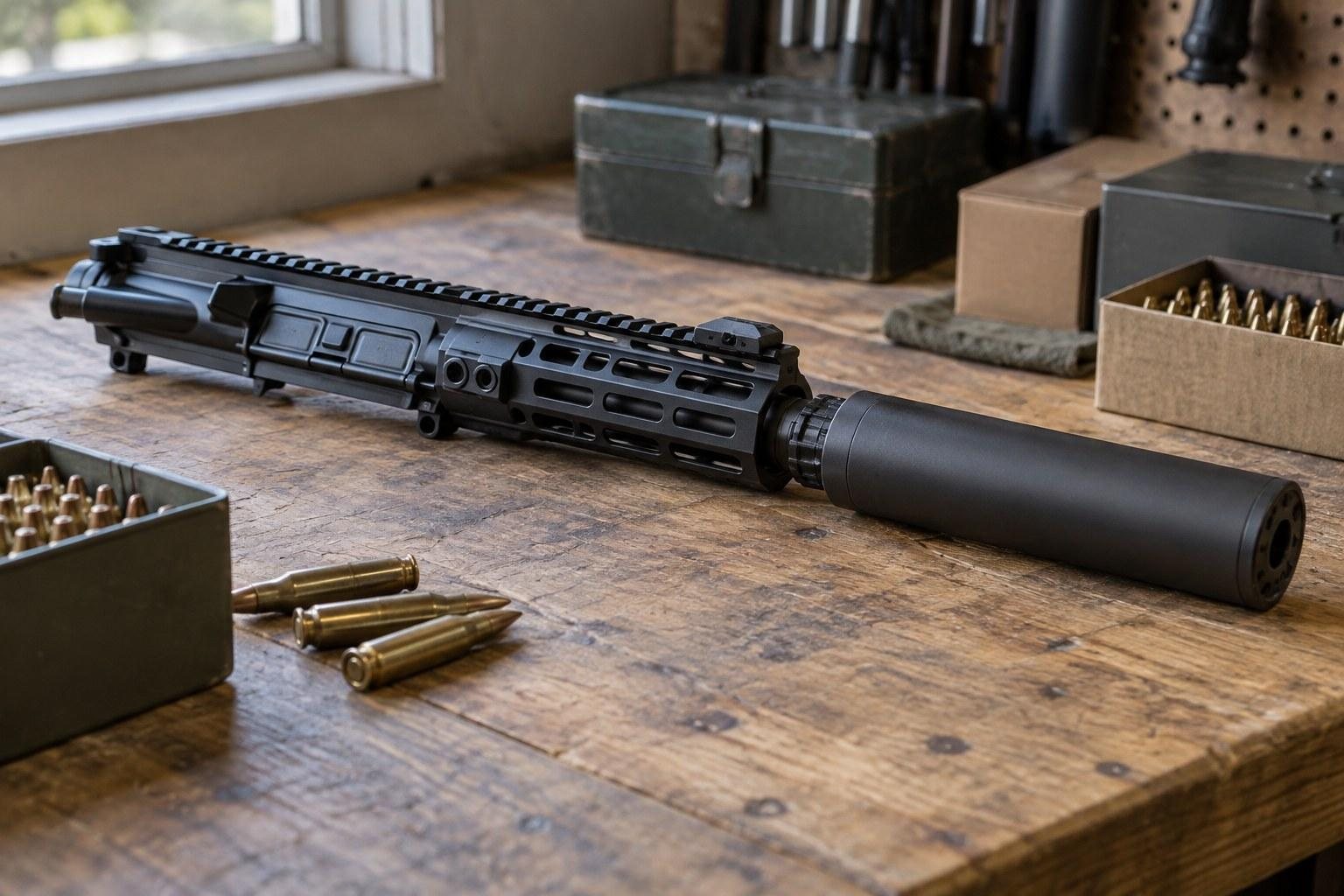
Many people who buy 300 Blackout subsonic ammo plan to shoot it suppressed. That makes the muzzle end of the upper one of the most important places to get right.
Thread Pitch
300 Blackout barrels are commonly threaded 5/8x24, though some 16-inch barrels are threaded 1/2x28. Your suppressor mount, flash hider or brake must match the barrel's threads exactly. Read the product title and spec, and never assume.
Muzzle Devices and Mounts
If you plan to run a quick-detach suppressor, the muzzle device becomes the mount. Browse AR-15 muzzle devices and check that the device is rated for 30 caliber bore. Our muzzle devices guide explains flash hiders, brakes and compensators in more detail.
Back Pressure and Gas in Your Face
A suppressor raises back pressure, which can push more gas out of the charging handle area toward your face. A gas-busting charging handle is one way owners address this. You can compare options among AR-15 charging handles, and the charging handle guide covers the differences.
Running Supersonic and Subsonic From One Upper
Many owners want one upper that runs both kinds of 300 Blackout. That is possible, but it comes with compromises you should plan for.
Expect a Tuning Compromise
A setup that cycles light subsonic loads unsuppressed may run supersonic rounds harder than you would like. A setup tuned for supersonic loads may short-stroke on subsonic loads. Some owners use an adjustable gas block, while others accept that subsonic ammo will only run with the suppressor attached.
Zero and Point of Impact
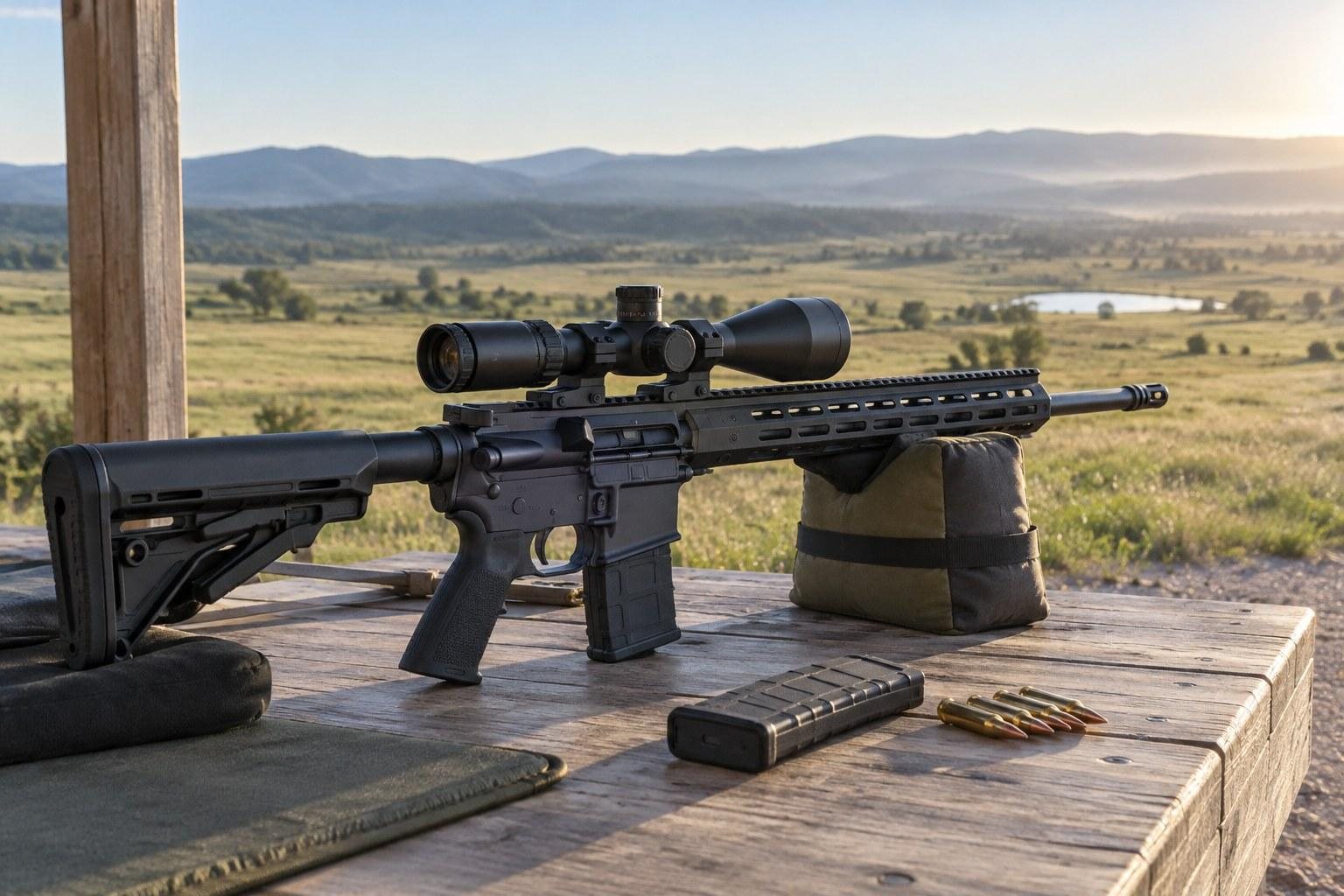
Supersonic and subsonic loads will not share a point of impact. Heavy, slow bullets drop much faster, as Hornady's published trajectory for its 190 gr Sub-X shows. Record separate holds for each load, or use an optic with a reticle that helps you hold for the slower round.
Keep Ammo Separated
Keep 300 Blackout ammunition apart from 5.56 or 223 ammunition at all times. The cases look similar in a magazine, and chambering 300 Blackout in a 5.56 rifle is dangerous. Label magazines and storage boxes clearly.
Testing Your 300 Blackout Subsonic Setup Safely
Once the upper is assembled, testing is where you learn whether your choices worked. Treat it as a short, methodical process rather than a range-day guess.
A Simple Test Sequence
- Confirm the firearm is unloaded and the chamber is clear before you inspect or change anything.
- Verify the barrel and ammunition are marked 300 Blackout; the bolt is a standard 5.56/223 bolt and will not carry that marking.
- Load one round and fire, then load two and confirm the bolt locks back on an empty magazine.
- Repeat with the suppressor attached and with it removed if you plan to shoot both ways.
- Note any short-stroking, failures to eject or failures to lock back, and change one variable at a time.
When to Ask for Help
If the rifle still will not run after you have checked cleaning, lubrication and buffer selection, stop and have a qualified gunsmith inspect it. Do not modify gas ports or components outside the manufacturer's instructions. Our cycling issues troubleshooting guide covers common causes.
Starting With a Complete Upper
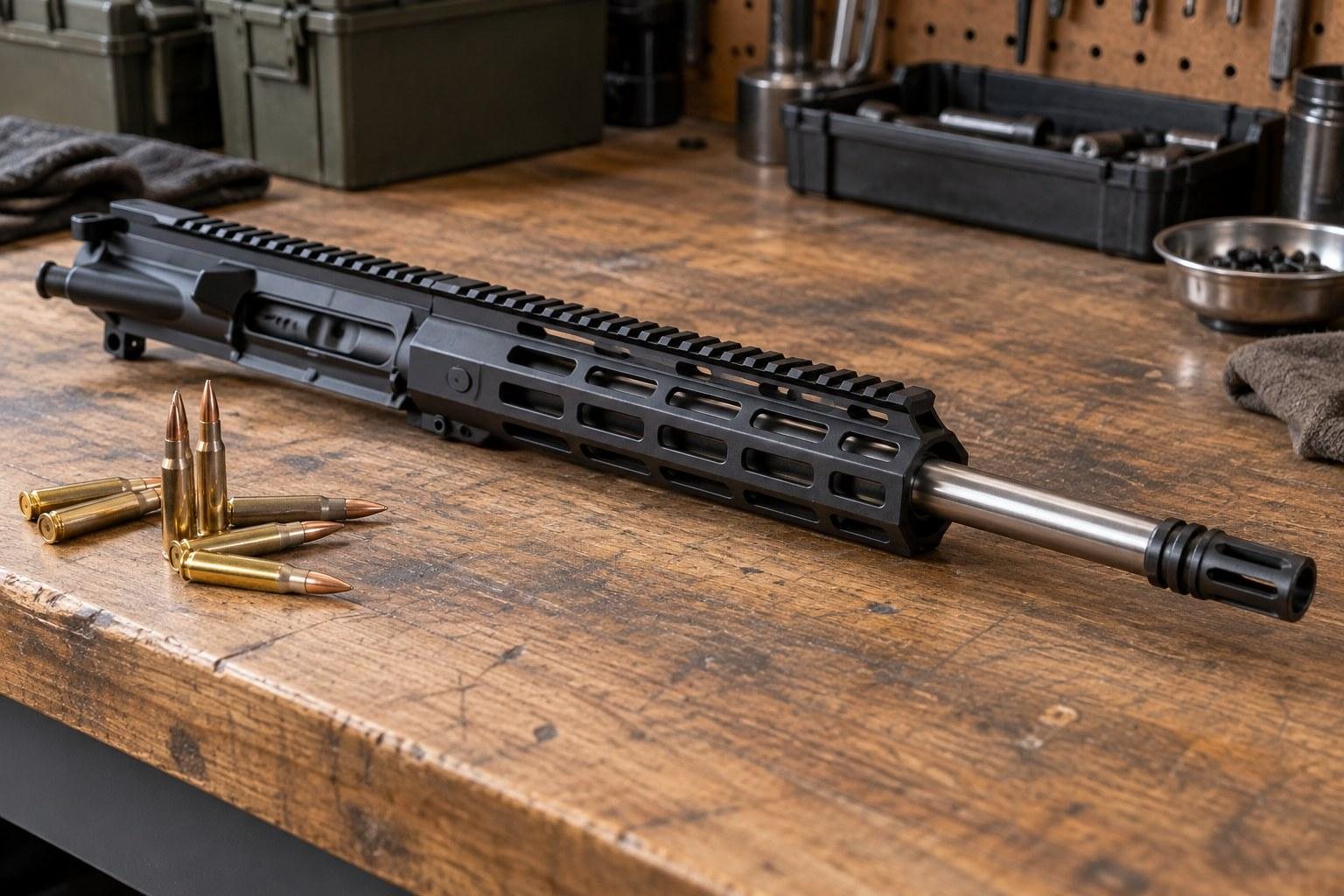
If you would rather skip the parts matching, a complete upper is a simple starting point. 300 Blackout uppers are commonly available in 10.5-inch and 16-inch configurations, including versions with a flash can on shorter barrels. Complete uppers are assembled in-house, headspaced and function-checked before they ship, and shipping takes 3 to 5 business days.
Ready to compare suppressor-friendly configurations side by side?