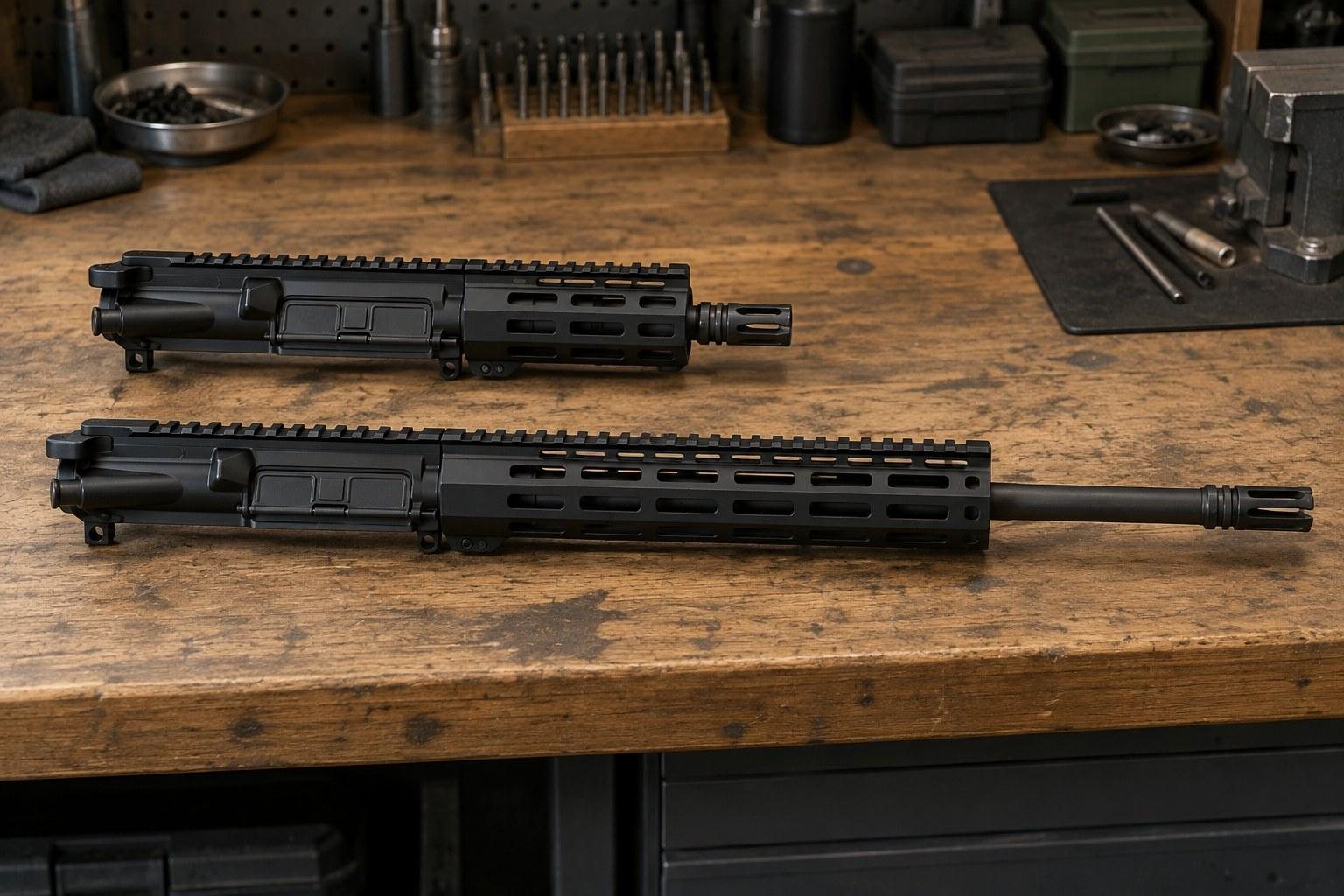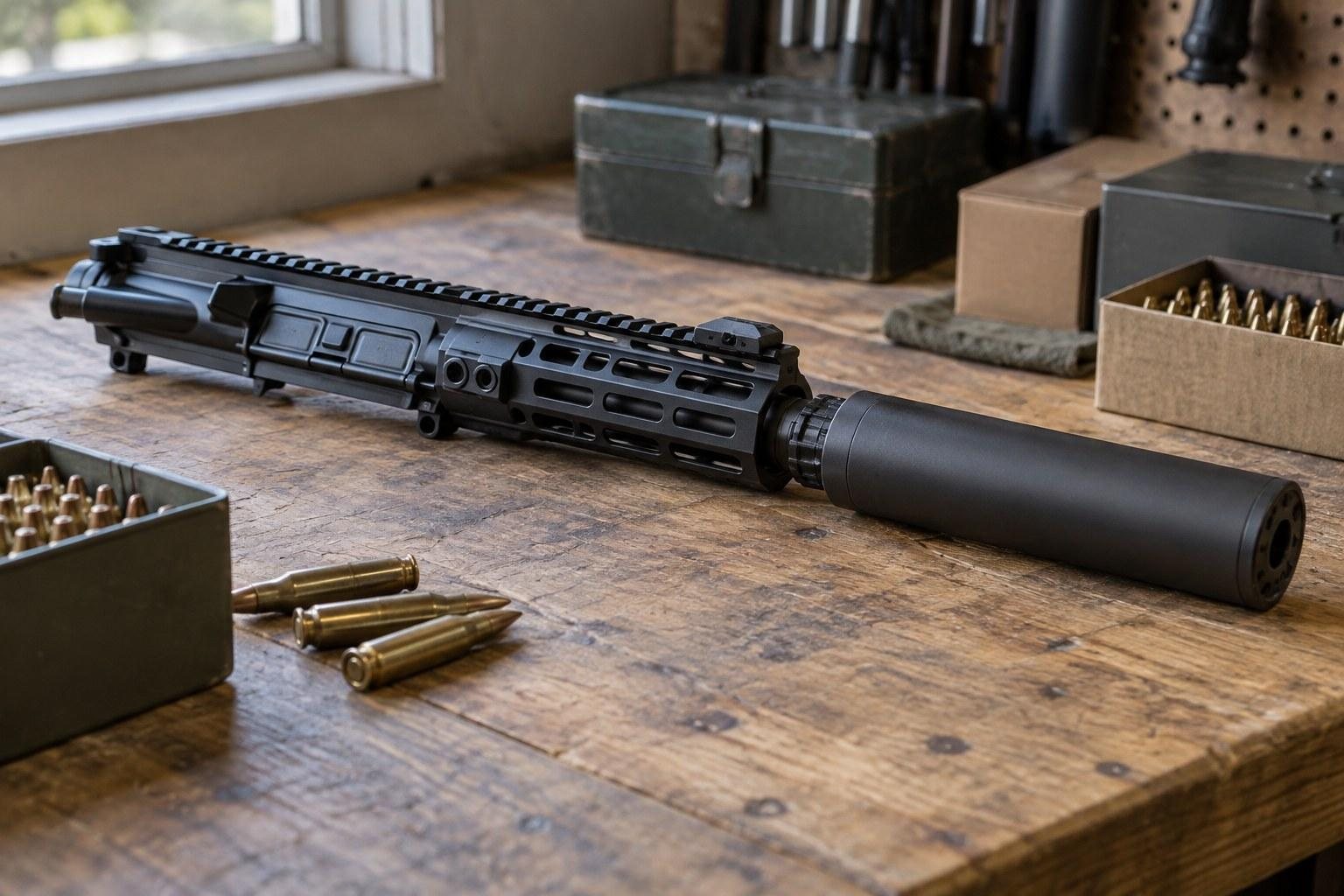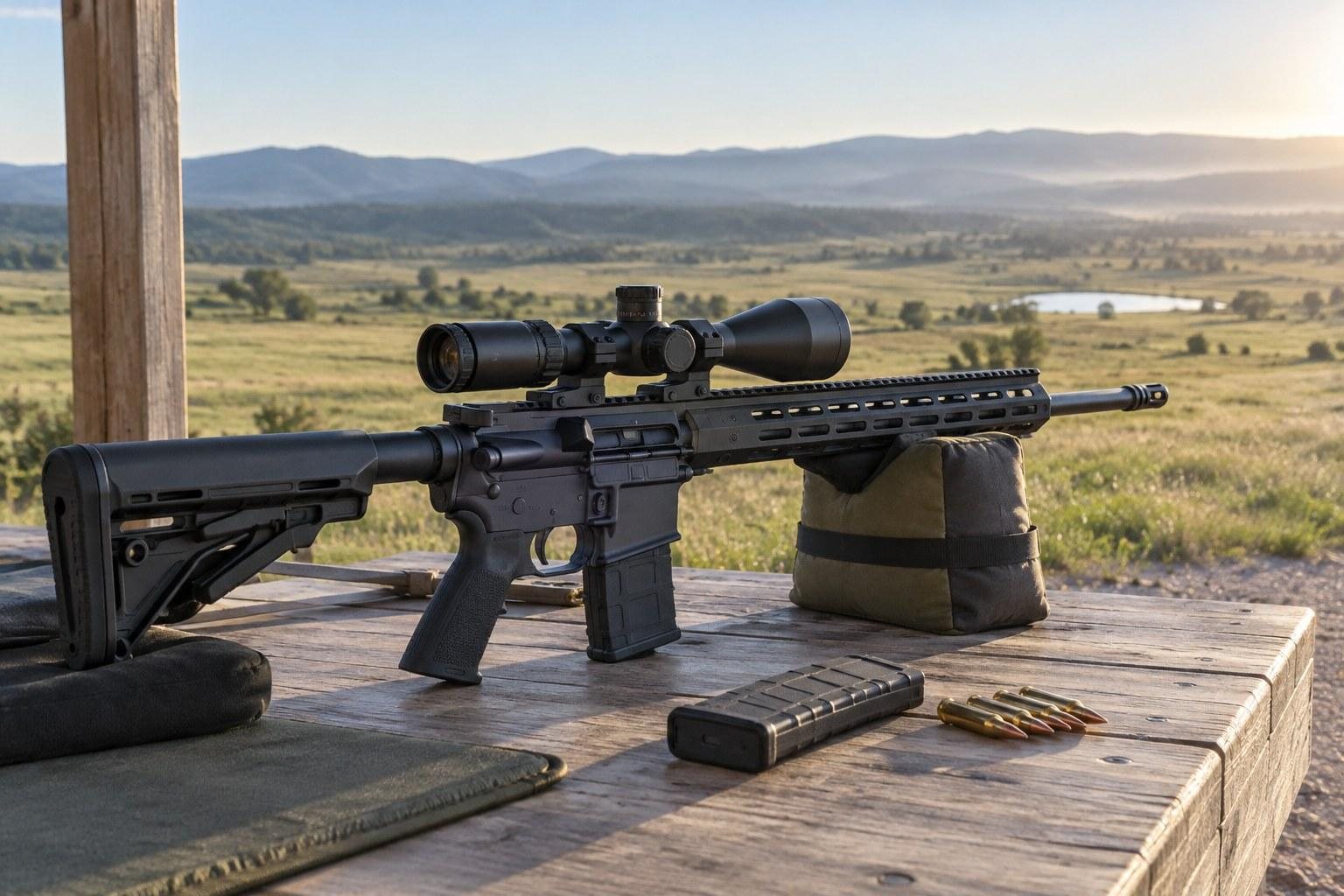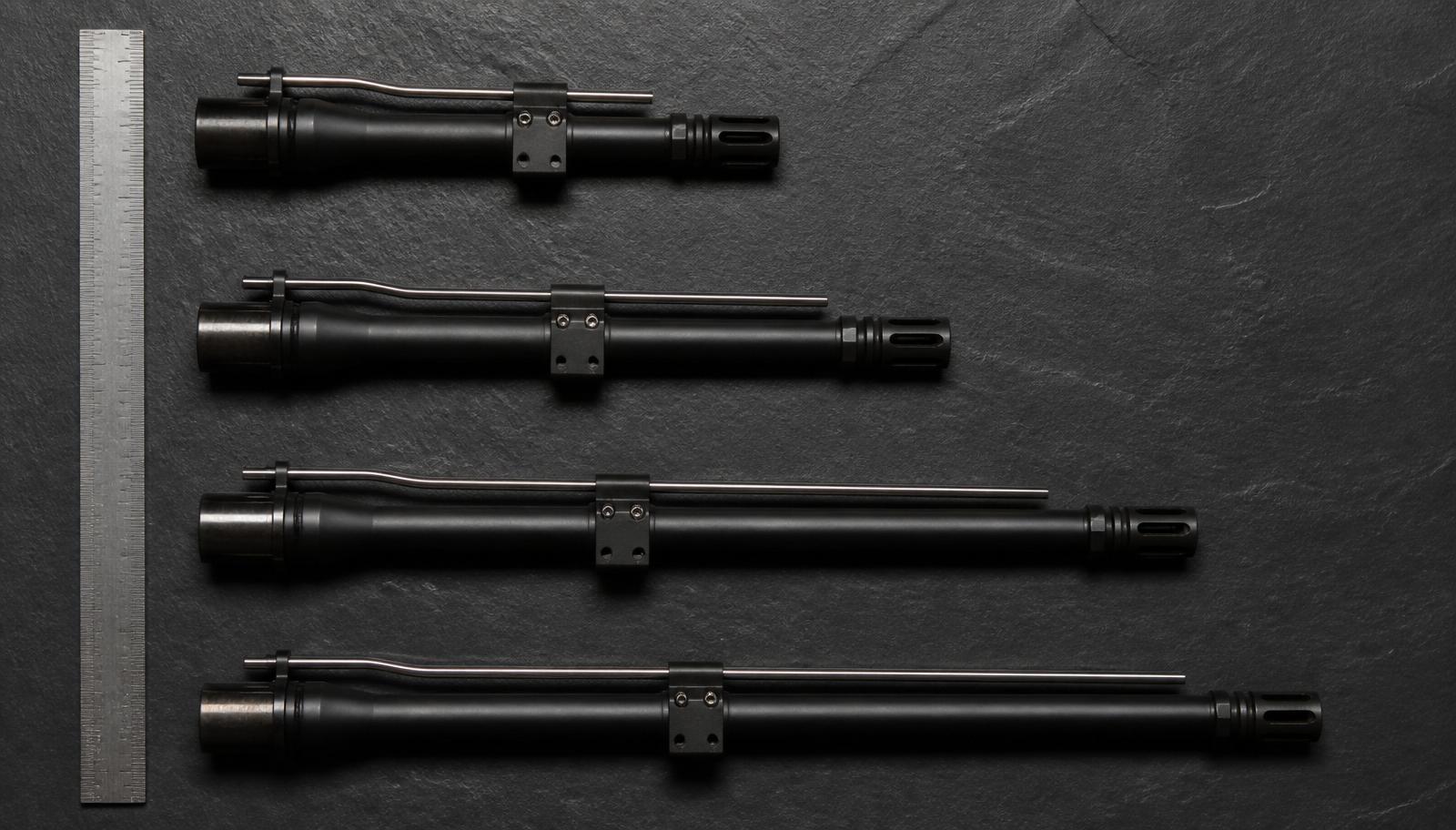
AR-15 barrel length comparison: velocity, gas system pairing, legal classification, and use-case recommendations for 7.5, 10.5, 14.5, 16, and 20 inch barrels.
Barrel length is the single spec that changes an AR-15's character the most. It sets the rifle's legal category, dictates which gas system it needs, and directly affects velocity, muzzle blast, weight, and handling. Get it right and the rifle does exactly what you built it for. Get it wrong, mismatch the gas system, pick too short for the caliber, or misunderstand the legal boundary, and you'll fight the gun forever. Here's the practical breakdown, including a full velocity and gas-system comparison across every length you're likely to consider: 7.5, 10.5, 11.5, 12.5, 14.5, 16, 18, and 20 inches.
Why Barrel Length Matters
A longer barrel gives the propellant more time to burn and accelerate the bullet. In 5.56 NATO, that translates to roughly 25 to 40 feet per second per inch of barrel length, though the exact number depends on load, powder, and barrel bore/groove dimensions. The gains taper off past about 18 inches (the powder is essentially fully burnt by then), and drop off sharply below 12 inches, where the bullet leaves the barrel with a meaningful amount of unburnt powder still burning, producing a large muzzle flash, a sharper blast, and noticeably lower velocity per inch removed. Choosing a chamber too? Read our 5.56 vs .223 Wylde vs .223 Rem guide.
Length also affects handling, weight, and balance. A 20-inch rifle points and swings differently than a 10.5-inch pistol; both are useful, just in different roles. A shorter barrel means a shorter overall package (easier in vehicles, tight hallways, or a truck gun role) at the cost of velocity and, usually, louder report and more flash. A longer barrel trades handiness for a flatter trajectory, more retained energy downrange, and a longer sight radius if you're running iron sights.
Weight follows a similar curve to handling. A profile that's fine at 16 inches can feel front-heavy at 20 inches if it's not stepped down or fluted, which is one reason many 18 to 20 inch precision builds use a lighter contour forward of the gas block. Conversely, very short barrels are sometimes cut from a heavier blank than needed simply because thin steel that short doesn't have much room to whip or heat-soak differently than a longer profile, so weight savings on a 7.5 to 10.5 inch upper are usually modest.
None of this happens in isolation. Barrel length also determines which gas system length is correct, which is where most first-time builders run into trouble. We cover that pairing in detail below, and in more depth in our dedicated gas system length guide.
Legal Categories by Barrel Length
US federal law splits AR-15s into three categories by barrel length. State laws sometimes add restrictions on top, including outright bans on short-barreled configurations or pistol braces, so always verify your federal, state, and local laws before you build or buy.
The distinction that trips people up: it's the configuration you build, not the parts you own. A stripped lower can become a pistol, rifle, or SBR depending on what you attach first, and reconfiguring an existing lower from one category to another can itself be a legal question worth researching before you touch a wrench. If you're building a compact upper specifically as a pistol, our AR-15 pistol upper guide walks through the parts and rules that keep that build in the pistol category.
Barrel Length and Gas System Pairing
The gas system taps propellant gas from a port along the barrel to cycle the action. If the gas port is too close to the chamber relative to barrel length (a short gas system on a long barrel), the action cycles violently, batters the bolt carrier group against the buffer tube, and wears parts faster. If the port is too far from the chamber for the barrel length (a long gas system on a short barrel), the bullet can exit before enough pressure builds in the system, and the action short-strokes, fails to lock the bolt back, or doesn't cycle at all.
Mid-length gas on a 16-inch barrel is the smoothest-shooting mainstream AR-15 configuration, period.
Dwell time (how long the bullet stays in the barrel after passing the gas port, giving the system time to fill with pressure before the bullet exits) is the real variable underneath this table. Two barrels of the same length can behave differently if the gas port is drilled in a different spot or at a different diameter, which is why some "12.5 inch pistol-length" builds run rough while a properly spec'd 12.5 inch carbine-length build runs clean. If you're chasing a cycling problem, mismatched gas system length is the first thing to rule out; our cycling issues troubleshooting guide walks through the diagnostic steps, and an adjustable gas block can help tune a system that's slightly over-gassed rather than requiring a barrel swap.
Detailed torque and install steps for pairing these on a stripped upper are in our upper install guide.
Velocity by Barrel Length: Full Comparison Table
Published ballistic data for 5.56/.223 varies by ammunition manufacturer, lot, and test barrel, so treat the figures below as approximate, commonly cited ranges for M193 55gr ball and M855 62gr ball, not guaranteed numbers for any specific load. Use them for relative comparison between lengths, not as a promise of what your rifle will chronograph.
*Legal category assumes a barrel under 16 inches is mounted on a lower without a stock (pistol) or with a stock and the appropriate NFA paperwork (SBR); 16 inches and longer is a standard rifle. Verify your own federal, state, and local laws, since some states restrict or ban short-barreled configurations and pistol braces independent of federal rules.
A few patterns stand out. First, the curve is not linear: the jump from 7.5 to 12.5 inches (5 inches of barrel) buys a bigger percentage gain than the jump from 16 to 20 inches (4 inches of barrel), because most of the powder is already burnt by 16 to 18 inches. Second, M855's heavier 62gr bullet starts slower and gains less per inch than M193's lighter 55gr bullet, simply because more mass means more resistance to acceleration from the same pressure curve. Third, the practical gap that matters most for terminal performance, the 300 to 400 fps difference between a 10.5 inch pistol and a 16 inch carbine, is exactly the range where 5.56 loads can fall out of their designed fragmentation velocity window at longer distances, which is one reason many short-barrel 5.56 builds are treated as close-range tools rather than all-purpose rifles.
It's worth repeating that these figures are approximations pulled from commonly cited published ranges, not a guarantee for any specific rifle, lot of ammunition, or barrel. Bore and groove dimensions, chamber cut (5.56 NATO versus .223 Wylde versus .223 Remington), barrel length tolerance, and ambient temperature can all shift a chronograph reading by a hundred feet per second or more in either direction. The practical takeaway from this table isn't any single number, it's the shape of the curve: diminishing returns above 18 inches, and a real, felt velocity penalty below 12.5 inches that gets steeper the shorter you go.
Common Barrel Lengths and Their Use Cases
- 7.5 inch (pistol gas): Ultra-compact PDW or 300 BLK suppressor host. Loud, flashy, short-range. Only makes sense as a pistol or SBR, and the 5.56 velocity loss here is severe enough that many builders run 300 Blackout instead, since that cartridge is designed around short barrels.
- 10.5 inch (pistol gas): The classic short AR configuration. Excellent for suppressed 300 BLK, defensive SBR, or truck gun use. Good balance of size and velocity in 5.56 if you accept the muzzle blast and flash.
- 11.5 inch (carbine gas): The Mk18-style length. A modest step up in velocity from 10.5 inches with generally smoother cycling on carbine gas. A common defensive and duty length.
- 12.5 inch (carbine gas): A less common but increasingly popular middle ground between 11.5 and 14.5 inches. Slightly more velocity and dwell time than 11.5, while staying comfortably inside pistol/SBR handling dimensions. Worth considering if 11.5 feels a touch snappy and 14.5 feels a touch long for your use case.
- 14.5 inch (mid-length gas): M4 length. Usually pinned and welded to a 16-inch effective length to stay in the rifle category without NFA paperwork. A smooth-shooting general-purpose carbine.
- 16 inch (mid-length gas): The default for most AR-15 builds. Legal rifle length, full-ish 5.56 velocity, wide parts availability, and typically the cheapest to build since it's the most common barrel length on the market.
- 18 inch (rifle gas): DMR and precision builds. Extra velocity for 5.56 loads and a longer sight radius. Rarely worth it for range or defense use versus 16 inches, but it earns its keep at distance.
- 20 inch (rifle gas): Classic A2 rifle configuration. Full-length velocity, the softest recoil impulse of the group, and generally the best choice for iron sights or long-range work.
Twist rate is a related spec that often gets confused with barrel length. Both affect how a bullet behaves downrange, but they're independent choices; a 16 inch barrel can be cut with a fast or slow twist depending on the bullet weights it's meant to stabilize. Our twist rate guide covers that pairing separately from length.
How to Choose
Work backwards from use:
- Range/general purpose: 16 inch mid-length. Cheapest, smoothest, most versatile. No downsides for most shooters.
- Home defense (no NFA): 16 inch mid-length carbine, or an AR-15 pistol with a 10.5 to 12.5 inch barrel.
- Home defense (SBR or suppressed): 10.5 to 12.5 inch, in 5.56 or 300 BLK. Best inside-the-home handling, and a strong candidate list for the builds in our best SBR uppers roundup.
- Hunting inside 200 yards: 16 inch in 300 BLK, 6.5 Grendel, or .350 Legend. See the caliber comparison guide.
- Precision/DMR: 18 to 20 inch in 5.56, .224 Valkyrie, or 6.5 Grendel.
- Competition (3-gun): 14.5 pinned or 16 inch mid-length. A good balance of speed and target-to-target transitions.
Whatever length you land on, remember that the muzzle device matters too: a pinned-and-welded device changes overall length and legal category, and a compensator, flash hider, or suppressor mount will change felt recoil and blast independent of barrel length itself. As always, verify your federal, state, and local laws before finalizing a build in the pistol, rifle, or SBR category.