The 22 ARC vs 22 Creedmoor question comes up the moment a shooter wants a fast, flat .224 cartridge built around modern low-drag bullets. Both rounds came from Hornady, and SAAMI accepted both in the same 2024 announcement, so they often get lumped together.
They are not interchangeable, though. One is sized for a standard AR-15 upper, and the other is a Creedmoor-length round that belongs in an AR-10 size or bolt-action rifle. This guide breaks down the case dimensions, pressure, published velocities and platform fit so you can decide which one matches the rifle you actually want to build.
If you already know the AR-15 is your platform, you can start by browsing complete uppers.
Key Takeaways
- The 22 ARC is derived from the 6.5 Grendel family and runs on the same 0.441 inch bolt face, which lets it work in an AR-15 with the right bolt, barrel and magazines.
- The 22 Creedmoor is based on the 6.5 Creedmoor case, so it is too long for an AR-15 and belongs in an AR-10 size or bolt-action rifle.
- SAAMI lists a Maximum Average Pressure of 52,000 psi for the 22 ARC and 62,000 psi for the 22 Creedmoor.
- Hornady's published factory velocities put the 22 Creedmoor several hundred feet per second ahead of the 22 ARC with comparable bullets.
- The 22 ARC gives you a lighter, more compact rifle, while the 22 Creedmoor trades size and barrel life considerations for extra speed.
Where Each Cartridge Came From
Both cartridges are part of a broader trend: designing the case around long, sleek bullets instead of forcing modern bullets into older cases. That shared goal is why the 22 ARC vs 22 Creedmoor comparison matters, because each round chases the same ballistic idea at a different scale.
The 22 ARC
Hornady introduced the 22 ARC as a smaller-bore sibling of the 6mm ARC. According to the NRA's American Rifleman, the 22 ARC shares its parent case with the 6.5 Grendel and carries over the 0.441 inch bolt head. Hornady's load data notes describe it as safe for all AR-15 systems at its 52,000 psi pressure level.
That AR-15 compatibility is the whole point. You get a high-BC .224 cartridge in the same footprint as a standard carbine, with no need to step up to a larger receiver set.
The 22 Creedmoor
The 22 Creedmoor started as a wildcat on the 6.5 Creedmoor case. Hornady's own 22 Creedmoor load data says it existed in the wildcat world for more than a decade before a joint venture between Horizon Firearms and Hornady led to SAAMI standardization in 2024.
Because it is built on the 6.5 Creedmoor, it inherits that cartridge's overall size. In a semi-auto, that means an AR-10 pattern rifle rather than an AR-15.
22 ARC vs 22 Creedmoor Specs Side by Side
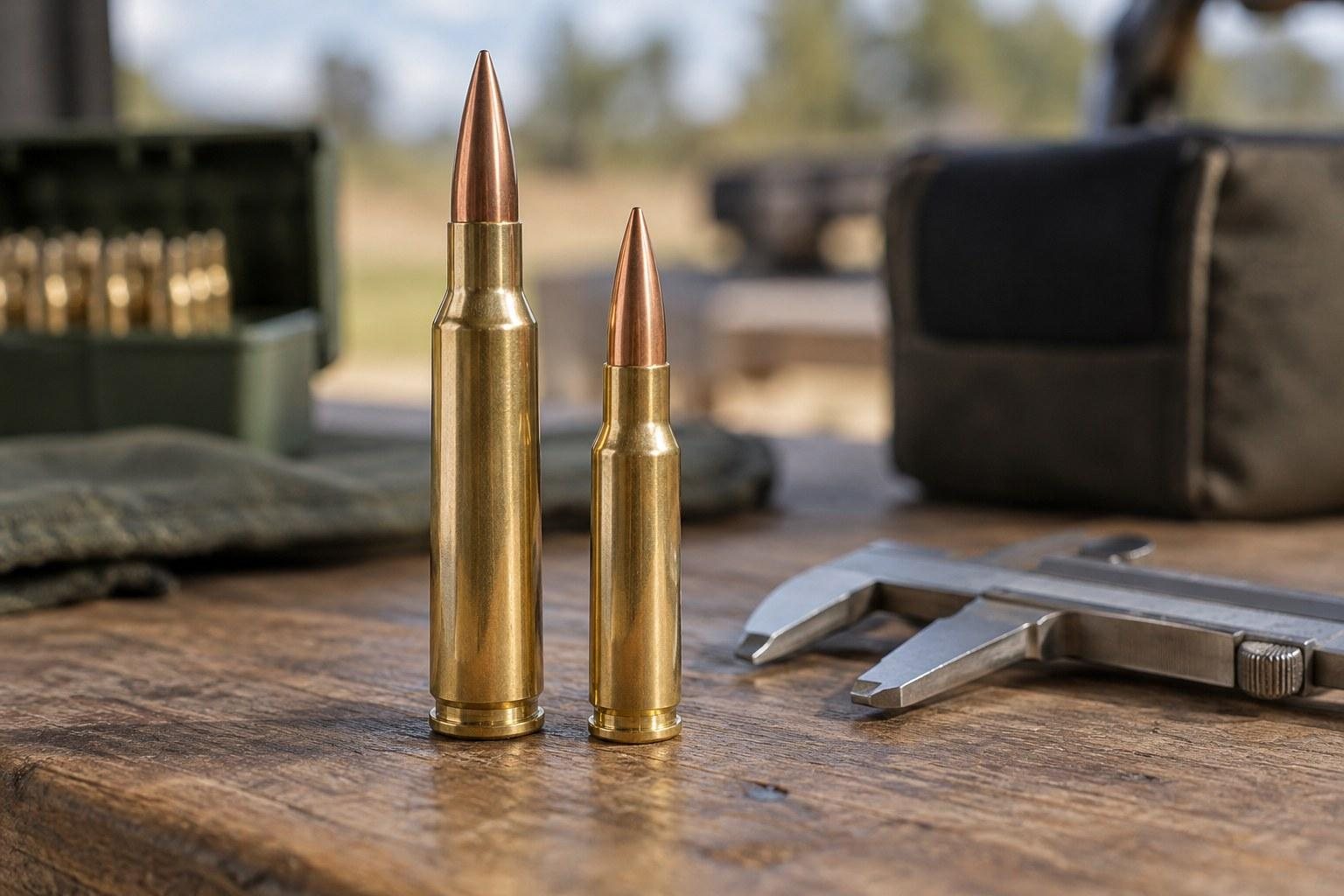
The numbers below come from SAAMI's acceptance announcement, Hornady's load data and Hornady's product literature. Factory velocities are Hornady's published figures from its test barrels, so expect your own rifle and barrel length to give different results.
| Spec | 22 ARC | 22 Creedmoor |
|---|---|---|
| Parent case | 6.5 Grendel family | 6.5 Creedmoor |
| Bullet diameter | 0.224 inch | 0.224 inch |
| Case length | 1.525 inch | 1.920 inch maximum |
| Cartridge overall length | 2.260 inch | 2.700 inch maximum |
| SAAMI Maximum Average Pressure | 52,000 psi | 62,000 psi |
| SAAMI introduction load | 75 grain at 3,075 fps | 80 grain at 3,250 fps |
| Twist rate | 1:7 (Hornady's recommended) | 1:8 (Hornady's load data test barrel) |
| Semi-auto platform | AR-15 | AR-10 size |
What the Pressure Gap Means
That 10,000 psi difference in Maximum Average Pressure, combined with a much larger case, is where the 22 Creedmoor gets its extra speed. The 22 ARC is held to a pressure level suited to the AR-15 bolt, which is why it stays within the limits of the smaller platform.
Never try to load either cartridge past published data. Pressure limits exist for the safety of you and your rifle.
Why Twist Rate Differs
Hornady recommends a 1:7 twist for the 22 ARC so it can stabilize heavy bullets like the 88 grain ELD Match. For the 22 Creedmoor, Hornady's load data explains that a 1:8 twist was chosen to reduce excessive bullet RPM with lighter bullets at higher velocities. Our AR-15 twist rate guide covers how twist and bullet length interact.
Want to see how barrel length affects velocity before you choose? Our barrel length breakdown is a good next step.
Factory Ballistics From Hornady
Speed is the headline difference. Here is what Hornady publishes for several factory loads, all measured from its test barrels.
22 ARC Factory Loads
- 62 grain ELD-VT V-Match: 3,300 fps from a 24 inch test barrel, per Hornady's product page.
- 75 grain ELD Match: 3,075 fps, the load SAAMI cites in its acceptance announcement.
- 88 grain ELD Match: 2,820 fps, per Hornady's 22 ARC sell sheet.
22 Creedmoor Factory Loads
- 80 grain: 3,250 fps, the load SAAMI cites for the 22 Creedmoor.
- 69 grain ELD-VT: 3,560 fps, from Hornady's announcement of its 2026 products.
Reading the Numbers Honestly
These are not identical bullets, so treat the list as a general picture rather than a direct shootout. Still, the pattern is clear: with bullets in the same weight range, the 22 Creedmoor is published at a few hundred feet per second faster.
That speed translates into flatter trajectory and less wind drift at long range. The 22 ARC answers with high-BC bullets that keep it competitive well past the distances many AR-15 cartridges handle comfortably, which is why it has a following among varmint hunters and target shooters.
Platform Fit Is the Real Deciding Factor
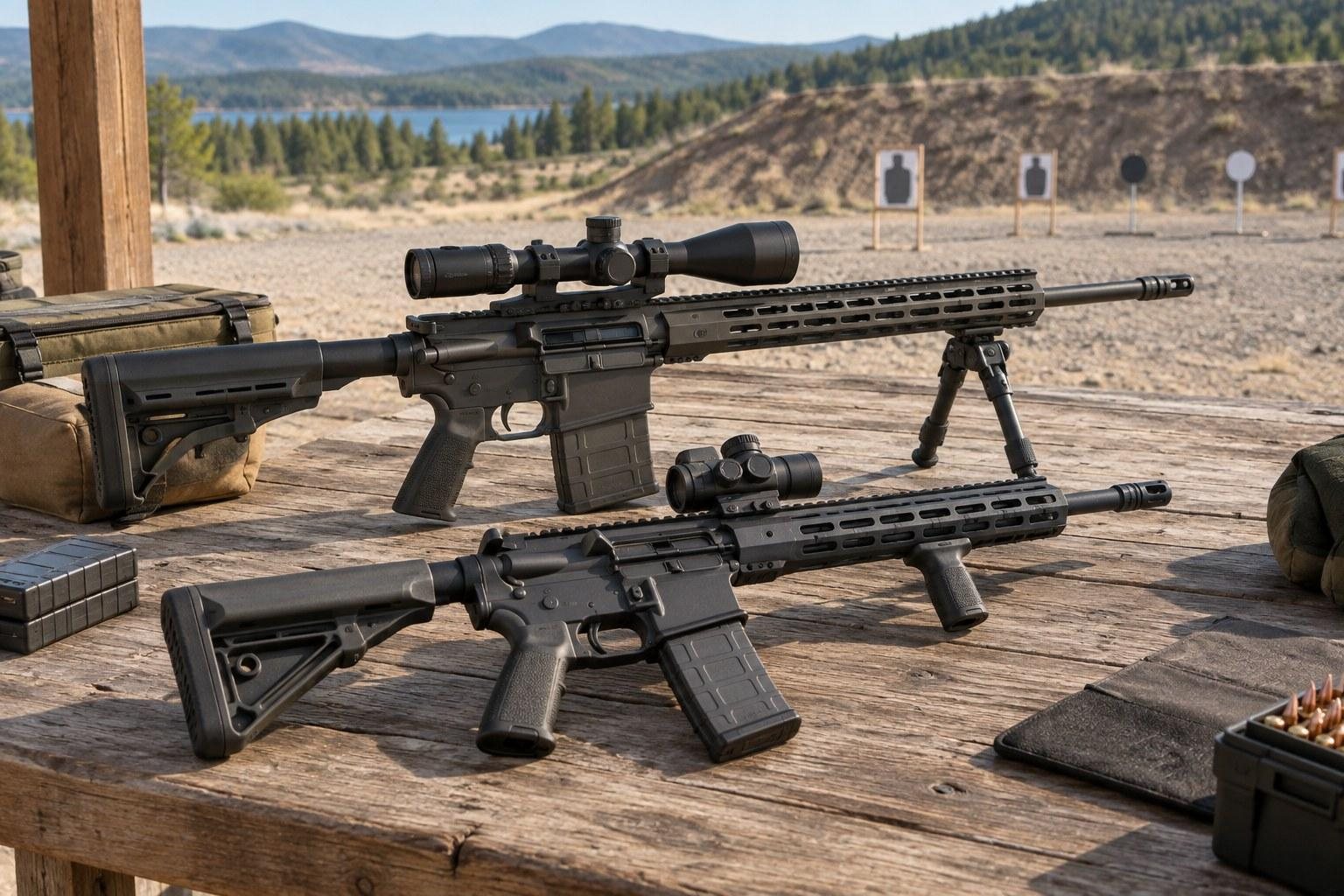
For most readers, the 22 ARC vs 22 Creedmoor decision is less about ballistics and more about which rifle you want to carry. The cartridge dictates the receiver size.
Building a 22 ARC AR-15
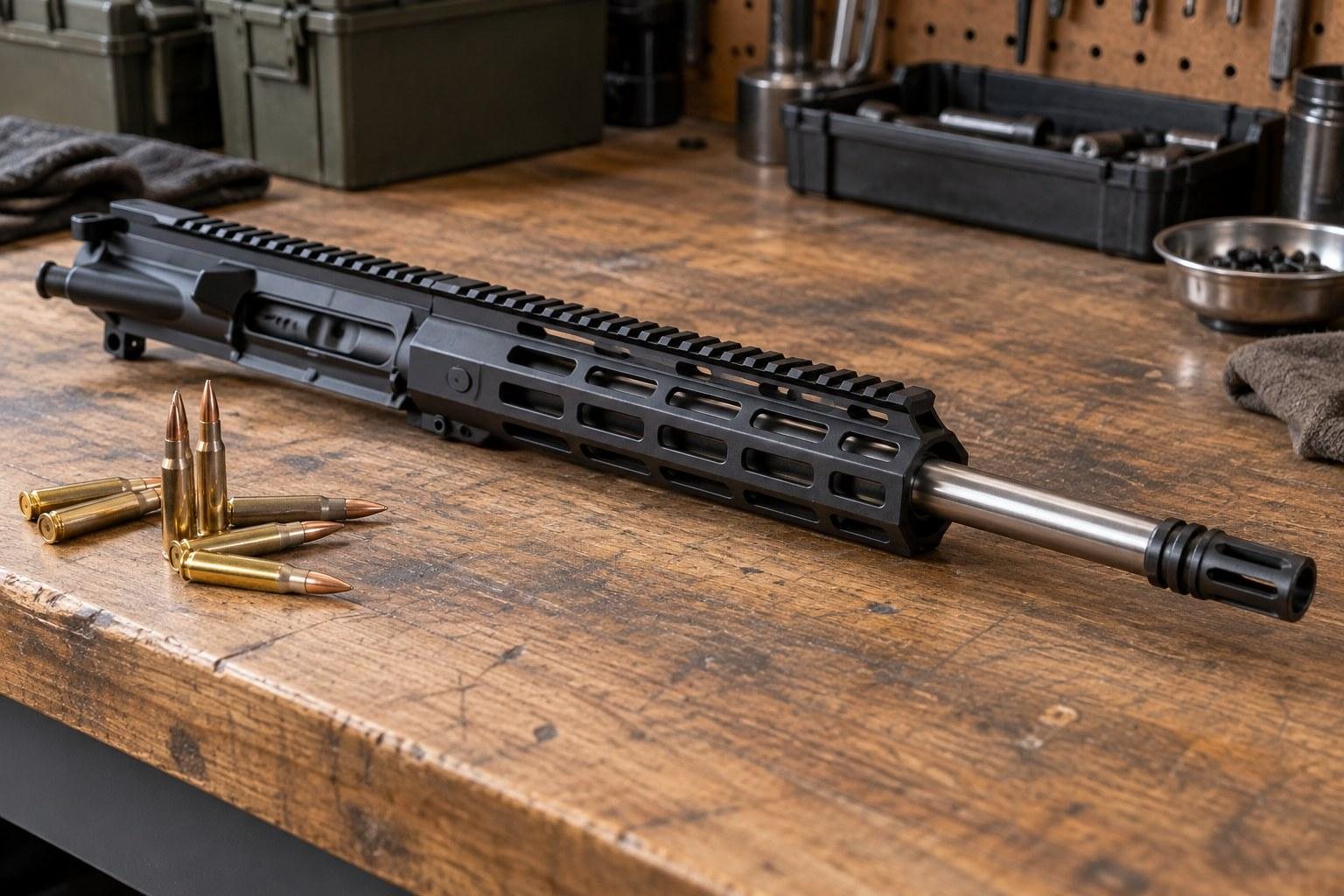
A 22 ARC upper uses a barrel chambered for the cartridge, a bolt for the 0.441 inch Grendel-family bolt face and magazines built for that case. The lower receiver stays a standard AR-15 lower.
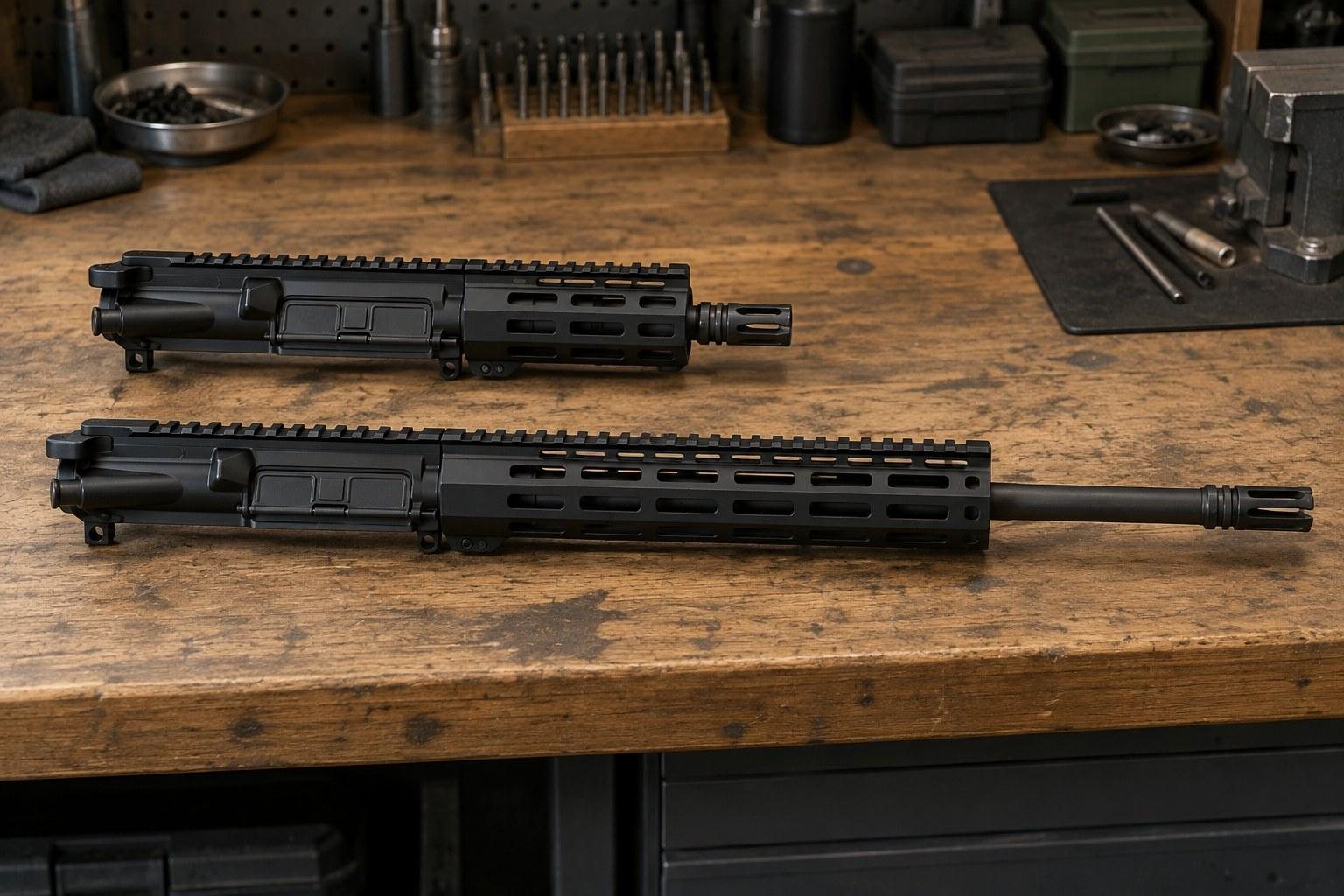
22 ARC uppers are commonly available in 16 and 18 inch configurations from barrel makers like Ballistic Advantage and Satern Barrels, as complete versions with a BCG and charging handle or as versions without them. If you prefer to assemble your own, 22 ARC barrels are generally available in lengths from 16 to 24 inches, typically with a 1:7 twist. Complete uppers are assembled in-house, headspaced and function-checked before they ship.
Building a 22 Creedmoor Rifle
The 22 Creedmoor's 2.700 inch maximum overall length puts it out of reach of AR-15 magazines and receivers. In a gas gun, you are looking at an AR-10 pattern rifle, and many shooters choose a bolt action instead.
A dedicated 22 Creedmoor category is less common since the cartridge is newer, so check current listings. If you like the Creedmoor case and want an AR-10, a 6.5 Creedmoor upper is a closely related option worth considering. This guide covers the bigger platform in the key differences between the AR-15 and AR-10.
Weight, Size and Handling
An AR-15 is generally lighter and more compact than an AR-10, and its ammunition is smaller and lighter to carry. If you walk long distances while predator hunting or want a handy target rifle, that matters as much as velocity.
Which Cartridge Fits Your Shooting
Neither round is better in every situation. Match the cartridge to your priorities.
Choose the 22 ARC If
- You want to keep your existing AR-15 lower and build a new upper.
- You value a lighter, handier rifle for varmints, predators or steel.
- You want a cartridge that runs at AR-15-friendly pressure.
Choose the 22 Creedmoor If
- You want the most speed from a .224 bullet and accept a larger rifle.
- You already shoot an AR-10 or prefer a bolt action.
- Maximum flatness at long range is your top goal.
Barrel Life and Ammunition Considerations
Higher velocity and more powder in a small bore generally mean more heat and throat wear. We cannot give you a round count, because barrel life varies with load, firing pace and the barrel itself, but it is worth weighing if you shoot high volumes.
Both cartridges are newer than mainstream options, so check what factory ammunition you can actually get before committing. Handloaders should use published data from a source like Hornady and work up carefully.
Safety and Legal Notes
Always confirm your firearm is unloaded before working on it, and follow the barrel and component manufacturers' instructions for installation and torque. Fire only ammunition that matches the chambering stamped on your barrel. If you are unsure about any step, have a qualified gunsmith do the work.
Barrel Length and the NFA
A barrel under 16 inches on a rifle, or an overall length under 26 inches, makes a short-barreled rifle under federal law. Since January 1, 2026, the federal SBR tax is $0, but ATF registration is still required. A pinned and welded muzzle device can bring a barrel to 16 inches. State and local laws vary, so check yours before you buy or build.
If you are still comparing small-bore options, our 6mm ARC upper roundup shows how the 22 ARC's bigger sibling stacks up. Read our look at 6mm ARC uppers or keep browsing caliber guides.