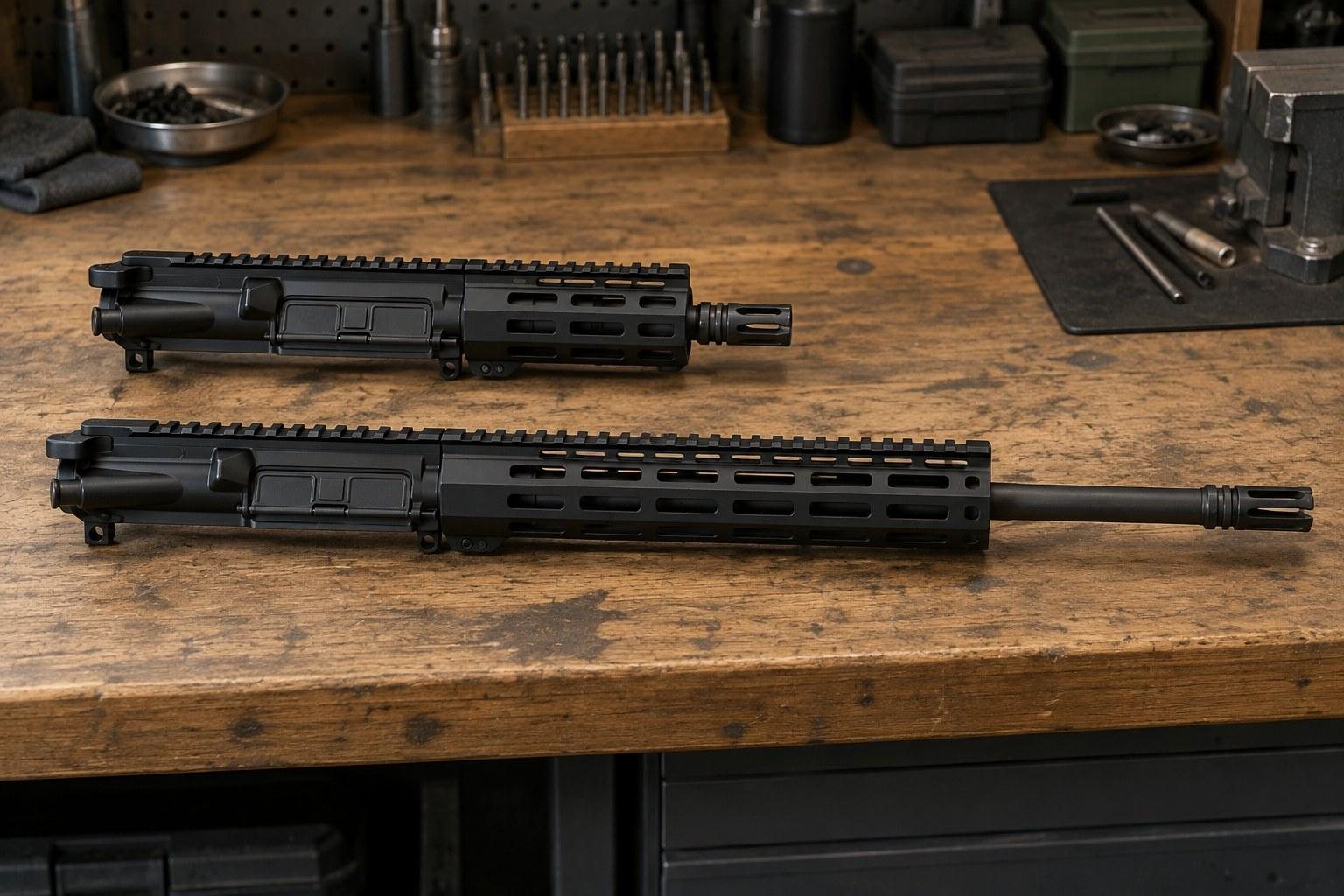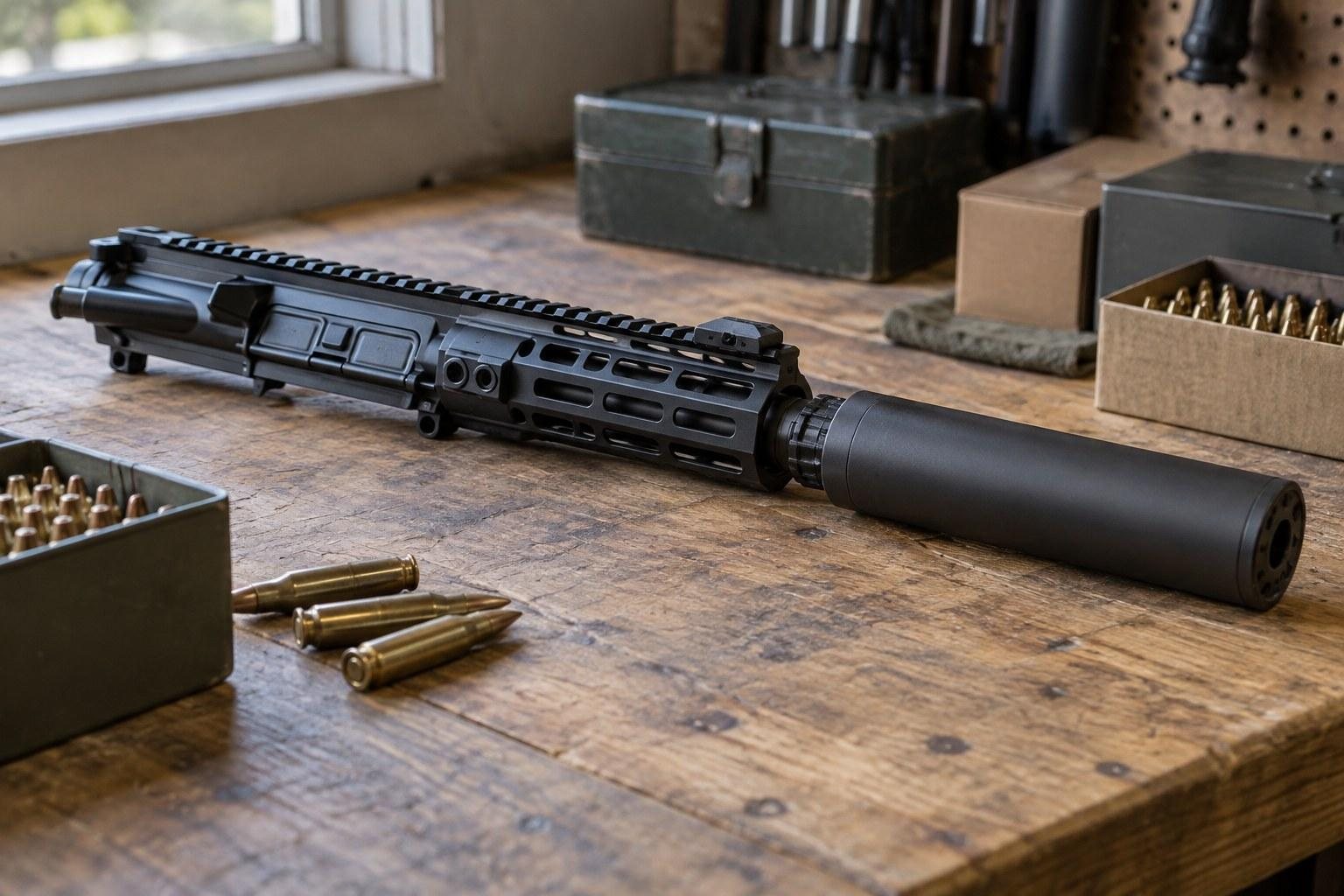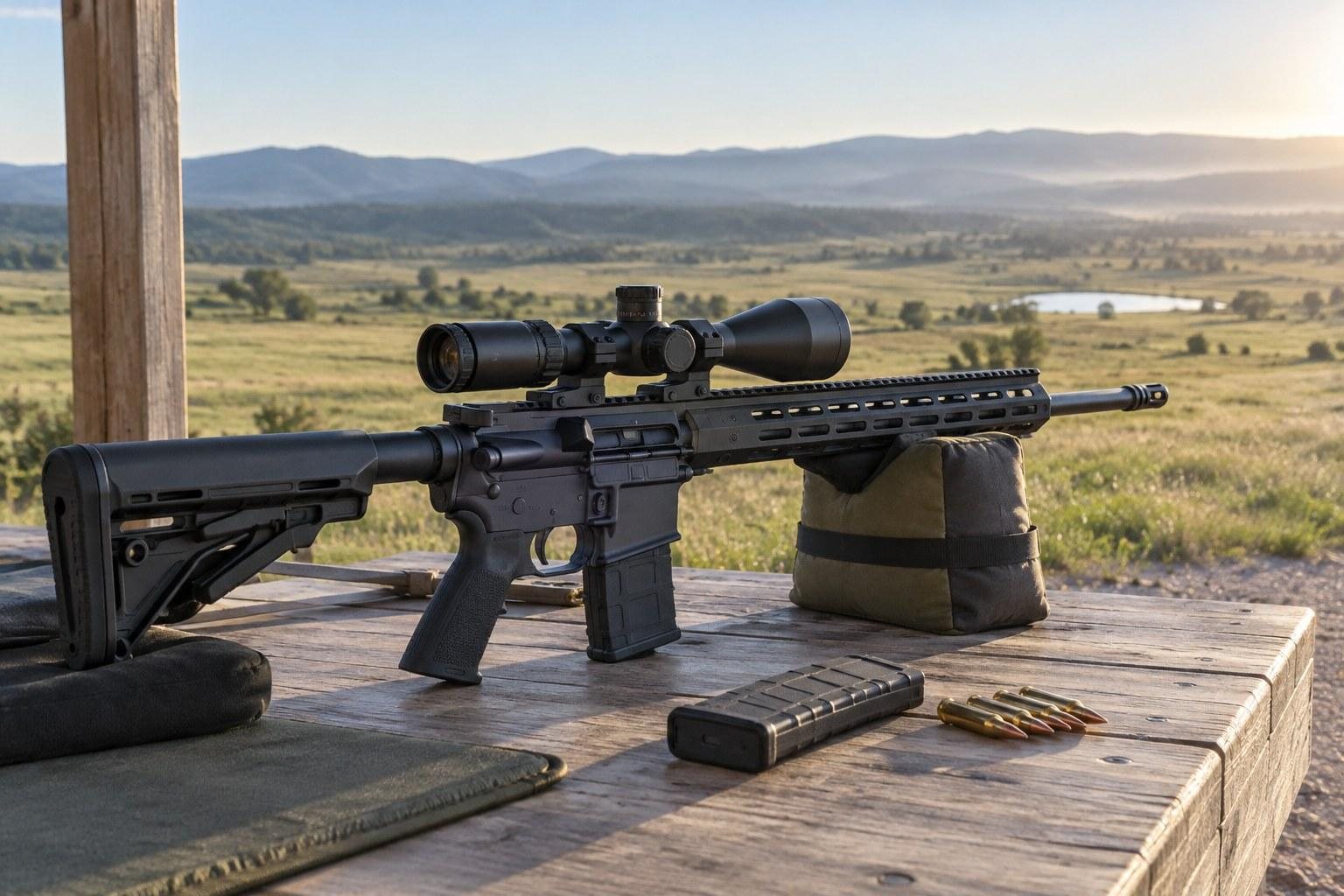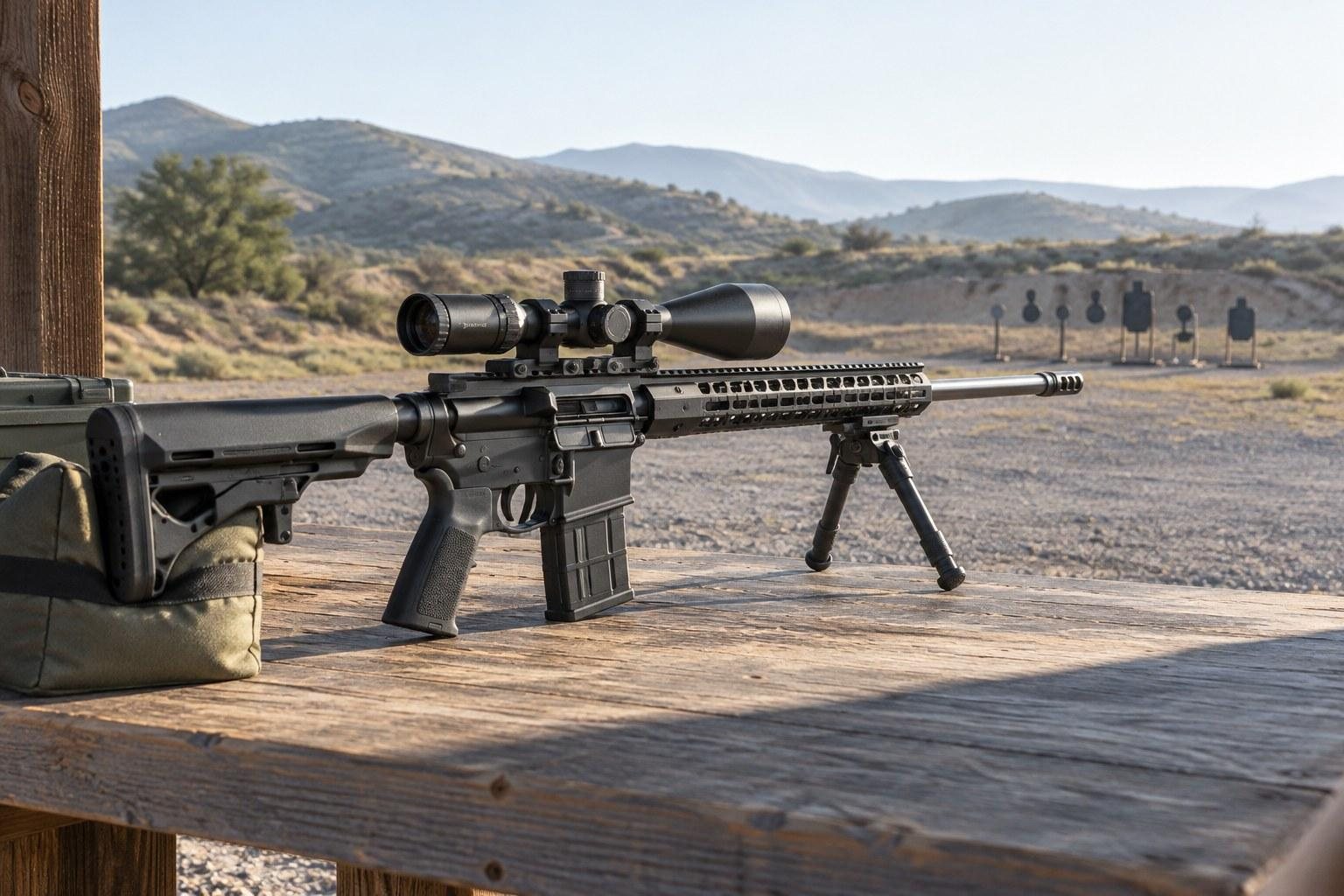
The 224 Valkyrie vs 223 question comes up every time an AR-15 owner starts reaching past the usual 300 to 500 yard steel. Both cartridges fire a .224 inch bullet from the same lower receiver, yet they are built for very different jobs. The 223 Remington family is the do-everything round of the AR-15 world, while the 224 Valkyrie was designed from the start to push long, heavy, high ballistic coefficient bullets farther downrange.
Our editors break down where each cartridge shines, what parts change between them, and how to decide which upper belongs on your bench. We keep the numbers honest and point you to manufacturer data wherever exact figures matter.
Want to see what a dedicated long range Valkyrie setup looks like?
Key Takeaways
- The 224 Valkyrie and 223 Remington both use .224 inch bullets, but the Valkyrie case is based on the 6.8 SPC and holds more powder.
- The Valkyrie is built around long, heavy, high ballistic coefficient bullets that resist wind drift and stay supersonic farther downrange.
- A 224 Valkyrie upper needs a 6.8 SPC style bolt and 6.8 SPC / 224 Valkyrie magazines, while 223 Wylde uppers run standard AR-15 bolts and magazines.
- Valkyrie barrels use fast twist rates such as 1 in 7 or 1 in 6.5 to stabilize heavy bullets, compared with the common 1 in 8 twist on 223 Wylde barrels.
- The 223 family wins on ammunition availability, cost per round, magazine options and versatility, so it remains the better choice for many shooters.
Two Cartridges, One Bullet Diameter
On paper the two rounds look like close cousins. Both throw a 22 caliber bullet and both run in a standard AR-15 lower. The differences start at the case and work their way through the entire upper.
The 223 Remington and 5.56 Family
The 223 Remington is a SAAMI standardized cartridge and the round most AR-15s were built around. Its military counterpart, 5.56 NATO, shares the same outside dimensions but uses a different chamber specification. The 223 Wylde chamber was designed to fire both safely while keeping good accuracy, which is why we see it on so many precision minded AR-15 barrels.
If the chamber names still blur together, our breakdown of 5.56 vs 223 Wylde vs 223 Remington walks through each one.
The 224 Valkyrie
Federal Premium introduced the 224 Valkyrie as a long range cartridge for the AR-15 platform. The case is derived from the 6.8 SPC, necked down to hold a .224 inch bullet. That fatter case body carries more powder than a 223 case, and the cartridge was designed to handle the long, heavy match bullets that a 223 magazine often cannot fit at a useful overall length.
The trade is simple. You give up the universal magazine and bolt compatibility of the 223 family in exchange for a round tuned specifically for distance.
224 Valkyrie vs 223 at Long Range
Long range performance comes down to how well a bullet holds velocity, how much the wind pushes it, and whether it stays supersonic all the way to the target. This is where the Valkyrie earns its reputation.
Bullet Weight and Ballistic Coefficient
A higher ballistic coefficient bullet slows down more gradually and drifts less in a crosswind. The 224 Valkyrie was built to launch heavy, sleek 22 caliber match bullets at speeds that keep them efficient well past where typical 223 loads start to struggle. The 223 can also fire heavy bullets, but the magazine length limits how long a bullet you can seat, and the smaller case limits velocity.
For exact velocity, drop and wind numbers, use the published load data from the ammunition maker for the specific load and barrel length you plan to run. Figures change a lot between loads, so we avoid quoting a single chart as gospel.
Wind Drift and the Transonic Zone
When a bullet slows toward the speed of sound it can become unstable, and accuracy suffers. Because the Valkyrie keeps heavy bullets moving faster for longer, it pushes that transonic point farther out than common 223 loads. For a shooter working steel at extended distances, that means more forgiving wind calls and fewer unexplained misses.
Our deeper look at 224 Valkyrie ballistics from the muzzle to 1,000 yards covers trajectory in more detail.
Where 223 Still Holds Its Own
Inside moderate distances, a well built 223 Wylde rifle with quality heavy bullet ammunition is accurate, inexpensive to feed and easy on the shoulder. Plenty of shooters never need more than that. The 223 also gives you the widest selection of factory loads of any AR-15 cartridge.
Want a shortlist of proven long range Valkyrie builds?
Parts That Change Between the Two Uppers
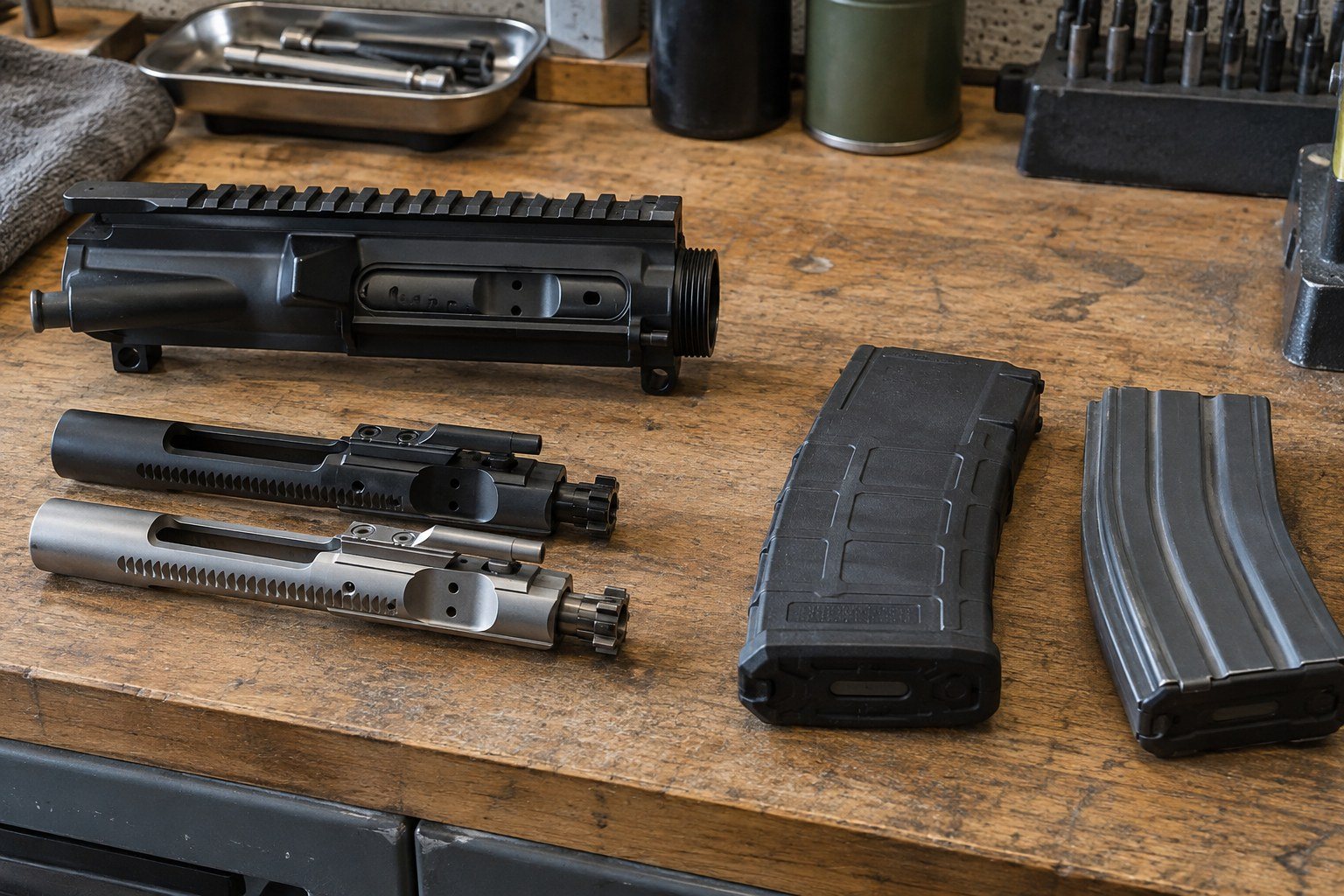
Switching from 223 to 224 Valkyrie is more than a barrel swap. Several parts are cartridge specific, and mixing them up causes feeding problems or worse.
| Component | 223 Wylde Upper | 224 Valkyrie Upper |
|---|---|---|
| Parent case | 223 Remington | 6.8 SPC |
| Bolt | Standard AR-15 (5.56) bolt | 6.8 SPC style bolt |
| Magazines | Standard 223 / 5.56 AR-15 magazines | 6.8 SPC / 224 Valkyrie magazines |
| Common twist rates | 1 in 8 on the barrels we track | 1 in 7 or 1 in 6.5 on the barrels we track |
| Lower receiver | Standard AR-15 lower | Standard AR-15 lower |
| Typical role | General purpose, training, varmint, mid range precision | Dedicated long range and precision |
Bolt and Bolt Carrier Group
The Valkyrie case head is larger than a 223 case head, so it needs a bolt with a matching bolt face. A standard 5.56 bolt will not work. On a complete upper, the bolt carrier group is generally matched to the caliber already. If you build from parts, confirm the bolt is specified for 6.8 SPC or 224 Valkyrie.
Magazines
Standard AR-15 magazines are shaped for the slimmer 223 case. Valkyrie ammunition feeds best from magazines made for the 6.8 SPC and 224 Valkyrie, such as these 6.8 SPC and 224 Valkyrie magazines. For a 223 Wylde build, standard 223, 5.56 and 300 Blackout magazines are the right fit.
Barrel Twist Rate
Heavy, long bullets need a faster spin to stay stable. 223 Wylde barrels commonly use a 1 in 8 twist, which handles a broad range of bullet weights. Valkyrie barrels commonly use 1 in 7 or 1 in 6.5 twist rates, which suit the heavy match bullets the cartridge was built for. Always match your ammunition to the twist rate the barrel maker recommends.
Barrel Length and Gas System Considerations
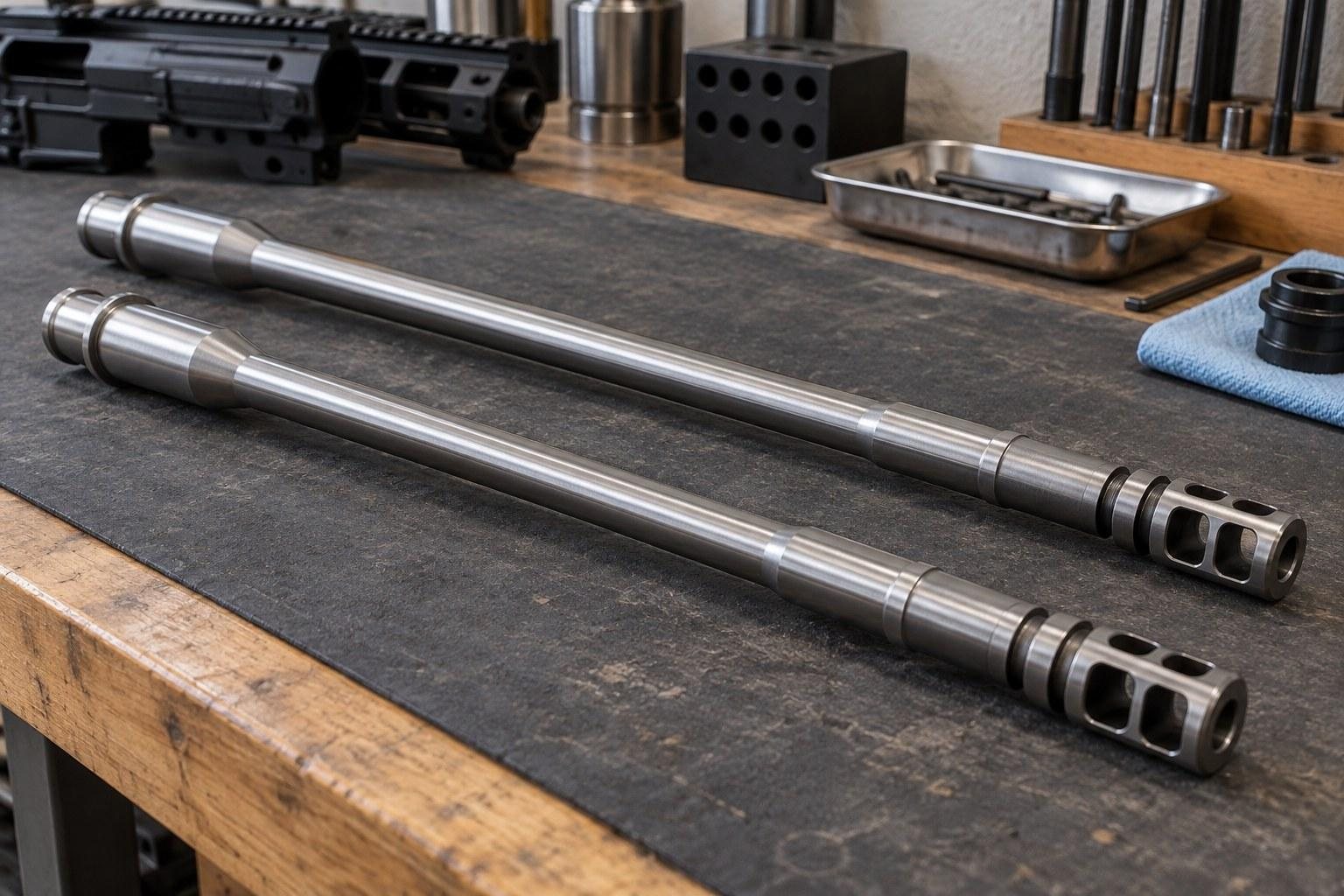
Barrel length matters more for the Valkyrie than for most AR-15 cartridges, because the round relies on velocity to deliver its long range advantage.
Valkyrie Barrel Lengths
224 Valkyrie barrels are commonly available in 22 inch and 24 inch lengths. Those longer barrels give the powder room to burn and help the cartridge reach the velocities it was designed around. Browse the current selection of 224 Valkyrie barrels to compare profiles and finishes.
223 Wylde Barrel Lengths
223 Wylde barrels are commonly available from 16 inch carbines up to 18, 20 and 24 inch rifle length options. That range lets you build anything from a handy general purpose upper to a heavy barreled precision rig. See the 223 Wylde barrels for full specs.
For more on how length affects velocity and handling, read our gas system length guide.
A Note on Short Barrels
A rifle barrel under 16 inches, or an overall length under 26 inches, creates a short-barreled rifle that requires ATF registration. Since January 1, 2026 the federal tax on SBRs is $0, but registration is still required. State and local laws vary, so check yours before building. Short barrels also give up much of the velocity that makes the Valkyrie worth choosing.
Ammunition, Recoil and Cost of Ownership
Performance on paper only matters if you can feed the rifle and practice enough to use it well.
Ammunition Availability
The 223 and 5.56 are among the most widely produced rifle cartridges in the United States, with loads for practice, hunting, defense and match shooting. The 224 Valkyrie has a much smaller catalog, built mostly around match and hunting loads. Expect fewer choices and higher cost per round, and buy enough of one lot to zero and practice with.
Recoil and Spotting Hits
Both rounds are mild in a full size AR-15. The Valkyrie burns more powder, so it has a bit more push, but it remains easy to shoot. A good muzzle brake helps you stay on target and watch your impact through the scope. Our muzzle devices guide explains the tradeoffs between brakes, compensators and flash hiders.
Barrel Life
Any cartridge that drives bullets fast with more powder tends to wear a barrel throat sooner than a milder load. Barrel makers do not publish a single universal round count, so treat throat wear as a maintenance item and watch for changes in group size over time.
Which Upper Should You Choose?
The right answer depends on how far you actually shoot and how much you want to spend feeding the rifle.
Choose 223 Wylde If
- You want one upper that handles training, varmints, local matches and general use.
- You value low cost per round and wide ammunition availability.
- You already own a stack of standard AR-15 magazines.
- Most of your shooting happens inside moderate distances.
Choose 224 Valkyrie If
- You want to stretch a standard AR-15 lower as far as practical with a 22 caliber bullet.
- You are comfortable buying dedicated magazines and match ammunition.
- You plan to shoot steel at extended range and want better wind performance.
- You prefer a dedicated precision upper over a general purpose one.
Our Take on 224 Valkyrie vs 223
For the shooter whose main goal is distance, the Valkyrie is the more capable long range tool. For everyone else, the 223 Wylde remains the smarter all around choice. Many owners end up with both uppers on one lower, a flexibility the AR-15 platform makes easy. Ready-to-run 224 Valkyrie uppers are assembled in-house, headspaced and function-checked before they ship.
Still weighing calibers for your next build?