Federal AR-15 barrel length laws come down to one number most builders already know: 16 inches. Go shorter on a rifle and you have a short-barreled rifle, which the National Firearms Act regulates. But the details matter. How the barrel is measured, whether a muzzle device counts, what overall length does, and how pistols fit in all change the answer.
This is a plain-English breakdown of the federal rules, the common barrel lengths you will see on AR-15 uppers, and the paperwork side of going short. We are not lawyers and none of what follows is legal advice. State and local laws vary, so always confirm the rules where you live before you buy or build.
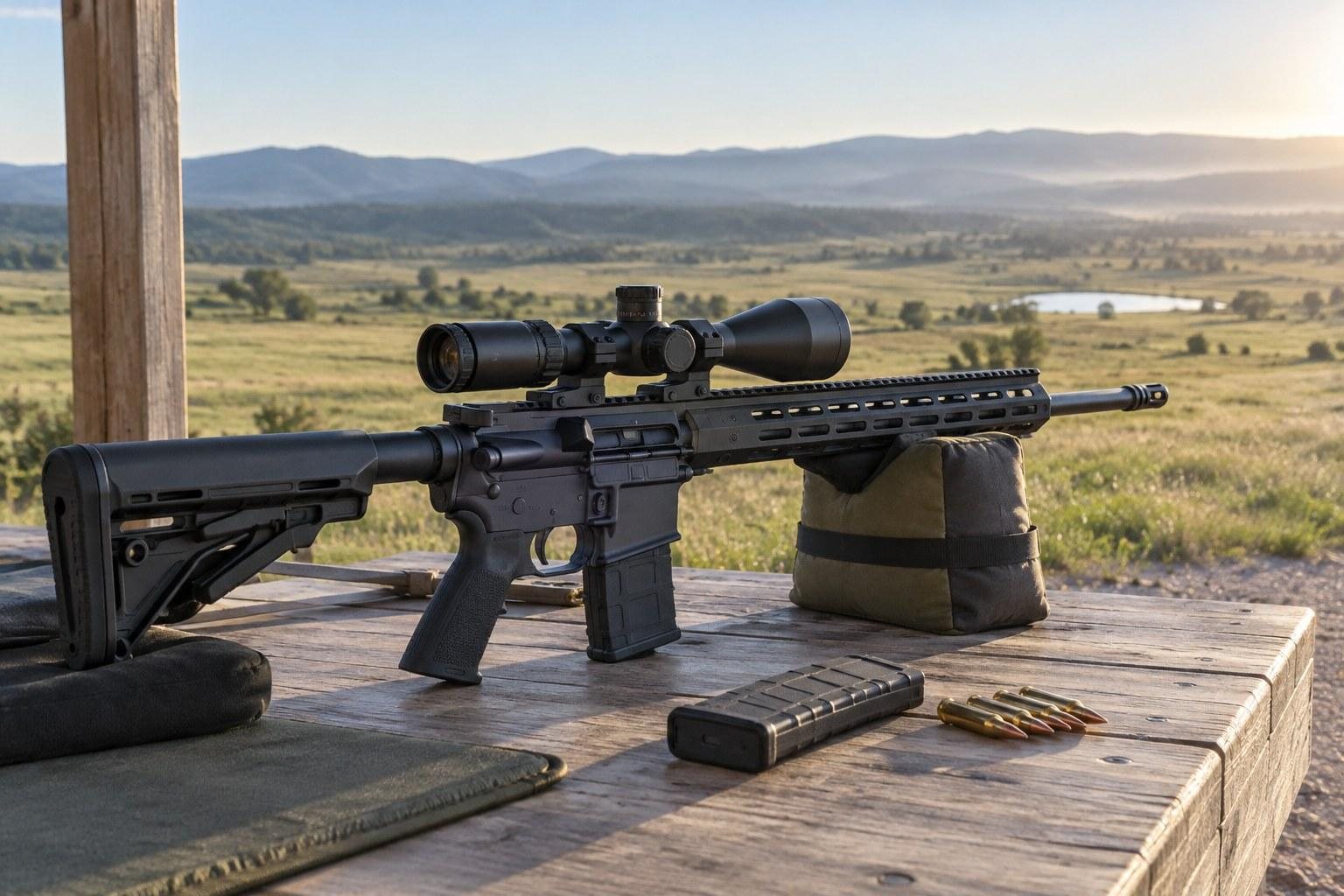
Want to see what a legal 16 inch build looks like in practice? Start with our complete upper coverage.
Key Takeaways
- Under federal law, a rifle barrel must be at least 16 inches long and the rifle at least 26 inches overall to avoid short-barreled rifle status.
- A barrel shorter than 16 inches on a rifle makes it an SBR, which must be registered with the ATF before it is built or acquired.
- A permanently attached muzzle device, pinned and welded, can count toward the 16 inch minimum, but a threaded device that simply screws on does not.
- Since January 1, 2026 the federal tax on SBRs is $0, yet the registration and approval process is still required.
- State and local laws can be stricter than federal law, so check your own jurisdiction before buying a short barrel.
The Federal Answer: 16 Inches and 26 Inches
The National Firearms Act defines a short-barreled rifle as a rifle with a barrel under 16 inches, or a weapon made from a rifle with an overall length under 26 inches. Both numbers apply at the same time. A rifle needs a barrel of at least 16 inches and an overall length of at least 26 inches to stay outside the NFA.
The ATF summarizes these definitions on its National Firearms Act page. In practice, the 26 inch overall rule rarely trips up a standard AR-15 rifle, because a 16 inch barrel plus an upper, lower and stock comfortably clears it. The barrel number is the one that matters for many builders.
Why 16 Inches Specifically
The 16 inch figure is a legal line, not a performance threshold. Nothing magic happens to a cartridge at 16 inches. It is simply where federal law draws the boundary between a regular rifle and a regulated one, so barrel makers and upper builders design around it.
What Happens Under the Line
If you put a 14.5 inch or 10.5 inch barrel on a rifle lower without approved registration, you have made an unregistered SBR. That is a federal offense. The fix is simple: do the paperwork first and wait for approval before you assemble anything.
How Barrel Length Is Measured Under AR 15 Barrel Length Laws
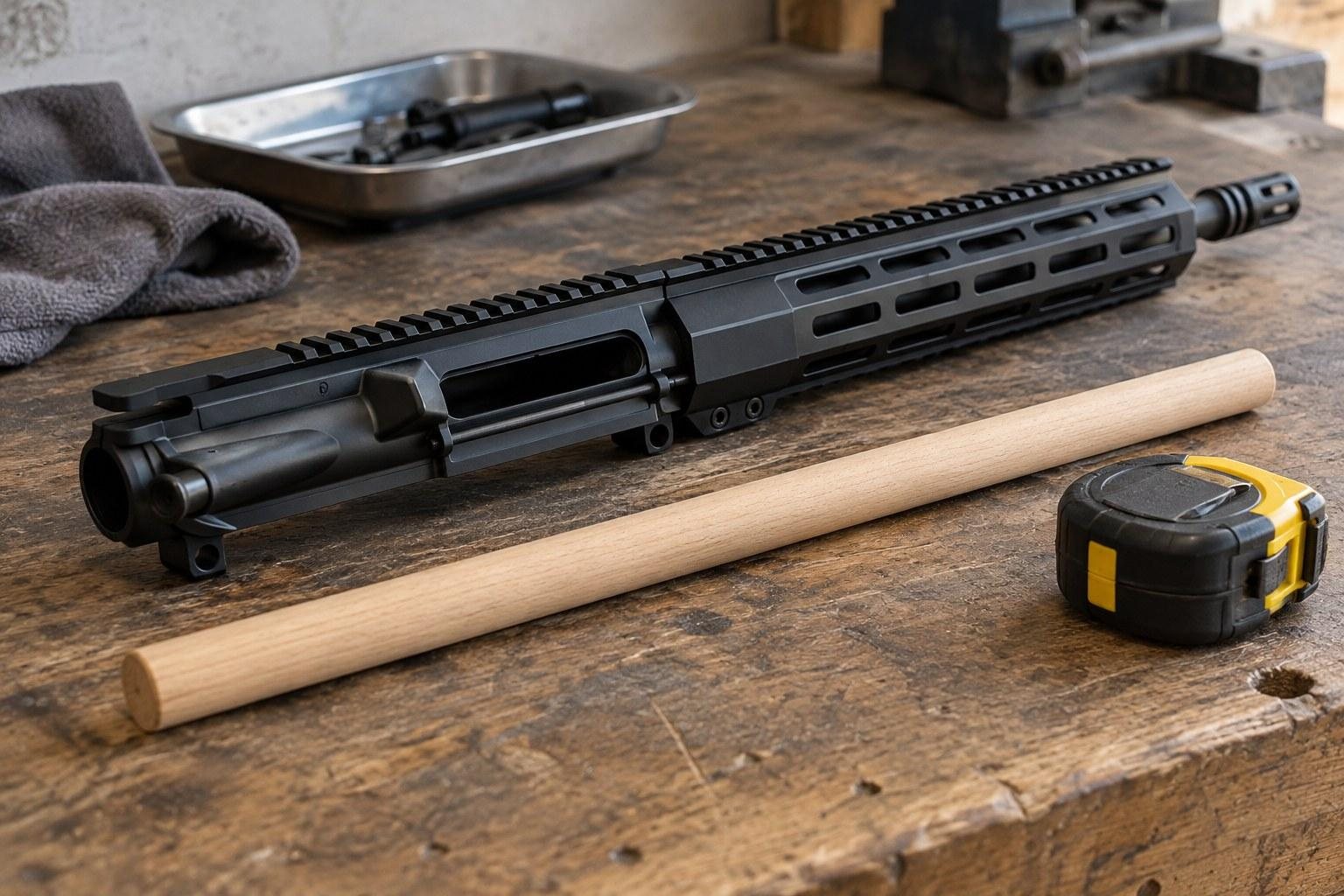
Measurement trips up more builders than the numbers themselves. Under AR-15 barrel length laws, the common practice is to measure from the face of the closed bolt to the end of the barrel, or to the end of a permanently attached muzzle device. Builders usually do this by dropping a dowel rod down the bore with the bolt closed, marking it at the muzzle, and measuring the dowel.
Measure With the Rifle Unloaded
Before you measure anything, confirm the firearm is unloaded, the magazine is out and the chamber is clear. Close the bolt, then insert a clean wooden or plastic rod from the muzzle until it touches the bolt face.
Threaded Devices Do Not Count
A flash hider or brake that simply threads onto the barrel can be removed in seconds, so it does not count toward length. Only a device that is permanently attached becomes part of the barrel for measurement purposes. If your barrel measures 15.9 inches without a permanent device, treat it as an SBR barrel.
Overall Length Basics
Overall length is measured along the axis of the bore from the end of the barrel or permanent device to the rear of the stock. With adjustable or folding stocks, measurement practice can get technical, so if your build is anywhere near 26 inches, ask a qualified gunsmith or check ATF guidance rather than guessing.
A dedicated reference walks through the performance side of each length. Read it before you settle on a barrel.
Pinned and Welded Muzzle Devices
The most common way to get a shorter-looking rifle without SBR paperwork is the pin and weld. A 14.5 inch barrel with a muzzle device that is permanently attached and long enough to bring the total past 16 inches can be a legal rifle barrel under federal law.
What Permanent Means
Permanent generally means the device is welded or otherwise attached so it cannot be removed without real effort, such as cutting or machining. A dab of thread locker or a set screw is not enough. Because the method matters, this is a job for a qualified gunsmith, not a kitchen table project.
Trade-offs to Consider
- A pinned and welded device cannot be swapped later without professional work.
- Suppressor users may lose the option to thread a different mount onto the muzzle.
- Re-barreling later can mean replacing the barrel and the device together.
If you want muzzle device options for a standard 16 inch barrel, AR-15 muzzle devices are commonly available in both 1/2x28 and 5/8x24 threads, including A2 flash hiders, competition brakes, flash cans and linear comps. Our muzzle devices guide explains how each type behaves.
Common AR-15 Barrel Lengths and Their Legal Status
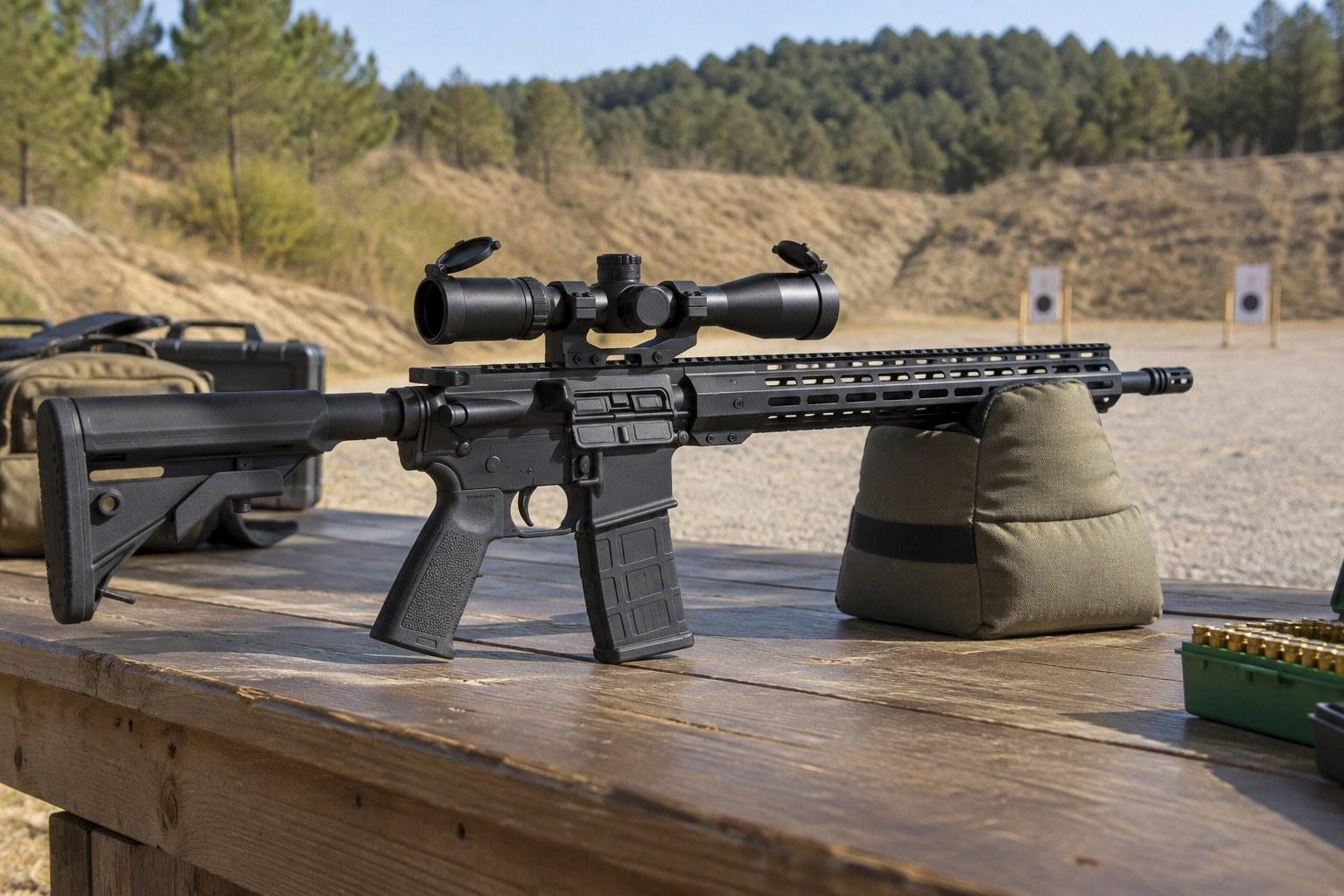
The table below shows where common barrel lengths fall under federal law when installed on a rifle. It assumes no permanently attached muzzle device unless noted.
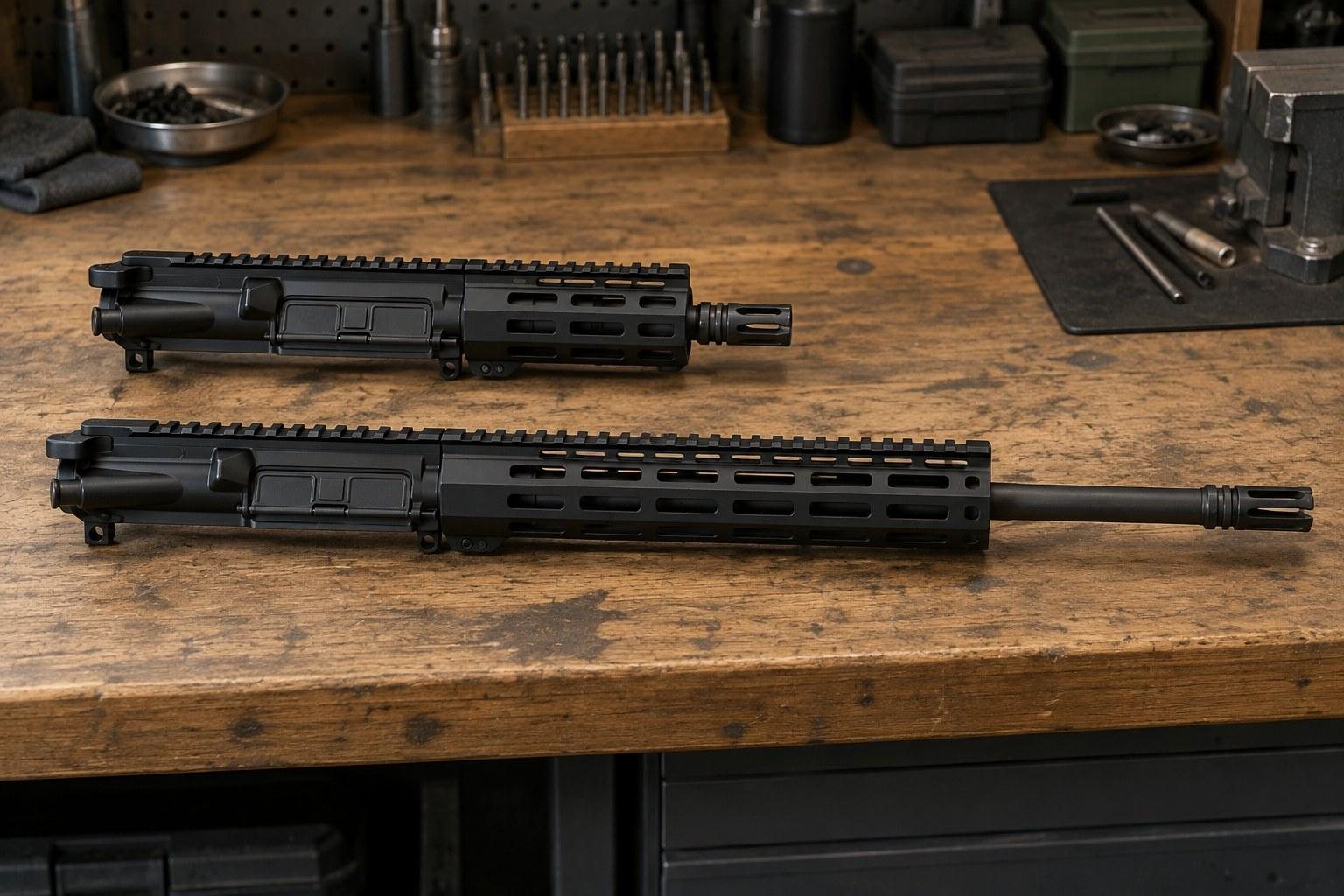
| Barrel Length | Federal Status on a Rifle | Notes |
|---|---|---|
| 8 inch | SBR, registration required | Often seen on 300 Blackout builds meant for suppressors |
| 10.5 inch | SBR, registration required | Popular compact length for 5.56 NATO and 300 Blackout |
| 11.5 inch | SBR, registration required | Common compact length in 5.56 NATO |
| 14.5 inch | SBR unless a permanent device brings it to 16 inches | Pin and weld is the usual route |
| 16 inch | Standard rifle | A common civilian AR-15 length |
| 18 inch and longer | Standard rifle | Favored for precision and longer range work |
Common Short-Length Options
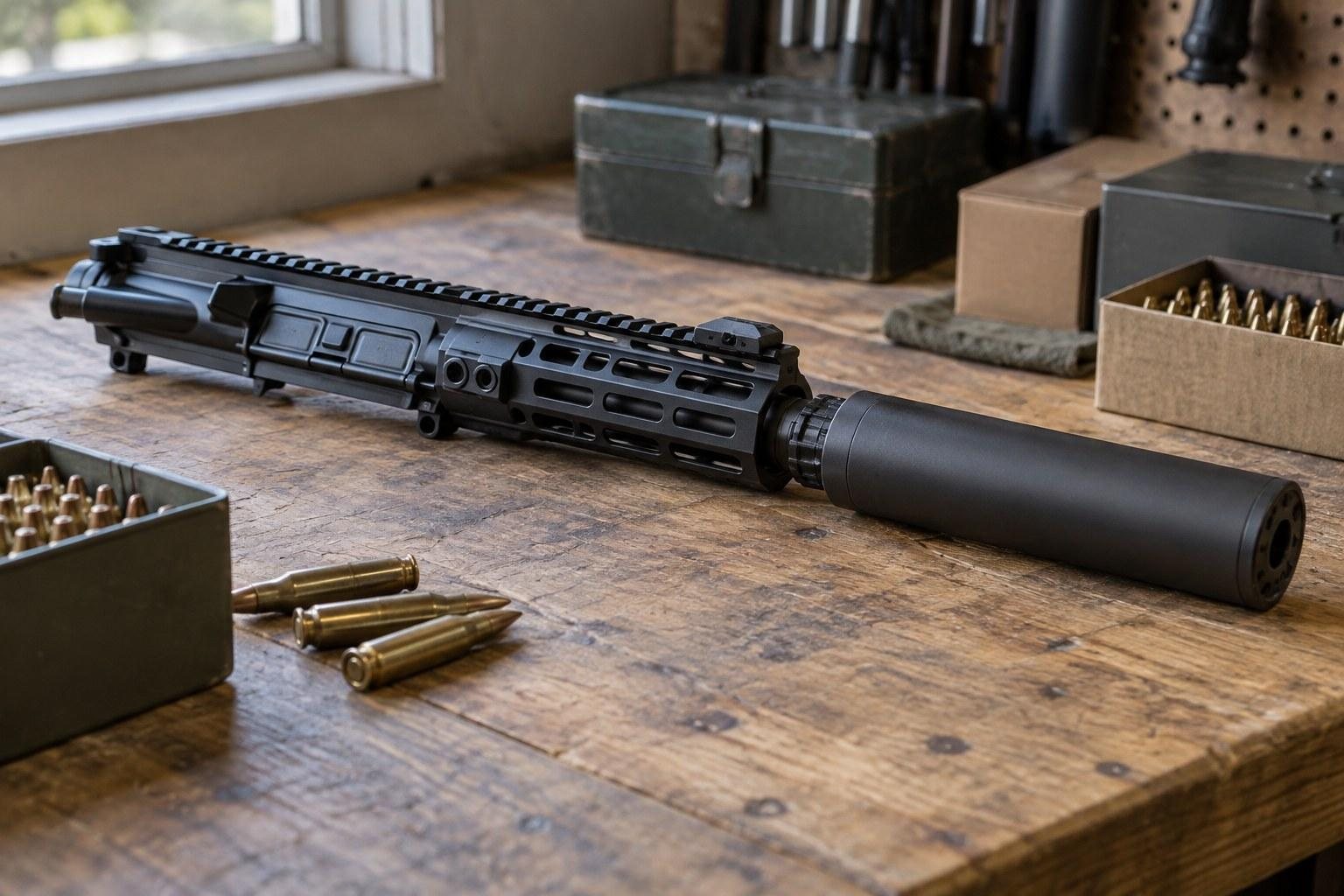
Short-barreled options in this range are common among 300 Blackout uppers and barrels, typically including 8 inch and 10.5 inch barrels with a 1:7 twist and 5/8x24 threads, alongside 16 inch options, so check current listings for specifics.
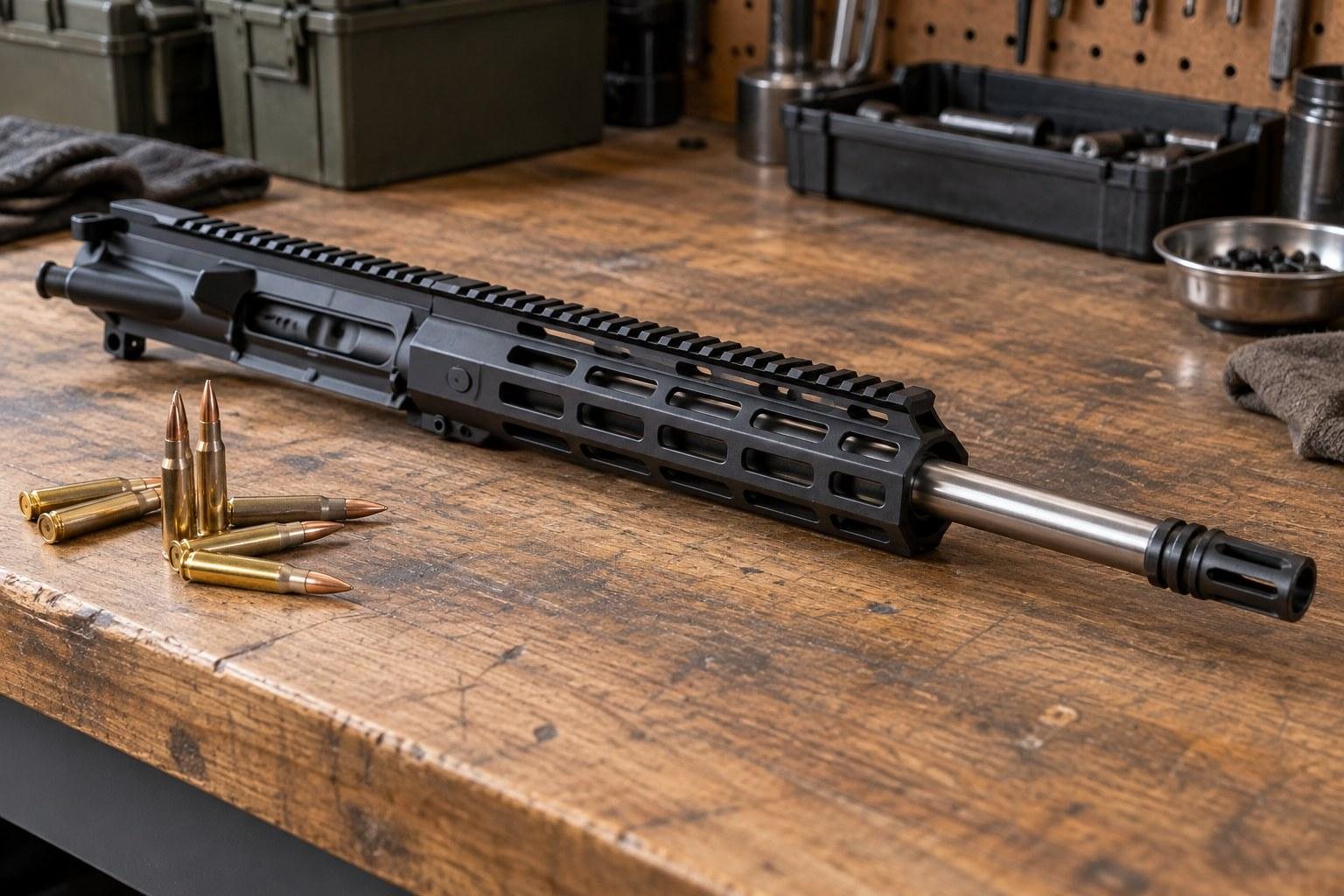
For 5.56, 10.5 inch M4 profile 5.56 NATO barrels with a 1:7 twist and 1/2x28 threads are a common short option, alongside the more typical 16 inch barrels, so check current listings for specifics. Any of the short barrels on a rifle requires SBR registration first.
Pistols, Braces and Other Gray Areas
An AR-15 built from the start as a pistol, with no shoulder stock, is not a rifle, so the 16 inch rifle minimum does not apply to it. That is why so many 10.5 inch and shorter uppers end up on pistol lowers. Our AR-15 pistol upper guide covers that route in more depth.
Why Caution Matters With Pistols
Pistol rules have shifted over the years, especially around stabilizing braces, and federal rules on braces have been challenged in court. Adding a shoulder stock to a pistol with a barrel under 16 inches can create an SBR. Because guidance can change, check current ATF material and your state law before configuring a pistol.
Rifle to Pistol and Back
Converting firearms between rifle and pistol configurations raises its own legal questions. If you are unsure whether a configuration is allowed, stop and ask a qualified firearms attorney or gunsmith before assembling anything.
Going Short Legally: The SBR Process
If you want a true short-barreled rifle, federal law allows it once you register and receive approval. The process runs through the ATF, typically using an application to make an SBR or a transfer form when buying one already registered.
The 2026 Tax Change
Since January 1, 2026, the federal tax on SBRs, short-barreled shotguns and suppressors is $0 under the One Big Beautiful Bill Act. Registration is still required. You still submit the paperwork, and you still wait for approval before you build or take possession.
State and Local Laws Come First in Practice
Federal approval does not override state law. Some states restrict or prohibit SBRs, and some cities add rules of their own. Even with the $0 tax, AR-15 barrel length laws at the state level can make a short barrel off-limits where you live.
Picking a Barrel After Approval
Once approved, think about gas system length, twist rate and caliber. Short barrels pair with shorter gas systems, and 300 Blackout is often chosen for short, suppressed builds. Compact options are compared in our 10 and 11 inch SBR upper roundup.
Prefer to stay at 16 inches and skip the paperwork entirely? Our buying guides help narrow down a rifle-length upper.