Short-barreled AR-15 uppers between 10.5 and 11.5 inches balance maneuverability with real terminal performance. Here's how to pick one that actually runs.
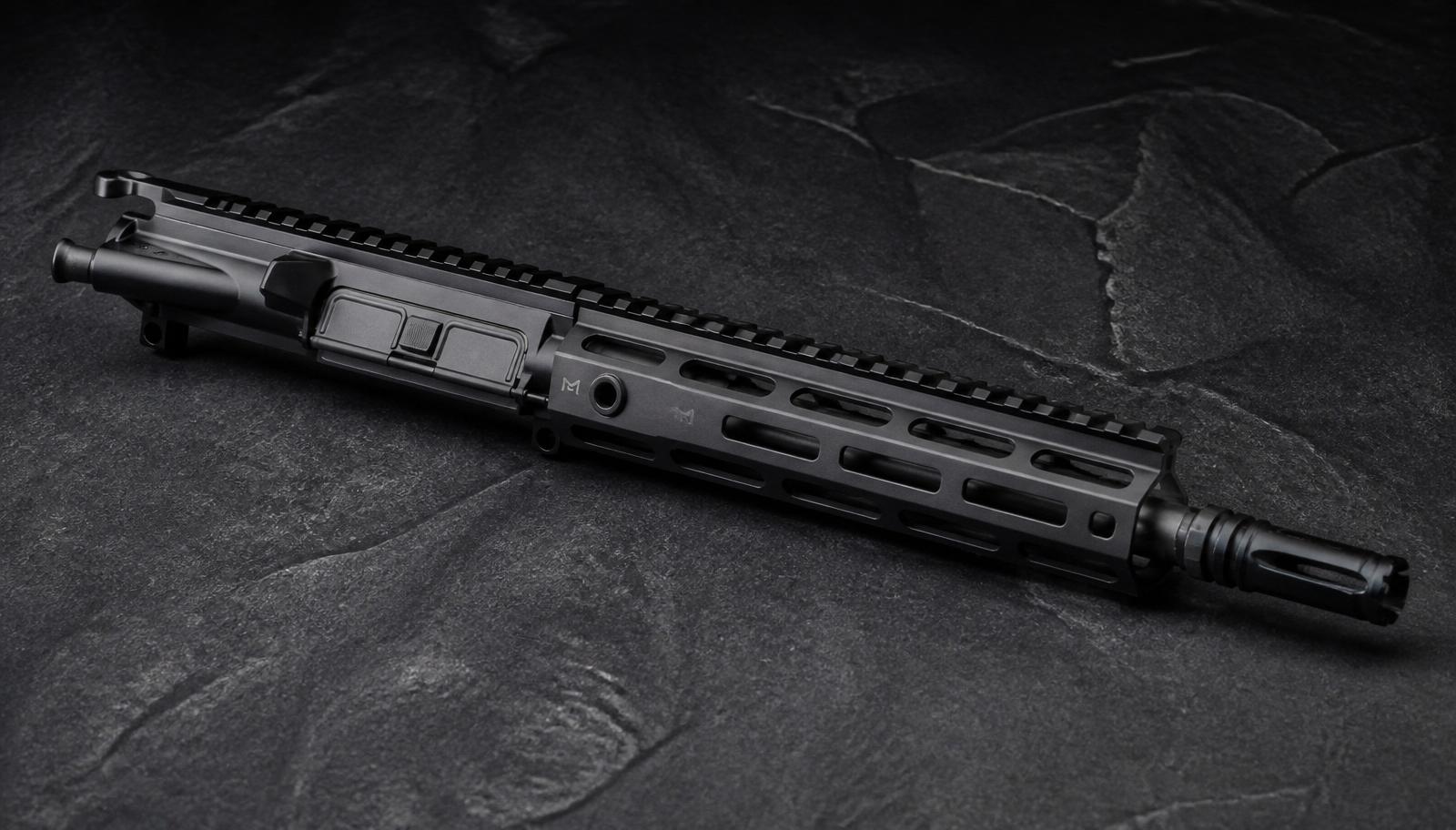
Short-barreled AR-15 uppers in the 10.5 to 11.5 inch range are the most versatile close-quarters platform you can build. They're compact enough for vehicles and indoor movement, still deliver real 5.56 terminal performance out to 200 yards, and pair beautifully with a suppressor. But you have to build them right, because a short barrel amplifies every mistake in gas system tuning and component quality.
Why Choose a 10.5 or 11.5 Inch Upper
The M4 was designed around a 14.5 inch barrel. Everything shorter is a tradeoff, and everything longer is a compromise on maneuverability. The 10.5 to 11.5 inch range is what special operations units have carried for decades because it hits a genuine sweet spot:
- Compact enough to clear rooms and vehicles without snagging
- Full sight radius and rail space for a red dot, light, and laser
- Retains enough velocity for 5.56 to fragment inside typical defensive distances
- Perfect host length for a suppressor without becoming rifle-length overall
The tradeoff is blast, muzzle flash, and reduced barrel life. You accept those for the size.
Legal Reality: SBR vs Pistol
Any AR-15 barrel under 16 inches is legally regulated. You have three paths:
- SBR (short-barreled rifle): File ATF Form 1 (make your own) or Form 4 (buy one), pay the $200 tax stamp, wait for approval. Then the upper can go on any rifle lower.
- AR pistol: Register the lower as a pistol from the start (never as a rifle), use a pistol brace or bare buffer tube. No stamp required federally, but rules and enforcement have shifted repeatedly, so check current guidance.
- Pinned and welded to 16 inches: Not applicable here. If your barrel plus permanent muzzle device measures 16 inches or more, it counts as a rifle.
State laws override federal in the restrictive direction. Several states ban SBRs outright or restrict braces. Verify your state before ordering.
What to Look For in a Short-Barrel Upper
Short barrels are over-gassed by design because the port has to be big enough to cycle before the bullet exits. That means more felt recoil, faster wear, and heavier fouling. An adjustable gas block plus a heavier buffer on the lower fixes almost all of it.
Best 10.5 Inch Uppers
BCM MK2 Standard 10.5 (5.56): Cold hammer forged chrome-lined barrel, pistol gas, MCMR handguard, BCG and charging handle included. The default duty-grade 10.5 inch. Around $850 to $950.
Daniel Defense DDM4 V7 SBR 10.3: DD's CHF barrel, pistol gas, MFR XS handguard. Premium fit and finish. Around $1,000 to $1,200.
Sons of Liberty M4-76 10.5: Duty-grade 10.5 with adjustable gas option, quality free-float handguard. Around $900 to $1,050.
Aero Precision Solus 10.5: Excellent budget-to-mid entry into the SBR game. Nitride or CHF barrel options, Atlas S-One handguard. $650 to $850 depending on config.
Radian Model 1 10.5: Ambidextrous controls, tight tolerances, one of the smoothest short uppers on the market. Around $1,700 to $2,000.
Best 11.5 Inch Uppers
BCM MK2 11.5: Same duty-grade BCM formula, extra inch of barrel, carbine gas option. Popular for a reason. Around $850 to $950.
Sons of Liberty M4-89 11.5: Instructor-favorite 11.5 with adjustable gas, upgraded charging handle, quality handguard. Around $950 to $1,100.
Daniel Defense MK18 Upper (10.3) or 11.5 configs: The MK18 clone market lives here. DD, Colt, and Geissele all build to this spec.
Geissele Super Duty 11.5: Match-tier tolerances, integrated adjustable gas, premium handguard. Around $1,800 to $2,100.
PSA Sabre 11.5: Surprisingly capable budget option with CHF barrel and MPI bolt. Around $600 to $750. Best entry price for a quality 11.5.
Suppressor and Ammo Considerations
Short 5.56 barrels are loud and blast-heavy, and a suppressor changes the platform from painful to pleasant. If you're building an SBR upper for defensive or serious use, plan for a can from day one.
Suppressor implications for short uppers:
- Adds significant back pressure, which means more gas, more fouling, and more bolt speed
- An adjustable gas block becomes essential, not optional
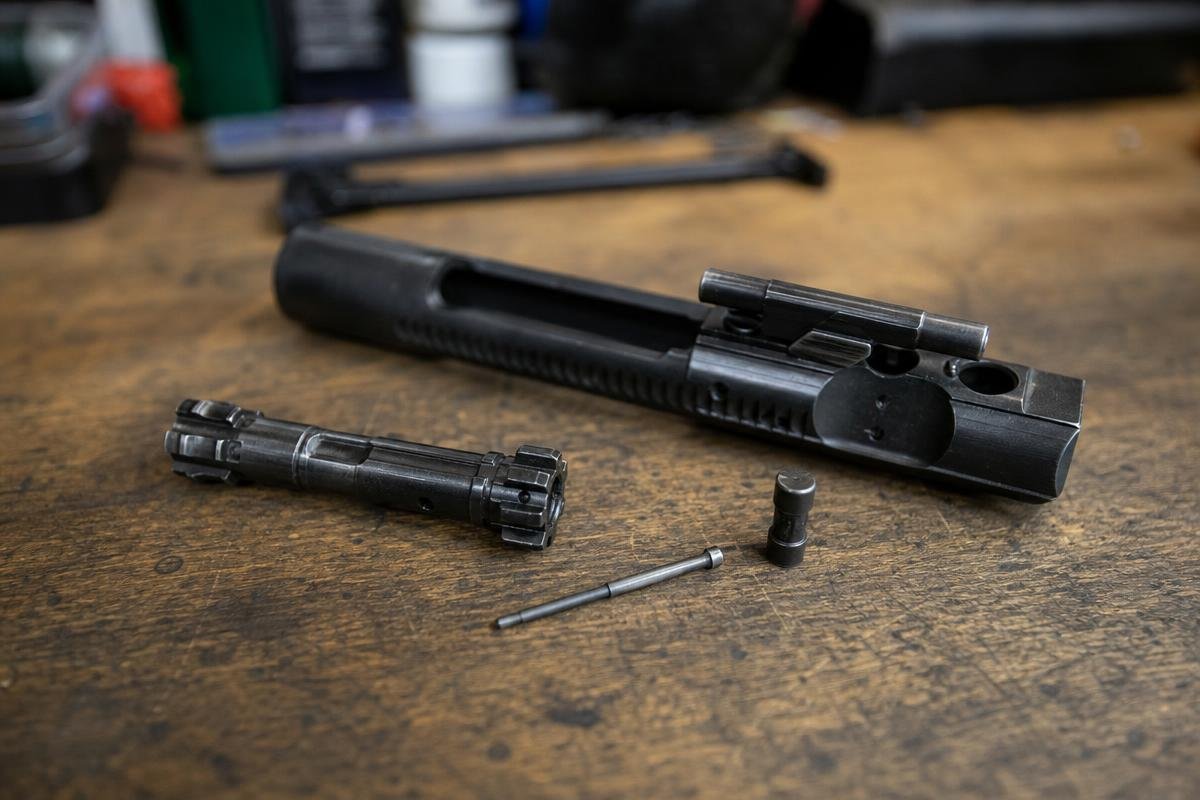
- Full-auto profile BCG and H2 or H3 buffer help the platform stay in spec
- Overall length with a compact can (SureFire RC2, SilencerCo Omega, HUXWRX Flow) stays close to 16 inch rifle territory
Ammo matters more on short barrels. 5.56 needs velocity to fragment, so heavier or bonded loads (75 gr TAP, Federal Fusion, Barnes TSX 62 gr) perform better than lightweight varmint bullets at short-barrel velocities. For 300 Blackout, the platform was engineered here, so subsonics and standard supersonics both run reliably.
Browse complete short-barrel uppers, upper receivers, and barrels at ar15parts.com to build the platform that fits your legal setup.