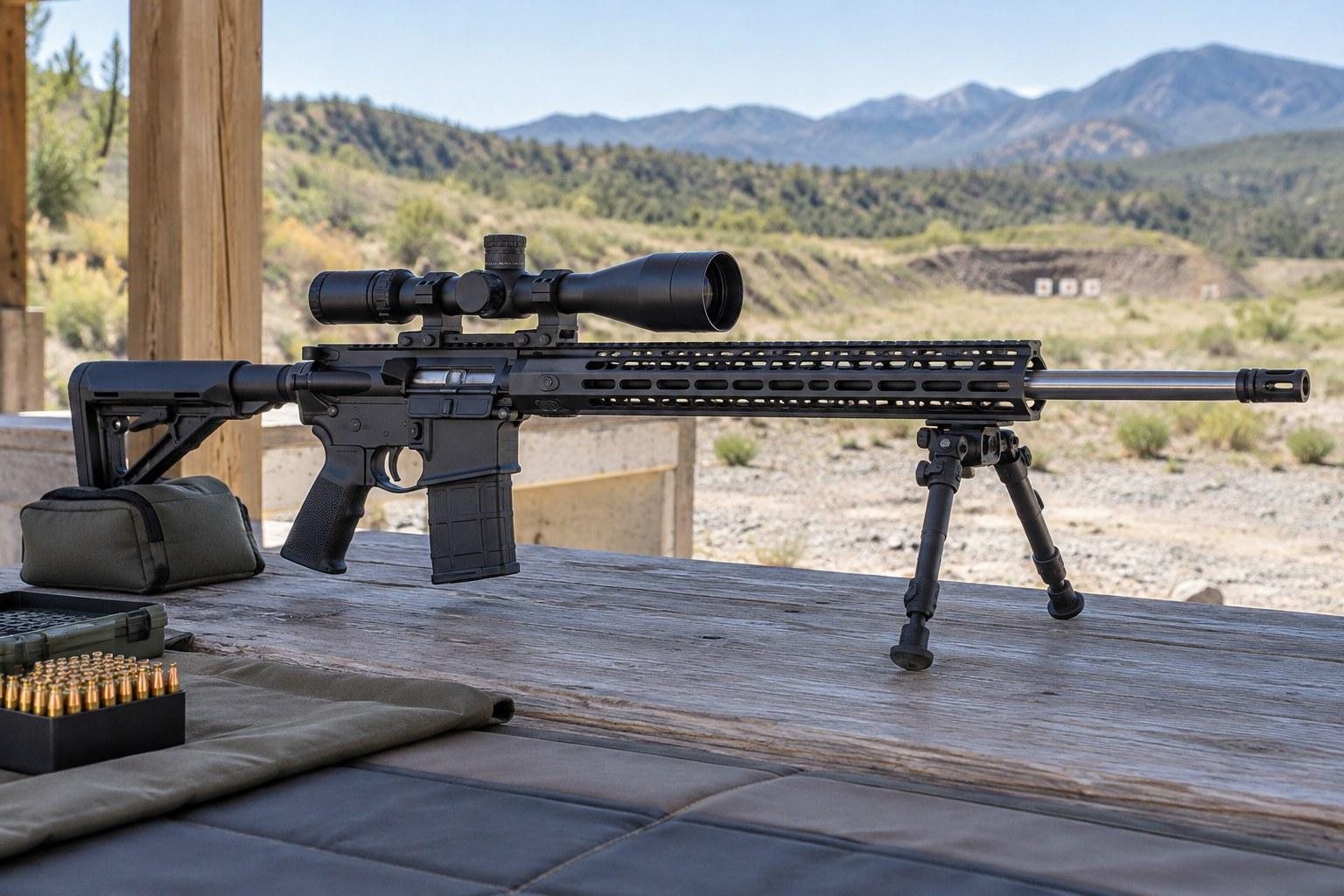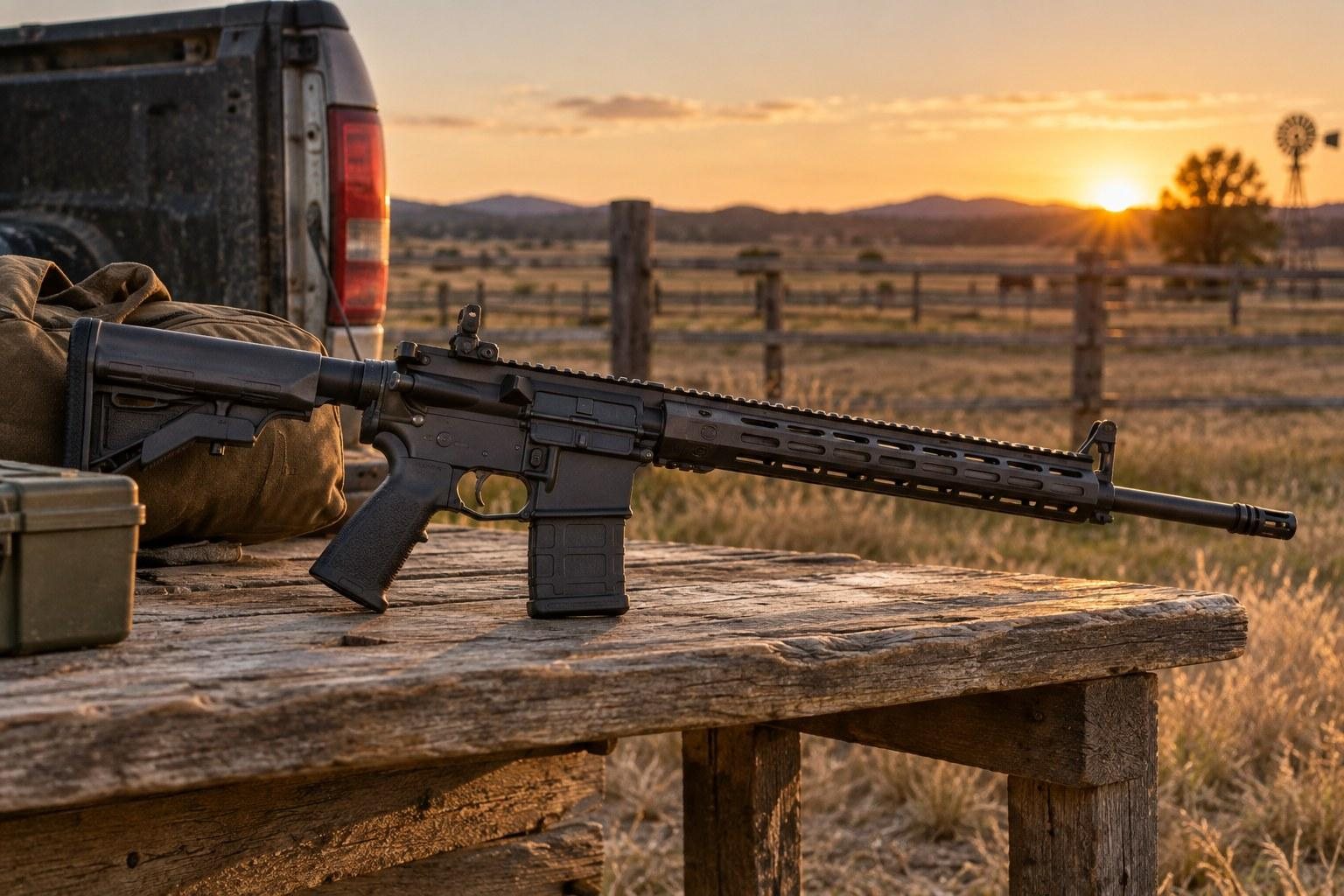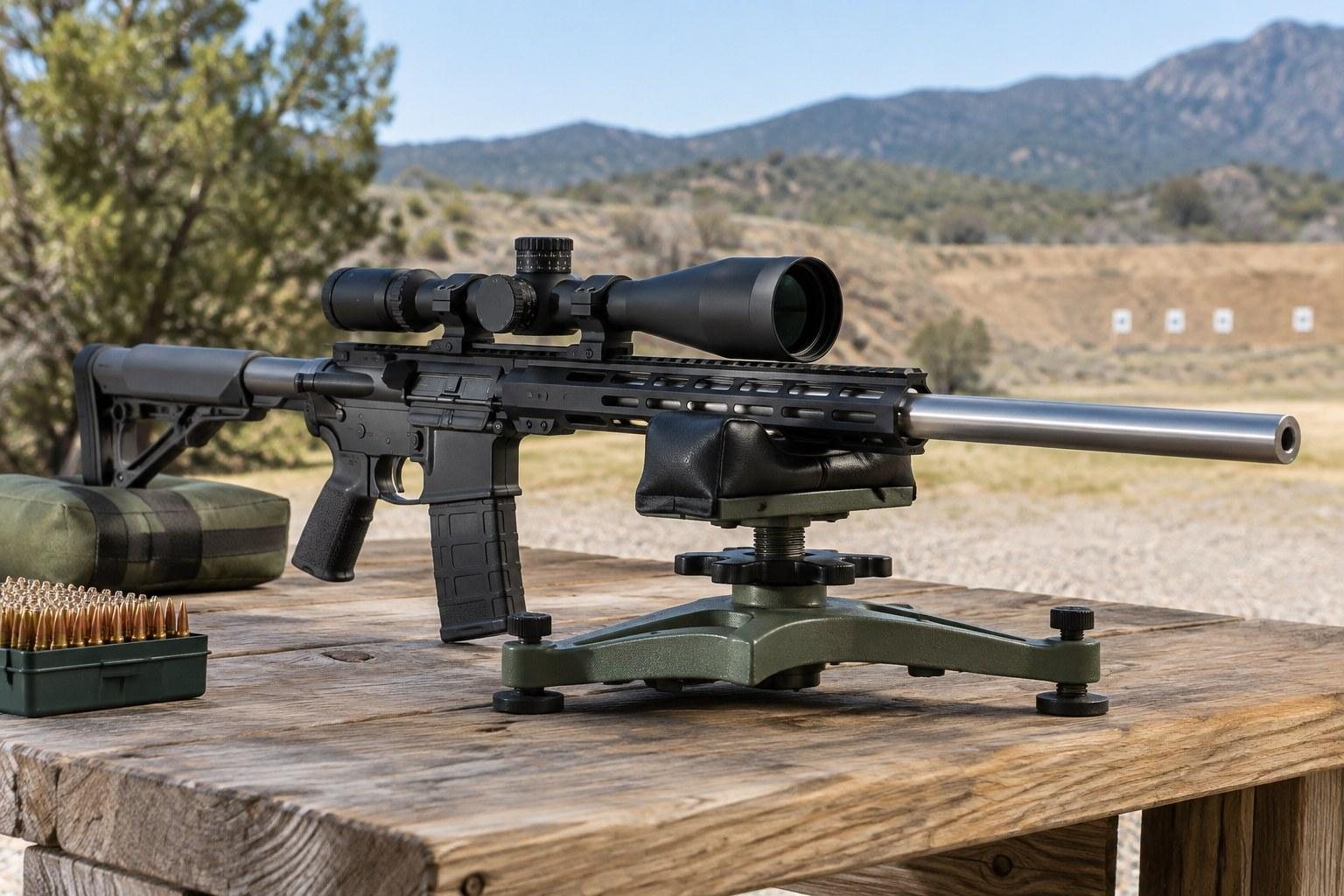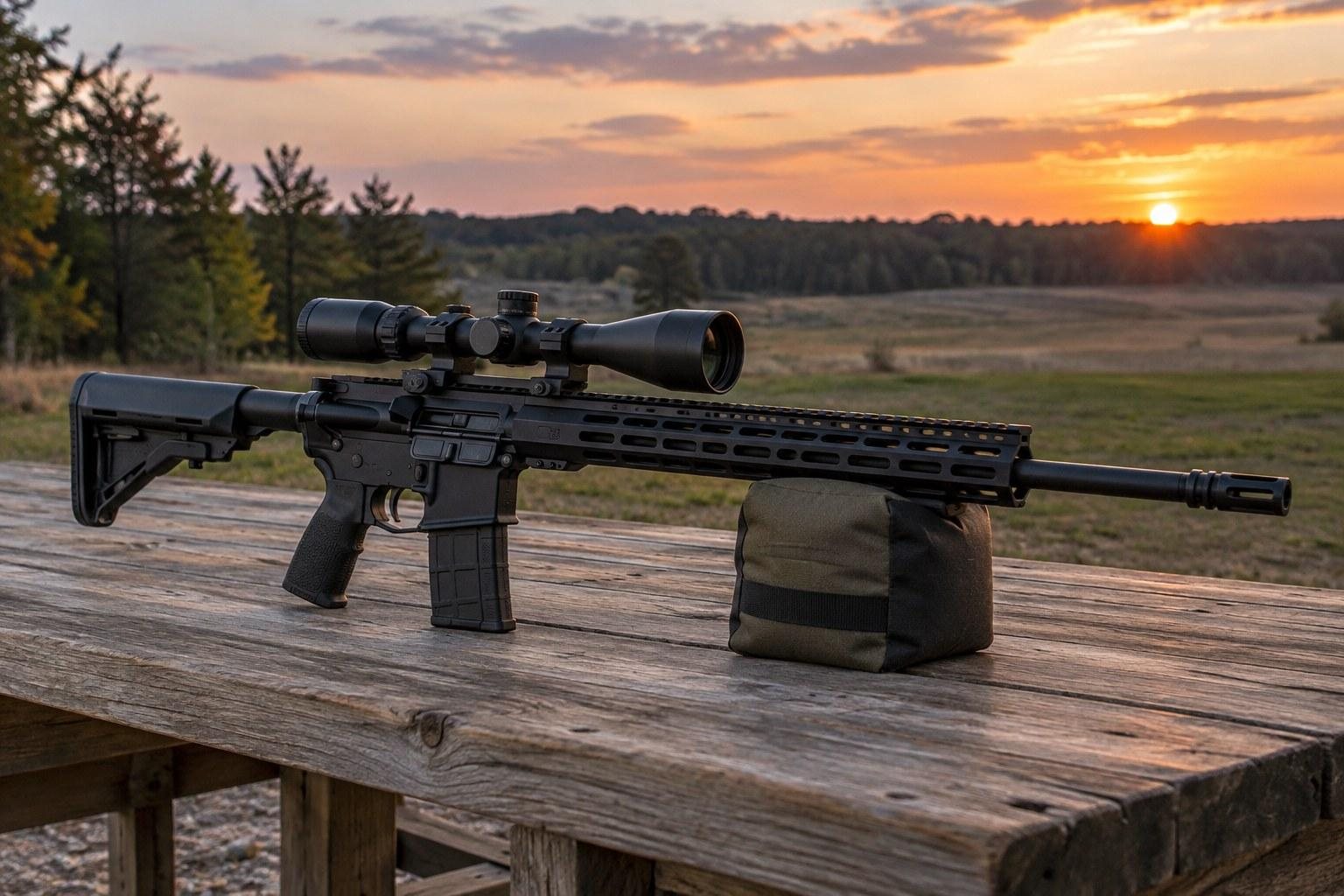
Hunting hogs with rifle platforms like the AR-15 makes sense for a simple reason: you can swap the upper and change the whole personality of the gun without touching the lower. Feral hogs are tough, thick-shouldered animals, and they often show up in groups at dusk or after dark. That puts a premium on a cartridge with real weight behind it, a handy barrel and a setup that runs fast follow-up shots. This guide walks through the choices that matter most, from caliber and barrel length to rails, muzzle devices and optics, so you can pick an upper that fits the way you actually hunt.
Want to see complete uppers that are assembled, headspaced and function-checked before they ship?
Key Takeaways
- Caliber is the biggest decision, and heavier bullets from larger AR-15 cartridges give you more margin on big hogs.
- A 16-inch barrel keeps you clear of short-barreled rifle registration while staying handy in blinds, trucks and brush.
- Match the barrel twist rate to the bullet weights you plan to shoot, and confirm the twist on the product page.
- A free-float handguard gives you room for a light, a sling mount and consistent accuracy from a rest.
- Hunting rules for feral hogs, including night hunting and equipment limits, vary by state, so check local regulations first.
What Hog Hunting With Rifle Builds Demands From an Upper
Hogs are not deer. A mature boar carries a thick layer of gristle over the shoulders, often called a shield, and the animal itself is dense and stocky. Shots also tend to be close and quick, at feeders, along field edges or in thick cover. That combination shapes every part of the upper.
Penetration Over Speed
For hogs, a bullet that holds together and drives deep matters more than flat trajectory at long range. Bonded and monolithic hunting bullets are designed for exactly that job. Pick an upper in a cartridge that has good factory hunting loads available, then let the ammunition maker's published data guide your bullet choice.
Fast Follow-Up Shots
Hogs travel in sounders, and the first shot often scatters the group. A semi-automatic AR-15 lets you stay on target for a second animal, but only if recoil and muzzle rise stay manageable. That is why barrel weight, muzzle devices and a solid handguard matter as much as raw power.
Low Light Is the Norm
Many hog hunts happen at dawn, dusk or after dark where state law allows it. Your upper needs a full-length top rail for a thermal or night vision optic and enough handguard real estate for a weapon light. We cover mounting in more detail further down.
Choosing a Caliber for Hogs
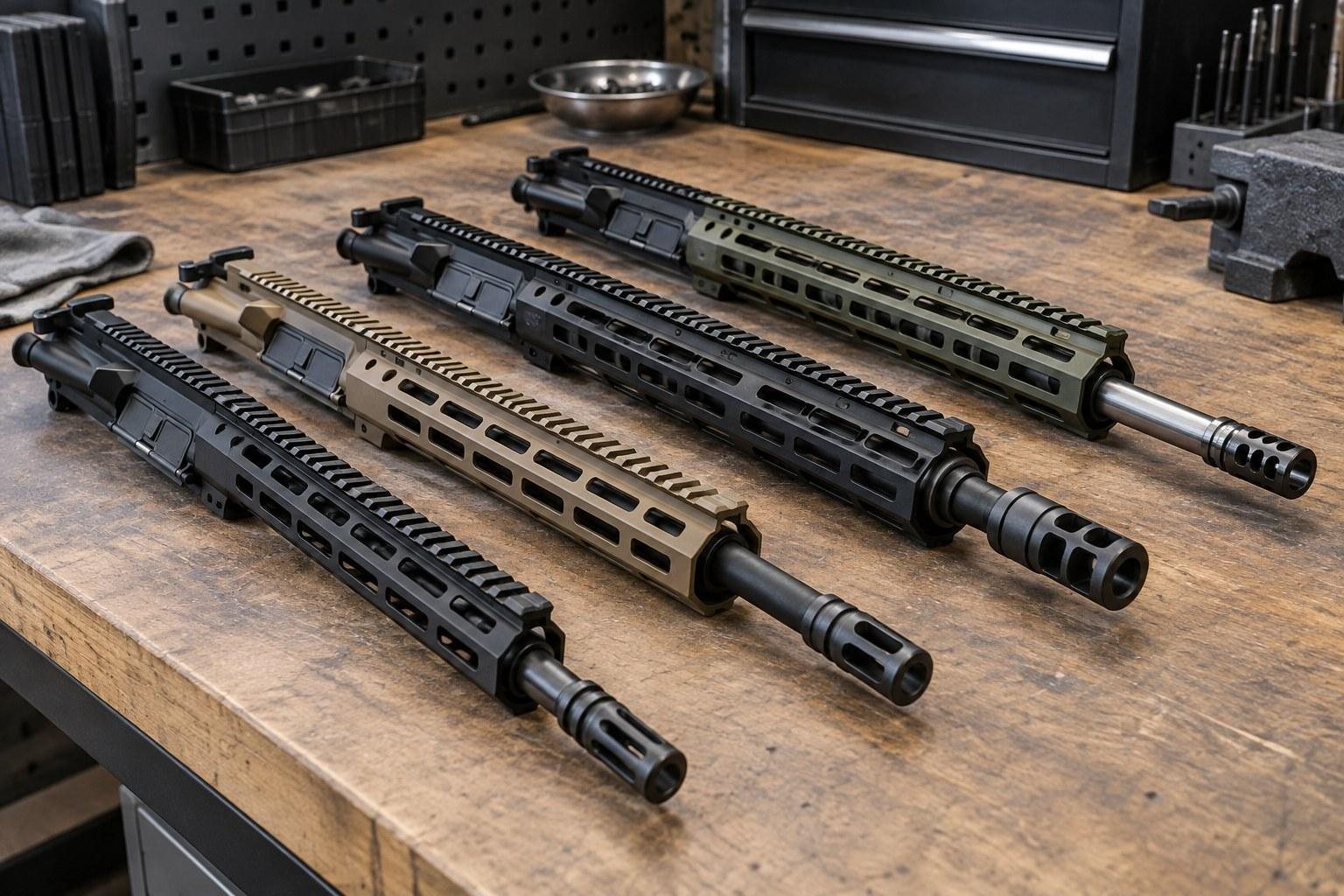
The AR-15 lower accepts uppers in a wide range of chamberings. For hogs, these cartridges generally fall into two camps: intermediate cartridges that shoot flatter and recoil less, and big-bore straight-wall cartridges that throw heavy bullets at shorter ranges. Some of these calibers need their own magazines, so plan for that before you order.
Intermediate Options
5.56 NATO and 223 Wylde. These work on smaller hogs with well-constructed bullets and careful shot placement, but they leave the least margin on a big boar. If you already own a 5.56 NATO upper, choose heavy, tough hunting bullets and keep your shots close and broadside.
300 Blackout. This cartridge runs from a standard AR-15 bolt and standard magazines and pairs well with a suppressor where that is legal. Supersonic hunting loads are the better choice for hogs than subsonic loads, which give up velocity and expansion. Browse 300 Blackout uppers if quiet, close work is your priority, and check current listings for supersonic-focused options.
6.5 Grendel and 6.8 SPC II. Both push heavier bullets than 5.56 from a 16-inch barrel and are popular with AR-15 hunters who also chase deer. They need their own bolt and magazines. Our look at whether 6.5 Grendel is good for hunting covers the trade-offs, and 6.8 SPC II uppers are available with a range of barrel options, so compare specs before you choose.
Big-Bore Options
450 Bushmaster. A straight-wall cartridge built around a heavy .45 caliber bullet. It hits hard inside typical hog distances and is legal in some states with straight-wall rules for deer, which is worth checking where you hunt. 450 Bushmaster uppers are commonly available with heavy parkerized or stainless barrels, so compare finishes before you choose.
458 SOCOM and 50 Beowulf. These throw very large, heavy bullets and are built for short-range stopping power. They use AR-15 magazine bodies with dedicated followers or caliber-specific magazines, so read the product notes. Our 458 SOCOM vs 50 Beowulf comparison explains how the two differ.
Browse every chambering we write about in our caliber guides.
Quick Caliber Comparison
| Caliber | Bolt and Magazine | Best Fit for Hogs | Trade-Off |
|---|---|---|---|
| 5.56 NATO / 223 Wylde | Standard AR-15 | Smaller hogs, careful placement | Least margin on big boars |
| 300 Blackout | Standard bolt and magazines | Close range, suppressed hunting | Short effective range |
| 6.5 Grendel | Dedicated bolt and magazines | Open fields, hogs and deer | Fewer barrel and ammo choices than 5.56 |
| 6.8 SPC II | Dedicated bolt and magazines | All-around medium game | Ammunition is less common |
| 450 Bushmaster | Dedicated bolt and magazines | Heavy bullets at moderate range | More recoil, lower capacity |
| 458 SOCOM / 50 Beowulf | Dedicated bolt, check magazine notes | Close-range stopping power | Curved trajectory, heavier recoil |
Barrel Length, Twist and Material
Once you settle on a caliber, the barrel decides how the upper handles in the field. Our AR-15 barrel length guide goes deeper, but here is what matters most for hogs.
Why 16 Inches Is the Sweet Spot
Under federal law, a rifle barrel shorter than 16 inches, or an overall length under 26 inches, makes a short-barreled rifle. That still requires ATF registration. Since January 1, 2026 the federal tax on SBRs and suppressors is $0, but the registration requirement has not gone away. A 16-inch barrel avoids that paperwork and keeps the rifle compact enough for a box blind or a truck cab. State and local laws vary, so confirm the rules where you live and hunt.
Shorter 300 Blackout uppers, like 10.5-inch versions, are popular on pistol builds, but configuring one as a rifle requires registration. If you want a simple hunting rifle, start at 16 inches.
Matching Twist Rate to Bullets
Twist rate tells you how fast the rifling spins the bullet, and it needs to suit the bullet weights you plan to shoot. As general examples, 16-inch 6.5 Grendel barrels commonly use a 1:8 twist, 16-inch 450 Bushmaster barrels commonly use a 1:20 twist, and 16-inch 458 SOCOM barrels commonly use a 1:14 twist. Check the product page and compare it with the ammunition maker's recommendation before you buy.
Barrel Material and Finish
You will see 416R stainless barrels and 4150 chrome-moly barrels with parkerized or nitride finishes. Stainless barrels are valued for accuracy, while chrome-moly barrels with protective finishes are valued for durability. Hog country is often wet and muddy, so whichever you choose, wipe the rifle down and keep it oiled after every hunt. If you plan to build your own upper, start with the barrel and work outward.
Handguards, Lights and Slings
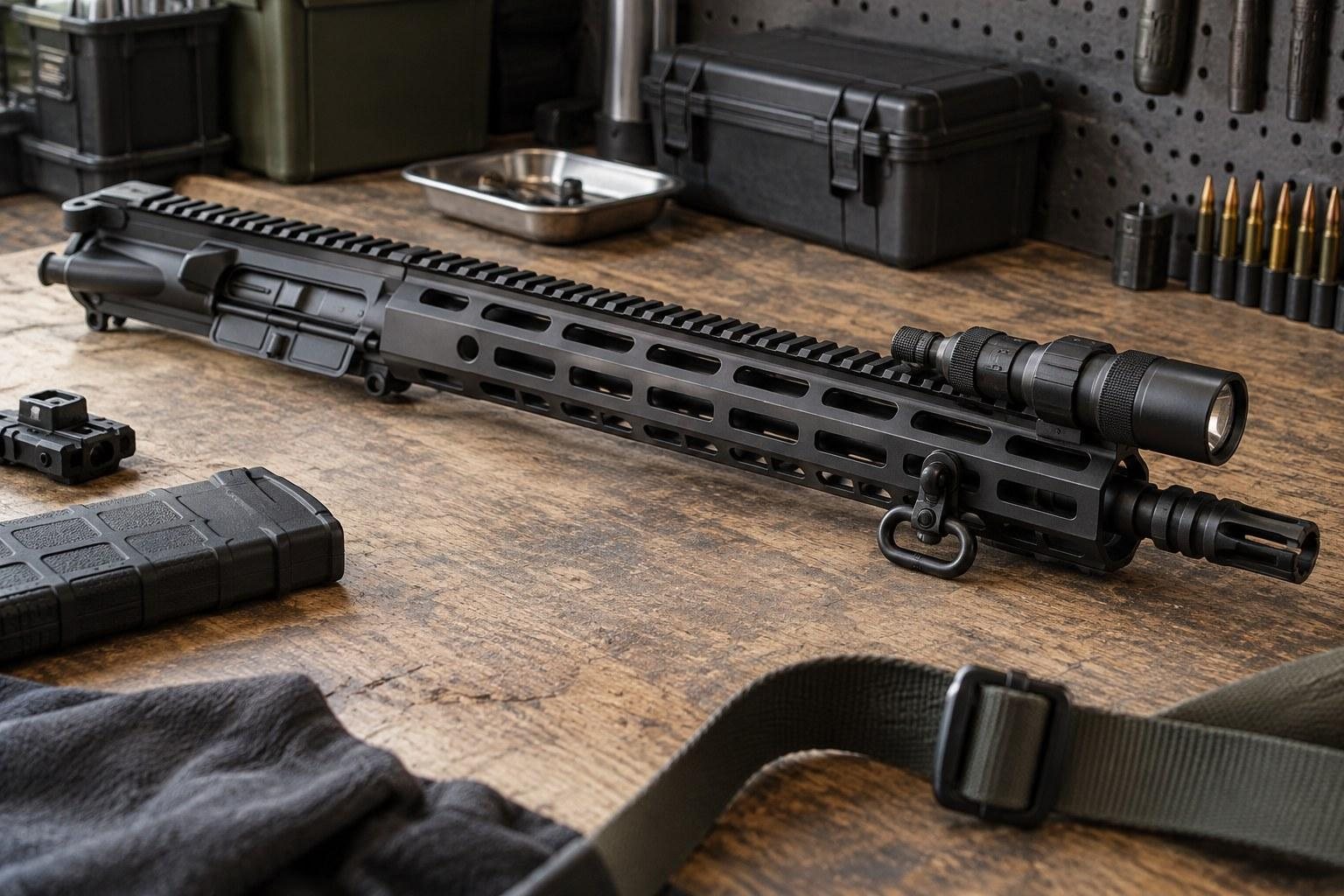
The handguard is where you mount the gear that makes night and brush hunting work. A common pattern is 12-inch and 15-inch rails on 16-inch big-bore and Grendel uppers.
Free-Float for Consistency
A free-float handguard does not touch the barrel, so pressure from a sling, a bipod or a shooting rail is less likely to shift your point of impact. That matters when you rest the rifle on a blind window or a shooting stick. Our guide to free-float vs drop-in handguards explains the difference.
Rail Length and Accessories
A longer rail gives you more room to place a light and a sling mount where your hand naturally sits. A shorter rail saves a little weight. Plan these accessories before you buy:
- A weapon light positioned so you can activate it without shifting your grip.
- A QD sling mount for carrying the rifle across fields and fence lines.
- A bipod or rail-mounted rest if you shoot from feeders or field edges.
- Cable management for a pressure switch, if your light uses one.
Muzzle Devices and Recoil
Muzzle devices change how the rifle feels, how loud it is and how fast you get back on target. Big-bore and Grendel complete uppers often come with a comp brake, while other versions ship with a thread protector, which leaves room for a suppressor or device of your choice.
Brakes and Compensators
A muzzle brake redirects gas to reduce recoil and muzzle rise, which helps with fast follow-ups on a running sounder. The trade-off is noise and blast to the side, which hunting partners will notice. Wear hearing protection.
Suppressor-Ready Threads
A suppressor makes hunting more comfortable where it is legal, and 300 Blackout is especially popular for suppressed use. Suppressors still require ATF registration even with the $0 federal tax. Check thread pitch on the product page before you buy any device, and browse muzzle devices to see what fits. Our muzzle devices guide covers the main types.
Optics and Mounting for Hog Hunting With Rifle Setups
Your optic will likely cost more attention than any other accessory, especially if you hunt after dark where it is legal.
Daylight Optics
A low power variable optic works well for daylight hog hunts. It gives you a wide field of view at low power for close, moving shots and enough magnification to confirm a target at a feeder. Our LPVO guide covers the options.
Thermal and Night Vision
Thermal optics detect heat and make hogs stand out in brush and tall grass. Night vision amplifies available light and usually works best with an infrared illuminator. Either way, mount the optic on the upper's flat-top rail, follow the optic maker's torque and mounting instructions, and confirm zero before every hunt. Night hunting rules vary by state, so check them first.
Safety on the Bench
Whenever you mount optics, swap uppers or install accessories, make sure the rifle is unloaded, the magazine is out and the chamber is visually clear. Follow each manufacturer's instructions, and see a qualified gunsmith if you are unsure about any step.
Complete Upper or Build Your Own
You can buy a complete upper that is ready to pin onto your lower, or you can build from a stripped receiver, barrel and parts.
When a Complete Upper Makes Sense
For most hunters, a complete upper is the simplest path. AR15Parts.com assembles complete uppers in-house, headspaces them and function-checks them before they ship, and orders ship in 3 to 5 business days. That means less guesswork and more time at the range confirming your zero before the season.
When Building Makes Sense
If you want a specific barrel, rail and muzzle device combination, building lets you choose each part. Start with upper receivers, then add a barrel, gas system, handguard, BCG and charging handle. Follow component manufacturers' published torque and gas specs, and leave headspace checks to a qualified gunsmith if you lack the gauges.
Ready to compare more hunting setups? Read our hunting upper roundup next.