Free-float handguards improve accuracy and mounting options; drop-in handguards install fast and cost less. Here's how to choose.
The handguard is one of those AR-15 components where the market has clearly picked a winner but the older option still exists for good reasons. Free-float handguards dominate every serious build. Drop-in handguards remain a valid budget or retro choice. Here's how to know which one belongs on your rifle.
The Core Difference
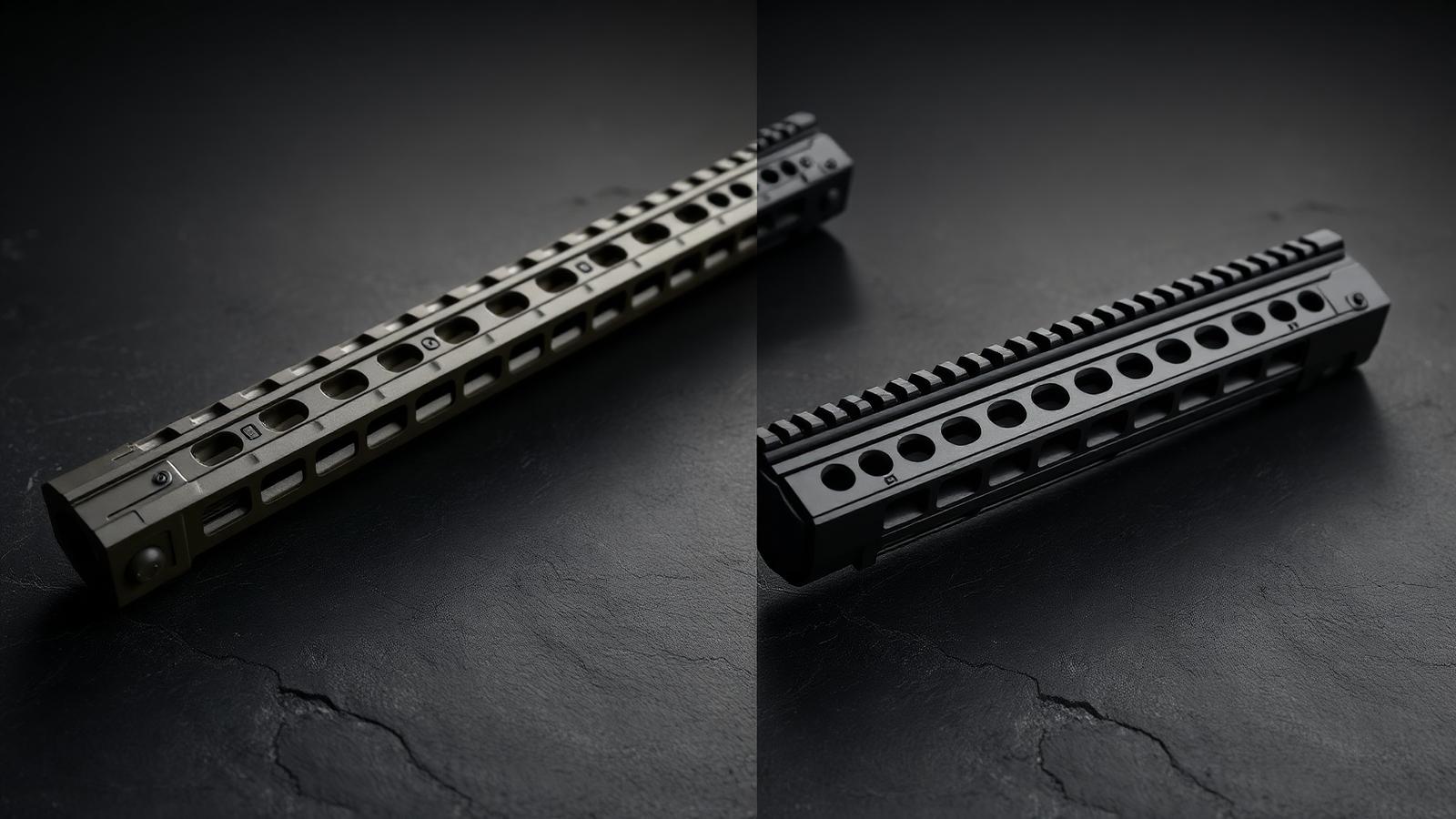
Drop-in handguards clamp to two fixed points on the barrel: the delta ring (behind the handguard) and the front sight base or gas block cap (ahead of the handguard). This is the traditional AR-15 configuration, standard from the M16A1 through the M16A2 and early M4.
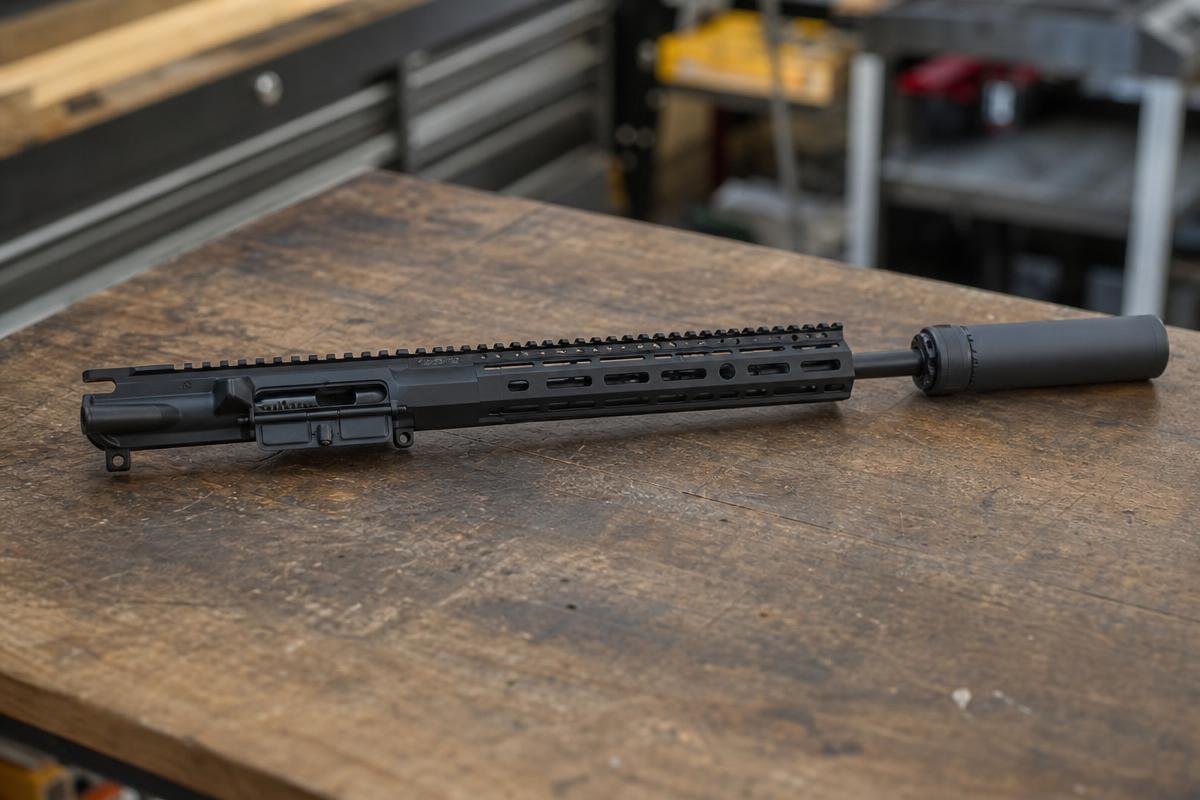
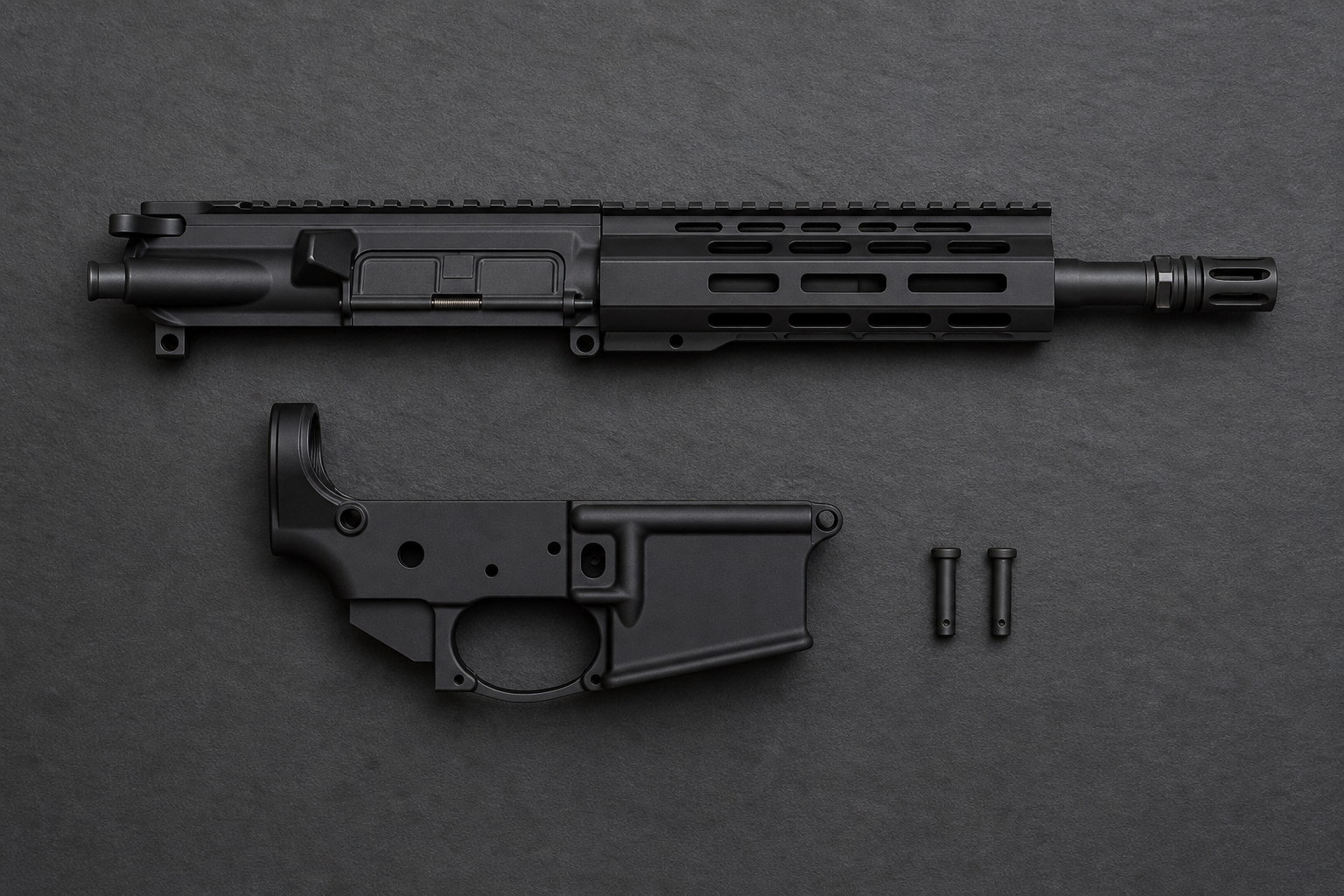
Free-float handguards attach only to the upper receiver via a barrel nut. They surround the barrel without touching it. There is no contact point on the barrel itself between the barrel nut and the muzzle.
That single structural difference drives every functional difference between the two:
Why Free-Float Won the Market
Three reasons free-float handguards became the default:
1. Accuracy under load. When you rest your rifle on a barrier, apply sling tension, or push on the handguard for stability, drop-in handguards transfer that pressure directly to the barrel through their contact points. This shifts point of impact, sometimes by inches at 100 yards under strong sling tension. Free-float handguards decouple the barrel from the handguard, so grip pressure has no effect on where the round lands.
For casual range shooting, this doesn't matter much. For precision use, defensive use with a sling, or shooting from barriers, it matters a lot.
2. Mounting real estate. Modern AR-15s carry a lot of accessories: red dots, magnifiers, lasers, lights, IR designators, foregrips, cant angle indicators. All of that needs somewhere to mount. Drop-in handguards give you two short 4-inch rail sections at best. Free-float M-LOK handguards give you 8 to 15 inches of continuous mounting real estate with M-LOK slots on all sides. It's not close.
3. Barrel harmonics. Beyond the pressure/load issue, a barrel that isn't touching anything vibrates more consistently shot-to-shot. This shows up in accuracy testing as tighter groups. Not a huge effect, but measurable.
When Drop-In Still Makes Sense
Drop-in handguards remain valid choices for specific builds:
- Retro clones (M16A1, M16A2, XM177, early M4 clones). The look requires drop-in triangular or round handguards. Free-float wouldn't be period-correct.
- Budget-constrained builds. A $50 drop-in with a $30 A-frame front sight is much cheaper than a $180 free-float. If money is the primary constraint and you don't need accessories, this works.
- Basic training rifles. If the rifle will only ever have iron sights or a single red dot and never mounted accessories, drop-in is sufficient.
- Weight-sensitive builds. Drop-in is lighter. If you're chasing minimum weight and don't need free-float benefits, drop-in saves a few ounces.
- Specific retro-modern aesthetics. Some shooters just prefer the classic look.
Everything else, free-float wins.
Picking a Free-Float Handguard
Rail attachment system:
- M-LOK is the modern standard. Wide accessory ecosystem, low weight, sturdy.
- KeyMod is older, thinner accessory ecosystem, mostly displaced by M-LOK.
- Quad rail Picatinny is heavy but has universal accessory compatibility. Only buy if you need Picatinny throughout.
Buy M-LOK unless you have a very specific reason not to.
Length:
- 7 to 9 inch: Fits short-barrel builds (10.5 to 12.5 inch barrels with pistol or carbine gas)
- 10 to 12 inch: Fits mid-length gas 14.5 to 16 inch barrels
- 13 to 15 inch: Fits 16 to 18 inch mid-length or rifle-length gas
- 15+ inch: Precision, DMR, and 20 inch rifle-length builds
Rule of thumb: handguard length should be 2 to 4 inches shorter than the barrel to leave clearance for the muzzle device and gas block.
Diameter and cross-section:
- Slim profile (1.4 to 1.5 inch diameter): Best ergonomics for a C-clamp grip; most popular modern configuration
- Standard profile (1.7 to 1.8 inch): More internal room for adjustable gas blocks or suppressor covers
- Quad rail: Widest, heaviest, most accessory mounting
Top mid-tier options ($100 to $200):
- Aero Precision Atlas S-One
- BCM MCMR (Modular Carbine Mid-length Rail)
- Midwest Industries Combat Rail
- Geissele MK4 or MK8
Top premium options ($200 to $400):
- Geissele Super Modular Rail (MK14 or MK16)
- Radian Handl
- KAC URX 4
- LaRue LR-15
Installation Notes
Free-float handguard installation requires:
- Remove the existing handguard, delta ring, and front sight base (if replacing a drop-in setup)
- Remove the existing barrel nut using a barrel nut wrench (may require heat if Loctited)
- Install the new barrel nut per the handguard manufacturer's spec (torque and alignment matter)
- Torque the barrel nut to manufacturer spec (typically 30 to 80 ft-lb depending on brand)
- Install the gas tube through the barrel nut
- Slide the handguard over the barrel nut and secure it (bolts or clamps depending on design)
If you're not comfortable with barrel nut removal and torquing, have a gunsmith install it. It's a $30 to $50 service in most shops and prevents installation-related issues.
Browse free-float M-LOK handguards, complete uppers with free-float installed, and drop-in handguards at ar15parts.com.