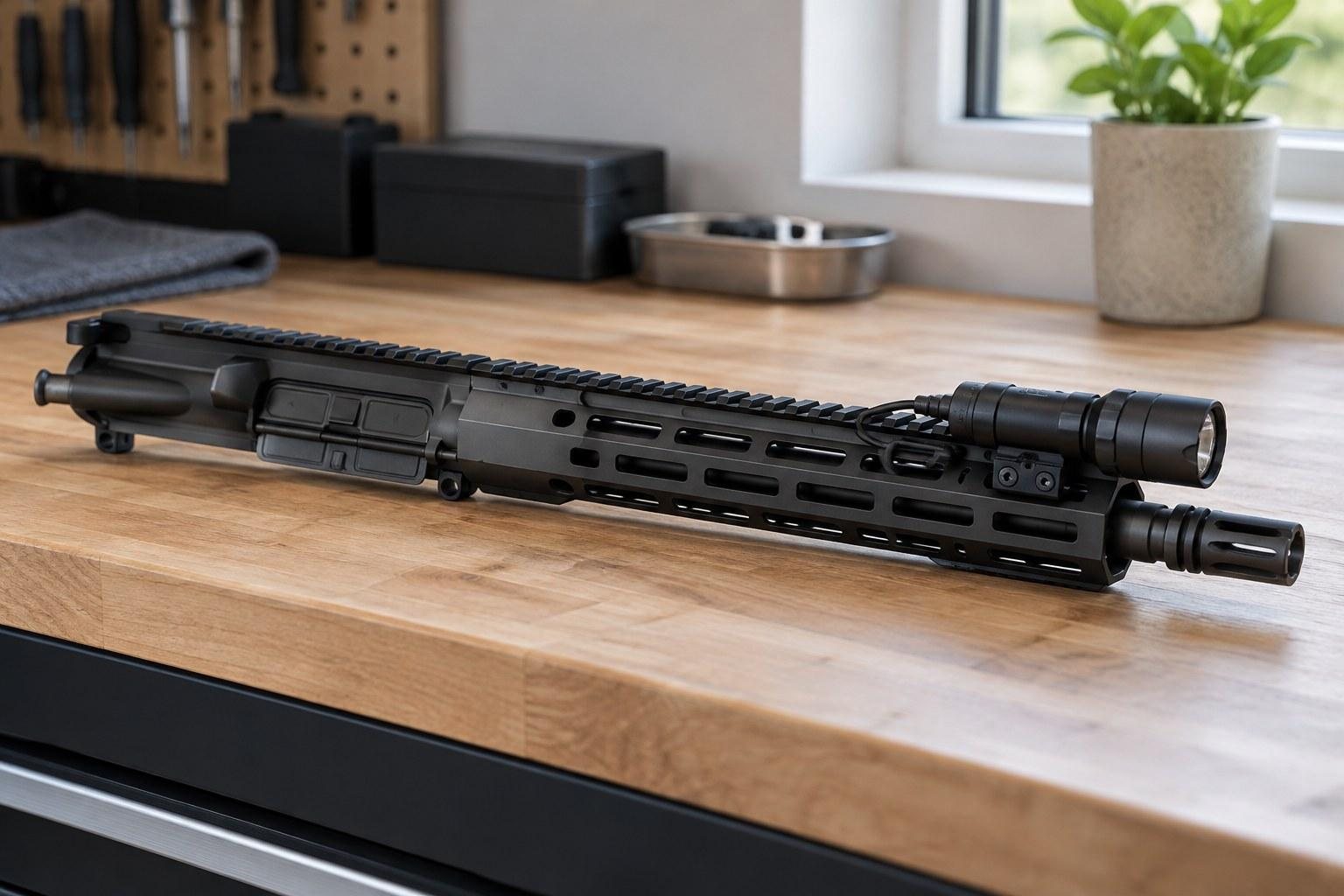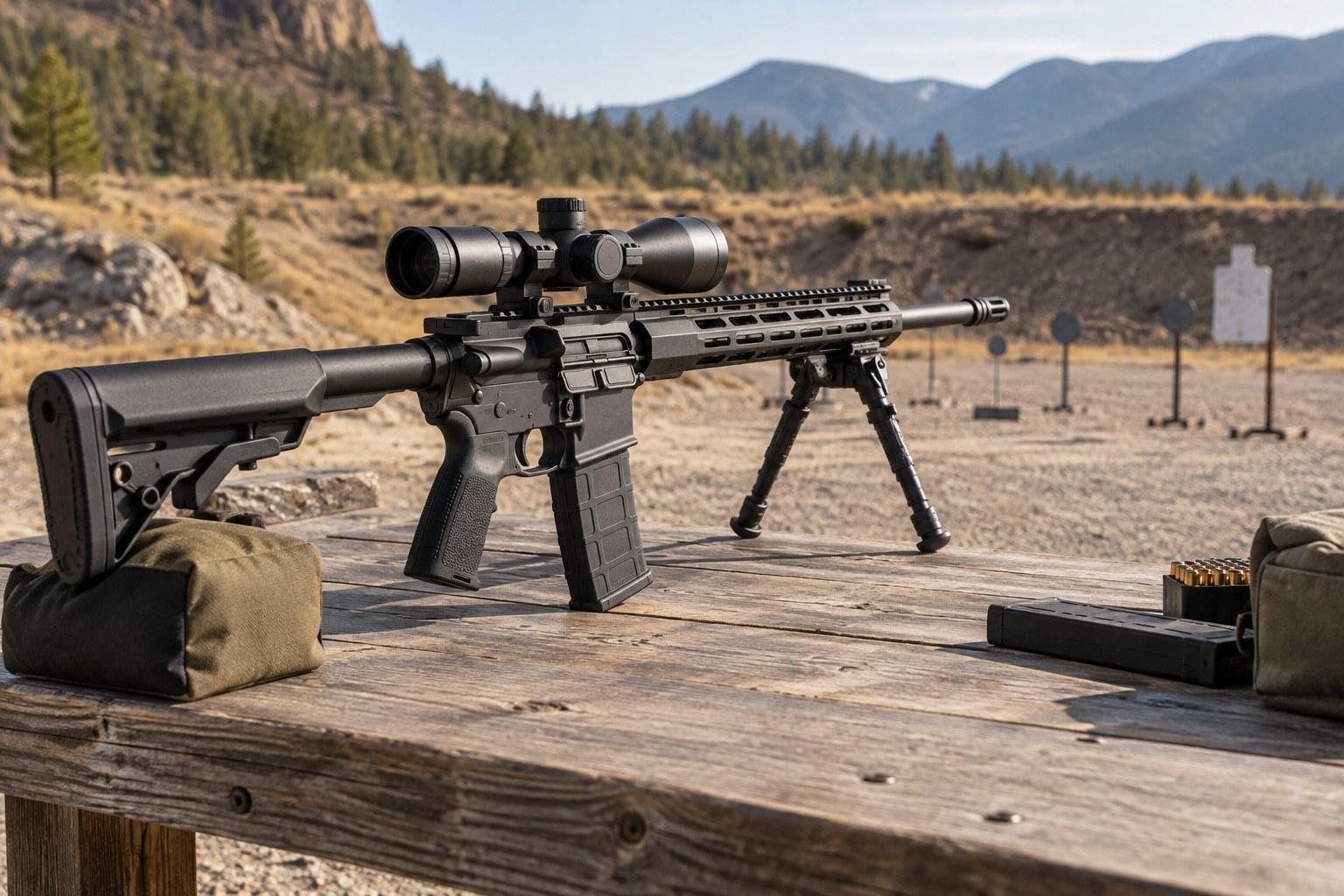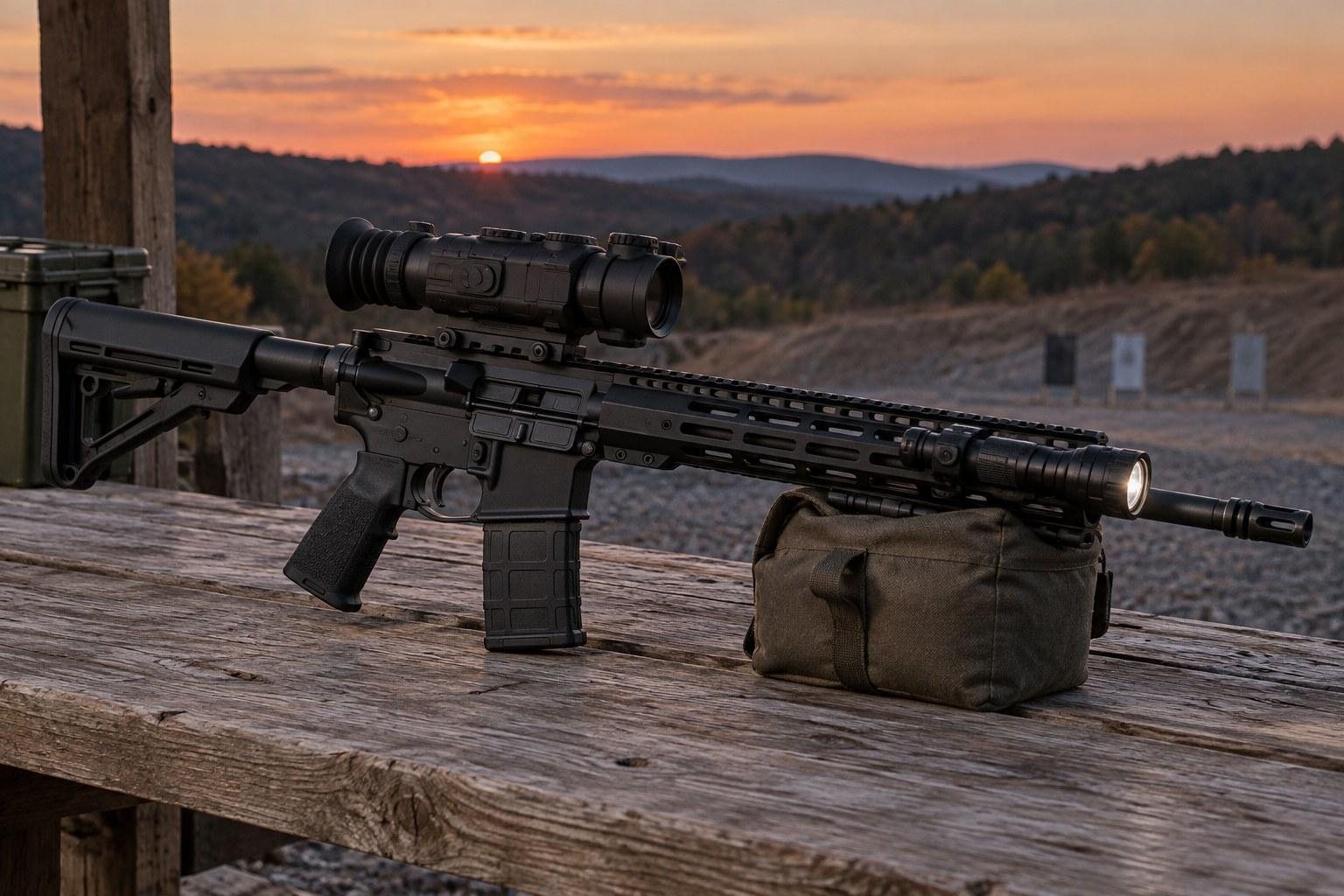
A dedicated upper for night hunting lets you keep your thermal or night vision optic zeroed and ready while your daytime setup stays untouched. Because an AR-15 upper swaps onto a compatible lower with two pins, one rifle can serve both roles without re-zeroing every time the sun goes down.
Our editors walk through the decisions that matter: caliber, barrel length, handguard space, muzzle device, optic mounting and accessory layout. Before any of that, check your state wildlife agency rules. Night hunting laws vary by state, and what species, equipment and seasons are legal after dark can differ a lot from one state to the next.
Want a ready-to-run starting point? Browse assembled uppers you can build around.
Key Takeaways
- Rules for hunting after dark vary by state, so confirm species, seasons, light and optic rules with your state wildlife agency before you build or hunt.
- A dedicated upper keeps an expensive thermal or night vision optic mounted and zeroed on one barrel.
- Caliber choice should match the animal and your shot distances, and 300 Blackout is popular when a suppressor is part of the plan.
- A free-float handguard with M-LOK slots gives you room for a light, pressure switch, bipod and IR illuminator without crowding.
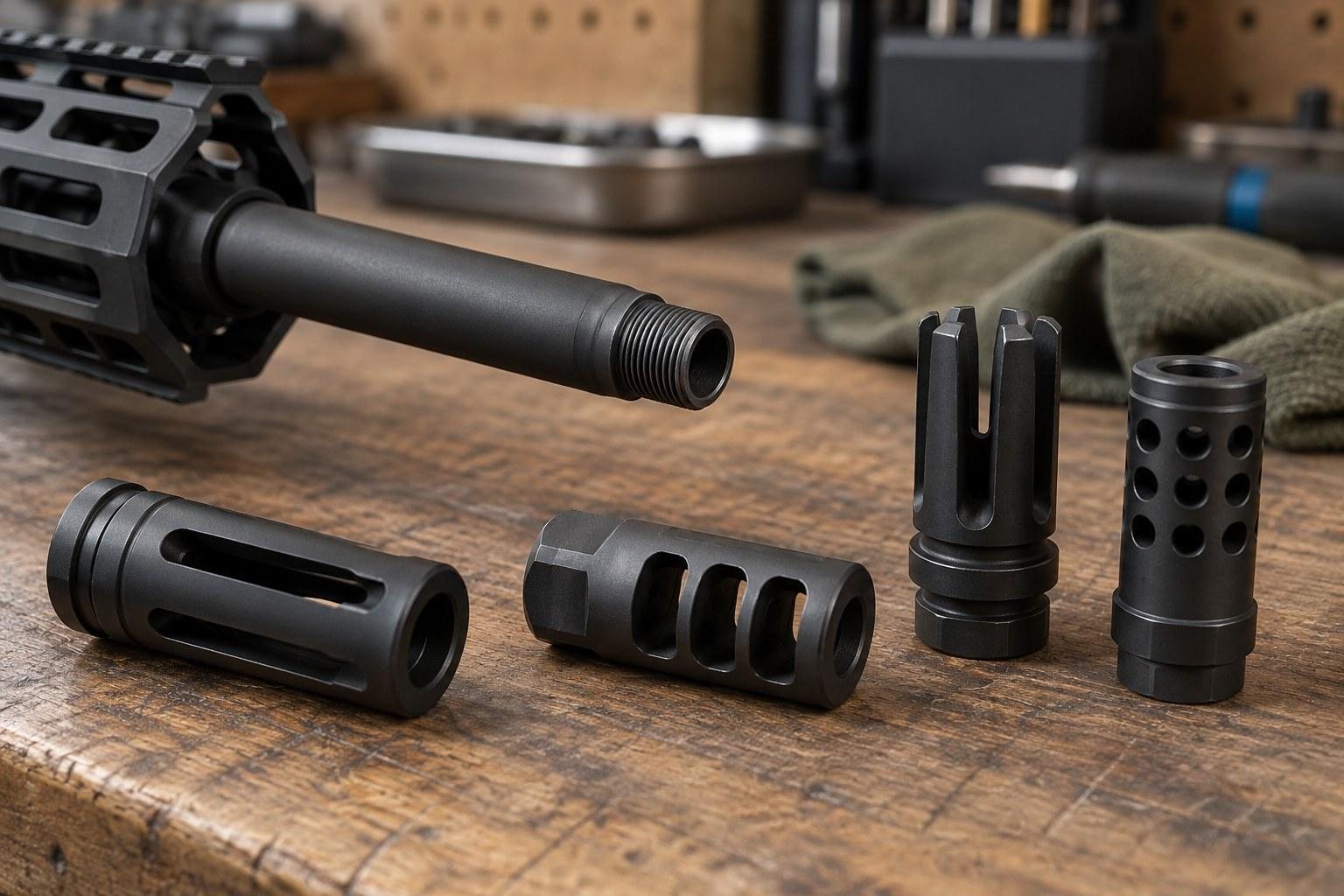
- Flash hiders and flash cans help keep muzzle flash from washing out your optic, while brakes add noise and blast.
- Always work on an unloaded firearm, follow each manufacturer's instructions and use a qualified gunsmith when unsure.
Start With the Law Before the Parts List
We put legal research first for a reason. Rules for hunting after dark are set state by state, and sometimes county by county. Some states allow certain nongame or nuisance species to be taken after dark, others restrict artificial lights, and some regulate thermal or night vision devices themselves.
Questions to Answer Before You Buy
- Which species, if any, may be hunted at night where you plan to hunt?
- Are artificial lights, thermal optics or night vision devices allowed?
- Do you need landowner permission, a special permit or a hunter notification?
- Are there caliber or suppressor rules for hunting in your state?
Your state wildlife agency is the authority on these questions. Rules change, so check the current regulations each season rather than relying on what was true last year. Nothing here is legal advice.
Suppressors and Short Barrels
Many night hunters want a suppressor, and some want a short barrel. Suppressors and short-barreled rifles are regulated under the National Firearms Act. A rifle barrel under 16 inches, or an overall length under 26 inches, creates a short-barreled rifle that requires ATF registration. Since January 1, 2026, the federal tax on SBRs and suppressors is $0, but registration is still required, and state and local laws vary.
Choosing a Caliber for After Dark
Your caliber should be chosen for the animal, the terrain and the distances you will actually shoot. Thermal optics can let you detect animals well beyond the distance at which you can ethically identify and place a shot, so plan around realistic shot distances.
Common AR-15 Options
| Caliber | Why Night Hunters Consider It | Things to Weigh |
|---|---|---|
| 300 Blackout | Designed for the AR-15 and widely used with suppressors, with both supersonic and subsonic loads available | Subsonic loads trade velocity for quiet, so match bullet design to the animal |
| 223 Wylde | Chambers both 5.56 NATO and .223 Remington ammunition | Choose bullets built for game, not just target use |
| 6.5 Grendel | Popular AR-15 hunting cartridge for longer open-country shots | Needs dedicated magazines and bolt |
| 350 Legend | Straight-wall cartridge used where straight-wall rules apply | Best suited to moderate distances |
300 Blackout uppers are commonly available in 10.5 inch and 16 inch configurations, alongside 223 Wylde uppers. For deeper caliber reading, see our 300 Blackout vs 5.56 upper comparison.
Bullet Choice Matters as Much as Caliber
Any caliber performs only as well as the bullet. Look for loads the ammunition maker designs for the game you hunt, and confirm the bullet expands at the velocity your barrel produces. If you run subsonic ammunition, pay close attention to the manufacturer's guidance on expansion.
Barrel Length and Handling
Hunting after dark often means moving through brush, climbing into a blind or working from a truck. A handier barrel helps, but shorter is not always better.
16 Inches Is the Simple Route
A 16 inch barrel avoids NFA paperwork and gives most cartridges good velocity. It also leaves enough length for a suppressor without making the rifle feel too long for most hunters.
Shorter Barrels Need Paperwork
A 10.5 inch 300 Blackout upper is compact and pairs well with a suppressor, but on a rifle lower it creates an SBR that must be registered first. Read our AR-15 barrel length guide for the tradeoffs.
Planning around a suppressor? A practical routine is comparing suppressor-friendly uppers in detail.
Handguard Space for Lights, Lasers and Switches
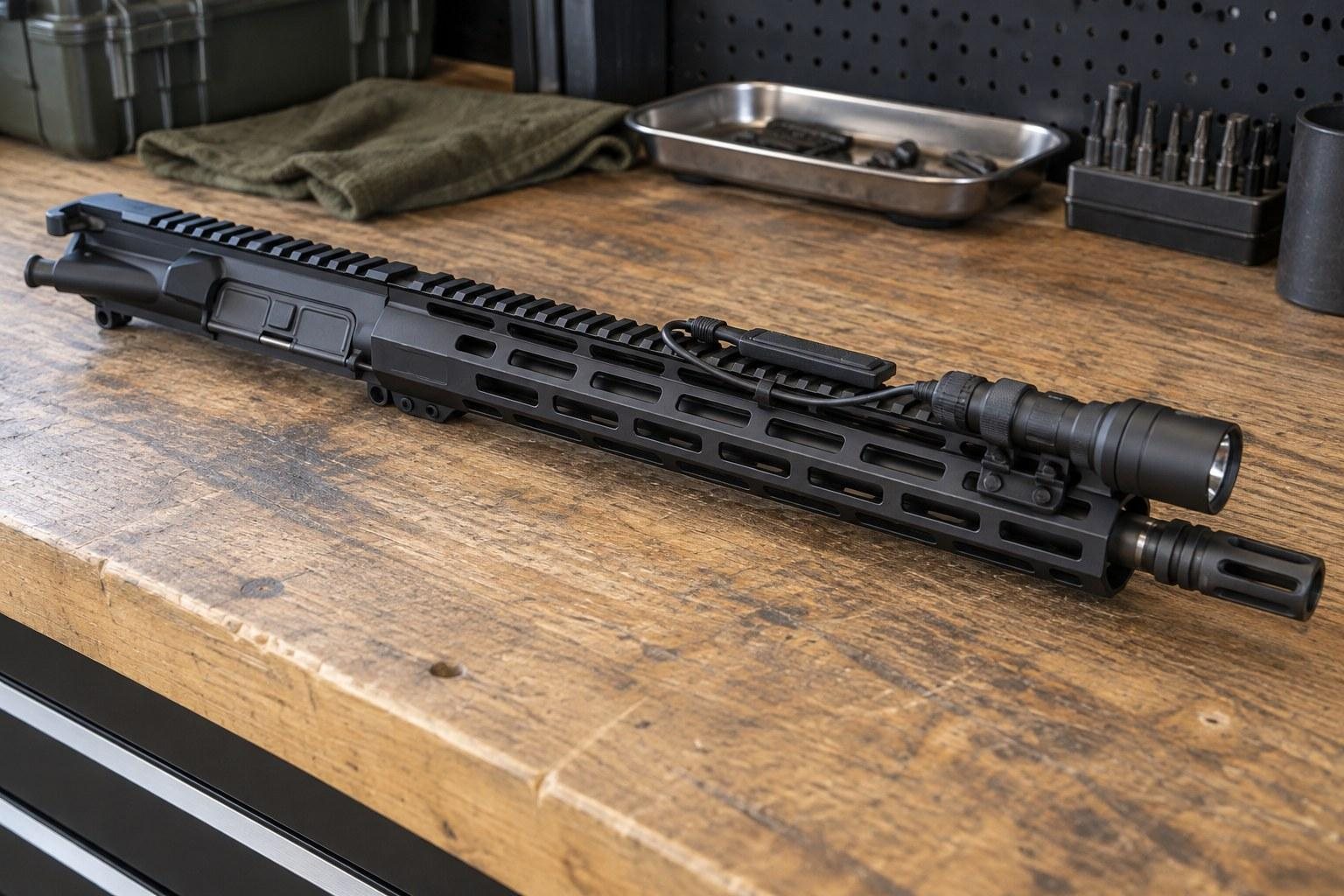
A night setup carries more gear than a daytime rifle. You may run a weapon light, an IR illuminator for night vision, a pressure switch and a bipod. A free-float handguard keeps that gear off the barrel, which helps hold your zero.
Length and Attachment System
Longer rails give more mounting room, and M-LOK has become a common attachment standard. AR-15 handguards commonly include M-LOK and KeyMod free-float rails in 10, 12 and 15 inch lengths. Our M-LOK vs KeyMod comparison covers the differences.
Layout Tips
- Mount lights where your support hand can reach the switch without shifting your grip.
- Route pressure switch cables so they cannot snag on brush or slings.
- Keep the top rail clear for your optic and any clip-on device.
- Check that a light or laser does not cast shadow from the muzzle device.
Muzzle Devices and Flash Control
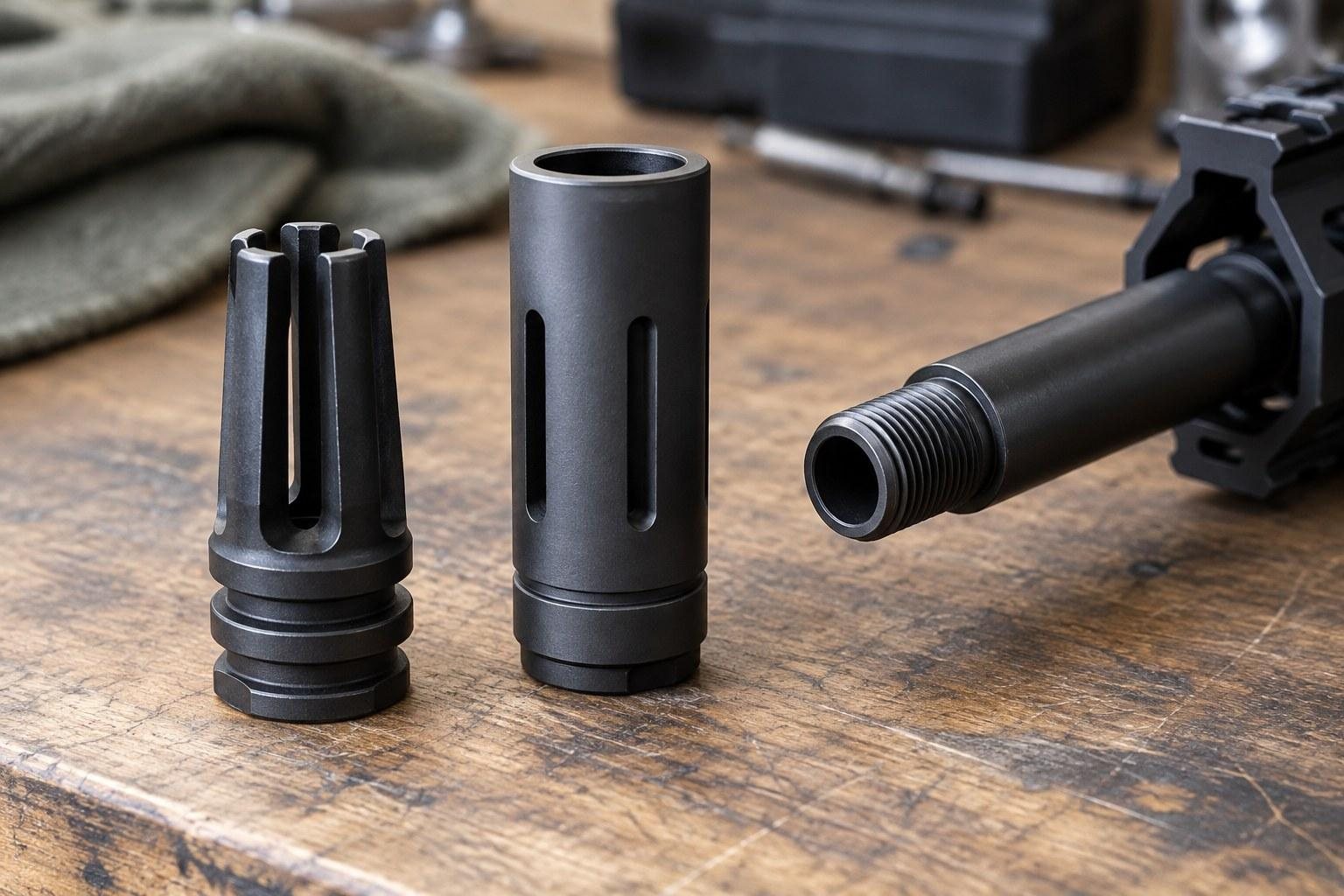
Muzzle flash can momentarily wash out a night vision image and draws attention after dark. Your muzzle device choice affects both flash and noise.
Flash Hiders and Flash Cans
A flash hider is designed to reduce visible flash. A flash can directs blast and noise forward, away from the shooter. Common muzzle devices include A2 flash hiders and slim cone flash cans in 1/2 x 28 and 5/8 x 24 threads.
Brakes and Suppressors
Compensators and brakes reduce recoil but usually add blast and concussion, which can be hard on hearing at night. If you plan to add a suppressor later, confirm your barrel thread pitch and use the mount the suppressor manufacturer specifies. Our muzzle devices guide explains each type.
Optics, Mounts and Zero Retention
The optic is usually the most expensive part of a night build, and it is the main reason to dedicate an upper. Keeping one optic on one barrel means your zero is ready the next time you go out.
Thermal Versus Night Vision
Thermal optics detect heat, which helps spot animals in cover. Digital and tube night vision amplify available light and often benefit from an IR illuminator. Each has strengths, and legality varies by state, so confirm the rules first.
Mounting and Confirming Zero
Use a quality mount with the torque values the optic and mount makers publish. Confirm zero in conditions similar to how you will hunt, and recheck it after travel or any hard knock. A witness mark on the mount screws makes movement easy to spot.
Assembling and Checking Your Upper
You can build an upper from parts or start with a complete upper. Complete uppers from AR15Parts.com are assembled in-house, headspaced and function-checked before they ship, and shipping takes 3 to 5 business days.
If You Build From Parts
Start with a quality AR-15 upper receiver, then follow each component maker's instructions and torque specs. Make sure the firearm is unloaded before any work, verify headspace, and never drill or modify gas ports. When in doubt, use a qualified gunsmith.
Final Checks Before the Field
- Function check the rifle with the upper installed and the chamber empty.
- Confirm light and switch operation in darkness.
- Verify zero at your expected hunting distance.
- Pack spare batteries for your optic, light and illuminator.
Scouting and Shot Discipline
A capable upper does not replace good fieldcraft. Scout your property in daylight so you know where fences, buildings, roads and livestock sit, and identify safe shooting lanes with a solid backstop before you ever head out at night.
Positive identification is the rule that matters most. A thermal image shows heat, not always species, size or what lies beyond the animal. If you cannot confirm the target and what is behind it, do not take the shot. Hunting with a partner who knows the ground adds another set of eyes and makes recovery easier.
Keeping the Two Uppers Straight
If you run a day upper and a night upper on the same lower, label each one and keep a simple log of its zero, ammunition and last confirmation date. Store magazines loaded with the right caliber next to the matching upper, especially if one is 300 Blackout and the other is 5.56, since mixing those cartridges can damage the rifle and hurt the shooter.
Want more build help? Browse our assembly guides.