M-LOK or KeyMod? See how SOCOM drop test data and accessory availability compare. AR15Parts.com helps you pick the right AR handguard. Call (888) 706-0633.
If you're building an AR-15 and trying to decide between M-LOK vs KeyMod handguards, which rail system you choose matters more than most shooters realize. Both systems replaced the old full-length Picatinny quad-rail for good reasons, but they are not equal. A 2015 SOCOM-commissioned drop test showed KeyMod retaining accessories at just 33% compared to M-LOK's 100% retention rate, and that single data point drove a clear industry shift.
We've been assembling and shipping AR-15 builds out of our Denison, TX shop since we opened, and we stock handguards in all three mounting systems so we can help you pick the right one for your build before it ships to your door. Not sure which handguard fits your build? We can point you in the right direction fast.
Understanding the Two Systems: A Side-by-Side Overview
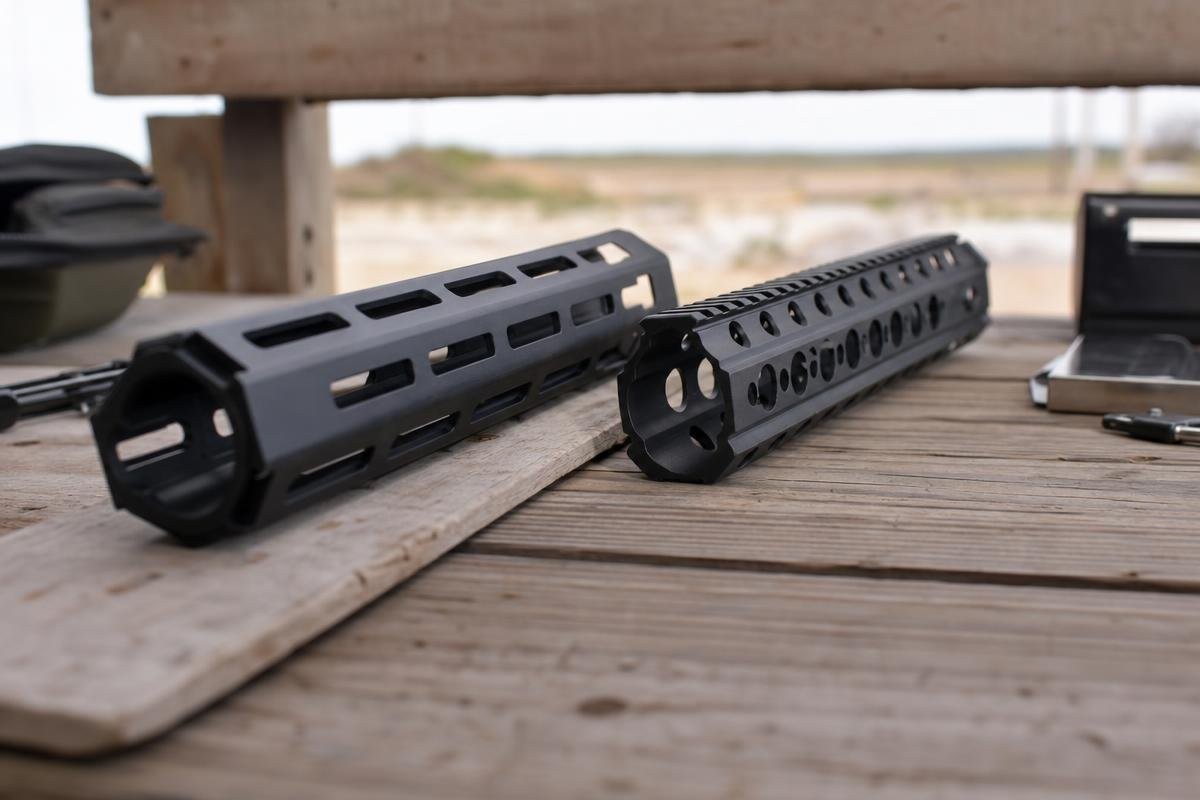
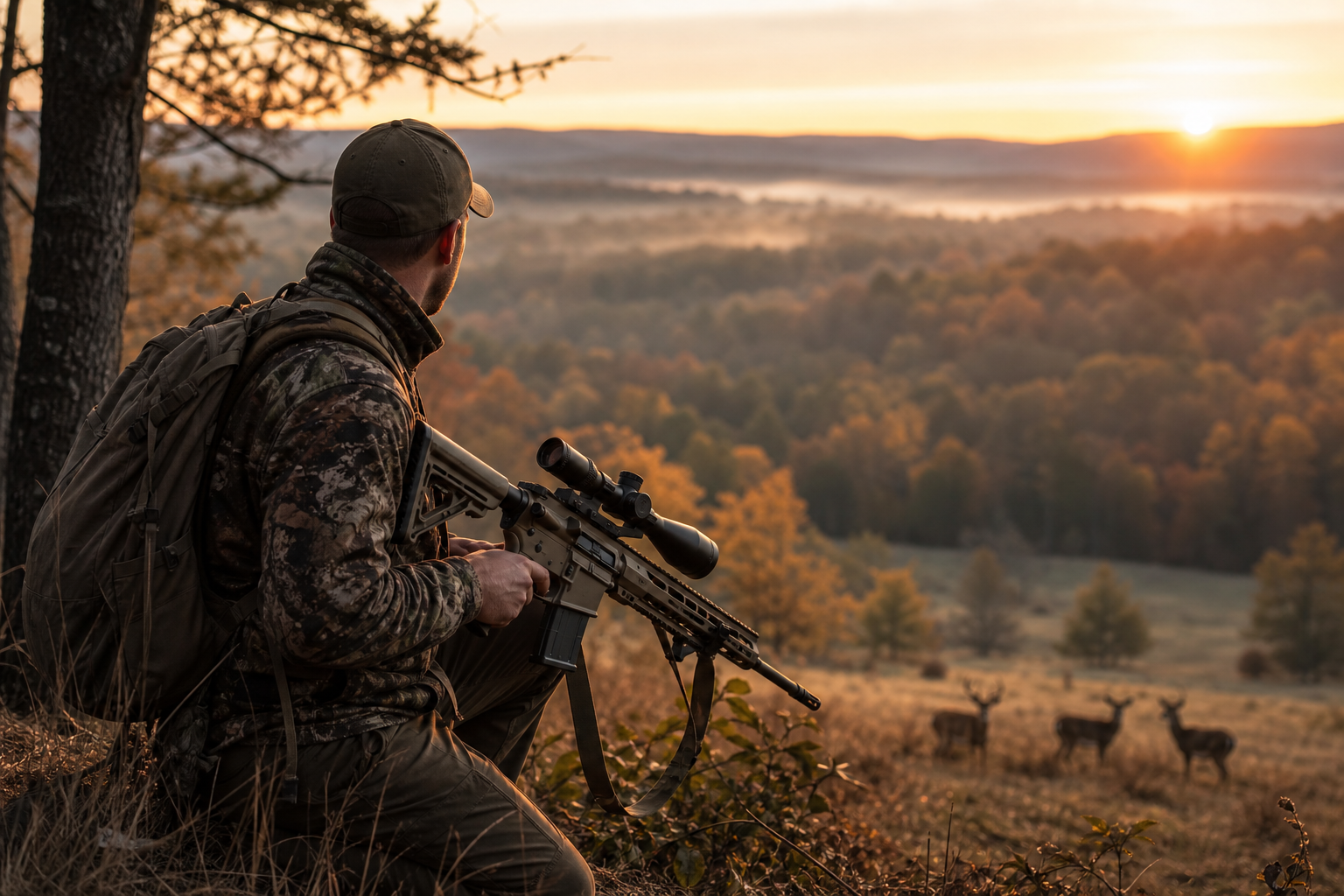
You're planning a build. Maybe it's a lightweight hunting rifle for working feral hogs through the post oak country south of Denison, or a 3-gun setup for the ranges near Lake Texoma. Either way, the handguard decision comes early, and it matters more than most shooters realize. The rail system you pick locks you into an accessory ecosystem before you buy a single light, grip, or bipod mount.
Both M-LOK and KeyMod exist to solve the same problem. Full Picatinny rails add weight and bulk that most shooters don't need. These two systems replaced most of that rail with open slots, cutting weight while keeping the option to mount accessories where you actually need them. Same problem, different mechanical approach, real-world tradeoffs worth understanding.
Here you'll find geometry, accessory availability, and the most objective head-to-head data available, the 2015 USSOCOM evaluation. No brand loyalty. No hedge at the end. A plain answer. Picatinny is not obsolete either, and it stays in the conversation where the use case calls for it.
If you're already past the research phase and ready to build, browse our complete AR-15 uppers or our full lineup of complete AR-15 rifles to see what we're currently assembling in shop.
How KeyMod Works: The Slot-and-Lug Design
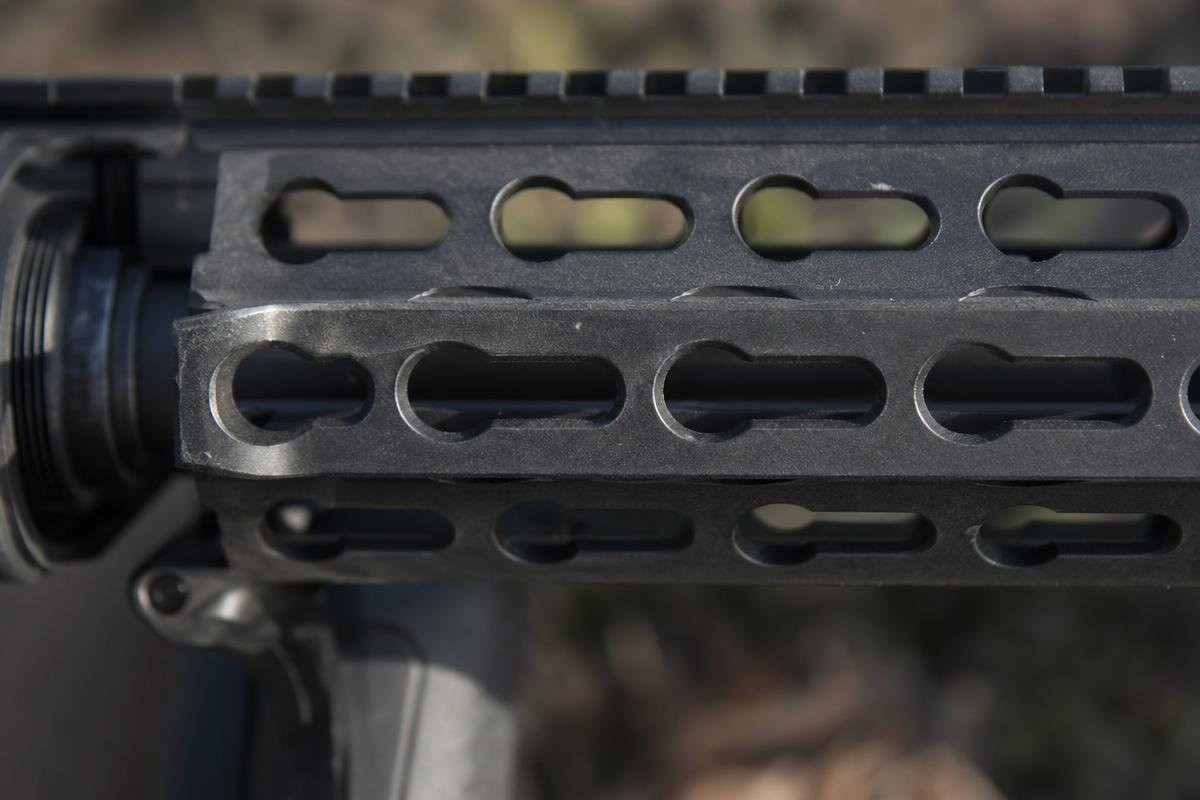
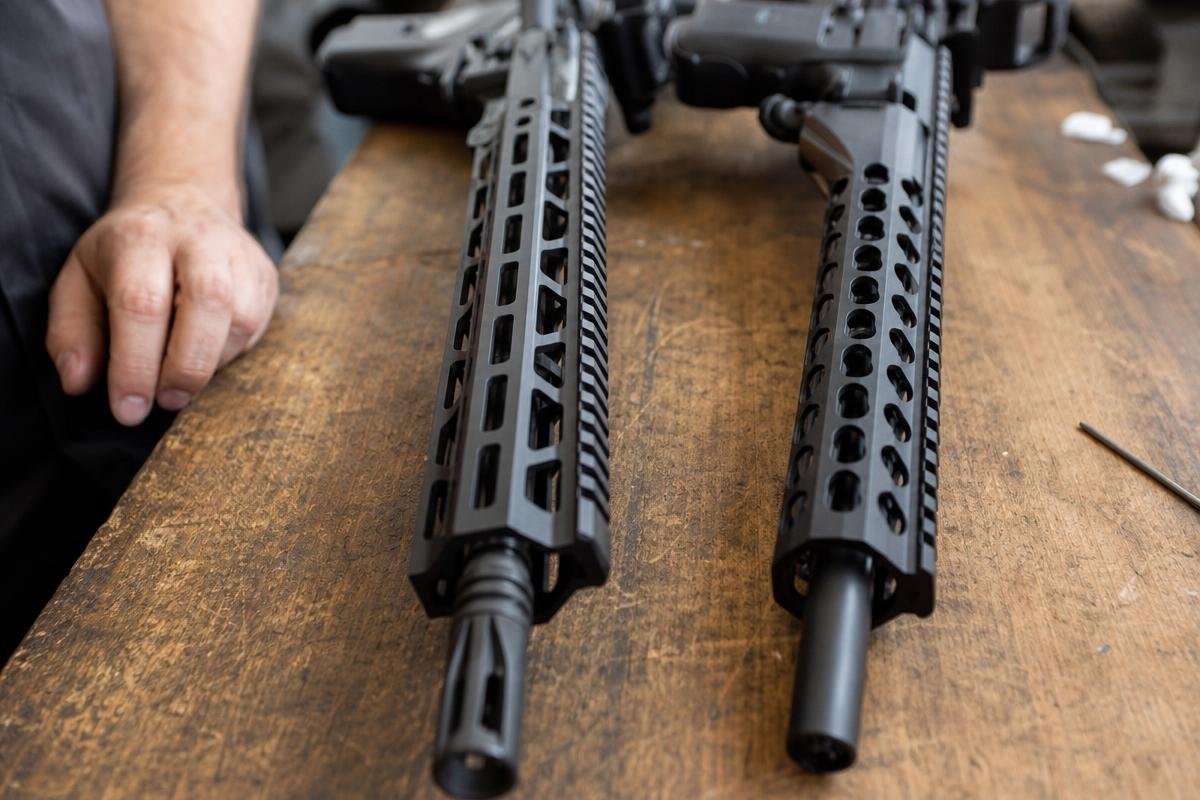
KeyMod is a direct-attachment mounting system built around a keyhole-shaped slot cut directly into the handguard body. The slot has two parts: a wide circular opening at the rear that accepts the accessory's stud, and a narrow forward channel that the stud slides into under spring tension. Once seated, a single screw draws the lug tight against the back face of the narrow channel, locking the accessory in place under mechanical compression.
Slot spacing follows a 1.5-inch standard. That consistent pitch means accessories from different manufacturers line up predictably along the handguard length. The cutouts remove material from the handguard body, which saves weight compared to a full Picatinny rail. The tradeoff is reduced surface area around each attachment point, which matters under hard lateral loads.
The Geometry Behind the KeyMod Slot
The keyhole geometry does the work that a Picatinny cross-slot does differently. Where Picatinny uses a T-bolt that clamps across a raised rail, KeyMod pulls the accessory forward and inward against the handguard surface. The attachment is flush and low-profile, which keeps the overall diameter of the handguard slim.
For a shooter running practical rifle drills at an outdoor range in the summer heat, that slim profile keeps the rifle handy and easy to index without adding bulk under the support hand.
Who Developed KeyMod and Why It Mattered
VLTOR Weapon Systems and Noveske Rifleworks developed KeyMod jointly and released it as an open-source, royalty-free standard around 2012. Any manufacturer could adopt it without licensing fees. That decision drove fast, broad adoption across the accessory market. Grip panels, light mounts, sling attachments, and rail sections all appeared quickly from dozens of makers.
That open-source foundation is exactly why KeyMod still has a meaningful accessory catalog today, even after M-LOK became the dominant standard. If you are building a complete AR-15 upper and want to run KeyMod hardware you already own, the parts are still out there. The ecosystem did not disappear overnight. It just stopped growing as fast as M-LOK's did.
How M-LOK Works: The Negative-Space T-Nut System
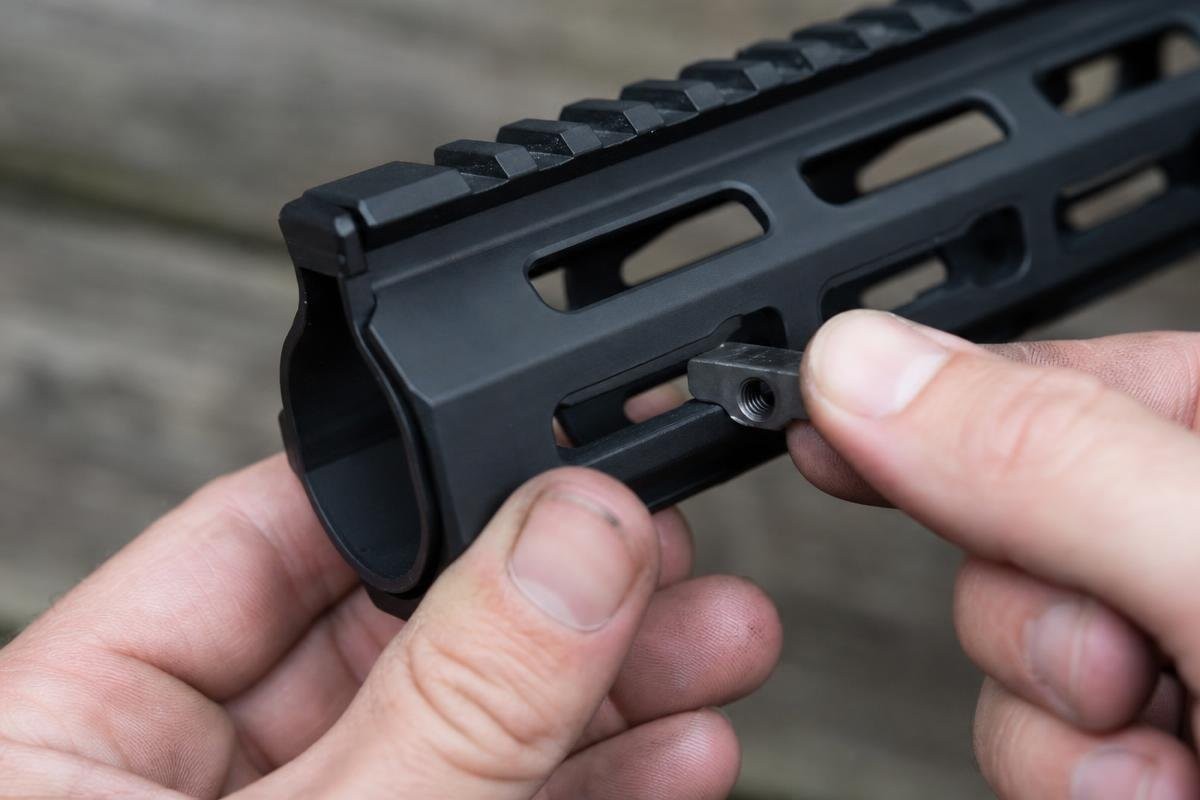
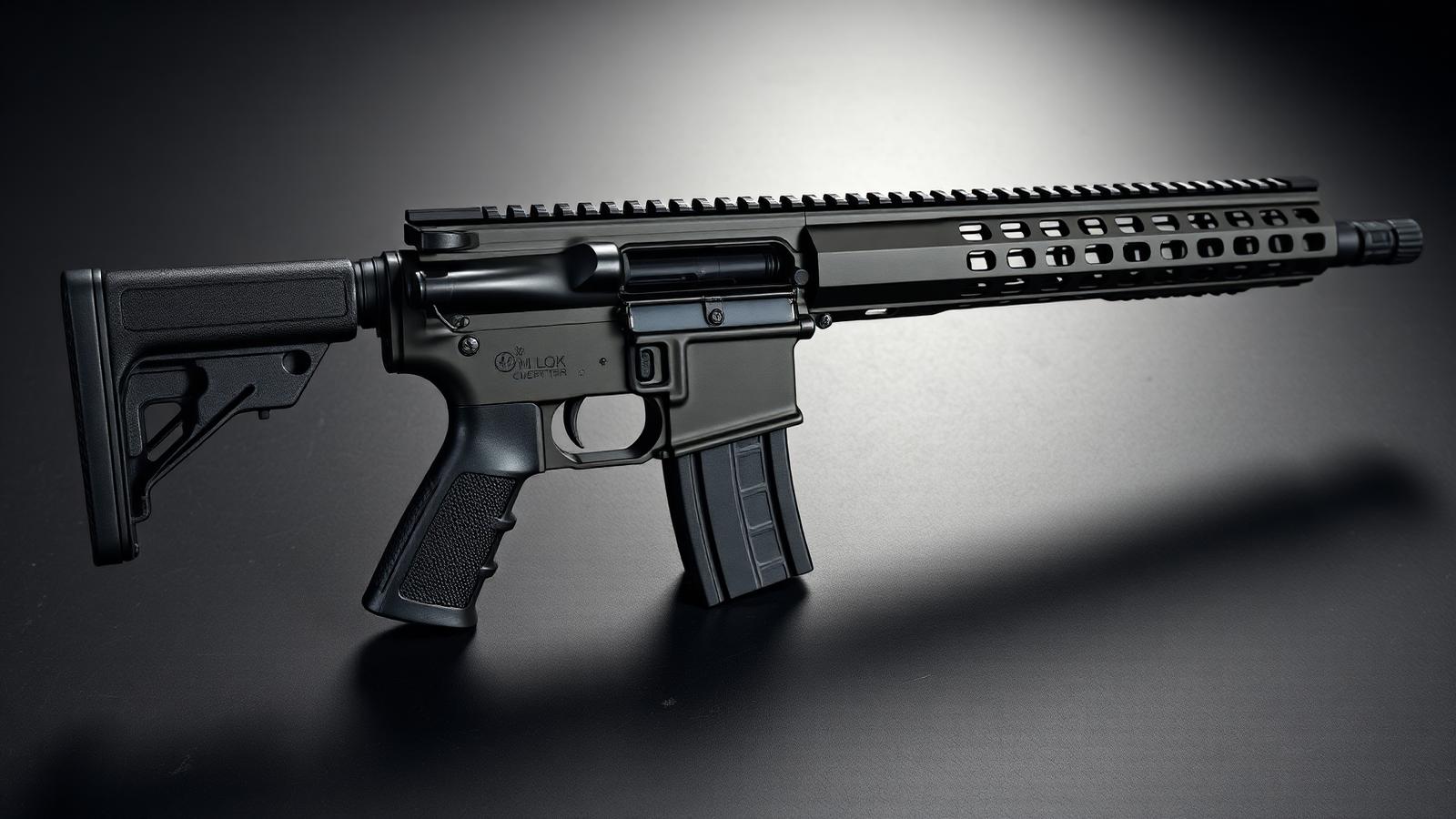
M-LOK takes a fundamentally different approach than KeyMod. Instead of a circular hole with a narrow retention channel, M-LOK uses rectangular slots cut directly into the handguard. A flat T-nut slides into the slot, rotates 90 degrees, and gets drawn tight against the inside of the handguard surface by a screw. The T-nut bears across the full width of the slot, spreading clamping force over a wider surface area than KeyMod's narrow channel neck ever could.
The slots themselves run approximately 0.9 inches long on a consistent grid. That uniform geometry makes accessory alignment straightforward. You're indexing a rectangle to a rectangle, not fitting a lug into a circular hole and threading it into a channel. For shooters building out a rifle with multiple accessories, that consistency adds up fast.
The Geometry Behind the M-LOK Slot
The wider bearing surface matters most in hard-use situations. North Texas hunters running suppressed hog rifles or 3-gun competitors near the Lake Texoma corridor put real stress on accessory mounts. Heat, recoil, and repeated removal cycles all test retention. The M-LOK T-nut's broad contact patch holds up better under those conditions than a narrow-channel lug. That mechanical advantage is a big part of why the best handguard mounting system for AR-15 builds shifted toward M-LOK after 2015.
Choosing the right handguard also depends on what you're attaching it to. If you're configuring one of our complete AR-15 uppers, the handguard system you pick affects accessory options for the life of that build. Know you want M-LOK? See what we have ready to ship.
Magpul's Open-Source Licensing Decision
Magpul released M-LOK in 2014 as a royalty-free open standard. Any manufacturer can adopt it without paying licensing fees. That decision was deliberate. Magpul already had deep brand trust in the AR market, and making M-LOK free to produce accelerated adoption across hundreds of accessory makers almost immediately.
Today, M-LOK handguard compatibility is essentially universal. Lights, grips, rail sections, sling mounts, and bipod adapters are all available in M-LOK at a volume that KeyMod simply cannot match at most retailers. Magpul's open licensing turned a geometry decision into a market standard.
The 2015 USSOCOM Test: What the Data Actually Showed
In 2015, the United States Special Operations Command commissioned an independent evaluation to settle the M-LOK vs KeyMod debate with actual data. The test measured three things: accessory retention force, return-to-zero consistency after removal and reinstallation, and durability under sustained use. M-LOK outperformed KeyMod in all three categories.
The mechanical reason comes down to bearing surface. M-LOK's T-nut spans the full width of the slot and clamps against a flat aluminum surface. KeyMod's lug-and-slot design contacts the handguard at two smaller points. Less contact area means less clamping force, and that difference showed up clearly in the test results.
Retention Force and Accuracy Under Load
M-LOK produced meaningfully higher retention force than KeyMod across repeated test cycles. Return-to-zero repeatability was also tighter with M-LOK, meaning accessories reinstalled to a closer point of aim each time. KeyMod's numbers weren't catastrophic, but the gap was consistent enough that SOCOM took notice. That's the kind of result that shifts an entire industry, and it did.
What the Test Results Mean for Civilian Builders
For a range rifle that sees occasional accessory swaps, the retention gap between the two systems is unlikely to matter. Both hold a foregrip or rail section securely under normal conditions. The gap becomes real on hard-use builds and home defense ARs where a weapon light must return to zero after removal for cleaning or transport.
Think about a Grayson County hog hunter running a night hunt near Lake Texoma. He pulls the weapon light off for pack transport, reinstalls it in the field before dark, and needs it pointing where it was. That's exactly the scenario where M-LOK's tighter return-to-zero repeatability pays off. If you're building a rifle for that kind of work, take a look at our complete AR-15 uppers to see configurations that pair well with free-float M-LOK handguards built for hard use.
Choosing Between M-LOK and KeyMod: Which Rail System Fits Your Build
The accessory market has spoken. If you are building from scratch today, M-LOK handguard compatibility is no longer a question. It is the default. Virtually every major manufacturer, from SureFire to Magpul to Arisaka, ships M-LOK-native versions of their products as the primary offering. KeyMod versions exist, but they are increasingly a secondary SKU or a legacy product line.
For 3-gun shooters running stages near the Lake Texoma corridor, that matters. You do not want to order an adapter or wait on a back-ordered niche part when a match is two weeks out.
M-LOK Accessory Selection
M-LOK coverage across accessory categories is deep. Weapon lights, angled foregrips, vertical grips, bipod mounts, hand stops, sling mounts, and Picatinny rail sections all have strong M-LOK-native options from multiple manufacturers at multiple price points. If a smaller maker releases something new, it almost always drops in M-LOK first. That gap between M-LOK and KeyMod versions of the same product has widened every year since the SOCOM test results went public.
KeyMod Accessory Selection
KeyMod is not dead. You can still find rail sections, basic foregrips, and common sling mounts without much trouble. But the gaps show up fast once you move into niche categories. Newer product lines from smaller manufacturers often skip KeyMod entirely. If you already own a KeyMod handguard and run a simple setup, you are fine. If you are building new and want maximum flexibility, the KeyMod accessory market will eventually make you work harder than M-LOK would.
Where Picatinny Still Wins
Neither system replaces Picatinny for optics mounts, magnified scopes, and certain specialized tactical accessories. That interface is still the standard for anything requiring a precise, repeatable zero. Most shooters run a hybrid setup: an M-LOK or KeyMod handguard body with short Picatinny rail sections added only where needed. You keep the weight down and still get full compatibility where it counts. If you are configuring a complete upper and plan to run a magnified optic, budget for at least one Picatinny section regardless of which slot system you choose.
Not sure which handguard setup fits your build? Call us at (888) 706-0633 and we will help you sort it out before you order.
Which Rail System Should You Choose?
For most new builds, M-LOK is the clear answer. The accessory market has moved decisively in its direction, the USSOCOM retention data backs it up, and nearly every major handguard manufacturer treats M-LOK as the primary platform. KeyMod is not a bad system. It is simply the second choice.
Choose M-LOK If...
- You are starting a new build from scratch
- You run a weapon light or laser and return-to-zero matters
- You hunt whitetail or hog in Grayson County and want a lightweight, maneuverable rifle with long-term accessory support
- You compete in 3-gun and swap accessories between matches
- You are building a home defense rifle that needs a reliable weapon light zero every time
M-LOK gives you the widest selection of accessories at every price point, and that gap keeps growing. If you are putting together complete AR-15 rifles or dedicated uppers for hard use, M-LOK is the best handguard mounting system for an AR-15 build today.
Choose KeyMod If...
- You already own a KeyMod handguard with accessories worth keeping
- A specific KeyMod rail offers a profile or price point with no M-LOK equivalent
That is a short list on purpose. There is no compelling reason to start a new build on KeyMod today. If you already have the hardware, keep running it. If you are starting fresh, go M-LOK.
When Picatinny Makes More Sense
Picatinny still wins in specific situations. Heavy optics, bipods, and night vision devices that demand maximum clamping force belong on a Picatinny section. Dedicated precision rifles with a full-length top rail already built into the design are another valid case. If you run the same accessories across multiple rifles and want zero-hassle swapping, a full Picatinny rail removes all compatibility questions.
The good news is you rarely have to choose exclusively. Most free-float handguards ship with Picatinny on top and M-LOK on the sides and bottom. That hybrid layout is already the market default, so you get the clamping strength of Picatinny where it matters most and the lighter M-LOK slots everywhere else.
Building in North Texas: Handguard Choices for Local Conditions
Summer in the Denison and Sherman area is no joke. Temperatures push past 100 degrees F for weeks at a stretch, and after a spring storm rolls up the Red River corridor, the humidity spikes fast. That combination matters when you're picking a handguard, especially if you're running a suppressed build or spending long days at an outdoor range.
Heat, Humidity, and Corrosion Resistance
Both M-LOK and KeyMod handguards are typically machined from 6061 or 7075 aluminum with a Type III hard-anodize finish. That finish holds up well in sustained heat and resists the surface corrosion that humidity can accelerate on bare metal. Either system handles the climate fine as long as the anodizing is done right.
Suppressed builds are a different story. A can traps heat and pushes handguard temperatures well above what you'd see on an unsuppressed rifle. If you're building a suppressed AR, look for a handguard with a free-float barrel nut design that keeps the handguard body away from the barrel, or a model with built-in heat shielding. We cover this in more detail for shooters thinking through upper configurations that pair well with suppressors.
What Denison-Area Shooters Are Running
Hunters working the post oak and blackjack oak terrain around Grayson County favor lightweight M-LOK handguards. Dense brush during whitetail and feral hog season puts a premium on a slim profile and easy maneuverability. A 15-inch M-LOK rail at 8 to 10 ounces keeps the rifle swinging fast when a hog breaks cover at 30 yards.
Competitive shooters running 3-gun and practical rifle matches near the area tend to land on M-LOK as well, mainly for the accessory flexibility between stages. M-LOK handguard compatibility with lights, foregrips, and bipods from nearly every major manufacturer makes swapping gear between matches straightforward. If you're looking for the best handguard mounting system for your AR-15 build in this area, M-LOK is what most local shooters are choosing.
We ship directly to customers in Denison, Pottsboro, Whitesboro, and Gainesville. You can also stop by and talk builds at our shop at 2022 S Crockett St, Sherman, TX 75090.