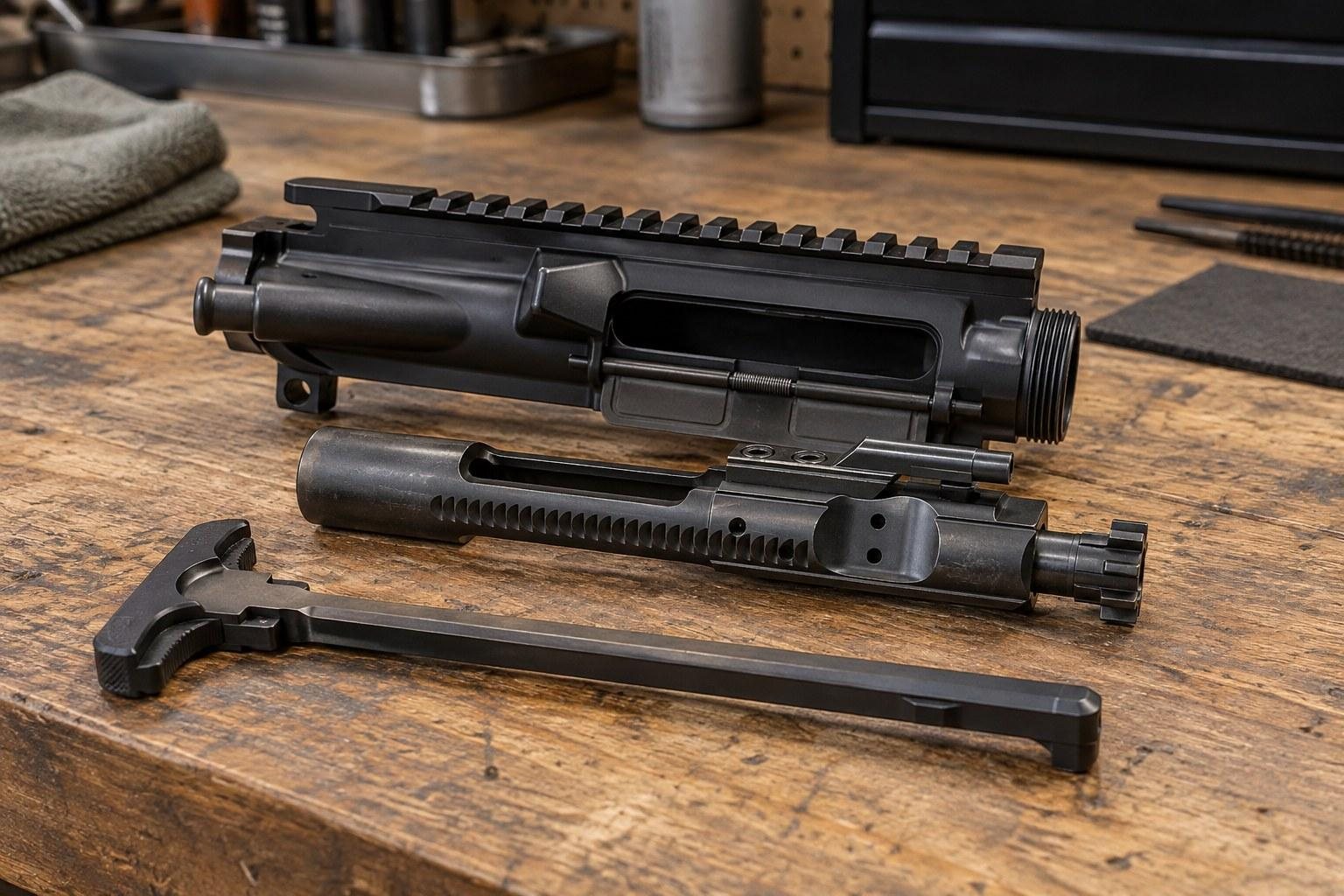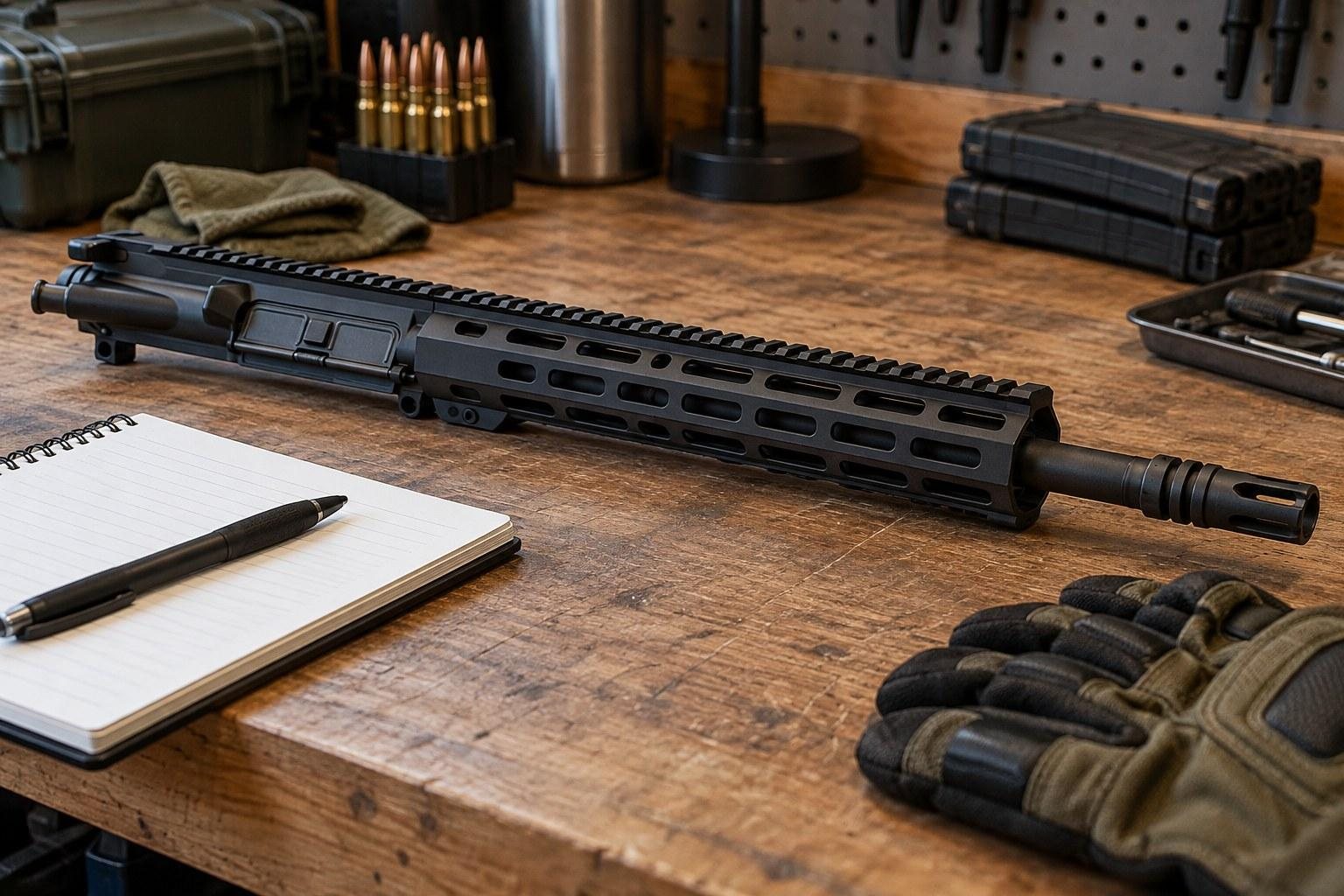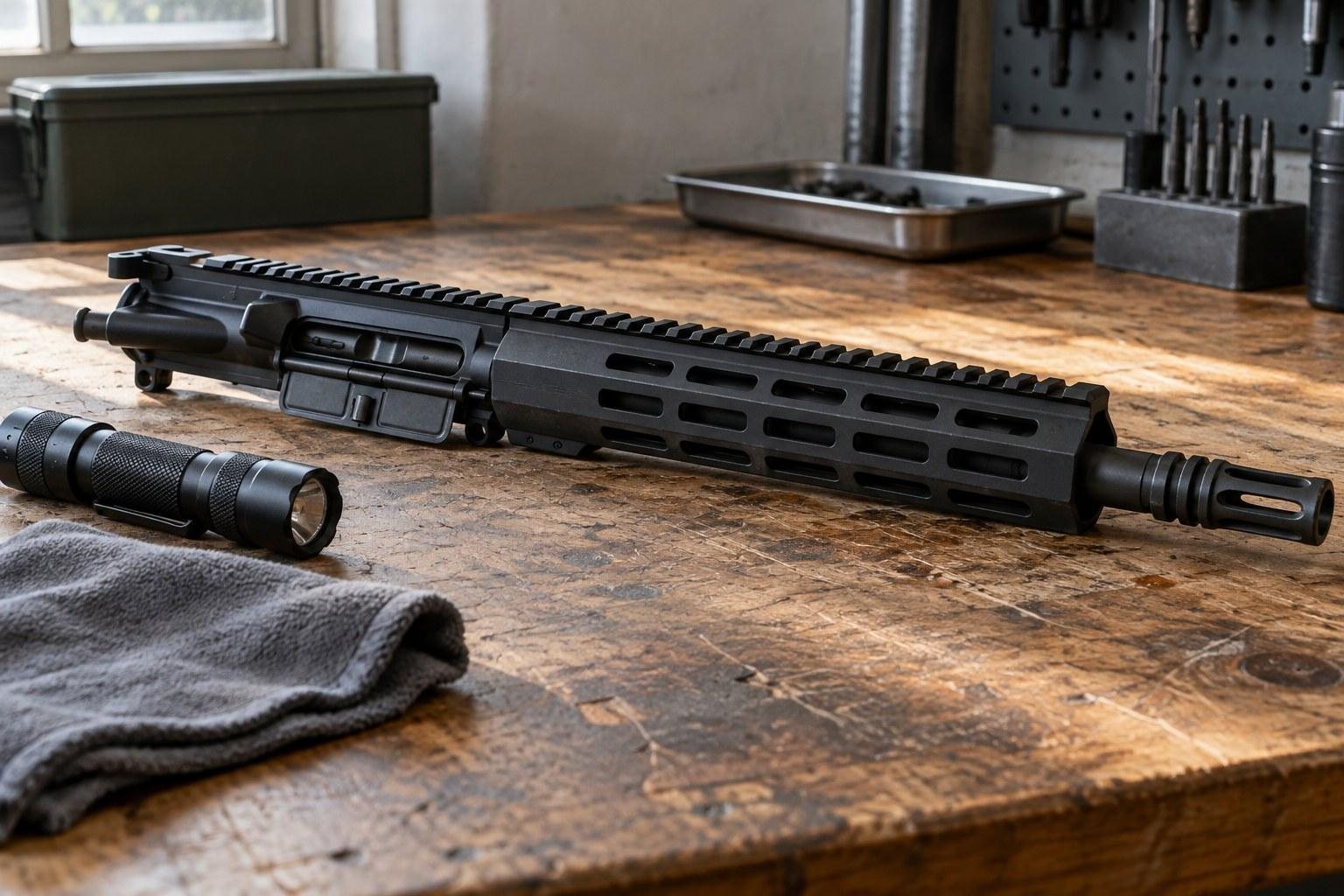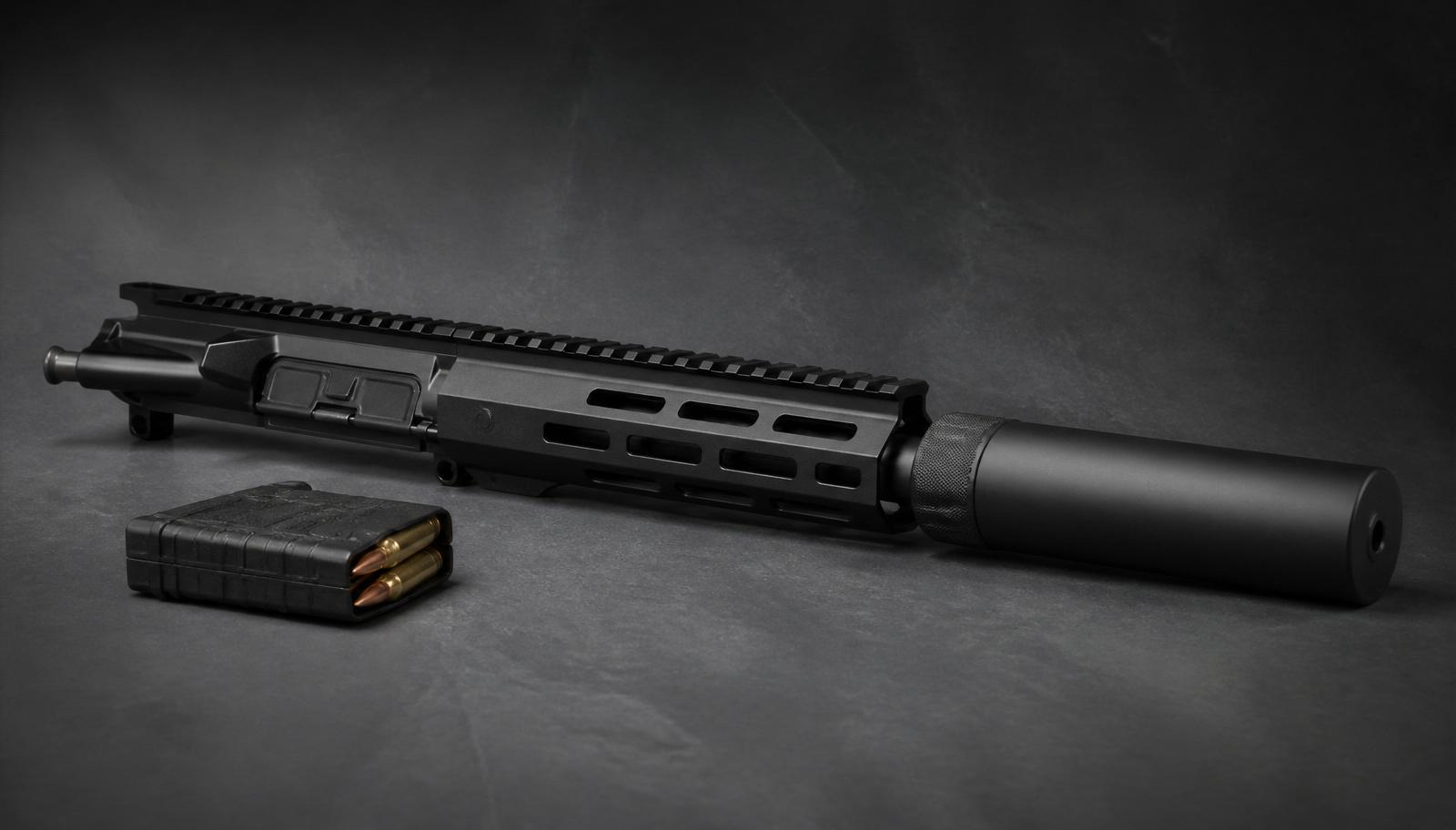
Find the best 300 Blackout upper: 8, 10.5, and 16 inch barrels compared, subsonic vs supersonic ammo, suppressor fit, and 5 real complete uppers.
300 Blackout (300 AAC, or 300 BLK) has become the default answer for anyone building a short, suppressed, or defense-focused AR-15. It was engineered from the start to hit full velocity from a 9-inch barrel, the exact configuration where 5.56 gives up the most performance, and it feeds from standard AR-15 magazines and runs on a standard bolt face. If you're picking an upper for a suppressor host, a home defense pistol build, or a compact hunting rifle inside 200 yards, 300 BLK is almost always the right chambering. This guide walks through barrel length, subsonic vs supersonic ammo, suppressor compatibility, twist rate, BCG choice, and five real complete uppers you can buy today. As always, verify your federal, state, and local laws before buying a short-barreled upper, a suppressor, or any NFA item.
Why 300 Blackout Exists (and Where It Beats 5.56)
5.56 NATO is a fast, light bullet that needs velocity to do its job. Cut the barrel below about 14.5 inches and terminal performance drops sharply, muzzle blast becomes brutal, and reliability with certain loads gets fussy. 300 Blackout was designed by AAC to solve exactly that problem: put a heavier .30-caliber bullet in a case that fits AR-15 magazines and bolt, and tune the powder to burn completely in a 9-inch barrel.
The result is a caliber that hits harder than 5.56 out of short barrels, cycles cleanly suppressed with subsonic ammo, and fits any AR-15 lower you already own. It won't replace 5.56 for high-volume range use or longer-range work (a 300 BLK round out of a 16-inch barrel isn't gaining much, and it's still a 200-yard-and-in caliber ballistically), but for a compact, suppressor-friendly build, nothing in the AR-15 world beats it. If you're still deciding between the two chamberings for a specific build, our 300 Blackout vs 5.56 upper comparison breaks down the tradeoffs in more depth.
Barrel Length: 8, 10.5, and 16 Inch Compared
Because 300 BLK burns its powder in a short barrel, gas systems on short 300 BLK uppers are almost always pistol-length. Anything longer bleeds off too much pressure before the bullet reaches the gas port and causes under-gassing, especially with subsonic loads. Rifle-length 16-inch barrels sometimes ship with a carbine-length gas system instead, which changes the dwell time and felt recoil compared to a pistol-gas short barrel.
For most builds, 8 to 10.5 inches with a pistol-length gas system is the sweet spot. It captures the caliber's full designed velocity, stays short enough to handle well suppressed, and runs both supersonic and subsonic ammo without fuss. An 8-inch barrel is ideal for a dedicated CQB, truck-gun, or braced pistol role. A 16-inch barrel is mostly chosen to build a rifle-length gun without a short-barrel stamp; the ballistic gain past 10.5 inches is small, so pick 16 inches for legal configuration or handling preference, not for extra velocity. For a deeper look at how gas system length changes reliability and recoil across barrel lengths, see our gas system length guide.
Ready-to-run complete 300 BLK uppers at ar15parts.com span all three of these configurations, so you can match barrel length to role without assembling one yourself.
Subsonic vs Supersonic Ammo
300 Blackout is built around running two very different types of ammunition through the same barrel, and understanding both is central to picking the right upper.
Supersonic loads typically run 110 to 125 grain bullets at roughly 2,100 to 2,350 feet per second out of a 9 to 16-inch barrel. These behave like a hard-hitting pistol-caliber-adjacent round: flat enough to 150 to 200 yards, plenty of energy for defense or hunting, and they cycle any properly gassed 300 BLK upper without special tuning. Supersonic ammo still produces a sonic crack downrange even when fired suppressed, since the bullet itself breaks the sound barrier.
Subsonic loads run much heavier bullets, commonly 190 to 220 grains, at velocities intentionally kept under about 1,050 feet per second so the projectile never goes supersonic. This is where 300 BLK earns its reputation as a suppressed-carbine caliber: with a can attached, subsonic 300 BLK is dramatically quieter than any subsonic 5.56 load, because the case capacity and bullet weight were designed around this exact use case from day one. The tradeoff is a rainbow-like trajectory past 100 yards and a bolt carrier group that has to be tuned to reliably cycle the lower pressure subsonic round, especially unsuppressed.
A single 300 BLK upper is expected to run both loads well, which is why barrel twist, gas tuning, and BCG choice all matter more here than in most other AR-15 calibers. Budget for both types of ammo when you test a new upper: run a box of supersonic and a box of subsonic through it before you trust it for defense or hunting use.
Suppressor Compatibility: Threads, Mounts, and Gas Tuning
Suppressed shooting is where 300 Blackout does its best work, and nearly every complete 300 BLK upper on the market ships ready for a can.
- Thread pitch. 5/8x24 is the standard muzzle thread on 300 BLK barrels, matching the same pitch used on most 5.56 and .308 suppressor hosts. Confirm the exact thread spec on the barrel you buy, but 5/8x24 is the safe default assumption for this caliber.
- Mounts. Direct-thread mounting works, but a quick-detach muzzle device (a fixed brake or flash hider paired with a QD suppressor mount) lets you swap the can on and off without re-zeroing every time. Our muzzle devices guide covers how to pick a brake, flash hider, or QD mount for this exact use case.
- Gas tuning. Adding a suppressor increases back pressure, which pushes more gas rearward into the action and speeds up bolt carrier cycling. On a pistol-gas 300 BLK upper this is usually a good thing with subsonic ammo (it helps reliable cycling at low pressure) but can over-gas the system with supersonic ammo, increasing felt recoil, bolt bounce, and wear. An adjustable gas block lets you dial the system in for the specific ammo and suppressor combination you actually run; see our adjustable gas block guide for how to tune one.
- Backpressure symptoms. Excess gas blowback (smoke in your face, ejected brass tumbling erratically, or a noticeably harder recoil impulse suppressed) usually means the gas port is oversized for a suppressed, subsonic-heavy use case. Reducing port size, adding an adjustable block, or switching to a heavier buffer are the standard fixes.
If a can is central to your build plan, start with an upper that's already configured for it; our best suppressor-ready uppers roundup covers options built specifically around this use case.
If a 300 BLK barrel doesn't spec 1:7 or 1:8 twist, treat it as a supersonic-only barrel and plan your ammo accordingly.
Twist Rate for Sub and Supersonic
300 Blackout is unique in that a single upper is expected to stabilize wildly different bullet weights: 110 to 125 grain supersonic hunting and defense loads, and 190 to 220 grain subsonic suppressed loads. That's roughly double the bullet weight in the same barrel.
The industry answer is a fast twist rate, 1:7 or 1:8, which stabilizes the whole range. Avoid any 300 BLK barrel with a 1:10 or slower twist unless you're only shooting light supersonic loads; heavy subsonics will keyhole (tumble instead of flying point-first), which destroys accuracy and can be unsafe. For a broader explanation of how twist rate math works across AR-15 calibers, see our twist rate guide.
BCG and Buffer Weight
300 Blackout uses the same bolt face and standard AR-15 BCG as 5.56 NATO, so a quality mil-spec bolt carrier group will work for supersonic ammo. Subsonic and suppressed use is where a couple of upgrades pay off:
- Dedicated 300 BLK / suppressed BCGs. Some manufacturers sell BCGs with modified gas key geometry or a heavier carrier to slow the cycle and improve reliability with subsonic suppressed loads. Nice to have, not required for supersonic-only shooting.
- Heavier buffer. An H2 or H3 buffer often does the same job as a specialty BCG at lower cost, dampening the extra bolt speed you get from suppressed or over-gassed cycling.
- Extractor and spring condition. Because subsonic loads run at much lower chamber pressure, a worn extractor spring shows up as a reliability problem in 300 BLK long before it would in 5.56. Check it if you're having subsonic-only malfunctions.
Top 5 Complete 300 Blackout Uppers
If you'd rather buy a finished upper than assemble one from parts, here are five real complete 300 Blackout uppers currently listed at ar15parts.com, spanning short, mid-length, and full 16-inch barrels.
- 8" Complete Upper, Ballistic Advantage DRP Modern Series. An 8-inch QPQ nitride 4150 CMV barrel with 1:7 twist, 30-caliber feed ramps, and 5/8x24 threads, paired with a 10-inch free-float M-LOK rail, a pistol-length gas system, a slim cone flash can, and a nitride 300 BLK BCG. The shortest, most suppressor- and SBR-friendly option in this list.
- 10.5" Complete Upper, Ballistic Advantage DRP Modern Series. Same barrel line stretched to 10.5 inches, still 1:7 twist and 5/8x24 threaded, with a 10-inch M-LOK rail, pistol-length gas system, A2 flash hider, and the same nitride BCG. This is the do-it-all length the barrel-length section above points to.
- 16" Complete Upper, Heavy Parkerized Barrel. A 16-inch heavy 4150 chrome-moly parkerized barrel with 1:8 twist and 5/8x24 threads, a 12-inch free-float rail, pistol-length gas system, A2 flash hider, and a mil-spec nitride BCG. A straightforward, no-frills rifle-length option.
- 16" Complete Upper, Satern Medium Stainless Barrel. A 16-inch 416R stainless medium-profile barrel from Satern Barrels, 1:7 twist, 5/8x24 threads, with a 15-inch free-float rail, a carbine-length gas system, a competition muzzle brake, and the standard 300 BLK BCG. The carbine gas system here changes the dwell time versus the pistol-gas options above.
- 16" Complete Upper, Wilson Combat Recon Fluted Barrel. A 16-inch fluted 416R glass bead stainless barrel from Wilson Combat, 1:7 twist, 5/8x24 threads, paired with a 12-inch free-float rail, pistol-length gas system, competition muzzle brake, and mil-spec BCG. The premium barrel choice in this lineup.
All five ship with a BCG and charging handle installed, drop onto any mil-spec AR-15 lower, and use 5/8x24 threading for a suppressor mount. Confirm current stock and pricing on the product pages before ordering, since availability changes.
How to Pick a Complete 300 BLK Upper
If you're buying a complete 300 Blackout upper rather than assembling one, the checklist is short:
- Barrel: 8 to 10.5 inches for a suppressed do-it-all build, 16 inches if you want rifle length without a stamp. 1:7 or 1:8 twist, chrome-moly or 4150 CMV (nitride finish is fine and lower cost than stainless for this caliber).
- Gas system: Pistol length on most short barrels, sometimes carbine length on 16-inch barrels. An adjustable gas block is worth the upgrade if you shoot suppressed regularly.
- BCG: Mil-spec 5.56 BCG (M16 profile), properly staked gas key, MPI/HPT tested. A dedicated 300 BLK BCG or an H2/H3 buffer helps with subsonic suppressed use.
- Handguard: Free-floating M-LOK, 9 to 15 inches, sized to the barrel so a suppressor clears the end.
- Muzzle: 5/8x24 threading is standard for 300 BLK. Come with a thread protector, flash hider, or brake and swap for a QD suppressor mount as needed. Verify your federal, state, and local laws before purchasing a suppressor or an NFA item to pair with it.
If you're building rather than buying complete, our upper install guide and pillar upper receiver guide cover the mechanical steps and the parts hierarchy in more depth. For caliber tradeoffs against 5.56, .224 Valkyrie, and 6.5 Grendel, see the caliber comparison guide.