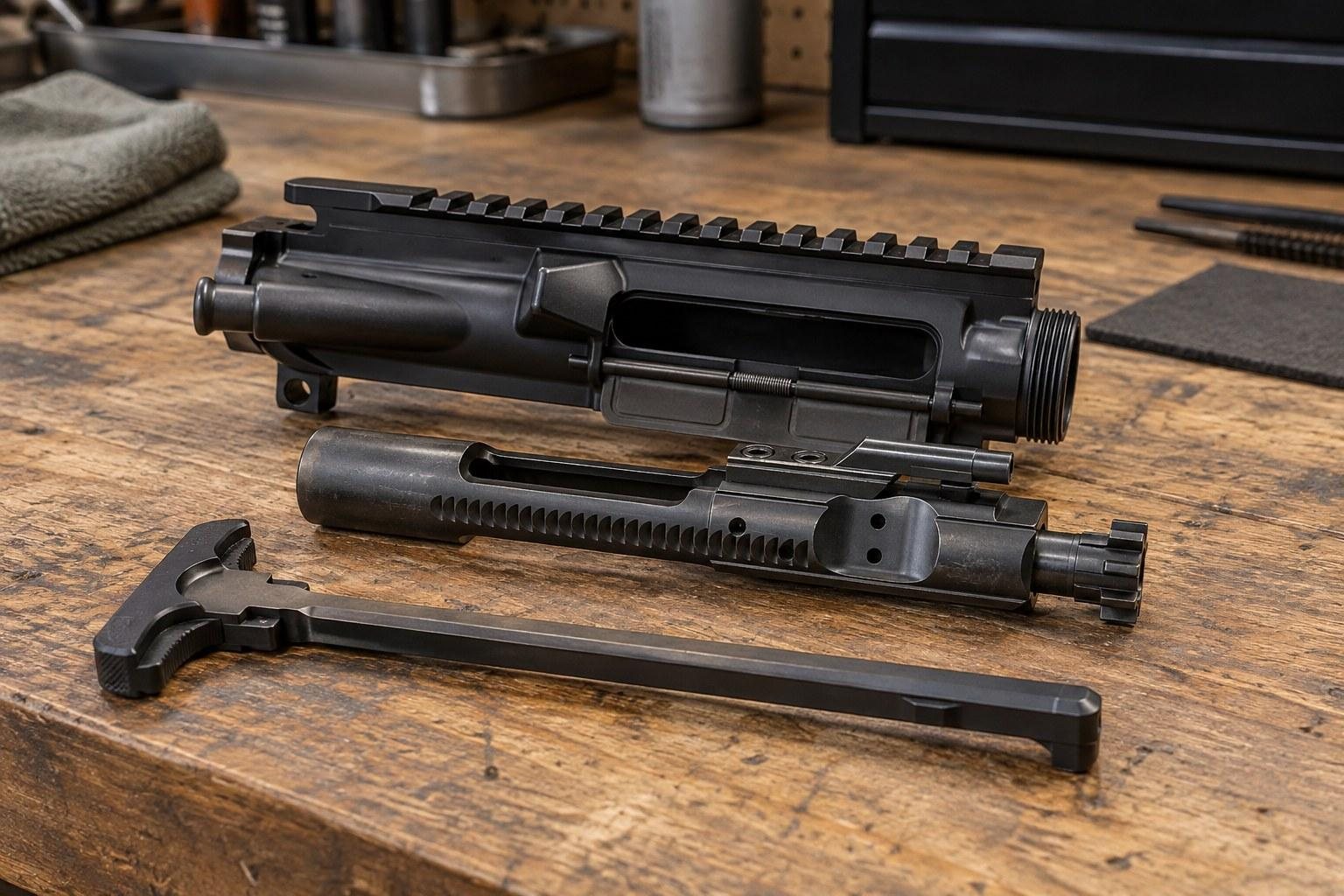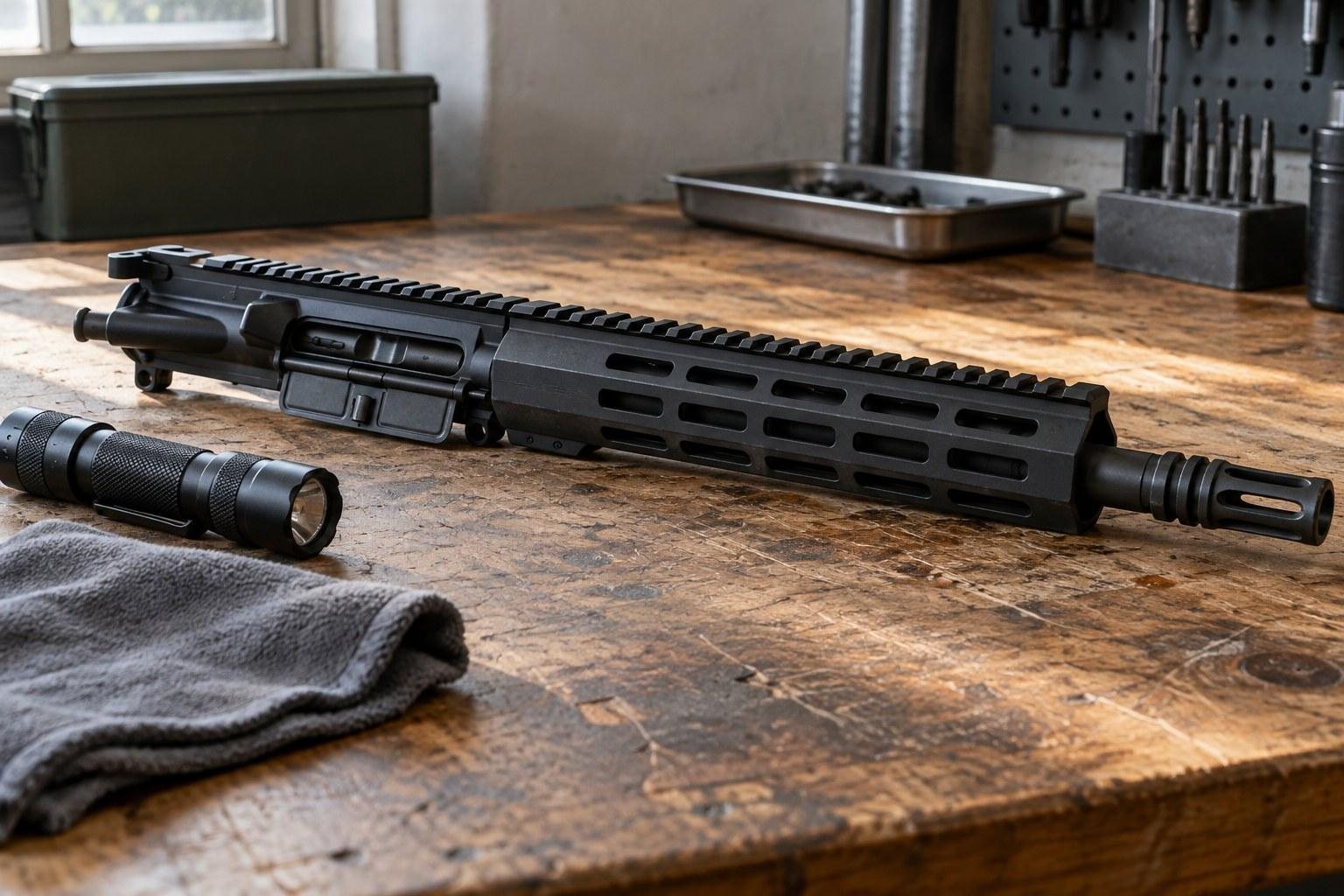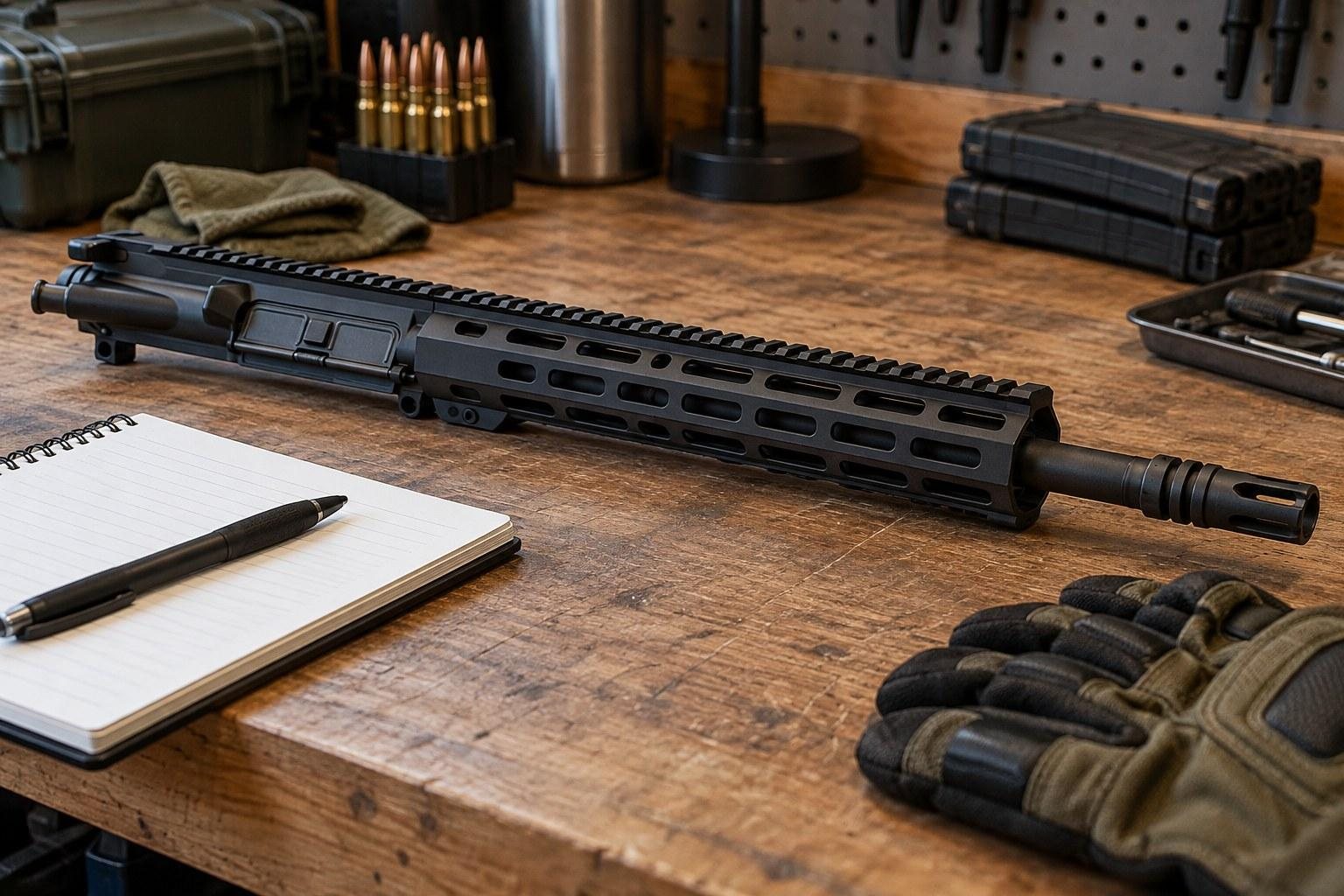
Good AR-15 training starts with a plan, and the upper you run should serve that plan instead of the other way around. Many shooters buy hardware first and then try to build skills around it. Our editors suggest flipping that order.
Write down what you want to be better at twelve months from now. Maybe it is clean fundamentals at 50 yards, faster carbine transitions, or steady hits on steel well past 300 yards. Each goal points toward a different caliber, barrel length, rail and optic setup. Below we break down how to read your own goals, then turn them into a short list of upper configurations that will actually support the work you plan to put in.
Want to see the configurations side by side before you plan?
Key Takeaways
- Your training goals should decide caliber, barrel length and rail length, not the other way around.
- Affordable, widely available ammunition matters more than any single feature when you plan to shoot often.
- A 16 inch 5.56 NATO or 223 Wylde upper covers fundamentals and carbine drills for most training plans.
- Precision goals favor longer barrels, rifle-length gas and cartridges built for distance, such as 22 ARC.
- Barrels under 16 inches create a short-barreled rifle on a rifle that still requires ATF registration, even with a $0 tax.
Start With Your Training Goals, Not the Hardware
An upper is a tool. Before you compare barrels and rails, decide what kind of shooter you are trying to become this year. Honest answers here save money and range time later.
Define the Skill You Want to Build
Most training plans fall into a few buckets. Fundamentals work covers grip, sight picture, trigger control and zeroing. Carbine work adds movement, reloads, transitions and shooting from barricades. Precision work focuses on wind reading, data collection and hitting small targets at longer distances.
Pick one primary bucket and one secondary bucket. Trying to train everything at once usually means you train nothing well.
Count Your Range Days and Round Budget
Next, estimate how often you can realistically get to the range and how many rounds you can afford per session. A plan with frequent, high-volume sessions pushes you toward a common, inexpensive cartridge. A plan with fewer, slower sessions gives you more room to pick a specialty caliber.
Be realistic about your local ranges too. If the longest lane you can reach is 100 yards, a long precision barrel will spend most of its life underused.
Write the Plan Down
Put your goals, sessions and round counts on paper. Then list the drills you will run each month. That short document becomes the spec sheet you use to judge every upper you consider.
Choosing a Caliber for AR-15 Training
Caliber is the decision that shapes everything else. It controls ammunition cost, recoil, magazine choice and how far your rifle can usefully reach. For high-volume practice, availability usually beats ballistics.
5.56 NATO and 223 Wylde for Volume Work
The 5.56 NATO chamber is the default for a reason. Ammunition is common, magazines are everywhere, and recoil is mild enough for long sessions. You can browse current configurations on the 5.56 NATO uppers page, where 16 inch builds with parkerized M4 profile barrels and stainless barrels are common options.
The 223 Wylde chamber is designed to fire both 5.56 NATO and .223 Remington while leaning toward accuracy. 223 Wylde uppers are commonly available in 16 inch heavy parkerized and stainless options. A 1 in 8 twist is a common choice for this chambering, since it handles a broad range of common bullet weights.
300 Blackout for Short Barrels and Suppressors
300 Blackout runs well in short barrels and is popular with shooters who train suppressed. It uses standard AR-15 magazines and bolts, so your support gear stays the same. Ammunition tends to cost more than 5.56, which matters for high-volume plans. Browse the 300 Blackout uppers, which are commonly offered in 10.5 and 16 inch builds.
22 ARC for Precision Goals
If your plan leans toward distance, 22 ARC is built for long, high ballistic coefficient bullets in an AR-15 sized action. 22 ARC uppers are commonly offered in 16 and 18 inch builds, often with a fast 1 in 7 twist. Expect ammunition to be more specialized and less common than 5.56.
Not sure which cartridge fits? Our caliber guides break down the tradeoffs.
Barrel Length and Gas System by Training Type
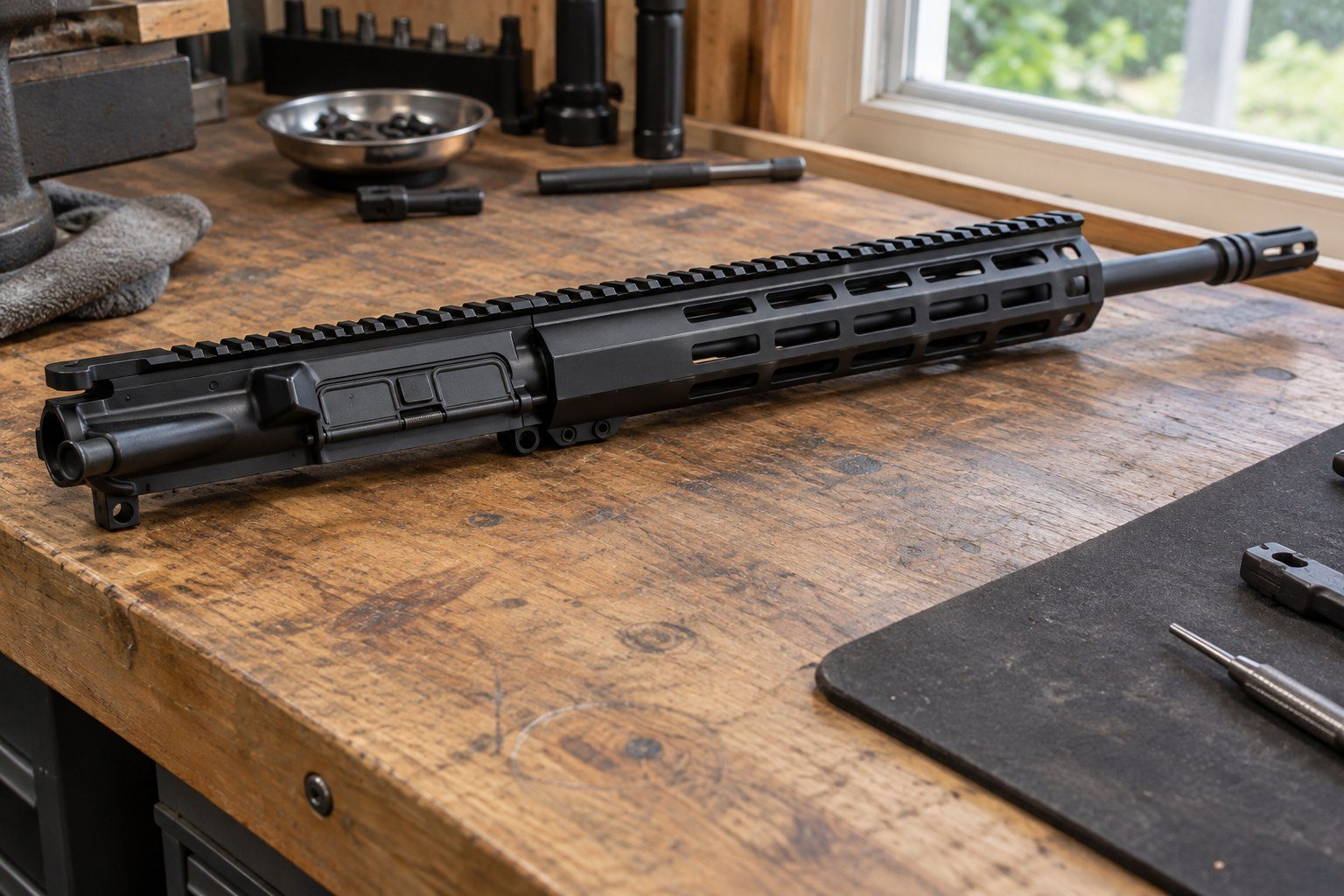
Once you pick a caliber, barrel length sets handling and velocity, and gas system length affects how smoothly the rifle cycles. Neither has a single correct answer. They should simply match the drills you plan to run.
Matching Length to the Drill
| Training Focus | Common Barrel Length | Typical Gas System | Why It Fits |
|---|---|---|---|
| Fundamentals and zeroing | 16 inch | Carbine or mid-length | No NFA paperwork, common and easy to support |
| Carbine and movement drills | 14.5 inch pinned, or 16 inch | Mid-length | Shorter and handier while staying at a legal 16 inches with a pinned device |
| Suppressed or close range | 10.5 inch (SBR) | Pistol or carbine | Compact handling, but requires ATF registration |
| Precision and distance | 18 to 20 inch | Rifle | More velocity and a longer sight radius for small targets |
For a deeper look at length tradeoffs, read our AR-15 barrel length guide.
Why Gas Length Matters
Gas system length affects felt recoil, timing and parts wear. A longer gas system on a given barrel often feels softer, while a short system on a long barrel can run harder. Our gas system length guide covers the details. Never drill or modify gas ports. If a rifle does not cycle reliably, check with the component manufacturer or a qualified gunsmith.
The NFA Line at 16 Inches
Under federal law, a rifle with a barrel under 16 inches, or an overall length under 26 inches, is a short-barreled rifle. Since January 1, 2026 the federal tax on SBRs is $0, but ATF registration is still required before you build one. A pinned and welded muzzle device can bring a 14.5 inch barrel to 16 inches. State and local laws vary, so confirm the rules where you live. The ATF National Firearms Act page is the place to start.
Rails, Optics and Controls That Support Your Plan
The parts bolted to your barrel shape how comfortable your training feels. Small details add up over hundreds of reps.
Handguard Length
Many complete uppers come with either a 12 or 15 inch rail. A longer rail gives you room to extend your support hand, which many shooters prefer for carbine drills and for building a stable position off barricades. A shorter rail saves a little weight and keeps the rifle compact. Free-float rails also keep pressure off the barrel, which helps consistency. Our free-float vs drop-in handguard comparison explains why.
Optic Choice by Goal
- Fundamentals: a red dot or simple iron sights keep your attention on trigger control and follow-through.
- Carbine work: a red dot or low-power variable optic supports fast target acquisition at close and mid distances.
- Precision: a higher magnification scope with clear reticle holds supports wind and elevation practice.
Muzzle Devices and Charging Handles
A flash hider is a sensible default for most training. A compensator or brake can reduce muzzle rise during fast strings but adds noise and blast for people beside you. Ambidextrous or extended charging handles can speed up malfunction drills, though a standard handle works fine for most plans.
Building a Year-Long AR-15 Training Calendar
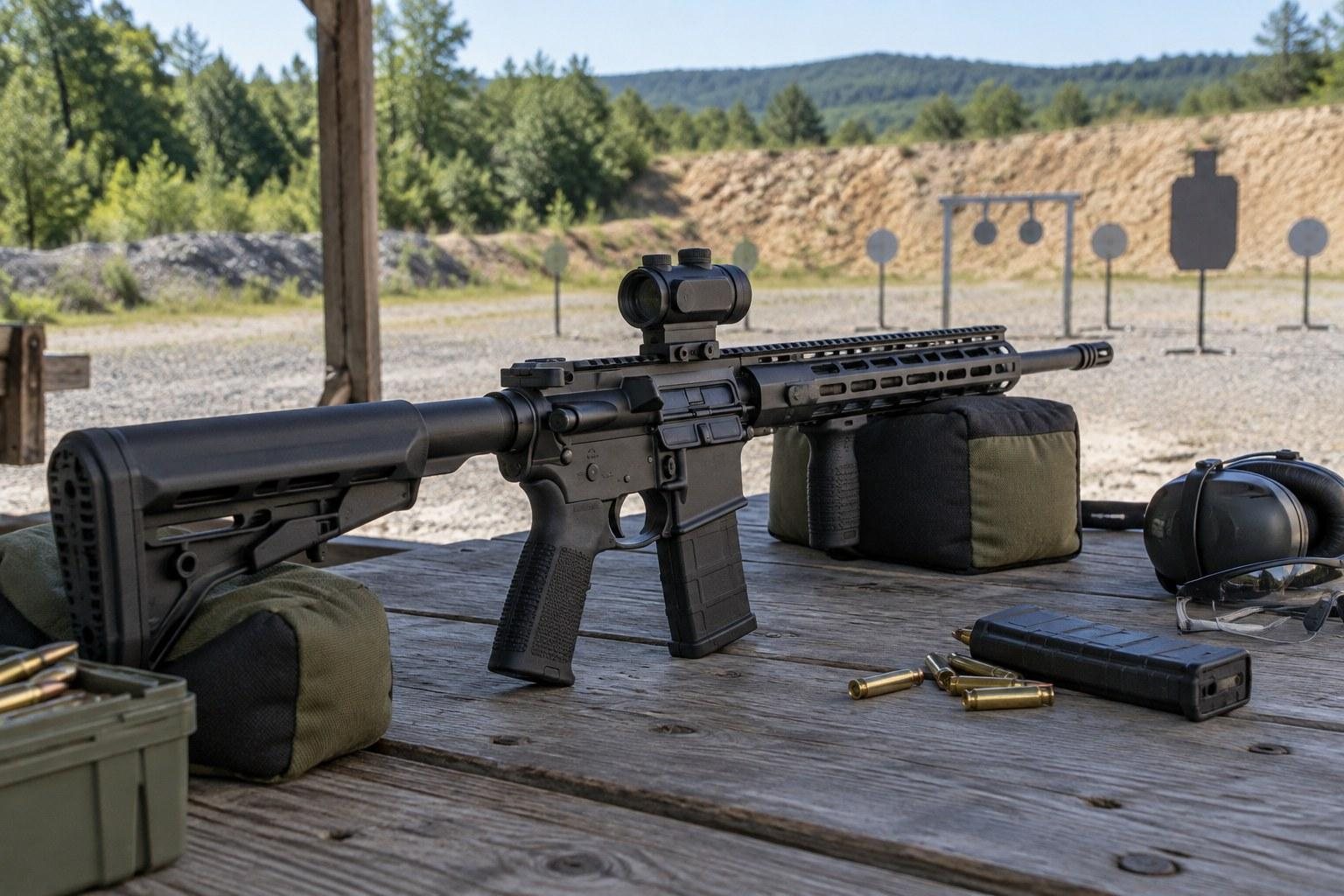
A simple calendar keeps you honest and helps you notice when your upper is holding you back. Think in quarters rather than single range trips.
Quarter One: Fundamentals and Zero
Start with a confirmed zero and slow, deliberate shooting from stable positions. Track group size and note any inconsistency. This is also a good time to learn your rifle's cleaning and lubrication needs.
Quarter Two: Carbine Skills
Add reloads, malfunction clearing with dummy rounds, transitions between targets and shooting from barricades. Always follow your range's rules and keep the rifle unloaded whenever you practice manipulations away from the line.
Quarter Three: Distance and Data
Stretch out to the longest distance your range allows. Record elevation and wind holds in a data book. If you find your current upper cannot keep up with your accuracy goals, this is when a second, precision-focused upper starts to make sense.
Quarter Four: Review and Adjust
Compare your notes against the plan you wrote in January. Decide what to keep, what to change and whether your hardware still fits your goals for next year.
One Upper or Two for Your Training Plan
One of the biggest advantages of the AR-15 platform is that a single lower can host more than one upper. That lets you split your training across two dedicated setups without buying a whole second rifle.
When One Upper Is Enough
If your plan centers on fundamentals and carbine work, a single 16 inch 5.56 NATO or 223 Wylde upper with a mid-length gas system and a 15 inch rail can cover the whole year. Simplicity also means fewer zeros to manage.
When a Second Upper Makes Sense
If precision is a real goal, a second upper chambered in 22 ARC or a longer 223 Wylde barrel lets you keep your carbine setup intact while you chase smaller groups. Remember that each upper needs its own zero, and some cartridges need their own magazines and bolt. Our 223, 5.56 and 300 Blackout magazines share a common format, which keeps those three calibers simple to support.
Safety and Swapping Uppers
Always confirm the rifle is unloaded before separating an upper from a lower. Follow the manufacturer's instructions, and if anything about fit or function seems off, have a qualified gunsmith inspect the rifle before you fire it.
Ready to turn your plan into a build? Start with our upper receiver guides.