The definitive pillar guide to AR-15 uppers, anatomy, stripped vs. complete, caliber options, legal classification, installation, and matching an upper to your use case.
An AR-15 upper is the assembly that sits on top of the lower receiver, housing the barrel, bolt carrier group, charging handle, and handguard. It's the half of the rifle that determines caliber, barrel length, and accuracy potential, and it can be swapped onto a compatible lower without any additional paperwork in most cases, since the upper itself isn't classified as a firearm under federal law.
That last point trips up a lot of first-time buyers, and it's one of several things worth understanding clearly before you start shopping. This guide covers the anatomy of an AR-15 upper, the stripped-vs-complete decision, caliber options, legal classification, installation, and how to match an upper to what you actually plan to do with the rifle, with links throughout to deeper coverage on each topic.
What Is an AR-15 Upper Receiver?
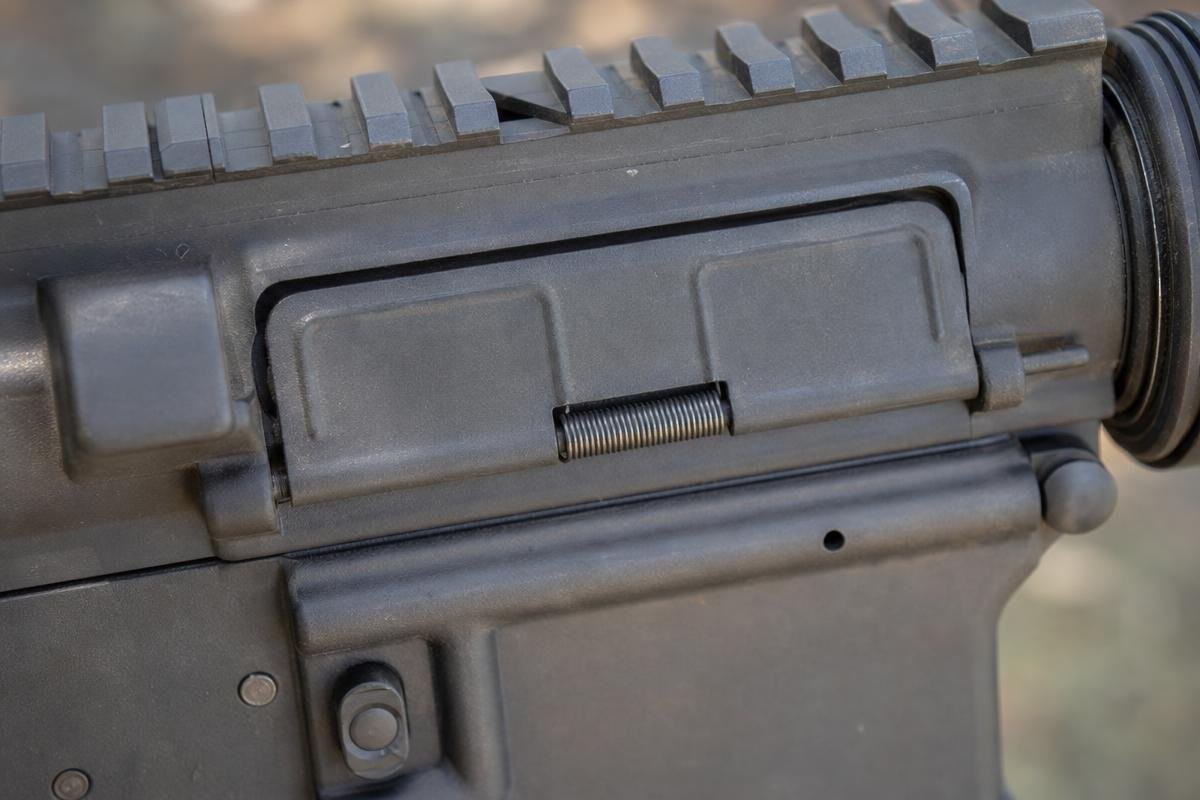
The upper receiver is a machined or forged aluminum housing (most commonly 7075-T6 for forged uppers, 6061-T6 for some billet designs) that holds the barrel, bolt carrier group, and charging handle, and provides the rail or M-LOK mounting surface via its attached handguard. Every component that actually fires the round, barrel, chamber, bolt face, lives on the upper side of the gun, even though the trigger and fire control group live in the lower.
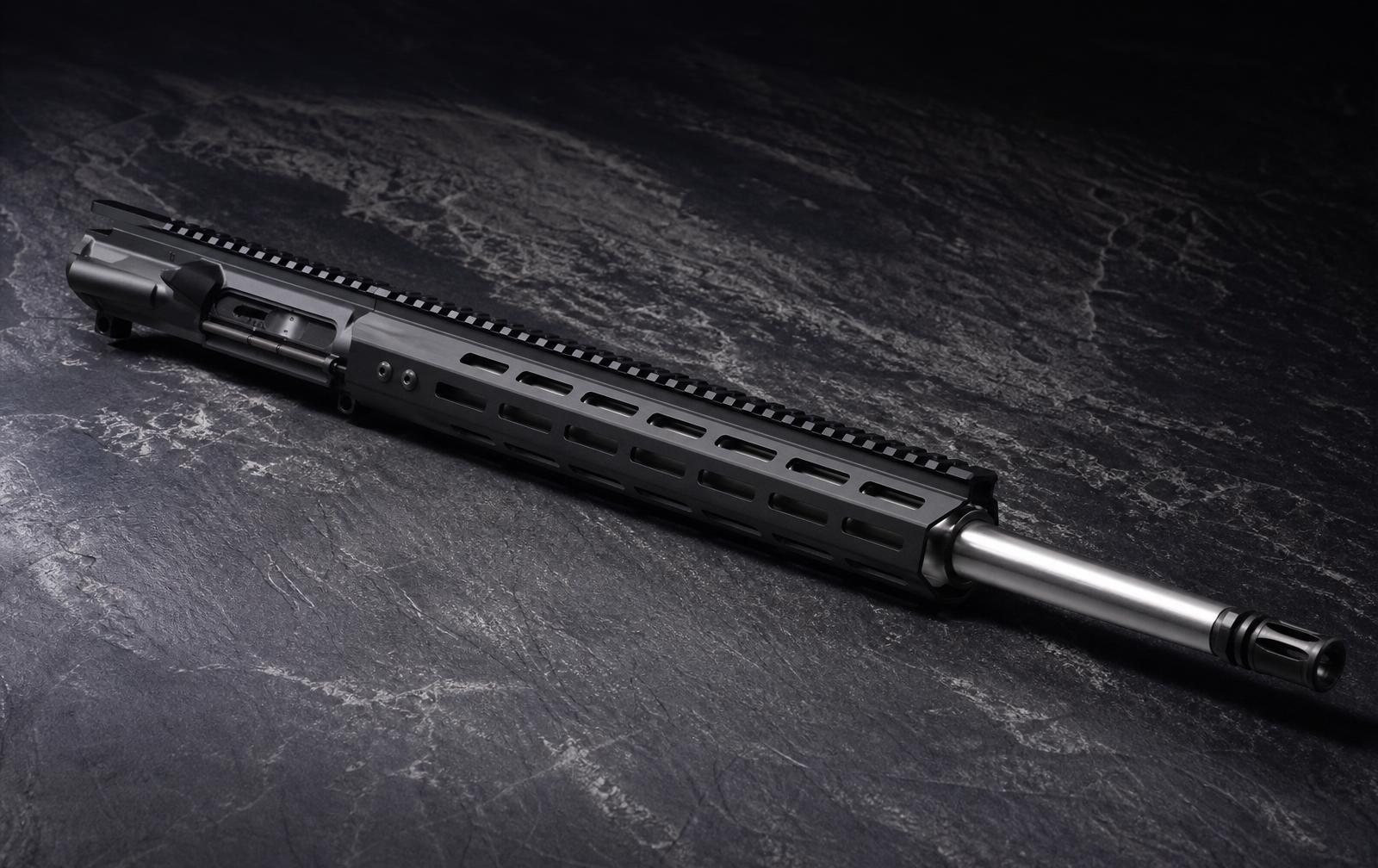
A complete upper assembly is built from several distinct parts working together:
- Upper receiver: The central housing, typically machined from aluminum, that the other components attach to. Flat-top designs with a Picatinny rail on top are now standard; A2/carry-handle uppers are largely a retro or nostalgia choice today.
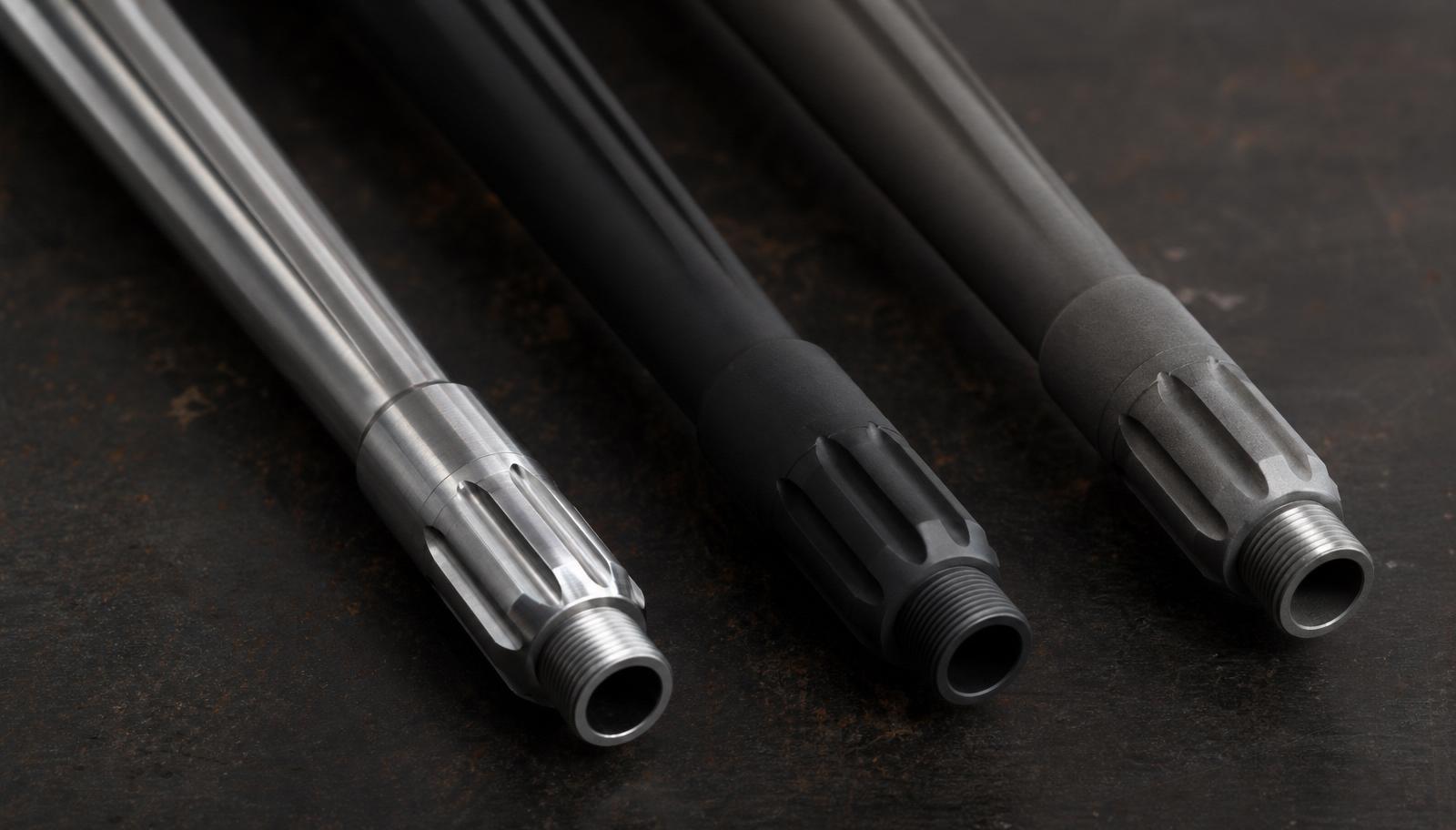
- Barrel: Most commonly chambered in 5.56 NATO/.223 Remington, with common lengths of 10.5", 14.5", 16", 18", and 20". Barrel steel is typically 4150 chrome-moly vanadium, sometimes chrome-lined or nitride-treated for corrosion resistance and extended service life.
- Bolt carrier group (BCG): The reciprocating assembly that extracts, ejects, and chambers rounds. Mil-spec BCGs use Carpenter 158 or equivalent steel with a phosphate finish; nickel-boron and DLC coatings are common upgrades for reduced fouling and easier cleaning.
- Charging handle: Used to manually cycle the action; standard mil-spec latches work fine for most shooters, though ambidextrous and extended-latch designs are popular upgrades, especially for left-handed shooters or optics-heavy builds.
- Gas system: A gas tube and gas block that redirect propellant gas to cycle the action. Gas system length (pistol, carbine, mid-length, or rifle-length) needs to match barrel length, a mismatch here is one of the most common causes of unreliable cycling in a new build.
- Handguard: Covers the barrel and gas system and provides the primary accessory-mounting surface. Free-float designs, which attach only to the receiver and don't contact the barrel, are now the standard for most builds because they don't transfer grip or accessory pressure to the barrel.
- Muzzle device: A flash hider, muzzle brake, or compensator threaded onto the end of the barrel, affecting recoil management, flash signature, and (on threaded barrels) suppressor compatibility.
Because the upper and lower interface through two takedown pins and a simple hinge design, a single lower receiver can support multiple uppers in different calibers or configurations, one of the platform's biggest practical advantages over rifles with a fixed, single-caliber receiver.
Forged vs. Billet Uppers
Most upper receivers are forged, aluminum is heated and compressed under extreme pressure into the receiver's basic shape, then machined to final dimensions. Forging aligns the metal's grain structure for strength, and forged uppers are the mil-spec standard, generally less expensive and just as durable as billet alternatives for the vast majority of shooters.
Billet uppers are machined from a solid block of aluminum rather than a forged blank, allowing for more aggressive design details, unique aesthetics, and sometimes tighter tolerances between upper and lower. They typically cost more than a comparable forged upper, and the performance difference for most shooters is negligible. Billet uppers are usually chosen for appearance and fit-and-finish preferences rather than any meaningful strength or reliability advantage over forged designs.
Flat-Top vs. Carry-Handle Uppers
The overwhelming majority of AR-15 uppers sold today are flat-top designs, featuring a full-length Picatinny rail on top of the receiver for mounting optics directly. Older A1/A2 carry-handle uppers integrate a rear sight and carrying handle into the receiver itself, a design largely reserved today for retro builds or shooters specifically replicating a period-correct rifle. Unless you're building a retro clone, a flat-top upper is almost always the right choice for optics compatibility and modern accessory support.
Stripped vs. Complete Uppers
A stripped upper is just the bare receiver, with no barrel, BCG, handguard, or gas system included, you buy and install every component separately. A complete upper includes all of that, fully assembled and ready to pin onto a compatible lower.
The tradeoffs come down to cost, control, and tools required. Building from a stripped upper typically costs somewhere in the $385 to $980 range once you've sourced a barrel, BCG, handguard, and gas system separately, and requires an armorer's wrench, torque wrench, and receiver vise block to assemble correctly. A complete upper runs roughly $350 at the budget end to $1,400+ for premium configurations, and generally requires nothing more than a set of takedown pins to install.
Neither path is objectively better. A stripped build gives you full control over every component and can be more economical if you shop carefully, while a complete upper removes the highest-risk assembly steps (barrel torque, headspacing) and gets you shooting faster. First-time builders are generally better served starting with a complete upper, since it removes the steps where a mistake is costliest to fix; experienced builders often prefer stripped uppers precisely because they want to hand-pick every component rather than accept a manufacturer's bundled configuration.
For a full breakdown of what's included in each option, realistic pricing, and a decision framework by buyer type, see our dedicated guide to stripped vs. complete uppers.
Choosing a Caliber
The AR-15 platform's split-receiver design means a single lower can run uppers in a wide range of calibers, each suited to a different role. Caliber choice affects recoil, effective range, ammunition cost, and, for hunters, what game the rifle is realistically suited for, so it's worth understanding the tradeoffs before defaulting to whatever's most common:
- 5.56 NATO/.223 Remington: The default AR-15 caliber, cheapest ammunition, widest parts availability, effective to 400 to 500 yards, and the easiest starting point for a first build.
- .300 AAC Blackout: Uses the same magazines and bolt as 5.56, with a simple barrel swap. Runs supersonic loads around 2,000 to 2,300 fps or subsonic loads near 1,000 to 1,050 fps, making it a favorite for suppressed and short-barrel builds.
- 6.5 Grendel: Built to stretch effective range well past 500 yards with better retained energy than 5.56, at the cost of a dedicated bolt and magazines.
- .224 Valkyrie: Purpose-built for flat, high-BC trajectories past 1,000 yards with low recoil, using a standard 5.56 bolt and magazines despite its very different ballistics.
- 6mm ARC: Built on the 6.5 Grendel case necked to 6mm, balancing long-range performance with better terminal performance on game than .224 Valkyrie.
- .350 Legend: A straight-walled cartridge for hunters in straight-wall-only states, using the same bolt as 5.56/.223 for a simple caliber swap.
- .458 SOCOM: A close-range, large-diameter cartridge for hog and big-game hunting, using a modified standard magazine.
- .50 Beowulf: The largest-diameter option on this list, delivering serious close-range stopping power with correspondingly heavy recoil.
Some of these calibers are simple barrel swaps from an existing 5.56 setup, meaning they run on your existing bolt and magazines; others, like 6.5 Grendel and 6mm ARC, require a different bolt face and dedicated magazines, which adds to the total cost of adding that caliber to your collection. Our full caliber comparison guide breaks down ballistics, cost per round, bolt/magazine compatibility, and which caliber fits which use case in detail.
Is an AR-15 Upper Considered a Firearm?
No. Under federal law, the lower receiver, not the upper, is the regulated "firearm." The ATF's regulatory definition of "frame or receiver" specifically identifies the lower receiver on AR-15/M-16 pattern rifles as the part that houses the fire control components, which is why it's the part that's serialized and requires a background check and FFL transfer. An upper receiver, stripped or complete, doesn't carry that classification and generally doesn't require a background check to purchase, which is why complete uppers, barrels, and other component parts can typically ship directly to your home just like any other rifle accessory.
You can buy a complete upper online and have it shipped to your door. Only the lower requires an FFL transfer.
There are important exceptions and caveats worth knowing. Short-barreled configurations fall under separate NFA rules, and some states impose their own restrictions that don't mirror the federal upper/lower distinction. It's also worth understanding what this classification does not mean: buying an upper without a background check doesn't create a functional firearm on its own, since you still need a lower receiver, which does require a background check, to assemble a complete, working rifle.
For the full explanation, including the ATF's regulatory basis and state-level considerations, see our dedicated article on AR-15 upper legal classification.
How to Install an AR-15 Upper
Installing a complete upper onto a compatible lower is a straightforward process: align the front takedown pin lug, insert the front pin, rotate the receivers together, align the rear pin holes, and insert the rear takedown pin. With both pins seated, cycle the charging handle and confirm the bolt locks fully into battery before considering the rifle ready to use. Most complete-upper installations take 20 to 40 minutes for someone doing it the first time, and require nothing more specialized than a set of takedown pins already built into the receivers themselves.
If you're building from a stripped upper rather than a complete one, you'll also need to torque the barrel nut (typically 30 to 80 ft-lbs, tightened until a gas tube slot aligns), torque and stake the castle nut (40 ft-lbs ± 2) and carrier key screws (35 to 40 in-lbs), and verify headspace if you're pairing components from different manufacturers. Getting torque specs right matters more than it might seem. Under-torquing the barrel nut can cause accuracy issues, while mixing up foot-pounds and inch-pounds is one of the most common mistakes new builders make on smaller fasteners like carrier key screws. Budget closer to 1 to 2 hours for a full stripped-upper build, including time to double-check each torque spec.
Our complete step-by-step installation guide covers the full process, a torque spec table, headspace gauging basics, and troubleshooting for common cycling issues.
Choosing the Right Upper for Your Use Case
The right upper depends entirely on what you're using the rifle for, more than any single spec sheet ranking. Rather than chasing a generic "best" recommendation, it's worth matching barrel length, gas system, BCG coating, and handguard type to your actual use case first:
- Home defense favors a shorter, maneuverable barrel (typically 14.5" to 16"), a lightweight or mid-weight profile, and a free-float M-LOK handguard with room for a light. Reliability and fast handling in tight spaces matter more here than long-range precision.
- Range and budget builds do well with a 16" carbine or mid-length setup, a chrome-lined 4150 CMV barrel, and a phosphate-coated BCG, proven, durable, and the most accessible price point for a rifle you'll shoot often.
- Long-range builds benefit from an 18" to 24" barrel in stainless or nitride-treated steel, a rifle-length gas system, and a heavier profile that holds zero across strings of fire.
- Lightweight and competition builds prioritize a pencil or lightweight barrel profile, a carbine or mid-length gas system, and a slim M-LOK handguard to minimize weight forward of the receiver, since a few extra ounces can noticeably affect transition speed on a shot timer.
Barrel length, gas system length, BCG coating, and handguard type all interact, and getting one wrong can undercut the benefit of getting the others right. For instance, a heavy long-range barrel paired with a carbine-length gas system tuned for a shorter barrel will often cycle unreliably. Our detailed use-case buying guide walks through recommended specs for each category in depth, along with realistic price ranges at each tier.
Ready to Shop?
Whether you're buying your first complete upper or adding a specialized second one for a new caliber or role, the fastest path forward is starting from your use case and caliber, then narrowing by the specs covered above.
Browse the full complete uppers catalog at ar15parts.com, filterable by caliber, barrel length, and price, or explore stripped uppers if you're building from individual components.