A use-case-first guide to choosing the right AR-15 complete upper, covering barrels, gas systems, BCGs, and handguards for home defense, range, long-range, and competition builds.
A quality complete upper comes down to four things: a barrel matched to your intended use, a gas system length suited to your barrel length, a properly coated bolt carrier group for reliability, and a handguard that fits how you'll actually use the rifle. Get those four right, and almost any other feature is a matter of preference rather than performance.
Below, we break down exactly what to look for, then match the right upper to the way you actually shoot, whether that's home defense, range days, long-range precision, or competition.
What to Look for in a Complete Upper
Before comparing options, it helps to understand the handful of specs that actually determine how an upper performs. Everything else, rail length, finish color, brand reputation, is secondary to these four.
Barrel Material and Profile
The barrel is the single most important component in any upper, and two things matter most: the steel and the profile.
- 4150 chrome-moly vanadium (CMV) steel is the mil-spec standard and a safe baseline for durability and heat resistance under sustained fire.
- Chrome lining adds corrosion resistance and extends barrel life, at a modest cost premium, a good upgrade if you expect to put significant round counts through the gun.
- Stainless steel barrels often deliver tighter accuracy out of the box and are popular for long-range and precision builds, though they typically wear faster under heavy, sustained use than chrome-lined CMV.
- Nitride (melonite) treatment is increasingly common as a middle ground, offering corrosion resistance similar to chrome lining with accuracy closer to stainless.
Barrel profile (lightweight/pencil, government, heavy/bull) affects weight, heat dissipation, and handling. Lighter profiles are easier to carry and maneuver; heavier profiles hold zero better across strings of rapid fire and dissipate heat more effectively.
Twist rate is another spec worth understanding, even though it's easy to overlook. A 1:7 twist rate stabilizes a wider range of bullet weights, including heavier options popular for longer-range shooting, and has become something of a default on general-purpose barrels. A 1:8 twist splits the difference well for most shooters running common 55 to 77 grain loads. Slower twist rates like 1:9 can still shoot well but are increasingly less common on new complete uppers.
Gas System Length
Gas system length should match your barrel length, not just personal preference:
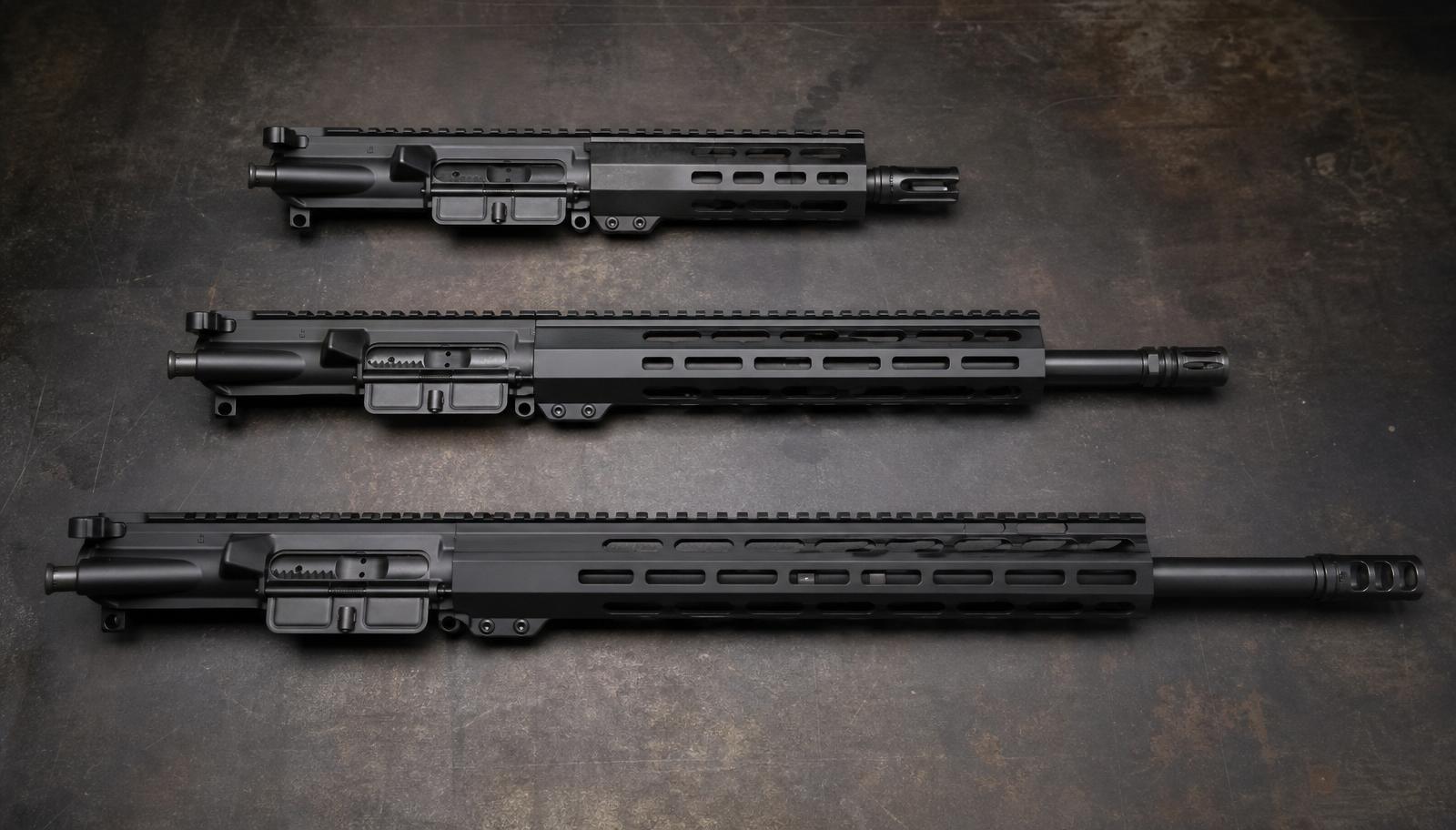
- Pistol-length (4" to 8" barrels): Snappier recoil impulse, used mostly on short-barrel/pistol builds.
- Carbine-length (10" to 18" barrels): The most common setup for compact, general-purpose rifles.
- Mid-length (14" to 18" barrels): Smoother recoil impulse than carbine-length on the same barrel length, increasingly the preferred choice for 16" barrels.
- Rifle-length (18" to 24" barrels): Softest recoil impulse, standard on longer, precision-oriented barrels.
Mismatched gas system length is one of the most common reasons a new upper cycles unreliably, so this is not a spec to guess on.
BCG Coating and Quality
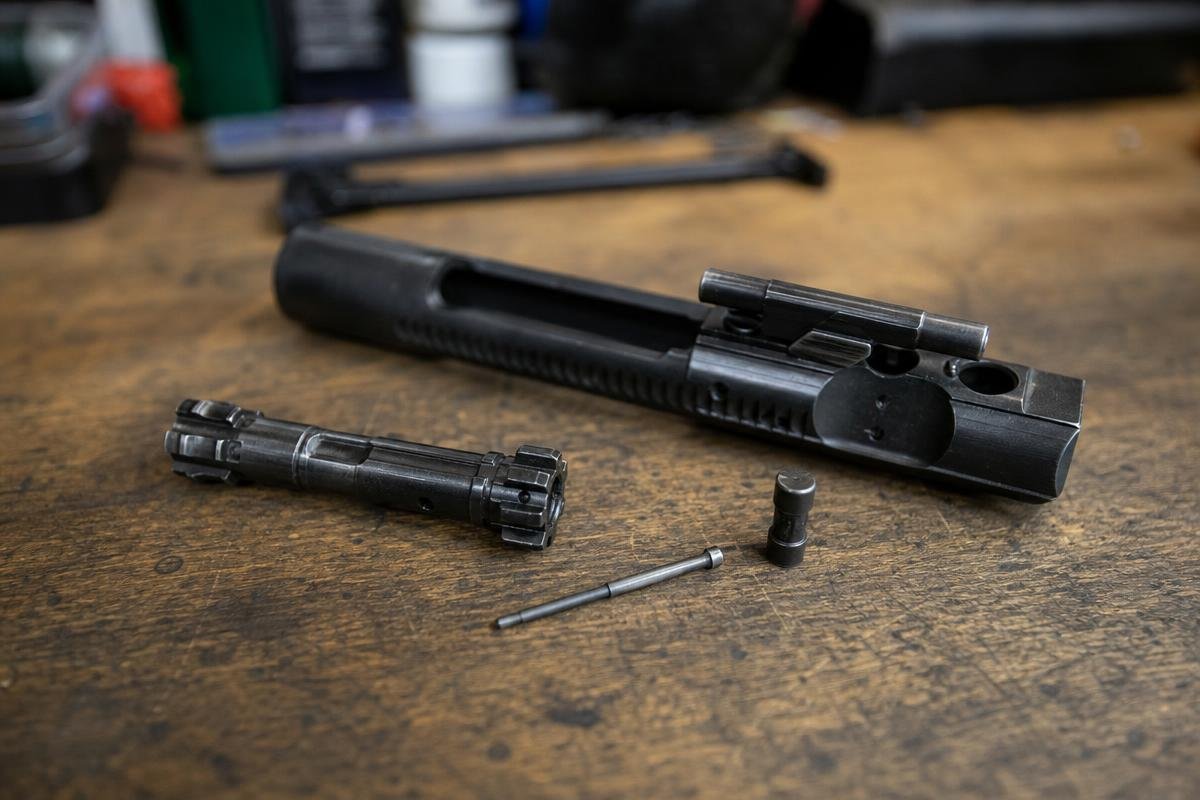
The bolt carrier group takes more abuse, heat, and fouling than almost any other part of the rifle, so coating matters:
- Phosphate (mil-spec/parkerized): The proven baseline, inexpensive, durable, and easy to clean with regular maintenance.
- Nickel boron: Slicker surface that resists fouling buildup and cleans up faster, at a moderate price premium.
- DLC (diamond-like carbon): The most wear- and corrosion-resistant coating widely available, typically found on premium BCGs.
Beyond coating, confirm the BCG is properly staked at the gas key and made from mil-spec-compliant materials (Carpenter 158 or equivalent steel, shot-peened). This is one area where cutting corners has a real reliability cost.
It's also worth understanding what a "complete" upper does and doesn't guarantee about its BCG. Some listings include a full mil-spec BCG standard; others treat it as an upgrade or bundle option. Since the BCG is one of the highest-wear components in the entire rifle, it's worth confirming exactly what's included and what coating and steel spec it carries before comparing price between two "complete" uppers that look similar on the surface.
Handguard Type
Handguard choice is mostly about mounting needs and hand feel, but it does affect performance:
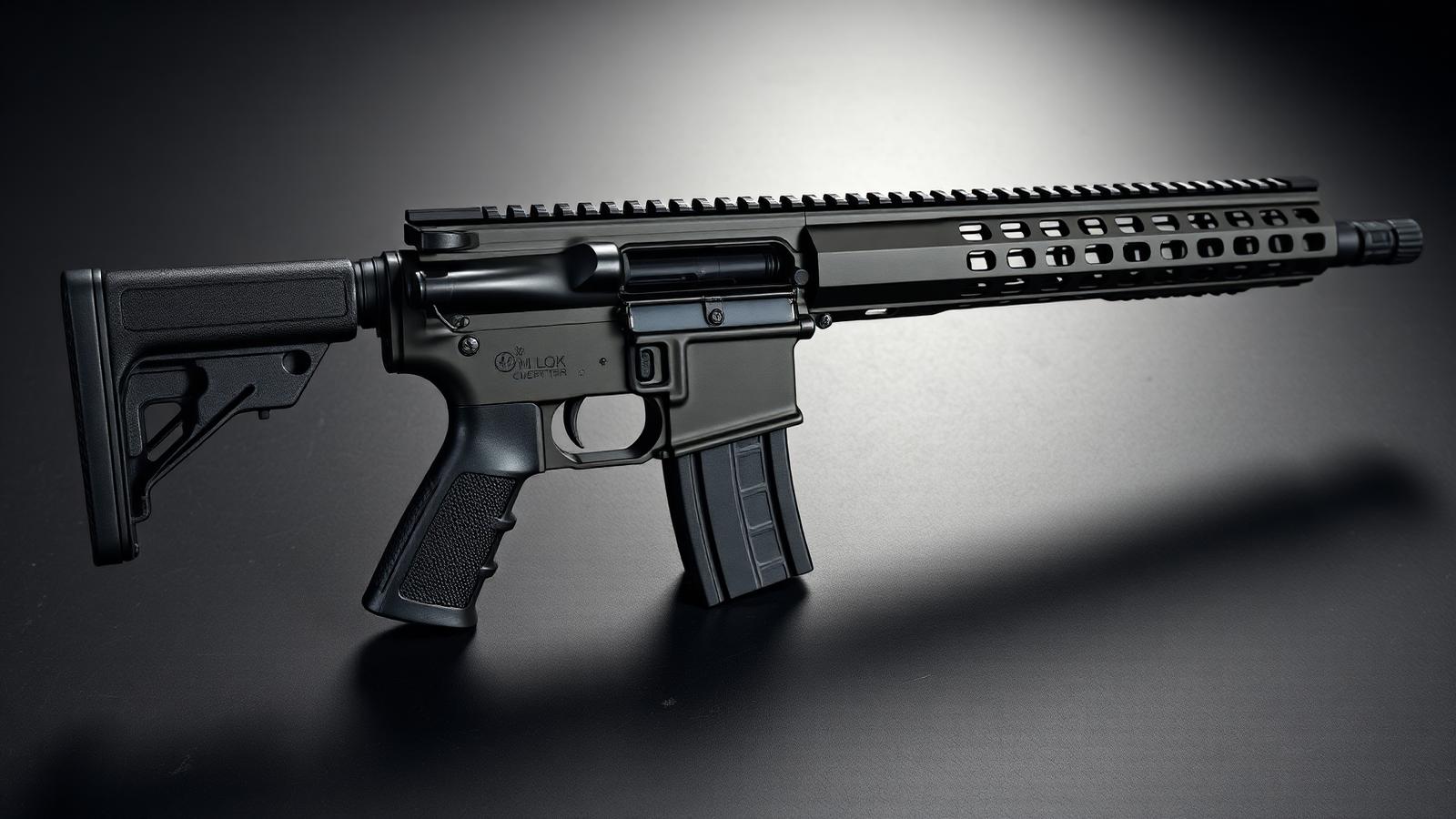
- M-LOK is now the dominant standard for lightweight, direct-attach accessory mounting.
- KeyMod is an older standard, still available but increasingly less common on new builds.
- Picatinny quad-rail offers maximum accessory compatibility but adds weight and can be less comfortable for extended carry.
- Free-float design (handguard doesn't contact the barrel) generally improves accuracy by isolating the barrel from the pressure of gripping or mounting accessories, worth prioritizing on any upper where precision matters.
Why Use Case Beats "Best Overall"
A lot of buying guides try to crown one universal "best" upper, but that framing doesn't hold up once you look at how differently these builds are actually used. A barrel profile that makes a home-defense carbine fast and maneuverable is the wrong choice for a precision rig meant to hold zero at 500 yards. A gas system tuned for soft-shooting long-range accuracy isn't what you want on a competition gun built around split times. Buying based on a generic "best" list often means paying for features, or giving up performance, that don't actually match how the rifle will be used.
That's why this guide is organized by use case rather than a single ranked list. Decide first how you'll primarily use the rifle, then use the buying criteria above to evaluate options within that category.
Match the spec sheet to your actual use case first, then let budget narrow the field within that category.
Best by Use Case
Rather than pushing one "best overall" upper, the right choice really depends on what you're using the rifle for. Here's how to think about each use case, and where to find uppers built for it.
Best for Home Defense
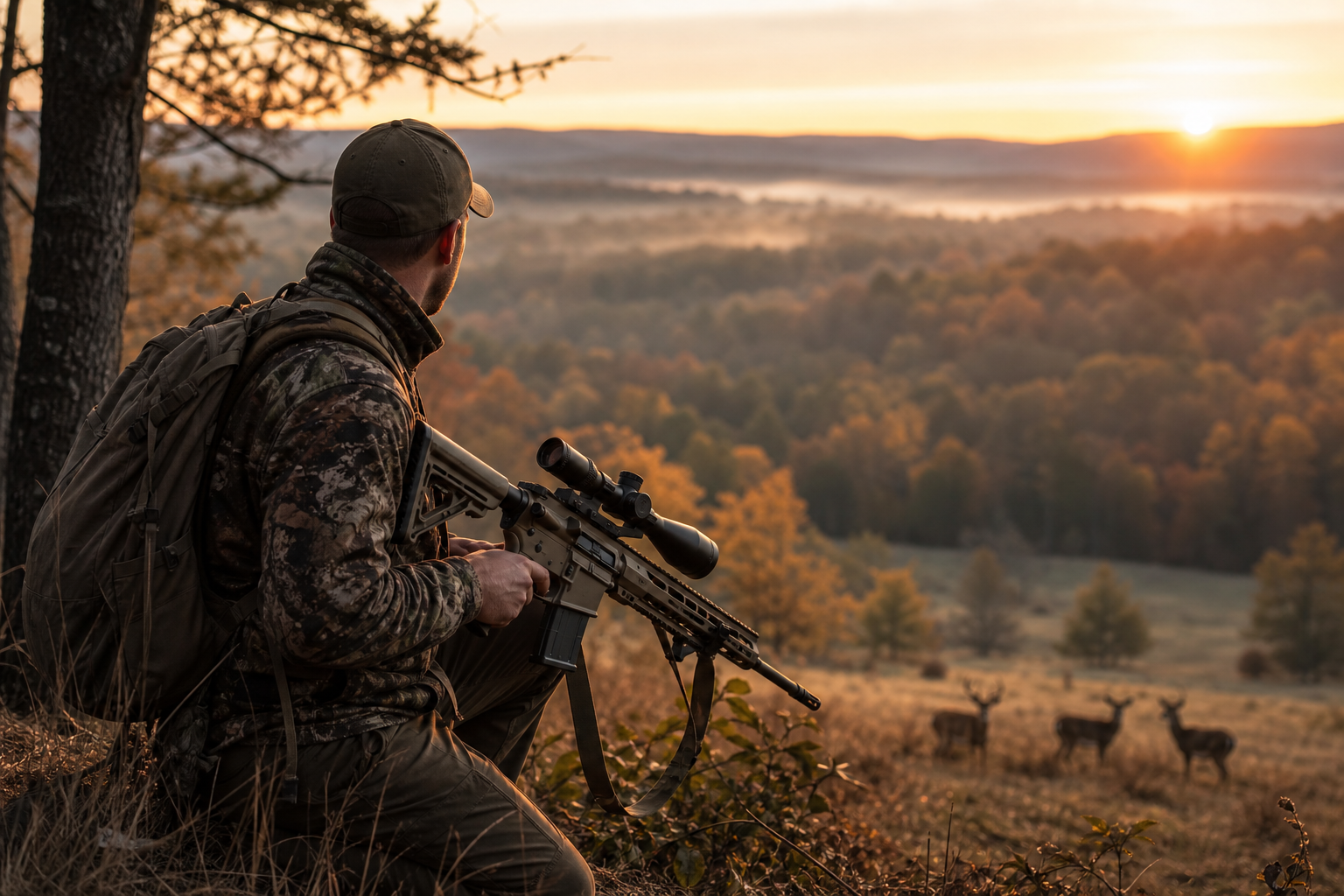
For a home-defense build, prioritize a shorter, maneuverable barrel (typically 10.5" to 14.5" pinned/welded to legal length, or a genuine 16" carbine-length setup), a mid-weight or lightweight barrel profile for fast handling in tight spaces, and a reliable phosphate or nickel-boron BCG. A free-float M-LOK handguard with room for a light and possibly a red dot rounds out a solid defensive setup. Reliability and handling under stress matter more than long-range precision here, this is not the build to prioritize a heavy bull barrel.
Consider also how the rifle will be stored and accessed. A shorter overall length maneuvers more easily through hallways and around furniture, and a lighter build is easier to hold at the ready for extended periods. Muzzle devices that manage flash are worth prioritizing too, since indoor use in low light makes flash signature a real consideration.
Browse home-defense complete uppers at ar15parts.com, curated for maneuverability and reliability.
Best for the Range/Budget
If you're building a general-purpose range rifle without a specialized role in mind, a 16" carbine or mid-length upper with a 4150 CMV chrome-lined barrel and phosphate-coated BCG delivers excellent reliability and durability at the most accessible price point. This is the upper to choose if you want something you can shoot often without babying it, and where round-count durability matters more than squeezing out the last half-MOA of accuracy.
This category is also the right starting point if this is your first AR-15 build. A proven mil-spec configuration gives you a reliable baseline to learn on, and it's easy to upgrade individual components, a better handguard, an optic, a trigger, later once you know what you actually want out of the rifle.
Browse range and budget complete uppers, the best value-per-round options in stock.
Best for Long-Range
For long-range shooting, look for a stainless or nitride-treated barrel in an 18" to 24" length, rifle-length gas system for a smooth recoil impulse, and a heavier or bull barrel profile to hold zero across strings of fire. Precision-focused builds also benefit from a fully free-floated handguard and a higher-tier BCG, since consistency matters more here than weight savings.
Twist rate deserves extra attention on a long-range build specifically, since heavier, more aerodynamic bullet weights generally perform better at distance, a 1:7 or 1:8 twist barrel gives you the flexibility to run those heavier loads without stability issues. It's also worth pairing a long-range upper with a quality optic mount and a rigid, free-float handguard long enough to fully support a bipod without contacting the barrel.
Browse long-range complete uppers, barrel profiles and gas systems built for distance.
Best Lightweight/Competition
Competition and lightweight builds prioritize a pencil or lightweight barrel profile, a carbine or mid-length gas system for fast, flat-shooting follow-up shots, and a slim, minimal-weight M-LOK handguard. A nickel-boron or DLC-coated BCG is worth the upgrade here too, since faster-cycling, lower-friction internals translate directly into faster splits on the clock.
If your competition discipline allows compensators or heavier muzzle devices, factor that into your overall weight and balance planning, a lightweight barrel paired with a heavier muzzle device shifts the rifle's balance point forward, which some shooters prefer for recoil management and others find throws off their natural point of aim.
Browse lightweight and competition complete uppers, built to shave ounces without sacrificing reliability.
Price Ranges to Expect
Complete upper pricing tracks fairly predictably with the components discussed above. Here's what to expect at each tier:
- Entry-level ($350 to $500): Phosphate BCG, 4150 CMV barrel (often nitride or basic chrome-lined), standard M-LOK or Picatinny handguard. A solid, reliable choice for a first build or budget-conscious range rifle.
- Mid-tier ($500 to $800): Upgraded barrel steel or coating, nickel-boron BCG options, higher-quality free-float handguards. This tier covers most home-defense and general-purpose builds well.
- Premium ($800 to $1,400+): Stainless or high-end nitride barrels, DLC-coated BCGs, name-brand free-float rail systems, and tighter manufacturing tolerances. This is where long-range and competition builds typically land.
Use case matters more than price tier alone, a $450 carbine-length upper built for range use will outperform a $1,200 long-range upper if you put it on a home-defense build, and vice versa. Match the spec sheet to your actual use case first, then let budget narrow the field within that category.
Ready to Choose Your Upper?
The fastest path to the right upper is starting from your use case, not a generic "best of" list. Whichever category fits how you'll actually shoot, we've grouped inventory to match:
- Home defense complete uppers
- Range and budget complete uppers
- Long-range complete uppers
- Lightweight and competition complete uppers
Still not sure which category fits your build? The full complete uppers catalog at ar15parts.com lets you filter by barrel length, gas system, and price to narrow things down further.