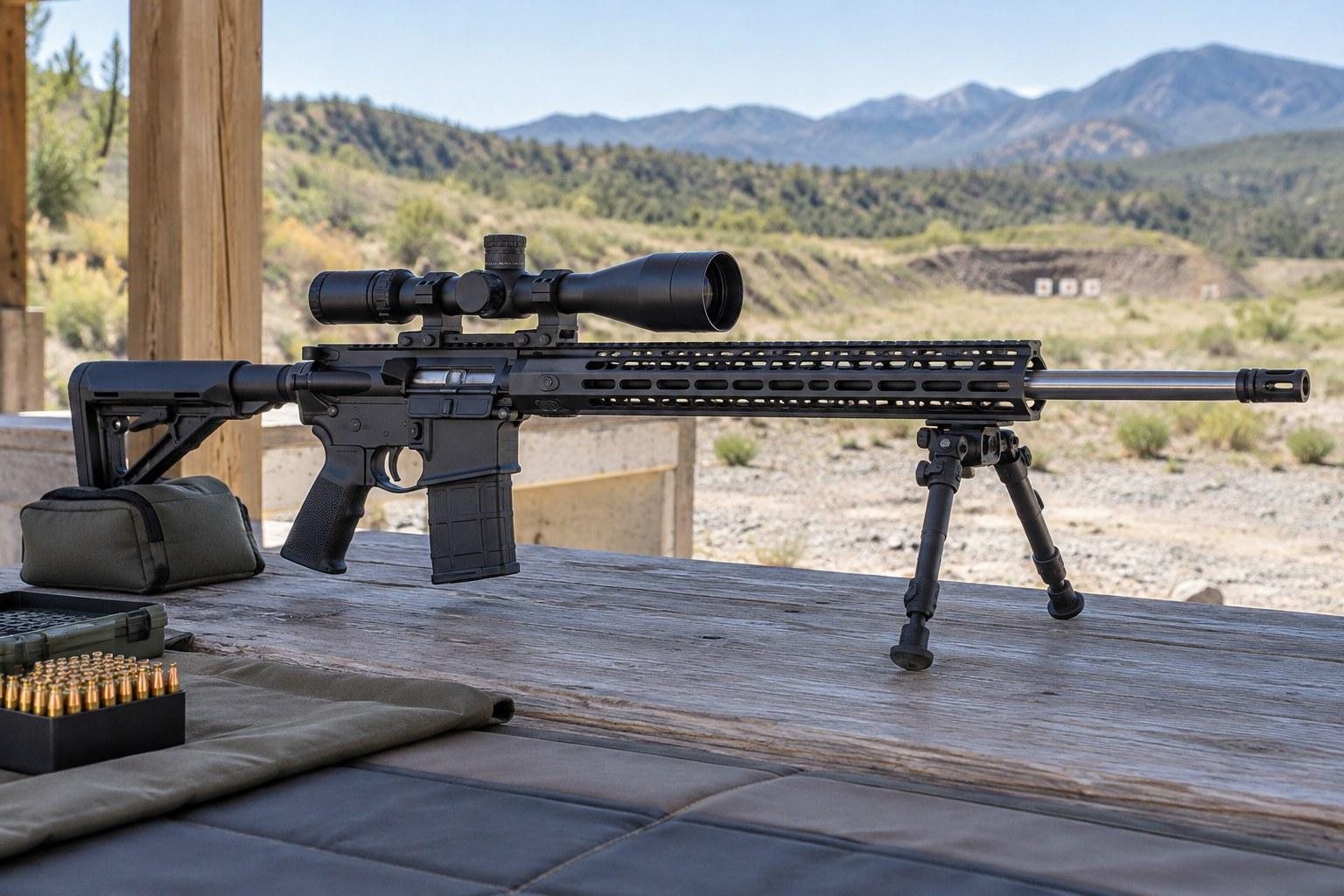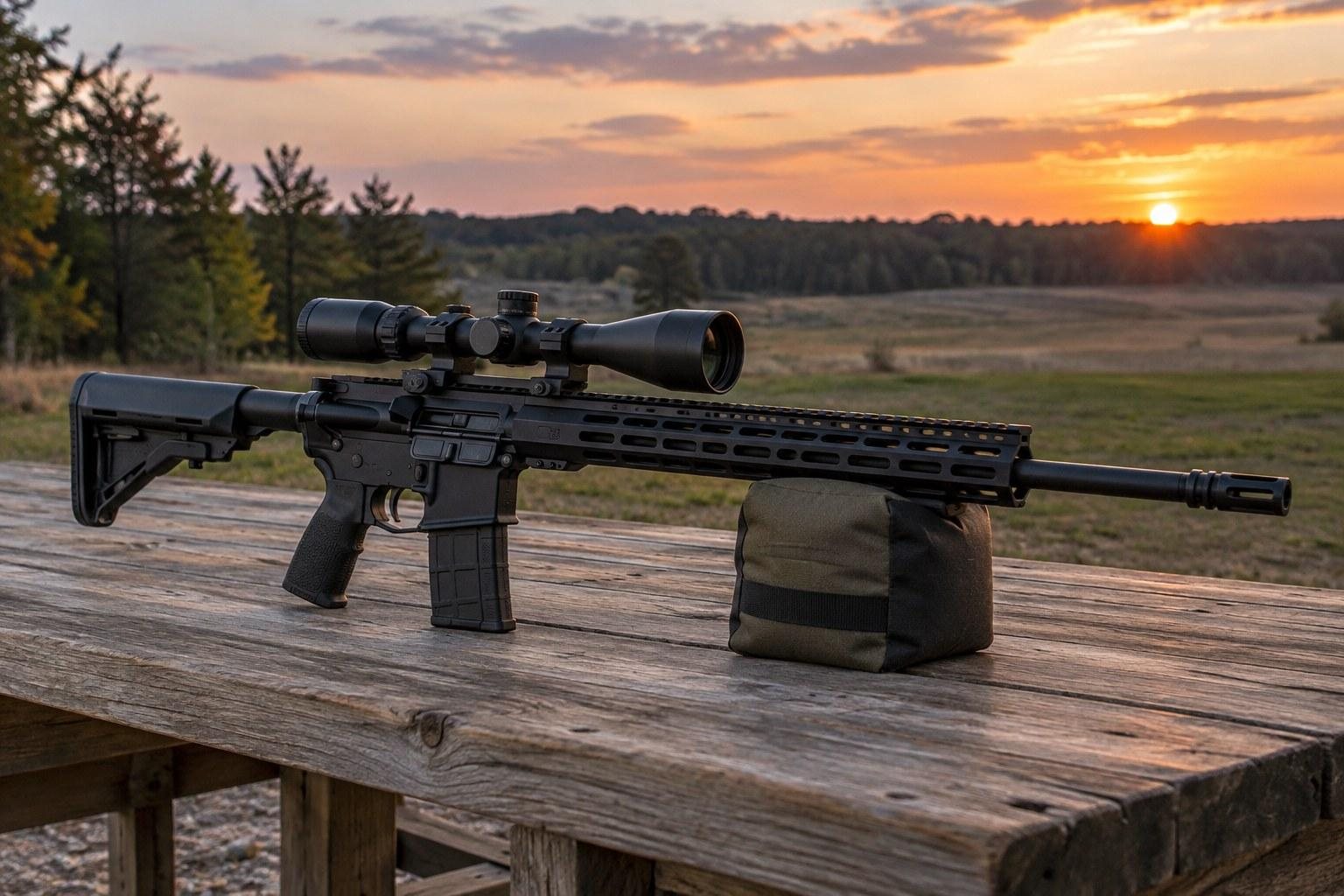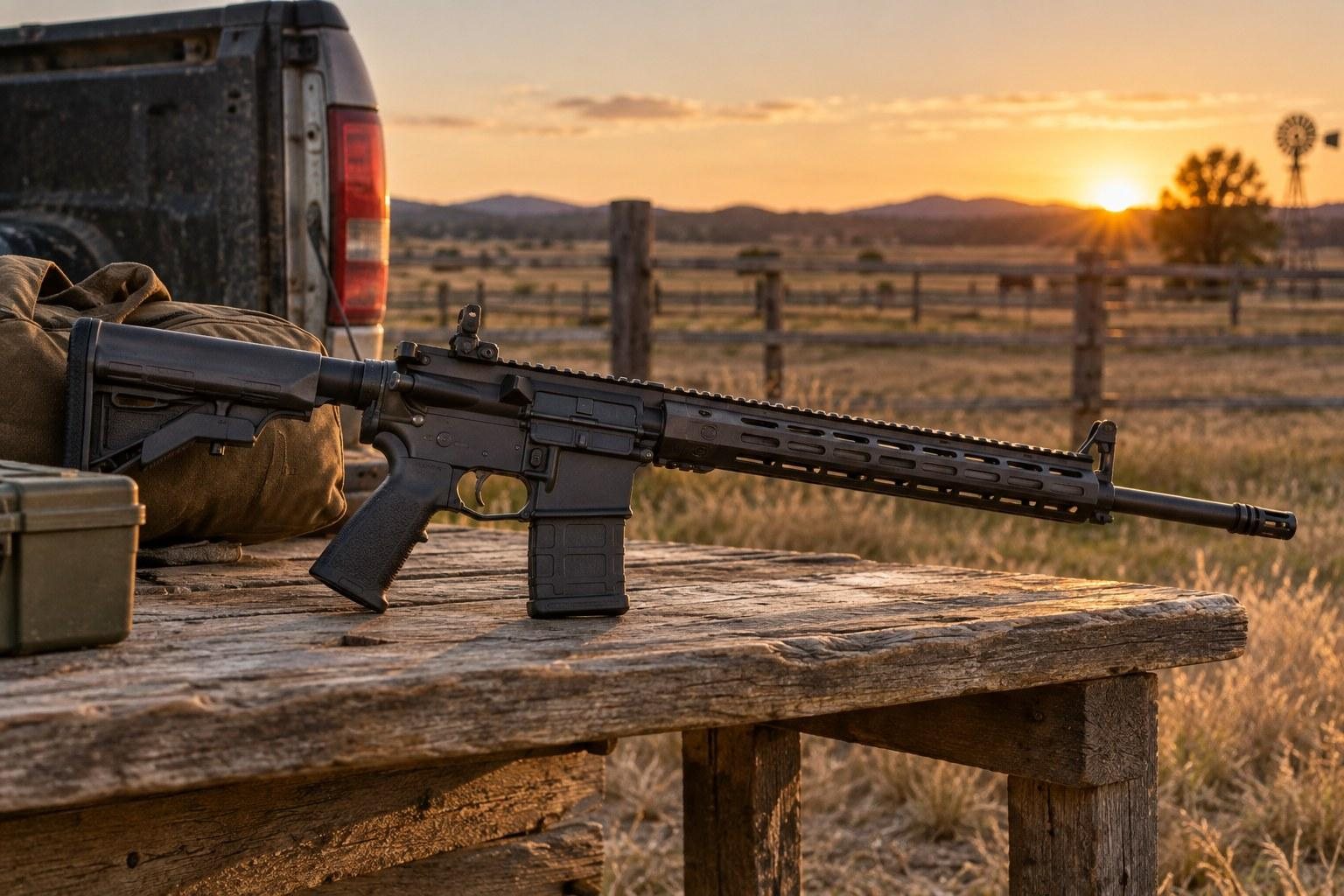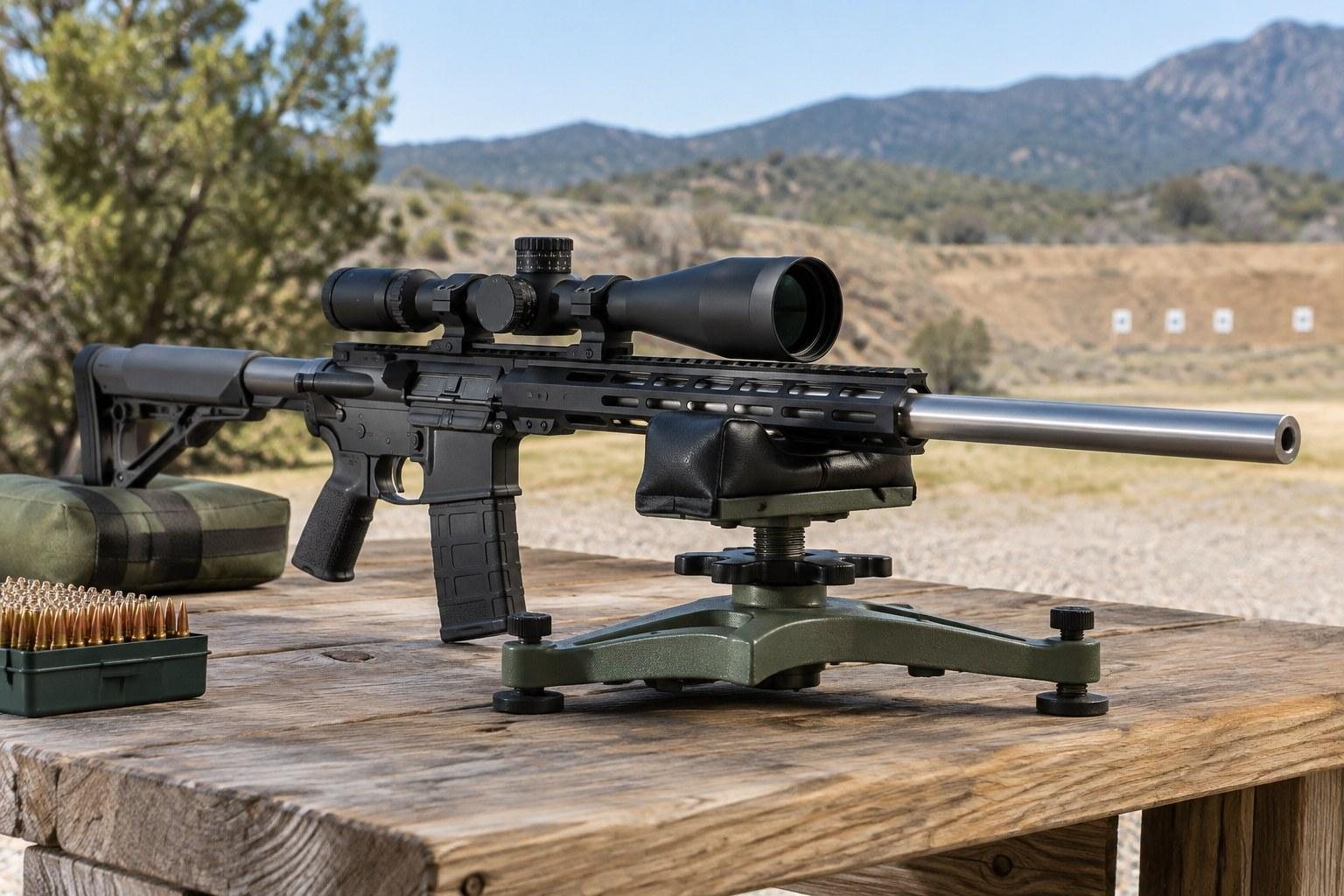
An AR-15 bull barrel is the thickest profile you can bolt onto the platform, and it exists for one job: shooting from a rest without the rifle wandering, heating up fast or changing its point of impact halfway through a string. It is not the profile you want to carry up a ridge. At a bench, though, the extra steel works in your favor.
This guide walks through what a bull profile actually changes, where the trade-offs show up, and which calibers make the most sense for a dedicated bench upper. We also cover the gas block, handguard and setup details that trip up first-time bench builders, so the upper you order matches the way you plan to shoot.
Want to see bench-ready configurations first? Browse the complete upper lineup.
Key Takeaways
- A bull barrel keeps a large outside diameter along most of its length, which adds weight and stiffness compared with lighter profiles.
- The added mass helps the rifle settle on a rest and generally heats more slowly during longer strings of fire.
- Bull barrels often use a larger gas block journal, so the gas block must match the diameter listed for that exact barrel.
- The weight is a real trade-off, which makes a bull upper a poor choice for a rifle you plan to carry far.
- 24-inch bull profiles are commonly available in .204 Ruger and 22 ARC for the AR-15, with .308 Win bull barrel options for AR-10 builds.
What Makes a Barrel a Bull Profile
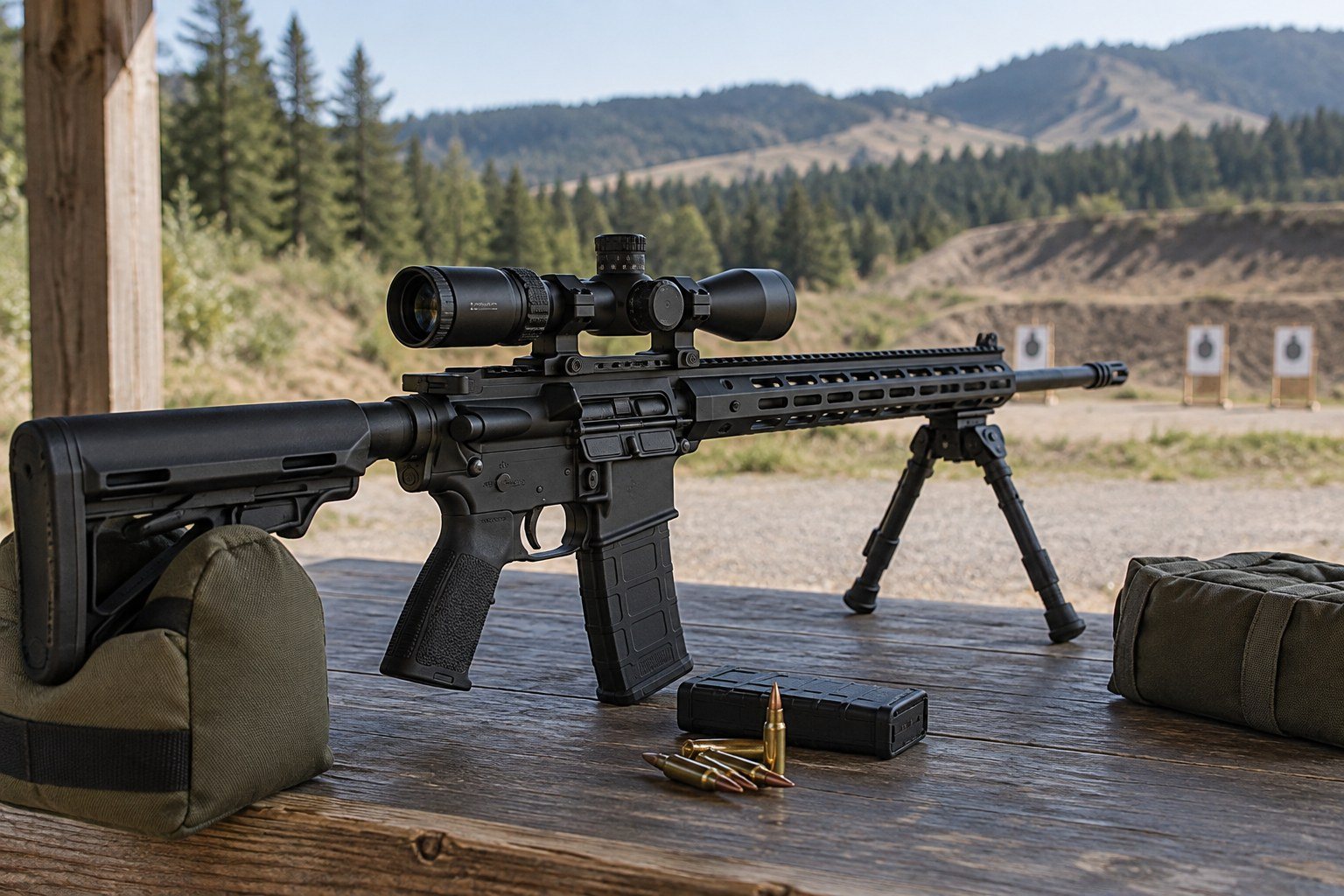
Barrel profile describes the outside shape of the barrel, not the bore. Two barrels can share the same chamber, twist rate and length while weighing very different amounts because one carries much more steel around the bore.
Pencil, Government, Heavy and Bull
Lighter profiles such as pencil and government contours taper down to keep the rifle handy. Heavy and medium profiles add material. A bull profile goes further and stays thick much closer to the muzzle, which is why it looks almost straight from the gas block forward.
Manufacturers do not all use identical dimensions for the same profile name, so treat "bull" as a family rather than a fixed measurement. Always check the listed weight and gas block journal for the exact barrel you are considering.
A Real Example From the Current Lineup
A typical 24-inch bull barrel in .204 Ruger is 416R stainless with a 1:12 twist, 1/2x28 muzzle threads, a rifle-length gas system and a .936-inch gas block journal. Barrels like this tend to weigh around 4.5 to 5 pounds, making them among the heavier options in that caliber. That one spec sheet shows what you are signing up for with a bull profile.
Why an AR-15 Bull Barrel Shines at the Bench
Bench shooting rewards consistency. You want each shot to leave the muzzle under the same conditions as the last one, and you want the rifle to settle the same way on the bag every time.
Mass That Settles on the Rest
Weight forward of the receiver helps the rifle sit still on a front rest. A heavier rifle is also less affected by small inputs from your hands and shoulder, and felt recoil from a light AR-15 cartridge stays mild. That makes it easier to watch your own hits through the scope and call your shots.
Slower Heat Buildup Across a String
More steel means more material to absorb heat. A heavy or bull profile generally heats more slowly during longer strings at the bench. For a varmint shooter working a prairie dog town or a target shooter running long strings, that helps keep the barrel in a more consistent state from the first shot to the last.
A bull barrel still gets hot. Give it time to cool between strings, and do not assume thick steel removes the need for patience.
Stiffness and Harmonics
Every barrel vibrates when a round is fired. A thicker barrel is stiffer, which tends to make that vibration smaller and more repeatable. It is wise to avoid promising a specific group size from any profile, since ammunition, the shooter, the optic and the rest all matter as much as steel. What a bull profile does is remove one variable that thinner barrels add during sustained fire.
For more on how barrel steel and finish choices affect wear and heat, read our comparison of chrome-lined, nitride and stainless barrels.
Planning the rest of the build around the barrel? Our length guide helps you pick the right size for bench work.
The Trade-Offs You Accept With a Bull Profile
A bull upper is a specialist. Before ordering one, be honest about how the rifle will be used.
Weight and Balance
Several pounds of barrel alone, before the handguard, optic and bipod, adds up to a rifle that feels front-heavy off a rest. Carrying it across a field or shooting it standing is tiring. If the same rifle must do double duty for hunting on foot, a medium or heavy profile is usually the more practical compromise.
Handguard and Gas Block Fitment
Bull barrels frequently use larger gas block journals. 24-inch bull barrels in .204 Ruger and 22 ARC often use a .936-inch journal, while lighter barrels in those calibers commonly use .750 inch or .875 inch. A gas block sized for the wrong journal will not fit, so match the block to the listed diameter and pair it with the correct gas tube length.
The handguard also has to clear the barrel and gas block. A free-float handguard is the standard choice for bench rifles because it keeps bipod and hand pressure off the barrel. Our breakdown of free-float vs drop-in handguards explains why.
Not Built for Fast Handling
A bull upper swings slowly. That is fine on a bench and a disadvantage for anything that requires quick transitions. Choose the profile for the job you will do most often.
| Factor | Lighter Profile | Bull Profile |
|---|---|---|
| Weight | Lighter, easier to carry | Heaviest option, best on a rest |
| Heat during long strings | Heats faster | Generally heats more slowly |
| Stability on a bag or bipod | Moves more with shooter input | Settles and stays put |
| Gas block journal | Often .750 inch | Often larger, such as .936 inch on many 24-inch bull barrels |
| Best use | Field carry, general purpose | Bench, prone varmint, target strings |
Calibers That Pair Well With a Bull Upper
A bull profile makes the most sense for cartridges that reward precision from a rest. Here are some common bull profile options available in these calibers.
.204 Ruger
The .204 Ruger is a purpose-built varmint cartridge with a flat trajectory and light recoil. A 24-inch bull barrel is a common choice for .204 Ruger uppers, often paired as a complete upper with a rail, BCG and charging handle. .204 Ruger barrels commonly use a 1:12 twist suited to the light bullets the cartridge is typically loaded with.
22 ARC
The 22 ARC was designed around long, high-BC bullets, and 22 ARC barrels commonly use a 1:7 twist. Bull profile 22 ARC barrels are commonly offered in bead blast and QPQ-treated 416R stainless finishes, typically with 1/2x28 threads and a rifle plus 1-inch gas system. You can compare them on the 22 ARC barrels page or browse 22 ARC uppers.
.308 Win on the AR-10
If your bench rifle is an AR-10, a 24-inch bull barrel in .308 Win is commonly available in 416R stainless steel, with a 1:10 twist and 5/8x24 threads. See the full .308 barrels category for details. Remember that most AR-10 parts, including barrels and bolt carrier groups, will not fit AR-15 receivers.
What About .223 Wylde and 5.56?
For .223 Wylde, heavy profiles are more common than true bull profiles, including 24-inch heavy stainless barrels with a 1:8 twist. A heavy 24-inch barrel can still make a capable bench rifle. Check our AR-15 twist rate guide to match the twist to the bullets you plan to shoot.
Setting Up a Bull Barrel Upper for the Bench
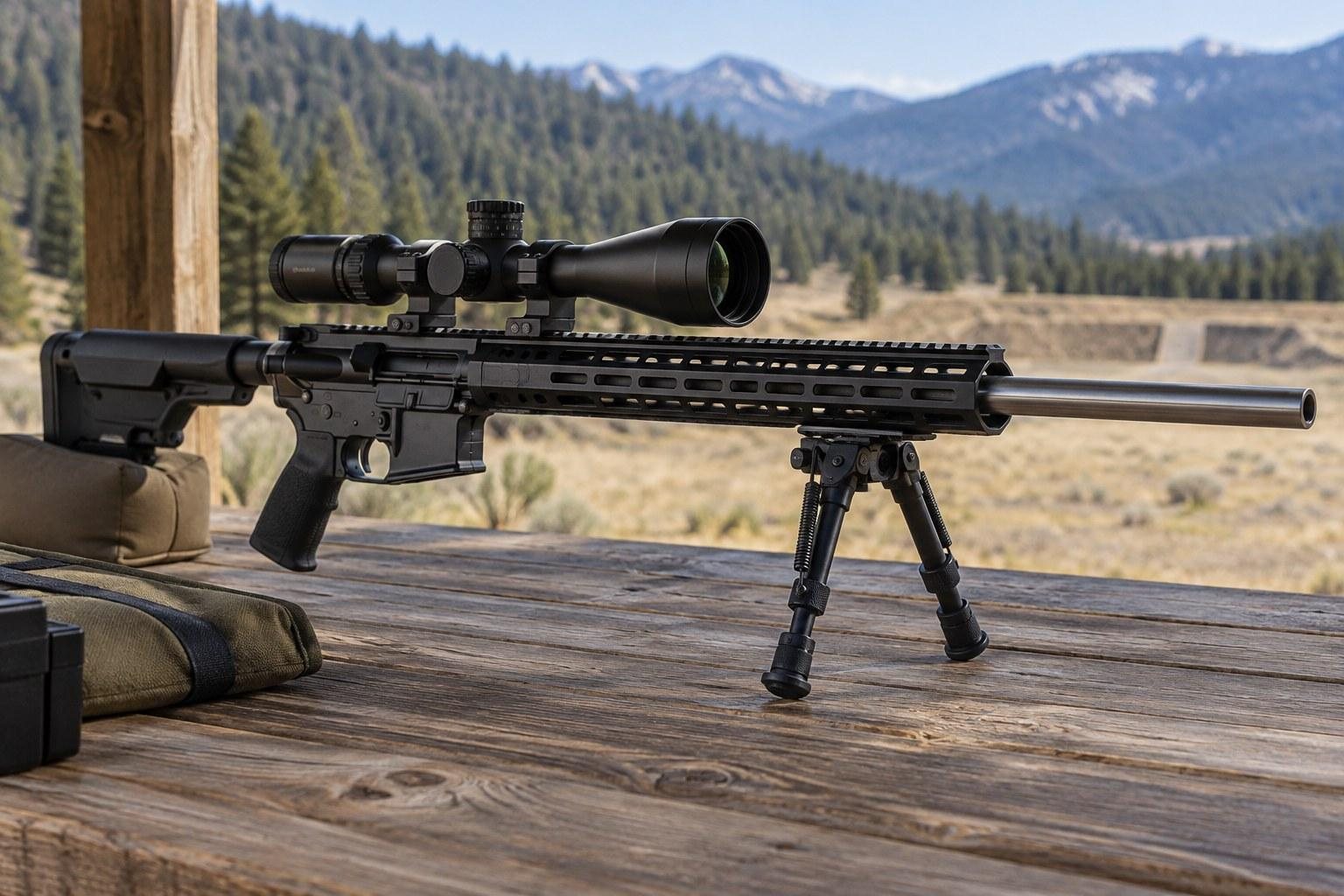
A heavy barrel only pays off if the rest of the setup supports it. These are the details worth checking first.
Optic and Mounting
Bench work usually calls for a magnified scope in a solid mount. Make sure the handguard and upper receiver give you continuous rail space for the mount you choose, and torque rings and mounts to the optic manufacturer's published spec.
Rest, Bipod and Muzzle Device
A free-float handguard with M-Lok slots gives you a place to attach a bipod without touching the barrel. Some bench uppers ship with a thread protector rather than a brake. A brake reduces muzzle rise, which can help with spotting hits, but it is loud for anyone beside you on the line.
Safety and Break-In
Always confirm the rifle is unloaded before working on it, and follow the barrel and component manufacturer's instructions. If you are unsure about any step, have a qualified gunsmith check the work. Our notes on AR-15 barrel break-in cover the early range sessions.
Assembled and Checked Before Shipping
Complete uppers from AR15Parts.com are assembled in-house, headspaced and function-checked before they ship, with shipping in 3 to 5 business days. That removes a lot of the fitting work for builders who want a bench-ready AR-15 bull barrel upper without sourcing every part separately.
Comparing other upper configurations before you decide? Browse our buying guides.