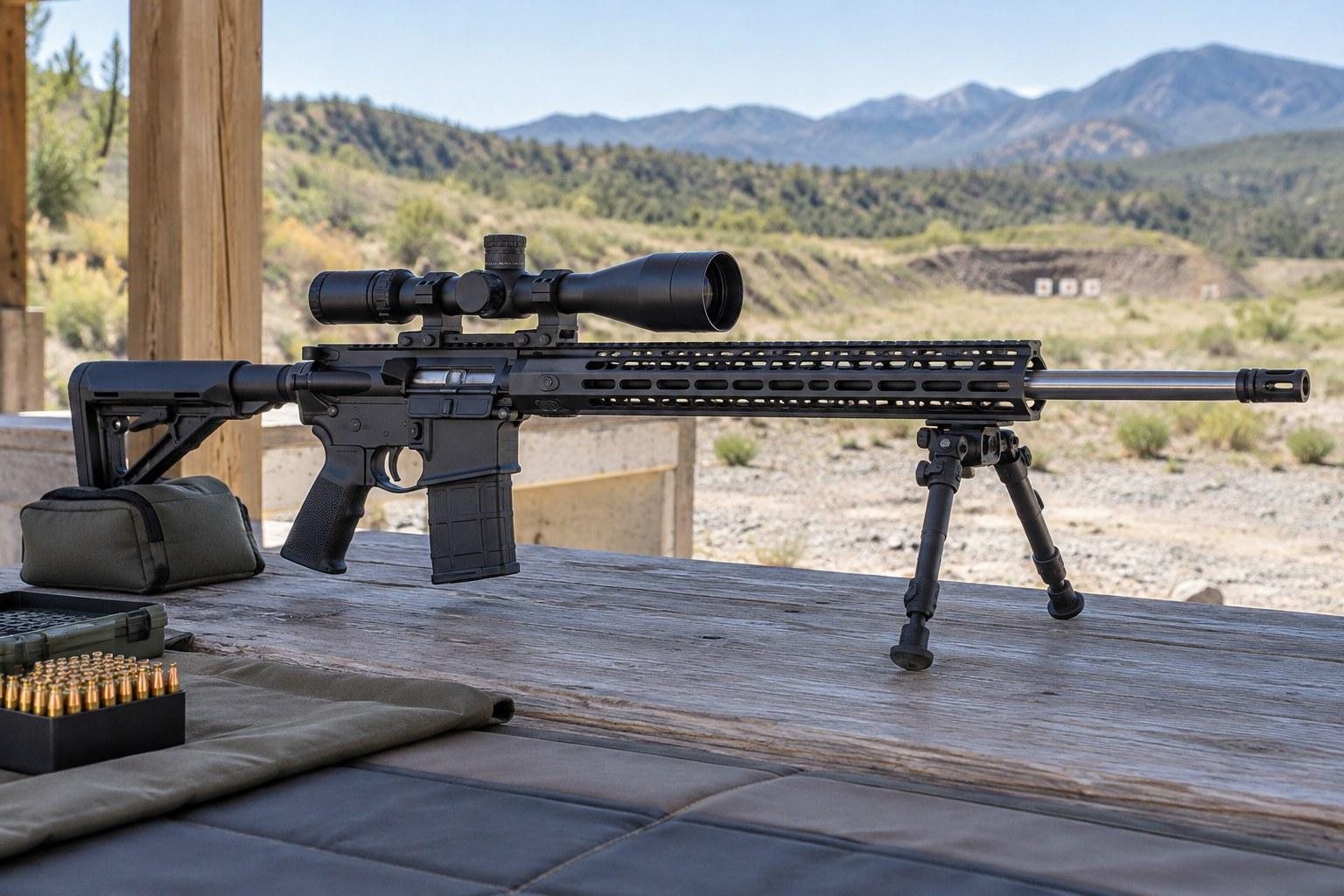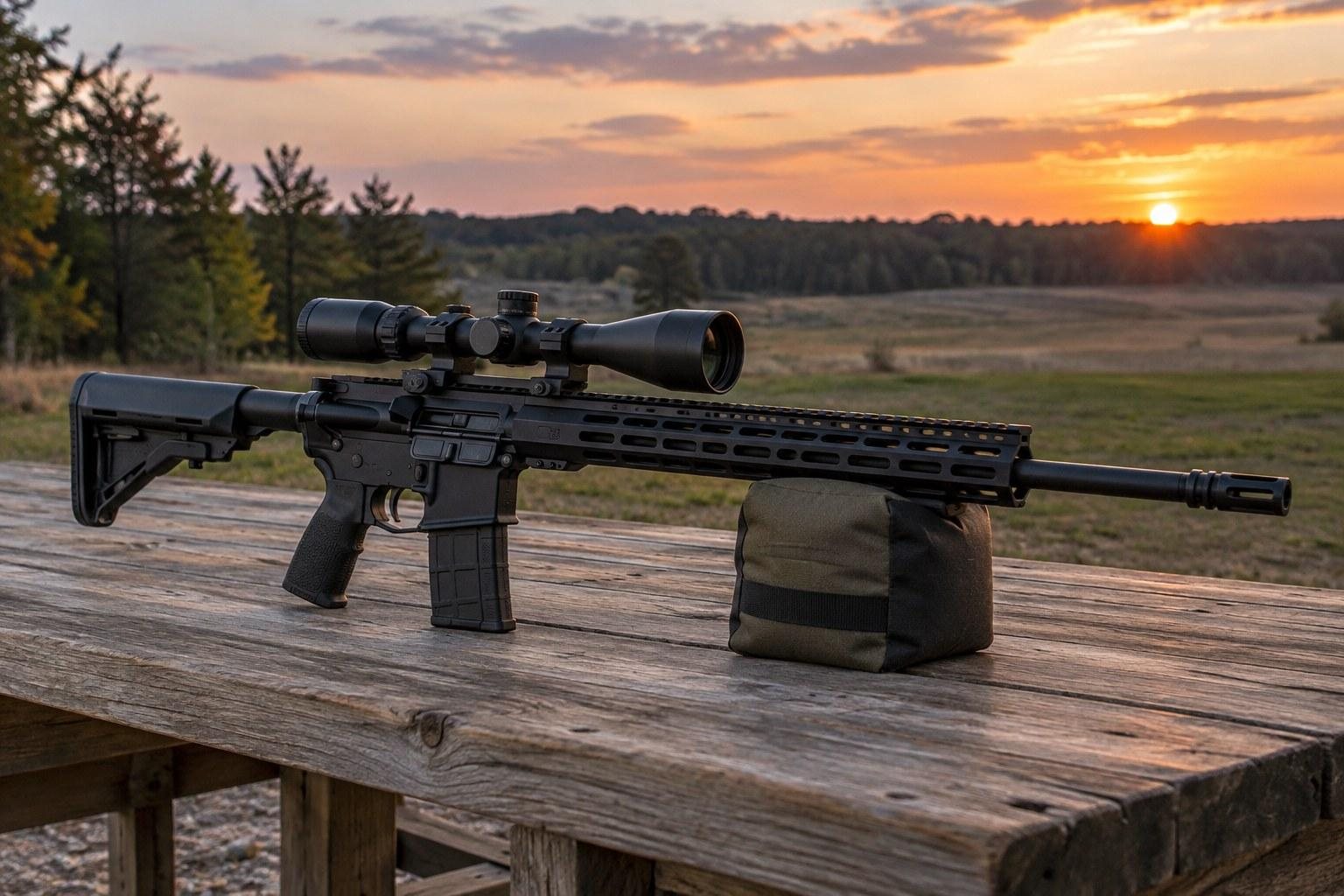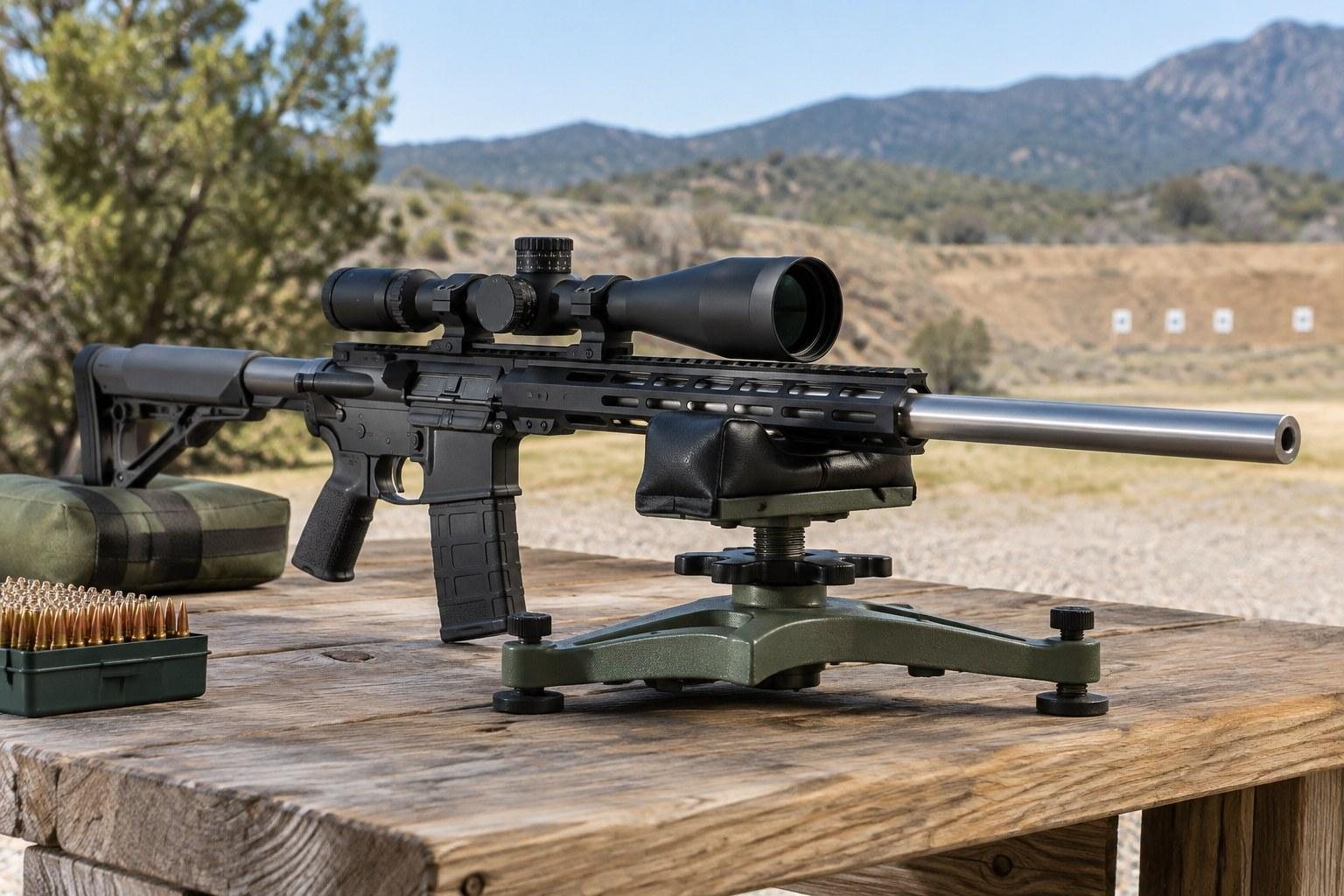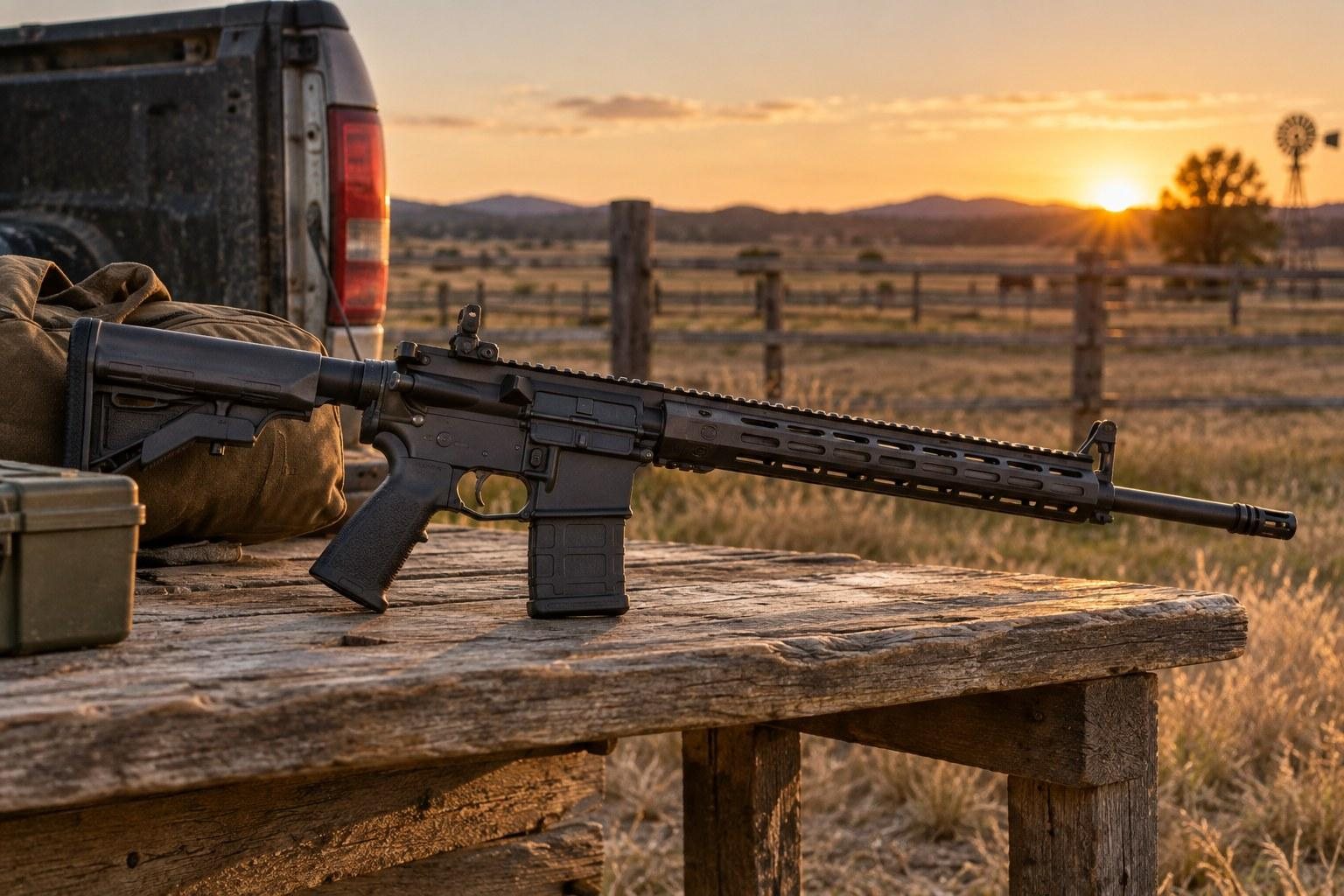
A ranch AR lives a harder life than a safe queen. It rides behind a seat or in a rack, soaks up road dust, gets bumped on gates and fence posts, and still has to work when a coyote shows up at the calving pen. The upper receiver group is where most of that durability is decided.
This guide looks at the choices that matter most for a working rifle: barrel length and legal limits, barrel material and finish, caliber, handguard length, sights and optics, and the small parts that keep everything running. The goal is simple. You want an upper that is easy to handle around a truck, tolerant of neglect, and accurate enough for the distances on your place.
Want to see working configurations first? Browse our complete upper roundups.
Key Takeaways
- A 16-inch barrel is the practical starting point for a truck rifle because it stays clear of federal short-barreled rifle rules without extra paperwork.
- Chrome-lined and stainless barrels each have strengths, and the right pick depends on how much you value corrosion resistance versus fine accuracy.
- 5.56 NATO and 223 Wylde chambers give you cheap, widely available ammunition for varmints and general ranch chores.
- A mid-length handguard leaves room for a light and a sling mount without making the rifle awkward to pull from a cab.
- Simple, robust optics and backup sights matter more on a ranch rifle than high magnification.
- Regular cleaning and lubrication are what keep a dusty truck gun reliable over years of use.
What Makes a Ranch AR Different From a Range Rifle
A range rifle usually travels in a padded case and gets cleaned after every trip. A truck rifle gets none of that pampering. It sees temperature swings, humidity, vibration and dirt, often for weeks between cleanings.
That changes the priorities. Light weight and handling speed count for more than a match trigger. Corrosion resistance matters more than a fancy finish. A barrel that shoots consistently with affordable ammunition beats one that only groups well with expensive handloads.
Typical jobs for a working rifle
- Dispatching coyotes, feral hogs and other predators near livestock, where game laws allow.
- Controlling varmints such as ground squirrels and prairie dogs around fields and pastures.
- Putting down injured animals humanely.
- General protection while checking fences, water and stock in remote areas.
Each of these jobs happens at practical distances, often with little warning. That is why handling and reliability come first and why a straightforward configuration is often the practical choice for most ranch owners.
Why the upper matters most
On an AR-15, the upper holds the barrel, gas system, bolt carrier group, handguard and sighting system. Swap the upper and you change nearly everything about how the rifle shoots. That also means you can keep one lower and own more than one upper for different chores, as long as each one is assembled correctly and the calibers are kept clearly separated.
Barrel Length for Truck and Cab Use
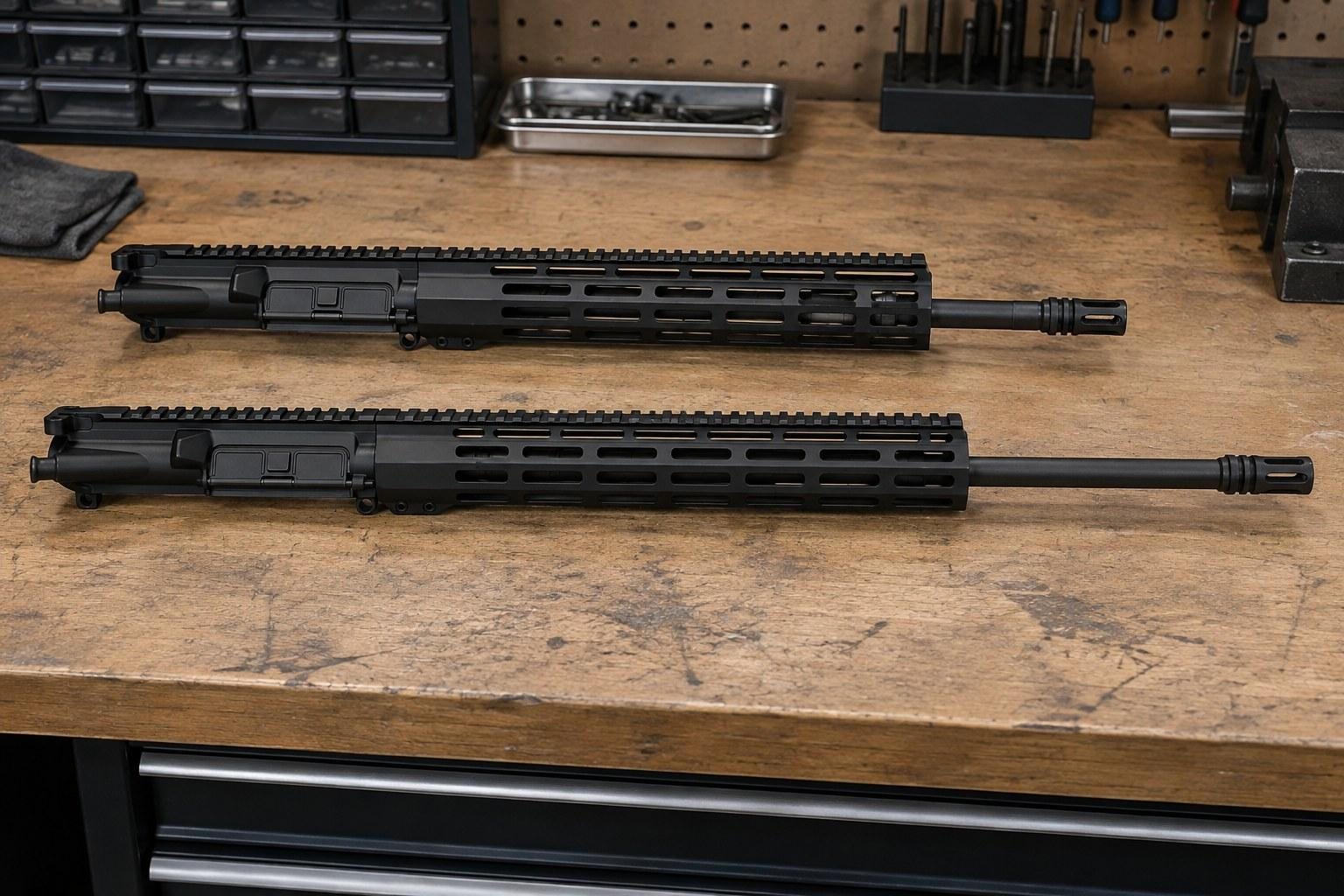
Barrel length drives handling, velocity and legal status. For a rifle that goes in and out of a truck all day, shorter is handier, but federal law sets a floor.
Stay at 16 inches unless you plan for NFA paperwork
Under the National Firearms Act, a rifle with a barrel under 16 inches, or an overall length under 26 inches, is a short-barreled rifle. It must be registered with the ATF before you build or own one. Since January 1, 2026 the federal tax on SBR registration is $0, but the registration requirement still applies. A pinned and welded muzzle device can bring a shorter barrel to the 16-inch mark. State and local laws vary, so check your own rules before you buy.
Shorter uppers, such as 10.5-inch 5.56 NATO models, are available on the market, but for a simple ranch truck gun the 16-inch length avoids the extra step. You can see how lengths compare in our AR-15 barrel length guide.
When a longer barrel makes sense
If your ranch has open pasture and you often take longer shots at varmints, an 18 or 20-inch barrel adds velocity and a longer sight radius. The tradeoff is a rifle that is harder to maneuver in a cab and heavier on the shoulder during a long day. Many owners keep the 16-inch rifle in the truck and a longer rifle at the house for planned varmint sessions.
| Barrel length | Truck handling | Legal note | Good fit for |
|---|---|---|---|
| Under 16 inches | Very handy | SBR, ATF registration required | Owners willing to file NFA paperwork |
| 16 inches | Handy | Standard rifle under federal law | General ranch and truck use |
| 18 inches | Moderate | Standard rifle under federal law | Mixed use with longer shots |
| 20 inches and up | Bulky in a cab | Standard rifle under federal law | Dedicated varmint work from a rest |
Need help sorting barrel lengths and gas systems? Read our breakdown of gas system lengths next.
Barrel Material and Finish for Weather and Dust
A ranch AR will get wet. It will sit in a hot cab and a cold one. Barrel material and finish decide how well the bore and exterior shrug that off.
Chrome-lined 4150 barrels
Chrome lining puts a hard layer in the bore and chamber. It resists corrosion and makes cleaning easier, which suits a rifle that may not see a cleaning rod for a while. M4 profile barrels in 16-inch 5.56 NATO uppers are commonly made from 4150 chrome-lined steel with a parkerized exterior.
Stainless 416R barrels
Stainless barrels are popular for accuracy and resist rust better than plain carbon steel, though they are not rustproof. 16-inch uppers with stainless barrels are widely offered, including Ranger and Recon profiles in 5.56 NATO and medium profiles in 223 Wylde. Keep a light coat of oil on any stainless barrel that rides in a humid truck.
Nitride and QPQ finishes
Nitride, also sold as QPQ, treats the steel itself and gives good corrosion and wear resistance on both the bore and exterior. Our comparison of chrome-lined, nitride and stainless barrels goes deeper on the tradeoffs.
Choosing a Caliber for Ranch Chores
Caliber choice comes down to what you shoot most and how easy it is to keep ammunition on hand. For a truck rifle, availability and cost often matter as much as ballistics.
5.56 NATO and 223 Wylde
For coyotes and smaller varmints, a 5.56 NATO or 223 Wylde chamber is the default for good reason. Ammunition is widely sold, recoil is light, and magazines are everywhere. A 223 Wylde chamber is designed to fire both 223 Remington and 5.56 NATO. Browse the 5.56 NATO uppers and the 223 Wylde uppers at AR15Parts.com to compare barrel options.
Larger options for hogs and deer
If feral hogs or deer are a bigger part of the job, a heavier bullet helps. Straight-wall cartridges such as 350 Legend, and intermediate rounds such as 300 Blackout or 6.5 Grendel, all run in the AR-15 platform. Check game regulations in your state before using any caliber for hunting. Our guide to hunting AR-15 uppers covers these choices, and the 350 Legend uppers page is a good place to compare options.
Keep calibers separated
If you own more than one upper, label each one and keep its ammunition and magazines apart. Some cartridges can chamber in the wrong rifle, which is dangerous. One caliber per truck is the simplest rule.
Handguards, Sights and Optics for a Working Rifle
The furniture on your upper decides how the rifle carries and how quickly you can get it into action.
Handguard length
16-inch uppers are commonly offered with 12-inch or 15-inch rails. A 12-inch rail keeps the front end trimmer, while a 15-inch rail gives more room for your support hand and accessories. Either works for a ranch AR. A good handguard guide explains M-LOK slots, weight and fit.
Optics
A ranch rifle benefits from a rugged, simple optic. A red dot is fast at close range. A low-power variable optic adds magnification for pasture shots without giving up quick handling. Pick a sturdy mount, use the manufacturer's recommended torque values, and confirm zero after the rifle has been bounced around in a truck.
Backup sights and slings
Folding backup iron sights are cheap insurance if an optic battery dies. A two-point sling lets you carry the rifle while opening gates or working stock, and keeps it off the ground.
Reliability Parts and Truck Storage
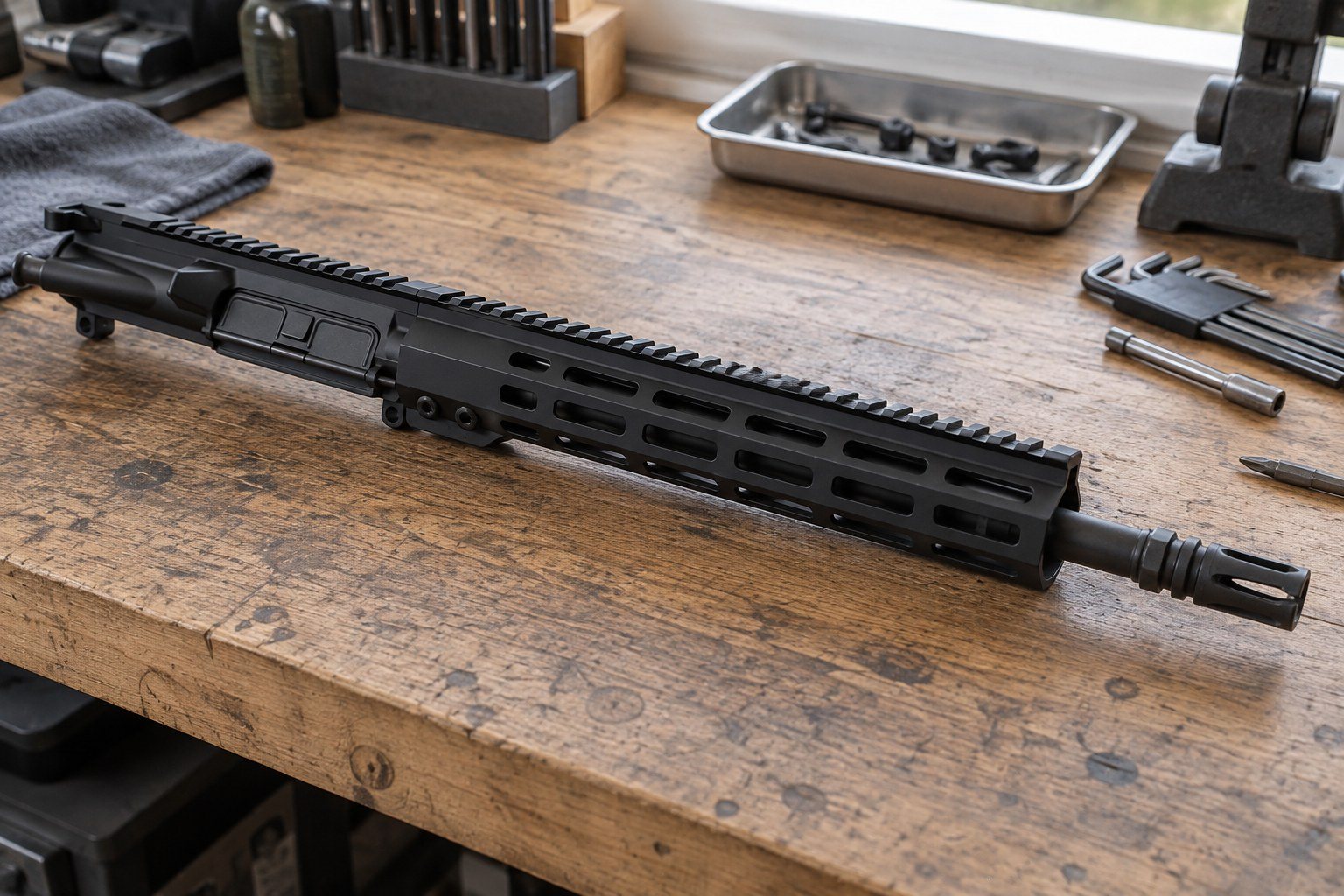
A dependable truck rifle depends on small parts and good habits as much as on the barrel.
Bolt carrier group and charging handle
Complete uppers from AR15Parts.com that include a bolt carrier group and charging handle are assembled in-house, headspaced and function-checked before they ship. If you build your own, a quality bolt carrier group is a smart place to spend money. When in doubt about headspace or assembly, have a qualified gunsmith inspect the upper.
Muzzle devices
A flash hider keeps flash down in low light, while a compensator or brake tames muzzle rise. Brakes are loud, which matters around livestock, dogs and your own hearing.
Storage and safety in the truck
- Store the rifle unloaded unless your state law and situation clearly allow otherwise, and always follow local transport laws.
- Use a locking rack or lockable case to deter theft and keep the rifle away from children and visitors.
- Keep the rifle in a case or cover to reduce dust buildup in the action.
- Wipe the exterior with a light oil after wet days.
Cleaning on a ranch schedule
Dust and grit find their way into the action. Clean and lubricate on a regular schedule, and after any day in rain or heavy dust. Always make sure the firearm is unloaded first. Our AR-15 upper cleaning guide walks through the steps.
Ready to compare build options for a working rifle? Explore our buying guides.