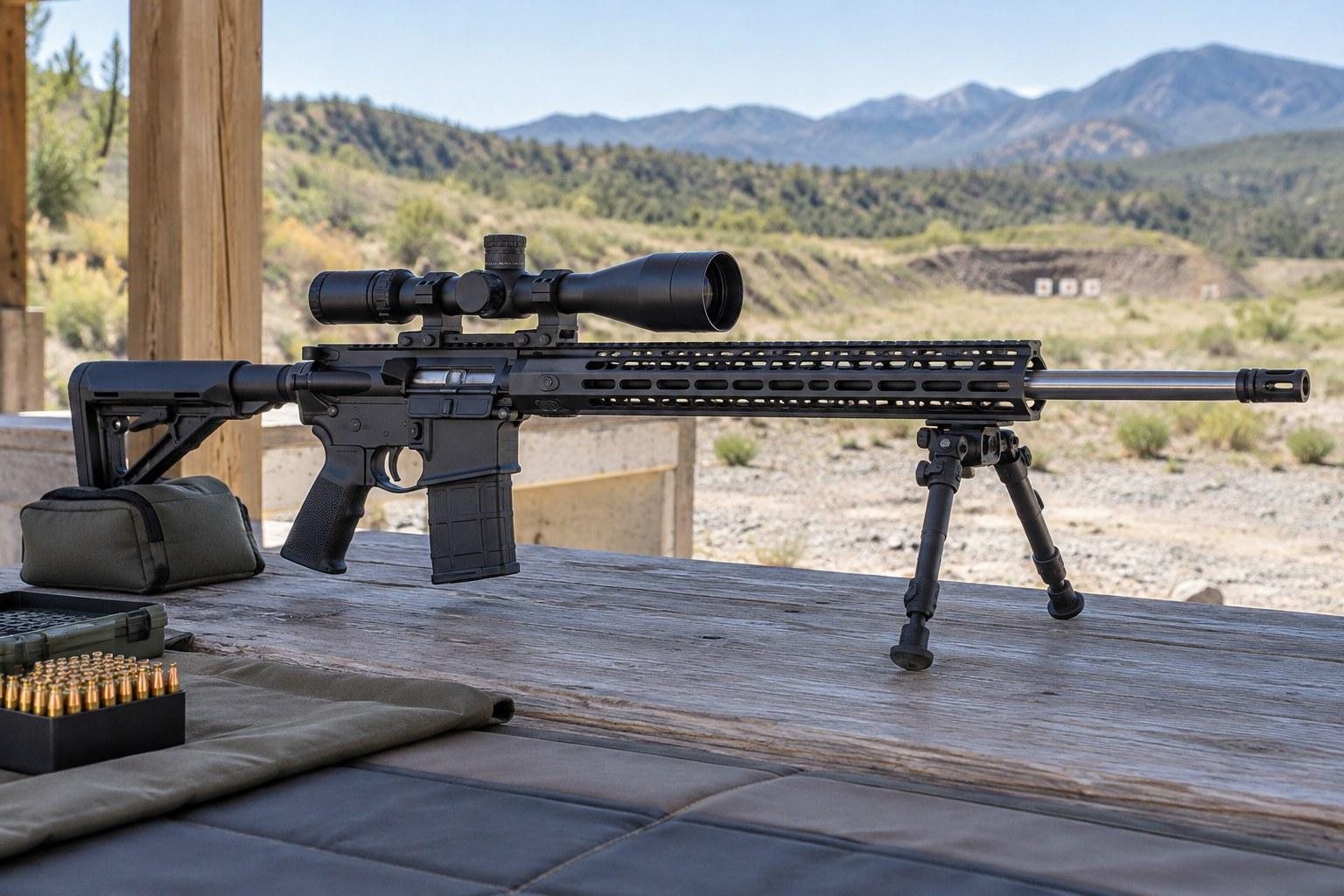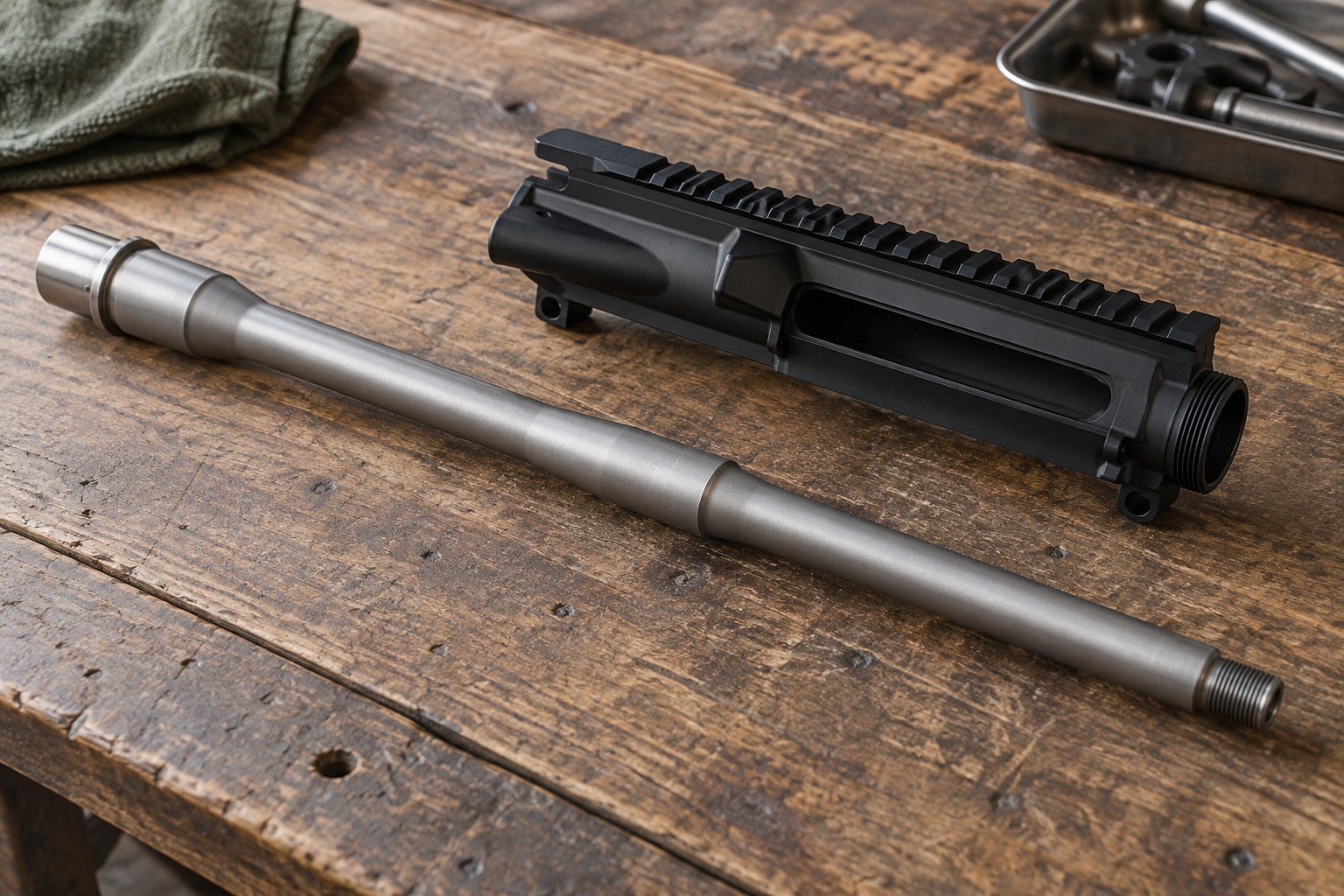
A Wilson Combat barrel is one of the most common upgrades hunters consider, and for good reason. The barrel decides how well your upper groups, how heavy it carries on a long walk and which cartridges it can run. Wilson Combat builds its AR-15 and AR-10 barrels from 416R stainless steel and offers several distinct profiles, each with a different balance of weight and stiffness.
Below, we break down what those barrels actually bring to a hunting build, using the kind of published specs commonly found on barrels like these. You will see how profile, twist, gas length and caliber fit together, and where a lighter or heavier option makes sense in the field.
Want to compare complete builds before picking parts?
Key Takeaways
- Wilson Combat barrels are generally made from 416R stainless steel with a glass bead finish.
- Profiles such as Ranger, Recon, Tactical Hunter and Super Sniper trade carry weight for barrel stiffness and heat tolerance.
- Common hunting calibers include 6.5 Grendel, 6.8 SPC II, 6mm ARC, 300 Blackout, 6.5 Creedmoor and 308 Win.
- Twist rate, gas system length and gas block diameter all differ by model, so read the spec block before you order parts around a barrel.
- A barrel under 16 inches on a rifle makes a short-barreled rifle under federal law, and state and local hunting rules vary.
Why the Barrel Matters Most on a Hunting Upper
On a hunting rifle, you usually get one shot at a calm animal. The barrel is the part that turns a good trigger press into a hit, so it deserves more attention than almost anything else bolted to the upper.
Hunting also asks different things of a barrel than a range day does. You carry the rifle for hours, you shoot it cold, and you rarely fire long strings. That shifts the priorities toward weight, first-shot consistency and a caliber that suits the game.
Cold-bore consistency over sustained fire
A competition shooter may care how a barrel behaves after many rounds. A hunter cares most about where the first round from a cold, clean or fouled barrel lands. Our editors suggest confirming your zero under the same conditions you hunt in, then checking it again before each season.
Carry weight versus stability
A heavier barrel is stiffer and soaks up heat, which can help consistency. A lighter barrel is far easier to carry up a ridge or into a stand. Choosing a Wilson Combat model is largely about picking the point on that scale that fits how you hunt.
What Goes Into a Wilson Combat Barrel
Wilson Combat models generally share the same core material and finish. Each product page also publishes a full spec block, which makes it easy to compare models without guessing.
416R stainless steel and a glass bead finish
The listed material is 416R stainless, a steel widely used for match-grade rifle barrels because it machines cleanly. The finish is glass bead blasted stainless, which gives a matte, low-glare surface. Stainless still needs care, so wipe it down after wet or humid hunts. For a deeper look at how this compares to other options, read our guide on chrome-lined, nitride and stainless barrels.
SAAMI chambers and clear compatibility notes
A 16 inch 6.5 Grendel barrel will typically conform to SAAMI specs for 6.5 Grendel Type 2, which has a 0.136 inch bolt face depth. Details like that matter, because the bolt you pair with the barrel has to match. You can review the cartridge standards themselves at SAAMI.
Published feed ramps, gas blocks and threads
Wilson Combat spec blocks list the feed ramp type, gas block journal diameter, gas system length and muzzle thread. For example, 30 caliber family barrels often use 30 Cal feed ramps and a 0.750 inch gas block, while heavier fluted barrels in 6.5 Grendel often use a 0.875 inch gas block. Order your gas block to match the listed diameter.
Unsure which parts work with your receiver?
Wilson Combat Barrel Profiles for Hunters
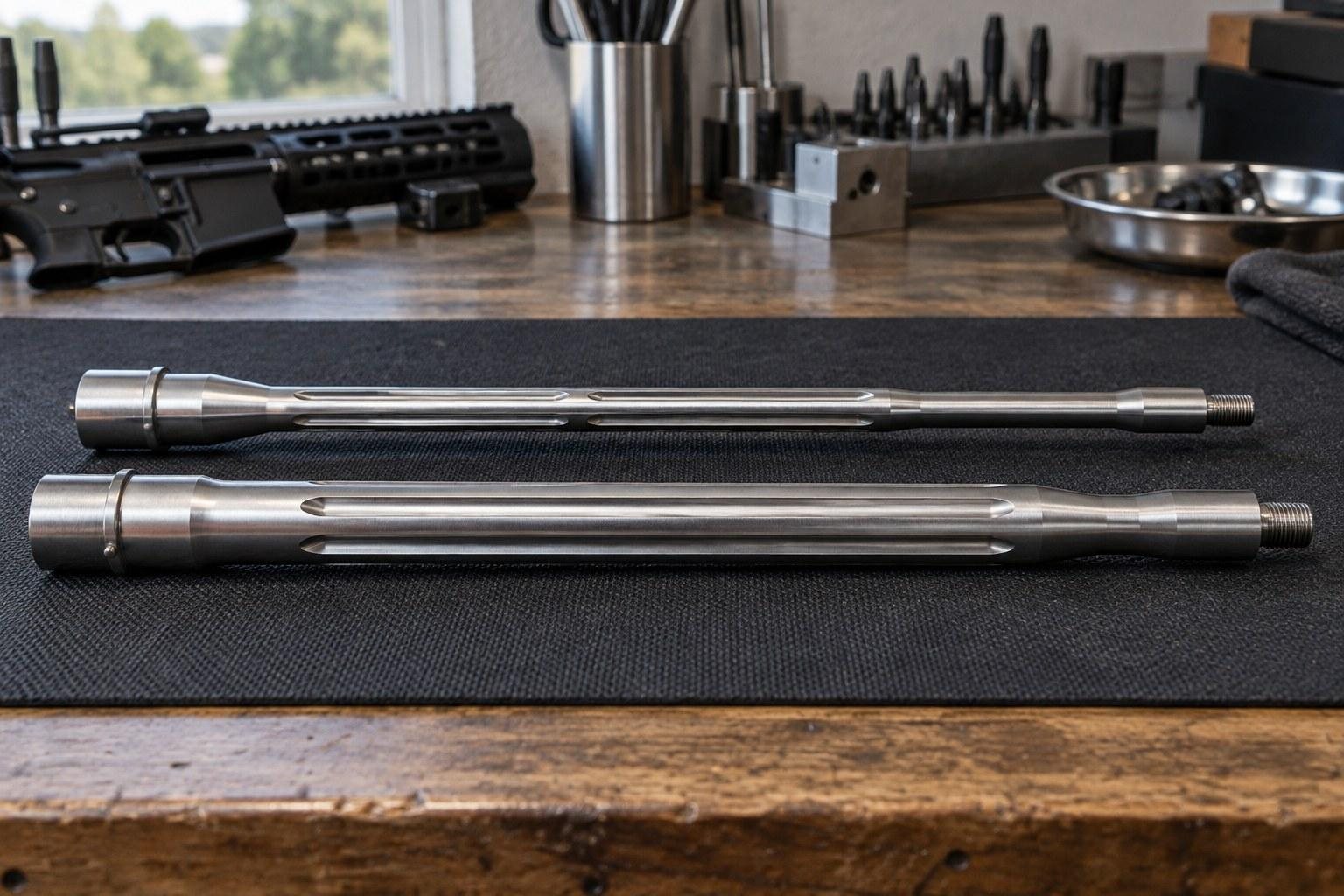
Wilson Combat names its contours, and each name tells you roughly how heavy the barrel will be. Here is how the profiles generally line up for hunting use, based on typical published weights.
Ranger and Recon for walking hunts
The Ranger and Recon profiles are the lighter contours. A 16 inch 6.5 Grendel Recon Round typically weighs around 1.7 lb, a 16 inch 6.8 SPC II Ranger around 1.75 lb, and a 16 inch 300 Blackout Recon Fluted around 1.5 lb. These are a good starting point for still hunting or covering ground.
Tactical Hunter for a middle ground
An 18 inch 6mm ARC Tactical Hunter Fluted typically weighs around 1.8 lb. That is close to the lighter 16 inch barrels while adding two inches of length, a reasonable fit for open country where shots may stretch out.
Super Sniper for stand and blind hunting
The Super Sniper Fluted is the heavy contour. A 22 inch 6.5 Grendel version typically weighs around 3.3 lb. That weight helps steady the rifle off a rest, so it suits shooting houses, blinds and field edges more than long walks.
| Example Barrel | Length | Twist | Gas Length | Typical Weight |
|---|---|---|---|---|
| 6.5 Grendel Recon Round | 16 in | 1:8 | Mid | 1.7 lb |
| 6.8 SPC II Ranger | 16 in | 1:11 | Mid | 1.75 lb |
| 300 Blackout Recon Fluted | 16 in | 1:7 | Pistol | 1.5 lb |
| 6mm ARC Tactical Hunter Fluted | 18 in | 1:7.5 | Intermediate | 1.8 lb |
| 6.5 Grendel Super Sniper Fluted | 22 in | 1:8 | Rifle | 3.3 lb |
Fluting removes material from the outside of the barrel to trim weight. It is a weight choice, not a guarantee of better accuracy, so weigh it alongside the rest of your build.
Matching Caliber and Twist to Your Game
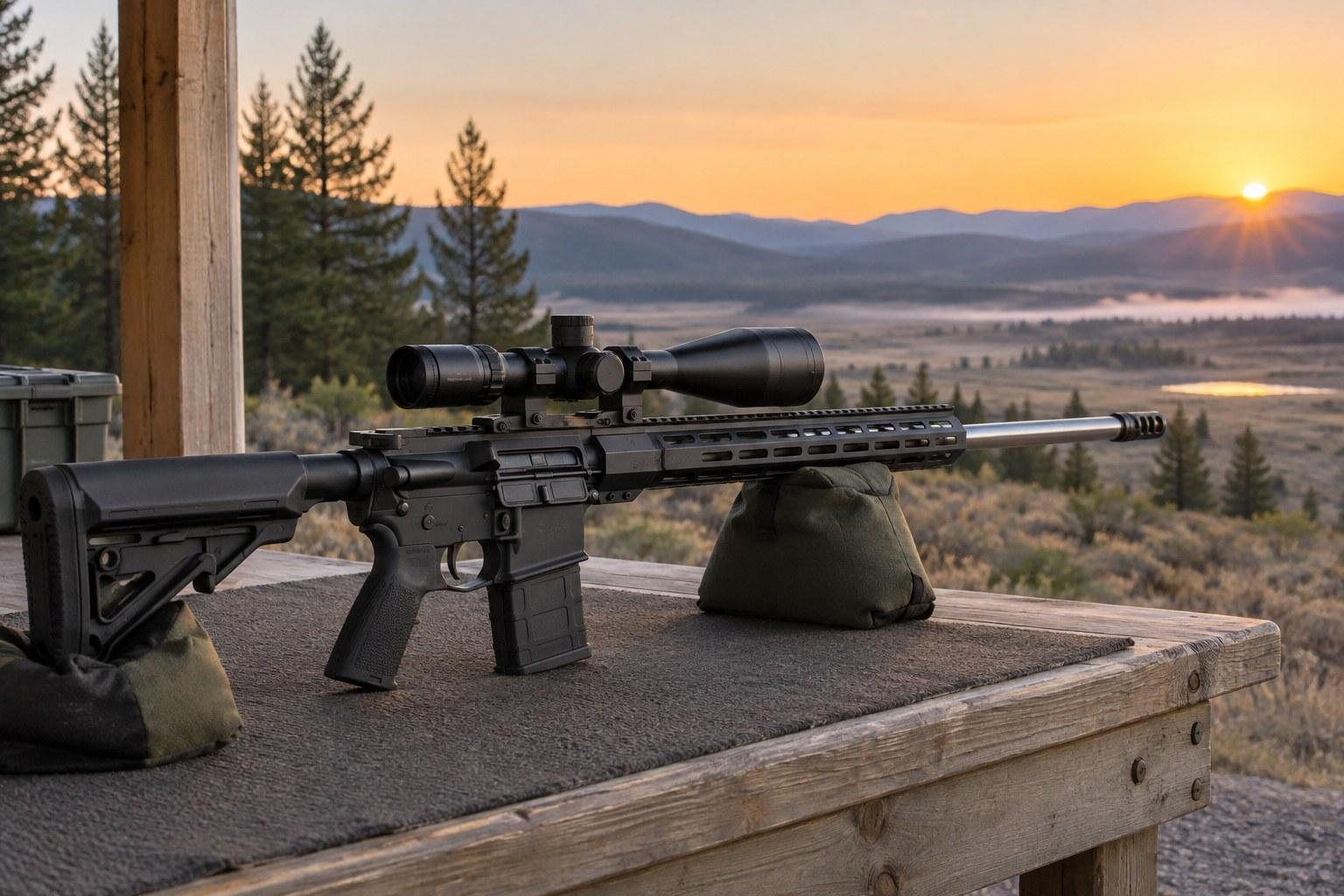
A Wilson Combat model is only as useful as the cartridge it is chambered for. Wilson Combat models are offered in a range of hunting calibers, and each has a twist rate chosen for that cartridge's typical bullet weights.
Deer-sized game on the AR-15 platform
For deer on an AR-15, many hunters lean toward the intermediate cartridges. Wilson Combat 6.5 Grendel barrels commonly come in 16, 20 and 22 inch lengths with a 1:8 twist. 6.8 SPC II barrels often include Ranger and Recon Fluted options at 16 inches with a 1:11 twist. Check your state wildlife agency for minimum caliber or energy rules before you commit. Our guide on deer hunting calibers for AR platforms covers the tradeoffs.
Hogs, predators and suppressed hunts
300 Blackout Wilson Combat models commonly use a 1:7 twist at 16 inches, a setup many hunters use with heavier subsonic or supersonic bullets. The 6mm ARC Tactical Hunter, with a 1:7.5 twist, is aimed at longer, flatter shots on smaller game and deer where legal.
Longer shots with AR-10 calibers
If you need more reach and energy, the AR-10 side of the lineup often includes Super Sniper Fluted barrels in 6.5 Creedmoor at 20 and 24 inches and in 308 Win at 18 and 20 inches. Browse the full 308 barrel category to see current stock, and remember that AR-10 parts are not interchangeable with AR-15 parts.
Setting Up a Hunting Upper Around a Wilson Combat Barrel
The barrel sets the rules for the rest of the upper. Once you pick a Wilson Combat model, the gas system, handguard, bolt and muzzle device all need to fit its published specs.
Gas system and gas block
Match your gas tube to the gas length printed on the product page, and match your gas block to the listed journal diameter. Our editors do not recommend modifying gas ports. If your rifle cycles poorly, an adjustable gas block is a cleaner fix, and our gas system length guide explains the basics.
Bolt and headspace
Calibers like 6.5 Grendel and 6.8 SPC II need the correct bolt for the barrel. Headspace should always be checked with proper gauges. Complete uppers from AR15Parts.com are assembled in-house, headspaced and function-checked before they ship, which removes that step for buyers who would rather not do it themselves.
Installation safety
Always work on an unloaded firearm with the magnifier, optics and magazine removed. Follow the barrel and component manufacturer's instructions and torque specs. If you are unsure about any step, have a qualified gunsmith do the installation.
Barrel Length, the Law and Hunting Rules
Several Wilson Combat models are 16 inches, which sits right at the federal line. Under federal law, a barrel under 16 inches on a rifle, or an overall length under 26 inches, makes it a short-barreled rifle that must be registered with the ATF. Since January 1, 2026 the federal tax on SBRs and suppressors is $0, but registration is still required.
A pinned and welded muzzle device can bring a shorter barrel to 16 inches, but that work should be done properly by a qualified gunsmith. State and local laws vary, and hunting regulations add their own rules on calibers, magazine capacity and suppressor use. Check your state wildlife agency and local laws before you hunt. Nothing here is legal advice.
Is a Wilson Combat model worth it for you?
If you hunt with an AR-15 or AR-10 and want a stainless match-style barrel with clearly published specs, a Wilson Combat barrel is a strong candidate. If you mainly plink or train, a chrome-lined barrel may suit your budget and use better. Either way, start from the game you hunt and the distance you shoot.
Want a broader view of hunting builds?