How to verify an AR-15 upper will fit your lower before you buy. Mil-spec vs. proprietary, caliber compatibility, pin size, and common gotchas.
The AR-15's greatest engineering feature is also its most-worried-about compatibility question: any mil-spec upper fits any mil-spec lower. This is the platform's core promise, and it holds true 99% of the time. The 1% of edge cases (proprietary billet sets, obscure legacy pin sizes, caliber-specific bolt requirements) trip up first-time buyers and drive most of the "will this work with my rifle?" questions online. This guide is the definitive pre-purchase compatibility checklist.
The Mil-Spec Compatibility Promise
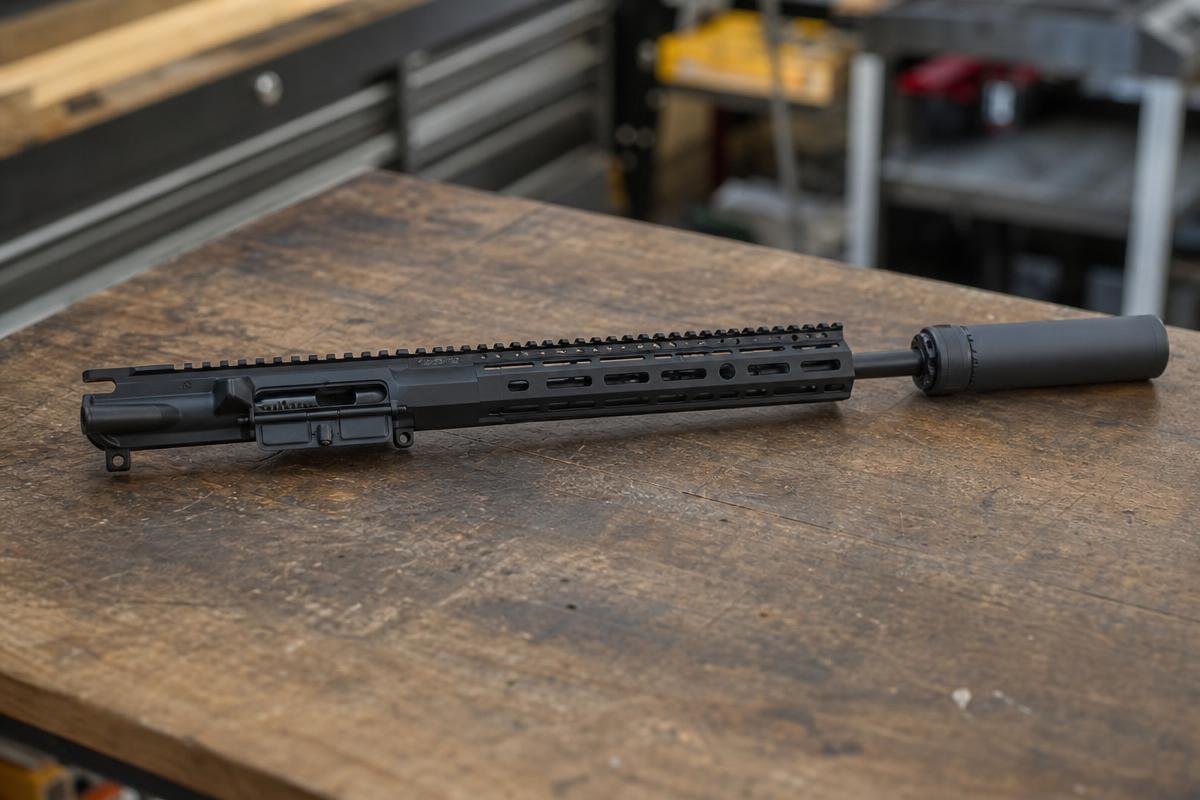
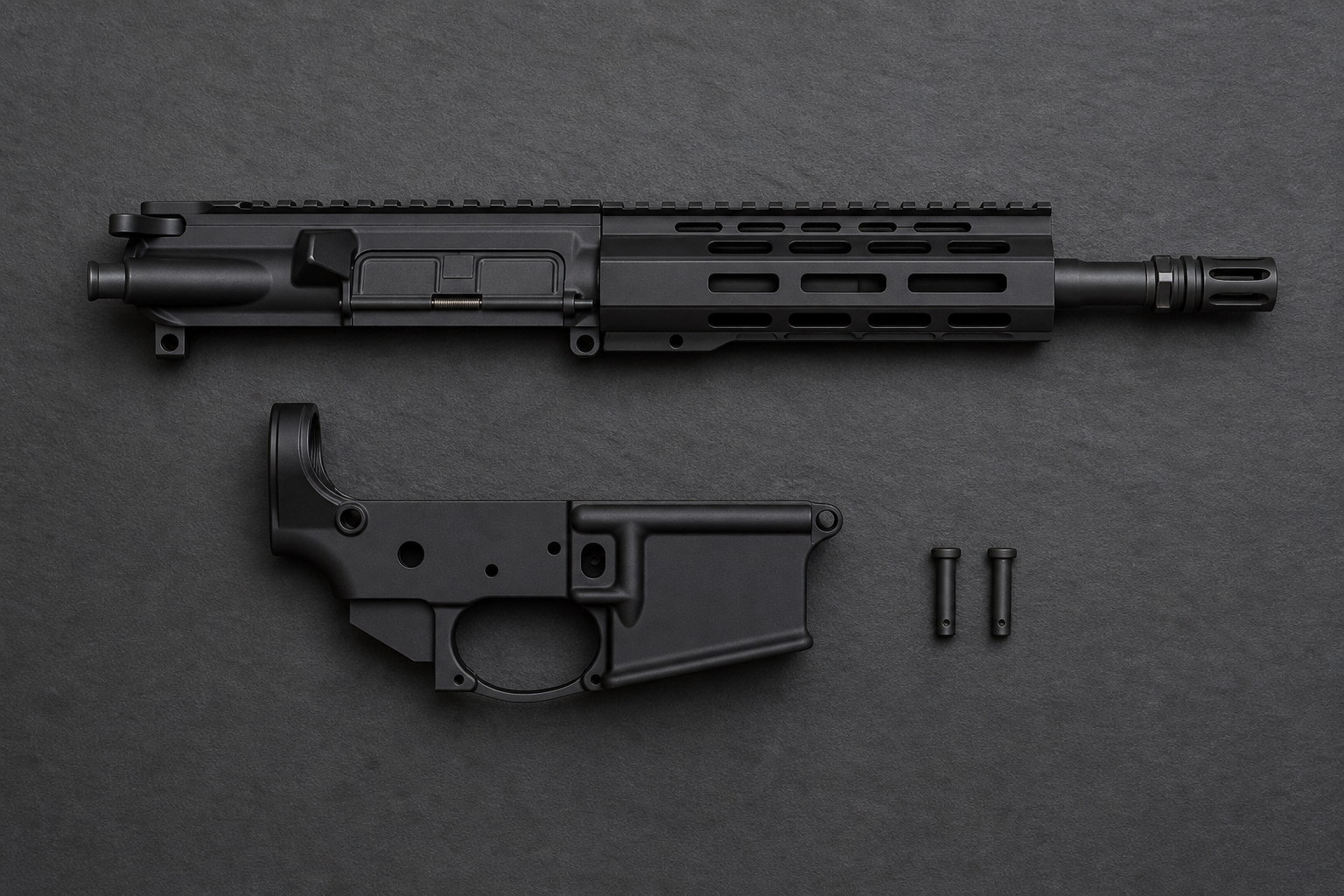
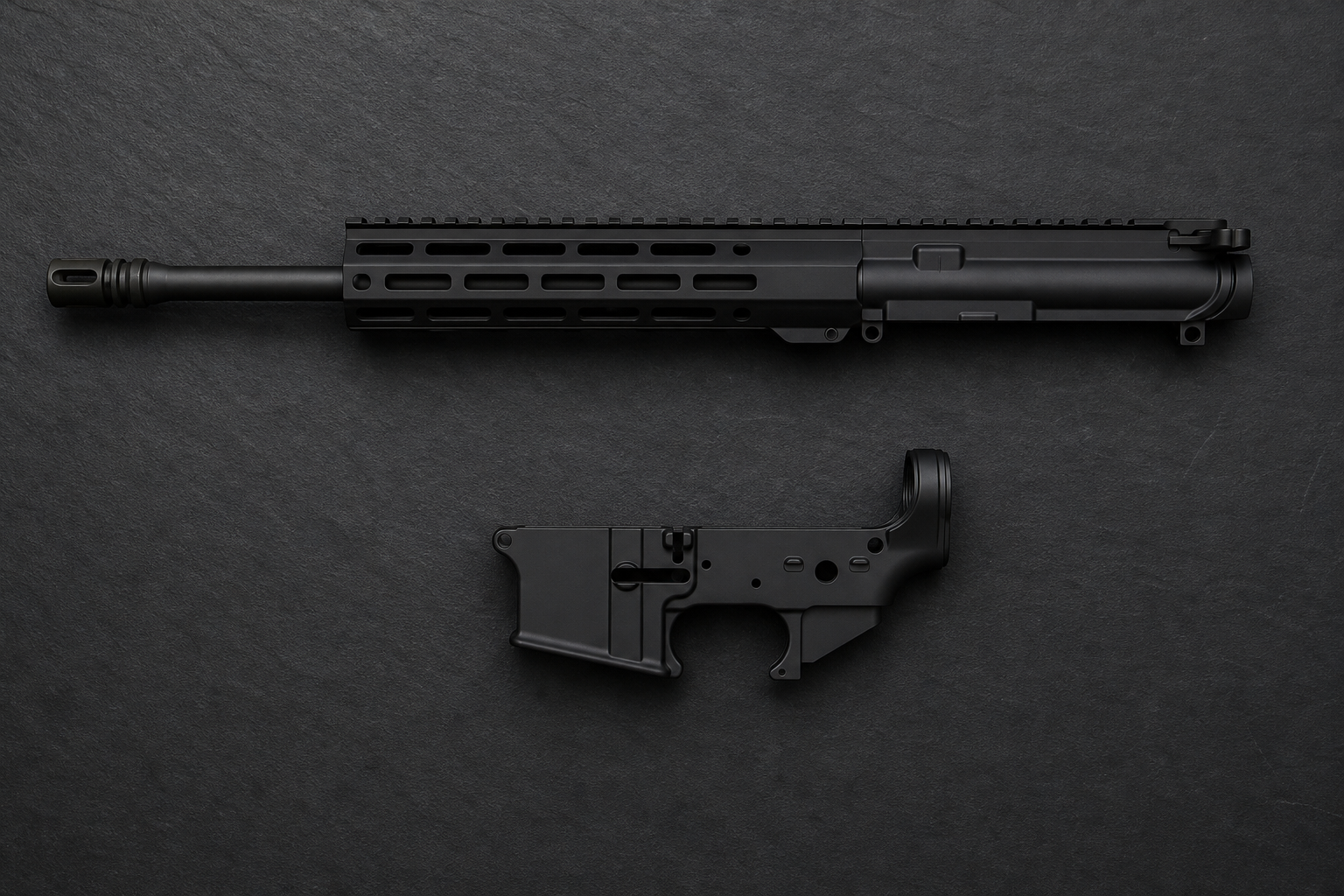
The AR-15 was designed as a modular platform. The U.S. military standardized dimensions for the upper receiver, lower receiver, takedown pins, buffer tube, and internal components so parts from any manufacturer would interchange with parts from any other. That specification, called mil-spec, is why you can buy an Aero Precision upper, put it on a PSA lower, install a Geissele trigger, and expect everything to work.
As long as both the upper and the lower are built to mil-spec, they will fit. No exceptions worth planning around for a modern civilian build.
Signs a part is mil-spec:
- The listing explicitly says "mil-spec," "mil-standard," or "TDP-compliant" (Technical Data Package, the military's spec document).
- Forged 7075-T6 aluminum construction (most mil-spec uppers and lowers).
- Standard 0.154-inch takedown pin holes.
- Compatible with M4/M16 furniture and internals.
Mixing Brands: When Fit Gets Tighter or Looser
Even within mil-spec, small tolerance variations between manufacturers mean some upper/lower pairs fit snugly and others have visible play. This is normal and does not affect function. A rifle with a slight upper/lower gap shoots exactly as accurately as a rifle with a tight fit.
If a loose fit bothers you, two easy fixes:
- Accu-Wedge: A small rubber wedge that slots between the upper and lower to eliminate play. $5 fix.
- Tension screw: A small set screw installed in the lower to push against the upper. Also cheap.
Proprietary billet sets (Aero M4E1, BCM billet, Radian Model 1) are designed as matched upper/lower pairs and typically fit tighter than mil-spec parts. Mixing a proprietary billet upper with a different brand's mil-spec lower usually still works but may fit looser than intended. Verify before buying if you have a specific setup in mind.
What actually breaks compatibility (rare):
- Some ultra-premium matched sets (LaRue, Radian in specific configurations) have modified pin geometry that requires their own matching lower.
- Handguard-integrated proprietary barrel nuts require the corresponding handguard, unrelated to the upper/lower fit itself.
Caliber Compatibility Rules
The lower receiver does not care what caliber the upper is chambered in. It's just an aluminum housing for the trigger, magazine well, and buffer tube. Any AR-15 lower accepts any AR-15 caliber upper.
What changes with caliber:
Barrel-only swaps (same bolt, same mags): .300 Blackout, .224 Valkyrie. If your existing 5.56 upper has a swappable barrel and you want to change caliber, these are the simplest paths.
Barrel + bolt + mags required: 6.5 Grendel, 6mm ARC, .350 Legend (mags only), .458 SOCOM, .50 Beowulf.
Whenever you're considering a caliber other than 5.56, verify the upper you're buying includes the correct bolt (most complete uppers do) and budget separately for caliber-specific magazines.
Pin Sizes and Uncommon Gotchas
Small pin vs. large pin: Modern AR-15 receivers use 0.154-inch takedown pins (small pin). Some very old Colt receivers from the 1970s and 1980s used 0.170-inch (large pin) dimensions. If you own a legacy Colt rifle with large pins, you'll need a large-pin upper to match, or a small-pin conversion insert. This is rare and almost never encountered in modern civilian builds.
Colt vs. mil-spec Colt: Some Colt commercial receivers use a proprietary hole spacing between the takedown and pivot pins. This does not affect upper compatibility (the upper still uses the same pin sizes) but can affect some accessories.
Forward assist and dust cover: Not all uppers ship with these installed. If you want them and the upper doesn't have them, adding them post-purchase requires roll pin installation and can be fiddly. Verify inclusion before buying.
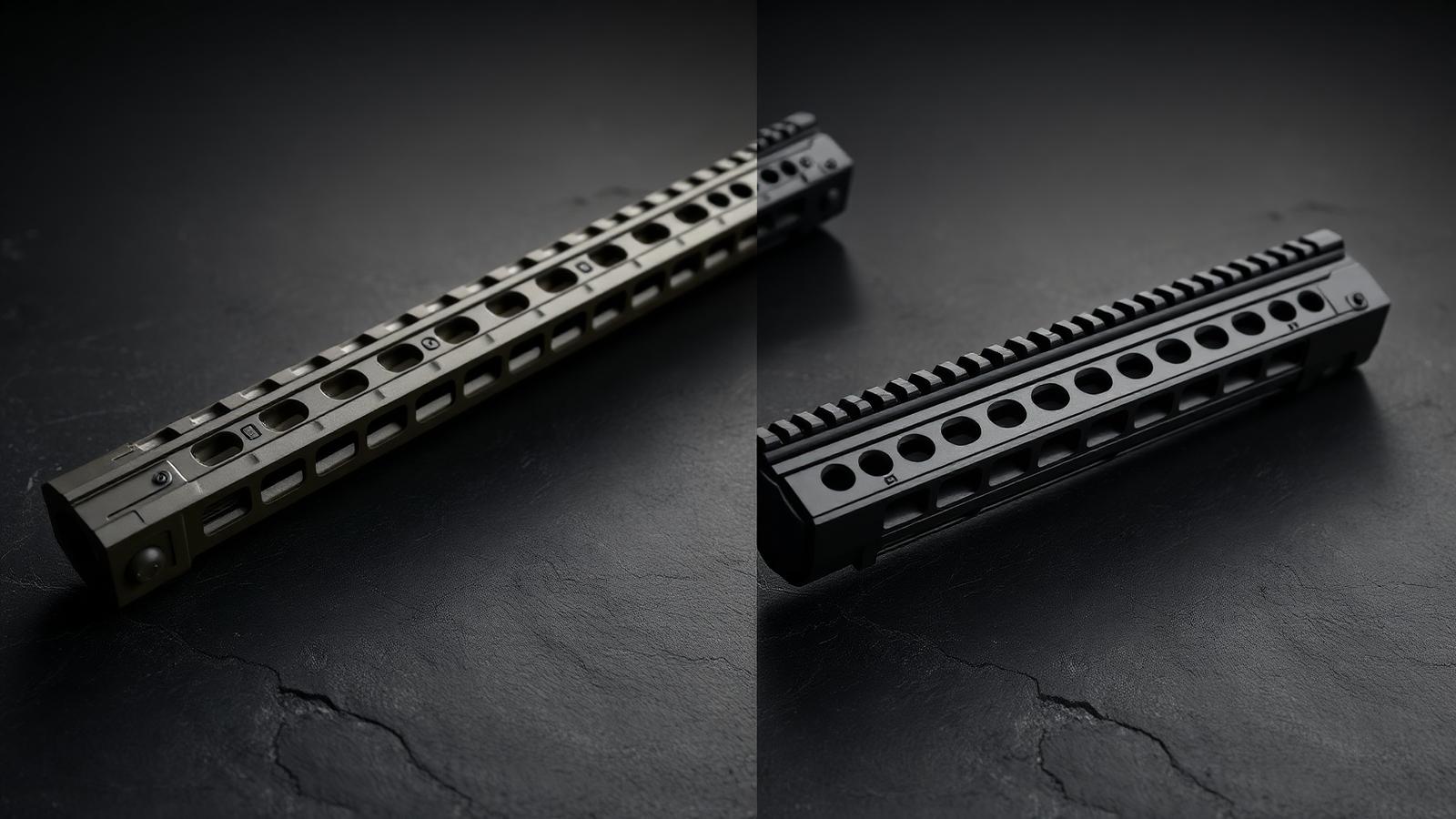
Handguard interface: This is the most common "surprise incompatibility." Handguards that use proprietary barrel nuts (Aero ATLAS, BCM MCMR, Geissele Mk-series) require that specific barrel nut. Swapping to a different-brand handguard usually requires swapping the barrel nut too. Buying a complete upper avoids this entirely.
AR-15 vs. AR-10: Never Interchange
AR-15 uppers do not fit AR-10 lowers, and vice versa. These are different platforms with different receiver dimensions, takedown pin spacing, magazine well width, and overall size. If your rifle is chambered in .308, 6.5 Creedmoor, .243, or another full-power cartridge, it's an AR-10 (or an AR-10 pattern variant) and requires AR-10 uppers.
The two AR-10 pattern subtypes (DPMS High and Armalite/DPMS Low) also do not interchange with each other. This is a separate compatibility problem covered in the AR-10 buying guide.
The rule: 5.56, .300 BLK, 6.5 Grendel, 6mm ARC, .224 Valkyrie, .350 Legend, .458 SOCOM, and .50 Beowulf are all AR-15 chamberings. .308 Winchester, 7.62 NATO, 6.5 Creedmoor, and .243 are AR-10 chamberings.
Pre-Purchase Compatibility Checklist
Before buying an upper, verify:
- Platform match: AR-15 upper for AR-15 lower, AR-10 upper for AR-10 lower.
- Pin size: 0.154-inch small pin for essentially all modern builds. Large pin only if you have a legacy Colt.
- Caliber match: If the upper is not 5.56 or .223, verify the correct bolt is included and note whether you'll need caliber-specific magazines.
- Handguard barrel nut: If the upper is complete, this is a non-issue. If you're buying a barrel to install into an existing upper, verify the handguard barrel nut matches.
- Forward assist / dust cover: Confirm the upper includes them if you want them.
- Buffer weight: Some calibers (.458 SOCOM, .50 Beowulf, some .300 BLK subsonic setups) prefer heavier buffers than the standard carbine buffer. Verify what your lower has installed.
99% of the time, if you buy a mil-spec AR-15 upper and mount it on a mil-spec AR-15 lower, it will work. The exceptions above cover the remaining 1%.
Browse compatible uppers by caliber and pin type at ar15parts.com.