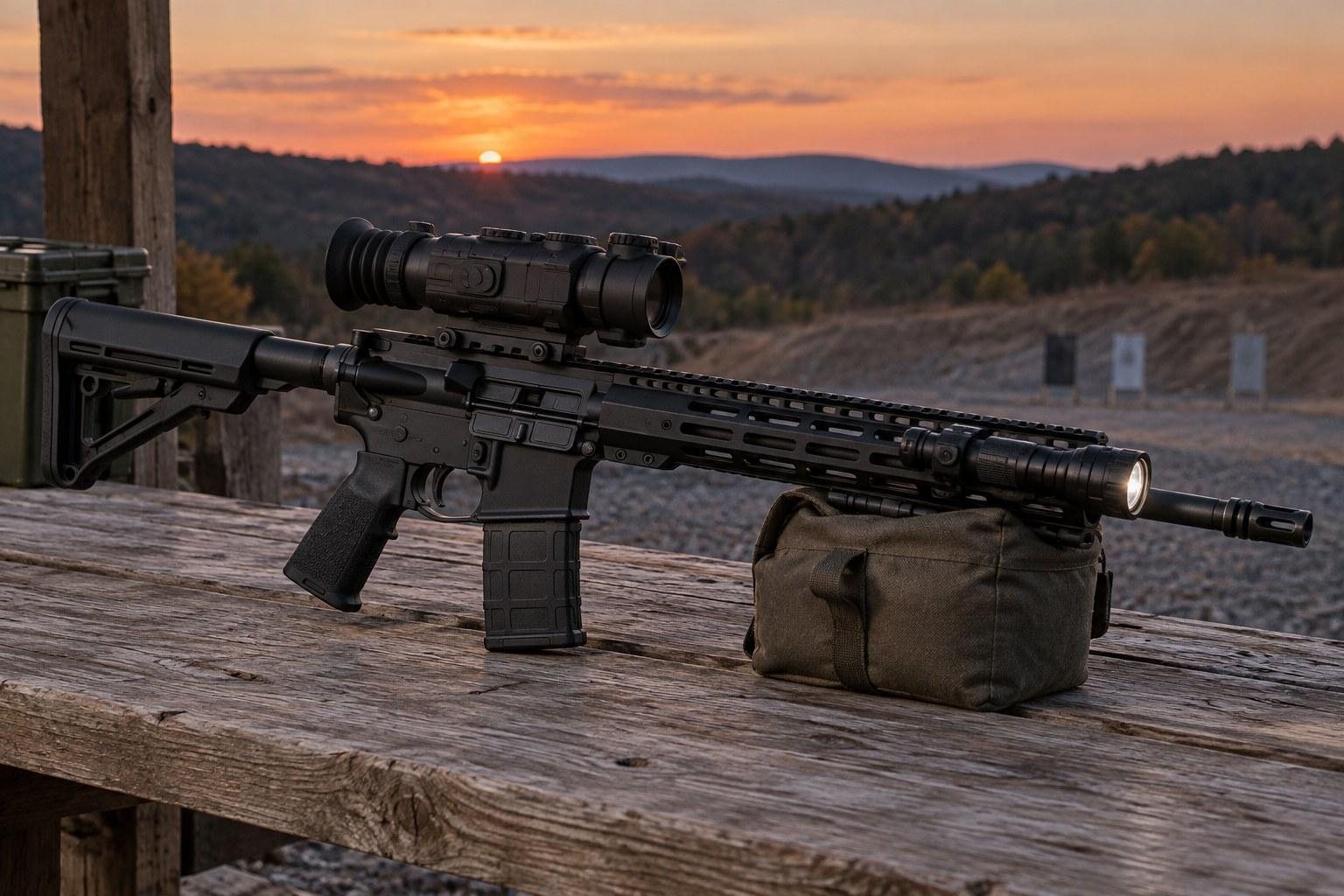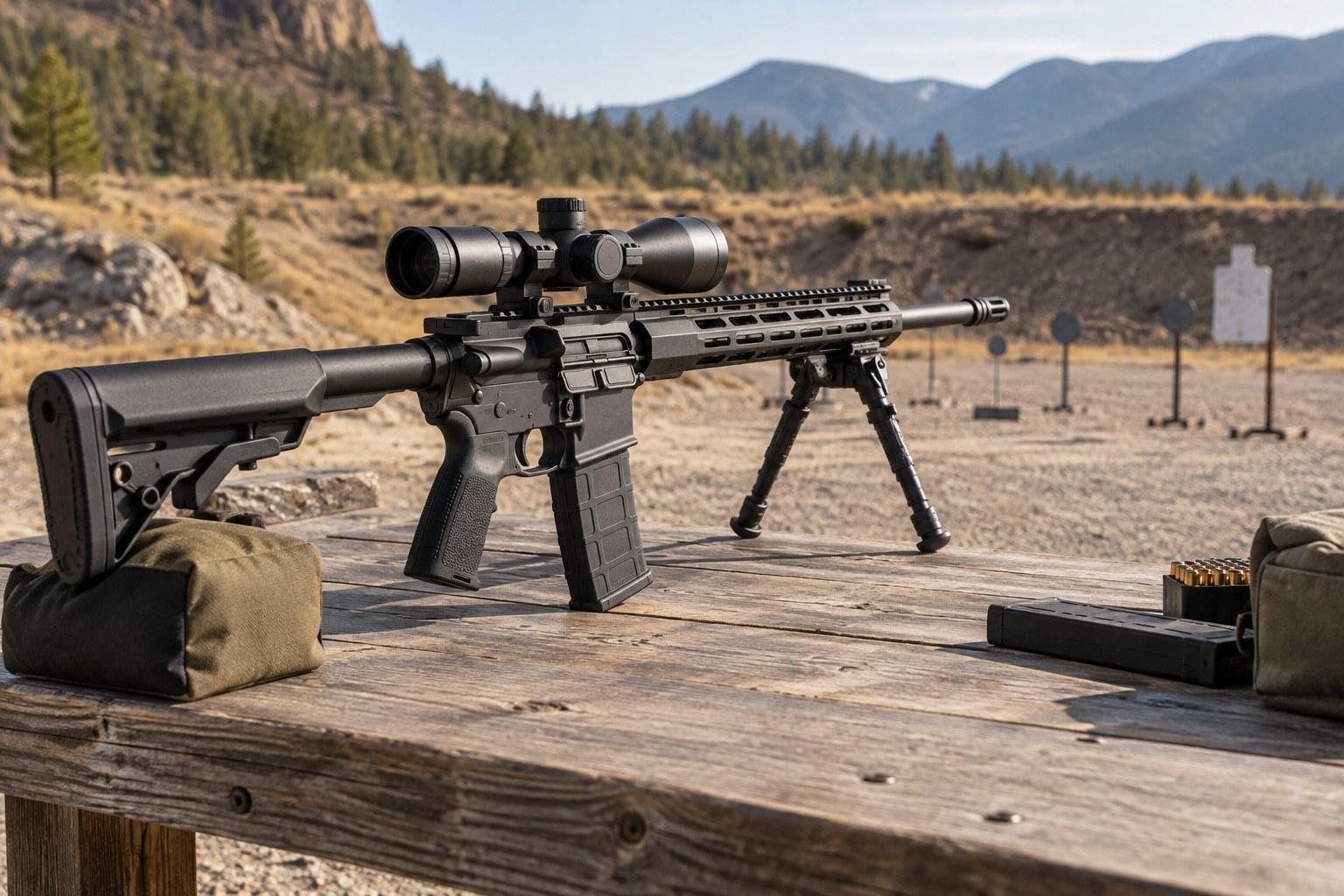
A home defense AR-15 lives or dies by two qualities that often pull against each other: how easily it moves through hallways and doorways, and how consistently it runs when you need it. Shorter barrels and smaller handguards make a rifle easier to handle indoors, but they also change gas pressure, muzzle blast and legal status. This breakdown covers the decisions that matter most for an upper that will sit ready at home. You will learn how barrel length, gas system, caliber, handguard, muzzle device and bolt carrier group fit together, and where the sensible compromises are for a rifle you trust.
Want to see compact and full-length configurations side by side? Browse our complete upper coverage.
Key Takeaways
- A 16 inch barrel is the simplest legal path to a compact rifle, while anything shorter makes a short-barreled rifle that requires ATF registration.
- Reliability comes from matched parts: barrel length, gas system length, buffer and a quality bolt carrier group must work together.
- A 5.56 NATO chamber gives you broad ammunition choice, while 300 Blackout is designed to work efficiently from short barrels.
- A free-floated handguard in the 10 to 15 inch range gives you room for a weapon light and a sling mount without excess length.
- Your muzzle device matters indoors, because a comp brake throws more blast and noise to the sides than a flash hider.
- Test any home defense upper with the exact ammunition you plan to keep loaded before you rely on it.
What Size and Reliability Really Mean for a Home Defense AR-15
Size is not just barrel length. It is overall length, weight out front, and how far the rifle sticks out ahead of you when you turn a corner. A rifle that feels balanced at the range can feel long in a narrow hallway.
Reliability is just as specific. For a defensive rifle it means feeding, firing, extracting and ejecting every time with your chosen ammunition, magazines and accessories. It also means a setup that stays zeroed and does not depend on perfect cleaning schedules.
Why the Two Goals Compete
As a barrel gets shorter, the bullet leaves the muzzle sooner and the gas system has less time to work. That shifts the gas port pressure and timing, which can make a short rifle run harder or more sensitive to ammunition. Shorter barrels also tend to produce more flash and concussion.
None of that makes short uppers unreliable. It means each component has to be chosen with the others in mind. A matched barrel and gas system, assembled and headspaced properly, solves many of the problems people blame on short barrels.
The Three Questions to Answer First
- Are you willing to register a short-barreled rifle, or do you want to stay at 16 inches?
- Which caliber do you want to train with and keep loaded?
- What accessories must the rifle carry, such as a light, sling and optic?
Your answers narrow the field quickly. The sections below walk through each choice in order.
Choosing Barrel Length for a Compact Home Defense Upper
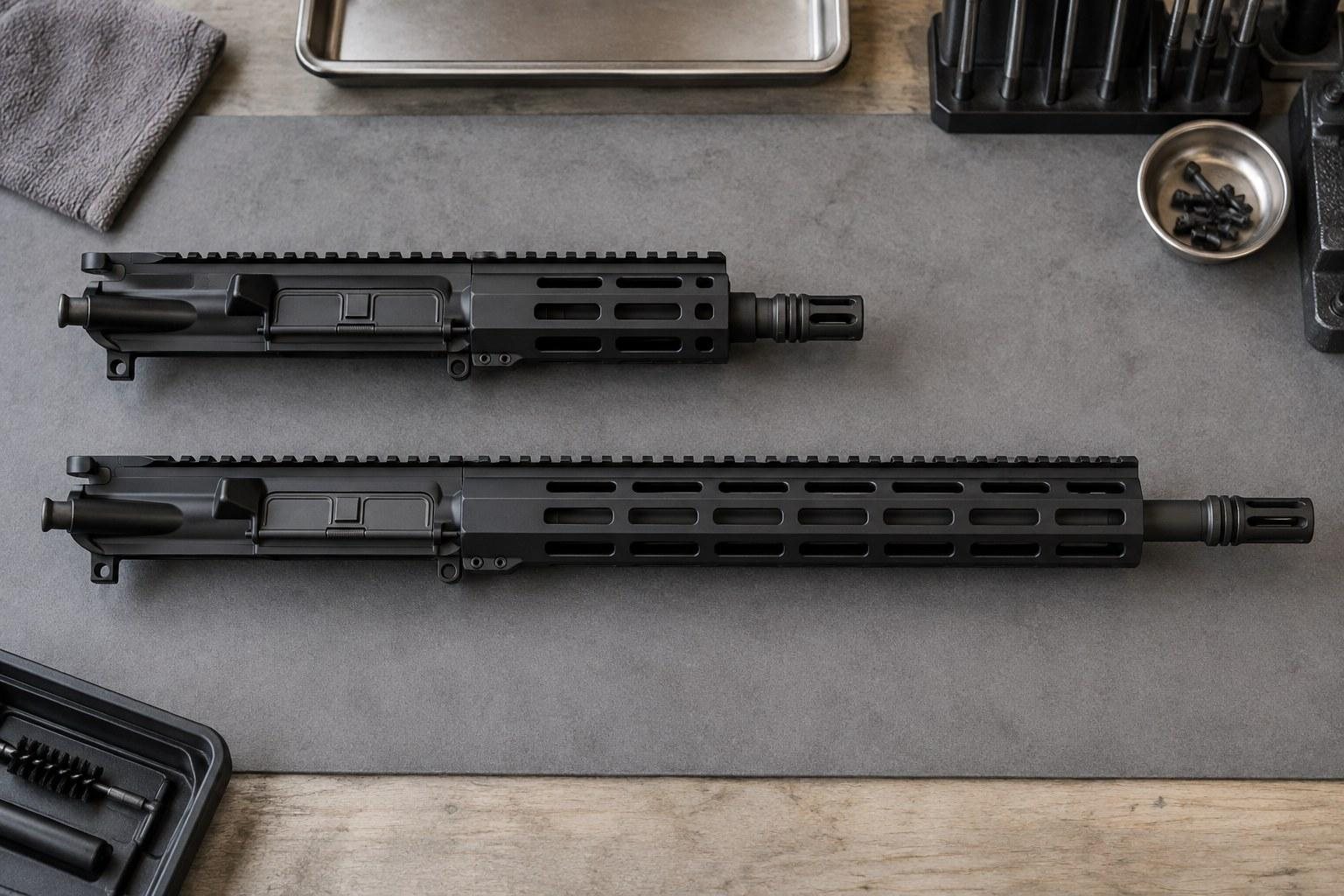
Barrel length is the biggest size decision you will make. Federal law treats a rifle with a barrel under 16 inches, or an overall length under 26 inches, as a short-barreled rifle on a rifle lower. Since January 1, 2026 the federal tax on SBRs is $0, but ATF registration is still required before you build one. State and local laws vary, so confirm the rules where you live before ordering parts. The ATF National Firearms Act page is the place to start.
16 Inch Barrels
A 16 inch barrel needs no NFA paperwork and gives 5.56 NATO room to work. 16 inch 5.56 NATO uppers are commonly built on an M4/Govt profile barrel with a 1:8 twist and carbine-length gas, and some fluted barrel options use an intermediate-length gas system instead. You can compare them on the 5.56 NATO uppers page.
10.5 Inch Barrels
A 10.5 inch barrel shortens the rifle noticeably, which many owners like indoors. 10.5 inch 5.56 NATO uppers are commonly built with a chrome-lined M4/Govt barrel, 1:7 twist and carbine gas. On a rifle, this length is a short-barreled rifle and must be registered first. On a properly configured pistol lower it is treated differently, which is covered in our AR-15 pistol upper guide.
Pinned and Welded Muzzle Devices
A muzzle device that is permanently attached, by pinning and welding, can count toward the 16 inch barrel length. This is a gunsmith job that must be done correctly, and you should keep documentation. For a deeper look at length tradeoffs, read our AR-15 barrel length guide.
| Barrel Length | NFA Status on a Rifle | Handling Indoors | Main Tradeoff |
|---|---|---|---|
| 16 inch | No registration required | Longer but manageable | More length out front |
| 14.5 inch with pinned and welded device | Counts as 16 inch if done correctly | Slightly shorter | Permanent device choice |
| 10.5 inch | SBR, ATF registration required | Compact and quick to turn | More blast, paperwork |
Ready to compare length options in more depth? Our caliber and configuration guides cover each one.
Matching the Gas System for Dependable Cycling
The gas system length should fit the barrel length. When the two are mismatched, a rifle may short stroke, eject erratically or batter its parts. That is why complete uppers are usually built with a gas length chosen for the barrel.
Common Pairings
- 10.5 inch 5.56 NATO barrels commonly use carbine-length gas.
- 16 inch 5.56 NATO barrels commonly use carbine or mid-length gas, depending on the maker.
- 300 Blackout barrels, in both 10.5 and 16 inch lengths, commonly use pistol-length gas.
Keep the Gas System Stock
For a defensive rifle, simple is better. Leave the gas port alone and never drill or modify it. If you run a suppressor and want to tune the system, an adjustable gas block can help, but follow the maker's instructions carefully. When in doubt, stay with the gas length the barrel maker specifies.
Picking a Caliber for Your Home Defense AR-15
Many owners choose between 5.56 NATO and 300 Blackout for a defensive rifle. Both run in a standard AR-15 lower and use the same bolt carrier group design. The right pick depends on barrel length, suppressor plans and what you want to practice with.
5.56 NATO
5.56 NATO is widely available in many loads, which makes it easy to find practice ammunition and a defensive load that runs well in your rifle. A 5.56 NATO chamber also accepts .223 Remington. Choose a defensive load from a reputable manufacturer and read the maker's published data for the barrel length you plan to use.
300 Blackout
300 Blackout was designed to work efficiently from short barrels and to pair well with suppressors. 300 Blackout uppers are commonly available with a 10.5 inch barrel as well as 16 inch options, so check current listings for specific barrel makers and profiles.
Magazines and Safety
Both calibers use standard AR-15 pattern 223, 5.56 and 300 Blackout magazines. That convenience brings a real risk: a 300 Blackout round can chamber in a 5.56 rifle and cause a dangerous failure. If you own both, mark your magazines clearly and store ammunition separately. Our 300 Blackout vs 5.56 upper comparison goes deeper.
Handguard, Muzzle Device and Lighting Choices
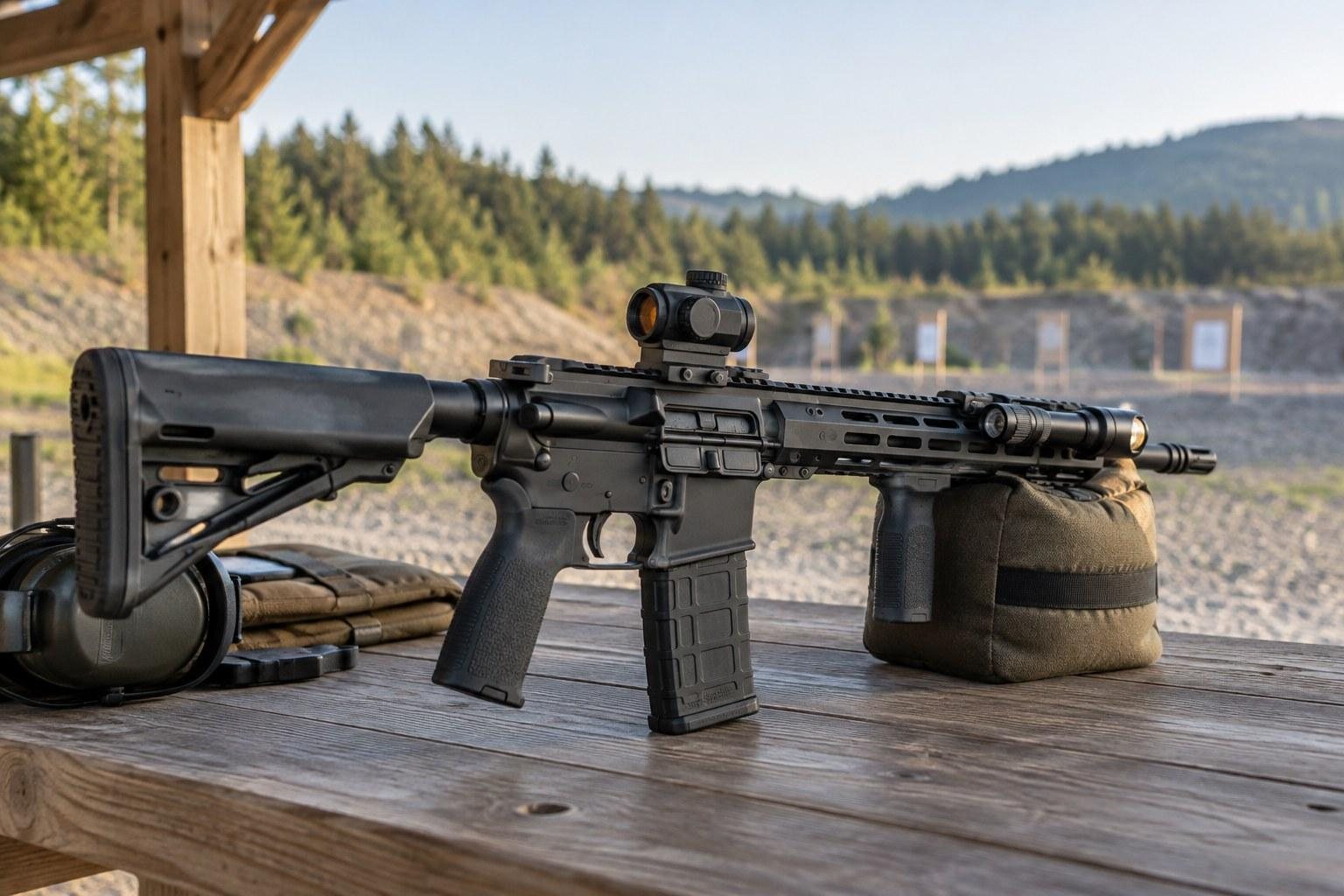
Once the barrel and caliber are set, the parts bolted around them decide how the rifle handles. These choices also affect reliability more than many people expect.
Handguard Length
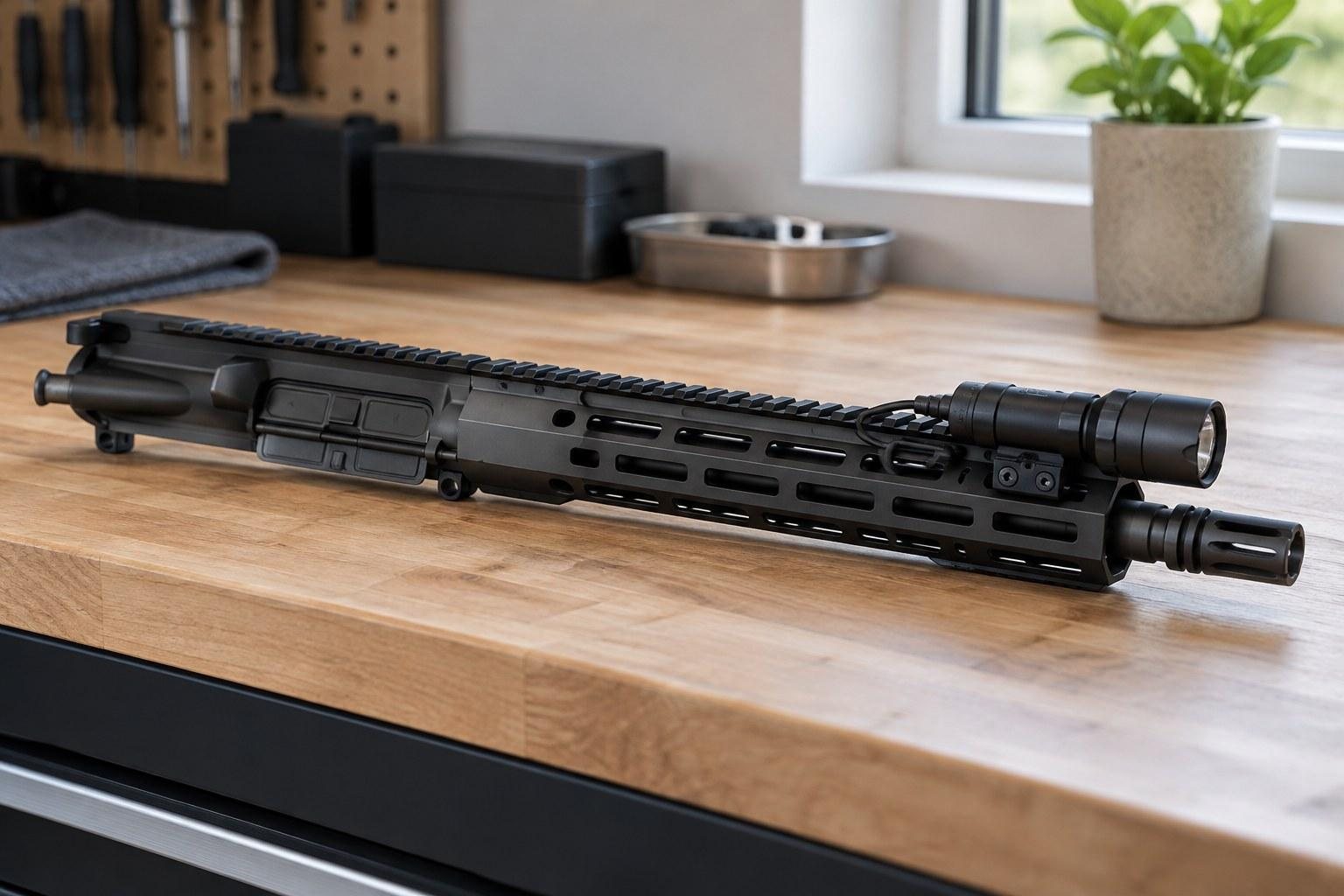
Complete uppers commonly come with rails in the 10 to 15 inch range depending on barrel length. A free-floated AR-15 handguard keeps pressure off the barrel and gives you space for a light, sling mount and support hand. Pick a length that leaves room for your light near the front without extending past the muzzle device.
Muzzle Devices Indoors
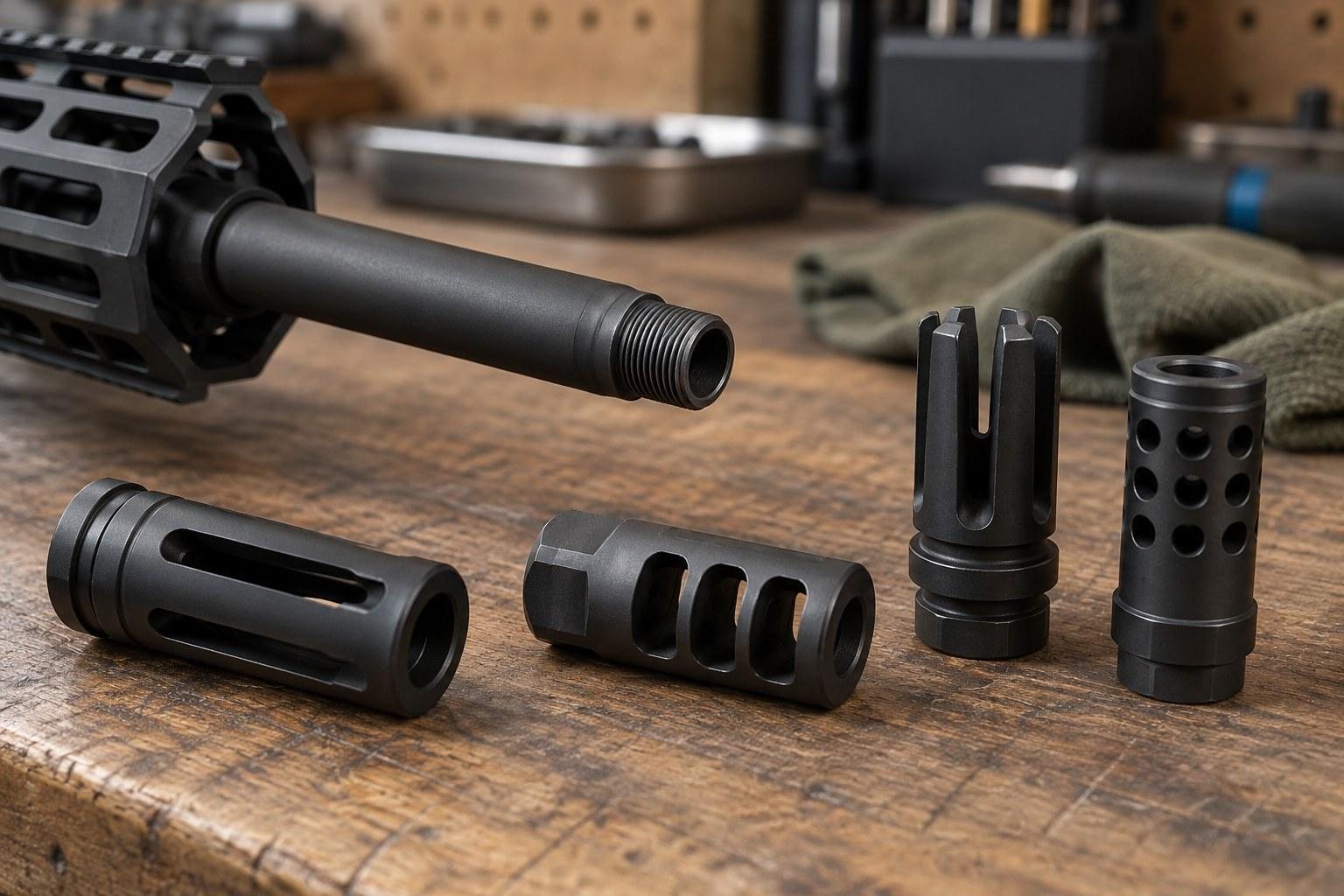
Indoors, the muzzle device changes what you and others in the room experience. A flash hider aims to reduce visible flash. A comp brake reduces muzzle rise but redirects more blast and noise to the sides, which can be harsh in tight rooms. Uppers commonly ship with an A2 flash hider, a flash can or a comp brake depending on the model.
Weapon Lights and Optics
- Mount the light where your support hand can reach the switch without changing your grip much.
- Keep the light forward enough to reduce shadow from the barrel.
- Choose a red dot or low-power optic that holds zero and has a long battery life.
- Check that no cables or switches block the ejection port or charging handle.
The Reliability Checklist for Your Upper
A compact rifle only earns a place by the bed if it runs. These steps help you get there without guesswork.
Start With a Quality Bolt Carrier Group
The bolt carrier group does the hardest work in the rifle. Look for a properly staked gas key and a bolt from a reputable maker. Complete uppers commonly include a BCG and charging handle, and the ones from AR15Parts.com are each assembled in-house, headspaced and function-checked before they ship.
Test Before You Trust
- Make sure the firearm is unloaded before any inspection or assembly.
- Lubricate the upper according to the manufacturer's instructions.
- Fire your chosen defensive load through the magazines you will keep loaded.
- Confirm zero for your optic at the distances you expect inside your home.
- Recheck that the light, optic and muzzle device are tight after shooting.
Know When to Get Help
Torque values for barrel nuts and muzzle devices should come from the component manufacturer's published specs. If anything about assembly, headspace or legal configuration is unclear, have a qualified gunsmith check the rifle. A defensive rifle should never be your first experiment.
Building your first defensive upper? Our assembly guides cover the steps in order.