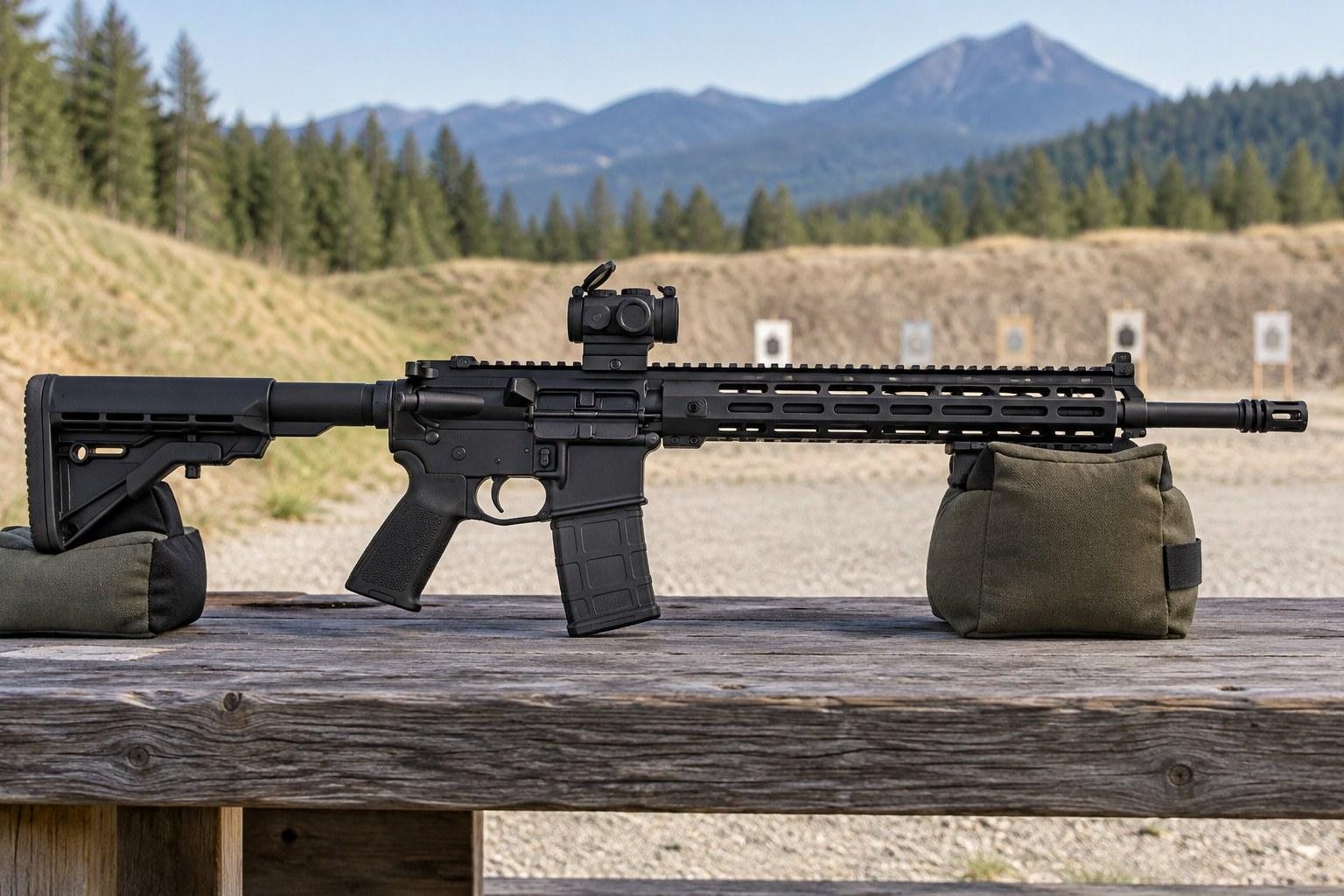
A flat top upper is the single biggest reason the modern AR-15 can wear almost any sighting system you can think of. Instead of a fixed carry handle with a rear sight built in, the top of the receiver is a flat rail with cross slots, so the optic decision is yours to make.
That freedom comes with a few choices of its own. Mount height, rail length, handguard alignment and backup sights all affect how comfortable and repeatable your setup feels. Our editors break down what the flat top design changes, which optic types pair well with it, and the mounting details that trip up first time builders.
Shopping for a complete upper that is ready for the optic you already own? Browse complete uppers at AR15Parts.com.
Key Takeaways
- A flat top upper replaces the fixed carry handle with a rail, so you choose the sighting system instead of inheriting one.
- Red dots, holographic sights, LPVOs, magnified scopes and folding backup sights can all mount on the same receiver rail.
- Mount height matters as much as the optic, because it controls how your cheek meets the stock and how well you line up behind the glass.
- A continuous top rail from the receiver onto a free float handguard gives you more room for magnifiers, lights and offset mounts.
- Always follow the optic and mount manufacturer's published torque values and zeroing instructions, and work only on an unloaded rifle.
What Is a Flat Top Upper
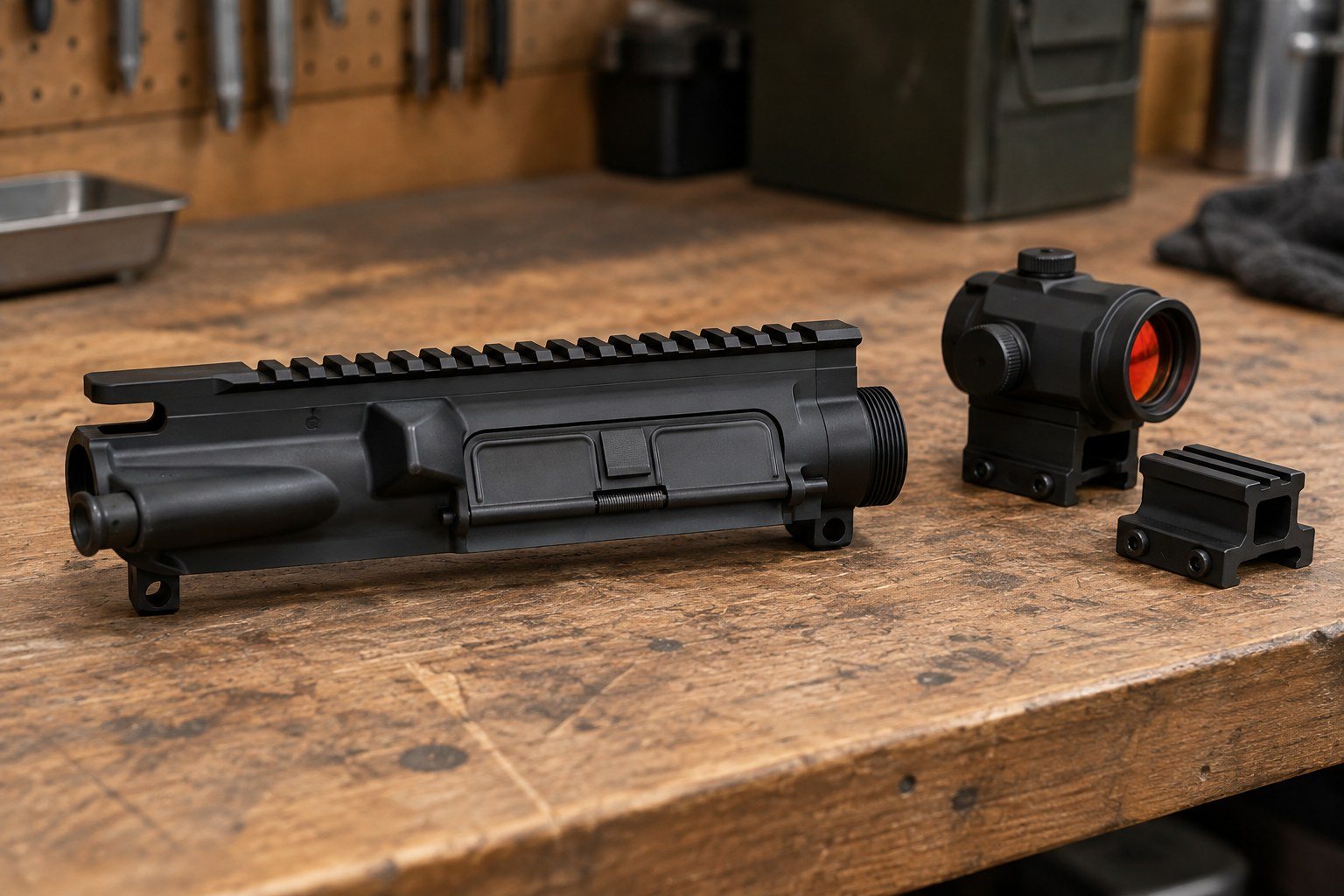
The early AR-15 and M16 uppers had a carry handle machined as part of the receiver, with the rear sight housed inside it. Your sight height and sight picture were fixed by that design. Later receivers moved to a flat top layout with a rail running along the top, and the carry handle became a removable accessory that clamps onto the rail.
Today the flat top layout is the default on most AR-15 uppers. When people say "A3 style" or "M4 style" upper, they usually mean a flat top receiver with a rail, a forward assist and a dust cover.
Picatinny Rail Basics
Most flat top receivers use a Picatinny rail, standardized for the U.S. military as MIL-STD-1913. It has evenly spaced cross slots that act as recoil lugs for clamps and rings. Many receivers also have numbered "T-marks" on the rail so you can note exactly where an optic sits and return it to the same slot after removal.
Weaver rails look similar but use different slot dimensions. Many Weaver accessories fit a Picatinny rail, but Picatinny mounts do not always fit a Weaver rail. If a mount is sold as Picatinny or 1913 compatible, it is designed for a standard AR-15 rail.
Flat Top vs Fixed Carry Handle
A fixed carry handle upper limits you to the built in iron sights or to tall mounts that sit on top of the handle. The result is a high sight line that makes a consistent cheek weld hard to find. A flat top lets the optic sit lower and closer to the bore line, and it lets you move it forward or back to suit your eye relief.
| Feature | Flat Top Receiver | Fixed Carry Handle Upper |
|---|---|---|
| Top of receiver | Picatinny rail with cross slots | Integrated handle with rear sight |
| Optic options | Red dots, holographic, LPVO, magnified scopes, thermal | Iron sights or optics on tall handle mounts |
| Mount position | Adjustable fore and aft along the rail | Limited to the handle footprint |
| Iron sights | Added separately, fixed or folding | Built in rear sight |
| Typical use today | Most modern builds | Retro and clone builds |
Optic Types That Pair Well With a Rail Top Receiver
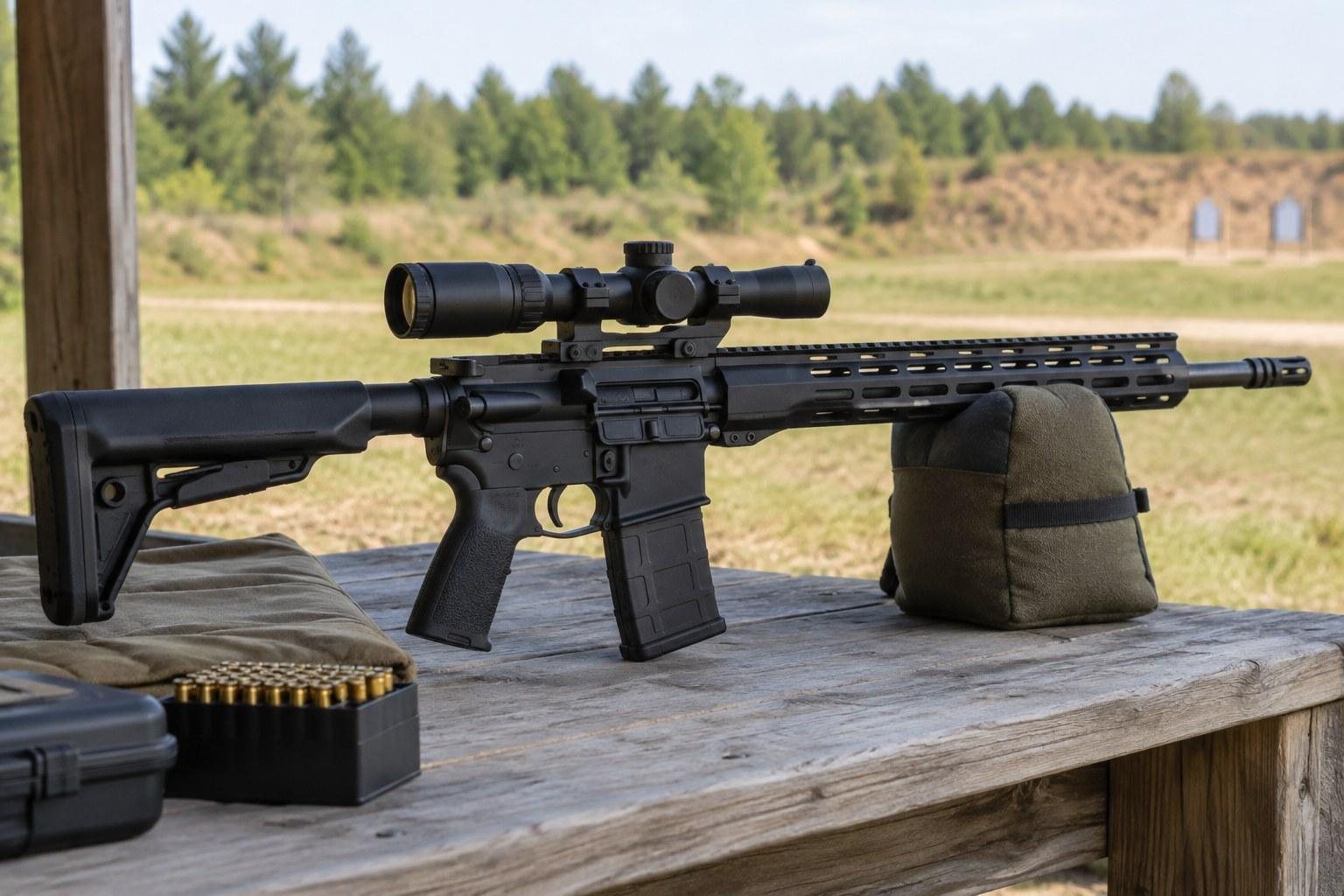
Because the rail accepts so many mounts, the right optic depends on how you shoot rather than what the receiver allows. Here is how the main categories line up.
Red Dots and Holographic Sights
Red dots and holographic sights are compact, quick to acquire with both eyes open, and forgiving of head position. They suit home defense, close range training and fast moving drills. Most are sold with a riser or mount that sets them at a height meant to line up with standard AR-15 iron sights. If you are weighing the two, our sister site's comparison of red dot vs holographic AR-15 optics walks through battery life, reticle and weight trade offs.
Low Power Variable Optics
An LPVO gives you a near red dot experience at its lowest setting and real magnification when you dial up. On a flat top receiver it typically rides in a one piece cantilever mount that pushes the scope forward far enough for proper eye relief. That flexibility is why LPVOs have become a popular all purpose choice. Our LPVO guide for AR builds covers magnification ranges and reticle options in more depth.
Magnified Scopes for Precision and Hunting
Higher magnification scopes make sense on precision chamberings like 6.5 Grendel, 224 Valkyrie or 22 ARC, and on hunting uppers where you want clear target identification at distance. These scopes are longer and heavier, so mount choice and ring spacing matter more. Eye relief also becomes less forgiving as magnification rises.
Magnifiers, Thermal and Night Vision
A flat top rail with enough length lets you run a red dot with a flip to side magnifier behind it. Thermal and night vision devices also mount on the rail, either as standalone optics or clip on units ahead of a day scope. Each adds length, so plan your rail space before you buy.
Curious which uppers tend to suit these setups? Start with our hunting upper picks.
Why Mount Height Matters
The flat top design gives you control over height, and that control is where many builds succeed or struggle. The goal is a natural, repeatable cheek weld with your eye centered behind the optic without craning your neck.
Absolute and Lower Third Co-Witness
If you run backup iron sights, mount height determines how the dot lines up with them. With an absolute co-witness, the iron sights line up in the center of the optic window. With a lower third co-witness, the irons sit in the bottom portion of the window, leaving more of the view uncluttered. Optic and mount makers list which co-witness their mount is designed for, so check the product specifications rather than guessing.
Matching Height to Your Stock
A taller mount often suits a more heads up posture or use with armor and helmets, while a lower mount suits a traditional cheek weld on the stock. Stock style changes this as well. If you are still choosing a stock, our AR-15 stock guide explains how fixed, adjustable and folding designs affect your position behind the rifle.
Height Over Bore and Close Range Holds
Any optic mounted above the barrel creates a gap between your line of sight and the bore. At very short distances, the bullet impacts below your point of aim. Taller mounts increase that offset, so practice close range holds with whatever height you choose and confirm them on paper.
Rail Space, Handguards and Continuous Top Rails
The receiver rail is only part of the picture. What happens forward of the receiver determines how much usable mounting space you really have.
Continuous Rails on Free Float Handguards
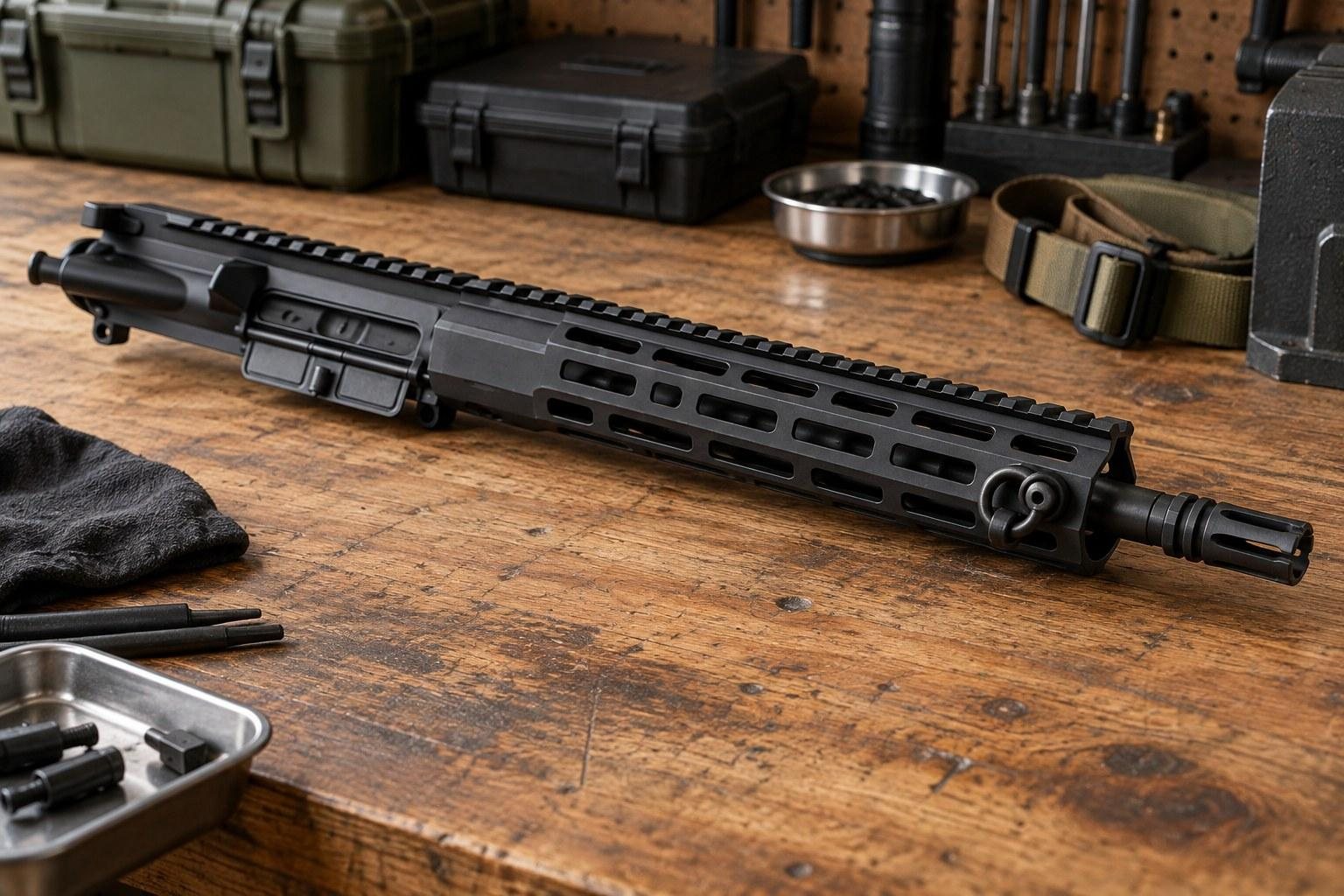
Many free float handguards carry a top rail that lines up with the receiver rail, creating one long, flat mounting surface. That makes it easier to run a red dot plus magnifier, a long scope, or a clip on device. Browse AR-15 handguards to compare lengths and rail layouts, and see our free float vs drop in handguard comparison for the trade offs.
Avoid Bridging the Receiver and Handguard
Many optic makers advise against placing a single scope ring or mount so it bridges the receiver and the handguard. A free float handguard can shift slightly under pressure, which can affect zero. Keep a one piece mount on the receiver rail, or fully on one surface, unless the manufacturer says otherwise.
Front Sight Bases and Gas Blocks
Some uppers still use a fixed front sight base at the gas block. That works well with an absolute co-witness setup, but it can show up in the view of a magnified scope at low power. Low profile gas blocks under a free float handguard leave the top line clean for any optic.
Backup Iron Sights Without a Carry Handle
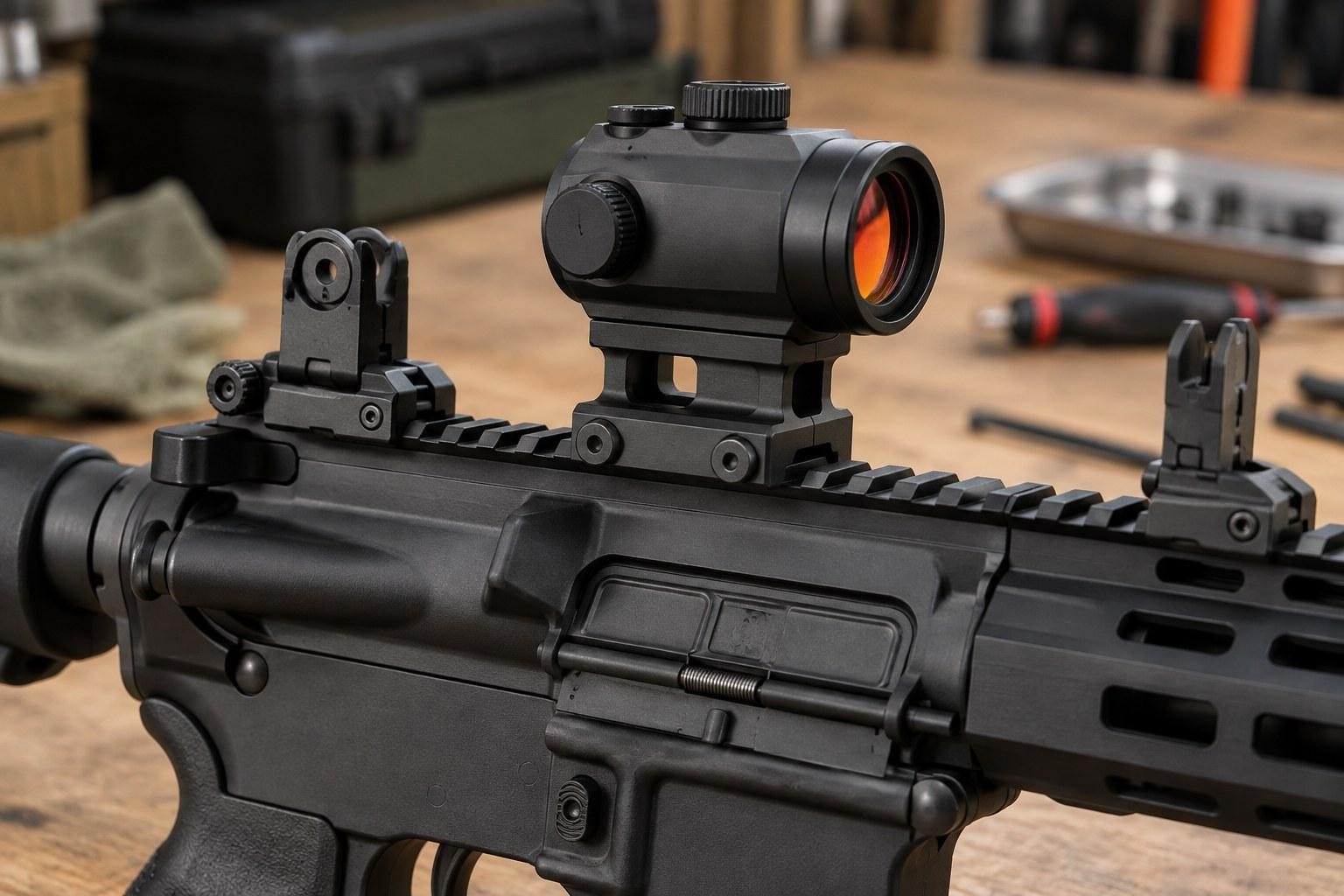
Because the flat top design removes the fixed rear sight, iron sights become an add on. Many shooters run folding backup sights that lay flat under the optic and flip up if the optic fails or the battery dies.
Fixed, Folding and Offset Sights
- Fixed sights: always deployed and simple, but they take up space in your optic window.
- Folding sights: stay out of the way until needed, and pair well with red dots and LPVOs.
- Offset sights: mounted at an angle, so you rotate the rifle slightly to use them while the main optic stays in place.
Choose the style that matches how often you expect to use the irons.
Zeroing Your Irons With Your Optic
Zero your primary optic and your iron sights separately, then confirm both on paper at the distances you plan to use. Follow each manufacturer's adjustment instructions, and make sure the rifle is unloaded any time you work on mounts or sights at the bench.
Choosing an Upper for Your Optic Plan
Once you know your optic, choosing the upper becomes simpler. Focus on the details that affect mounting and zero retention.
Complete Upper or Stripped Receiver
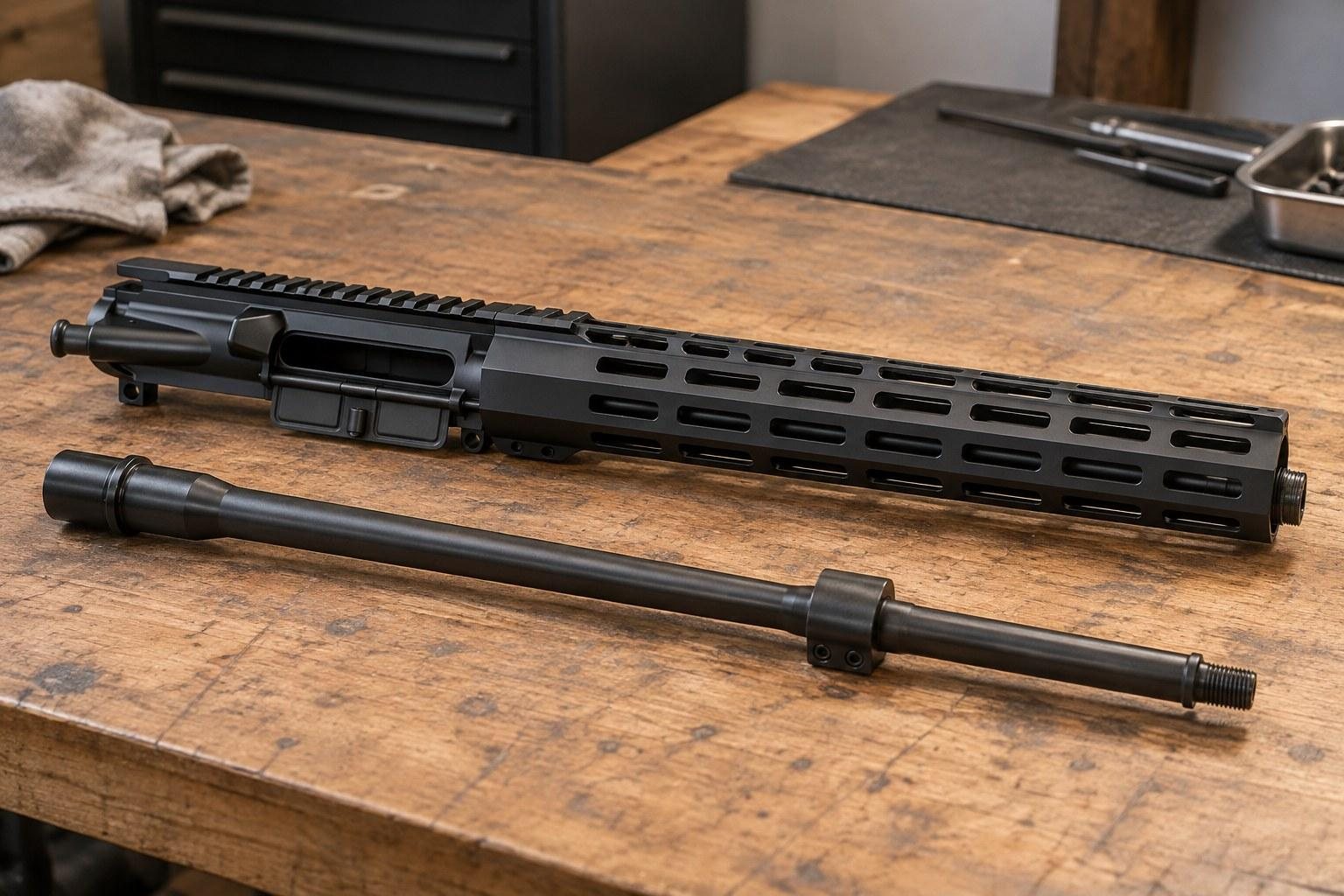
A complete upper arrives with the barrel, handguard and internals installed. At AR15Parts.com, complete uppers are assembled in house, headspaced and function checked before they ship. If you would rather build from the ground up, stripped and assembled upper receivers let you choose every part yourself. Check each listing's photos and description to confirm the receiver style before ordering.
Caliber Changes the Optic, Not the Rail
The top rail works the same regardless of chambering. What changes is the distance you expect to shoot. A 300 Blackout upper built for suppressed, shorter range work is often paired with a red dot, while a 6.5 Grendel upper built for longer range shooting is more commonly paired with a magnified optic. Choose the optic for the job, then choose the mount height that fits you.
A Simple Mounting Checklist
- Clear the rifle and confirm it is unloaded before any work.
- Set the optic on the rail and adjust it fore and aft for full eye relief in your shooting position.
- Seat the mount's recoil lug against the front of its slot and note the T-mark position.
- Tighten to the mount manufacturer's published torque value with a torque driver.
- Level the reticle, zero on paper, and recheck screws after your first range session.
If anything about the fit feels wrong, have a qualified gunsmith look it over. For more build walkthroughs, browse our assembly articles.