Your cheek weld is the point where your face meets the stock, and on an AR-15 it is set largely by how high your sights or optic sit above the upper receiver rail. Get that height right and your eye lands behind the glass the same way every time. Get it wrong and you end up craning your neck, floating your head or hunting for the dot.
This guide breaks down why the AR-15 sits the way it does, how rail and mount height change your head position, and how to match an optic, mount and stock so the rifle fits you. The goal is simple: a repeatable position that you can find without thinking about it.
Starting a new flat-top build? Browse complete uppers that are assembled, headspaced and function-checked before they ship.
Key Takeaways
- The AR-15 uses an in-line stock, so the sighting plane sits well above the bore and your face rests on top of the stock rather than down along it.
- On a flat-top upper, the height of your optic is set by the mount or riser you choose, not by the receiver itself.
- A mount that is too low forces your neck down and can cause scope shadow, while a mount that is too high leaves your chin floating off the stock.
- Co-witness terms such as absolute and lower one-third describe where a red dot sits relative to iron sights, and each puts your head in a slightly different spot.
- Stock style, length of pull, gear and body armor all change where your face naturally lands, so test your setup in the positions you actually shoot.
Why the AR-15 Sits Your Head So High
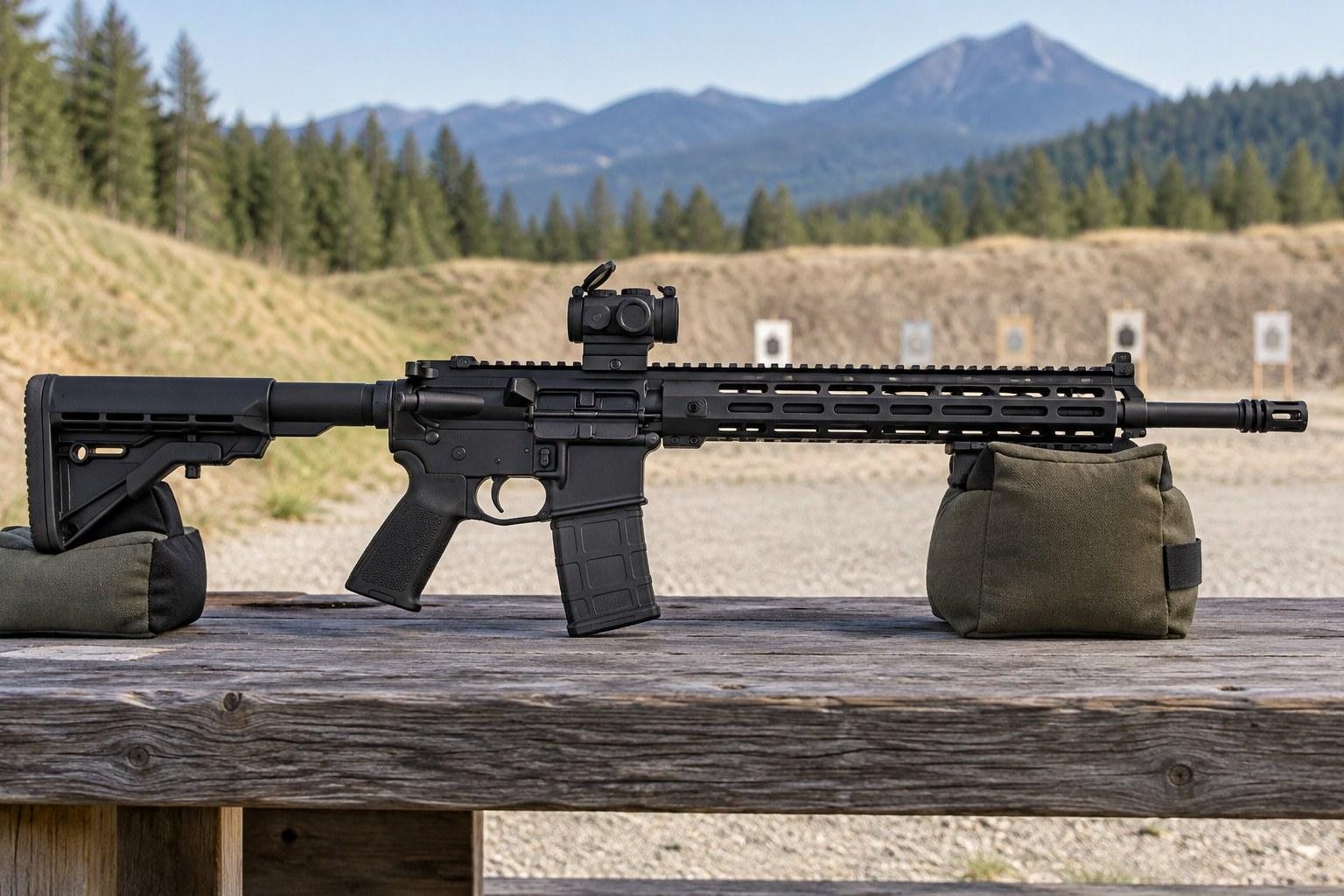
The AR-15 was designed with a straight, in-line stock. The buffer tube runs directly behind the bolt carrier, so recoil comes straight back into your shoulder instead of lifting the muzzle the way a dropped hunting stock can. That layout is one reason the rifle is easy to control during fast strings of fire.
The tradeoff is that the stock sits roughly level with the bore. To see over the receiver, the sights have to be raised well above it. That is why the original rifle carried its rear sight in a tall carry handle and its front sight on a tall triangular post.
Sight Height Over Bore
Sight height over bore is the vertical distance from the center of the barrel to the center of your sight or optic. On an AR-15 it is noticeably taller than on a typical bolt-action rifle. Every ballistic calculator asks for this number because it affects how your bullet path crosses your line of sight at different distances.
When you change rail height or mount height, you change this number. That matters for your zero and for close-range holdover, not just comfort. Measure it on your own rifle with a caliper rather than guessing.
What "Rail Height" Really Means
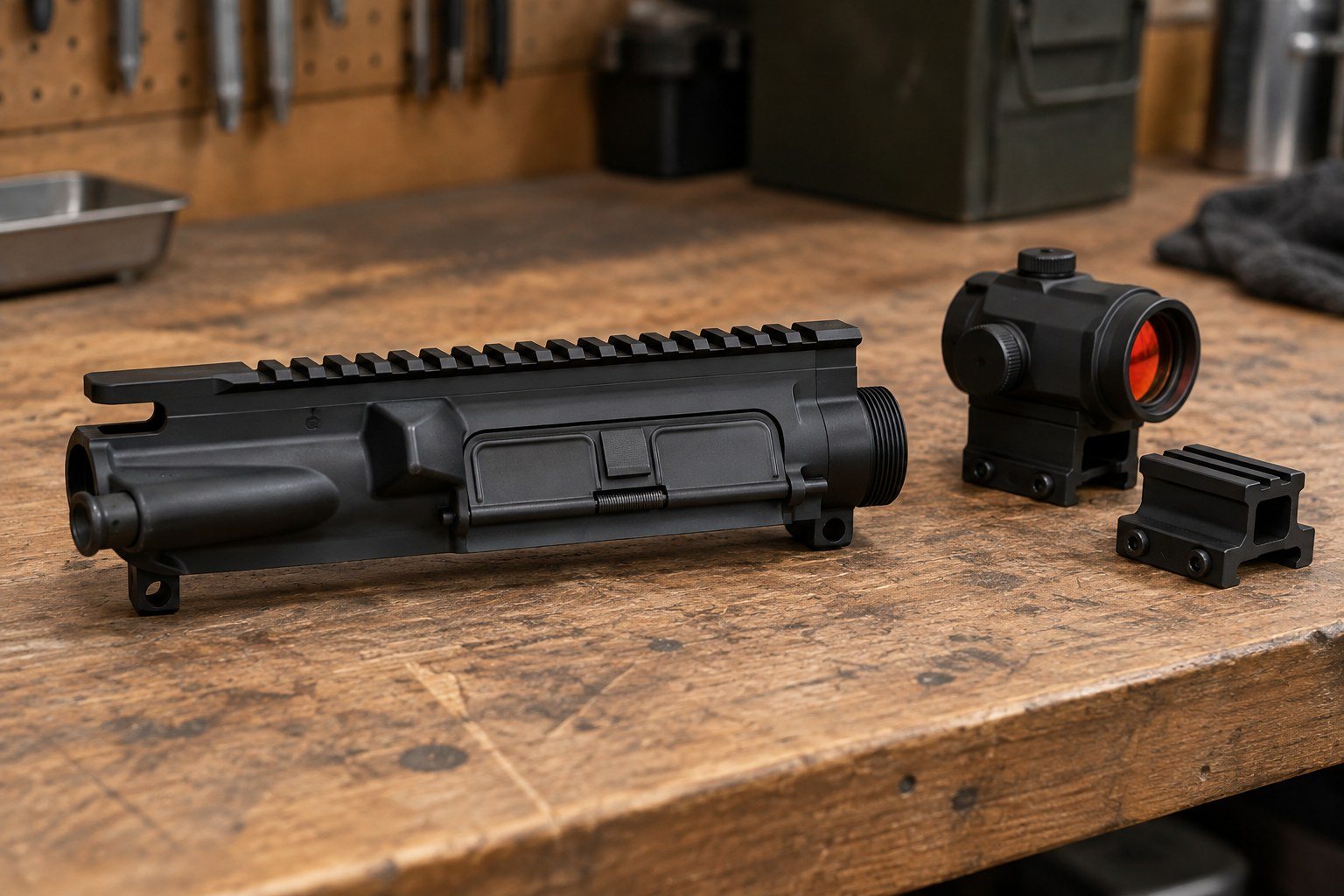
Modern flat-top uppers have a Picatinny rail machined across the top of the receiver. Most free-float handguards continue that rail forward at the same height so the top runs in one flat line. When people talk about rail height, they usually mean two things: the height of that rail above the bore, and the extra height added by whatever mount or riser sits on it.
Since the receiver rail on a standard AR-15 flat-top is a fixed part of the forging, the mount is where you actually make your adjustment. For a full rundown of receiver features, see our AR-15 upper anatomy and parts list.
Carry Handle Uppers vs Flat-Top Uppers
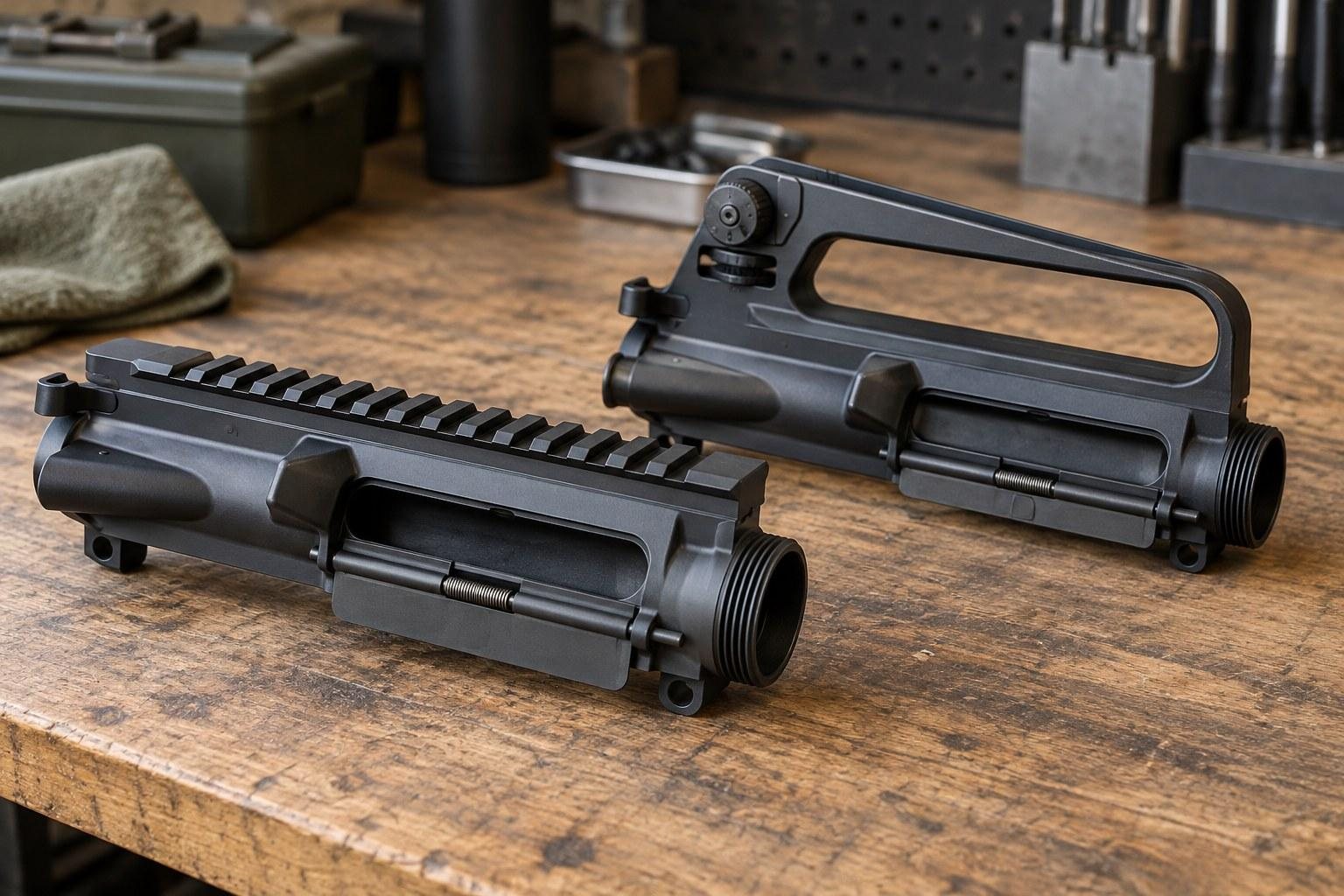
Older A2-style uppers carry the rear sight in a fixed carry handle. Your eye height is locked to that handle, and adding an optic means mounting it on top of the handle, which puts the glass very high. Many shooters end up with a chin weld instead of a true cheek contact in that setup.
Flat-top uppers removed the handle and gave builders a clean rail. You can mount a red dot, an LPVO, a magnified scope or detachable iron sights at whatever height suits you. That flexibility is the main reason flat-tops became the standard on modern builds.
| Upper Style | How Sight Height Is Set | Effect on Head Position |
|---|---|---|
| Fixed carry handle (A2 style) | Built into the receiver | Fixed for irons; optics mounted on the handle sit very high |
| Flat-top with Picatinny rail | Chosen mount or riser | Adjustable to match your optic, stock and shooting position |
| Flat-top with detachable carry handle | Handle or optic mount, swapped as needed | Classic iron sight height when the handle is installed, flexible when it is removed |
If you are building around a stripped flat-top receiver, forged AR-15 upper receivers and the upper parts needed to finish them are widely available.
Want to see how a flat-top fits into a complete build plan? Read our compatibility checklist before you order parts.
How Mount Height Changes Your Cheek Weld
Every optic mount lifts the center of the optic a set distance above the rail. Manufacturers publish that figure, and it is the single most useful number when you are trying to dial in your head position. A small change in mount height can move your eye from comfortably centered to pressed hard against the stock.
Signs Your Mount Is Too Low
- You have to push your face down hard to see through the optic.
- Your neck feels strained after a few minutes in the prone position.
- You see a dark ring or crescent around the edge of a scope image, often called scope shadow.
- Your nose crowds the charging handle or the rear of the optic.
Signs Your Mount Is Too High
- Your jaw or chin barely touches the stock, so your head floats.
- Your point of impact wanders because your eye lands in a different spot on each shot.
- You lift your head off the stock to find the dot after recoil.
- Shooting with gear on, such as a helmet or gas mask, feels fine, but slick shooting does not.
Red Dot Co-Witness Heights
Red dot mounts are usually described in relation to standard AR-15 iron sights. An absolute co-witness puts the dot on the same plane as the iron sights, so your head sits at classic iron sight height. A lower one-third co-witness raises the optic so the irons sit in the bottom portion of the window, which lifts your head slightly and keeps more of the glass clear.
Neither is right for everyone. Shooters who want the most natural, low position often prefer absolute, while those who like a heads-up posture or wear gear often prefer lower one-third. Check the optic maker's mount listing, since the same label can mean slightly different heights across brands.
Magnified Optics, LPVOs and Scope Rings
Magnified optics add another variable: the objective bell and the scope tube diameter. A larger objective needs more clearance above the rail and handguard, which can push you toward a taller mount. A cantilever mount moves the scope forward so you can set eye relief correctly without crowding the charging handle.
Low-power variable optics are popular on AR-15s because they cover both close and mid-range work. They tend to sit on one-piece cantilever mounts in the taller height ranges so the shooter can hold a heads-up position. Our LPVO guide covers how to pick magnification ranges and reticles.
Eye Relief and Eye Box
Mount height controls where your eye sits vertically. Eye relief controls where it sits front to back. Both have to agree with your cheek position. If you set the height perfectly but leave the optic too far forward, you will still creep your head along the stock to find a full image, and that breaks the repeatable position you were after.
Set eye relief with the rifle shouldered in your normal stance, with the stock at the length you will actually use. Then confirm the image is full and centered without moving your head.
Stocks, Length of Pull and Cheek Risers
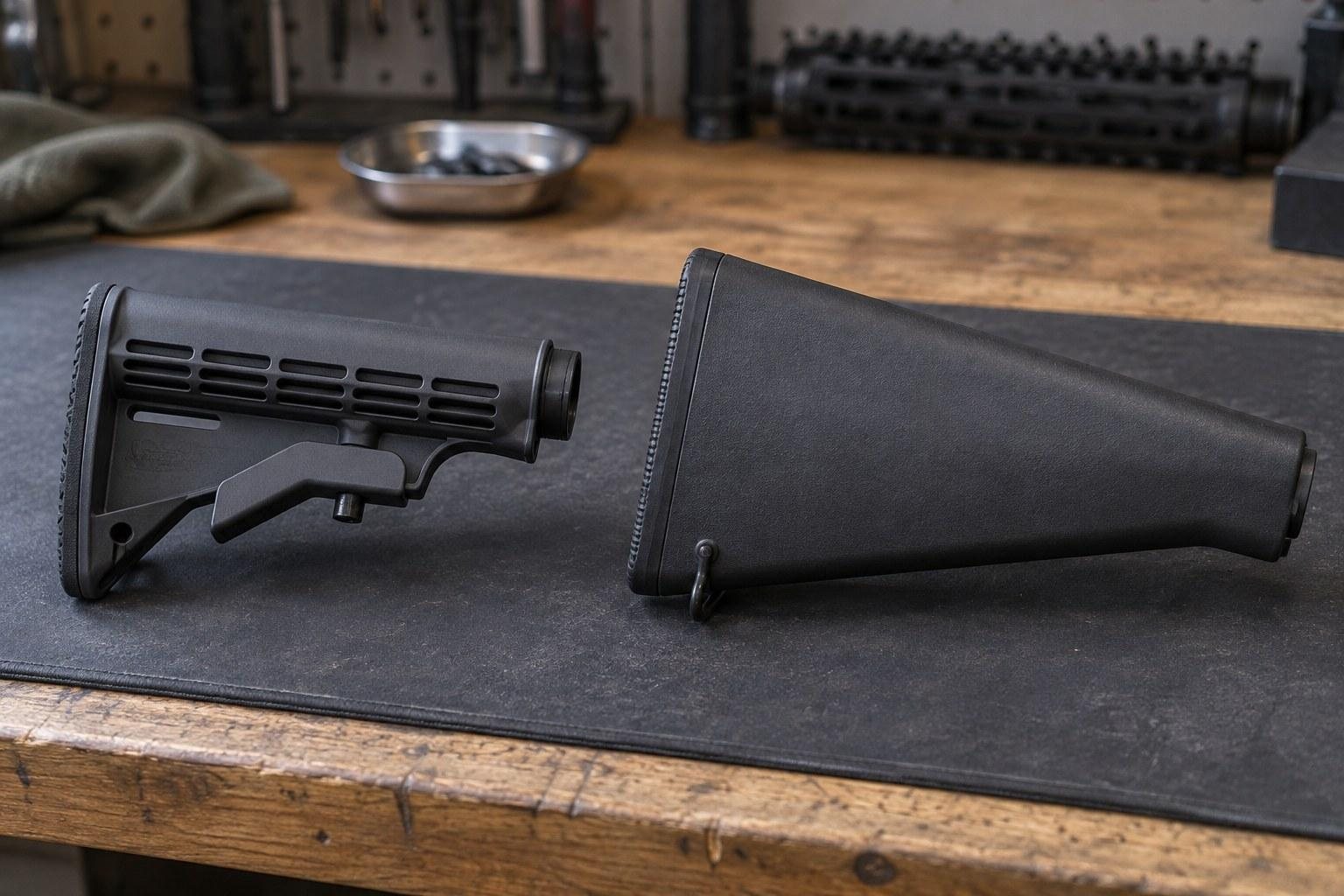
The other half of the equation is the stock. On an AR-15 the stock comb sits at a fixed height on the buffer tube, so you can only change your face position by changing the stock design or adding a riser. That is why stock choice and mount choice should be planned together.
Collapsible vs Fixed Stocks
A collapsible stock lets you adjust length of pull, which moves your face forward or back along the comb. Shooters often collapse the stock when wearing a heavy jacket or armor and extend it for slick shooting. A fixed rifle-length stock gives you one consistent position and a full-length comb to rest on.
Both styles are common, including mil-spec six-position collapsible stock kits and A2 fixed rifle-length stock kits, in the AR-15 stocks category. For the differences in depth, read our AR-15 stock guide.
Cheek Risers
Aftermarket cheek risers clip or strap onto the stock to raise the comb. They are a common fix when a taller magnified optic leaves your face floating. If you go this route, make sure the riser does not block the charging handle stroke or interfere with the receiver extension, and follow the riser maker's installation instructions.
How to Dial In Your Setup Step by Step
A good fit starts at home, not at the range. Always confirm the rifle is unloaded, remove the magazine and lock the bolt to the rear before you start handling it for fit checks.
- Pick your primary position. Decide whether you will mostly shoot standing, kneeling, prone or from a bench. Set the rifle up for that first.
- Set length of pull. Adjust the stock so you can shoulder the rifle comfortably with the gear you normally wear.
- Close your eyes and mount the rifle. Bring it up naturally, settle your face, then open your eyes. If the optic is not right there, note whether you are high or low.
- Adjust mount height or add a riser. Change only one variable at a time so you know what made the difference.
- Set eye relief. Slide the optic forward or back until you see a full, clear image.
- Torque and zero. Tighten the mount to the optic or mount manufacturer's published spec, then confirm your zero. If you are unsure about any step, have a qualified gunsmith check your work.
Remember Your Zero Changes
Any change in mount height changes your sight height over bore, which shifts your trajectory relative to the line of sight. After swapping mounts, re-zero the rifle and update your ballistic calculator. It is generally wise to also do a quick confirmation at your most common distances.
Ready to build a rifle that fits? Our complete upper buying guide walks through barrels, handguards and receivers in one place.