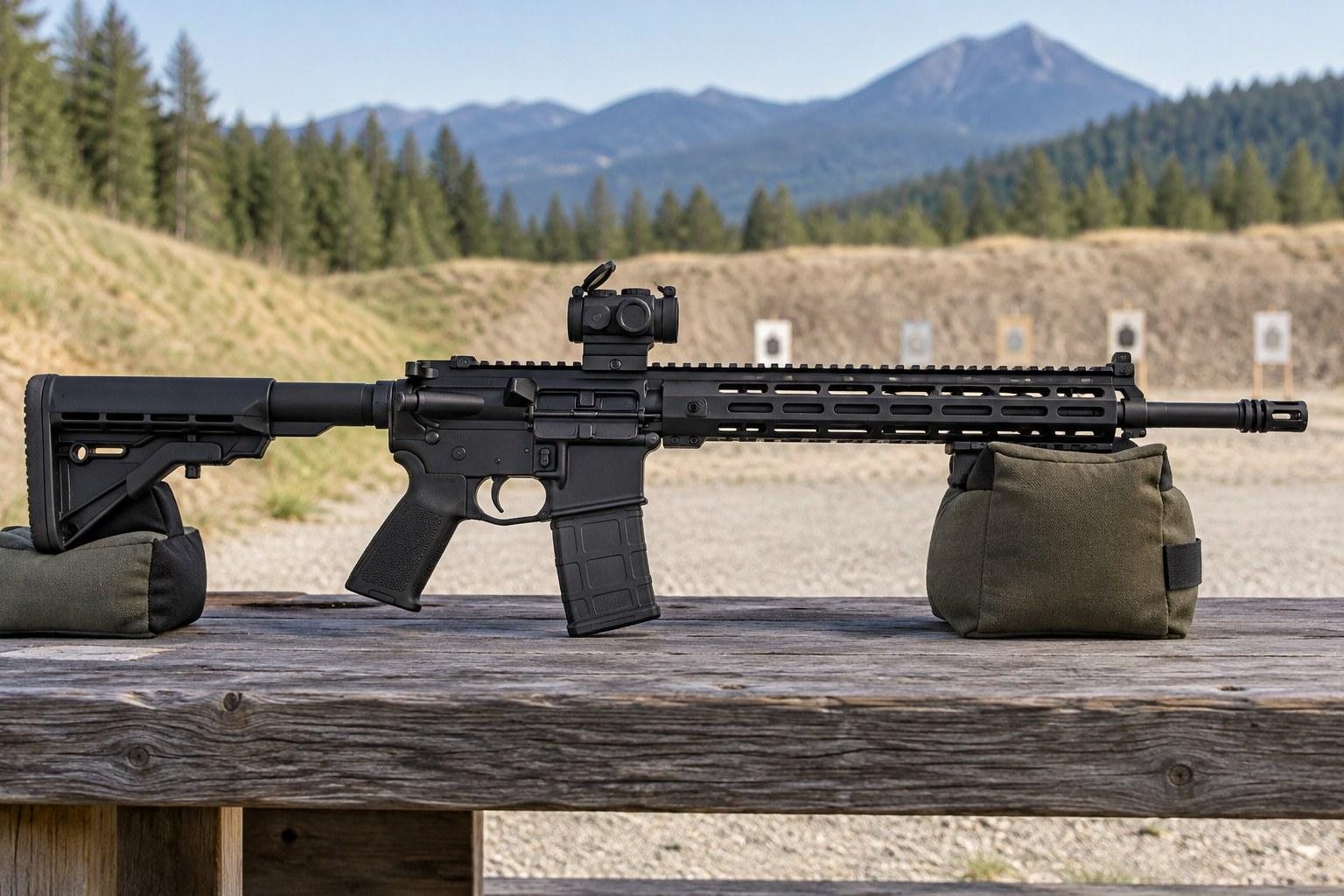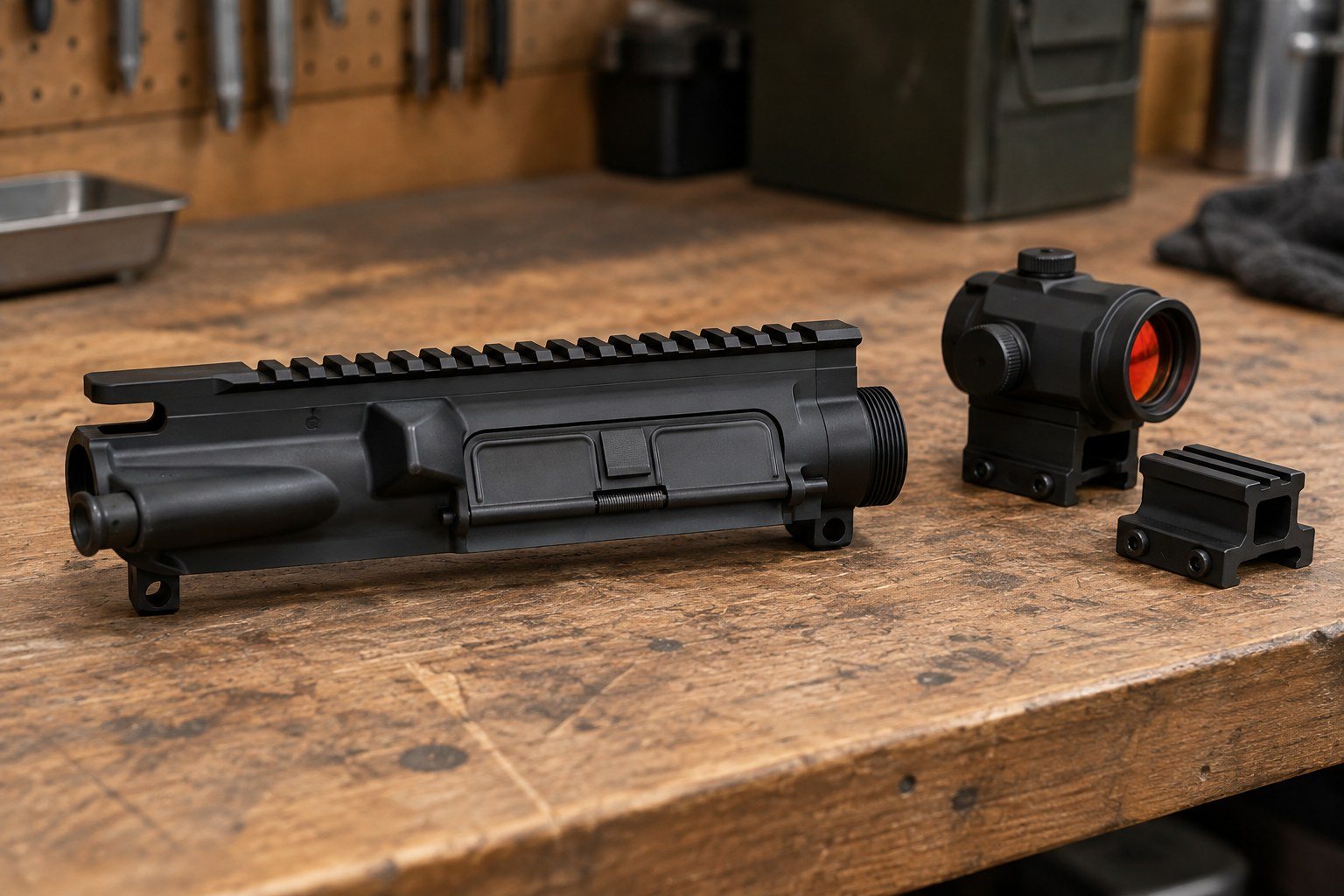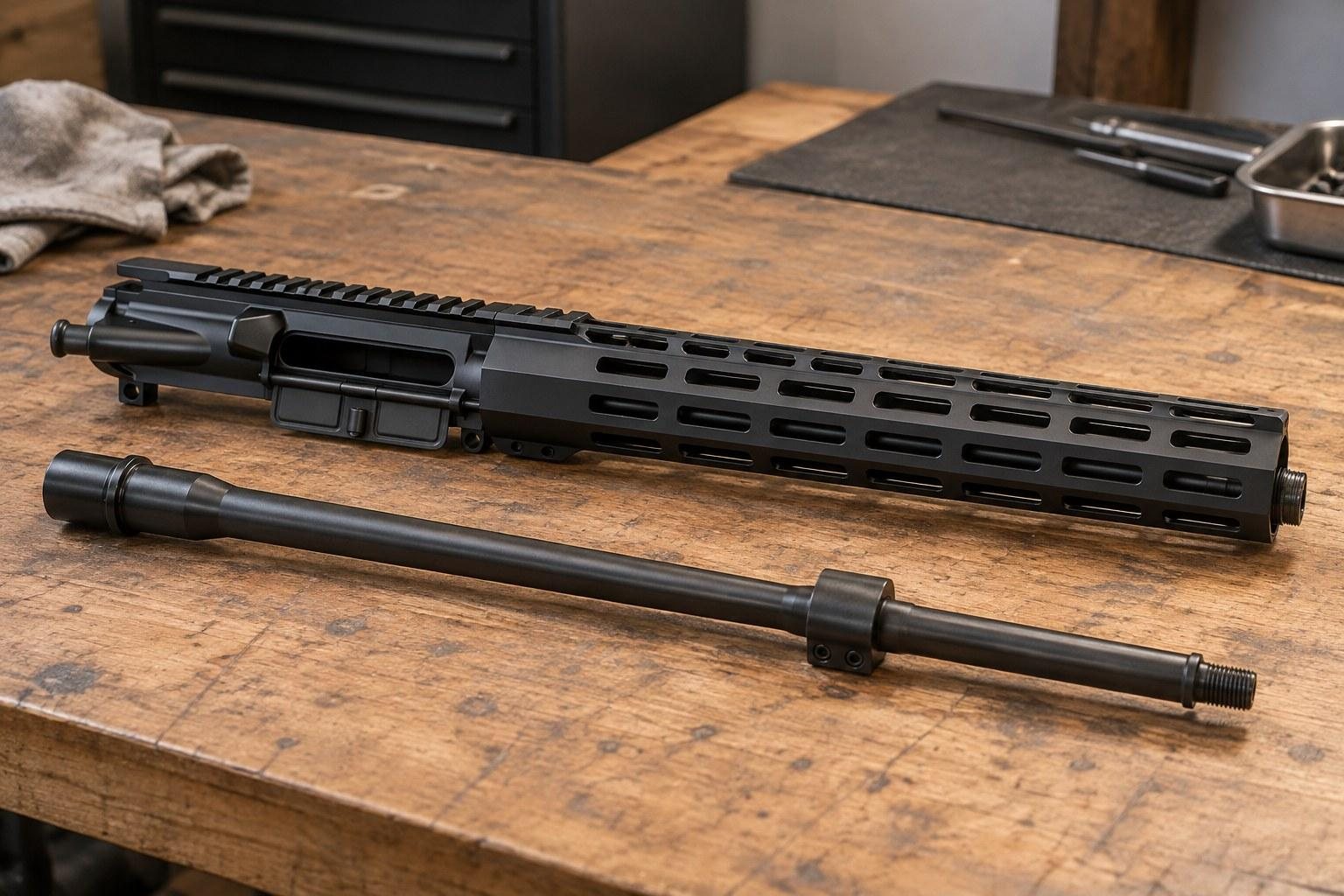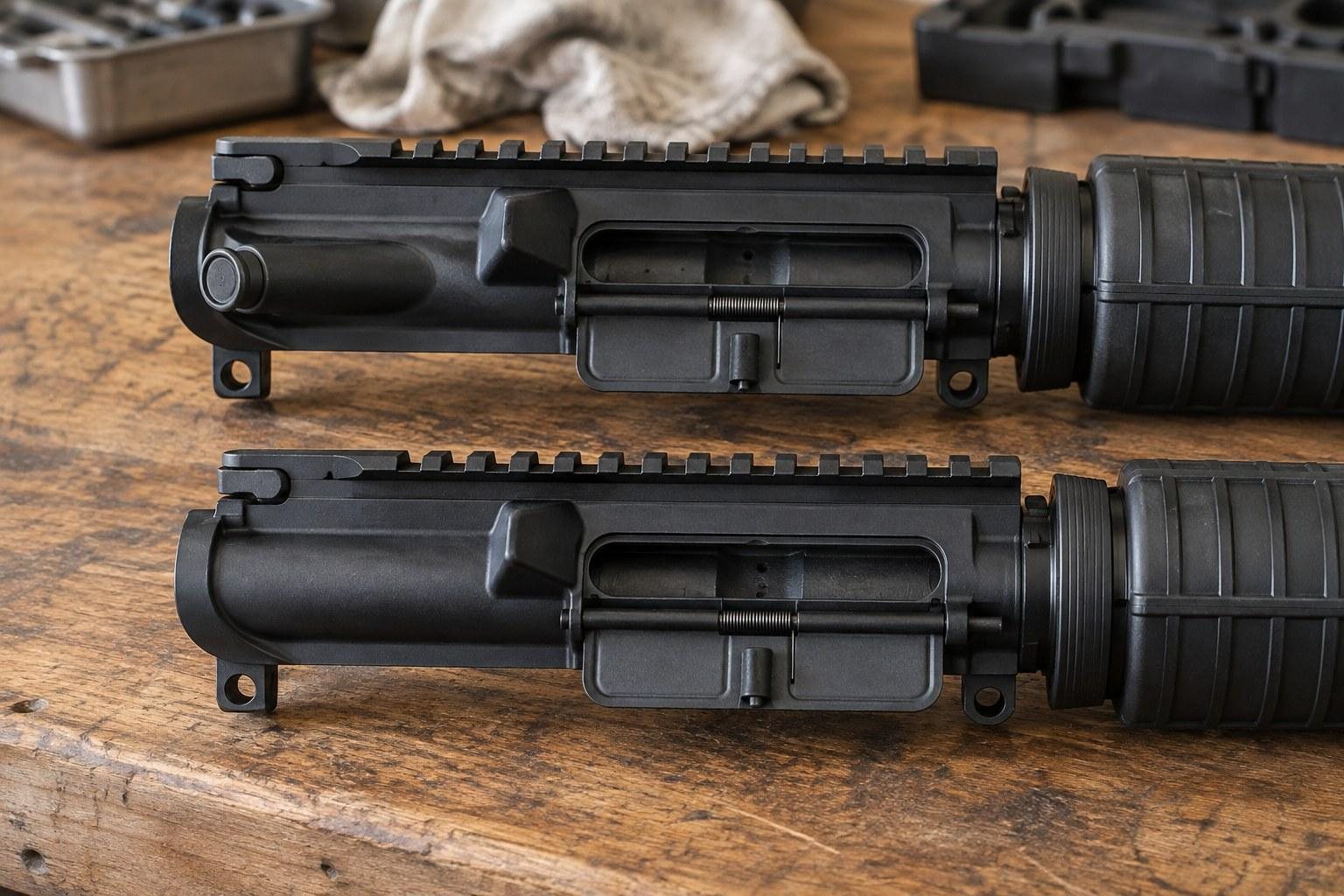
A slick side upper skips the forward assist, and sometimes the dust cover, for a cleaner, simpler receiver. A standard upper keeps the forward assist plunger on the right side so you can push the bolt carrier fully into battery by hand. Both styles accept the same AR-15 barrels, bolt carrier groups and handguards, so the choice comes down to how you shoot and what you value.
Our editors at AR15 Uppers have broken down what each design does, where each one shines and the questions worth asking before you buy. By the end you should know which receiver belongs on your next rifle, whether it is a duty-style carbine, a lightweight build or a range toy.
Looking for a finished upper with a forward assist already installed? Browse complete uppers that are assembled, headspaced and function-checked before they ship.
Key Takeaways
- A forward assist lets you manually push the bolt carrier forward when the bolt does not fully lock, while a slick side receiver leaves that feature off entirely.
- Slick side receivers have fewer parts and a cleaner profile, which appeals to builders chasing light weight or a retro look.
- The forward assist is a backup tool, not a fix for a dirty, dry or out-of-spec rifle, and forcing a round into battery can make a problem worse.
- Both receiver styles use standard AR-15 barrels, bolt carrier groups, charging handles and handguards in most cases, so parts compatibility rarely decides the matter.
- For duty, defensive or hard-use rifles, many builders still prefer a forward assist and dust cover for the extra margin they provide.
What Is a Forward Assist on an AR-15?
The forward assist is the round, spring-loaded plunger on the right rear of a standard AR-15 upper receiver, just behind the ejection port. When you press it, a pawl engages notches cut into the side of the bolt carrier and pushes the carrier forward. The goal is to seat the bolt fully into battery when it stops a little short.
The feature was added to the military rifle during its early service history, and it has stayed on most mil-spec style uppers ever since. That simpler layout is part of why the slick side design still has loyal fans today.
How the Forward Assist Works
The assembly is simple. A plunger, a pawl, a spring and a retaining roll pin sit in a machined boss on the receiver. Your bolt carrier needs matching serrations or notches on its right side for the pawl to grab, and most standard carriers include them.
Pressing the plunger only moves the carrier forward. It does not extract a case, clear a jam or cycle the action. Think of it as a nudge, not a repair.
When Shooters Actually Use It
- Quietly chambering a round by easing the charging handle forward, then pressing the forward assist to lock the bolt.
- Confirming the bolt is fully closed after a press check.
- Getting a rifle back into the fight when grime or cold weather slows the bolt and the immediate action drill has not solved it.
What Is a Slick Side Upper?
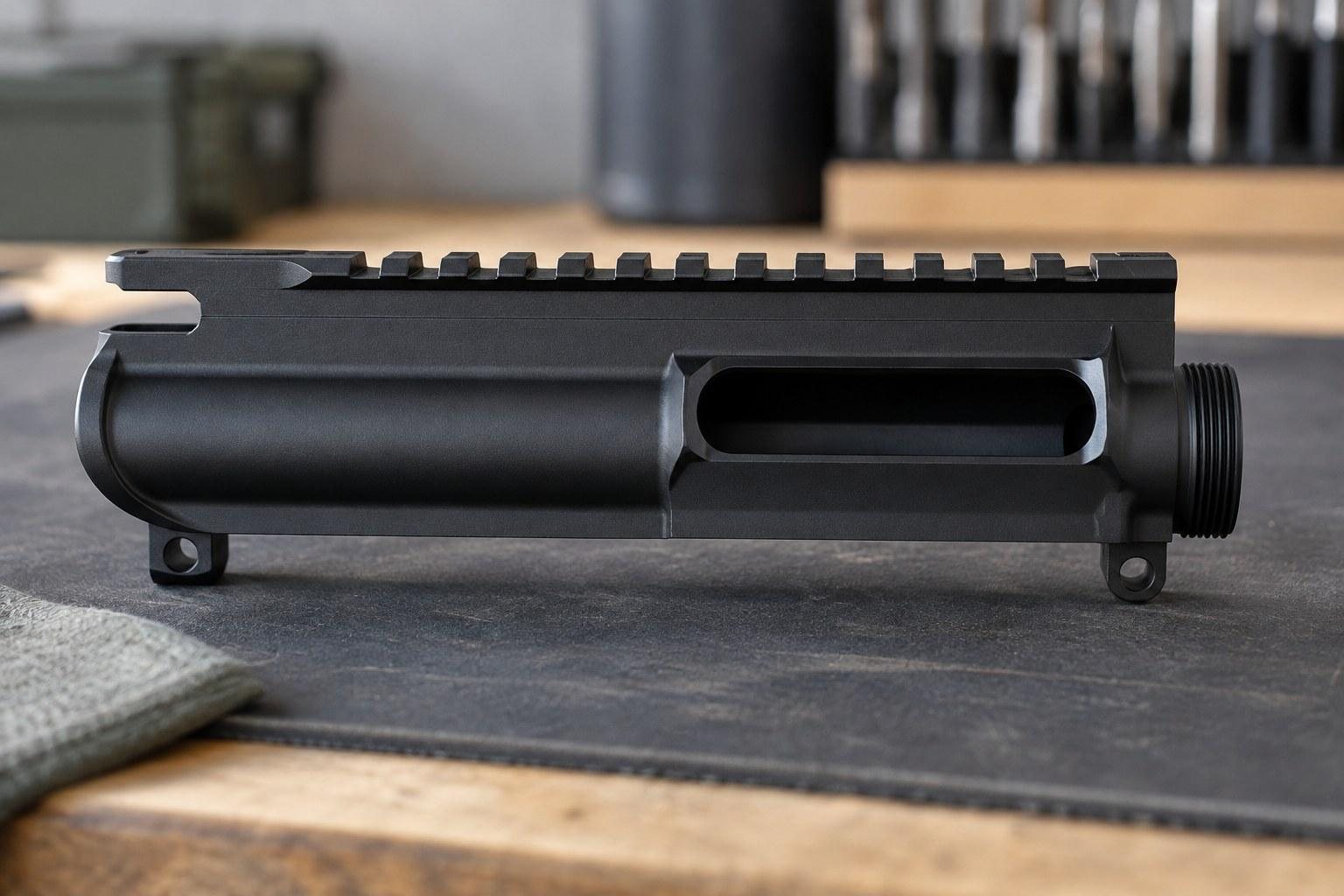
A slick side receiver is an AR-15 upper receiver machined without the forward assist boss. The right side of the receiver is smooth behind the ejection port, which gives the rifle a clean, uncluttered look. Some slick side receivers also omit the dust cover and the brass deflector, though many modern versions keep one or both.
Because there is no plunger housing, there is less material, fewer small parts and nothing for a sling, plate carrier or bench bag to snag on that side of the rifle.
Common Slick Side Variations
- Fully slick: no forward assist, no dust cover and no brass deflector, often seen in retro and ultralight builds.
- Slick with dust cover: no forward assist, but the ejection port cover is retained to keep debris out.
- Slick with deflector: no forward assist, with a brass deflector kept to protect left-handed shooters from ejected cases.
Who Builds Slick Side Rifles
You will see slick side receivers on lightweight hunting rifles, retro-inspired clones, competition guns where every ounce matters and minimalist range builds. They also appeal to shooters who simply never use the forward assist and would rather not carry hardware they do not need.
Not sure which parts belong on a lightweight build? Our bolt carrier group guide explains carrier types and coatings so you can match the right BCG to your receiver.
Forward Assist vs Slick Side Upper Compared
Here is a side-by-side look at how the two receiver styles stack up. These are general tendencies, and individual receivers vary by manufacturer, so always check the specific product you are considering.
| Factor | Forward Assist Upper | Slick Side Upper |
|---|---|---|
| Manual bolt closure | Yes, via plunger | No, rely on charging handle or bolt carrier |
| Part count | Higher (plunger, pawl, spring, pin) | Lower |
| Weight | Slightly heavier | Slightly lighter |
| Profile | Boss on right side | Smooth right side |
| Typical use | Duty, defensive, general purpose | Lightweight, retro, competition, minimalist |
| Availability | Very common | Less common, more specialized |
| Compatibility | Standard AR-15 parts | Standard AR-15 parts in most cases |
Weight and Profile
The weight difference is real but small. Removing the forward assist boss and its parts trims a little metal from the receiver. On its own it will not transform a rifle, but builders stacking lightweight barrels, handguards and stocks often see it as one more piece of the puzzle.
Reliability and Function
Neither design is inherently more reliable at cycling. A clean, properly lubricated rifle with correct headspace and a well-matched gas system should run the same either way. The difference shows up when something goes wrong: the forward assist gives you one more option, while the slick side receiver asks you to clear the problem another way.
Cost and Availability
Forward assist uppers are the industry default, so you will find them in far more configurations and calibers. Slick side receivers are a more specialized product, and choices can be narrower depending on the caliber and finish you want.
The Case for a Forward Assist
For a rifle that might be used for home defense, duty or hard field use, a forward assist adds a measure of redundancy. If the bolt stops just short of lockup after a round is chambered, a firm press can close it without running the charging handle again.
Quiet Loading and Press Checks
Hunters and anyone who wants to chamber a round quietly often ride the charging handle forward rather than letting it slam home. The forward assist then locks the bolt the rest of the way. After a press check, it is also a quick way to confirm the bolt is closed.
Standard Parts and Familiar Layout
Because the forward assist upper is the most common AR-15 configuration, replacement parts, manuals and training material assume it. If you train with others or run multiple rifles, keeping a consistent layout can make handling more intuitive.
If you are building around a 5.56 NATO chambering, 5.56 NATO uppers are a good place to compare configurations. Shooters who want a little more flexibility with ammunition can also look at 223 Wylde uppers, since that chambering is generally considered effective across a wider range of factory loads.
The Case for a Slick Side Upper
A slick side receiver makes the most sense when you value simplicity and know you will not lean on the forward assist. Many experienced shooters argue that if a round will not chamber with the charging handle, forcing it with the forward assist is the wrong move anyway.
Why Forcing a Round Can Backfire
If a cartridge is dirty, damaged or out of spec, ramming it into the chamber can make extraction harder and turn a minor hiccup into a stuck case. The safer habit is to perform your immediate action drill, and if the issue repeats, unload the rifle and diagnose it. Our AR-15 cycling troubleshooting guide covers common causes such as gas, lubrication and magazine problems.
Clean Lines and Fewer Snag Points
With no plunger on the right side, the receiver looks clean and is easier to wipe down. There is one less assembly to inspect, and nothing to catch on gear. For a dedicated lightweight or retro build, that streamlined look is often half the appeal.
Keeping Debris Out Without a Dust Cover
If you choose a fully slick receiver with no ejection port cover, expect more dust and debris to reach the bolt when the rifle is carried in the field. Regular cleaning matters more. Our upper cleaning guide walks through a routine that keeps the bolt and chamber in good shape.
Compatibility and Build Considerations
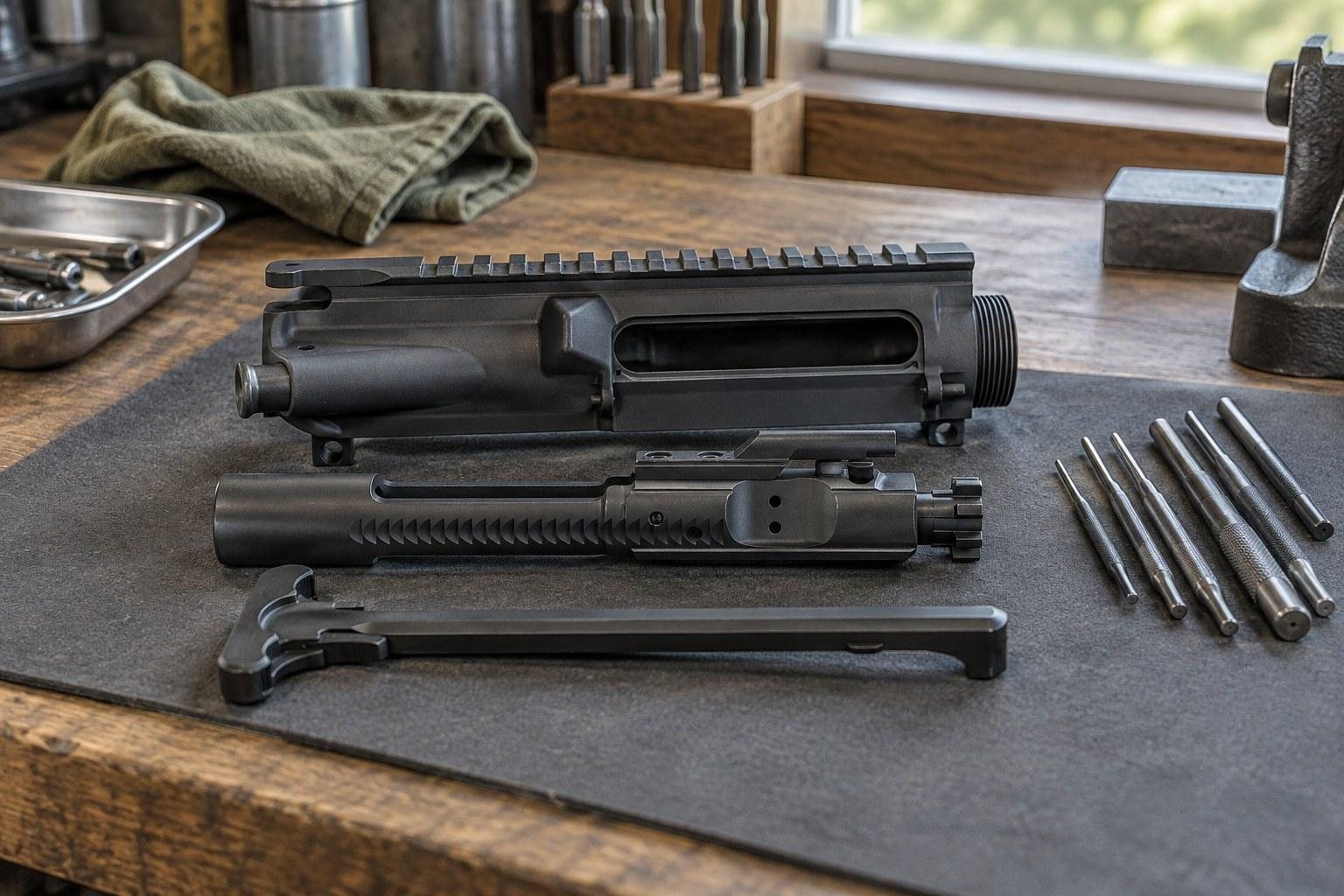
For most builders, swapping between a forward assist and a slick side receiver does not change the rest of the parts list. Both use the same barrel extension, barrel nut threads, charging handle channel and takedown pin locations as a standard AR-15 upper, although you should always confirm details with the receiver manufacturer.
Bolt Carrier Groups
A standard carrier with forward assist notches works fine in a slick side receiver, since nothing engages the notches. Some lightweight carriers omit the notches, which pairs well with a slick side receiver but will not work with a forward assist. Browse bolt carrier groups and check the carrier description before mixing and matching.
Charging Handles
Without a forward assist, the charging handle becomes your main way to manipulate the bolt. A comfortable, easy-to-grab handle can make that routine smoother, especially with an optic mounted. Charging handle styles vary, so it is worth comparing options before you buy.
Assembly and Safety
Installing a forward assist or dust cover into a stripped receiver requires roll pins, proper support and the right punches. Always work on an unloaded firearm, follow the component manufacturer's instructions and published specifications, and take the receiver to a qualified gunsmith if you are unsure. If you want those parts already installed, assembled upper receivers options are commonly available with the forward assist and ejection port cover fitted.
Which Upper Fits Your Build?
The right answer depends on the job you expect the rifle to do. Use these quick guidelines as a starting point.
Choose a Forward Assist Upper If
- The rifle is meant for home defense, duty or hard field use.
- You want the most common configuration and the widest choice of calibers.
- You like to chamber quietly and confirm lockup with a press.
Choose a Slick Side Receiver If
- You are building a lightweight, retro or minimalist rifle.
- You never use the forward assist and prefer fewer parts.
- You are comfortable clearing stoppages with the charging handle and proper drills.
Still deciding on barrel length and gas system for the same build? Our gas system guide can help you match components before you choose a receiver.