Stripped vs. complete AR-15 uppers compared piece by piece: what each one includes, real cost ranges, tools required, and which one is right for your build.
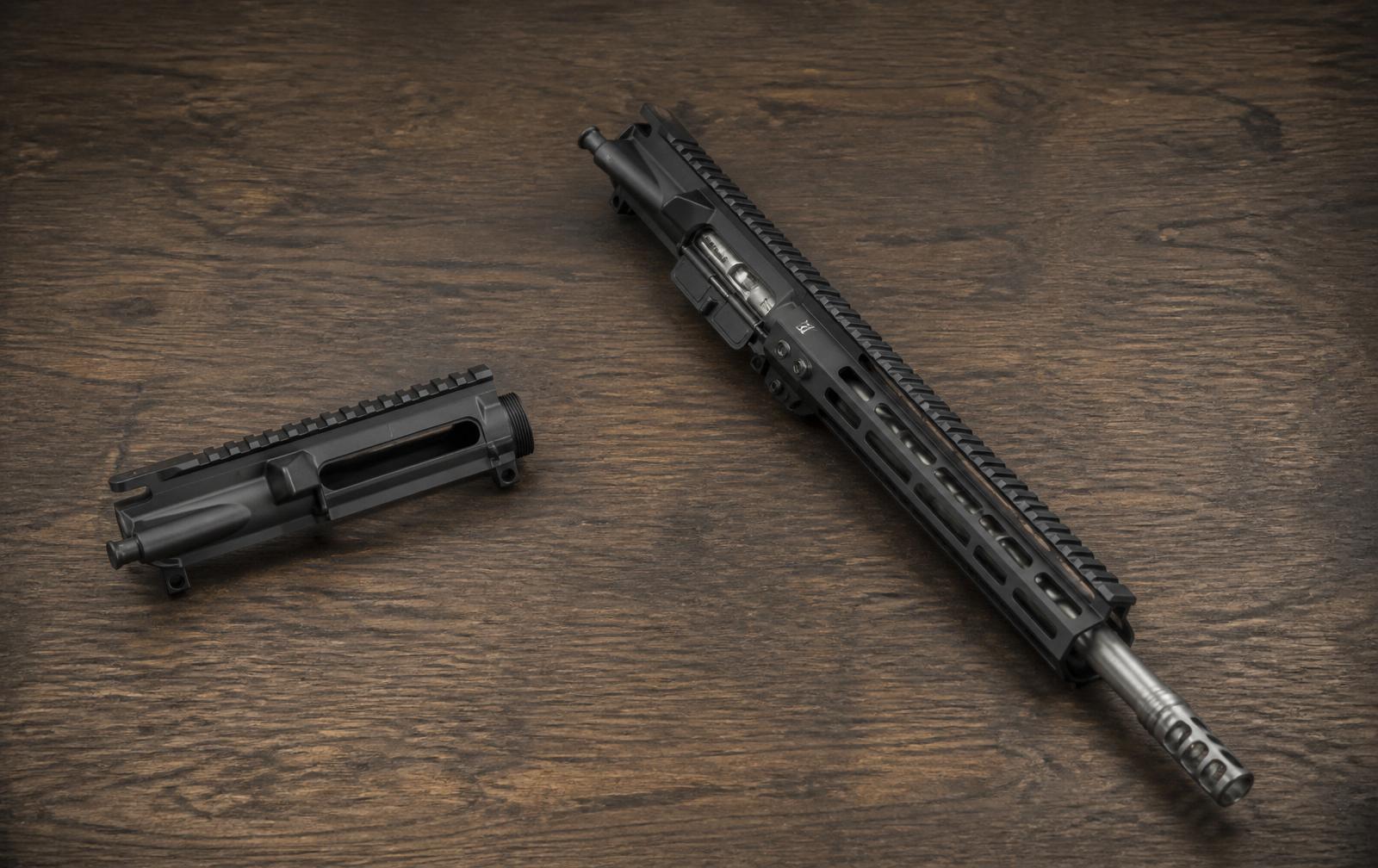
A stripped upper is just the bare aluminum upper receiver, no barrel, no bolt carrier group, no handguard. A complete upper includes all of that, fully assembled and ready to attach to your lower. The right choice comes down to how much building you want to do, what tools you have, and how much control you want over the final parts list.
If you're still deciding which route makes sense for your build, here's a full breakdown of what you get, what it costs, and how to think about the decision.
What's Included in Each
The core distinction is simple: a stripped upper is one part, and a complete upper is dozens of parts assembled into a ready-to-install unit. Here's how they compare piece by piece.
Note that "complete upper" isn't a perfectly standardized term across sellers. Some listings include the BCG and charging handle by default; others sell those as add-ons. Always check the product description line by line before assuming what's in the box, this is the single most common source of buyer confusion in this category.
It's also worth understanding what a stripped upper does not include, since the term causes confusion for first-time buyers. "Stripped" specifically means the receiver has no additional components attached or installed, not even the forward assist or dust cover on some models.
Some sellers offer a middle option sometimes labeled a "barreled upper," which includes the barrel and gas system but stops short of the BCG, charging handle, and handguard. If you see that term while shopping, treat it as its own category rather than assuming it behaves like either a stripped or complete upper.
"Complete upper" isn't a standardized term. Read the product page line by line before you assume what's in the box.
Cost Comparison
Price is usually the deciding factor, so it's worth looking at realistic numbers rather than best-case pricing you might see in a sale listing.
Stripped upper + individual parts:
- Stripped upper receiver: $60 to $150
- Barrel (16" chrome-lined, mid-tier): $120 to $300
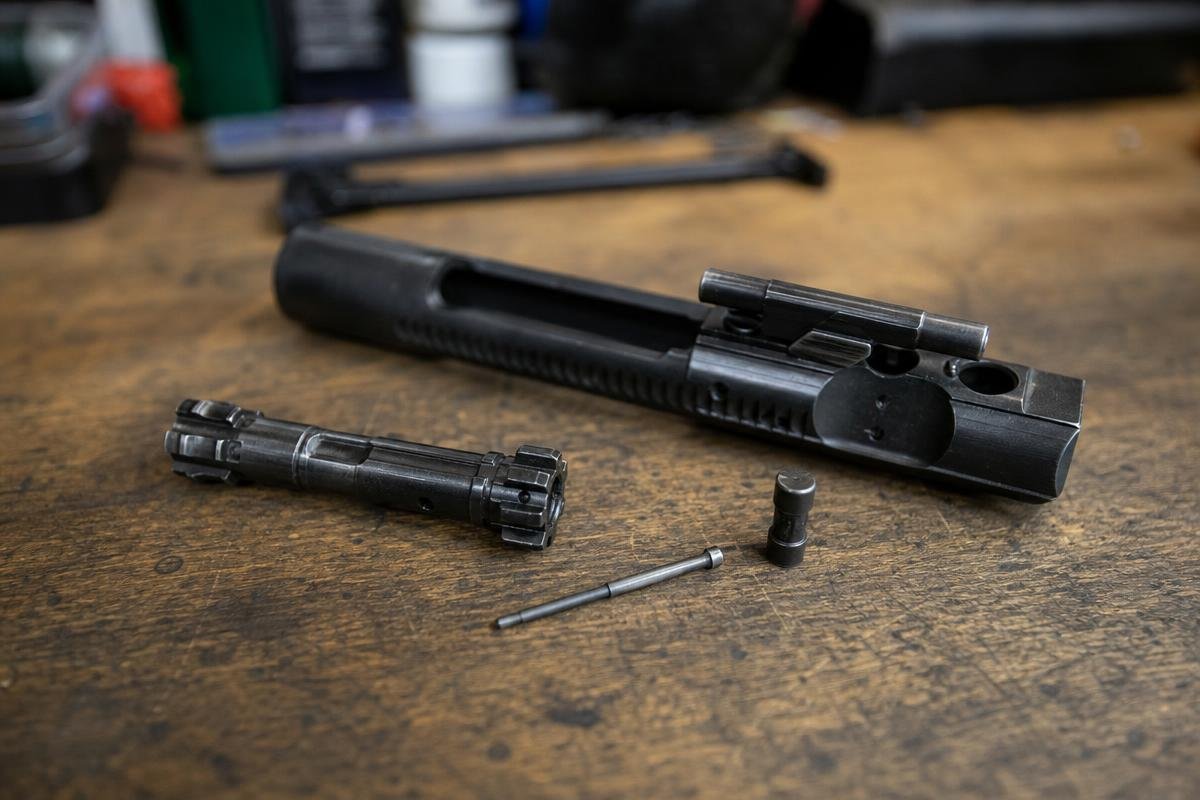
- BCG (mil-spec, properly staked): $90 to $180
- Charging handle: $25 to $60
- Handguard (free-float, aluminum): $60 to $200
- Gas tube and block: $15 to $40
- Muzzle device: $15 to $50
- Total: roughly $385 to $980, depending heavily on component quality and brand
Complete upper (assembled):
- Budget/entry-level: $350 to $500
- Mid-tier (chrome-lined barrel, quality BCG, free-float rail): $500 to $800
- Premium (nitride/stainless barrel, name-brand BCG, upgraded rail): $800 to $1,400+
The gap isn't as wide as people expect. Building from stripped parts can save money if you shop sales and buy components individually over time, but it can also cost more than a complete upper if you're not comparison shopping carefully, especially once you factor in the risk of buying a mismatched or lower-quality part that needs replacing later. Complete uppers benefit from bulk purchasing and assembly efficiency on the manufacturer's end, which sometimes makes them a better value than the sum of their parts.
There's also a timing factor that's easy to overlook. Buying parts individually means you can spread the cost out over weeks or months, picking up a barrel on sale one month and a BCG the next. A complete upper is a single purchase, which is easier to budget for but doesn't offer the same flexibility if you're working with a tight monthly budget. On the other hand, buying piece by piece means your rifle sits half-finished until every component arrives, which can stretch a build out far longer than planned if a part is backordered.
Skill and Tools Required
This is where the two paths really diverge, and it's often more important than the price difference.
Building from a stripped upper requires:
- An armorer's wrench (for the barrel nut and muzzle device)
- A vise with upper receiver blocks (to avoid damaging the receiver)
- A torque wrench (barrel nut torque specs matter for accuracy and reliability)
- Roll pin punches (for the gas tube and forward assist, if not pre-installed)
- Comfort reading a torque spec sheet and following a step-by-step sequence without skipping steps
None of this is exotic, and there are detailed guides and videos for every step. But it does take an evening of focused work, a modest tool investment ($100 to $200 if you're starting from zero), and a willingness to troubleshoot if something doesn't fit quite right.
The steps that trip up most first-time builders are barrel nut torque and headspacing. Barrel nuts have a specific torque range, and going outside it, too loose or too tight, can affect accuracy or, in more serious cases, safety. Headspacing (making sure the bolt and barrel extension are properly mated) is usually a non-issue with quality mil-spec parts, but it's still worth checking with a set of headspace gauges if you're mixing components from different manufacturers rather than buying a matched barrel/BCG set.
A complete upper requires:
- An upper/lower receiver pin punch set (to attach the upper to your lower)
- No specialty barrel or gas system work at all
For most complete uppers, attaching it to a lower is a five-minute job with basic tools you may already have. There's no torque spec to worry about and no risk of cross-threading a barrel nut. This is why complete uppers are often recommended as the lower-risk path: the manufacturer has already handled the steps where a mistake is costliest to fix.
Which Is Right for You?
First-time builder: A complete upper is usually the better starting point. It removes the highest-risk steps in the build, barrel installation and headspacing, where mistakes can affect both reliability and safety. Once you've built one rifle from a complete upper, you'll have a much better feel for whether you want to tackle a stripped build next.
Experienced builder: A stripped upper makes sense if you already have the tools, know your torque specs, and want to hand-pick every component, a specific barrel profile, a particular BCG coating, a rail system with exact accessory mounting. This is also the better route if you're building something non-standard, like a specific barrel length or caliber conversion that isn't commonly sold as a complete unit.
No-tools buyer: If you don't own (and don't want to buy) an armorer's wrench, torque wrench, and receiver blocks, a complete upper is the practical choice. You'll still need basic pin punches to mate it to your lower, but that's a much smaller tool investment than a full barrel install setup.
There's no wrong answer here, plenty of experienced builders still buy complete uppers for certain calibers or configurations simply because it's not worth the time savings to source every part individually. The decision is really about your tolerance for hands-on assembly work versus your desire for exact part-by-part control.
Ready to compare options? Browse the full selection of AR-15 uppers at ar15parts.com.