How to pick a 16-inch AR-15 complete upper: why 16 inches is the general-purpose sweet spot, what specs matter, and how to match one to your build.
If you're building a general-purpose AR-15, a home defense rifle, or a first build, a 16-inch complete upper is almost always the right answer. It's the shortest legal rifle barrel, it delivers real 5.56 velocity, and it's the most-produced configuration in the industry, which means more options at every price point. This guide covers what makes a 16-inch upper good, what specs to prioritize, and how to pick the right one for your budget.
Why 16 Inches Is the Sweet Spot
Federal law defines a rifle as having a barrel of at least 16 inches. Anything shorter is either a pistol (with no stock) or a short-barreled rifle (SBR), which requires a $200 tax stamp and BATFE registration. 16 inches is the shortest configuration you can buy off the shelf, put a rifle stock on, and take to the range without paperwork.
Ballistically, 16 inches keeps a 5.56 55-grain load running around 2,900 to 3,000 fps, well above the terminal effectiveness threshold of ~2,500 fps out to about 200 to 250 yards. That's more than enough for defense, training, and general-purpose shooting inside 400 yards.
Where 16 inches loses to longer barrels is at extended range. A 20-inch barrel picks up another 100 to 150 fps and extends 5.56's effective range to 500+ yards with heavy match ammo. For a general-purpose rifle, that's rarely worth the extra length, weight, and awkwardness.
Gas System: Mid-Length, Not Carbine
This is the single most-overlooked spec on budget 16-inch uppers, and it matters more than any other. A 16-inch barrel must use a mid-length gas system (approximately 9.5 inches from chamber to gas port) for correct dwell time.
Why it matters: Dwell time is how long the bullet is past the gas port before it exits the muzzle, which determines how much gas pressure feeds the operating system. Too much dwell (carbine gas on a 16-inch barrel) means the system is over-gassed: it batters parts, increases felt recoil, and shortens BCG life. Too little dwell (rifle gas on a 16-inch barrel) means under-gassing and reliability problems.
Some very cheap 16-inch uppers still use carbine-length gas because it's the older, more common tooling. These uppers will run, but they'll be harsh and wear parts faster. If you see a 16-inch upper listed with carbine gas, either pass on it or budget for an adjustable gas block to tune it down.
Specs That Actually Matter at 16 Inches
At the 16-inch length, the specs to prioritize (in order):
1. Mid-length gas system. Non-negotiable for a smooth-running 16-inch rifle.
2. Barrel material and treatment. 4150 CMV with nitride treatment is the reliable, affordable default. Chrome-lined barrels last longer under sustained fire but are usually more expensive. Stainless is best for precision but wears faster.
3. Twist rate. 1:7 or 1:8 stabilizes the full 5.56 weight range (55 to 77 grain). 1:9 is fine for 55 to 62 grain only; avoid if you plan to shoot heavy match ammo.
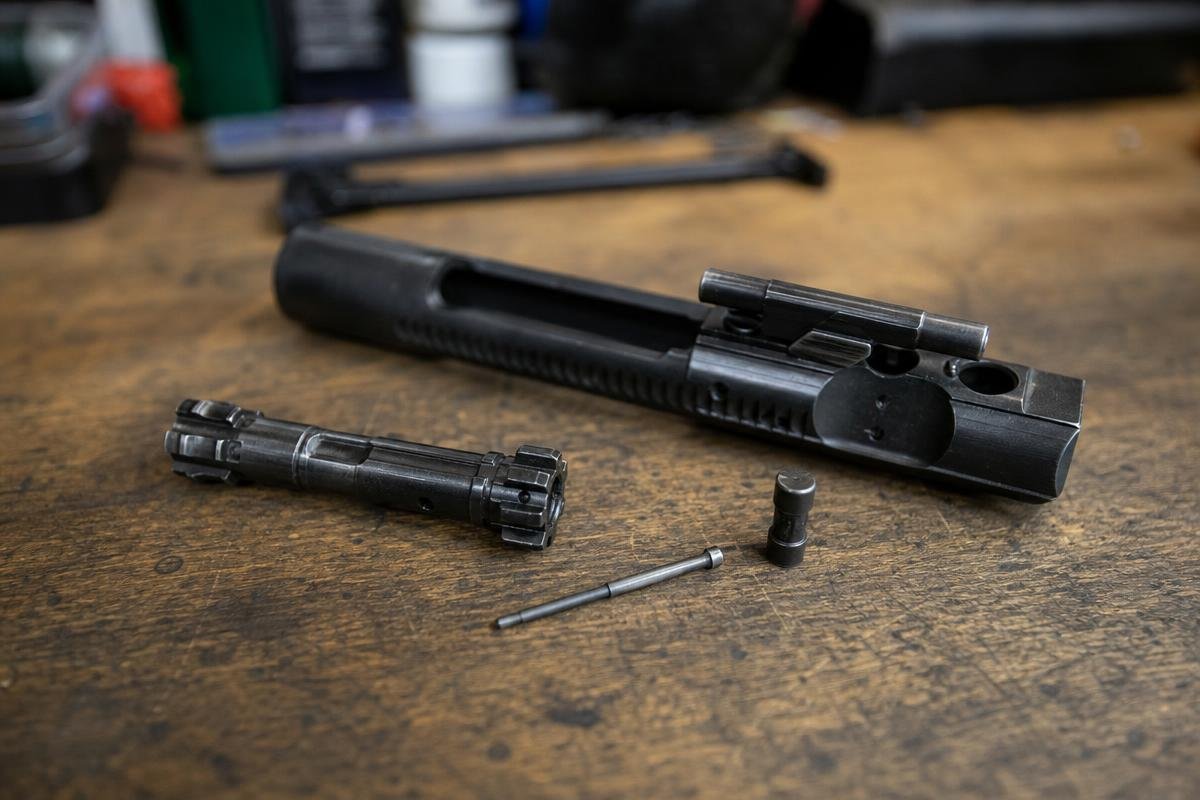
4. BCG quality. MPI/HPT-tested is worth the small upcharge on a defensive rifle. Standard mil-spec is fine for range use.
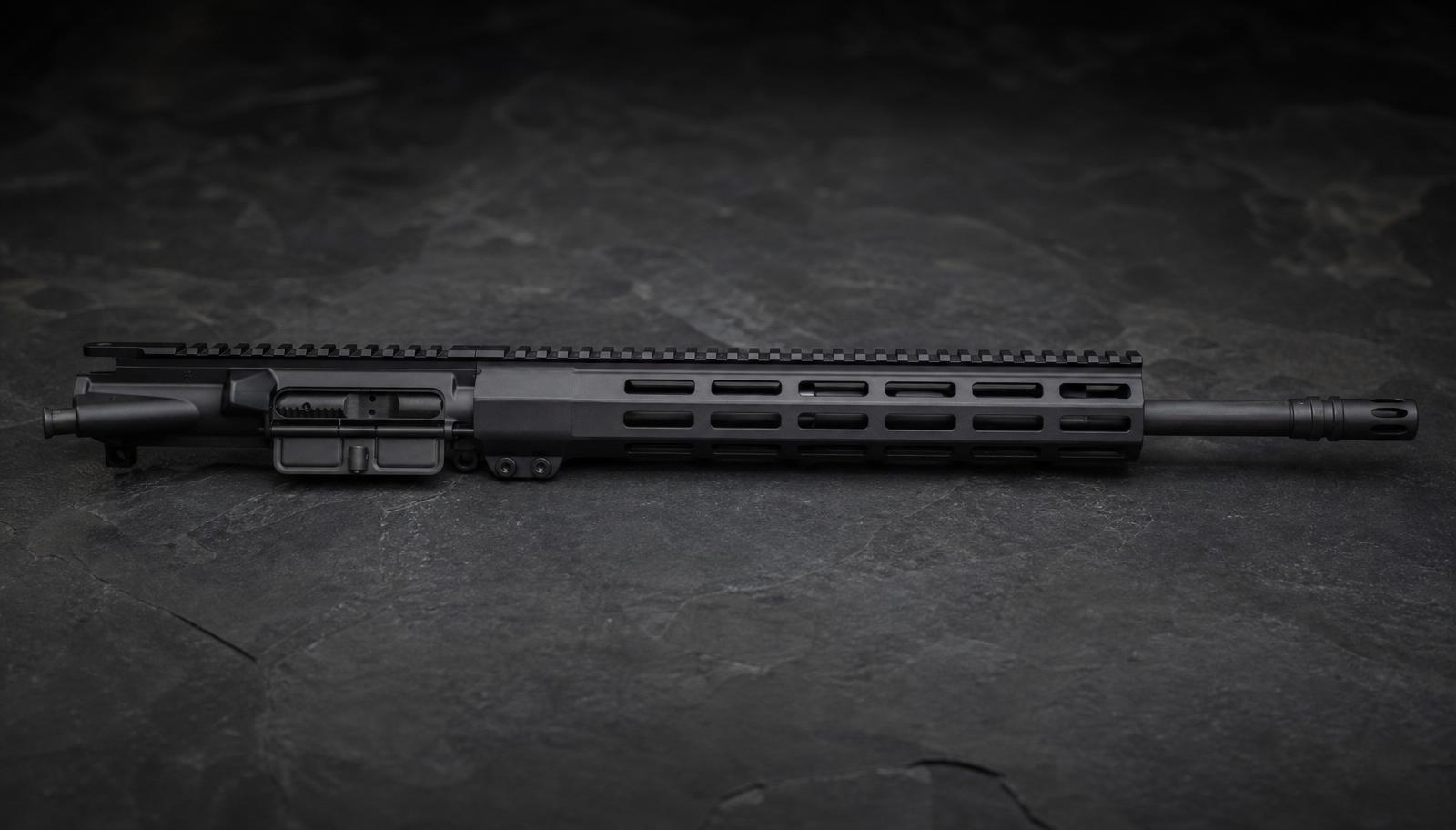
5. Free-float handguard. A quality M-LOK free-float handguard doesn't touch the barrel, which helps accuracy and gives you a proper mounting surface for lights, lasers, and grips.
6. Chamber spec. 5.56 NATO chamber is standard and safely fires both 5.56 and .223. A .223 Wylde chamber is a hybrid that shoots both accurately, preferred on precision-focused builds.
What to Buy at Each Price Tier
The steepest quality gain is from $300 to $700. Above $700, you're paying for QC, features, and finish more than raw performance.
Configurations Worth Considering
5.56 NATO, 16 in, mid-length gas, 1:7 or 1:8 twist, nitride barrel, M-LOK free-float handguard. The default. Reliable, versatile, feeds any 5.56 or .223 load. Best for first builds and general-purpose rifles.
.223 Wylde, 16 in, mid-length gas, 1:8 twist, stainless barrel. Precision-leaning variant. Slightly better accuracy with match .223 loads, still shoots all 5.56 safely.
5.56 NATO, 14.5 in with pinned 1.5 in muzzle device (16 in overall), carbine gas. Slightly more compact, slightly different balance. Carbine gas is correct for 14.5-inch barrels.
.300 Blackout, 16 in, pistol gas. If you want 16-inch overall length in .300 BLK. Rarely worth it, .300 BLK is optimized for 9 to 12 inches; a 16-inch .300 BLK barrel is mostly cosmetic.
For most builders, a 16-inch 5.56 mid-length upper from a reputable brand in the $500 to $800 range is the right answer. It's the configuration used by more AR-15 owners than any other, spare parts are everywhere, and it does 90% of what any civilian rifle needs to do.
Browse 16-inch complete uppers at ar15parts.com, filterable by caliber, gas system, and price.