How to pick a quality AR-15 complete upper under $500: what to look for in the barrel, BCG, and handguard, and where corners get cut.
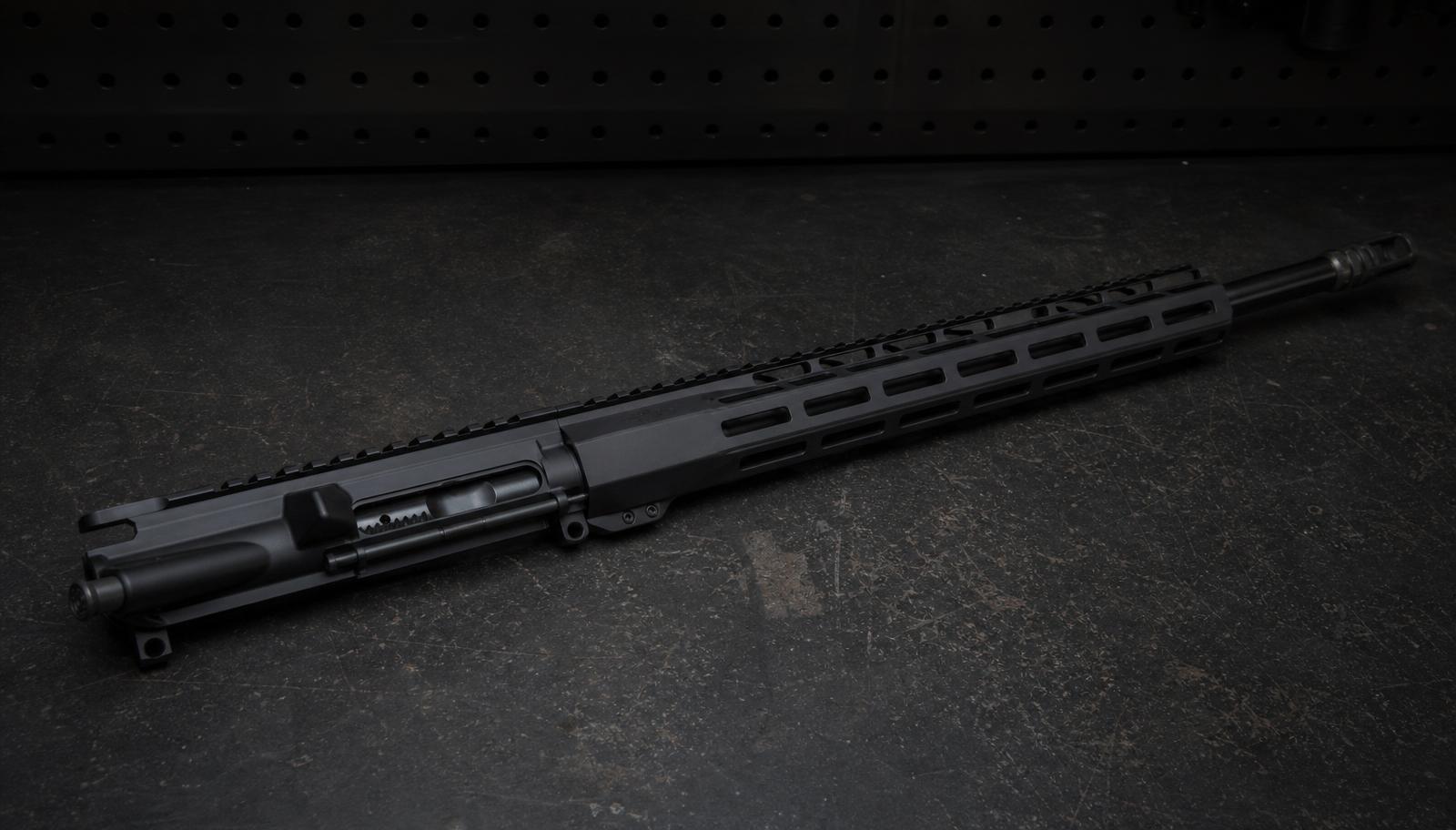
Building an AR-15 on a budget doesn't mean building a bad rifle. A well-chosen complete upper in the $400 to $500 range will be reliable, accurate enough for general-purpose use, and built from the same forgings and mil-spec parts as uppers costing twice as much. The trick is knowing where the cost savings come from (which is fine) versus where corners get cut (which is not). This guide walks through what to look for, what to avoid, and which configurations are the honest sweet spot.
What $500 Actually Buys
At the $400 to $500 price point, you're buying:
- A 7075-T6 forged upper receiver (mil-spec, same forging most premium brands use)
- A 16-inch 4150 chromoly vanadium (CMV) barrel, typically nitride-treated or lightly parkerized
- A mid-length gas system with a low-profile gas block
- A basic M-LOK free-float handguard (or, at the very bottom, a drop-in polymer handguard)
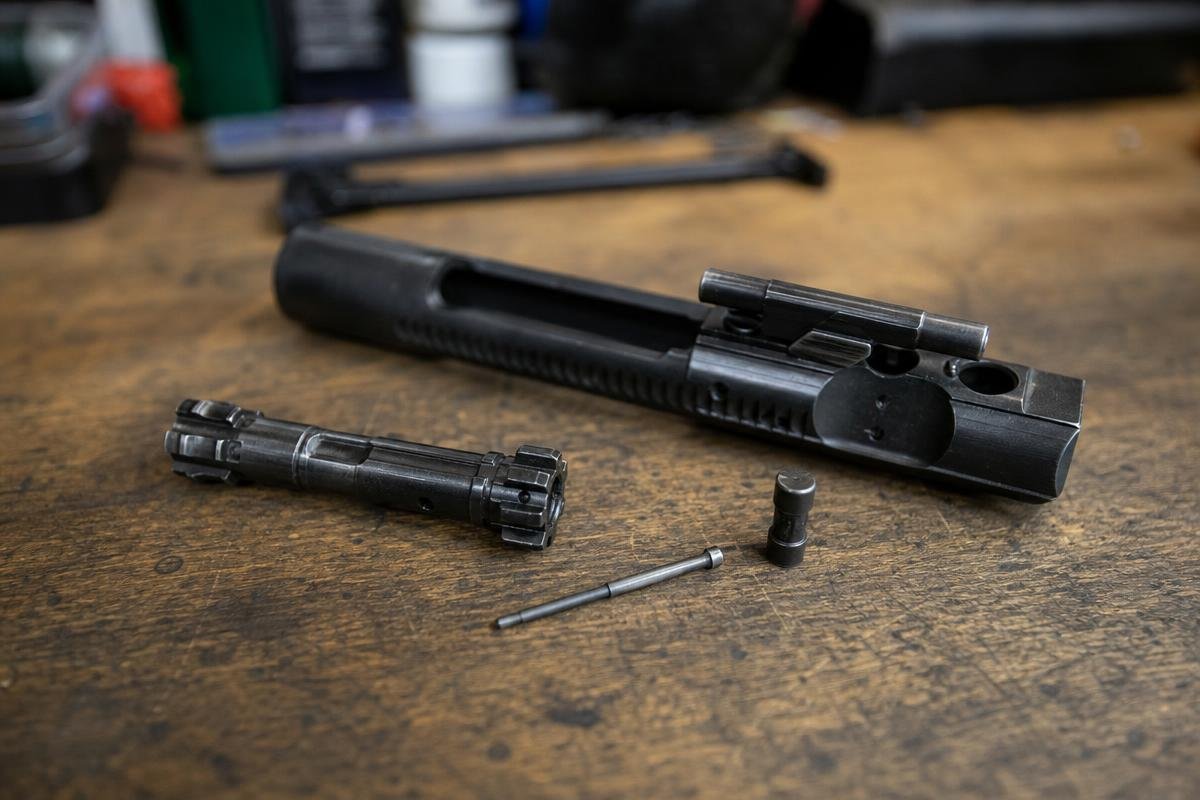
- A phosphate-coated, non-MPI-tested mil-spec BCG
- A standard mil-spec charging handle
That's a real, functional, range-ready rifle upper. What you're not getting at this price is a cold hammer forged chrome-lined barrel, a magnetic-particle-inspected bolt, an upgraded charging handle, or premium finishes. Those live in the $700+ tier.
What to Look For in the Spec Sheet
Three specs matter more than any others at this price point:
1. Barrel material and treatment. The spec sheet should explicitly say "4150 CMV" or "4140 CMV" for the barrel steel, plus a treatment: nitride (QPQ), parkerized, or chrome-lined. If the listing just says "steel barrel" with no material or treatment specified, walk away. That's a red flag for the cheapest possible barrel.
2. Bolt inspection. Ideally you want to see "MPI tested" (magnetic particle inspection, which catches surface flaws) at any price. Under $500 this is uncommon on the baseline, but the better budget brands (Aero Precision Premium, PSA CHF line) offer MPI options. If you can't get MPI at this price, plan to inspect the bolt visually and replace it in a few thousand rounds if you shoot a lot.
3. Gas system correctness. A 16-inch barrel should have a mid-length gas system, a 14.5-inch barrel should have a carbine-length gas system, and a 20-inch barrel should have a rifle-length gas system. Mismatched gas systems (e.g., 16-inch barrel with carbine gas) will over-gas the rifle, batter parts, and make it unpleasant to shoot. This is the single most common budget-upper mistake.
Where Corners Get Cut Under $500
Not all cost cuts are equal. These are the ones that actually matter:
- Barrel steel downgrades: Some very cheap uppers use 4140 or unspecified steel instead of 4150 CMV. 4140 is fine for range use but wears faster.
- Skipping bolt inspection: Un-inspected bolts pass 99% of the time, but the 1% that fail can crack unexpectedly. This is why duty rifles specify MPI/HPT.
- Nonstandard gas system lengths: Rare but it happens on the cheapest imports. Always confirm the gas system matches the barrel length.
- Cheap handguards: A wobbly polymer drop-in handguard will hold zero on a laser or optic mounted to the handguard rail poorly. Free-float is worth the small upcharge.
- Unnamed BCG suppliers: "Mil-spec BCG" with no manufacturer name usually means the cheapest available. This is fine for range use, but note it.
Cost cuts that don't matter as much: cosmetic finish grade, brand of charging handle (any mil-spec unit works), or whether the upper has a forward assist and dust cover installed (both are optional in a modern build).
Configurations Worth Buying
If you're shopping under $500, these configurations are the honest sweet spot:
- 16-inch 5.56 NATO, mid-length gas, nitride barrel, M-LOK free-float handguard. The default. Reliable, accurate, and every part is easily replaced later.
- 16-inch .223 Wylde, mid-length gas, nitride barrel, M-LOK free-float handguard. Same rifle, but with a chamber that shoots both 5.56 and .223 Remington accurately. Better for precision use with commercial .223 loads.
- 14.5-inch 5.56 with pinned and welded muzzle device (16-inch overall). Slightly more compact without SBR paperwork. Uses a carbine-length gas system.
Avoid, at this price:
- Anything shorter than 14.5 inches (the cost savings vanish because short-barrel gas tuning is harder to get right).
- Calibers other than 5.56 / .223 (budget .300 BLK, 6.5 Grendel, or 6mm ARC uppers often cut corners on the BCG or gas port that hurt reliability).
- Anything marketed primarily on aesthetics ("skeletonized," "billet look-alike," etc.) without spec sheet details on the barrel and bolt.
When to Spend More
Step up above $500 when any of the following apply:
- You're building a home defense or duty-analog rifle (spend for CHF chrome-lined barrel and MPI/HPT bolt, roughly $700+).
- You want sub-MOA precision (match-grade barrels start at $500+ for the barrel alone).
- You want cold hammer forged barrel life (typically $650+ for the upper).
- You want ambidextrous controls or premium features (typically $1,200+).
For a first build, a training rifle, or a general-purpose range gun, the $400 to $500 tier is a legitimate landing spot, not a compromise.
Compare configurations across price points at ar15parts.com, filterable by barrel length, caliber, and gas system.