The 50 Beowulf vs 50 BMG question comes up constantly because both cartridges share a half-inch bore and the same "50" in their names. That is where the similarity mostly ends. One is a short, straight-walled round built to run in an AR-15 with a new upper. The other is a long-range heavy machine gun cartridge that needs a purpose-built rifle.
This guide breaks down the real differences in case design, platform, range, recoil and ownership so you can tell which one actually fits your goals. If you want big-bore power on a lower you already own, the answer is usually simpler than people expect.
Ready to see big-bore options built on the AR-15 platform?
Key Takeaways
- The 50 Beowulf is a 12.7x42mm cartridge, while the 50 BMG is a 12.7x99mm cartridge, so the BMG case is more than twice as long.
- The 50 Beowulf runs on a standard AR-15 lower receiver with a dedicated upper, bolt and magazine.
- The 50 BMG does not fit a standard, magazine-fed AR-15 upper, and is fired from large single-shot, bolt-action or semi-automatic rifles built specifically for it.
- The 50 Beowulf is a short-range hunting and defense cartridge, while the 50 BMG is designed for long-range work.
- State and local laws treat these cartridges and rifles differently, so always check your own jurisdiction before buying.
Two Cartridges That Share a Number and Little Else
Both rounds fire a bullet of roughly half an inch in diameter, which is why they get compared. The metric names tell the real story. The 50 Beowulf is listed as 12.7x42mm, and the 50 BMG is 12.7x99mm. The second number is case length in millimeters, so the BMG case is dramatically longer and holds far more powder.
Where the 50 Beowulf Came From
The 50 Beowulf was developed by Alexander Arms to give the AR-15 a heavy, large-diameter bullet at close and moderate range. The goal was simple: big-bore stopping power without moving to a larger rifle. It uses a straight-walled case and a rebated rim so it can work with a modified AR-15 bolt face. Because the cartridge was designed around the AR-15 magazine well, the overall length stays inside what a standard lower can feed. That design choice is the entire reason the round exists.
Where the 50 BMG Came From
The 50 BMG, short for Browning Machine Gun, was developed for John Browning's heavy machine gun and has served militaries for generations. It was built for long distances, vehicles and hard targets, not for a light shoulder-fired carbine.
Civilian shooters use it in dedicated 50-caliber rifles for long-range target shooting. Those rifles are heavy, large and built from the ground up around the cartridge.
50 Beowulf vs 50 BMG at a Glance
The quickest way to see the gap is side by side. The table below sticks to differences that are well established rather than load-specific numbers, which vary widely by manufacturer.
| Feature | 50 Beowulf | 50 BMG |
|---|---|---|
| Metric designation | 12.7x42mm | 12.7x99mm |
| Case design | Short, straight-walled, rebated rim | Long, bottlenecked |
| Platform | AR-15 lower with a dedicated upper | Purpose-built 50-caliber rifles and machine guns |
| Typical role | Short-range hunting, hog control, defense | Long-range target shooting, military use |
| Rifle weight and size | Carbine sized | Very large and heavy |
| Ammo cost and availability | Specialty, fewer loads | Specialty, generally expensive per round |
Why the Case Shape Matters
A straight-walled case is efficient for pushing a heavy bullet at modest velocity from a short barrel. A long bottlenecked case like the BMG's burns a much larger powder charge and needs a long barrel to use it. That is the root of every other difference in range, recoil and rifle size.
Why Load Data Is Left Out
Velocity and energy figures for both cartridges change with bullet weight, barrel length and manufacturer. Rather than print numbers that may not match your ammunition, it is generally wise to read the published data from the specific ammunition maker you plan to buy. Their box and website figures reflect their own test barrels.
If you are weighing other big-bore AR options at the same time, our comparison of two popular choices is a good next stop.
How Each Cartridge Fits the Rifle
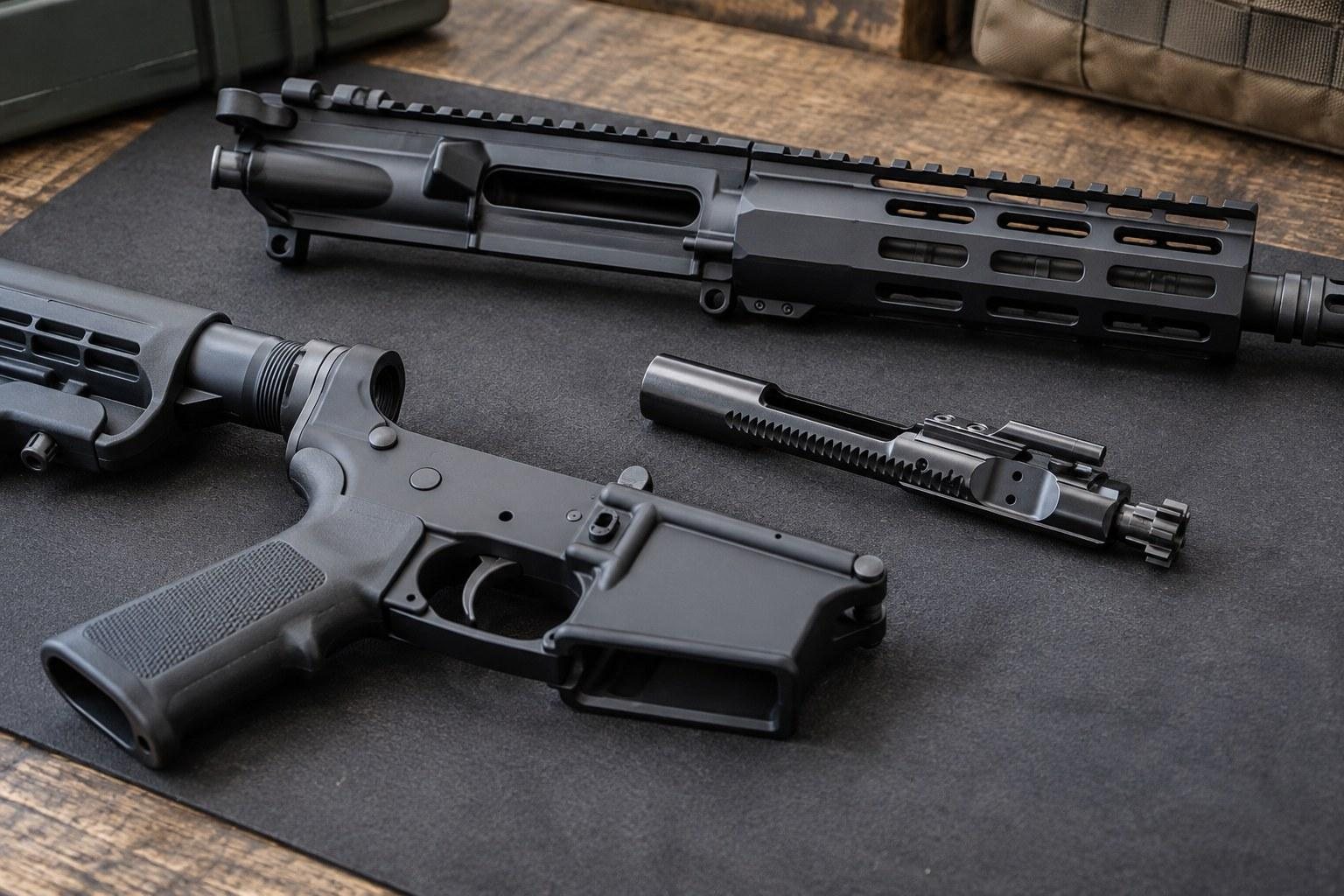
This is the practical difference that matters most to AR-15 owners. One cartridge is a caliber swap on your existing rifle. The other requires an entirely different firearm.
Running the 50 Beowulf on an AR-15
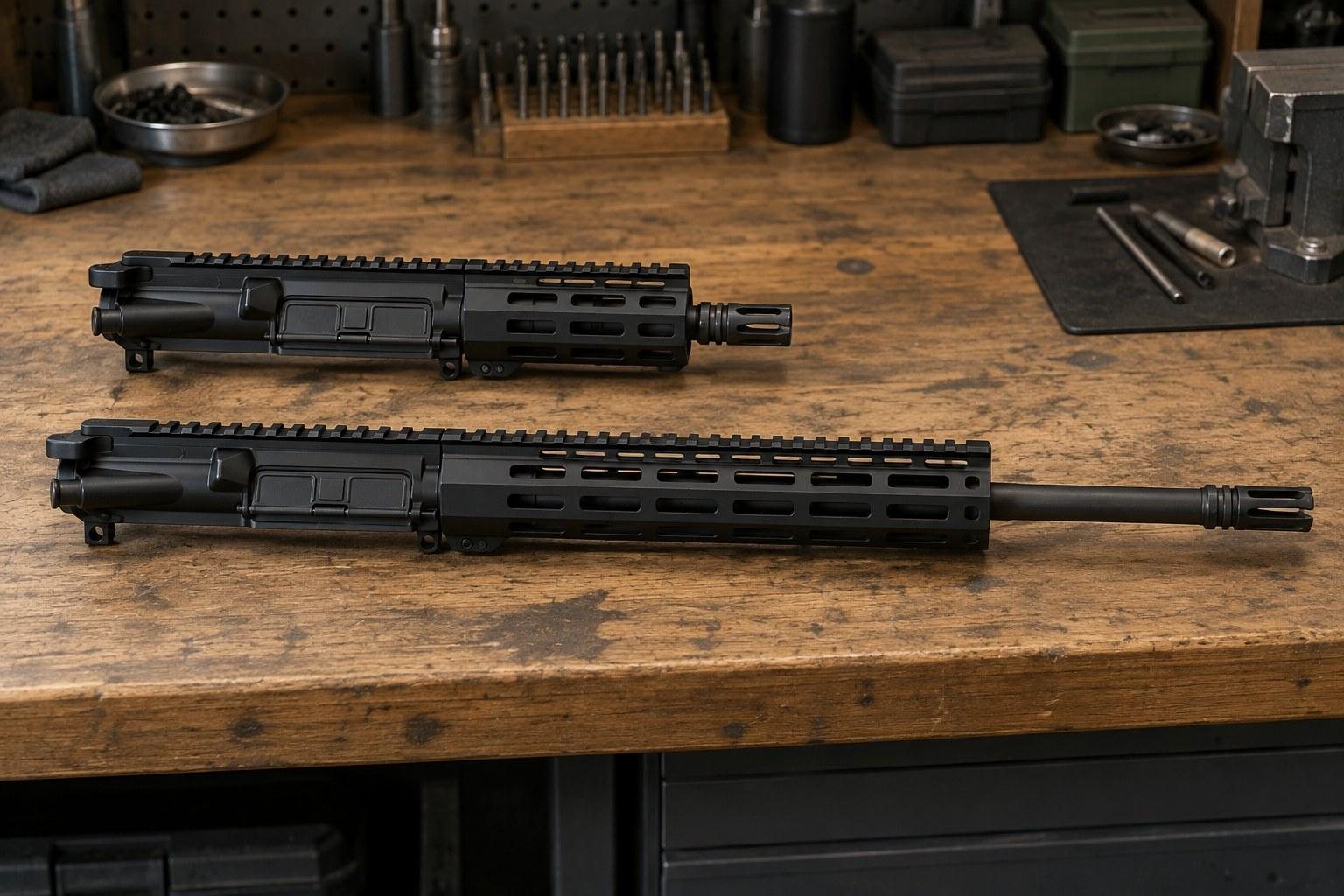
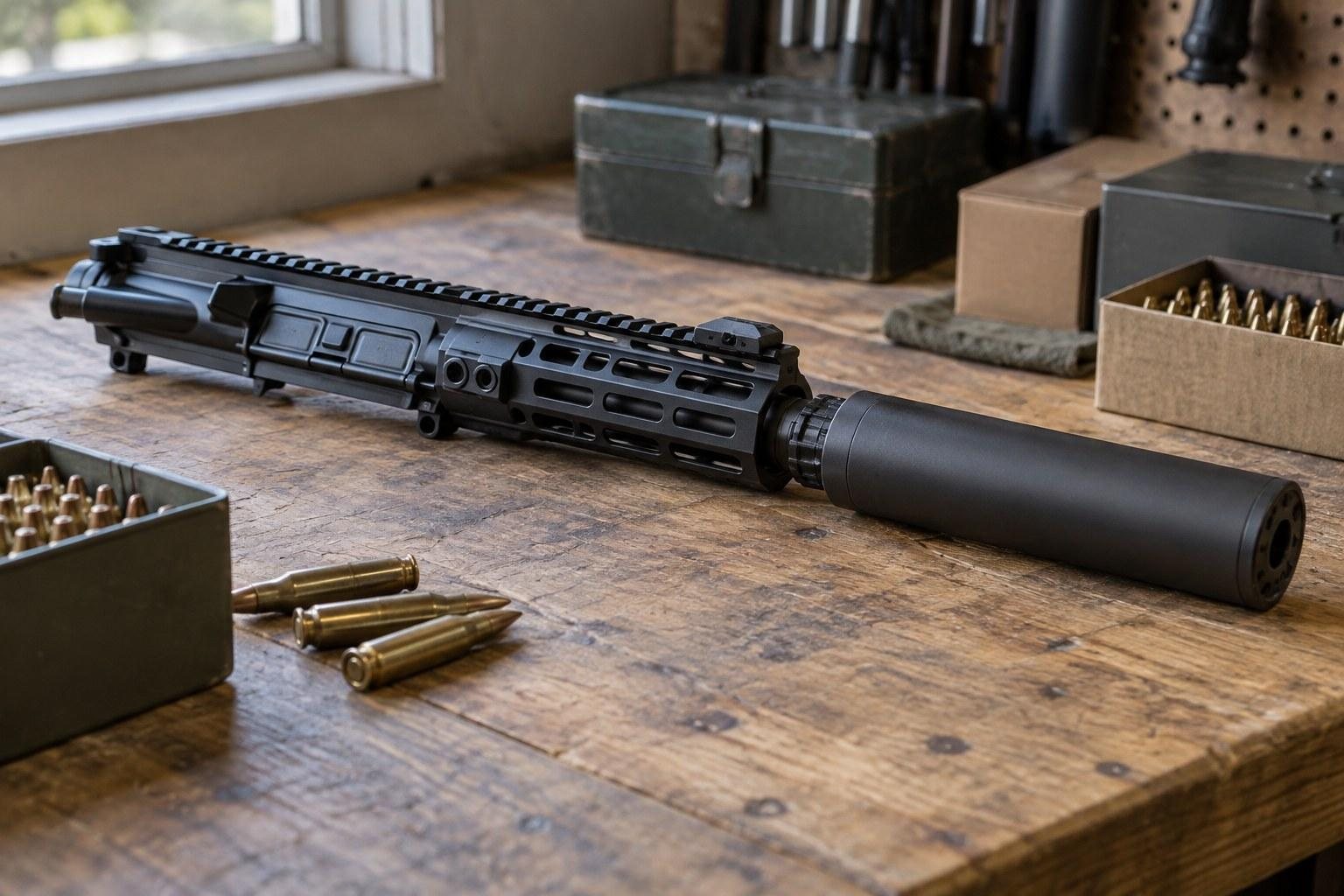
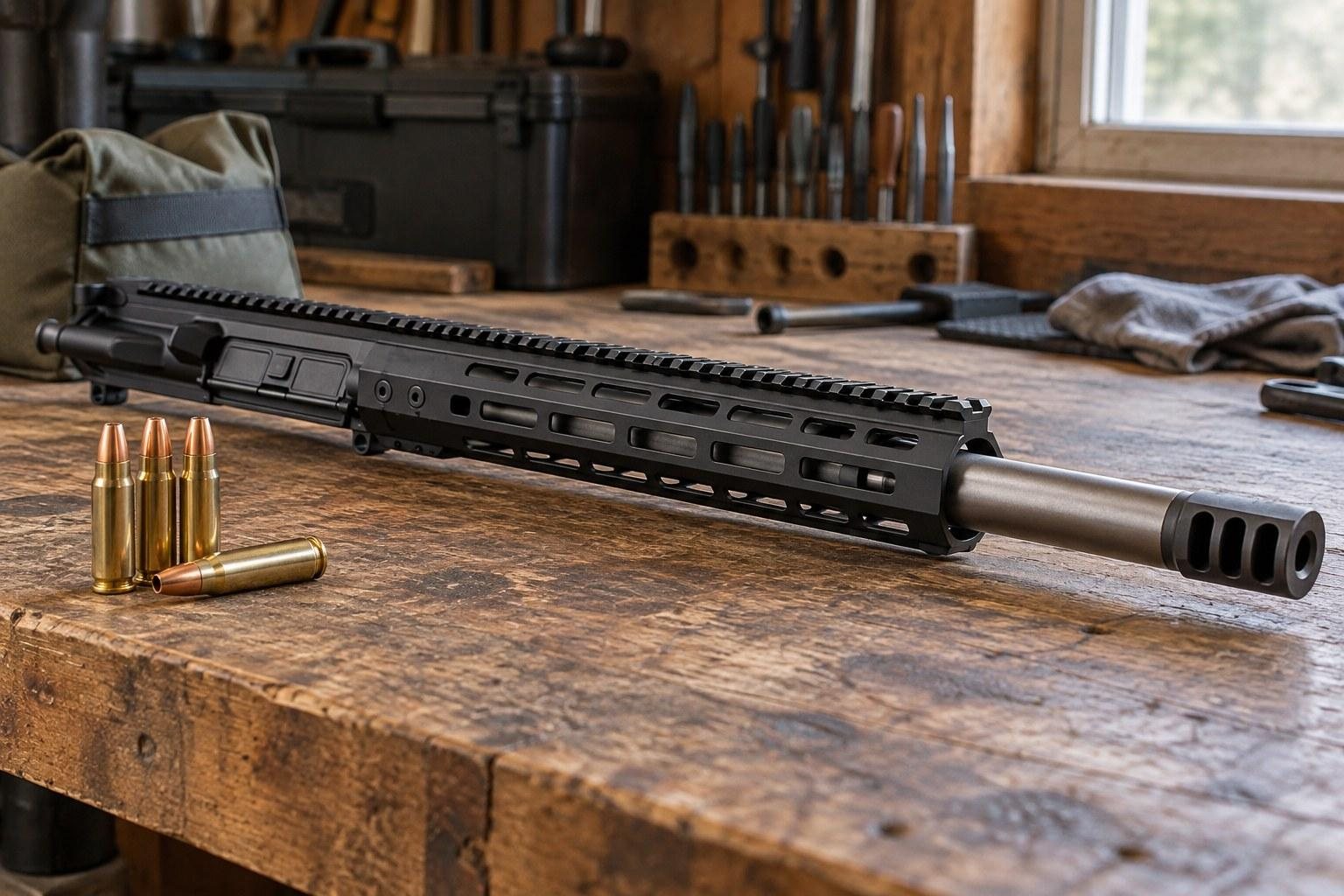
A 50 Beowulf build keeps your existing lower receiver, trigger, stock and grip. You change the upper, which carries the barrel, bolt carrier group and charging handle. The bolt has a larger face to accept the rebated rim. 50 Beowulf uppers are commonly offered as 16-inch builds with either a bull parkerized barrel or a heavy stainless barrel, offered with 12-inch or 15-inch rails.
Complete uppers from AR15Parts.com are assembled in-house, headspaced and function-checked before they ship, which removes much of the guesswork from a caliber change. If you prefer to assemble your own, 50 Beowulf barrels are commonly available in 16-inch and 18-inch lengths with a 1:20 twist.
Magazines for the 50 Beowulf
The big Beowulf case changes how a magazine holds rounds, so capacity is much lower than with 5.56. Dedicated 50 Beowulf magazines are commonly available in 4-round and 10-round versions. Using a magazine made for the cartridge helps with reliable feeding.
Why the 50 BMG Cannot Go on an AR-15
The 50 BMG case is far too long and too powerful for a standard, magazine-fed AR-15 magazine well, bolt or receiver. A single-shot 50 BMG upper that mounts on an AR-15 lower does exist, but it is not a drop-in magazine-fed caliber swap. Shooters who want 50 BMG buy a complete rifle designed for it, with its own receiver, heavy barrel, muzzle brake and stout bipod.
Complete 50 BMG rifles are a specialty category generally sold separately from standard AR-15 parts and uppers.
Range, Trajectory and Terminal Behavior
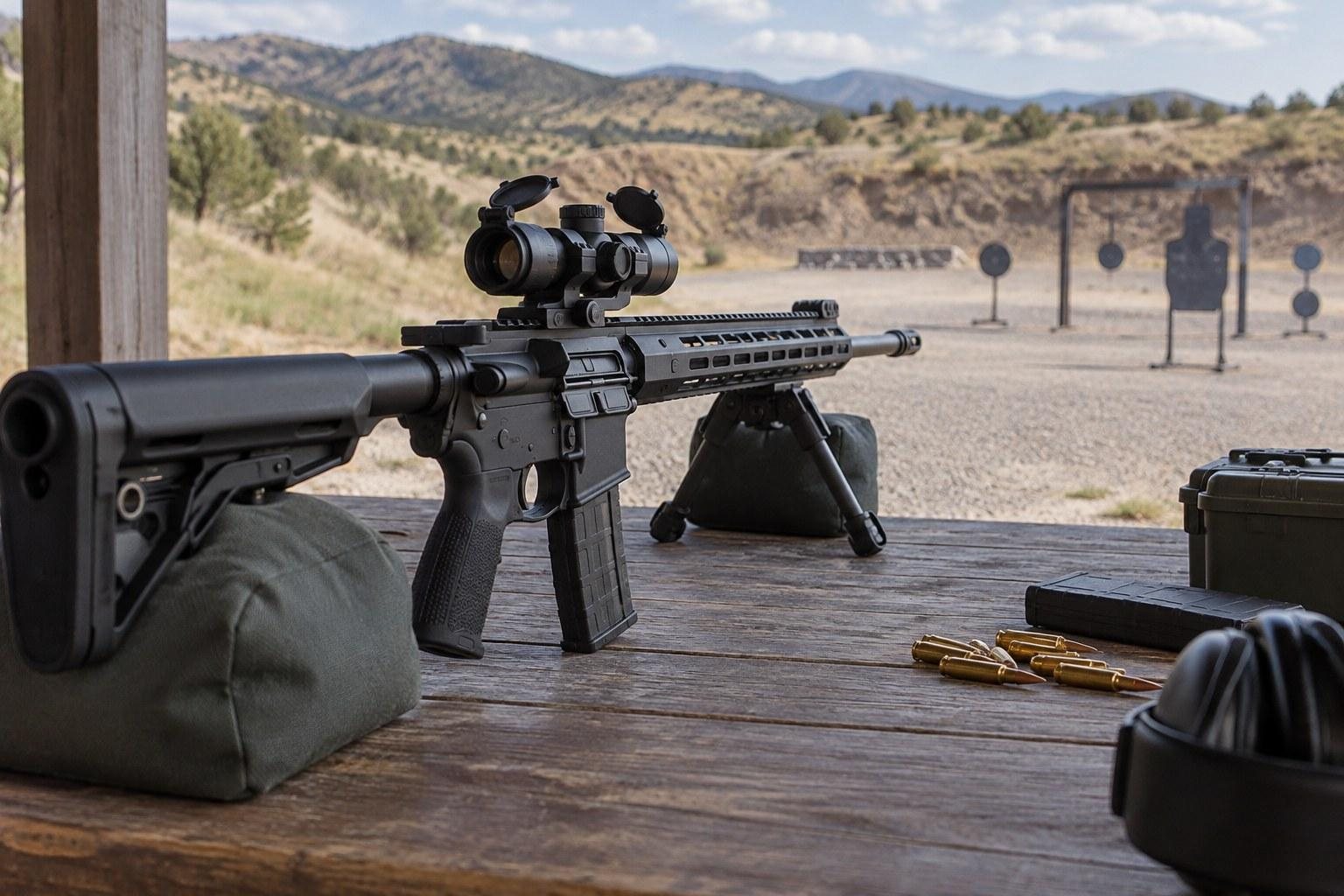
The two cartridges are built for completely different distances. Thinking of them as competitors is a bit like comparing a shotgun slug to a long-range target rifle.
The 50 Beowulf at Short Range
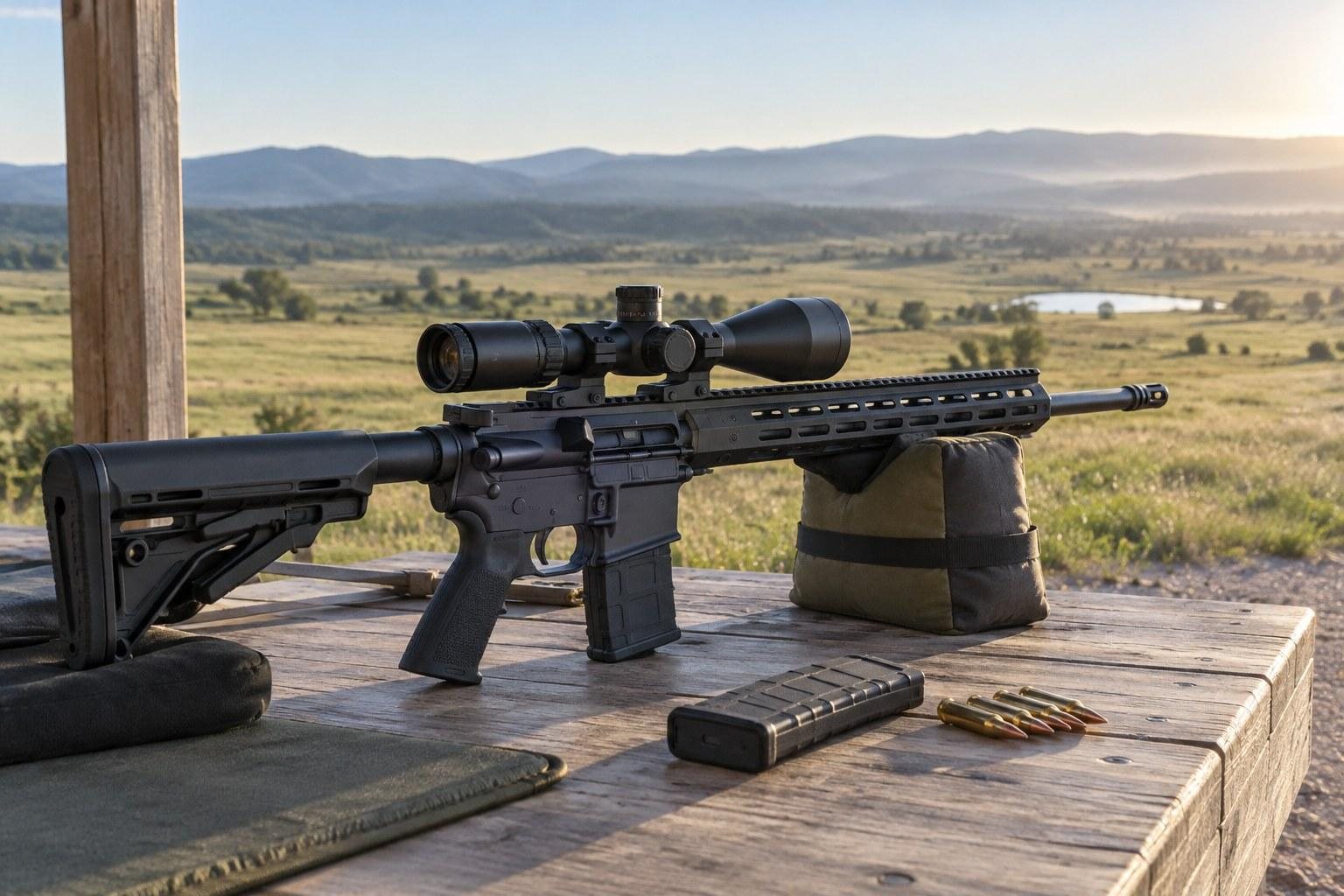
The 50 Beowulf throws a heavy, wide bullet at moderate speed. That gives it a looping trajectory, so it shines inside close and moderate distances where holdover stays manageable. Hunters use it in thick cover for deer and hogs, where shots tend to be close and a wide, heavy bullet is an asset.
A 1:20 twist is the standard rate for the cartridge's heavy, large-diameter projectiles, and it is what most available barrels use. Zeroing with your chosen load is important because trajectory changes with bullet weight. For broader hunting context, see our deer hunting calibers guide for AR platforms.
The 50 BMG at Long Range
The 50 BMG carries very heavy, aerodynamic bullets at high velocity. That combination holds energy and resists wind far better at extended ranges. It is a specialist tool for long-range target matches and military applications rather than a practical hunting or home defense choice for many people.
Its sheer power also means backstops and range limits matter. Many public ranges do not allow 50 BMG at all, so check before you plan a session.
Recoil, Weight and Handling
Recoil follows the powder charge and bullet weight. Here the gap between the two cartridges is very large.
Shooting the 50 Beowulf
The 50 Beowulf kicks noticeably harder than a 5.56 AR-15. A muzzle device, a good stock weld and a heavier barrel all help. Our muzzle devices guide explains how brakes and compensators change felt recoil, and it is worth reading before you choose one. Even with stout recoil, the rifle remains carbine sized and handy. You can carry it through brush and shoulder it quickly.
Shooting the 50 BMG
50 BMG rifles rely on substantial weight and large muzzle brakes to keep recoil manageable. They are usually fired prone from a bipod. The muzzle blast is intense, so hearing protection, including doubling up on plugs and muffs, is strongly recommended. These rifles are not something you carry far. They are transported to the firing line and set up there.
Legal and Practical Ownership Considerations
Ownership rules for both cartridges depend heavily on where you live. Nothing here is legal advice, and state and local laws vary.
Barrel Length and the NFA
A 50 Beowulf barrel under 16 inches on a rifle, or a rifle with an overall length under 26 inches, creates a short-barreled rifle under federal law. That still requires ATF registration before you assemble it. Since January 1, 2026 the federal tax on SBR registration is $0, but the registration requirement remains. You can review federal rules directly at the ATF's National Firearms Act page. A pinned and welded muzzle device can bring a shorter barrel to 16 inches.
State Restrictions on 50 BMG
Some states and localities place specific restrictions on 50 BMG rifles. Others restrict certain straight-walled hunting cartridges or set their own magazine rules. Always confirm your state's current regulations and your hunting regulations before buying either one.
Safety Basics
Whatever you build, start with an unloaded firearm, follow the component manufacturer's instructions and published specifications, and use a qualified gunsmith when you are unsure about any step. Never modify the gas system or gas ports. Our AR-15 headspacing guide explains why headspace checks matter on any caliber change.
Which One Fits Your Goals
For many AR-15 owners, the 50 Beowulf vs 50 BMG decision is really a question of platform. If you want big-bore power on the rifle you already own, the 50 Beowulf is the realistic path. If you want extreme long-range shooting, the 50 BMG is a different hobby with a different rifle.
Choose the 50 Beowulf If
- You want to keep your current AR-15 lower and swap uppers.
- Your shots are close to moderate, such as hogs or deer in timber.
- You value a compact, maneuverable rifle.
Choose the 50 BMG If
- You want dedicated long-range target shooting.
- You have access to a range that permits it.
- You are prepared for a heavy, specialized rifle and expensive ammunition.
If the 50 Beowulf fits, you may also want to compare other big-bore straight-wall options such as the 450 Bushmaster uppers before you decide. More caliber breakdowns are collected in our calibers section.