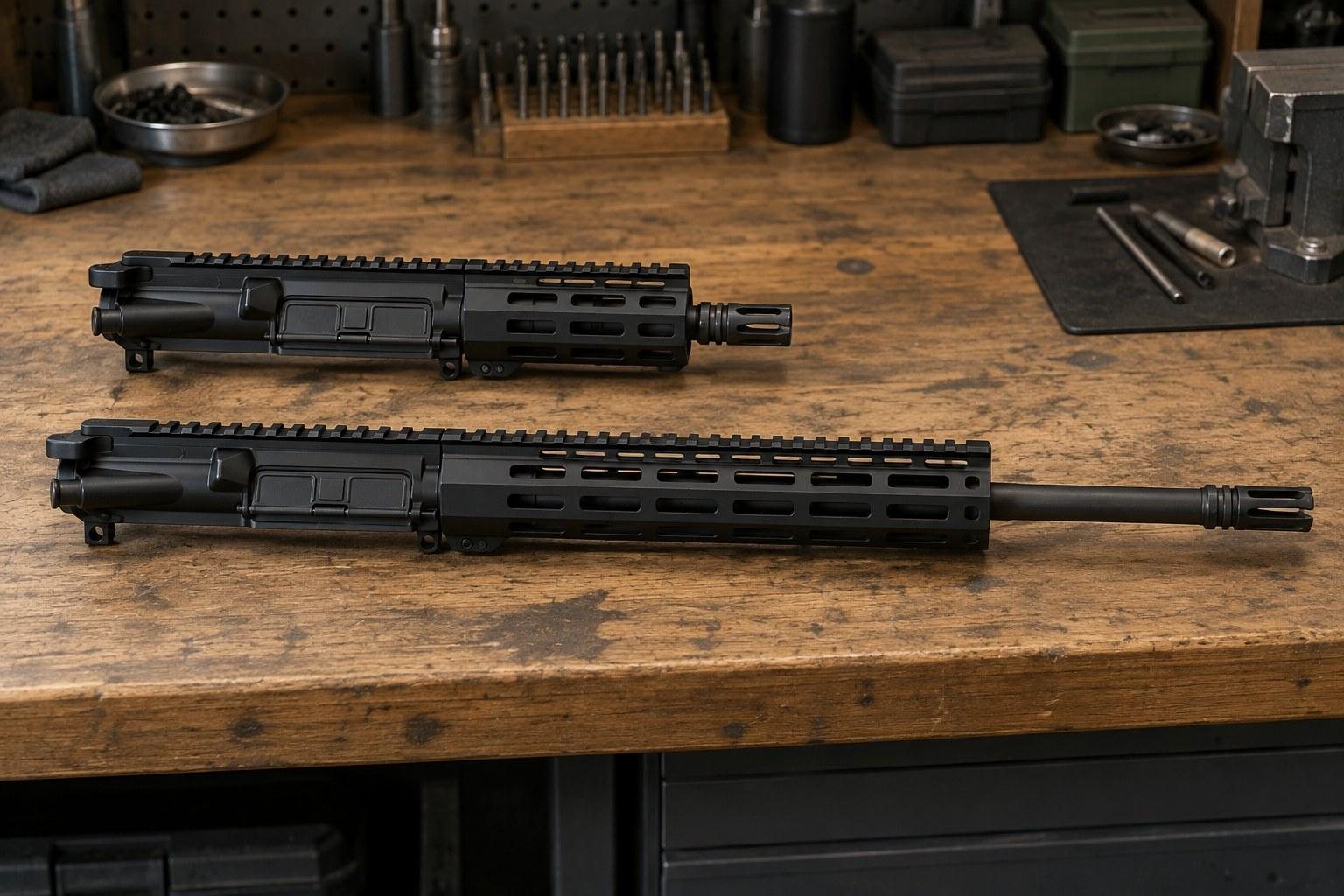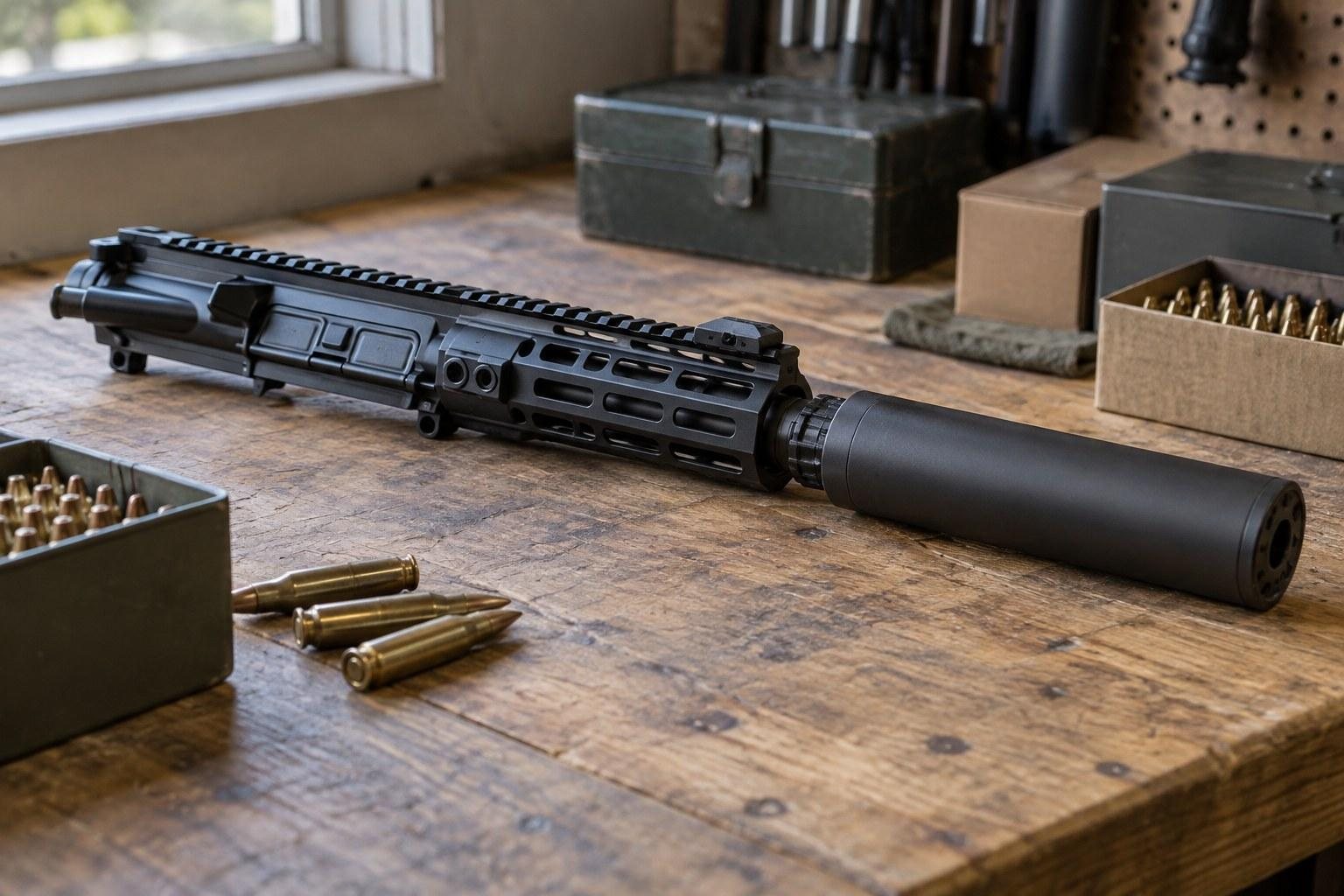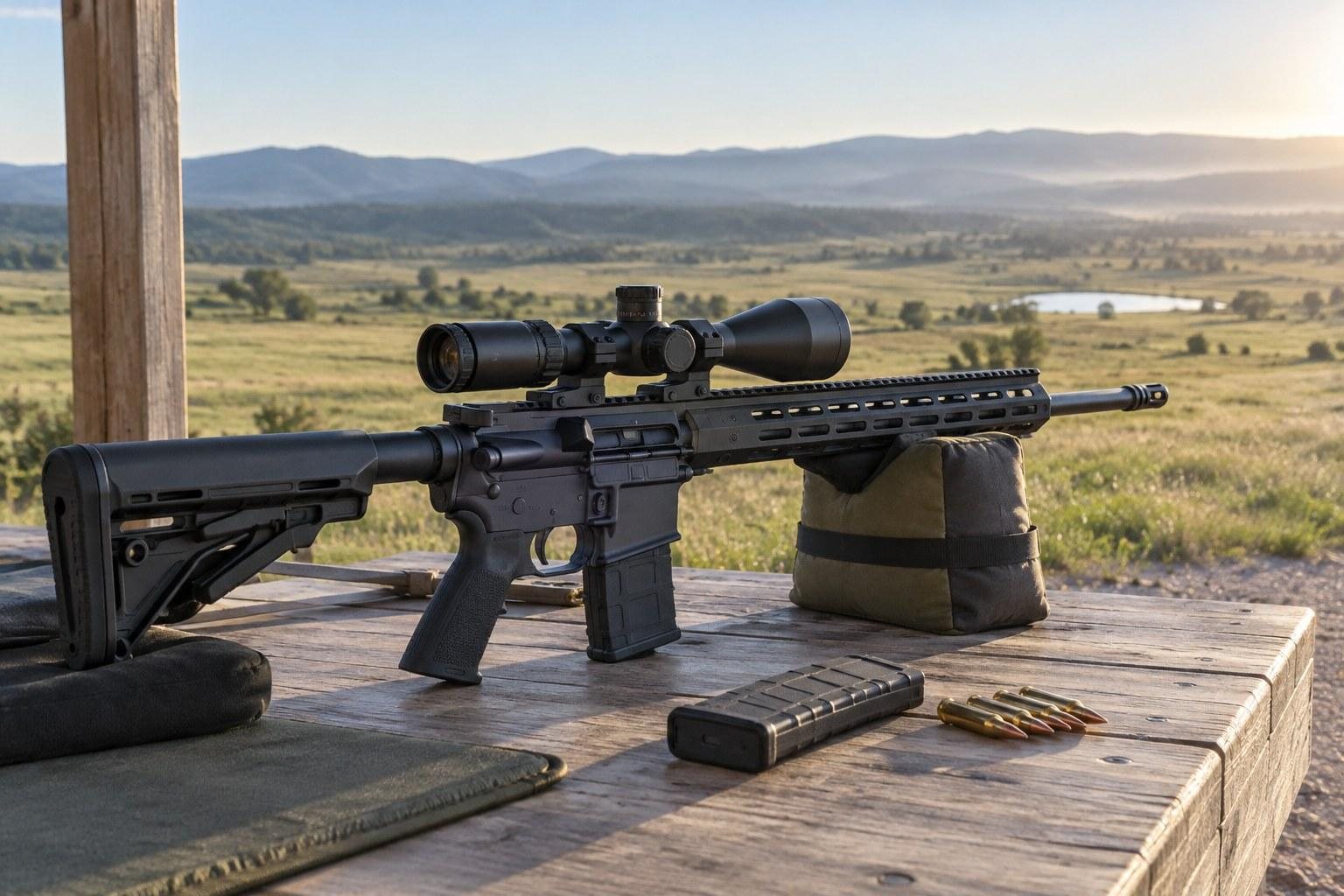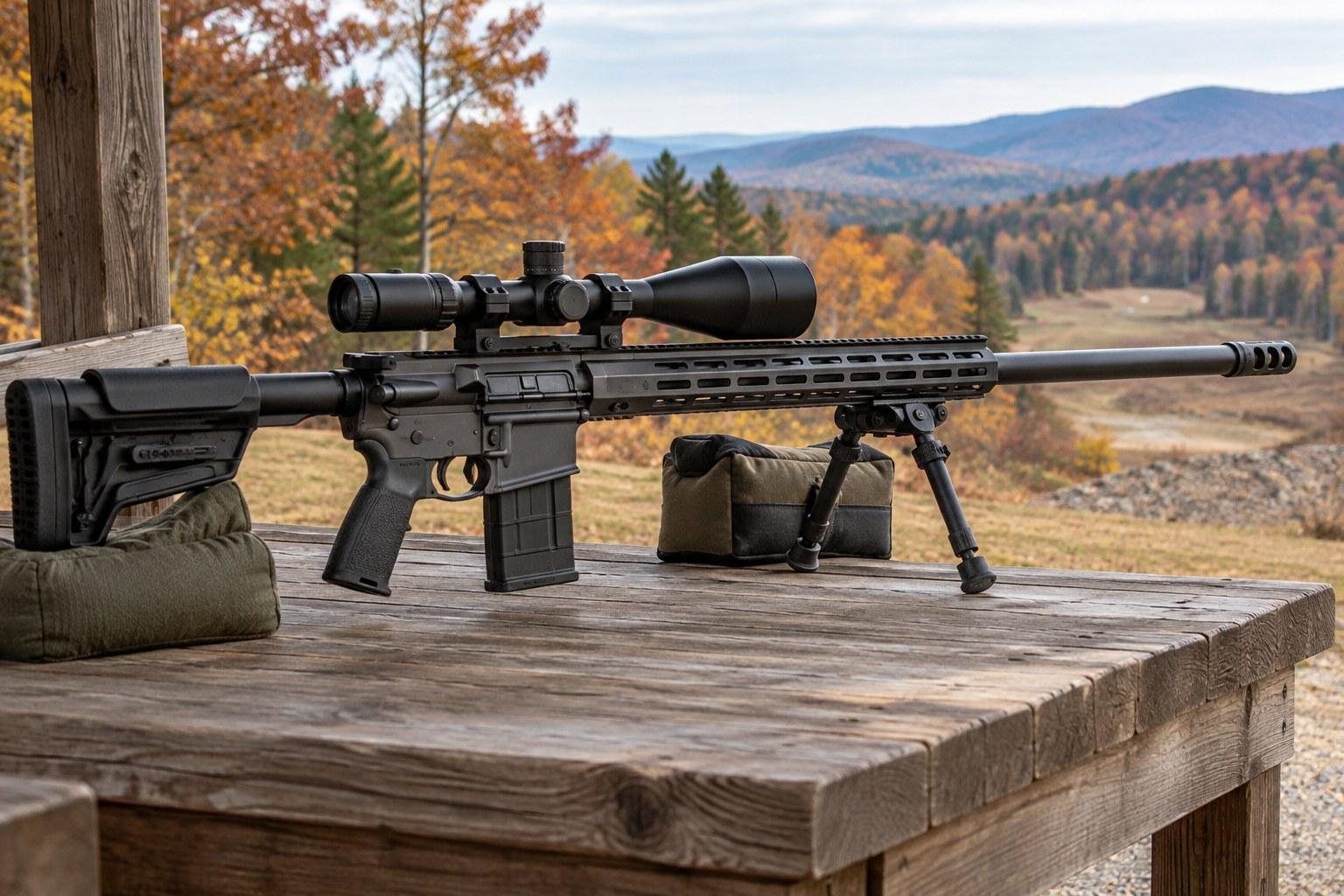
The 400 Legend vs 450 Bushmaster question comes up every fall, especially among hunters in states that limit rifle hunting to straight-walled cartridges. Both rounds run in an AR-15 sized platform, both throw heavy, wide bullets, and both are built for deer-sized game at practical woods and field distances.
They are not the same tool, though. The 450 Bushmaster has been around far longer and carries a larger bullet, while the 400 Legend is Winchester's newer answer that aims to deliver similar energy with less recoil. This comparison breaks down published ballistics, upper setup, magazines and real-world tradeoffs so you can pick the right one with confidence.
Want to see what a straight-wall deer upper looks like when it is built and ready to run? Start with our complete upper coverage.
Key Takeaways
- Both cartridges are straight-walled designs that work in an AR-15 sized lower, which makes them popular where state rules restrict bottlenecked rifle rounds.
- Winchester's 400 Legend launched in 2023 with a 215 grain Power-Point load, and Winchester markets it as delivering energy similar to the 450 Bushmaster with about 20 percent less recoil.
- The 450 Bushmaster fires a larger .452 inch bullet and has a much deeper selection of factory loads, barrels and complete uppers today.
- Neither cartridge drops into a standard 5.56 upper, so you need the correct barrel, bolt and magazines for whichever round you choose.
- Hunting regulations for straight-walled cartridges vary by state and change over time, so always confirm current rules with your state wildlife agency before the season.
Where Each Cartridge Came From
Understanding the origin of each round explains a lot about how it behaves in the field. One was built around big-bore stopping power, and the other was built around a regulatory box.
The 450 Bushmaster Story
The 450 Bushmaster was developed by Hornady with Bushmaster Firearms as a .45 caliber cartridge that would fit and function in the AR-15 action. It uses .452 inch bullets, the same diameter as many .45 caliber handgun bullets, rather than the .458 inch rifle bullets used by the 458 SOCOM. If you are curious how the other big-bore AR rounds stack up, our 458 SOCOM vs 50 Beowulf comparison covers that side of the family.
The round gained a large following once several Midwestern states opened deer seasons to straight-walled rifle cartridges. That head start is why you will find so many loads and so much hardware for it today.
The 400 Legend Story
Winchester introduced the 400 Legend in April 2023 as a follow-up to its 350 Legend. According to Winchester's announcement, the cartridge targets big game such as deer, hogs and black bear, particularly inside 300 yards, and rifles were announced from several makers including CMMG, Ruger, Savage and Mossberg.
Winchester lists a bullet diameter of 0.4005 inch and a case length of 1.650 inches for the 400 Legend. That case length matters, because some state rules cap straight-wall case length, and the Legend family was designed with those rules in mind.
400 Legend vs 450 Bushmaster Ballistics on Paper
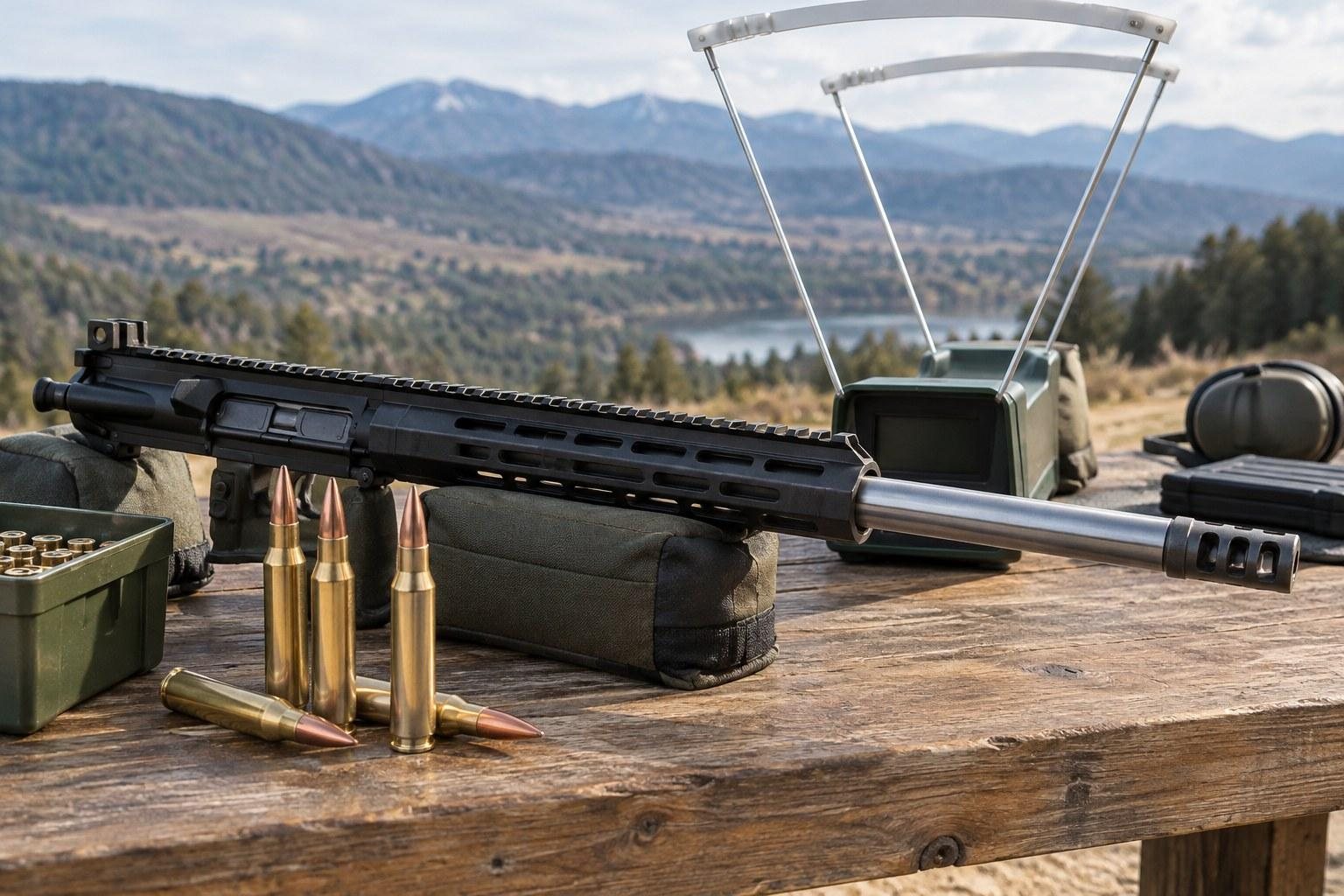
Published numbers are the best starting point for any comparison, as long as you remember that each maker tests in its own barrel and conditions. Your rifle will produce its own results, and only a chronograph tells you the truth.
Published Load Data
Hornady lists its 450 Bushmaster 250 grain FTX Black load at 2,200 fps and 2,687 ft-lbs at the muzzle from a 20 inch test barrel, falling to 1,868 ft-lbs at 100 yards and 1,274 ft-lbs at 200 yards. You can review the full numbers on Hornady's load page.
For the 400 Legend, Winchester's 215 grain Power-Point product page lists the cartridge dimensions but, generally does not publish a full ballistics table. Coverage in the NRA's American Hunter reports the 215 grain load at about 2,250 fps at the muzzle and notes it retains roughly 770 ft-lbs at 300 yards.
| Spec | 400 Legend | 450 Bushmaster |
|---|---|---|
| Introduced by | Winchester (2023) | Hornady with Bushmaster |
| Bullet diameter | 0.4005 inch | .452 inch |
| Case length | 1.650 inches | About 1.70 inches |
| Example load | 215 gr Power-Point | 250 gr FTX |
| Published muzzle velocity | About 2,250 fps (reported) | 2,200 fps (20 inch test barrel) |
| Manufacturer recoil claim | About 20 percent less than 450 Bushmaster | Baseline |
| Factory load selection | Limited, growing | Broad |
What the Numbers Mean for Deer
On paper the two rounds land closer together than the bore sizes suggest. The 400 Legend uses a lighter, slightly faster bullet, while the 450 Bushmaster carries more bullet weight and a wider frontal area.
For whitetails at typical woods and food plot distances, either cartridge carries plenty of energy when you use a quality hunting bullet and put it in the vitals. Shot placement and bullet construction matter far more than a few hundred ft-lbs on a spec sheet.
Planning a broader deer setup? Our caliber overview walks through every common AR option side by side.
Recoil and Shootability
Recoil is the area where the 400 Legend makes its strongest pitch. Winchester markets the round as offering energy similar to the 450 Bushmaster with about 20 percent less recoil, and it also claims 55 percent less recoil than a 12 gauge slug.
Why Recoil Matters in the Stand
Lower recoil usually means more range time before fatigue sets in, faster follow-up shots and less flinching. For new or younger hunters, that can translate into better shot placement when it counts.
That said, the 450 Bushmaster in a gas-operated AR is manageable for most adult shooters, especially with a sensible muzzle device and a good recoil pad. Our muzzle devices guide explains how brakes and compensators change felt recoil and noise.
Muzzle Devices and Hearing
Brakes cut felt recoil but make an AR louder for you and anyone beside you. If you hunt from a shared box blind, think about that tradeoff before you commit to an aggressive brake.
- A compensator or brake reduces felt recoil and muzzle rise.
- A thread protector keeps the rifle quieter for the people around you.
- A suppressor still requires ATF registration, and state laws vary, so check before you buy.
Building an AR-15 Upper for Either Round
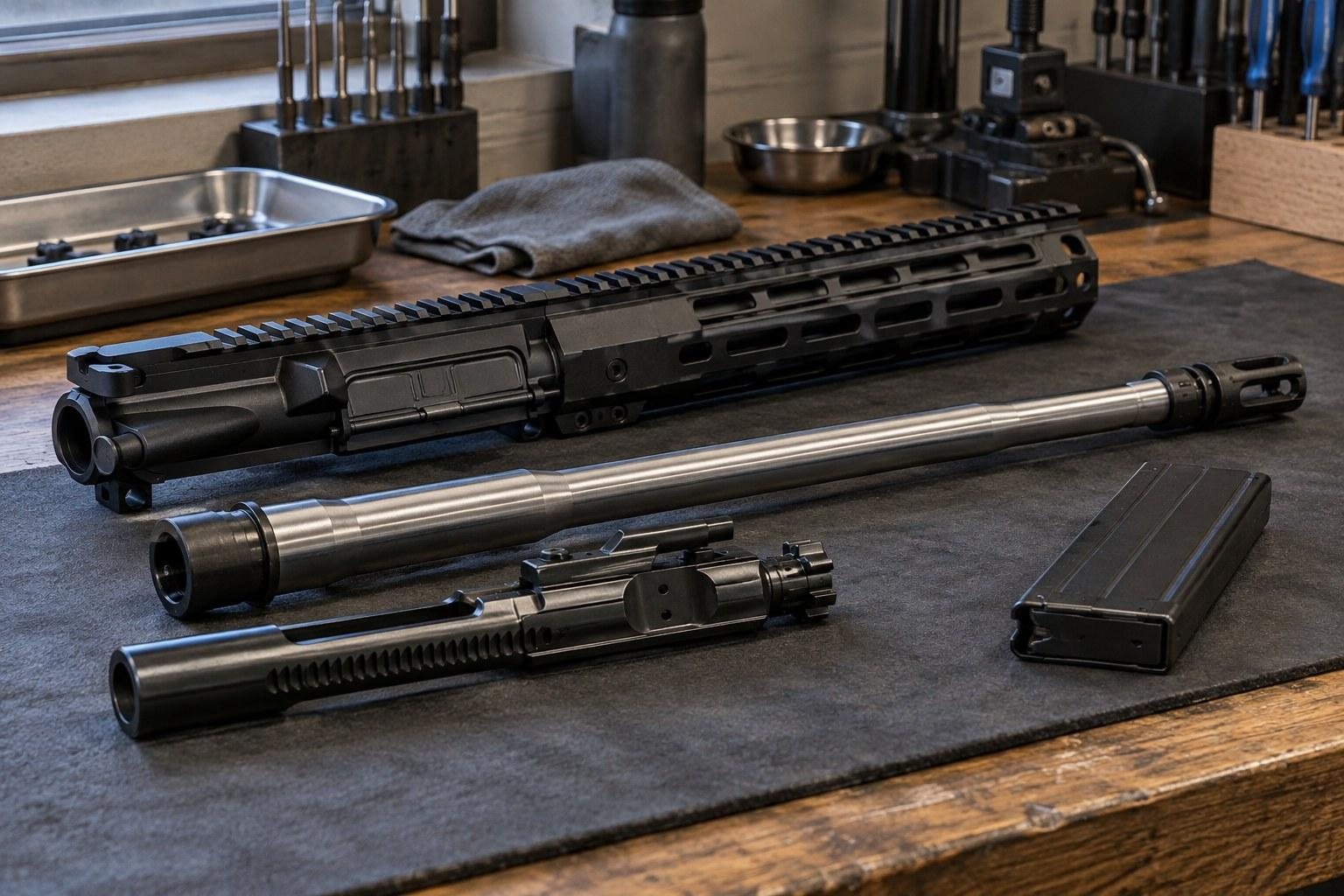
Both cartridges use an AR-15 sized lower, but neither shares parts with a 5.56 upper beyond the receiver and handguard. The barrel, bolt and magazines are cartridge specific.
Barrel and Twist
450 Bushmaster barrels are commonly available in 16 and 18 inch lengths, with heavy parkerized or stainless options and twist rates typically around 1:20 to 1:24, as seen in the AR15Parts.com 450 Bushmaster barrel lineup. Staying at 16 inches or longer on a rifle keeps you out of short-barreled rifle territory.
Keep in mind that on a rifle, any barrel under 16 inches, or an overall length under 26 inches, creates a short-barreled rifle that must be registered with the ATF. The federal tax on SBRs has been $0 since January 1, 2026, but registration is still required, and state and local laws vary.
Bolt and Headspace
The 450 Bushmaster and the 400 Legend each need a bolt matched to their case head, and the 400 Legend's case head is the same size as the 6.8 SPC according to American Hunter. Never assume a bolt from another caliber will work, and always follow the barrel or upper manufacturer's guidance on the correct bolt.
Complete uppers from AR15Parts.com are assembled in-house, headspaced and function-checked before they ship. If you assemble your own upper, verify headspace with the correct gauges and have a qualified gunsmith check your work if you have any doubt. Our 350 Legend upper guide covers similar straight-wall setup considerations.
Magazines
Big straight-wall rounds feed best from magazines built for them. For the 450 Bushmaster, 7 round magazines are a common option in the 450 Bushmaster magazine section.
For the 400 Legend, check with the rifle or upper maker for the magazines it recommends. Many states also cap magazine capacity for hunting, so confirm the limit before opening day.
Availability and Practical Ownership
A cartridge is only as useful as the ammunition and parts you can actually get. This is where the two rounds differ the most today.
Ammunition Selection
The 450 Bushmaster has years of head start, and Hornady alone lists several loads for it. That variety makes it easier to find a bullet that groups well in your rifle and matches your game.
The 400 Legend launched with a single Winchester 215 grain Power-Point load. Expect fewer choices on the shelf, and buy enough of one lot to zero and practice before the season.
Uppers and Parts
450 Bushmaster uppers are commonly available in 16 and 18 inch configurations with 12 or 15 inch rails, offered as complete uppers with a BCG and charging handle or as barreled uppers without them. 400 Legend uppers and barrels are less common and worth checking current listings for.
If you want a lighter-recoiling straight-wall option that is often available as a ready-built upper, the 350 Legend uppers are another route worth comparing.
Which One Should You Choose This Deer Season
There is no wrong answer here, only a better fit for your hunting and your shoulder. Use the points below to narrow it down.
Choose the 450 Bushmaster If
- You want the widest selection of factory loads, barrels and complete uppers.
- You hunt larger-bodied deer, hogs or black bear and prefer a heavier, wider bullet.
- You are comfortable with more recoil, or plan to tame it with a muzzle device.
Choose the 400 Legend If
- Recoil sensitivity is a priority for you or a younger hunter in your family.
- You already own or prefer a rifle chambered for it from one of the supporting makers.
- You are fine with a narrower ammunition selection while the market grows.
Our Editors' Take
For a hunter building an AR-15 upper right now, the 450 Bushmaster is the more practical pick simply because of availability. The 400 Legend is a promising round, and if recoil is your main concern it deserves a hard look as support expands.
Whichever round you pick, handle firearms safely: confirm the rifle is unloaded before any work, follow the manufacturer's instructions, and consult a qualified gunsmith when you are unsure.
Want to compare hunting-ready setups before you buy? Our hunting upper roundup is the next step.