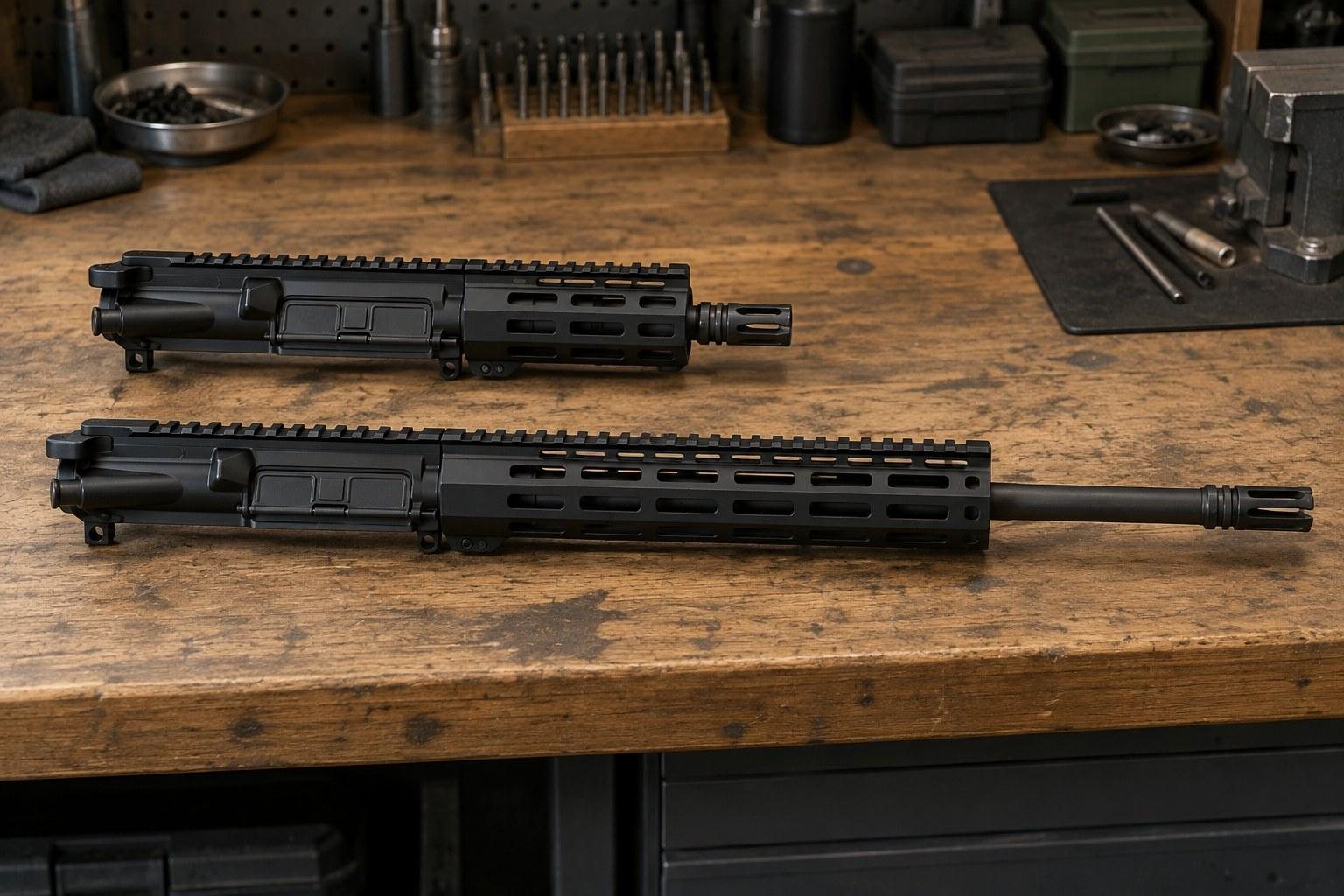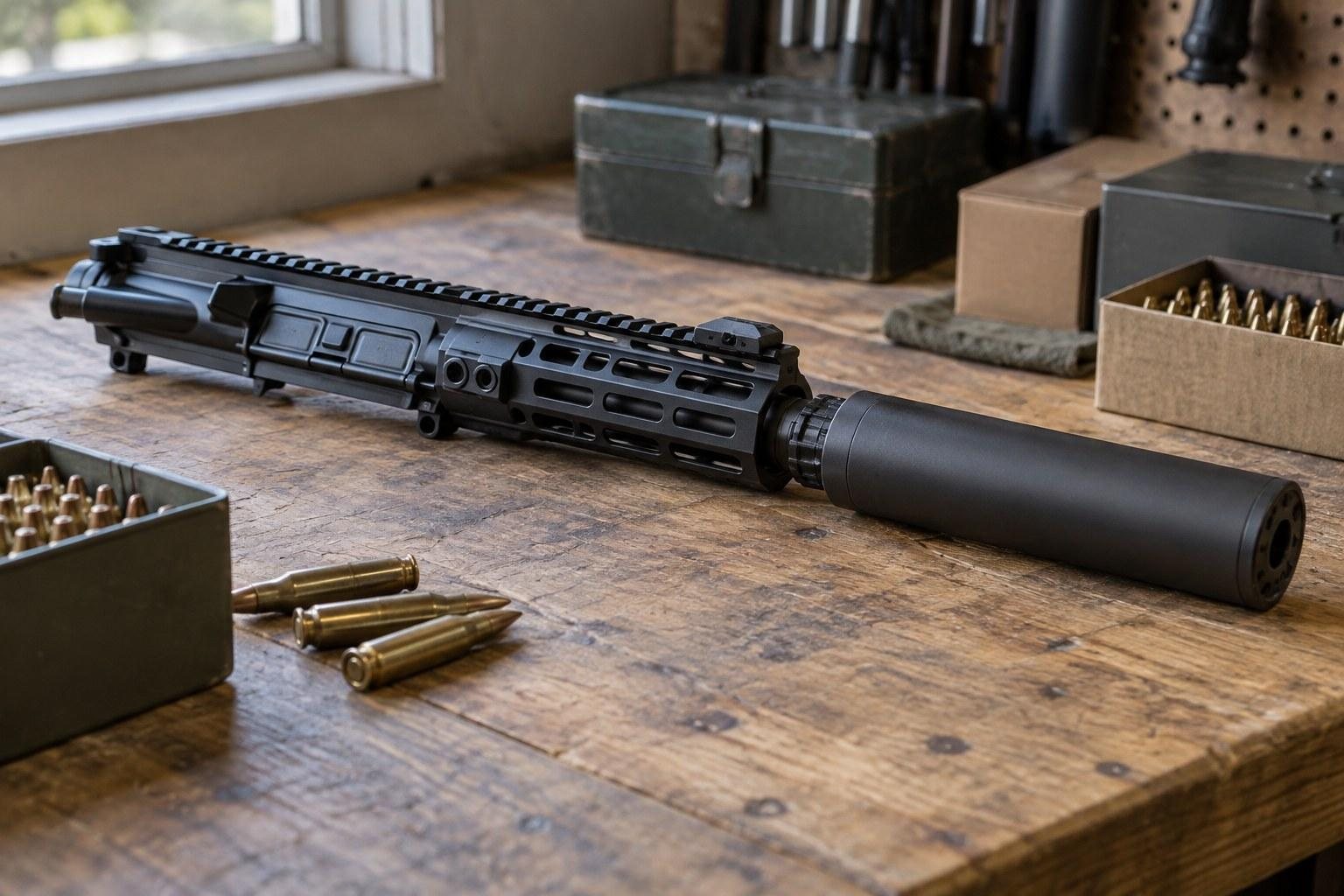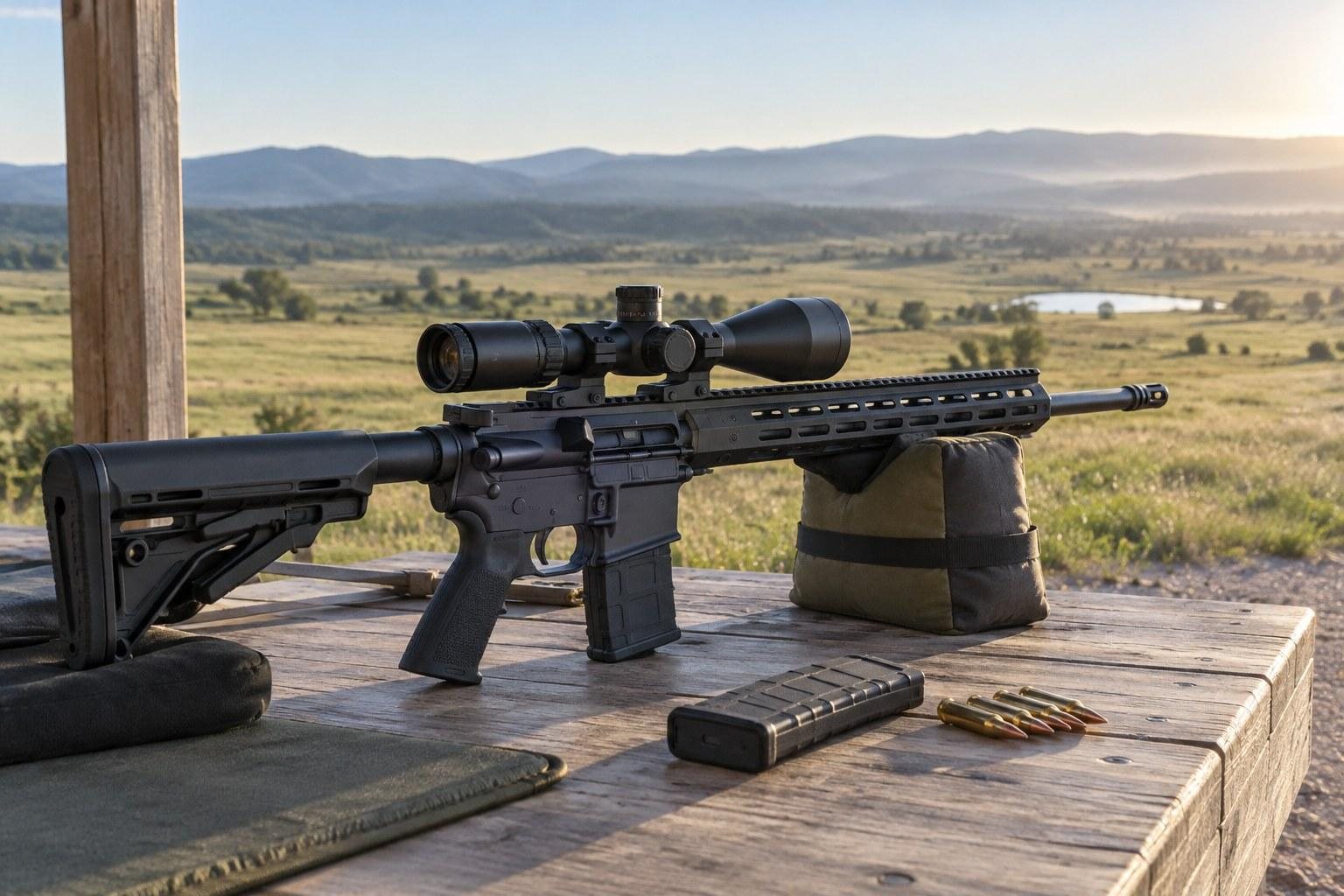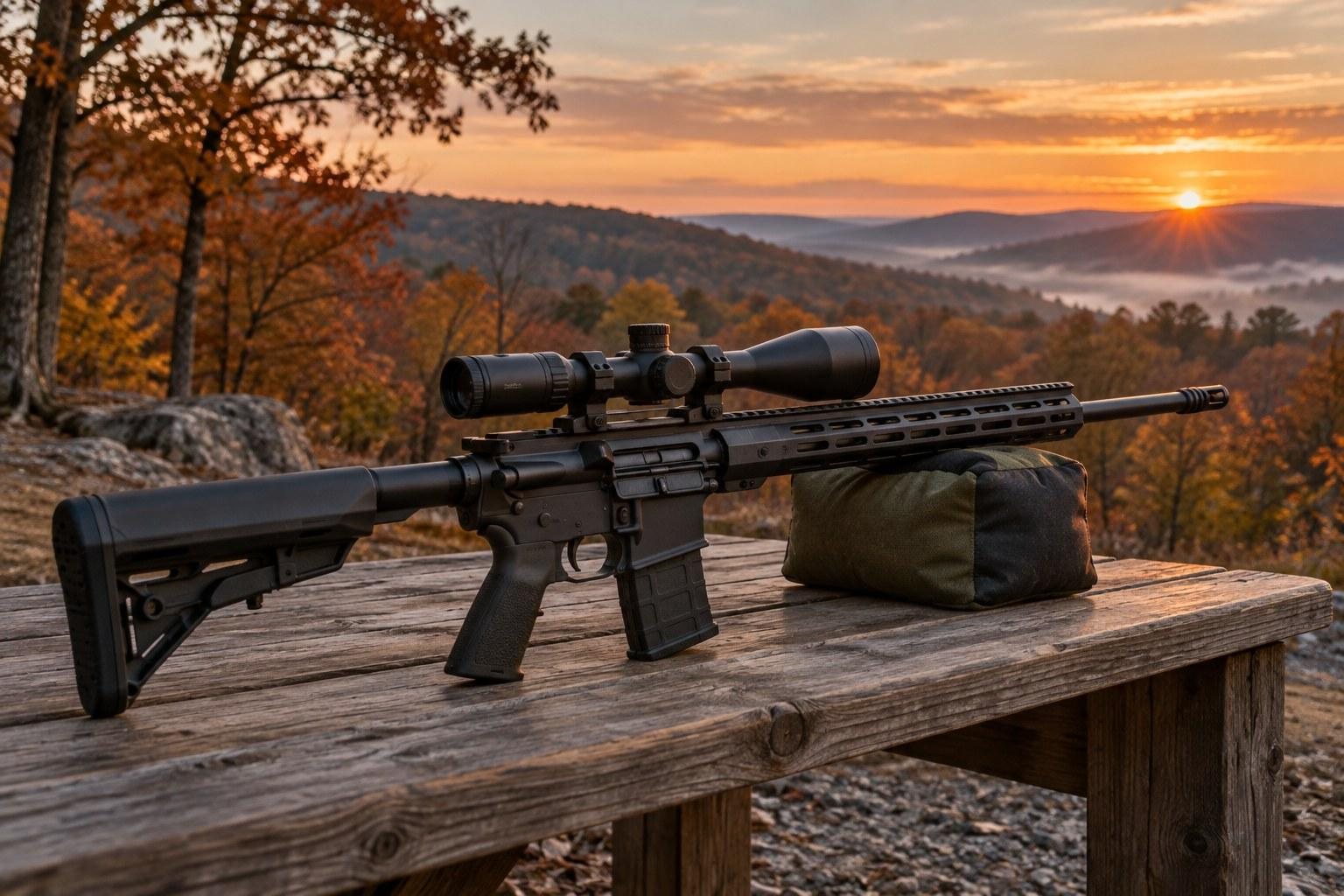
Running a 6.8 SPC for deer hunting is one of the most practical ways to turn a standard AR-15 lower into a capable whitetail rifle. The cartridge pushes a heavier .277 caliber bullet than 5.56 while still fitting the AR-15 magazine well, which is exactly why so many hunters look at it each fall.
Owning the right upper is only half the job, though. How you configure the barrel, optic, magazines and ammunition decides whether the rifle performs when a buck finally steps out. Our editors walk through the setup choices that matter most, in the order we would tackle them before opening day.
Want to start with a complete, ready-to-run upper?
Key Takeaways
- A 6.8 SPC upper needs its own dedicated bolt, because the cartridge uses a different bolt face than 5.56, though a standard AR-15 carrier works fine with it.
- A 16 inch barrel keeps the rifle a standard Title I firearm, while 18 and 20 inch options trade handling for extra length.
- Your optic, mount height and zero distance should match the ranges where you actually expect to see deer.
- Choose a bullet built for deer and confirm it groups in your specific barrel before the season starts.
- Check your state wildlife agency rules on caliber, magazine capacity and semi-automatic rifles before you hunt.
Why the 6.8 SPC Works for Deer Hunting
The 6.8mm Remington SPC was designed to give the AR-15 more energy on target than 5.56 NATO without moving up to a larger AR-10 frame. For hunters, that means a familiar rifle, familiar controls and a lighter package than most .308 class builds.
What the cartridge brings to the field
The 6.8 SPC fires .277 diameter bullets, generally in the 110 to 120 grain range. Those bullet weights give you far more frontal area and mass than typical 5.56 loads, which is a big reason hunters choose it for whitetail.
Recoil stays mild in an AR-15 sized rifle. That helps with follow-up shots and makes practice sessions more pleasant, so you are more likely to put in the range time that matters.
Know its honest limits
The 6.8 SPC is an intermediate cartridge. It is best suited to the woods, food plots and moderate field distances that make up a lot of deer hunting, not long shots across big open country. If you want a deeper look at trajectory and energy, the AR15Parts.com team has a full breakdown of 6.8 SPC ballistics for real-world hunting.
Still weighing cartridges? Our guide to deer hunting calibers for AR platforms compares the 6.8 SPC with other popular options.
Choosing the Right 6.8 SPC Upper Configuration
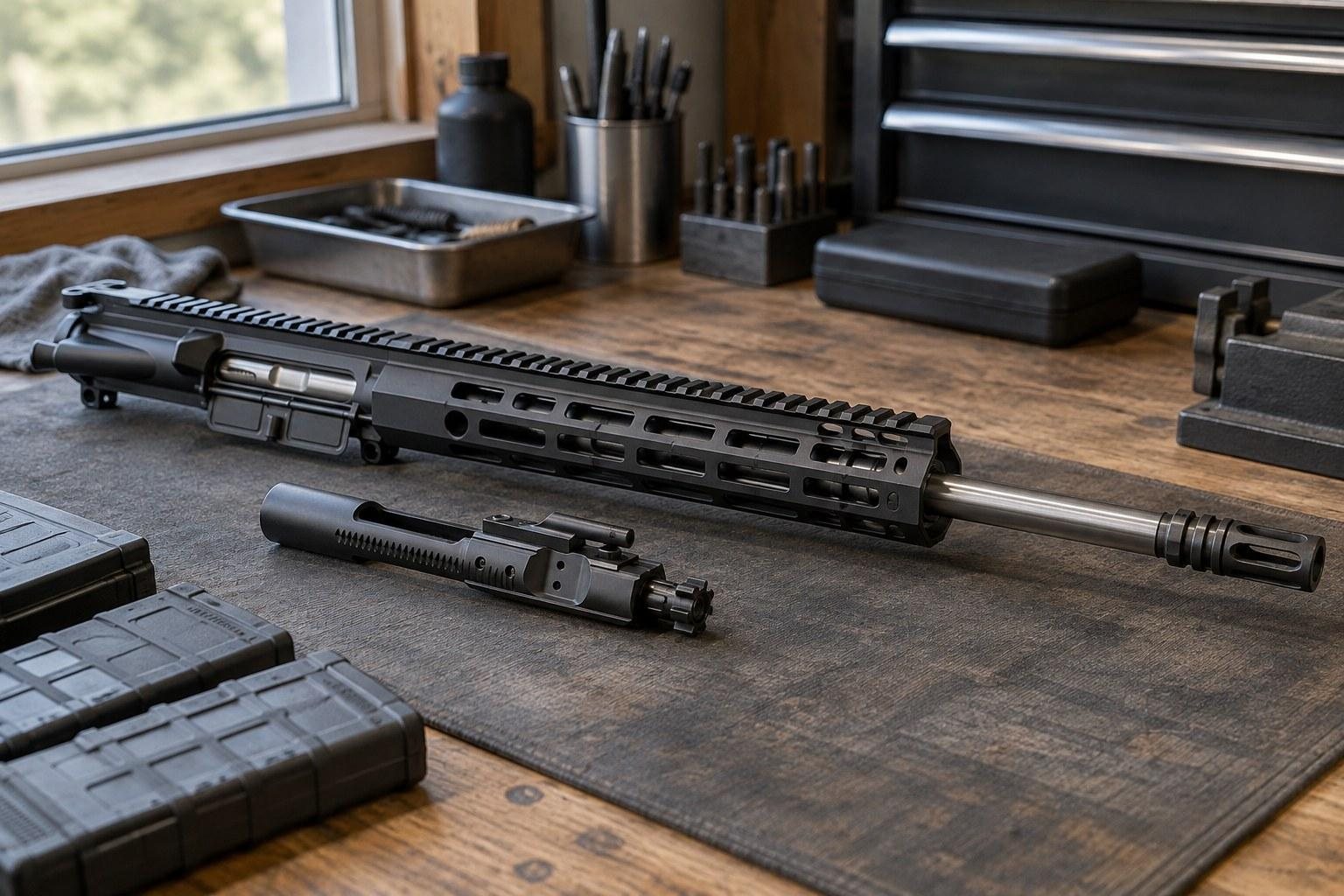
The upper itself is where your setup starts. We will not repeat every detail of chamber specs and component choices here, because AR15Parts.com already covers them in its 6.8 SPC II upper guide for the AR-15. Instead, we focus on the decisions that change how the rifle hunts.
Complete upper or stripped build
Because the 6.8 SPC uses a dedicated bolt face, your existing 5.56 bolt will not work, even though the carrier itself is interchangeable. A complete upper that includes the matching 6.8 SPC BCG and charging handle removes that guesswork. The 6.8 SPC II uppers at AR15Parts.com are assembled in-house, headspaced and function-checked before they ship.
If you prefer to build from components, plan on sourcing a dedicated 6.8 SPC bolt, which will work with a standard AR-15 carrier, and have a qualified gunsmith confirm headspace if you are not equipped to check it yourself.
Common barrel options
A common pattern in 6.8 SPC II uppers is stainless barrels from well regarded manufacturers. Here is how typical barrel options break down.
| Barrel | Length | Twist | Gas System |
|---|---|---|---|
| Wilson Combat Ranger, glass bead stainless | 16 inch | 1:11 | Mid-length |
| Wilson Combat Recon Fluted, glass bead stainless | 16 inch | 1:11 | Mid-length |
| Satern Barrels Medium, stainless | 16 inch | 1:12 | Mid-length |
| Satern Barrels Medium, stainless | 18 inch | 1:12 | Mid-length |
| Satern Barrels Medium, stainless | 20 inch | 1:12 | Rifle-length |
Barrels like these are often 416R stainless with 5/8x24 muzzle threads. You can browse them individually in the 6.8 SPC II barrel category if you are building your own upper.
Want more background on picking a hunting upper?
Picking a Barrel Length for How You Hunt
Barrel length is the setting you cannot easily change later, so it deserves the most thought. Think about where you hunt, how you get there and how far your shots typically are.
16 inch for stands and blinds
A 16 inch barrel keeps the rifle compact enough to haul into a tree stand or swing inside a ground blind. It is also the shortest length that stays a standard rifle under federal law without NFA registration. 16 inch uppers commonly come with a choice of 12 or 15 inch handguards.
18 and 20 inch for open ground
Longer barrels generally give the powder more time to burn, which can help velocity with a cartridge like the 6.8 SPC. They also add weight and length. If you hunt from a fixed position over a field or sit behind a bipod, an 18 or 20 inch barrel can make sense. For still-hunting through brush, many hunters stay at 16 inches.
A note on short barrels
A barrel under 16 inches on a rifle, or an overall length under 26 inches, creates a short-barreled rifle. Since January 1, 2026 the federal tax on SBRs is $0, but ATF registration under the National Firearms Act is still required. State and local laws vary, so check yours before choosing anything shorter. For more on the tradeoffs, see our AR-15 barrel length guide.
Optics, Mounts and Zeroing Your 6.8 SPC for Deer Hunting
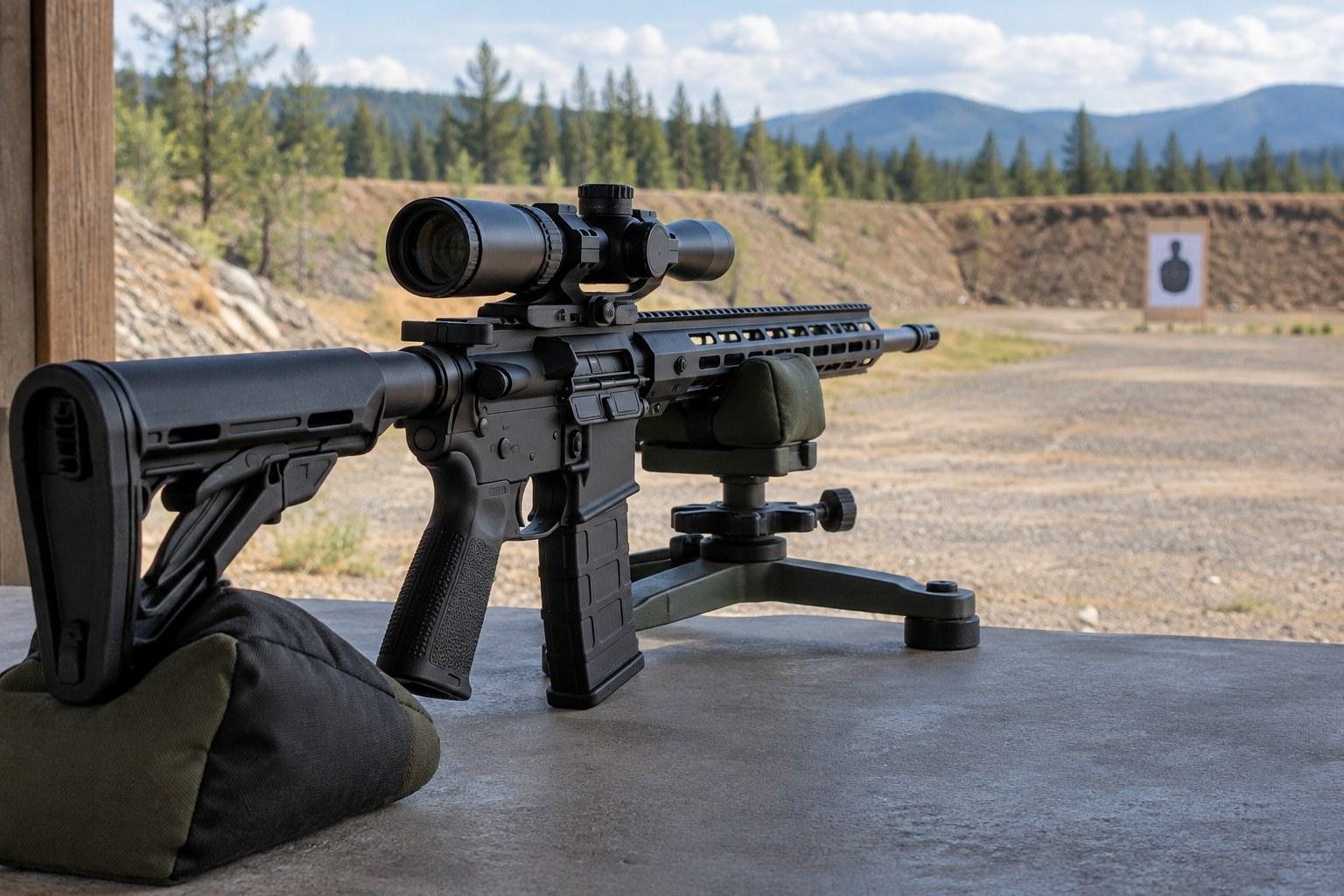
Glass and zero matter as much as the barrel when you set up a 6.8 SPC for deer hunting. A great upper with a poorly mounted scope will still miss.
Choosing an optic
Deer hunting usually happens at dawn and dusk, so an optic with clear glass and a reticle you can see in low light is worth prioritizing. A low power variable optic gives you a wide field of view up close and enough magnification to confirm your target farther out. Our LPVO guide for AR builds walks through the main options.
Mounting it correctly
- Use a one-piece AR mount with enough height to clear the upper and give you a comfortable cheek weld.
- Set eye relief with the rifle shouldered in your hunting position, not standing upright at a bench.
- Level the reticle before tightening the rings.
- Torque ring and base screws to the mount manufacturer's published spec, and use thread locker only if they recommend it.
Picking a zero distance
Choose a zero that matches where you expect to shoot. Confirm your point of impact at the distances you are likely to see deer, using the exact load you plan to hunt with. Write those results down or tape them to the stock so you are not guessing when it counts.
Magazines, Ammo and Muzzle Devices
The small parts are where a lot of 6.8 SPC setups go wrong. Get these right and the rifle will feed and shoot consistently all season.
Use 6.8 specific magazines
The 6.8 SPC case is fatter than 5.56, and standard 5.56 magazines are not designed for it. Dedicated 6.8 SPC and 224 Valkyrie magazines are available, including 10 round versions that can help you meet capacity limits some states set for hunting.
Choose a deer-appropriate bullet
Pick a bullet designed for controlled expansion on medium game, not a varmint or target bullet. Try a few hunting loads in your rifle and keep the one that groups best. Then buy enough of that same lot to zero, practice and hunt.
Muzzle device considerations
6.8 SPC II uppers often ship with a comp brake, which helps tame muzzle rise. Brakes are loud, though, especially for a hunting partner beside you or inside an enclosed blind. If noise matters more than recoil control, browse the muzzle devices available in 5/8x24 thread pitch and have a qualified gunsmith time and install it if you are unsure.
Your Pre-Season Checklist
A few weeks before opening day, run through these steps with the firearm unloaded and the bolt carrier group removed for inspection.
- Clean the bore and chamber, then lightly lubricate the BCG according to the manufacturer's instructions.
- Check that every optic and mount screw is still at spec.
- Confirm the rifle functions with each magazine you plan to carry.
- Re-confirm your zero with the exact ammunition you will hunt with.
- Practice from realistic positions such as sitting, kneeling or off shooting sticks.
- Review your state wildlife agency regulations on legal calibers, magazine capacity and semi-automatic rifles.
If anything feels off during function checks, stop and have a qualified gunsmith look at it before you head to the woods. For more setup advice, explore our calibers and configurations library.